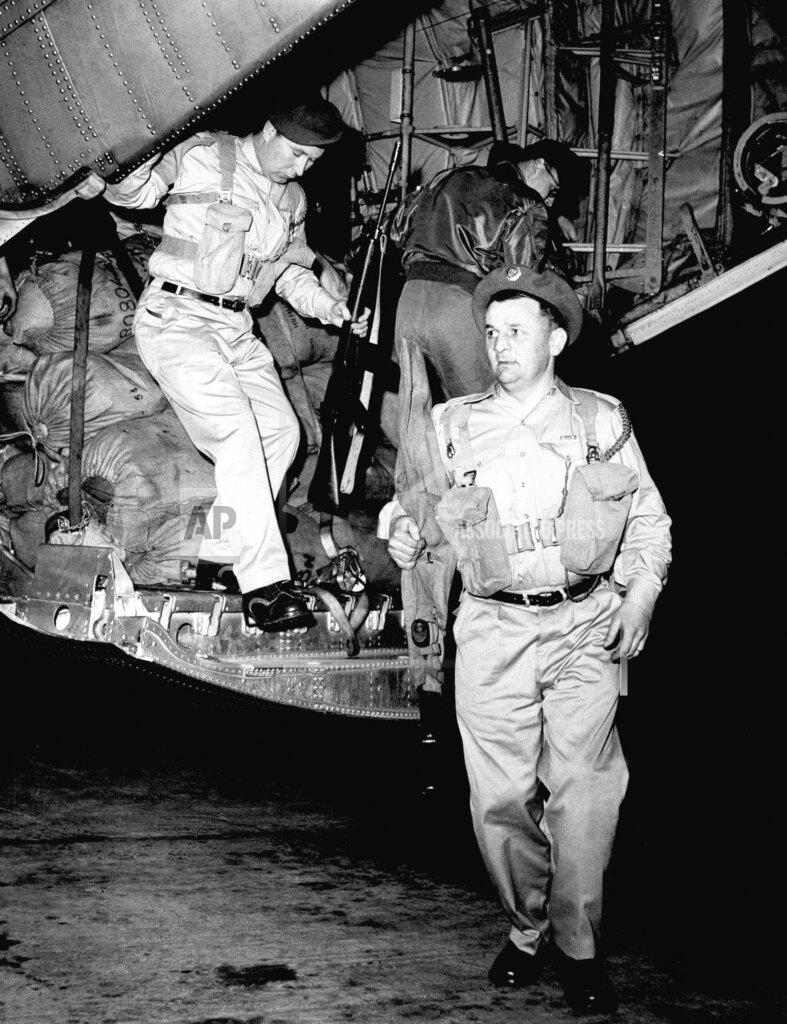
During four days of major fighting in the Mekong Delta, ARVN losses are over 50 while four Americans are killed; during one mortar barrage, a U.S. helicopter base is forced to evacuate.
Communist guerrillas have stepped up their aggressive activities in the northern region of the vital Mekong Delta in the last two days. About 300 Việt Cộng rebels struck from ambush this afternoon against about the same number of South Vietnamese soldiers who were convoying supplies to an outpost in Kiến Hòa Province, 50 miles southwest of Saigon. The ambush came less than 36 hours after two companies of guerrillas raided a government militia school in the village of Gò Ðền, 15 miles southwest of Saigon. The rebels inflicted 91 casualties on students and faculty of the center. They took 115 of the school’s weapons with them when they formed into orderly ranks in the yard and marched off into the predawn darkness.
Observers said that the boldness of the attack on the government post, situated only 100 yards off the main highway south from Saigon, and the audacity of the ceremonial withdrawal illustrated the relative freedom of operation the Communists have in most of the densely populated rice bowl from Saigon south to the Bassac River (Sông Hậu). The guerrillas’ control of the local population gives them advantages in the gathering of information and in troop concealment. These advantages negate to a large extent the benefits the government troops derive from United States‐supplied communications and transportation equipment. The boldness and daring shown by the Việt Cộng in the delta region was said to have more than counteracted the psychological gain the government won with its destruction yesterday of a Communist base near the Laotian border.
The destruction of the militia school in Gò Ðền is expected to have an impact far greater than an attack in some out‐of‐way place would have. Gò Ðền is on one of the most heavily traveled highways in South Vietnam and its police checkpoint, protected by thick walls and barbed wire, was familiar to thousands of people who passed through here each day in buses, automobiles and animal‐drawn wagons. The checkpoint no longer exists. The attackers demolished it with explosive charges.
The training center was so well protected by a thick mud wall, a moat and a double barricade of barbed wire that military men wondered how it could have been seized by only two companies of guerrillas. The officers said that almost any sort of determined defense, provided there had been even a few moments’ warning, would have repulsed the Việt Cộng forces.
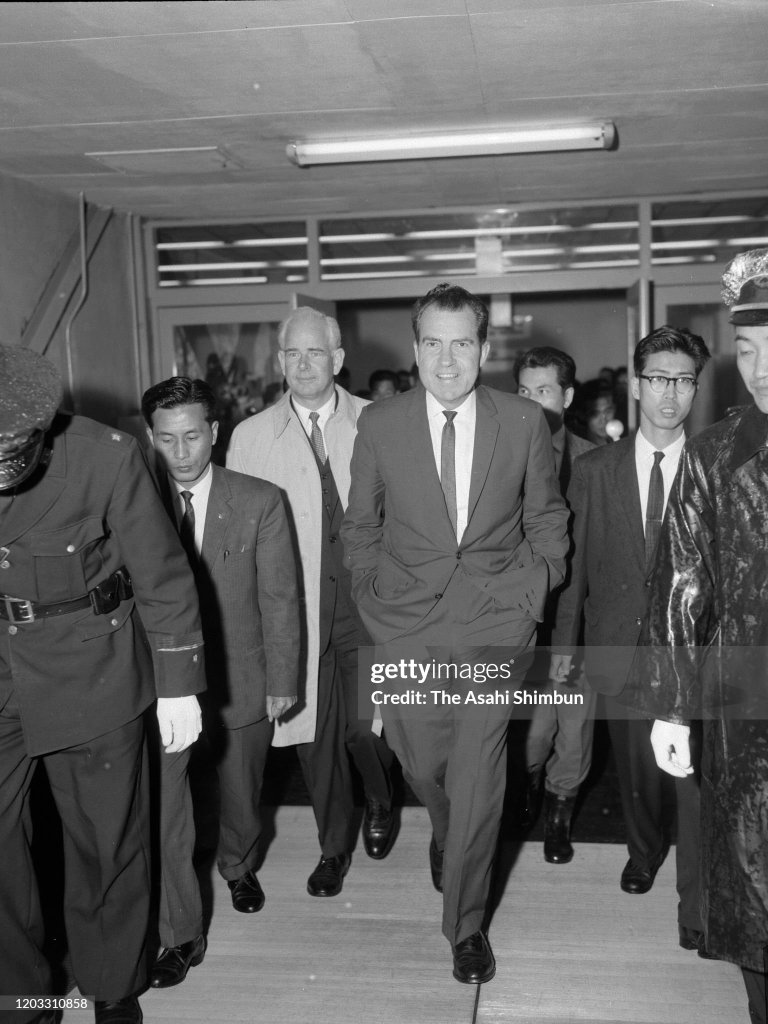
Richard M. Nixon indicated in Tokyo today that he favored extension of the Vietnamese hostilities to the Communist-controlled north, and would strongly recommend such action upon his return to the United States at the end of his present world tour. The former Vice President, who has just visited Saigon, said he believed there had to be “a reappraisal of whether the present plan of allowing the Communists a privileged sanctuary in North Vietnam is adequate “I will have recommendations to make when I get to the United States,” he said at a news conference at the Imperial Hotel. Mr. Nixon said little success attended the policy of “restricting the South Vietnamese to simply dealing with the Communist guerrillas in South Vietnam.” He said a strong body of opinion, particularly among the military, felt that merely to increase economic and military assistance would not suffice unless some countermeasures were taken against the North.
Brazil’s military government issued its first Institutional Act (Ato Institucional), providing that the President could suspend the political rights of any citizen for up to 10 years, giving him power to fire national, state and local legislators, and allowing the Brazilian Congress limited power to consider bills sent to it by the President. The Act also required Congress to elect a President at its April 11 session. The Institutional Act would end after two months, during which nearly 11,000 government employees, military officers, and political leaders had their rights suspended.
The Brazilian revolutionary command put into force tonight a decree designed to end the penetration of extremists, including Communists in Brazil. The measure gives the commanders in chief of the three services power to oust Congressmen as well as members of state legislatures and municipal councils. While it is aimed at Communist infiltration, the leaders are not required to prove Red activities in expelling legislators. Such officials when ousted will have no right of judicial appeal. Their political rights, including the right to vote or to be elected, can be suspended for 10 years. Other provisions permit the removal of officials found to have worked against the security of the state. Constitutional and legal guarantees granting immunity or job security to judges, professors and other officeholders are lifted for six months to permit the purge to proceed.
Proclamation of the new powers by the commanders of the army, navy and air force halted speculation that Congress might be asked to pass similar enabling legislation. Troops searched the University of Brasilia a few hours after the drastic powers were enacted, The Associated Press reported. Congress has been instructed to choose the interim President on Saturday. There is no doubt that he will be a military man. The Army Chief of Staff, General Humberto Castelo Branco, 43 years old, is supported by most party leaders and appears to have the necessary majority. But two other candidates are in the field. They are General Amaury Kruel, commander of the Second Army, and former President Eurico Dutra, a retired marshal.
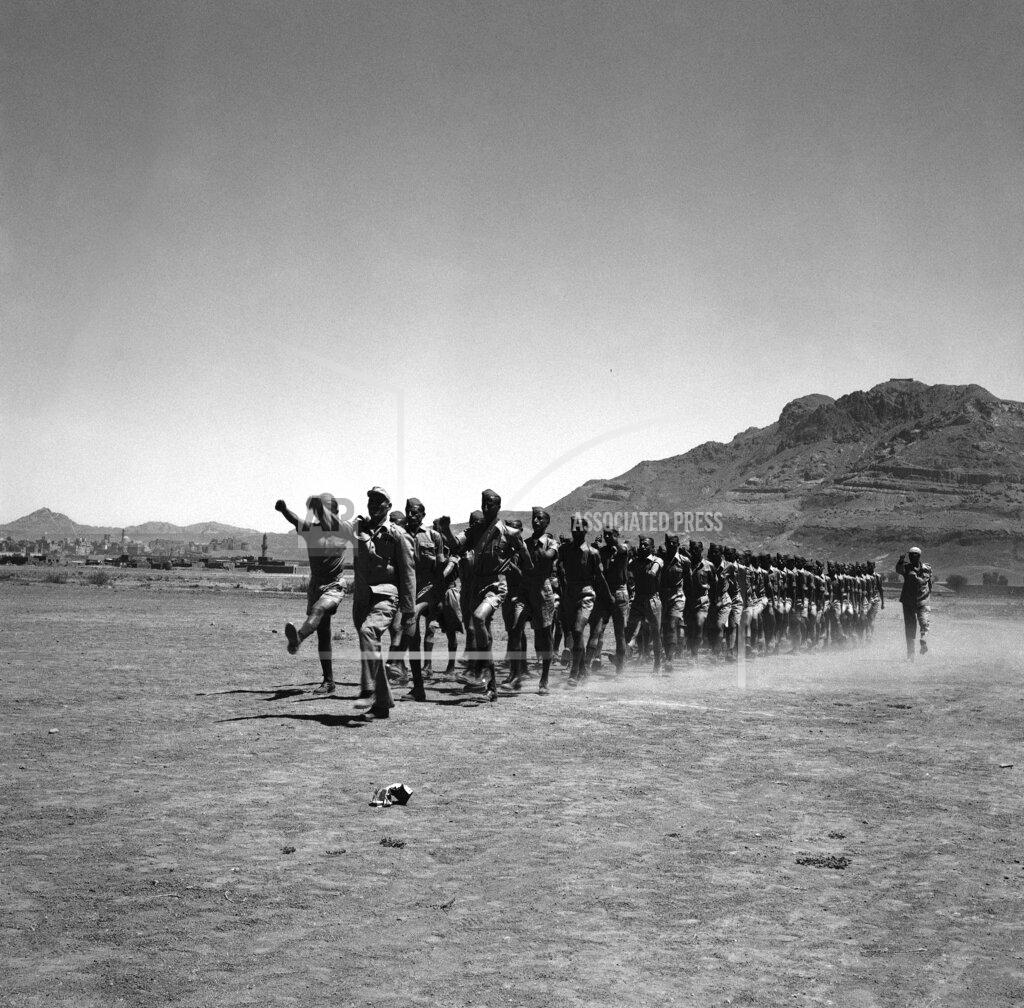
The United Nations Security Council adopted, by a 9–0 vote, a resolution deploring a British air attack on a fort in Yemen 12 days earlier, in which 25 persons were reported killed. The United States and Britain abstained. The resolution condemned the concept of reprisals as “incompatible with the purpose and principles of the United Nations.” The British had described the air attack as a defensive reaction to attacks by Yemenis, assisted by forces of the United Arab Republic, against the British‐protected South Arabian Federation. Other Arab states termed the British attack a reprisal.
The British Air Force is maintaining a fighter patrol at Aden over the Beihan side of the border with Yemen. It hopes to avoid a recurrence of the series of incursions against which it retaliated in a raid March 28. The fighter patrol is evidence of the British Government’s determination to support the South Arabian Federation — and the British base in Aden — against manifold pressures from across the Yemeni border. These pressures are inspired by the Yemen Republic and by President Gamal Abdel Nasser’s forces in Yemen.
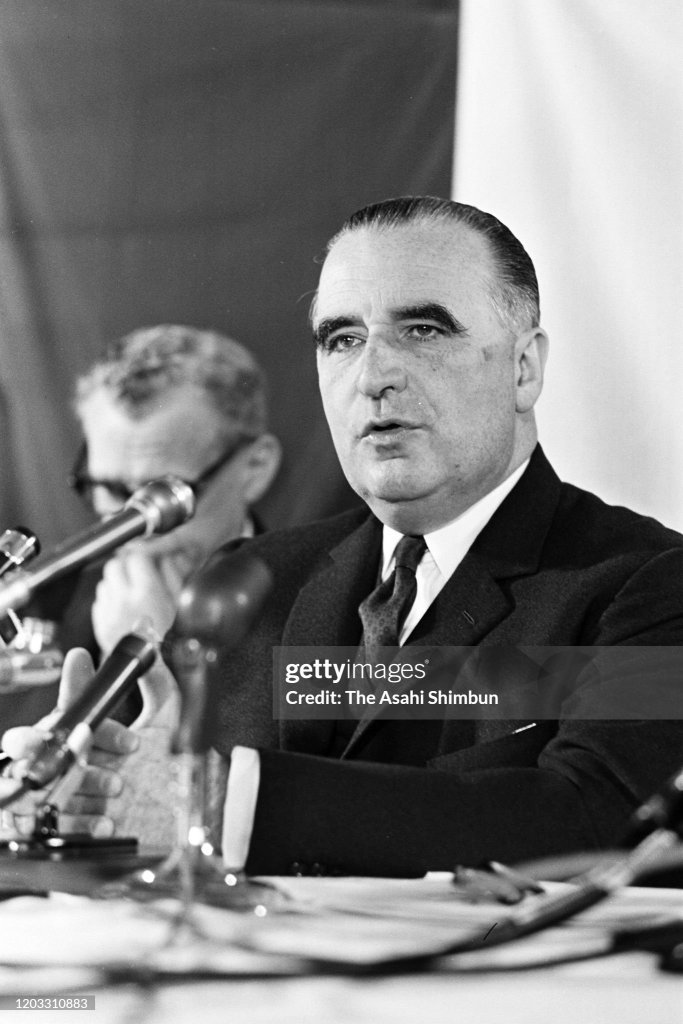
The British general election will be held in October. The Prime Minister, Sir Alec Douglas‐Home, ended the guessing about the time with a 38-word statement last night. It said: “In order to remove the present uncertainty about the date of the general election, the Prime Minister thinks it right to inform the country of his decision not to ask the Queen to dissolve Parliament before the autumn.” The announcement was made at 6 P.M., three hours before the polls closed in the elections for the Greater London Council. It was assailed by the Opposition parties.
The Labor party was sweeping to impressive victories over the Conservatives in the local elections early today. The results in some of the most vital areas of the country, particularly London and Lancashire, provided swift justification for Sir Alec’s decision. The swing in the local elections, if projected into a national ballot, would return a Labor Government with a majority of 100 or more seats in the House of Commons, or just about the same majority won by the Conservatives in 1959.
Premier Khrushchev accused the Chinese Communists today of trying to take over the world Communist movement. “The convulsive efforts of the Chinese leaders to seize power over the Communist movement shall end in a shameful failure,” the Soviet leader said. However, he indicated that Peking had been sufficiently successful at forming pro‐Chinese factions in foreign Communist parties to compel Moscow to launch a counteroffensive. Mr. Khrushchev spoke to about 2,500 people in a sports hall in Budapest as his 10‐day official visit to Hungary neared an end. He accused the Chinese leaders of policies tending to weaken the unity of the world Communist movement, of trying to justify the “despotism and misuse of power” of Stalin’s time and of “frantic slanders” against other Communist parties.
U.S. President Johnson won tonight a 15‐day postponement of a national railroad strike. Officials of the nation’s railroad and the five operating rail unions agreed to an urgent request by the President to postpone a shutdown to give Administration mediators another chance to try to settle the five‐year‐old dispute over work rules. President Johnson, in announcing the postponement after a four‐hour meeting tonight at the White House with union and management officials, said negotiations would resume at 10 AM tomorrow in the White House Cabinet Room.
In expressing satisfaction over the averting of the walkout that had been set to start at 12:01 AM tomorrow, the President said on nationwide television: “Both management and the brotherhoods have tonight acted in the public interest. They responded as Americans to the request of their President, and they have done what is best for their country.”
Roy E. Davidson, head of the Brotherhood of Locomotive Engineers, announced that the unions would immediately call off their strike against the Illinois Central Railroad. That walkout, which began early yesterday, triggered the latest national railroad crisis. At the meeting earlier today with union and management officials, President Johnson had sought a 20‐day postponement. The unions were said to have balked at a postponement of that duration but were persuaded to agree to the 15 days.
President Johnson appealed, cajoled and in some instances “talked turkey” to House members in the Administration’s drive to get the food‐stamp and farm bills through the House early today. His telephone calls and other efforts from the White House were characterized as a major element in nailing down votes and holding straight some wavering Democrats during the 14‐hour session. Informed sources described the Democratic action as one of the “best coordinated” legislative lobbying efforts in recent years. As some saw it, the main problem at the end was to overcome the Republican parliamentary moves, which sought to stall the bill and cause defections from Democratic ranks.
In the wake of the Administration’s dual victory, the House was stalled today apparently by Republican pique over the power play on the farm and food‐stamp bills. No business could be transacted because of Republican calls for quorums, reading of the daily journal and other time‐killing tactics. It did not seem to be an organized blockade but rather expression of the resentment of a few members against the Democratic leadership for holding the House in session into the night. The stalling was effective because many Democrats did not show up today.
President Johnson made an emotional plea to businessmen tonight to look beyond the passage of civil rights legislation to their responsibility for making equality a fact in their communities. The “great issue,” Mr. Johnson told about 200 businessmen in the East Room of the White House, is the question “What does America stand for?” He answered: “I believe it stands for progress in human rights, for full and equal rights for all of its citizens.”
Senator Edward M. Kennedy made an impassioned plea today for passage of the civil rights bill. The 32‐year‐old brother of President Kennedy has spoken briefly on several occasions, but this was his first major speech in the Senate. As he came to the close of his brief address. he said: “I remember the words of President Johnson last November 27: ‘No memorial oration or eulogy could more eloquently honor President Kennedy’s memory than the earliest possible passage of the civil rights bill for which he fought so long.’”
His voice broke with emotion for a few seconds, and then he continued in a low voice: “My brother was the first President of the United States to state publicly that segregation was morally wrong. His heart and soul are in this bill. If his life and death had a meaning, it was that we should not hate but love one another; we should use our powers not to create conditions of oppression that lead to violence, but conditions of freedom that lead to peace.” Mr. Kennedy emphasized, not the enforcement provisions in several sections of the bill, but the opportunities for conciliation and voluntary compliance before resort would be made to court orders. “This is not a force bill,” he said. “There are no fines or criminal penalties. On the contrary, the bill abounds with reasonableness, with conciliation, with voluntary procedures, with a moderate approach toward its goals.”
Organized religion in the United States will commit itself here tomorrow to a campaign of spiritual leadership, public pressure, and private prayer for passage of the civil rights bill now before the Senate. Representatives of the leadership of American Protestantism, Judaism, and Roman Catholicism will announce at a joint news conference a National Interreligious Convocation to be held here on April 28. Officials of all faiths said it would be “the largest gathering of ministers, priests and rabbis ever before assembled in a witness to racial justice.” A special section of 535 seats — one for each Representative and Senator — will be reserved. Each member of Congress is to receive a personal invitation with a request for a “yes or no” response. This is a technique used first at the August 28 civil rights march on Washington last year, when seats were reserved for Congressmen at the Lincoln Memorial. In a number of ways — political, social and ecumenical — the Washington convocation of church leaders has been hailed as revolutionary.
A jury of white men, seven of them college graduates, began hearing testimony today in the second murder trial of Byron De La Beckwith, accused in the murder of Medgar W. Evers, Black civil rights leader. The jury selection was completed late last night before the state put on the first witness, a police officer described the scene of the ambush shooting outside Mr. Evers’ home last June 12. Mr. Evers was state field secretary for the National Association for the Advancement of Colored People.
District Attorney William L. Waller indicated that he was pleased with the make‐up of the jury, which has a higher level of education than the jury for the first trial. That panel was unable to agree on a verdict February 7. Defense attorneys appeared to be frustrated by their inability to weed out college graduates and those who had come from other regions. A large number of the more than 70 prospects questioned were dismissed by Judge Leon F. Hendrick because they had a fixed opinion as to the defendant’s guilt or innocence. Mrs. Myrlie Evers, widow of the victim, told the jury, as she did in the first trial, how her husband was shot in the back when he returned home from a civil rights rally.
Governor William W. Scranton of Pennsylvania made “one final effort” today to convince his draft‐minded friends that he does not wish to run for President. They err, he said, if they believe that secretly he does desire the Republican nomination. The Governor said that only his belief that no American has the right to refuse a genuine draft keeps him from saying he would reject the nomination if offered. The immediate effect was to encourage those who have been promoting Mr. Scranton. These include the Republican State Chairman, Craig Truax. Some supporters said they did not expect to build a great popular following before the Republican National Convention opens on July 13, as the promoters of Wendell L. Willkie did in 1940. They are counting, instead, on the convention’s turning to the Governor after other candidates fail to receive a majority of votes on the early ballots.
Jet planes will begin using La Guardia Airport in regularly scheduled service about June 1. Four airlines yesterday received permission from the Port of New York Authority to use three‐engine Boeing 727 planes on that date. The announcement followed prolonged testing of the takeoff and landing noise that the short- to medium-range jets would produce near the airport in Jackson Heights, Queens. United Air Lines and American Airlines are expected to start 727 service between La Guardia and Chicago, Cleveland and Detroit on or about June 1. Eastern Airlines and Trans World also received Port Authority approval for 727 flights. Eastern said it would begin flights on July 1. No details were available on the cities that would be served.
The 33rd and last Titan II research and development flight was launched from Cape Kennedy.
The Tigers purchase pitcher Larry Sherry from the Dodgers.
Dow Jones Industrial Average: 821.35 (-2.84).
Born:
Doug Ducey, American politician and businessman, 23rd Governor of Arizona (2015 to 2023), in Toledo, Ohio.
Charles Jenkins Jr., American athlete (Olympic gold medal, 4x400m relay, 1992), in New York, New York.
Rick Tocchet, Canadian NHL right wing (NHL Champions, Stanley Cup-Penguins, 1992; Philadelphia Flyers, Pittsburgh Penguins, Los Angeles Kings, Boston Bruins, Washington Capitals, Phoenix Coyotes), in Scarborough, Ontario, Canada.
Skip McClendon, NFL defensive end (Cincinnati Bengals, San Diego Chargers, Minnesota Vikings, Indianapolis Colts), in Detroit, Michigan.
Floyd Dixon, NFL wide receiver (Atlanta Falcons, Philadelphia Eagles), in Beaumont, Texas.
Robert Awalt, NFL tight end (St. Louis-Phoenix Cardinals, Dallas Cowboys, Buffalo Bills), in Landstuhl, Rhineland-Palatinate, West Germany.
Donald Miller, NFL linebacker (Seattle Seahawks), in Chicago, Illinois.
Paul Oswald, NFL center and guard (Pittsburgh Steelers, Dallas Cowboys, Atlanta Falcons), in Topeka, Kansas.
Bruce Douglas, NBA shooting guard (Sacramento Kings), in Quincy, Illinois.
Blaise Ilsley, MLB pitcher (Chicago Cubs), in Alpena, Michigan.
Lisa Guerrero, American investigative reporter, in Chicago, Illinois.
Died:
Hesketh Pearson, 77, English biographer and playwright (“Writ for Libel”).

 History Diaries