
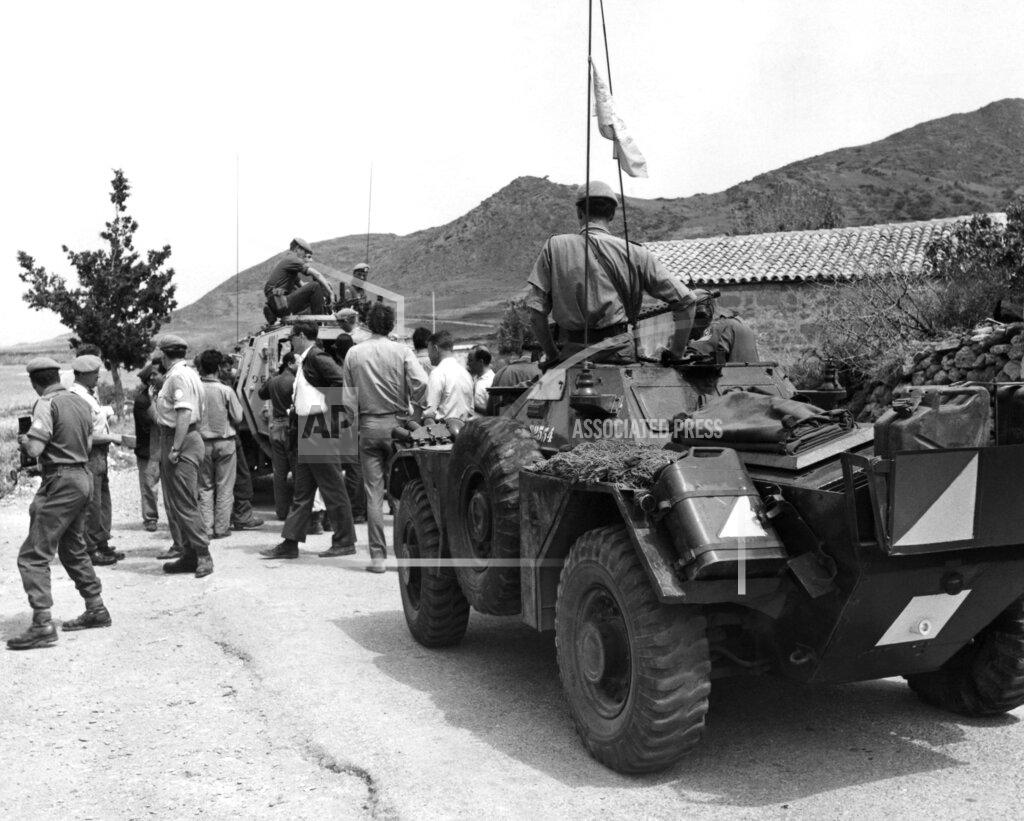
United Nations officers arranged a cease‐fire today between warring Greek and Turkish Cypriote communities in western Cyprus. The firing had stopped after three days as night fell on the tiny Turkish village of Kokkina and the Greek hamlet of Pakhyammos, a few miles to the west. But later, to the east, four Turkish Cypriotes were taken outside Nicosia and gunned down by Greek Cypriotes, ac‐cording to Dr. Fazil Kutchuk, Vice President of Cyprus and leader of the Turkish Cypriote community. British soldiers in the United Nations force found two bodies in a field, Dr. Kutchuk said. One man survived and the fourth was reported missing. The survivor said the four had been taken from Famagusta Gate in Nicosia by men armed with automatic weapons, lined up and shot, according to the Turkish Cypriote account.
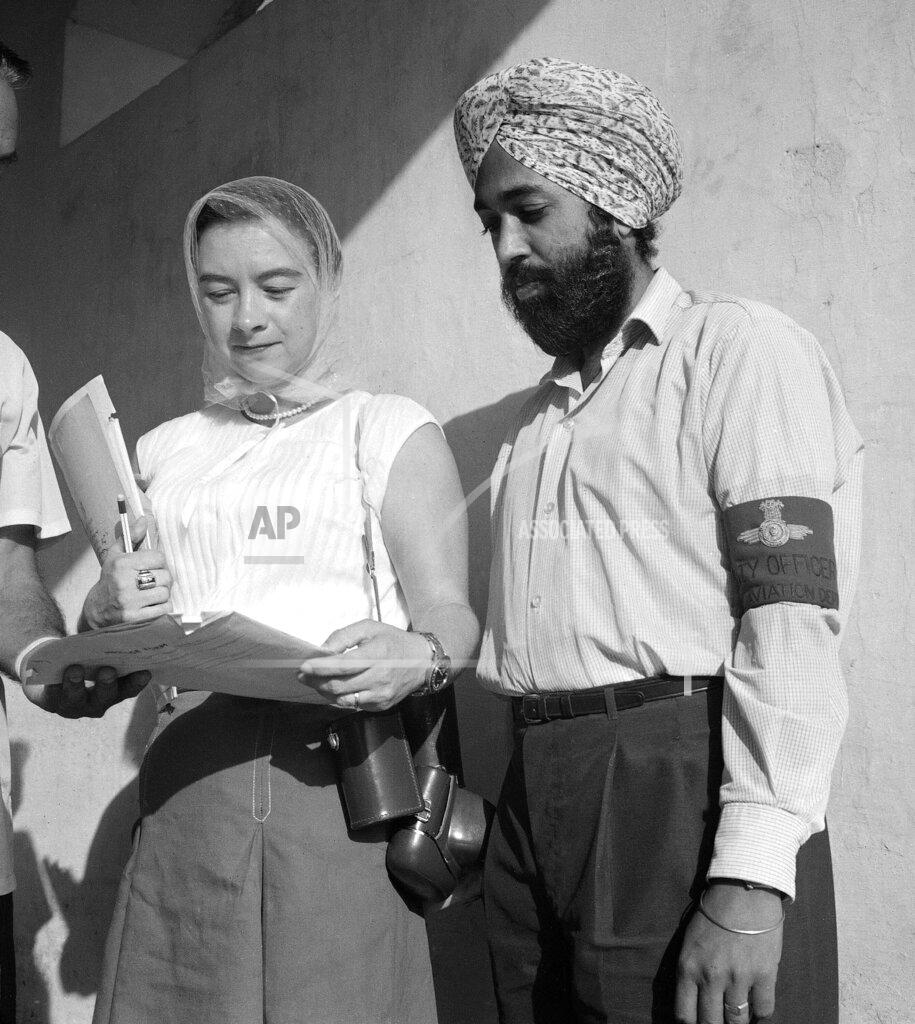
The commander of the United Nations peace force, Lieutenant General Prem Singh Gyani of India, announced earlier that he had reached agreement in principle with Archbishop Makarios, President of Cyprus, on an accord on freedom of movement over the island’s main roads. This was one of the United Nations’ first announced goals in Cyprus. Negotiations continued on implementing of the agreement. It was not known whether the agreement took in the so-called Green Line, the border separating the Greek and Turkish Cypriote communities in Nicosia. Published newspaper reports said it did.
Premier Khrushchev scoffed at Chinese Communist endorsements of war as a way of promoting world revolution today. He declared that the Soviet Union stood for peace and a chance to build a richer life for all people. “Yes, I can confirm that the Soviet party, our people and our government are against war,” he shouted. “We are for peace.” Making his first mention by name of his Chinese Communist opponents in the ideological feud since he began his official visit to Hungary last week, he said:
“The Chinese leaders tell us: If there is war — so what? Suppose one half of mankind will be destroyed. The other half will remain. Time will pass, women will again bear children and mankind will be the same number as before.” A crowd of 4,000 workers at the Borsod chemical plant laughed as he went on: “In my opinion it is not from an excess of brains but from an absence of them that people say such things.”
The Premier praised recent speeches by President Johnson and other American political figures as realistic, as “recognizing the fact that we exist, are developing and have immense strength.” Mr. Khrushchev, whose remarks added up to a vigorous but reasoned rebuttal of his Chinese critics, answered Peking’s charges that he was “praying to the imperialists for peace” by declaring: “Now the balance of forces for the first time in the history of mankind is such that the working people have the stronger muscles, better weapons than the capitalist world. “It is on these that we rely, and also to a little extent on the common sense of those who could start a war.” “The United States is boasting — with our atomic bombs we can destroy Russia several times over,” he said. “But in a lower voice it agrees — Russia can also annihilate us.”
“To reckon who can destroy whom how many times is a stupid form of bookkeeping,” Mr. Khrushchev said. “In the first place everybody conceals how many weapons he has. Secondly, and most importantly, if you have been destroyed once, what difference does it make if you are destroyed several times more?”
Mao Tse‐tung, chairman of the Chinese Communist party, and a visiting military mission exchanged assurances of support in the event of war, sources close to the Government of Prince Norodom Sihanouk said today. It was understood that Mr. Mao gave the assurances to the recent mission led by Lieutenant General Lon Nol, Cambodia’s Defense Minister. Hsinhua, the Chinese Communist press agency, in a dispatch monitored in Tokyo, reported that Premier Chou En‐lai conferred in Peking today with Premier Souvanna Phouma of Laos.
Prime Minister Jawaharlal Nehru declared today that India was preparing to regain territory along her northern border now occupied by Chinese Communist troops. “We want all our territories back,” Mr. Nehru told Parliament. He made a similar statement shortly after the Chinese occupied some of the disputed territory in the summer of 1962. Fighting in the area broke out that October. Defense Minister Y. B. Chavan told Parliament that the Chinese build‐up along the border was heavier now than in 1962, but that India had made preparations against any more setbacks.
Mr. Nehru said that the Indian defense preparations not only were aimed at meeting any future Chinese threats but also sought to “regain the territory lost to China, including Aksai Chin.” His statement was cheered by Parliament members. Aksai Chin is a high plateau in the northern Ladakh area The other disputed area is about 1,000 miles to the east, in the Himalayan Mountains separating Chinese‐held Tibet and India’s North East Frontier Agency. The Prime Minister, whose statement was broadcast by the Government’s All‐India radio, told Parliament he could assure the Indian people that the country’s defense potential was growing. Asked on what basis India would negotiate with the Chinese, Mr. Nehru declared: “On the basis of our own claims.”
Mr. Chavan said the Chinese had moved more regiments and ammunition supplies to the frontier region and built more roads. He said the Government had taken note of a Chinese statement recently that in another Indian‐Chinese clash the odds would be five Chinese soldiers to one Indian, not three to one as in 1962. The defense minister said the Indian Government had made preparations all along the border, including the Ladakh area, drawing on lessons learned in 1962.
Revolutionary leaders made the immediate ouster of “extremists” and pro‐Communists from Congress their first order of business today. The military leaders and powerful state governors who joined forces to overthrow President João Goulart last Thursday are demanding a purge of Congress. The purge would presumably precede the election of General Humberto Castelo Branco, 63year‐old Army Chief of Staff, as interim President this week. He would serve out Mr. Goulart’s term, which ends in January, 1966. The Constitution provides that Congress must elect the interim President.
General Castelo Branco has the united backing of the victorious military forces and of seven of the country’s most powerful governors. There appears to be little question of his election. The general told a cheering crowd of 10,000 outside his residence that all persons responsible for trying to “Communize the country” would be punished. The danger of Communism has not been wiped out, he said. The revolution “must be completed,” he added. Several thousand Communists and leftists have been put under arrest. A search was on for Deputy Leonel Brizola, the leftist brother‐in‐law of Mr. Goulart. Mr. Brizola, known for his denunciations of the United States, was regarded as one of Mr. Goulart’s chief advisers.
Two doctors were arrested today following the death of a 15‐monthold baby during Belgium’s nationwide physicians’ strike. Eric Moons died yesterday in a hospital in Herentals, 10 miles east of Antwerp. The child had severe bronchitis last week. His parents’ attempts to summon aid Saturday went unanswered until late at night. The baby was taken to the hospital in an ambulance. Dr. Emanuel Robrechts and Dr. George Geens, who were in charge of providing emergency service in the Herentals area, are under arrest. The physicians said they were unable to attend the boy until Saturday night because of other urgent demands. They will be brought before the public prosecutor tomorrow. Dutch physicians refused today to support the Belgian doctors in their walkout, which is in its sixth day. Physicians in the Netherlands informed the Belgian Medical Society that they would continue to treat sick Belgians who crossed the border seeking assistance.
Vatican City became associated with the United Nations with the creation of the Permanent Observer of the Holy See to the United Nations, allowing it to participate, but not to vote, in the UN General Assembly.
An anti‐British revolt has broken out in the Maldive Islands, a British protectorate in the Indian Ocean. According to a statement from the Maldivian representative in Ceylon, “angry demonstrators” have made inoperable the British airstrip at Hulule in the Maldives. The damage was described as slight by the British High Commissioner.
Egypt and Belgium restore diplomatic relations.
The U.S. Supreme Court cleared the way today for trial without a jury of the criminal‐contempt charges against former Governor Ross R. Barnett of Mississippi and his successor, Paul B. Johnson Jr. By the narrowest of margins, 5 to 4, the Court held that the Constitution’s jury-trial requirements do not apply to contempt cases. It thus adhered to numerous earlier decisions upholding criminal‐contempt convictions without a jury. But the Court indicated that anyone convicted of criminal contempt by a judge could not be given a sentence more severe than might be imposed for a “petty offense.” This would probably be at most a few months in jail and a small fine. The sentence limitation was a striking departure from anything the Supreme Court had said before. As recently as 1958 it upheld a three‐year sentence for criminal contempt without a jury trial.
The Barnett case arose out of the efforts to enroll James H. Meredith at the University of Mississippi in September, 1962. Governor Barnett and Lieutenant Governor Johnson, as he then was, were charged with obstructing the court orders for desegregation of the university. The judges of the United States Court of Appeals for the Fifth Circuit, whose orders had assertedly been violated, divided 4 to 4 on whether they or a jury should try the case. They certified the question to the Supreme Court and today’s divided decision resulted.
The U.S. Supreme Court raised new barriers to corporate mergers today in two major antitrust decisions. A majority said in one decision that any merger of companies that were “major competitive factors” in a market violated the Sherman Antitrust Act. A dissent said this sweeping rule, in effect, condemned mere “business.” That case was the merger of the First National Bank and Trust Company of Lexington, Kentucky, and the Security Trust Company, also of Lexington. The court found a violation of the Sherman Act’s Section which prohibits combinations in restraint of trade. The second decision overturned the acquisition of the Pacific Northwest Pipeline Company by the El Paso Natural Gas Company. The court said the potential for competition between them made their merger a violation of Section 7 of the Clayton Act, barring mergers that may “substantially lessen competition.”
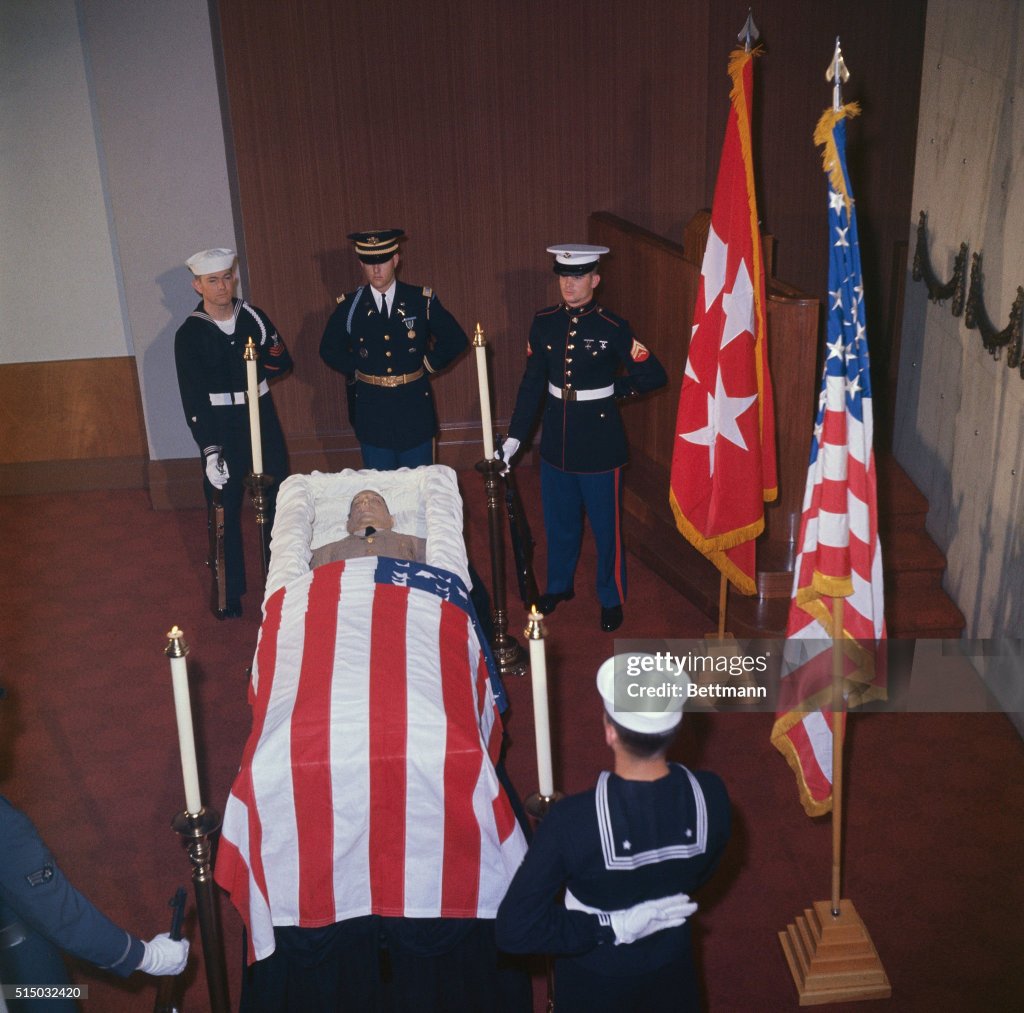
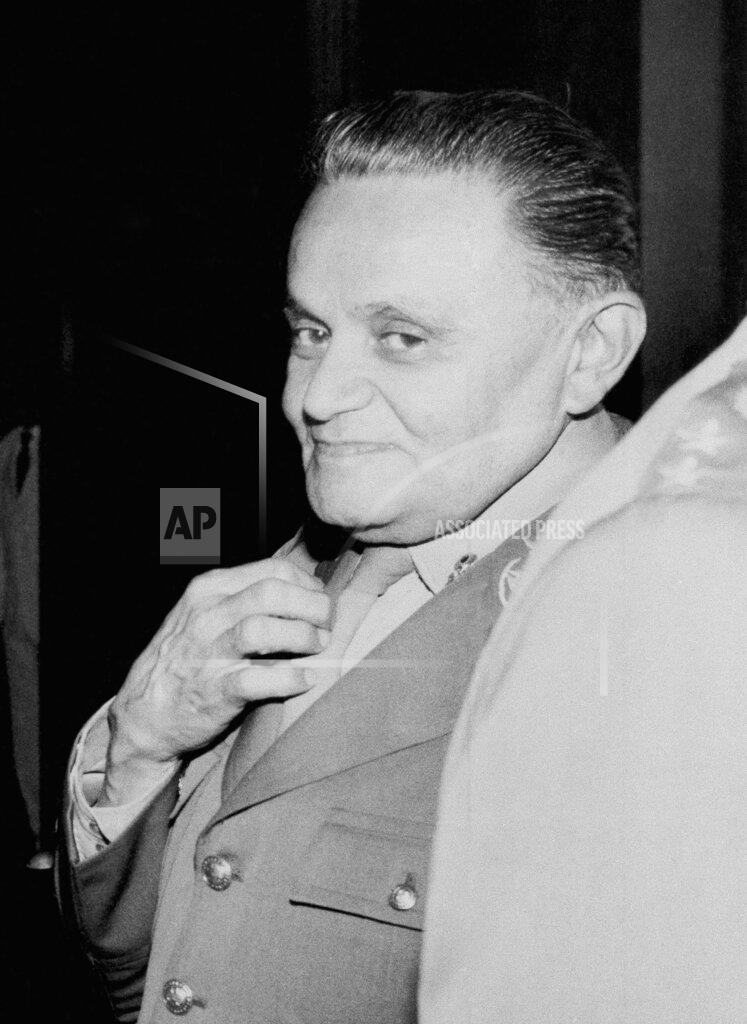
The brass‐studded front doors of the Seventh Regiment Armory, at Park Avenue and 66th Street, will swing open at 10 o’clock this morning to permit New Yorkers to pay their final respects to General of the Army Douglas MacArthur. The public has been invited by the Army to pass the bier, in the armory’s Clark Room, in salute to the general who led the Allied conquest of Japan in World War II and commanded the United Nations forces in the Korean War. The doors will remain open to the public until at least 10 PM today, and later if conditions warrant. General MacArthur, who lived in New York the last 13 years, died Sunday at the Waiter Reed Army Medical Center in Washington. He was 84 years old.
A final farewell was paid to General MacArthur yesterday at the United States Military Academy at West Point, New York. The 2,500 cadets stood in a chill rain as a 19‐gun salute was fired.
A turnout of 1,000,000 voters, close to a record, was forecast today for the Wisconsin Presidential primary tomorrow. The balloting is expected to test Northern sentiment on the civil rights bill pending in Congress. The contest has shaken both the state and national Democratic leadership. President Johnson, Attorney General Robert F. Kennedy and Postmaster General John A. Gronouski have intervened at the last minute to support Governor John W. Reynolds who is running as a favorite son pledged to Mr. Johnson. The three appealed for a big vote for Mr. Reynolds’s delegate slate.
His opponent, Governor George C. Wallace of Alabama, who came to Wisconsin in an effort to draw support away from the civil rights bill, said: “Any votes I get would be significant because I wasn’t supposed to any.” Questioned about the White House intervention, when he held open house for his supporters at the Schroeder Hotel here, he said anybody had the right to free speech. Representative John W. Byrnes is running unopposed in the Republican primary as an uninstructed favorite son. The polls close at 8 PM central standard, 9 PM Eastern standard time.
In 1960 the primary election that gave John F. Kennedy a significant push toward the White House over Senator Hubert H. Humphrey of Minnesota drew a record total of 1,182,160, voters. Mr. Wallace, a leading Southern segregationist, is not expected to elect his full slate of delegates to the Democratic National Convention. But it seemed possible that he might win as many as three of the 46 Democratic delegate votes.
Byron De La Beckwith went on trial for the second time today for the murder of Medgar W. Evers, the civil rights leader who was shot from ambush in the driveway of his home in Jackson, Mississippi last June 12. The trial opened in the same courtroom, before the same judge and attorneys, as the first trial. That proceeding ended February 7 when the jury was unable to agree on a verdict. The most obvious change today was in the defendant, a 43‐year‐old salesman from Greenwood, Mississippi. Gone were his brilliant red tie and socks and flashing smile, displayed so prominently throughout the first trial. Today he wore navy‐blue socks, tie and suit and appeared glum and a little bored as the tedious process of finding a jury got under way.
John Fox 3rd, a young Assistant District Attorney, had told the jury in the first trial that Beckwith’s lack of humility in the courtroom was no mark of an innocent man. Only a handful of spectators was on hand today as District Attorney William L. Waller began picking through a venire of 310 men in search of 12 who would vote to convict a white segregationist of killing a Black integration leader if they believed he was guilty. It was obvious that finding a jury would be even more difficult than in the first trial. Judge Leon F. Hendrick scheduled night sessions to speed the process. When the trial was recessed at 9:30 tonight, not a single juror had been picked. State attorneys had approved 11 prospective jurors, but none of these had been questioned by the defense.
Mr. Waller told a reporter he had no additional witnesses or evidence for the second trial. “Let’s face it,” he said. “A fingerprint is a fingerprint and a gun is a gun. We have done the best we could, and we will try all the harder this time.” An Enfield rifle with a telescopic sight was found in a clump of sweetgum bushes across the street from the Evers home. In the first trial, the state showed that Beckwith had owned the murder weapon and that the print of his right index finger was on the telescopic sight, which Beckwith had bought about a month before the shooting. Two white taxi drivers testified Beckwith had been in Jackson four days before the crime looking for Mr. Evers’s home. Beckwith denied he had shot Mr. Evers but did not say where he had been the night of the crime. He said the rifle had been stolen from his bathroom closet.
Sheriff Bruce Scoggins took three children from a farm couple today after the Arkansas Supreme Court had ruled that the couple could not deny the children an education on religious grounds. Archie Cude, the farmer, told Sheriff Scoggins that he would not take the children back if the state had them vaccinated against smallpox so they could attend school. Mr. Cude said his religious convictions were against medical treatment and if the children were vaccinated, he would consider them unclean. The children are Wayne, 12 years old; Delia, 11, and Linda May, 8.
A gambler testified yesterday at the trial of Roy M. Cohn that he had paid former Chief Assistant United States Attorney Morton S. Robson $33,333 on instructions relayed from Mr. Cohn to escape indictment in a 1959 stock‐fraud case. Mr. Robson, who is to appear today as a witness for the defense, said last night that this testimony by Allard Roen, manager of the Desert Inn in Las Vegas, Nevada, was “an absolute lie.” He said that he had never been in Las Vegas, had never met Roen, had never received money from Roen, and that no one had ever received money from Roen on his behalf.
A group of 16 employees of the IBM company, led by Gene Amdahl and Gerrit Blaauw, filed a patent application for a data processing system machine. U.S. Patent number 3,400,371 would be granted on September 3, 1968.
Dow Jones Industrial Average: 824.76 (+1.77).
Born:
Tim Walz, American politician (Rep-DFL-Minnesota 2007-19), Governor of Minnesota (2019-), in West Point, Nebraska.
Bill Brooks, NFL wide receiver (Indianapolis Colts, Buffalo Bills, Washington Redskins), in Boston, Massachusetts.
Adrian White, NFL defensive back (New York Giants, Green Bay Packers, New England Patriots), in Orange Park, Florida.
Jon Sawyer, NFL defensive back (New England Patriots), in Miami, Florida.
Ken Williams, MLB outfielder and third baseman (Chicago White Sox, Detroit Tigers, Toronto Blue Jays, Montreal Expos), in Berkeley, California.
Amy Jo Ellis, American country-folk singer-songwriter (“Welcome the Day”), in Modjeska Canyon, California.
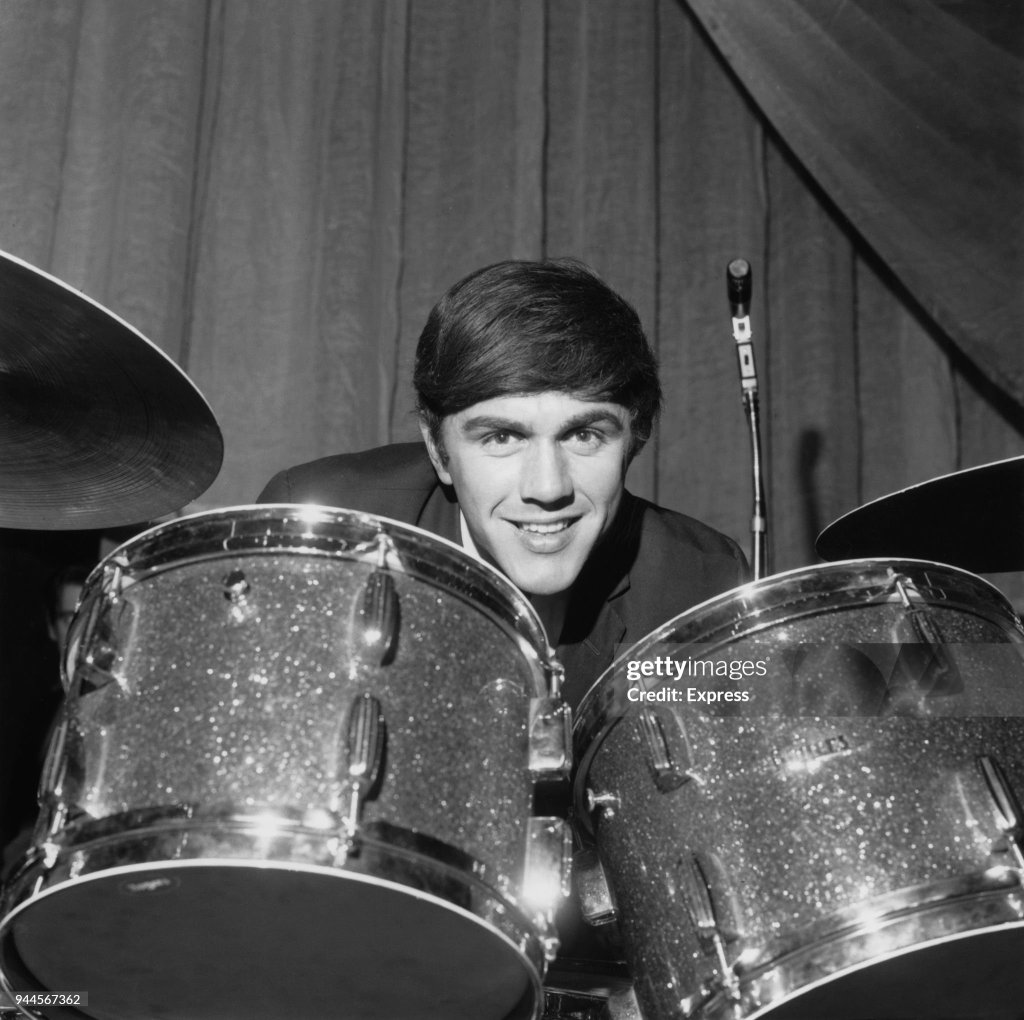
Johnny Dee [DiTeodoro], American heavy metal drummer (Britny Fox – “Boys in Heat”; “King Kobra”), in Conshohocken, Pennsylvania.
 History Diaries