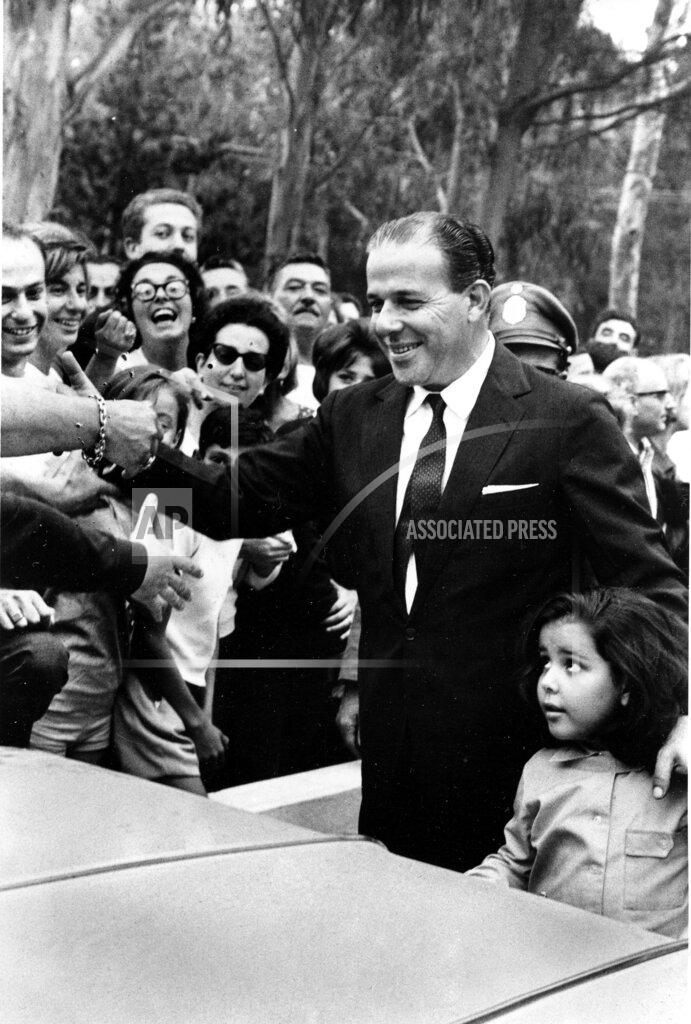
Several thousand persons were reported today to have been arrested throughout Brazil in the drive by the Government against Communists and suspected Communists. A number of those arrested were being held on a ship in the Bay of Guanabara outside Rio de Janeiro. Some of the pro‐Goulart people were reported in hiding in the State of Rio de Janeiro waiting for the opportunity to strike back. Meanwhile, there were complaints in military and civilian circles that not enough was being done to purge Communists from the Government, the military forces and unions. Anti‐Communist newspapers warned that there was a danger the revolution would be lost.
Brazil’s military leaders, backed by 10 state governments, overthrew President João Goulart early Thursday or the ground that he was leading the country toward an extreme leftist dictatorship. In the drive against the Communists, the police reported finding several Communist cells in the rural area with arms, propaganda and large sums in dollars. Among those in the police net were eight Chinese Communists and at least one Cuban. The Soviet Embassy was burning documents to such an extent that the neighbors complained of the smoke. In exile in Uruguay, Mr. Goulart declared “Everyone knows I have never been a Communist” and said he expected to remain active in politics.
Seven of the country’s governors, including those from the four most influential states, called on Congress to elect the army chief of staff, Gen. Humberto Castelo Branco, as President to fill out Mr. Goulart’s term, which ends on January 31, 1966. By law Congress must fill the post within 30 days of Mr. Goulart’s deposition last Wednesday night. It is expected that the decision will be made in the next few days, possibly Tuesday.
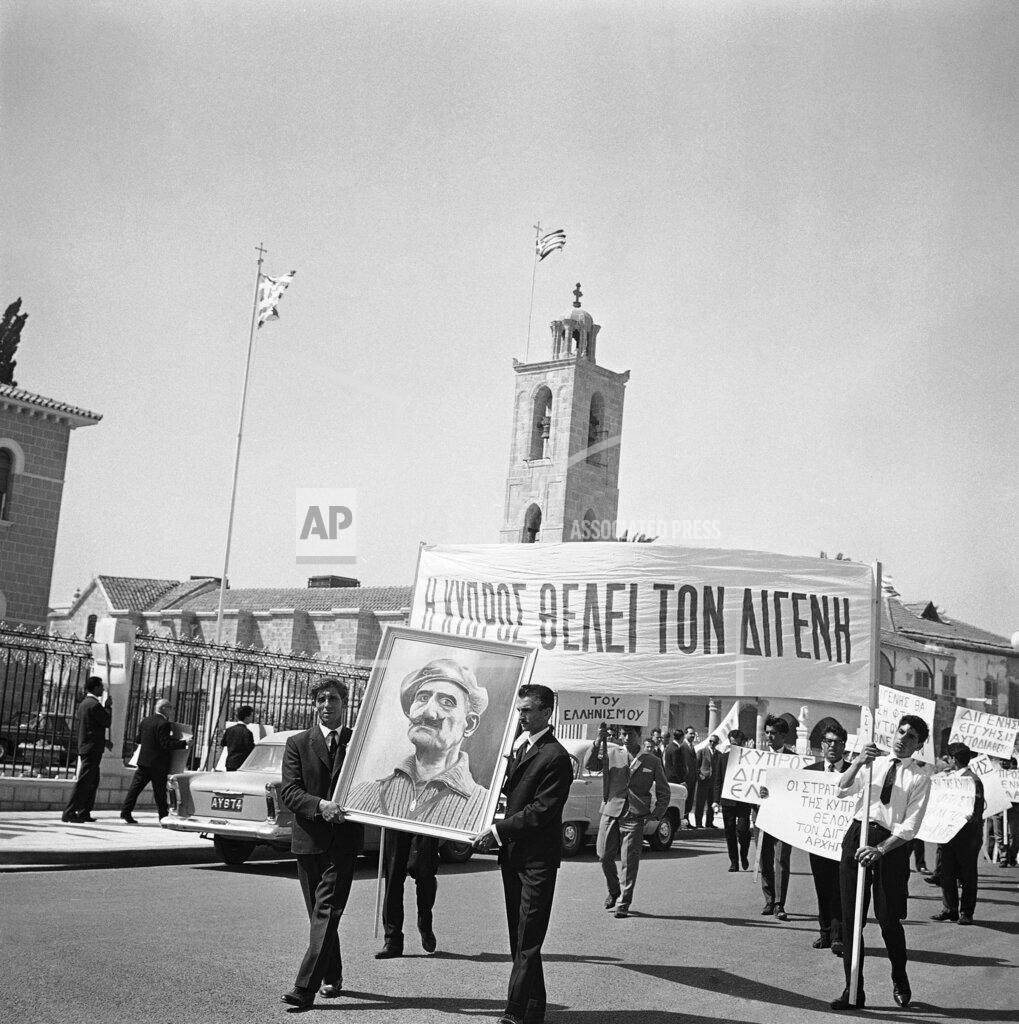
The Turkish Government rejected today a move by the Cypriote President, Archbishop Makarios, to terminate the Cyprus Treaty of Alliance. It called such a move “completely worthless, both legally and effectively.” The position was made known following a three‐hour Cabinet meeting under the chairmanship of President Cemal Gursel. The meeting was attended by top military leaders, including the Chief of the General Staff, General Cevdet Sunay. After the meeting, Premier Ismet Inonu said: “This, of course, is another attempt of Makarios to abrogate the treaty unilaterally. He has tried before, and this attempt will fail exactly as have his previous attempts.” The Treaty of Alliance binds Greece, Turkey and Cyprus together for their common defense. It gives Turkey the right to keep 650 troops in Cyprus and Greece 950 troops.
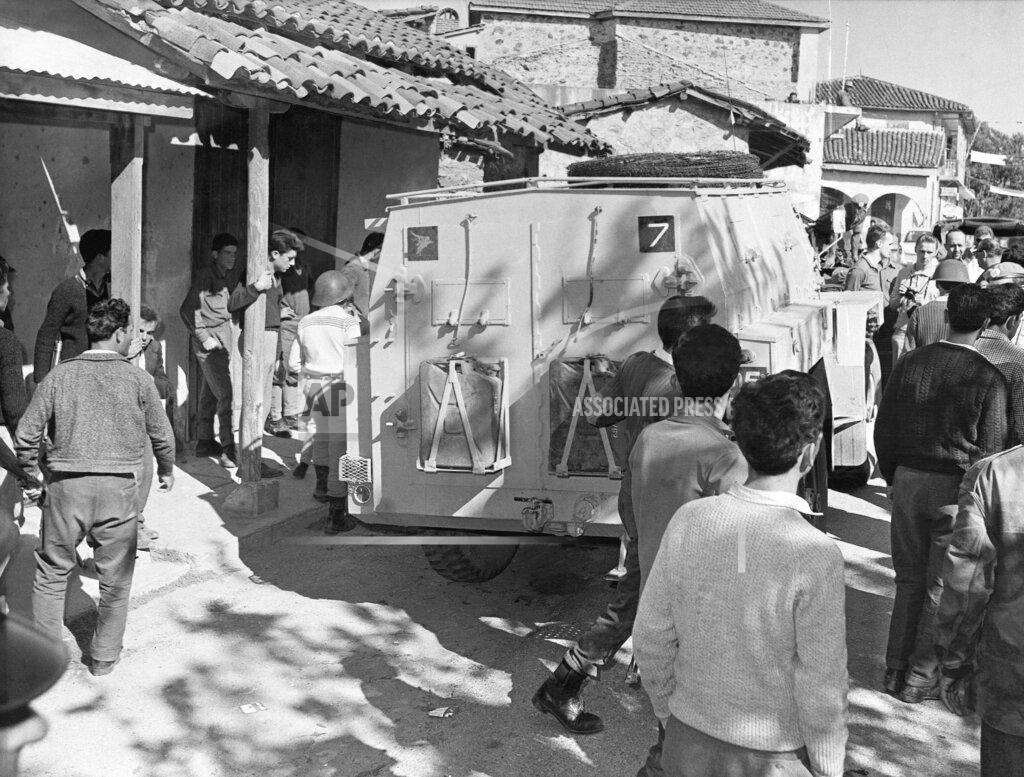
In Cyprus, Greek Cypriotes held 20 British soldiers of the United Nations force at gunpoint for three hours before releasing them. The Associated Press reported from. Nicosia that a Greek Cypriote was shot dead at a Turkish Cypriote barricade. Greek Cypriotes held 20 British soldiers of the United Nations force at gunpoint for three hours here today, demanding that British troops be withdrawn from the area as a condition of the captives’ release. The demand was not met.
There had been scattered fighting during the day in several villages in the rugged area west of Morphou Bay. The region is one of the few where Turkish Cypriotes outnumber Greek Cypriotes. British troops were involved in at least one shooting incident with a force attacking Ayios Theodoros. The Greek Cypriotes contended that British soldiers fired on them in two other skirmishes during the day. While United Nations officials in Nicosia were trying to negotiate the release of the British soldiers, villagers here were working up a fever of excitement.
Then one Greek Cypriote shot another by accident and a third man fired a shotgun blast in the air by mistake. Villagers ran for shelter on all sides. Men clattered onto the tile roofs with automatic weapons to take up positions. Lieutenant Michael Stevens of the Royal Engineers reminded the Greek Cypriote commander that the British troops were still armed and were a rather formidable force. The commander, Michael Christodoulou, then allowed the British troops to go. They carried the wounded man with them to a waiting United Nations helicopter.
The Turkish Foreign Minister, C. Erkin, said tonight: “Turkey refuses to accept such an illegal abrogation. There is no provision in the treaty for its unilateral cancellation or abrogation by Makarios or anyone else.” A number of Turkish warships sailing for their base near Istanbul were recalled tonight and ordered to rejoin a flotilla at Iskenderun in southern Turkey. The warships have been participating in troop‐landing exercises near Iskenderun during the last two months.
A new South Vietnamese draft law authorizes conscription into the Civil Guard and the Self-Defense Corps, the two paramilitary forces that bear the brunt of the fight against the Việt Cộng; both forces have suffered a lack of volunteers and a rise in desertions. The new draft law, just drawn up by the government of Premier Nguyễn Khánh, appears to be designed to bring the South Vietnam Civil Guard and the Self‐Defense Corps up to strength. These so‐called paramilitary forces bear the brunt of most attacks by the Việt Cộng, South Vietnam’s Communist guerrillas. Volunteers have all but dried up in many areas, and the manpower shortage has been compounded by an increasing wave of desertions.
Robert S. McNamara, United States Secretary of Defense, said March 29 that the United States would pay $50 million a year in addition to its current aid of $500 million to help South Vietnam add 50,000 men to its armed forces by conscription.
The Saigon Government, which announced early today that it expected to hold elections for a National Assembly in four to six months, said that the timing would depend on the “degree of security in the country.” According to observers here, the degree of security will depend to a large extent on the success of the government in building and improving the paramilitary units. General Khánh seized power Jan. 30 and rules as the successor to the junta that overthrew the regime of President Ngô Đình Diệm last November 2. President Diệm’s National Assembly was dissolved after his government fell. It is believed that the Self-Defense Corps, which guards villages and the countryside, is at least 30 percent below its authorized strength of 72,000. The Civil Guard, which provides a paramilitary force in each of South Vietnam’s 43 provinces, is believed to be 15 to 20 percent below its authorized strength of 80,000.
Premier Khrushchev strongly defended today his policy of seeking to improve the living standards of the Soviet people. Alluding to the Chinese Communists, the Soviet leader said criticism of this aim as “degenerate” was “crazy.” In another allusion to Peking, which defends Stalin’s dictatorial and aggressive policies, Mr. Khrushchev said: “Anyone who loves Stalin can take him if they like the smell of corpses.” The Soviet Premier spoke to a crowd of about 80,000 gathered to welcome him to Miskolc, a manufacturing center in northeastern Hungary that is the country’s second most important industrial city.
Jigme Palden Dorji, the first Prime Minister of Bhutan, was shot and fatally wounded by an assassin while visiting the city of Phuntsholing. According to early reports, Dorji had been relaxing in a traveler’s home when the killer fired through an open window and shot him in the back. He died the next day. On April 8, a Bhutanese soldier named Jambay Dukpa confessed to firing the shot, after being arrested ten miles away at the city of Tala.
Relations between high United Nations and Congolese officials have broken down in bitterness and misunderstanding. For more than two months, Premier Cyrille Adoula has persistently refused to receive Max H. Dorsinville of Haiti, officer in charge of the United Nations operation here. Mr. Adoula and other leading Congolese officials have openly snubbed Mr. Dorsinville at diplomatic receptions. Until recently Mr. Adoula also refused to receive Mr. Dorsinville’s second in command, Bibiano Osorio‐Tafall of Mexico, who is chief of the United Nations civil operation here.
Elections for the 99-seat Majlis an-Nuwwab began in Lebanon, and would continue on consecutive Sundays until May 3.
A United States Marine Corps F-8C fighter suffered a mechanical malfunction and crashed into a residential neighborhood at Hara Machida near Tokyo, killing four people on the ground and injuring 32 others. The aircraft’s pilot ejected and was not seriously injured.
The first driverless trains run in the London Underground.
U.S. Senator Richard B. Russell of Georgia, who leads the Southern forces against the civil rights bill, said today that voting on amendments to the bill might begin in a week or two. The Senate has been talking about civil rights since March 9. No votes will be possible unless the Southern opponents permit them or two-thirds of the members agree to limit debate by imposing closure. There is no possibility of obtaining enough support for closure until the debate has run many weeks more. The chances of any preliminary voting, therefore, depend on Southern sufferance.
At the moment, the Northern forces favoring the bill are in the middle of a broad exposition of its purposes. They expect to take several more days, possibly the rest of this week. Then, Senator Russell said in an interview, the Southerners will want a week to answer them. At that point, he indicated, some amendments might be put to a vote. First up may be the changes proposed by Senator Everett McKinley Dirksen, Illinois Republican, in the fair employment title. Leaders of the civil rights forces have indicated that they may accept these as not affecting the substance of the title.
The backers of the legislation were encouraged by a letter received from 22 leading lawyers supporting the constitutionality of the fair employment and public accommodations titles. The letter was released over the weekend. Three former Attorneys General — Francis Biddle, Herbert Brownell and William P. Rogers — were among the signers. So were four former presidents of the American Bar Association, David F. Maxwell of Philadelphia, John Randall of Cedar Rapids, Iowa, Charles S. Rhyne of Washington and Whitney North Seymour of New York. The letter was prepared by the co‐chairmen of the Lawyers Committee for Civil Rights Under Law, Harrison Tweed of New York and Bernard G. Segal of Philadelphia.
General of the Army Douglas MacArthur died today after a determined fight for life. He was 84 years old. The general, who led the Allied victory over Japan in World War II and commanded the United Nations forces in the Korean War, died at 2:39 PM at the Walter Reed Army Medical Center, where he had been a patient since March 2. Death was attributed to acute kidney and liver failure. Life had ebbed slowly. The general had undergone three operations to relieve common duct obstruction, esophageal bleeding and intestinal obstruction with perforation.
Despite the operations, blood transfusions and artificial assistance for vital internal functions, he had regaled hospital attendants and visitors with reminiscences until Friday night, when he sank into a “peaceful coma.” The general’s wife, Jean; their only child, Arthur, 26; and his wartime aide and principal assistant, Major General Courtney Whitney, were at the hospital at the end.
President Johnson, leading the nation in mourning, said: “One of America’s greatest heroes is dead. General of the Army Douglas MacArthur fought his last fight with all the valor that distinguished him in war and peace.”
Tributes to the general poured in from around the globe. Mr. Johnson ordered that American flags be flown at half-staff around the world until after the burial next Saturday in the General Douglas MacArthur Memorial in Norfolk, Virginia. The body of General MacArthur was taken to New York City, where it will lie in repose Tuesday. On Wednesday, it will be returned to Washington, to lie in state in the Capitol Rotunda until Thursday noon. Nineteen‐gun salutes will be fired at noon tomorrow and on Saturday at military installations in the United States and in the Pacific area.
Senator J. W. Fulbright said tonight that the cold war had become “an excuse as well as a genuine cause” for the diversion of national energies and resources. The Arkansas Democrat, who last week kindled a controversy in Washington with a speech about what he called myths and realities in American foreign policy, expressed similar complaints about national priorities in domestic affairs. He complained about “morbid” preoccupation with the dangers of Communist aggression abroad and subversion at home. That preoccupation, he said, did not end with the McCarthy era of a decade ago.
The overriding concern with security, Senator Fulbright asserted, produced a blind faith in the military, an inclination to permit the vast military establishment to run itself, a refusal in Congress to supervise and even debate the defense budget properly and a “splendid indifference” to the size and content of that budget. All this is going on, Mr. Fulbright declared, while the nation’s human resources are “being extravagantly wasted and neglected.” Mr. Fulbright, who is chairman of the Senate Foreign Relations Committee, delivered the address that opened a weeklong symposium at the University of North Carolina. The symposium’s subject is “Arms and the Man: National Security and the Aims of a Free Society.” About 1,700 people heard Mr. Fulbright’s speech. It was the Senator’s first venture out of Washington since his controversial address about the “myths” that govern discussions of foreign policy in the United States. Newspapers have been divided for and against that address in the Senate, but a public response of more than 3,000 letters and telegrams has been running about 4 to 1 in approval.
Richard M. Nixon took sharp exception today to Senator Fulbright’s statement last week that the Communist countries do not necessarily present a unified threat to the rest of the world. Mr. Bundy, special assistant to President Johnson on international security affairs, spoke on “Issues and Answers,” an ABC television program. He dissented from the Senator’s assessment of the Cuban Government as a “nuisance” rather than a menace to the United States. The former Vice President said on his arrival here from Hong Kong: “This kind of naive woolly‐headed thinking is what has plagued United States policy at times in the past.” “All free peoples and free governments must stand firm for what is right, for if they do so there is no question about the future of freedom,” he declared at a news conference at the airport.
McGeorge Bundy expressed strong disagreement yesterday with Senator Fulbright over the issue of Cuba, calling it a “center of infection and a menace” to democratic regimes in the Western Hemisphere. As his plane circled over the airport in Portland, Oregon today, Senator Barry Goldwater was asked if it were true that President Kennedy had once advised him to stay out of the primaries if he wanted the Republican nomination. It was true, Mr. Goldwater said, and, “with hindsight,” he wished he had heeded the President’s advice, with one exception — the California primary on June 2. “That’s a big one,” he said, “and that delegation now has to stay hitched.” Moments later he alighted and started seeking votes for the Republican primary here. He had come from California, where 86 votes are at stake, to Oregon, where on May 15 voters will decide which candidate gets the support of the state’s 18 delegates. The Senator will be campaigning here Monday and Tuesday and will return to Washington Tuesday night.
Bill Bradley of Princeton, Walt Hazzard of the University of California at Los Angeles and four other players were selected yesterday by unanimous votes of the United States Olympic basketball committee for the twelve‐man team in the 1964 Olympic Games at Tokyo.
Born:
Christopher Reid, formerly known as Kid, comedian, actor, and rapper of the hip-hop duo Kid ‘n Play; in The Bronx, New York, New York.
Gary Hershberger, American actor (“Twin Peaks”, “Six Feet Under”), in Inglewood, California.
Robert “Bob” Kaehler, American rower (Olympics, 5th, 1992, 1996), in Burlingame, California.
Michael Adams, NFL defensive back (New Orleans Saints, Phoenix Cardinals), in Shelby, Mississippi.
Charles Wright, NFL defensive back (St. Louis Cardinals, Dallas Cowboys, Tampa Bay Buccaneers), in Carthage, Missouri.
Ted Chapman, NFL defensive end (Los Angeles Raiders), in Philadelphia, Pennsylvania.
Mike Champion, NBA small forward (Seattle SuperSonics), in Everett, Washington.
Died:
Douglas MacArthur, 84, U.S. Army five-star general; served in World War I, World War II, and the Korean War; later military governor of occupied Japan.
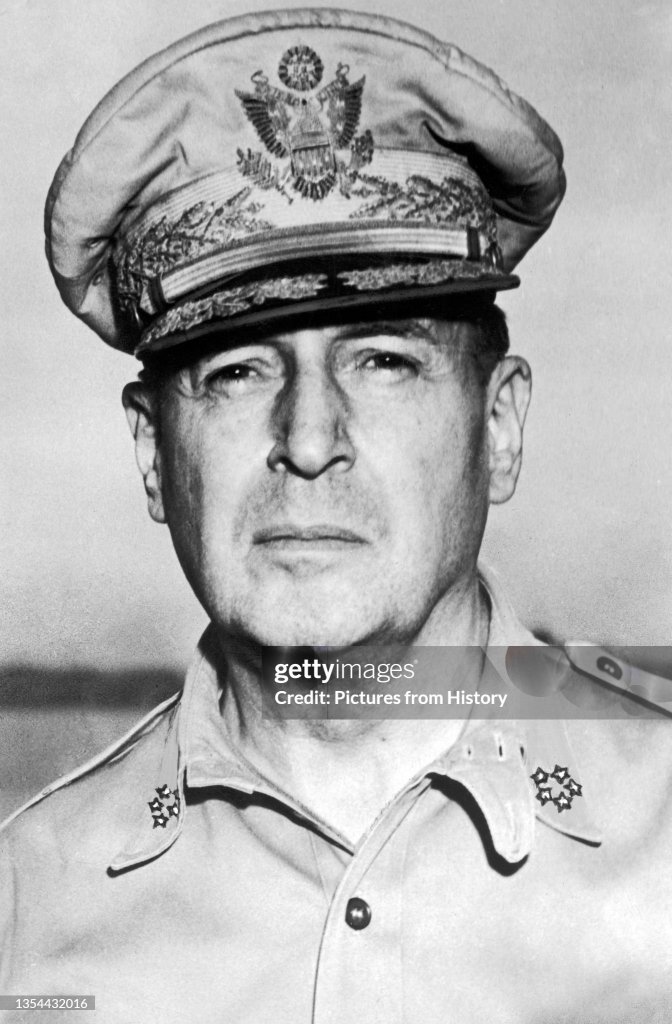
[Ed: Douglas MacArthur. Larger than life, with an ego to match. Brilliant at times; at other times, a pompous fool. Courageous without a doubt; as vain as any Hollywood prima donna. Perhaps a better politician than a general. A flawed but fascinating figure.]


 History Diaries