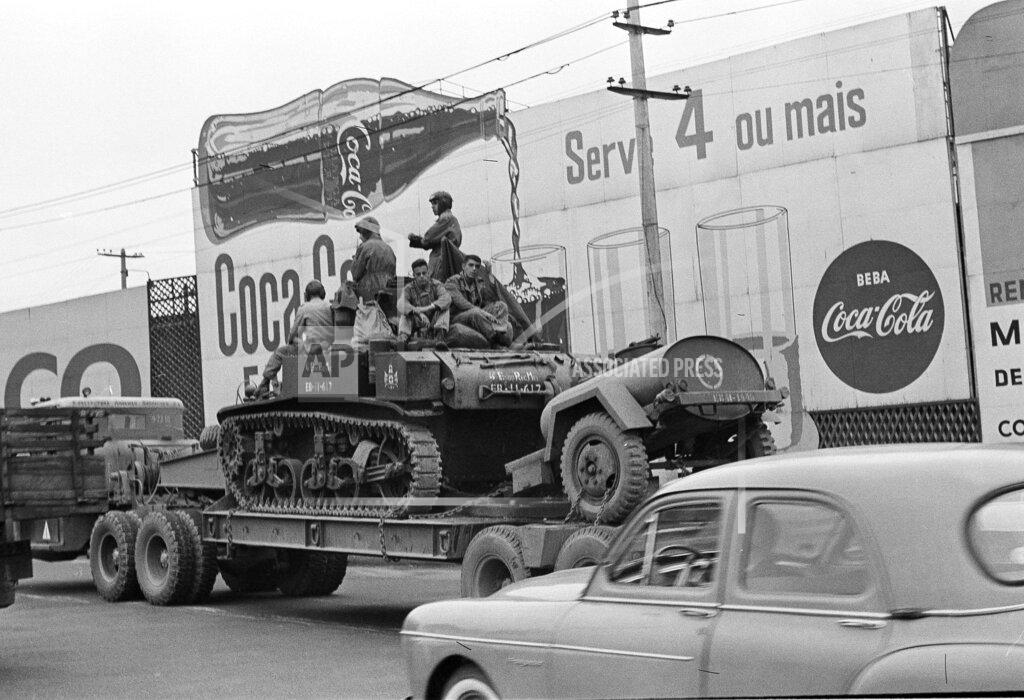
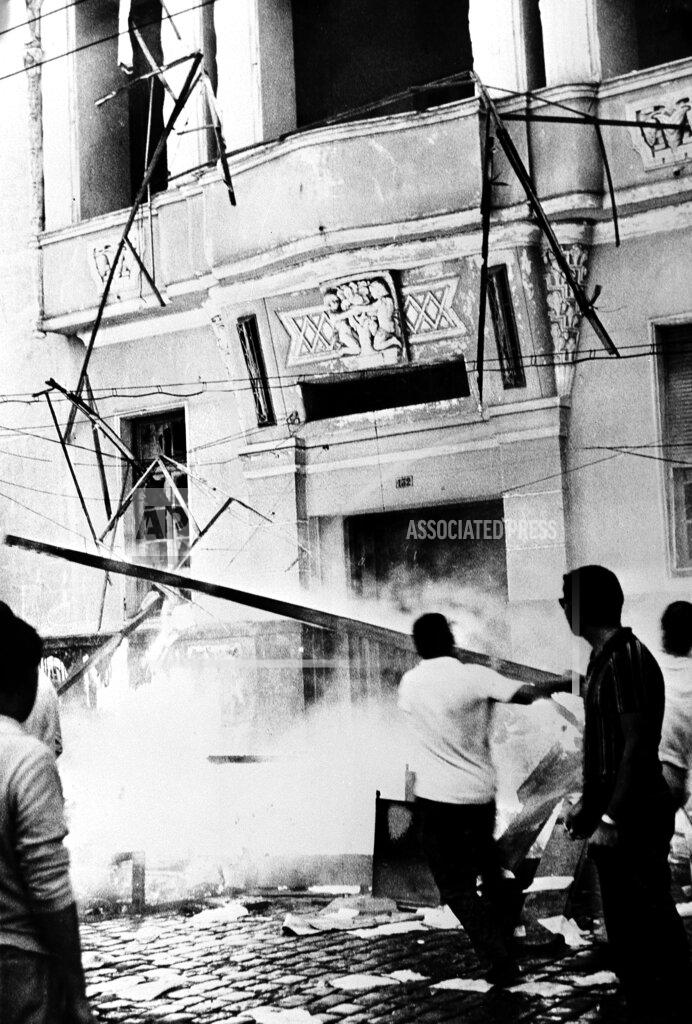
Ranieri Mazzilli, the presiding officer of Brazil’s Chamber of Deputies, was sworn in as the new President of Brazil, while João Goulart abandoned further efforts to fight the coup leaders. Goulart and his family drove from his ranch in São Borja, and crossed the border to reach Santo Tomé in Argentina. U.S. President Lyndon Johnson, who was in favor of the ouster of Goulart by anti-Communist forces, sent a cable to Mazzilli, and called the relationship between the U.S. and Brazil “a precious asset in the interest of peace and prosperity and liberty in this hemisphere and in the whole world.” Mazzilli would step down on April 15 when the Brazilian Congress elected Humberto Castelo Branco to the Presidency.
Mr. Mazzilli took the oath of office at 4:15 o’clock this morning (2:15 AM New York time). A “march of the family for God and liberty,” which had been scheduled before the revolution as a demonstration against Communism and the Goulart Administration, turned into a victory celebration here. Almost a million men, women and children marched soberly but triumphantly. The march had been organized by a number of religious and democratic anti-Communist groups that sprang up as the Goulart Government intensified its leftist programs, with Mr. Goulart demanding changes in Brazil’s social, economic and constitutional structure.
President Johnson sent his “warmest wishes” tonight to Brazil’s provisional President, Ranieri Mazzilli. The resumption of large‐scale United States economic aid to Brazil was in the wind. In a message sent 12 hours after Mr. Mazzilli was sworn in to replace João Goulart, Mr. Johnson told Mr. Mazzilli that the United States watched with “anxiety” Brazil’s economic and political difficulties. The President’s message made it clear that the United States had rapidly concluded that the constitutional transfer of power by Brazil’s Congress to Mr. Mazzilli removed any problem over recognizing the new regime. Because Mr. Mazzilli’s succession followed Brazil’s constitutional procedure, it was felt that there was no need for the United States to interrupt diplomatic relations.
The President’s message said: “Please accept my warmest good wishes on your installation as President of the United States of Brazil. The American people have watched with anxiety the political and economic difficulties through which your great nation has been passing and have admired the resolute will of the Brazilian community to resolve these difficulties within a framework of constitutional democracy and without civil strife. The relations of friendship and cooperation between our two Governments and peoples are a great historical legacy for us both and a precious asset in the interests of peace and prosperity and liberty in this hemisphere and in the whole world. I look forward to the continued strengthening of those relations and to our intensified cooperation in the interests of economic progress and social justice for all and of hemispheric and world peace.”
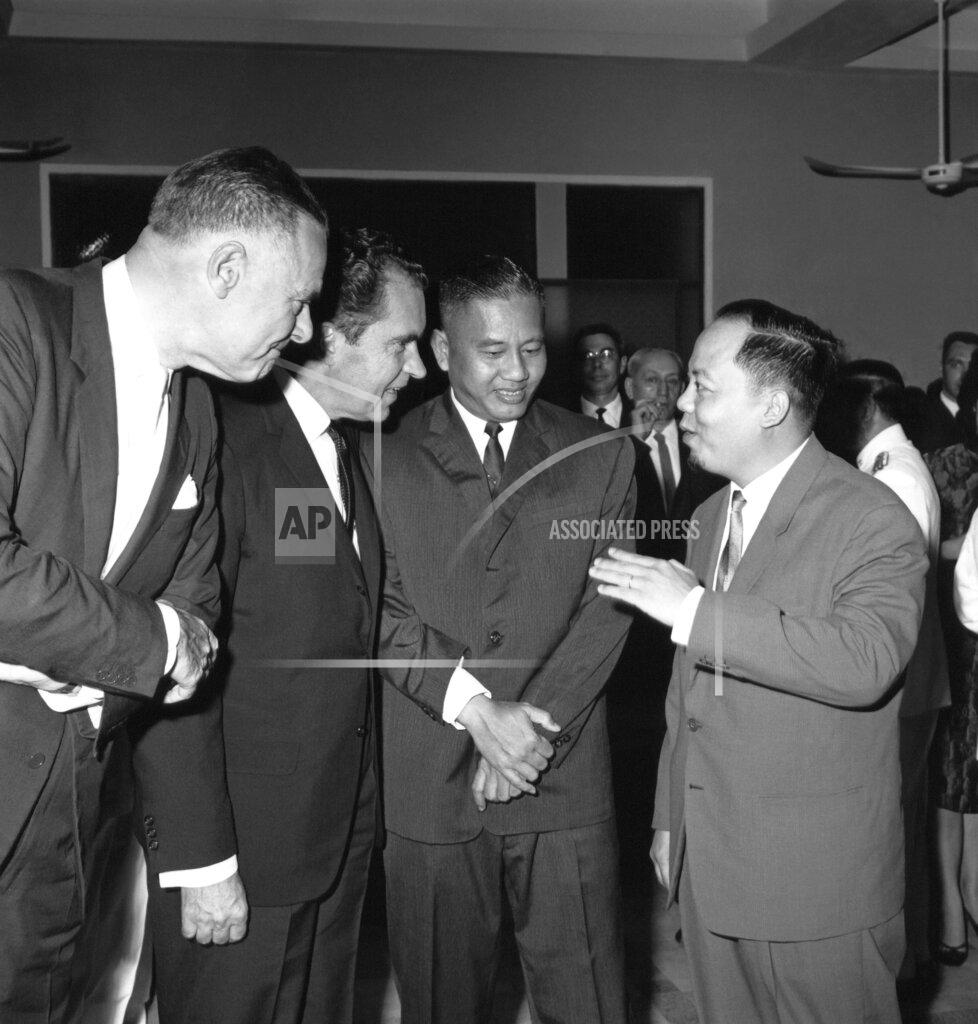
Richard M. Nixon said today that neutralization of Vietnam, or a withdrawal of United States forces from the country, would insure a Communist victory. The 1960 Republican Presidential candidate, who flew to the battle‐weary South Vietnamese countryside, said that those who talked about such moves “should come here and see these children and their elders — people who just want to live in peace.” Standing beside the United States Army helicopter that brought him to the beleaguered hamlet of Vĩnh An, 30 miles southwest of Saigon, Mr. Nixon declared that his trip to South Vietnam had reinforced his belief that the United States was “properly committed to help these people.” Mr. Nixon’s comments appeared to reflect guarded approval of the policies enunciated recently by Secretary of Defense Robert S. McNamara.
U.S. Senator Wayne Morse, Democrat of Oregon, said today that he planned to introduce a resolution asking the Senate to go on record as to whether or not it supports the Administration’s policies in South Vietnam. At the same time, Mr. Morse called on President Johnson to make known whether he condoned an alleged charge by the South Vietnam Premier, Major General Nguyễn Khánh, calling Mr. Morse a traitor to United States interests for urging withdrawal of American forces from Vietnam. “I want to know the position of my government on that charge, and I want to know quickly,” Mr. Morse declared in a Senate speech delivered on a point of personal privilege. “I want to know the position of President Johnson, too.” “I shall await the position of the President of the United States on the statement of this tinhorn tyrant dictator,” said Morse.
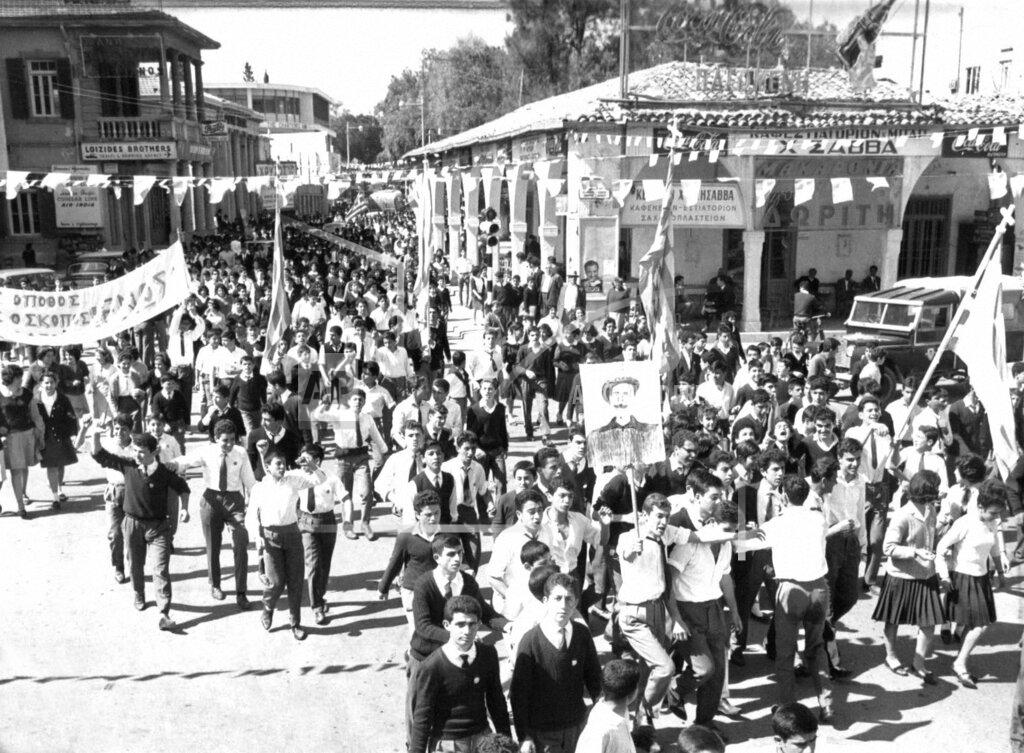
Joint patrols of United Nations troops and Greek Cypriote policemen roamed through Nicosia and into the countryside for the first time tonight. Under an extension of the cease‐fire agreement in Nicosia, two Greek Cypriote police vehicles were put into the patrol operation. Each vehicle carried two men of the British units in the United Nations peace‐keeping force and two Greek Cypriote policemen, all armed with automatic weapons. The cease‐fire agreement provided that British troops and Greek Cypriote policemen would control movement on the so‐called green line truce boundary that runs through the middle of the city.
Tonight, this mixed patrol covered whole sections of Nicosia and went beyond the edge of the town. It stayed clear of the Turkish quarter. Yet the move was, accompanied by other signs that the political winds were blowing in the Greek Cypriotes’ favor. Greece has promised Archbishop Makarios, President of Cyprus, her support for terminating the treaty of alliance by which Greek and Turkish troops are stationed permanently on the island.
Turkish troops, keeping the strategic positions they took up when warfare between the Cypriote communities was renewed last December, have been a source of strength to the island’s Turkish minority. Fazil Kutchuk, Vice President of Cyprus and leader of the Turkish minority, rejected yesterday a proposal by General Prem Singh Gyani, commander of the international force, that the island’s police posts and checkpoints be manned jointly by United Nations forces and Greek Cypriote policemen. Without an assurance that the United Nations would be in command, the proposal would mean the surrender of his people, the Turkish leader said.
A large underground nuclear explosion two years ago in Soviet Central Asia was detected with unexpected clarity by seismic stations in the central United States, some 6,000 miles away. The previously undisclosed detection, along with other recent seismological experiments, is forcing American scientists to revise their theories about how seismic signals are propagated by underground nuclear explosions. The revision, in turn, is opening up promising new possibilities for developing a detection system for monitoring a ban on underground nuclear tests. It now appears that there are certain regions that could serve as extremely sensitive listening posts for picking up the weak seismic signals generated by an underground explosion.
The Soviet test took place on February 2, 1962, at the Soviet nuclear weapons proving ground in the Semipalatinsk area of Central Asia. The United States Atomic Energy Commission announced the same day that the Soviet Union had “apparently” conducted an underground test, but the agency declined to say whether the explosion had been detected in this country. One apparent reason for the reluctance was that the explosion came in the midst of the test ban negotiations when the United States was arguing that detection stations inside the Soviet Union would be needed to monitor Soviet underground tests. Confirmation that the explosion was widely detected by seismic stations in the United States came from Dr. Charles C. Bates in a technical paper recently presented to the Seismological Society of America. Dr. Bates is in charge of Project Vela Uniform, the Government program to develop better methods for detecting underground tests.
The Soviet leadership, after six months of public silence, harshly condemned today the ideological position and political tactics of Communist China. It also declared that it favored a world conference of Communist parties to discuss “basic problems” facing them. The Russians accused the Chinese leaders of “ideological apostasy.” This, in the view of Western observers, came closer than any previous Soviet statement to an attempt to read the Chinese Communists out of the international Communist movement. The accusation was contained in an editorial in Pravda, the organ of the Soviet Communist party. A summary of the editorial was published by Tass, the official press agency,
Tass said that Pravda would also contain a seven‐page text of a speech made by Mikhail A. Suslov, the party’s chief ideologist, a month and a half ago. Mr. Suslov outlined the Soviet party’s stand on basic ideology and its attitude toward Communist China at a meeting February 14 of the Central Committee of the Communist party. Several thousand party functionaries who deal with ideological questions were present at the meeting. The publication of Mr. Suslov’s speech had been predicted several times by party sources but was postponed pending the outcome of exchanges between Soviet and Chinese representatives and a mediation attempt by the Rumanian Communist leaders. Mr. Suslov charged that the Chinese leaders through their policies and activities had become the “principal threat to the unity of the Communist movement.”
The Soviet Union joined Arab countries today in demanding that the Security Council condemn Britain for an air raid on Yemen last Saturday. The British were retaliating for Yemen attacks on the British‐protected Federation of South Arabia. They called also for action to make the British withdraw all troops from the area, including the major base at Aden. Sir Patrick Dean of Britain said his country was prepared to negotiate for a demilitarized zone on both sides of the frontier to guard against further incidents.
Alfons Gorbach resigned as Chancellor of Austria and was succeeded by Josef Klaus, who would serve until 1970.
The Soviet Union launched Zond 1 on a flyby of the planet Venus. Although the probe would pass within 100,000 kilometers (62,000 miles) of that planet on July 18, no data could be received because of a failure of transmitters in May and in June.
Senators Jacob K. Javits and Wayne Morse complained today that the section of the civil rights bill banning discrimination in publicly owned facilities needed strengthening. The New York Republican and the Oregon Democrat are the bipartisan captains in charge of Title III of the bill, but their lengthy, heavily legal analysis of that section today seemed more in the nature of a criticism than a defense. Senator Morse said it was “narrow and limited” and only a “pale” reflection of the controversial Part III of the 1957 act, which was passed by the House and deleted in the Senate.
Senator Javits said he would later offer three amendments to give the Attorney General more power and provide “meaningful” civil and criminal penalties. Before setting out on his analysis, Senator Javits said he had been disturbed by newspaper headlines suggesting that the “G.O.P. will back changes in rights bill” to be proposed by the minority leader, Everett McKinley Dirksen of Illinois. Two days ago, Mr. Dirksen told reporters he had found considerable support in the Senate Republican Policy Committee for technical amendments he intended to offer to the fair employment section of the bill.
He said further that some of his party colleagues were sympathetic to another proposal to make compliance with the ban on discrimination in public accommodations voluntary for a stated period before resort to court injunctions for enforcement. Today Senator Javits said that while there might be amendments, it was “certainly jumping the gun to assume they will be ‘weakening’.” Furthermore, he declared, it is “inaccurate” to say that the Republicans have reached no clear consensus on the bill. In his judgment, he said, a great majority of the Republicans “are for all the titles in the bill before us.”
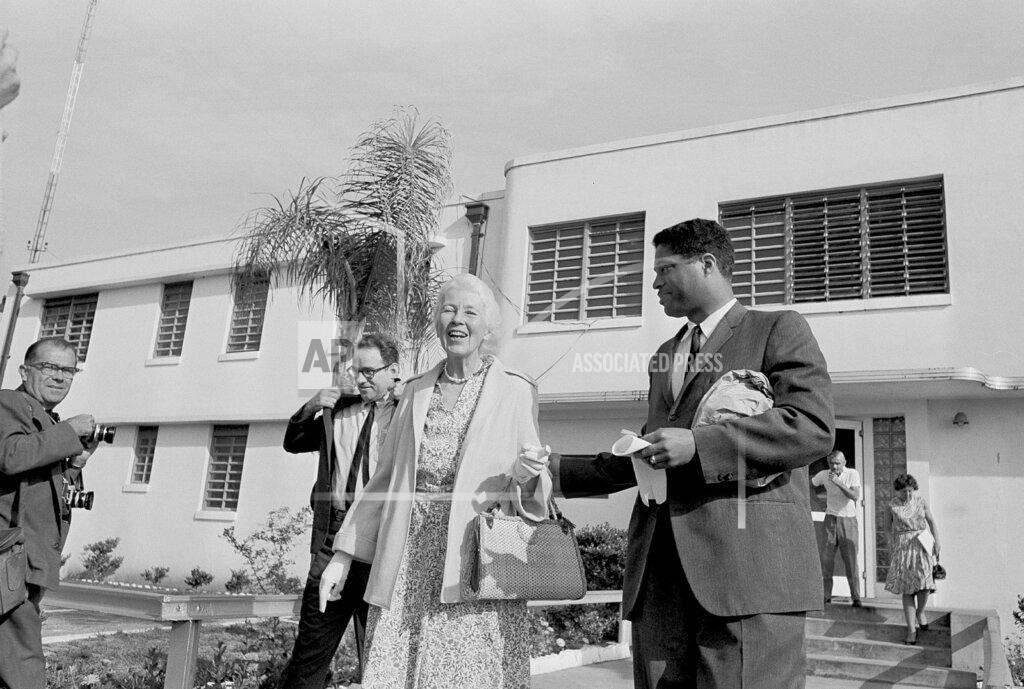
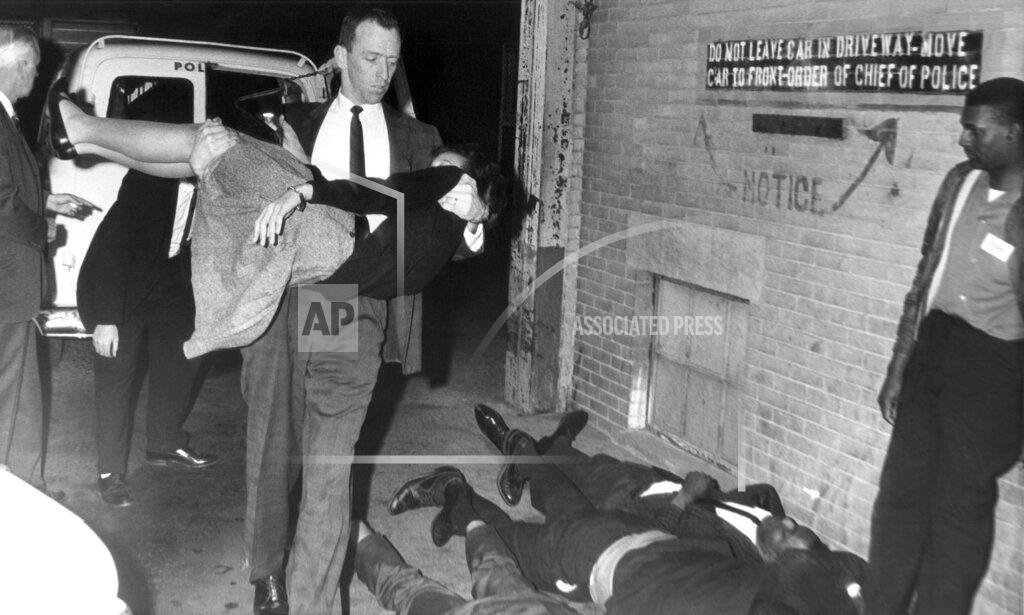
Mrs. Malcolm Peabody, 72, mother of Massachusetts Governor Endicott Peabody, was released on $450 bond after spending two days in a St. Augustine, Florida jail, for participating in an anti-segregation demonstration there. The 72‐year‐old grandmother, whom Blacks in St. Augustine consider symbolic of Northern white friendship, told 220 persons at a mass meeting tonight that “I feel as if a wall were crumbling.” “Goodbye for the present,” she said. She said she planned to catch a plane back to Boston early tomorrow morning. With her announcement, the civil rights drive in St. Augustine, the nation’s oldest city, seemed to lose some of its urgency. No demonstrations or arrests were reported today in the East Coast Florida town, town, where 283 persons have been arrested since last Saturday, 141 of them 16 years or younger.
Governor Rockefeller ended four days of campaigning along the West Coast today with another challenge to Senator Barry Goldwater on the issue of rightwing extremism. But there was strong evidence that the New York Governor was flying home with the feeling that Ambassador Henry Cabot Lodge had become an even greater threat than the Arizona conservative in the race for the Republican Presidential nomination. Mr. Rockefeller who got a warm, if not always enthusiastic, reception in both Oregon and California, struck again and again at Mr. Goldwater in a news conference here on the University of California campus and in a speech to 3,000 students.
Governor William A. Egan plans to ask a joint session of the Legislature tomorrow to double Alaska’s bonded indebtedness. The Governor announced here today he would fly to Juneau, the capital, and urge legislators to vote a 30‐year bond issue of $50 million. The money would be used in the reconstruction of areas devastated by last week’s earthquake and tidal waves. This step by Mr. Egan is preliminary to his weekend flight to Washington to consult with President Johnson and a new federal construction and planning committee for Alaska. The Governor hopes to persuade the government to grant up to $500 million to put Alaska back on its economic feet. “I want the Legislature in session when I get back, so that I can present a full report of what can be expected from the federal government,” Mr. Egan told a news conference in his trailer office here.
William Denis Fugazy, a former friend and business associate of Roy M. Cohn, testified in Federal Court yesterday that Mr. Cohn induced him to lie to a grand jury in 1962. His testimony supported the Government’s charge that Mr. Cohn engaged Mr. Fugazy and others in an elaborate conspiracy to cover up Mr. Cohn’s involvement in a plot that enabled four swindlers to escape Federal indictment. The indictments were threatened in the $5 million United Dye and Chemical Corporation stock fraud investigation in 1959. But Mr. Fugazy denied the Government’s contention that Mr. Cohn used him as a pipeline to communicate threats to two of the swindlers who had pleaded guilty and were testifying against Mr. Cohn before the grand jury.
A Federal grand jury today indicted Charles L. O’Brien, an associate of the Teamsters Union president, James R. Hoffa, on charges of offering a juror $25,000 in an effort to upset Mr. Hoffa’s recent jury-tampering conviction in Chattanooga, Tennessee. Mr. O’Brien, constant companion of Mr. Hoffa at the latter’s trials here and previously at Nashville, posted a $15,000 bond with United States Commissioner H. Arnold Morgan and was released. His arraignment date will be set later. The indictment charged that Mr. O’Brien offered the bribe to a juror in Mr. Hoffa’s trial here last month on jury‐tampering charges to get the juror to swear that the Teamster official did not get a fair trial. Mr. Hoffa and three co‐defendants were convicted of jury‐tampering in Mr. Hoffa’s 1962 conspiracy trial in Nashville and have been sentenced to prison.
The court‐appointed defense attorney for the accused slayer of two Queens, New York women said last night that he believed his client had also murdered a third victim. The lawyer, Sidney G. Sparrow, said he had reached the conclusion after conferring with the defendant Winston Mosely, a 29‐year‐old business‐machine operator, who has confessed to the three killings. Moseley is accused of slaying Catherine “Kitty” Genovese, 28, a barmaid, on March 13, and Anne Mae Johnson, 24, a housewife, on February 29. He also told the police he killed 15‐year‐old Barbara Kralik in her home last July 20. A second man, Alvin L. Mitchell, 18, had previously confessed to having stabbed Miss Kralik to death. He is now awaiting trial. Mr. Sparrow said he planned to have Moseley plead “guilty by reason of insanity.” The attorney said he was making public his belief on the third killing to avoid “any miscarriage of justice.” The second confession is still being investigated.
The oldest ancestors of man yet known, a race of upright but small‐brained toolmakers that lived in East Africa about 1,750,000 years ago, have been given the official name of Homo habilis. The name was taken from the Latin, meaning “able, handy, mentally skillful, vigorous.” The bone fossil remnants of these men were found, mostly between 1961 and 1963, in the Olduvai gorge of Northern Tanganyika by Dr. Louis Leakey and his wife, Mary, also a well-known scientist. Reports of these discoveries have been made previously.
The final step was taken today in changing the name of Cape Canaveral, Florida, to Cape Kennedy. The United States Board on Geographic Names distributed its official decision list showing the new name. The board, at the suggestion of President Johnson, approved the change last November as a tribute to the late President. Although that action was effective immediately, the publication of the decision list completes the legal procedure.
A 36-hour open-sea qualification test, using Gemini static article No. 5, began in Galveston Bay. The test ended after two hours when the test subjects became seasick. Among the technical problems encountered during this two-hour exposure were the failure of one of the suit ventilation fans and structural failure of the high-frequency whip antenna.
Dow Jones Industrial Average: 820.87 (+4.79).
Born:
John Brandes, NFL tight end (Indianapolis Colts, Washington Redskins, New York Giants, San Francisco 49ers), in Fort Riley, Kansas.
Lee Getz, NFL guard (Kansas City Chiefs), in Hunterton County, New Jersey.
Brendan Folmar, NFL quarterback (Detroit Lions), in Birmingham, Alabama.
Died:
Carlos Hevia, 64, President of Cuba for three days (January 15 to January 18) in 1934.


 History Diaries