
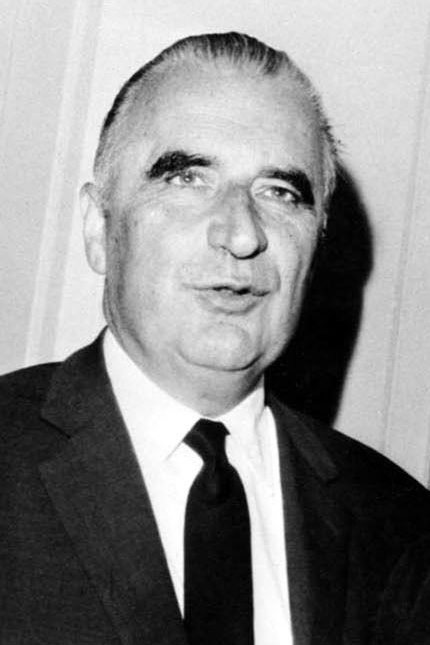
President Georges Pompidou of France died tonight at the age of 62. The cause of death was not immediately announced. But for more than a year, there had been ceaseless speculation about his health, causing political uncertainty as he reduced his work schedule and his government temporized on many major issues.
The day after Newsweek magazine’s April 8 issue revealed that Georges Pompidou, President of France since 1969, was ill with cancer and might soon be resigning, the President’s office abruptly canceled that day’s scheduled meeting with the President of Rwanda, Juvénal Habyarimana, followed by a cancellation of all engagements for the rest of the week because of illness. Pompidou stayed home at his private apartment on Quai de Bethune on the Île Saint-Louis in Paris, and was found dead at 9:00 in the evening. The Agence France-Presse news agency sent a bulletin at 9:58 announcing “M. Pompidou c’est mort.” Pompidou, who was later found to have complications from Waldenström macroglobulinemia, a form of leukemia, was 62. Before becoming president, he had served as prime minister from 1962 to 1968. The President of the French Senate, Alain Poher, became the Acting President of France until an election could be held to determine a new President. Poher had previously served as acting president after the death of President Charles de Gaulle, until Pompidou’s election as president.
Mr. Pompidou was initially a protege of Charles de Gaulle. He became de Gaulle’s Premier, was dismissed from that post in 1968, but was finally elected on June 15, 1969, as the second President of the Fifth Republic, which was created by de Gaulle in 1958.
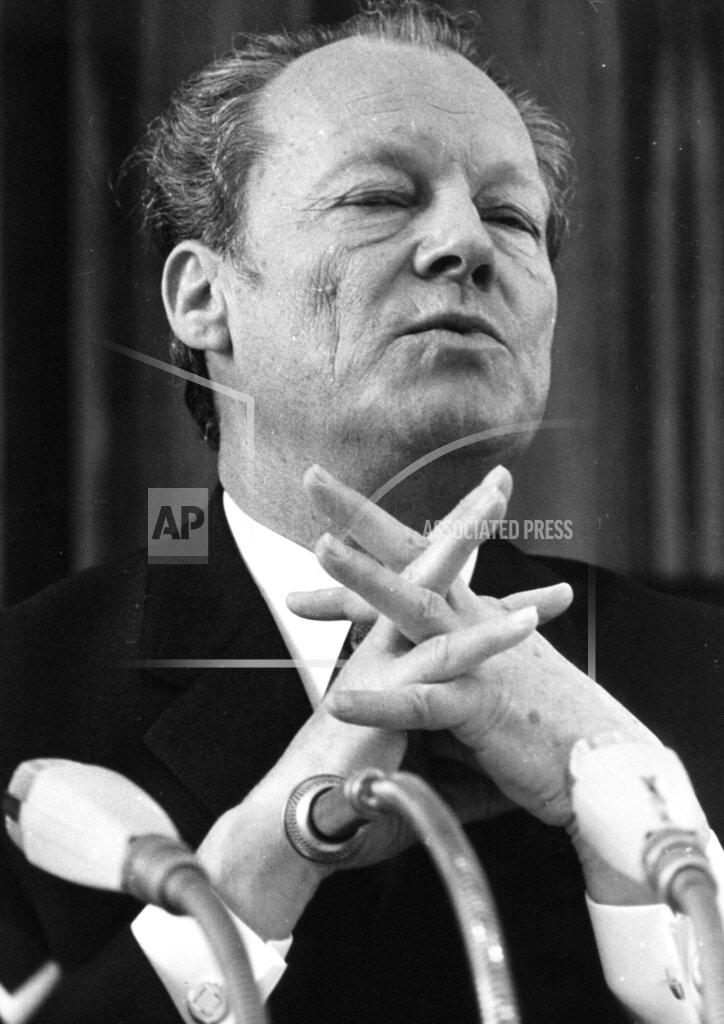
West German Chancellor Willy Brandt announced a purge of left-wing radicals in his ruling Social Democratic Party, leaving no doubt he holds extremists in the party’s youth wing partly responsible for the party’s recent setbacks in state and communal elections. Brandt told a Bonn news conference his party’s policy was firmly based on the Bad Godesberg program of 1959, when the party shed its Marxist image and turned into a broad-based mass organization aimed at attracting the moderate vote.
Alexander Solzhenitsyn told a Swiss newspaper he is convinced he will some day return to Russia because conditions there will change. The banished author said in an interview in the Neue Zuricher Zeitung that until his return, he will live in Zurich where he has found a “most friendly welcome.”
Britain’s prospects of being self-sufficient in oil were brighter with the discovery of a deposit east of the Shetland Islands in the North Sea. The Burmah Oil Co. said it hoped to produce between 150,000 and 330,000 barrels of oil a day from the new field.
A federal grand jury in Baltimore returned a 23-count indictment against five persons, including three Americans, on charges of conspiring to smuggle arms to the Irish Republican Army. The five had illegally purchased 158 AR-15 rifles and six handguns, the grand jury said. Those indicted were: Henry Hillick of Northern Ireland; James Conlon of the Irish Republic; Kiernan F. McMahon of Silver Spring, Maryland; Francis M. Larkin of Riverdale, Maryland; and William Westerland of Kensington, Maryland.
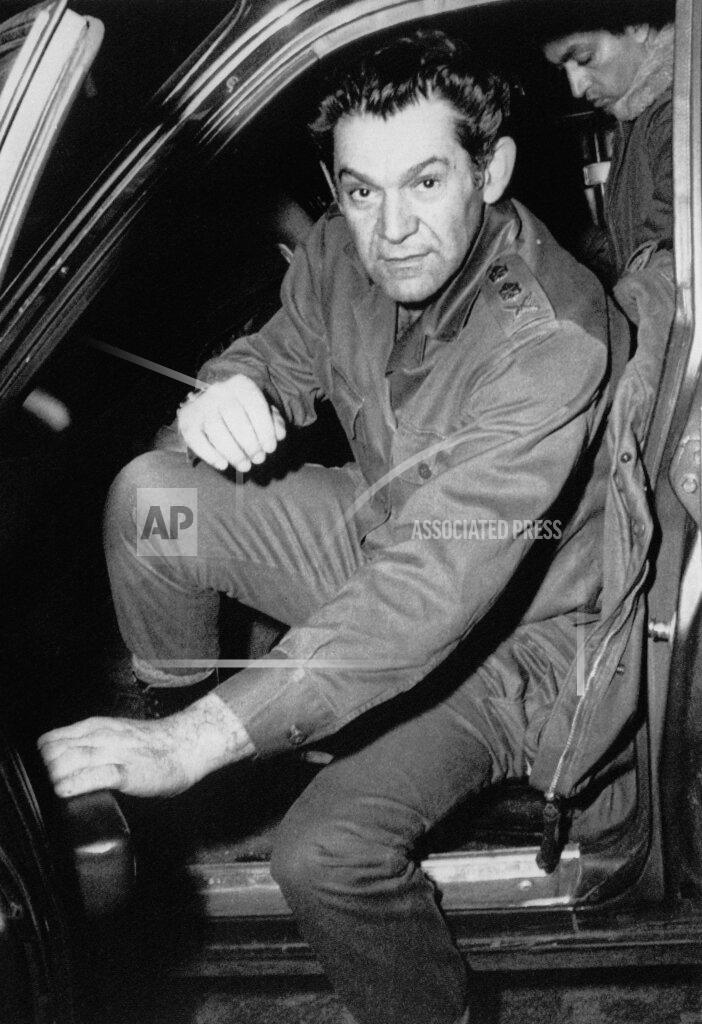
The Agranat Commission, chaired by the President of the Supreme Court of Israel, issued its report assessing blame for Israel’s failures in the 1973 Yom Kippur War, with recommendations for dismissal of General David Elazar (Chief of Staff of the Israeli Defense Forces); Major General Eli Zeira, director of the military intelligence for the agency Agaf HaModi’in), Brigadier-General Aryeh Shalev (head of research at the Agaf HaModi’in), and Major General Shmuel Gonen, leader of the Southern Front defense against Egypt. Following the report, the government of Prime Minister Golda Meir would fall.
General David Elazar resigned as Israel’s chief of staff shortly after an official commission investigating Israeli setbacks at the start of the October war recommended that he and other senior army officers be removed. Issuing an interim report, the commission cleared Premier Golda Meir and Defense Minister Moshe Dayan of responsibility for what was described as Israel’s lack of preparation for war.
Irael massed troops and equipment on the Golan Heights front lines today. The redeployment was, given wide publicity by the press and radio in Israel — an almost unprecedented move. Newspaper editorials in Tel Aviv warned Syria against an attempt to secure through “military blackmail” the softening of Irael’s proposals for a disengagement agreement in the Golan Heights. But in the rugged strategic plateau itself, actual fighting appeared limited in scope, with intermittent artillery duels today similar to those of the last 21 days.
An Israeli communiqué issued shortly before midday accused the Syrians of starting the day’s fighting, in which artillery and tanks went into action. Israeli newspapers accused Syria today of “brinkmanship” and reported indications of a possible Syrian attempt to retake by force the area captured by the Israelis in the October war. Authoritative Israeli sources said that the danger of a serious flare‐up had increased in view of an offensive redeployment of the Syrian forces that they said had led to the high state of alert on the Israeli side.
Between 100 and 500 Cubans are serving with the Syrian armed forces, according to the Pentagon. A statement by spokesman William Beecher said they were believed to be “fillers” in a Syrian armored brigade but it was not known exactly what their jobs were. They have been in Syria “for some months,” he said. Israeli Defense Minister Moshe Dayan recently referred to a Cuban brigade in Syria, which would mean about 3,000 men.
Graham Martin, the United States Ambassador to South Vietnam, suggested in a confidential cablegram last month to the State Department that Senator Edward Kennedy not be given an “honest and detailed answer” to questions he had raised about American policy in Indochina. The cable, addressed to Secretary of State Henry Kissinger, was made public by Senator Kennedy, who expressed “outrage” that an American Ambassador should suggest that members of Congress not be given honest answers to questions of public policy.
The Ethiopian government pushed ahead with a sweeping program of political reform and an investigation of alleged government corruption in an effort to prevent more civil strife. Students asked that a state of emergency be declared to deal with famine in southern Ethiopia. Negotiations continued, meanwhile, for the release of five American and Canadian oilmen held by the Eritrean Liberation Front.
“We have only our hopes,” U.S. consulate spokesman Bob Milton said in Hermosillo, Mexico, as silence over the whereabouts of kidnaped Vice Consul John Patterson continued. Milton denied rumors that Patterson’s kidnapping was a hoax and said that he had no information on the success of handbills and advertisements seeking information about Patterson.
The ocean liner Queen Elizabeth 2, crippled and adrift off Bermuda, prepared for the transfer of her 1,630 passengers to a Norwegian cruise ship racing to a rendezvous in mid-ocean. The Elizabeth, bound from New York to St. Thomas in the Virgin Islands, stalled before dawn Monday with a breakdown of three boilers.
British reporter David Martin said in an article in the London Financial Times that he was expelled by the African nation of Tanzania because he reported purges by President Idi Amin in neighboring Uganda. Martin said he was pressured by Tanzania authorities to stop reporting on the Uganda situation and was given 24 hours to get out after he refused to comply.
With the White House moving toward an announcement soon of the appointment of William Simon, the Federal Energy Administrator, to succeed George P. Shultz as Secretary of the Treasury, a fierce backstairs struggle has developed for the broad economic policy role exercised by Mr. Shultz. It appears, Washington sources said, that Roy Ash, the director of the Office of Management and Budget, and Secretary of State Kissinger both will have more influence with Mr. Shultz gone.
Enactment of the national health insurance program took a giant step forward as two congressional leaders introduced a new proposal similar to the one proposed by President Nixon two months ago. The new bill was prepared and introduced by Senator Edward Kennedy, who scrapped a much more liberal version that he had championed, and Representative Wilbur Mills, who had sponsored the Nixon version.
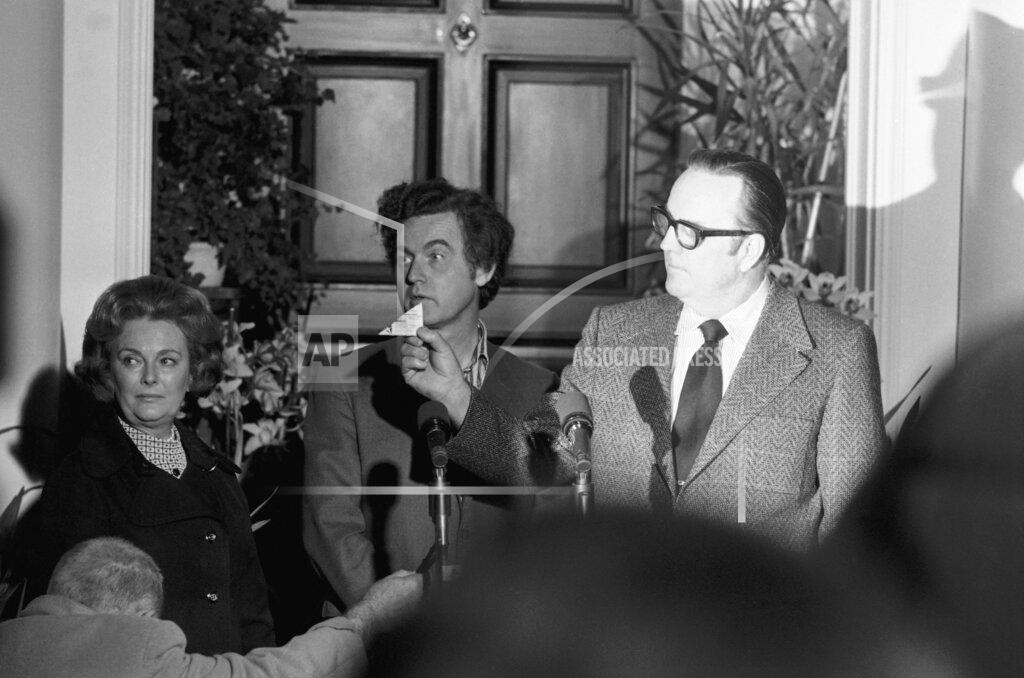
An underground newspaper in San Francisco, the biweekly Phoenix, said it had received half of Patricia Hearst’s driver’s license and a message purporting to be from her kidnappers saying that the exact place and time of her release would be disclosed in 72 hours. The message was delivered to the Phoenix, a biweekly newspaper in the Haight‐Ashbury district. Half of a driver’s license belonging to Miss Hearst was included in the message, delivered in a bunch of long-stemmed roses. The message said that further communications “regarding the subject prisoner will follow within 72 hours.” However, the newspaper was warned not to cooperate with the Federal Bureau of Investigation by turning over information to agents involved in the case. At the Federal Building here, Charles Bates, the agent in charge, said that he had not been able to obtain any information from the newspaper.
The purported message from Miss Hearst’s captors, who call themselves the Symbionese Liberation Army, was the first in more than three weeks. It came a few hours after the Hearst Corporation placed $4‐million in escrow and set a 30‐day deadline for the release of Miss Hearst, who was abducted from her Berkeley apartment last February 4. At his home in suburban Hillsborough, her father, Randolph A. Hearst said, “If it’s true, we’re delighted. It sounds like their [the S.L.A.] communiqué. I wish to believe it. If one half of the driver’s license is truly Patty’s, I have no reason to doubt it.” The driver’s license enclosed with the message had been cut diagonally, showing part of Miss Hearst’s photograph and her signature.
In a stunning courtroom tableau, Donald Nixon, a brother of the President, took the witness stand at the Mitchell-Stans trial to testify that he was asked to warn the President that a secret $200,000 cash contribution to his re-election campaign might be exposed before election day. He refused to pass on the warning, Mr. Nixon said, because “I have never taken anything to him nor have I used that office for any purpose for myself or any people I work for.”
Donald H. Segretti testified today at the trial of Dwight L. Chapin that he had reported regularly to Mr. Chapin about the bogus campaign literature he was distributing during primary elections in the name of Democratic Presidential candidates. Mr. Segretti, who completed a jail term last week for having handed out unauthorized campaign material, also swore that Mr. Chapin had instructed him to concentrate his efforts on the campaign of Senator Edmund S. Muskie of Maine. Later, another of the govemment’s key witnesses, Herbert W. Kalmbach, testified that he had specifically told Mr. Chapin how much Mr. Segretti was being paid. Mr. Chapin, once President Nixon’s appointments secretary, is charged with having lied about these matters last year to a Federal grand jury that was investigating political “dirty tricks” in the Presidential campaign of 1972.
Reacting to evidence in the investigation of the crash of a DC‐10 near Paris on March 3, the Federal Aviation Administration said yesterday that all future design changes “to correct an unsafe condition” would be dealt with by compulsory decrees. The Paris crash, in which 346 persons died, is widely believed to have been caused by failure of the rear cargo door, which was found about nine miles from the main wreckage. Inquiry has disclosed that the cargo door of the Turkish Airlines jumbo jet apparently did not incorporate a recommended design change that might have averted the tragedy. The, change was supposed to have been made by the manufacturer, the McDonnell Douglas Corporation. It has also been disclosed that the F.A.A. and the company agreed orally that the change would be recommended as a voluntary rather than a mandatory measure. This agreement has drawn considerable criticism from air ‐ safety experts.
Rep. Olin E. Teague (D-Texas), ranking member of the House Veterans Affairs Committee, and two national veterans’ organizations called on President Nixon to fire the chief of the Veterans Administration instead of putting him in charge of another study of veterans problems. Mr. Nixon announced Sunday that Administrator Donald E. Johnson would head a special inter-agency committee to find solutions. Teague said the President’s proposal “is something like putting the fox in charge of the hen house” and denounced “Johnson’s incompetence” as VA chief for the last five years. National commanders of the Veterans of Foreign Wars and the Disabled American Veterans issued similar complaints.
The Federal Energy Office said it was prepared to turn over to the Justice Department evidence of marketing irregularities that helped drive up propane prices. In testimony before a House subcommittee conducting its own investigation of propane price increases, Charles R. Owens, a deputy assistant administrator, said the FEO had uncovered instances of artificial transactions that added as much as 14 cents a gallon to the price paid for propane by consumers.
Eighteen Republican congressional leaders met for nearly two hours with President Nixon and one of them declared that Congress’ inaction on energy legislation was “the biggest scandal of all.” Senate Republican Whip Robert P. Griffin of Michigan said there was a question of whether Democrats want to do something about energy problems “or just want an issue in the November election.” House Republican leader John J. Rhodes of Arizona, asked if the GOP leaders were in effect launching a campaign aimed at the November elections, responded: “I think what we’re trying to do is to get the Democratic Congress to move.”
A confessed killer who provided the first major break in the 1969 murder of Joseph A. Yablonski and his wife and daughter told a court in Media, Pennsylvania, how he and two other men stalked them. The plan was to “kill them… leave no witnesses,” testified Claude E. Vealey, 30, at the trial of former United Mine Workers President W. A. (Tony) Boyle. The government claims that Boyle, 72, initiated the plan to kill union dissident Yablonski and authorized the expenditure of $20,000 in union funds for the assassination.
The Cost of Living Council announced it was lifting wage controls for workers in the newspaper industry. The council removed price controls on March 15 but said it was delaying action on wages because important wage negotiations were under way in some cities.
Bonuses up to $15,000 a year if needed to attract doctors, dentists, veterinarians and optometrists into the all-volunteer military were voted by the House. Rep. Les Aspin (D-Wisconsin) and other critics of the bill produced Pentagon letters quoting Deputy Defense Secretary William P. Clements as saying that there is “no need at this time” for bonuses except for doctors. The bill was sent to a compromise conference with the Senate, which has a bill authorizing bonuses up to $12,000 for doctors only. A House source said the bonus and special pay would raise the pay for a military doctor with two to four years’ service to $41,644 a year, near the average $43,000 he could earn as a civilian.
The 46th Academy Awards ceremony was held in the U.S. at the Dorothy Chandler Pavilion in Los Angeles. “The Sting” won seven awards, including Best Picture, Best Director (George Roy Hill), and Best Original Screenplay (David S. Ward). Best Actor and Actress awards were given to Jack Lemmon and Glenda Jackson, while the Best Supporting Actor and Actress awards went to 71-year-old John Houseman and 10-year-old Tatum O’Neal, who became the youngest actress ever to receive an Oscar.
Oakland Raiders quarterback Kenny Stabler signs a contract to play for the WFL’s Birmingham Americans beginning in 1976. The upstart pro football league will go out of business before it can play a 1976 season.
Dow Jones Industrial Average: 846.61 (+3.13, +0.37%).
Born:
Pete Incaviglia, MLB outfielder (Texas Rangers, Detroit Tigers, Houston Astros, Philadelphia Phillies, Baltimore Orioles, New York Yankees), in Pebble Beach, California.
Chris Robinson, NBA shooting guard (Vancouver Grizzlies, Sacramento Kings), in Columbus, Georgia.
Håkan Hellström, Swedish pop musician; in Gothenburg, Sweden.
Died:
Georges Pompidou, 62, French President (1969-74) and Prime Minister (1962-68), of Leukemia.
Douglass Dumbrille, 84, Canadian stage, film and TV actor (“Mr Deed Goes to Town”).
Olga Burgoyne, 95, African-American choreographer and actress.
[Ed: Of course, this is just a cruel joke on the part of the SLA. What ensues in the coming days is as ridiculous as it is vile.]



[Ed: Hollywood is poison. Stardom and the drug culture in Hollywood would lead to abuse and addiction. Tatum would have been better off never setting foot in L.A.]

 History Diaries