In a bold move that might provoke Germany, but more probably, it was believed, would halt Nazi imperialism, Britain prepared to announce that she and France would fight for Poland in case of attack by the Reich. The Cabinet decision, understood to have been taken on news of German concentrations along the Polish frontier, is expected to swing Rumania, Yugoslavia, Greece and Turkey into the Anglo-French front.
The British Prime Minister, Neville Chamberlain met with the Foreign Secretary Lord Halifax and the Foreign Office’s Permanent Undersecretary, Sir Alexander Cadogan, to write up a statement warning that Britain would go to war if Germany invaded Poland. Prime Minister Neville Chamberlain is expected to announce to the House of Commons tomorrow the momentous decision that Great Britain and France would give full armed assistance to Poland in case of aggression by Germany. This decision is understood to have been taken at an emergency meeting of the Cabinet, summoned at short notice this morning, on news of heavy concentrations of German war material in Pomerania and Silesia along the Polish frontier. It followed receipt of a communication from Paris promising the full assent and cooperation of France.
When Sir Eric Phipps, the British ambassador in Paris, asked Bonnet for his approval on the “guarantee” today, it was immediately granted without Bonnet consulting the rest of the French cabinet.
British Ambassador in Poland Howard Kennard offered Poland a British-French-Polish agreement in which the three countries would mutually guarantee each others’ borders; this agreement arose from the build-up of tension between Germany and Poland over Danzig. The Soviet Union was purposely excluded from the negotiations per Polish demands.
In Warsaw itself, Opposition leaders pledged support to the government in resisting any German attempt to “trample upon Poland’s rights.” The Polish press was instructed to inform its readers tomorrow that, contrary to “widespread rumors,” Poland had received “no German demands having the character of an ultimatum, nor has any German pressure been exercised.” The press instructions said further that “in view of the fact that German circles may be inclined to apply the same methods of surprise to Poland that have been applied to other countries, it is quite natural that the Polish Government must take a vigilant stand.” Two council members of the Peasant party, Wladislaw Witek and Wladislaw Krzeptowski, called on President Ignaz Moscicki to promise their support.
Nazi Minister of the Interior Dr. Wilhelm Frick hints that the Polish government abuses minorities. The Reich is displeased with the status of Germans there. The anti-Polish campaign in Berlin received added impetus when Interior Minister Frick indicated Germany’s dissatisfaction with Poland’s treatment of her German minority. An official intimation that Germany regards the situation of her national minority in Poland as unsatisfactory and that the Polish-German minority agreement was “incomplete,” was given tonight by Dr. Wilhelm Frick, Minister of the Interior, speaking at a meeting of members of the foreign diplomatic services and foreign press. He spoke on “Non-German Racial Groups Within the Reich” and he made clear that while Germany regards the treatment of the minority groups within the Reich as exemplary, she does not consider that other nations with German minorities have fulfilled all their obligations toward the Germans within their territories.
Meanwhile, Germany was trying to consolidate her position in the Balkans; trade talks are scheduled with Yugoslavia and Bulgaria
Offsetting this, however, was a new French-Rumanian trade agreement, initialed in Paris this morning, under which French purchases of Rumanian oil are to be doubled and French duties on Rumanian farm products are to be slashed 60 percent. All France, incidentally, seemed solidly behind Premier Daladier’s reply of Wednesday night to Premier Mussolini.
Nevertheless, Signor Mussolini pursued his campaign by declaring that “Italy does not intend to remain suffocated in the Mediterranean.”
Indications perhaps of economic strain in the dictatorships were a speech by Reichsbank President Funk deploring the American gold drain and a report by the Bank of Italy showing a gold loss in 1938 of 202,000,000 lire.
The Lithuanian parliament ratified the treaty ceding the Memel Territory to Germany. The Lithuanian-German treaty on Memel was ratified today by the Diet in a five-minute sitting. General Jonas Cernius, the Prime Minister, will make a new statement of the government’s policy to the Diet early next week. The fate of the Diet is arousing interest. At present it consists only of members of the old Government party and the new government will, in the long run, be unable to work with it. New elections, on the other hand, are at the moment impracticable.
The Vatican hails Franco, and feels his country will return to the ancient faith of its fathers.
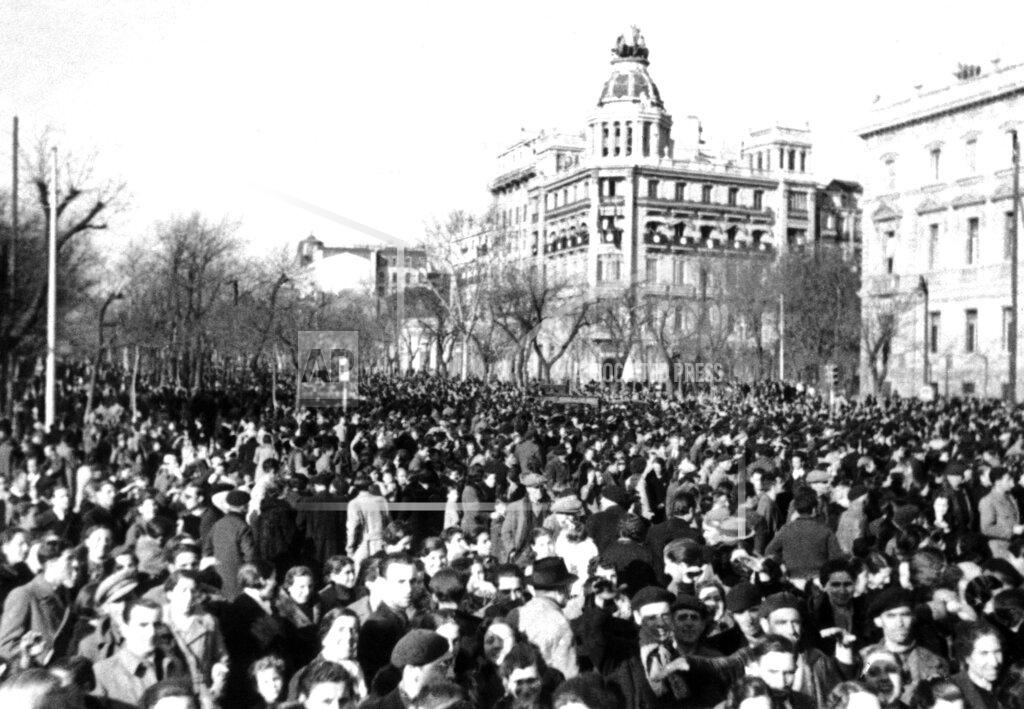
The Franco regime arrests 100,000 and decrees the death penalty for sedition, sniping, looting, or sabotaging services. Nationalist authorities imposed stern measures today to crush any lingering Republican opposition to the civil war victors. A technical state of war — in effect, martial law — was decreed in Madrid and jurisdiction was given to military courts over all crimes committed during the thirty-two-month conflict. Police began rounding up persons listed in a huge card index compiled by the “fifth column,” Nationalist agents and sympathizers, throughout the war. More than 100,000 prisoners have been taken during the last two days, swelling the Nationalists’ total number of prisoners to 600,000. They included all members of the Republican National Defense Council, except General José Miaja, who escaped by flying to Algeria. His Defense Minister, Lieutenant Colonel Segismundo Casado, who was arrested in Valencia, and his Foreign Minister, Julian Besteiro, were taken to Burgos. Madrilenos were warned by posters that failure to surrender firearms, explosives and incendiary and poisonous materials within twenty-four hours would mean summary court-martial and possibly death.
Spain regains possession of Spanish art held by the League of Nations.
Belgians speed fort construction in response to Nazi agitation.
IRA bombs exploded in Birmingham, Liverpool, and Coventry.
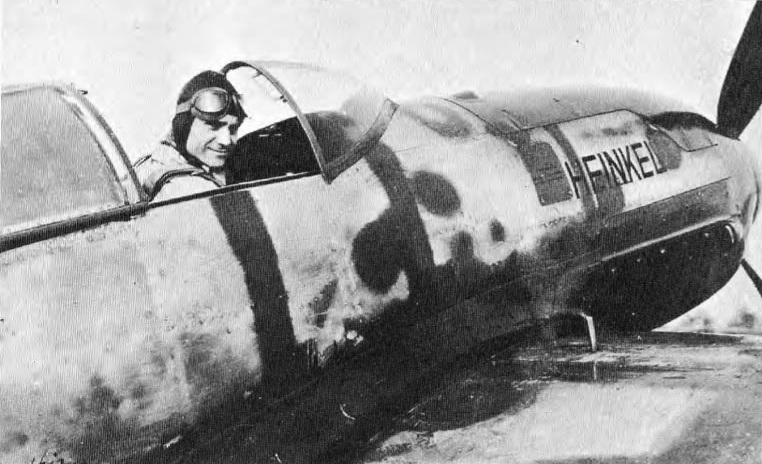
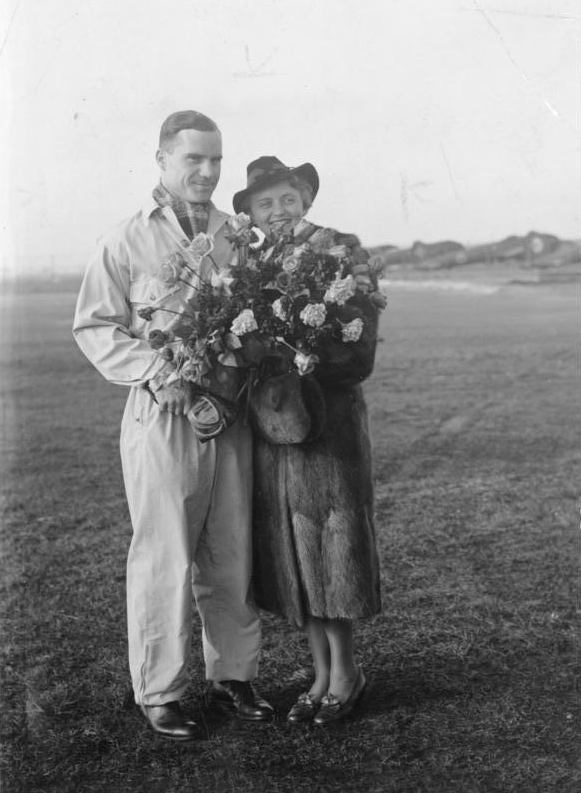
German pilot Hans Dieterie flew the Heinkel He 100 V8 at 463.82 mph to set a new world air speed record (745km/h). At 5:25 p.m., Ernst Heinkel Flugzeugwerke GmbH test pilot Hans Dieterle, flying a high-performance prototype fighter, the Heinkel He 100 V8, D-IDGH, entered a measured 3-kilometer course near the factory’s airfield at Oranienberg, Germany. He would attempt to set a new Fédération Aéronautique Internationale (FAI) World Record for Speed Over a 3 Kilometer Course. Dieterle took off at 5.23 p.m. After completing his two runs in each direction he made a perfect landing 14 minutes after the start. Although the official speed of the runs could obviously not have been known to him, he must have been certain that he had beaten the record, for on leaving the machine he turned three handsprings in the exuberance of his youth (he is only 24). When the speeds had been worked out it was found that the average was 746.66 km./h (463.953 m.p.h.) The machine took only 14.464 sec. to cover the timed section.
Field Marshal Göring immediately promoted Herr Dieterle to Flight Captain: he is the youngest pilot to hold that rank in the German Luftwaffe.
Hungarians reject the newest Slovak offer, refusing to accede territory as an exchange. The Slovak border commission returned to Budapest early today and resumed its sessions. It is understood the Slovaks brought proposals for territorial cessions in exchange for the Ung Valley. The Hungarians flatly turned these down. The Slovaks immediately returned to Bratislava for further instructions. Hungarian circles consider any territorial cession impossible, since Budapest is claiming only delimitation of her Slovak frontier, which would assure possession of the Ung railway. Reliable information indicates the Hungarians maintained a firm attitude and asked the Slovaks for answers by tomorrow noon. Otherwise, Budapest will decline responsibility should further incidents occur.
Hopes increased today for an early settlement of the Slovak-Hungarian border dispute as Slovaks indicated a readiness to accept Hungarian revision demands. Two Slovak notes, one to Berlin. and one to Budapest, however, suggested there were still some obstacles to final agreement. A Hungarian demand for a strip of Slovakia along the Carpatho-Ukraine border approximately eighteen miles deep and including the town of Sobrance was reported in semi-official Slovak circles.
Sources close to the Slovak Government said a note had been dispatched to Budapest asking for the evacuation of territory in Eastern Slovakia which had been occupied by Hungarian troops. Slovakia was reported to have called on Germany, her protector. for advice on the attitude she should take toward the Hungarian claims. In Berlin, however, officials would not admit they had received any such note.
The Yankee Clipper arrived in Lisbon at 4:15 PM this afternoon, having covered the 1,200 miles from Horta, the Azores, on the second stage of her first transatlantic flight in 7 hours 7 minutes. The flying boat’s actual flying time for the whole 3,600-mile trip from Baltimore to Portugal was 24 hours, 39 minutes. The Clipper was welcomed here by the American Minister, the American Consul and the whole American colony. The twenty-one persons aboard, comprising the crew of twelve and the nine passengers, said that they had a good trip. The Clipper was the first plane to arrive at the new airport that Pan American Airways had built five miles up the Tagus River from Lisbon. The landing situation there is safe and convenient in all kinds of weather. The date of the Clipper’s departure for Marseille has not yet been fixed.
A rapid-fire debate in the House of Representatives today laid the ground for a series of votes tomorrow which will determine the additional amount of relief funds to be appropriated in response to President Roosevelt’s request for $150,000,000. Surface indications pointed to House support for the $100,000,000 voted by a majority of the Appropriations Committee, but the New Dealers were testing their lines tonight to see if they could withstand a move tomorrow to cut the fund to $50,000,000. They may also be called upon to wage a fight for any money at this time, since it was announced that a motion would be made to recommit the bill.
A speech by Representative Woodrum, Democrat, of Virginia, who is a leader of the economy forces, drew an ovation from both sides of the House when he criticized Works Progress Administration policies and declared: “The whole set-up is due for a drastic and fundamental overhauling.” The applause from both sides heartened the economy members and added to the growing doubt that the Administration could stave off a further cut in, or outright refusal of, more funds for the WPA at this time.
Representative Woodrum directed his attack upon what he said was the “fallacy” of the argument that if $150,000,000 was not provided, there would be hunger and suffering. “In no sense is such an assumption warranted,” he said. “We have never sought by the Federal program to provide for all who are eligible for WPA. If the full amount were appropriated, there would still be approximately a million certified as eligible for WPA who would have to rely upon their own resources or upon the care of States and localities.”
Mr. Woodrum said Congress had never required the WPA to justify its expenditures, as it had of every other governmental agency. “The WPA appropriations usually have been rushed through this House under the plea of meeting an emergency,” he remarked.
Ignoring President Roosevelt’s suggestion for a cotton expert subsidy program, the Senate agriculture committee approved today a bill which would permit farmers to reclaim up to 3,000,000 bales of stocks now held as collateral for government loans. At the same time the committee sent on to the Senate a “cost-of-production” farm bill sponsored by Senator Frazier, Republican, of North Dakota, and sixteen other Senators. It would substitute government price-fixing on a long list of farm commodities for the present program of crop and marketing controls. Senator Bankhead, author of the cotton proposal, said it involved “subsidizing the American producer instead of the foreign buyer.”
President Roosevelt today challenged the Southern States, once classed by him as the “nation’s No. 1 economic problem,” to make themselves economically self-supporting by first getting themselves “out of hock to the North” and then establishing their own enterprises with Southern capital and through the exercise of imagination and experimentation.
The President addressed his remarks particularly to the youth of the South, on whose endeavors, he said, the future progress and prosperity of the area would largely depend. To the younger generation also Mr. Roosevelt appealed for an end of sectionalism, urging the young to take a more lively interest in their political responsibilities, which, he said, would determine the progress of the South of the future. The President’s economic challenge, voiced in an informal address to the assembled student body and faculty of the Alabama Polytechnic Institute, was the highlight of a day of extemporaneous speechmaking and touring which took him about the Alabama and Southern Georgia countryside.
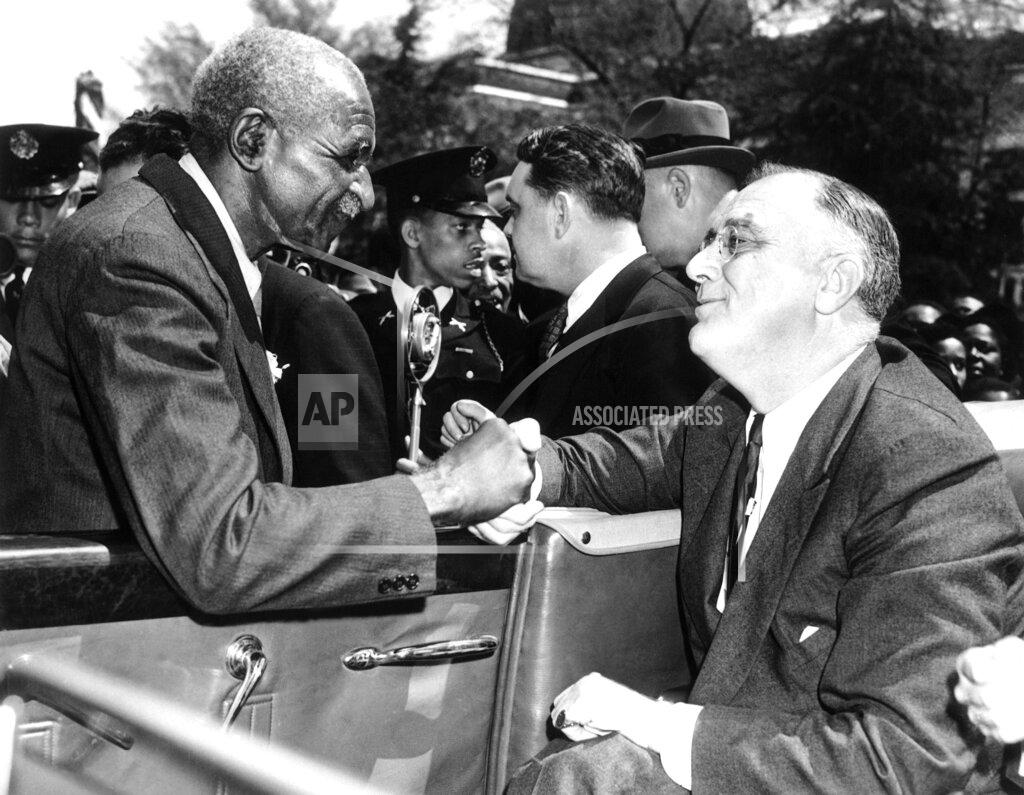
Before motoring on to Auburn, Alabama, to make his principal address of the day to the Polytechnic students, Mr. Roosevelt paid a brief visit to Tuskegee Institute. After an inspection trip around the grounds, he spoke to the Black student body, stressing that in the face of increasing opposition he had scorned any retreat from his social and economic objectives and described himself as “persistent and consistent.”
By the time that he drove up to the little “White House” on Pine Mountain in Warm Springs this evening, the President had spoken informally four times from the rear seat of his automobile. After his appearance at Tuskegee Institute, the Presidential party motored down to the town of Tuskegee, where Mr. Roosevelt again dwelt on his theme that individual States could no longer remain as self-contained as they could thirty years ago, but that they must now work together for the common good of the nation.
U.S. Cardinals return from the Vatican, happy with the choice of Pope.
Secretary Ickes announces that Marian Anderson will give an open-air concert in Washington at the Lincoln Memorial on the afternoon of Easter Sunday.
A husband and wife serve on the same New York jury. The “permissive woman juror law” created this possibility.
In New York, Adolf Hitler’s nephew William called his uncle “a menace.”
According to copyright records in the Library of Congress, this is the publication date of Detective Comics issue #27 (cover date of May), notable for the first appearance of Batman 81 years ago.
The Animal Rescue League plans drastic action if fish swallowing contests continue.
In Canada Premier King said his government would not allow conscription for service overseas.
Japanese troops occupied the Spratly Islands (Japanese: Shinnan Shoto) in the South China Sea. They were to be administered by Japanese authorities in Taiwan. The Japanese Navy would soon build a seaplane base and a submarine base on the island of Itu Aba (Japanese: Nagashima).
China admits the Nanchang loss but reports other victories. Japanese-sponsored regimes are to disregard the rights of powers sympathetic to China.
The Japanese-dominated Peiping and Nanking governments aimed two blows today at foreign influence in China, apparently after setting the stage by a campaign in Chinese newspapers published in Japanese-occupied cities. A joint meeting of Ministers of the puppet regimes at Nanking:
- Decided to repudiate all loans or credits granted by foreign powers to the Chinese Government of Generalissimo Chiang Kai-shek.
- Approved a statement “denouncing foreign powers that are giving assistance to the Chiang Kai-shek regime.”
The two governments, which Japan recognizes as heirs to governmental authority in Northern and Central China, declared jointly that they would refuse to respect the vested rights or interests of powers assisting General Chiang. The United States last December made credits of $25,000,000 available to the Chinese Government, and Britain backed a $25,000,000 loan to support China’s currency two weeks ago. Translations from the Japanese-controlled press in Shanghai, Nanking, and Hangchow in the past ten days show similarity in attacks on Occidental nations in editorials, language and slogans, hinting at common inspiration.
Foreign observers point out that Chinese newspapers in Japanese-occupied cities are published under strict supervision of the Japanese Army’s special service section, which has acknowledged that its work includes propaganda for Chinese-Japanese collaboration. All the editorials emphasize Japan’s friendly motives toward China and repeatedly demand a “new order in Asia”-which is Japan’s current slogan.
“East Asia for the people of East Asia,” is one recurring theme. Another urges a common front of yellow races for complete equality with the “ferocious” white race. The United States, France and Soviet Russia are mentioned, but almost all single out Britain. They charge her with attempts to enslave China’s millions, nefarious exploitation schemes, trying to make China “another India” and attempting to dismember China through the credits to General Chiang.
The Chinese press reported that “240 puppet officials” connected with the Nanking Government had been assassinated up to yesterday, when the regime observed its first anniversary. The Chinese reported today that they had scored a smashing victory over Japanese clean-up forces near Wuning, northern Kiangsi province. The Chinese said that the arrival of three new divisions in the Wuning sector, sixty-five miles northwest of Nanchang, enabled them to push the Japanese back and capture “great numbers of artillery pieces, machine guns and other equipment.” The Chinese said that fighting still was in progress in the streets of Nanchang and that a Chinese air squadron had bombed Japanese lines north of the city, destroying a score of tanks.
Japanese airmen reported bombing hangars and barracks at Liangshan, a Chinese airbase in Szechwan province. The Chinese launched an offensive against Sinyang, 110 miles north of Hankow on the Peiping-Hankow railway, coincidentally with a Japanese announcement that the railway was ready to resume traffic between Hankow and Sinyang. Japanese engineers had just completed repairs on the Wushengkwan tunnel and the Shi River bridge, permitting resumption of limited operations after many months. Sinyang was reported to be under shellfire and Chinese infantrymen were said to have made three assaults that drove the Japanese outside the walls back toward the city.
First flight of the Australian C.A.C. CA-16 Wirraway military aircraft.
Dow Jones Industrial Average: 136.69 (-3.06).
Born:
Bryan Molloy, Scottish chemist (co-inventor of Prozac), in Dundee, Scotland, United Kingdom (d. 2004).
Bobby Thompson, NFL cornerback (Detroit Lions, New Orleans Saints), in Minden, Louisiana (d. 2014).
Herb Roedel, AFL guard (Oakland Raiders), in Appleton, Wisconsin (d. 2022).
Sandy McGregor, Canadian NHL right wing (New York Rangers), in Toronto, Ontario, Canada (d. 2023).
Naval Construction:
The U.S. Navy orders the modified Yorktown-class aircraft carrier USS Hornet (CV-8) from the Newport News Shipbuilding Corp. (Newport News, Virginia, U.S.A.).
The U.S. Navy Benham-class destroyer USS Lang (DD-399) is commissioned. Her first commanding officer is Lieutenant Commander Felix Leslie Johnson, USN.
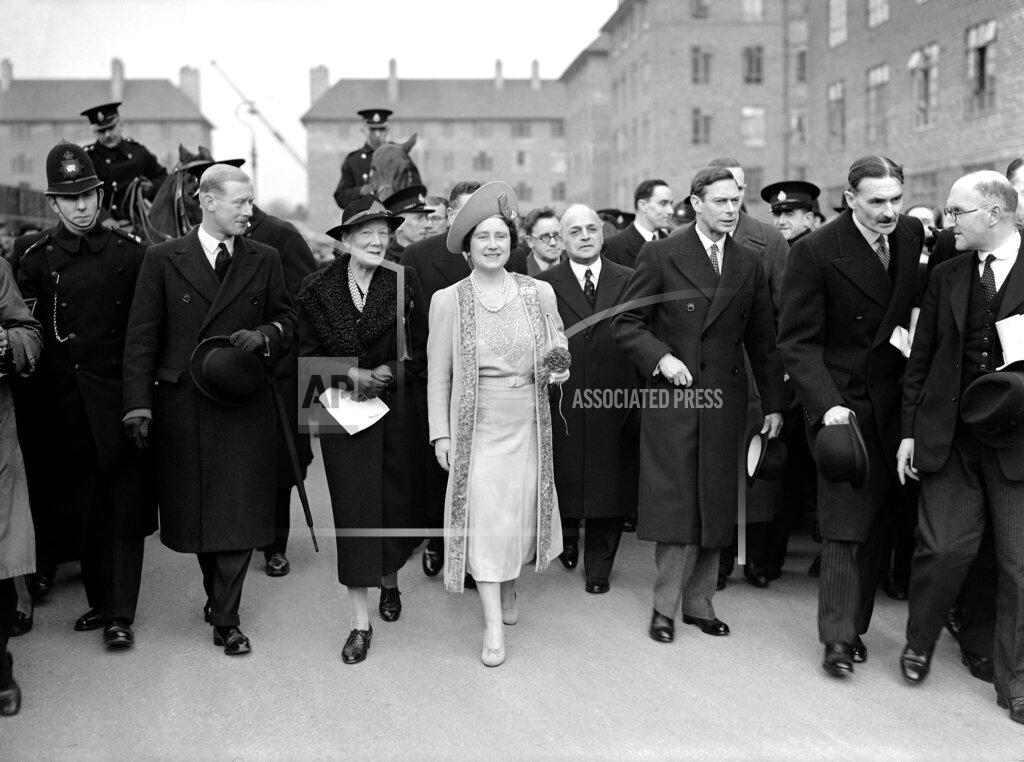

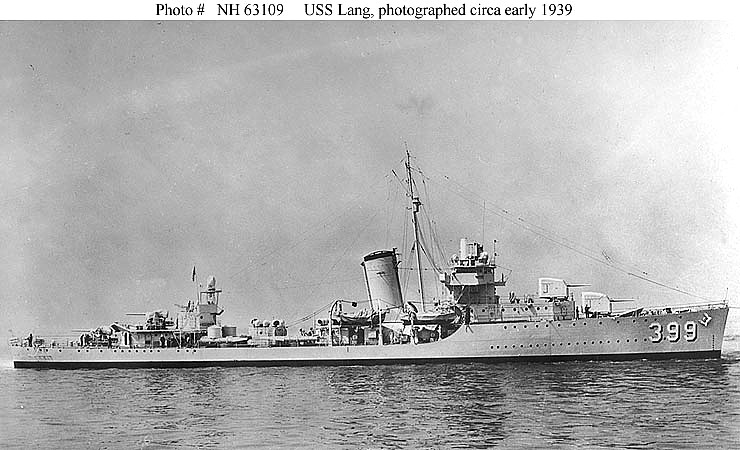
Lang departed New York 12 August 1939 guarding President Franklin D. Roosevelt’s passage to Campobello Newfoundland, and Nova Scotia. The President came on board the 24th at Sandy Hook, N.J., for transit to Fort Hancock. In November, the destroyer left Newport, R.I. for Galveston, Tex., and duty on the Gulf Patrol. Transferred to the Pacific, she reached San Diego 18 March 1940 and Pearl Harbor 2 April, where she participated in fleet problems and training exercises. She voyaged between the west coast and Hawaii throughout the remainder of 1940 and into early 1941 engaged in escort duties and training.
In June 1941 she returned to the Caribbean and Atlantic coast for carrier and antisubmarine training. In December she acted as screen and plane guard during flight operations for Yorktown and Ranger off the Maine coast and Bermuda.
She next sailed to Port Royal, Nova Scotia, for patrols with ships of the Royal Navy, then sailed for the British West Indies in January 1942. In transit she answered a distress call from torpedoed SS Empire WildeBeest, and rescued 34 survivors. She left Bermuda 18 March for Casco Bay, Maine, and thence sailed 26 March escorting TF 39 which included carrier Wasp. The force rendezvoused with three British ships 3 April and entered Scapa Flow, Scotland, the next day. The destroyer then became a part of Force “W”, sailing between England and the Mediterranean to deliver desperately needed Spitfires to the besieged island of Malta. After two such missions, Lang returned to Norfolk 28 May and was transferred to San Diego a month later.
As flagship for DesDiv 15, part of TF 18, Lang departed San Diego 1 July to join in shore bombardment exercises off Tonga in preparation for the Guadalcanal-Tulagi landings. Three weeks later she screened Wasp as the carrier launched her aircraft against enemy territory in the first American land offensive of the Pacific war.
Operating from the New Hebrides, Lanq carried out patrol and escort missions in the continuing effort to re conquer the Solomons. On 22 and 24 January 1943 she bombarded Japanese positions near Kokumbolln Beach Guadalcanal, inflicting heavy casualties upon the enemy. In July, Lang and four other destroyers sailed for Kula Gulf escorting six APDs to the New Georgia landings. Early on the 18th, the American force sighted and attacked three Japanese destroyers forcing them to retire behind a smokescreen. After warding off enemy fighter attacks, the ships completed their mission and sailed for Purvis Bay, Florida, from which Lang and two other destroyers escorted five LCIs to the landings at Onaiaviii, New Georgia, 31 July. During enemy air attack here Lang splashed one aircraft.
Lang’s next mission, in company with five other destroyers, was to destroy enemy forces in Vella Gulf part of the “Tokyo Express” route. On the nights of 6 and 7 August her task group sank three Japanese destroyers, Kawakaze, Arashi, and Hagikaze, which had been attempting to reinforce Kolombangara. Two nights later the victorious vessels conducted a sweep in the same area and drove off three groups of enemy troop barges. After 3 months’ continued escort duty. Lang joined TF 50 for the invasion of the Gilberts 23 to 30 November, bombarded Nauru 9 December, and early in the new year bombarded Roi, Namur, and Abraham. Then she joined TF 58 for the occupation of Kwajalein, returning to escort duties 15 March 1944. During the summer she again operated with TF 58 during the Marianas campaign, screening the fast carrier force as it launched attacks on Japanese convoys, pulverized enemy installations on Guam, and decimated Japanese airpower. She returned to Tulagi 17 August after the victory in the Marinas.
Lang next sailed to Wewak, New Guinea, 31 August to lay a minefield and bombard shore positions. She then escorted two reinforcement convoys bound for Morotai 16 September to 3 October through heavy enemy air attacks. On 8 October she took torpedoed Shelton (DD-407) in tow, and brought her in to Morotai before the stricken ship capsized and sank.
Lang departed Hollandia 10 October for the Leyte Gulf operation. Though she came under six kamikaze attacks, the ship suffered no damage and shot down one enemy plane. She departed the battle area for Manus 31 October, and on Christmas Day sailed with TF 78 for the Lingayen Gulf landings. Again attacked numerous times by suicide planes, Lang suffered no damage and splashed another enemy. She returned to Leyte Gulf 16 January 1945 to escort a resupply echelon to Lingayen, patrolled the entrance to Lingayen until 28 January, then sailed to train in the Solomons for the Okinawa assault.
Departing Ulithi 27 March as flagship for ComDesDiv 4, Lang screened the transports of TF 53 to Okinawa. Under air attack from 12 to 29 April, Lang again incurred no damage and accounted for another enemy kamikaze. From 29 April to 17 May she screened three escort carriers providing direct air support for Okinawa operations, and then screened other flight operations near Okinawa to 11 June.
Lang departed the Pacific battle zones in June and arrived in San Francisco 3 July for repairs. En route to New York she rescued two downed pilots 25 August. She decommissioned 16 October 1945, was sold to George Nutman, Inc., Brooklyn, N.Y., 20 December; and scrapped 31 October 1947.
Lang received 11 battle stars for World War II service.
 History Diaries