U.S. Army and ARVN helicopters evacuate about 250 Vietnamese men, women, and children from Ấp Giao Hiệp, an outpost threatened by the Việt Cộng, 50 miles south of Saigon. It was abandoned as indefensible.
Representatives of the communist insurgents in South Vietnam have intensified their political and propaganda activities in foreign countries, according to qualified sources. Operating as delegates of the South Vietnam National Liberation Front, the Việt Cộng envoys have been putting forward Communist complaints against the South Vietnamese Government and its chief supporter, the United States. The front, organized in December, 1960, in close collaboration with the military arm of the Việt Cộng. Presumably it would provide a frame work for a government it the Việt Cộng guerrillas were victorious in South Vietnam or decided to set up regime in a “liberated area.”
The Revolutionary Council that ruled Burma issued the “Law Protecting National Unity” and outlawed all political parties except for the ruling Burma Socialist Programme Party. The law would not be repealed until September 18, 1988.
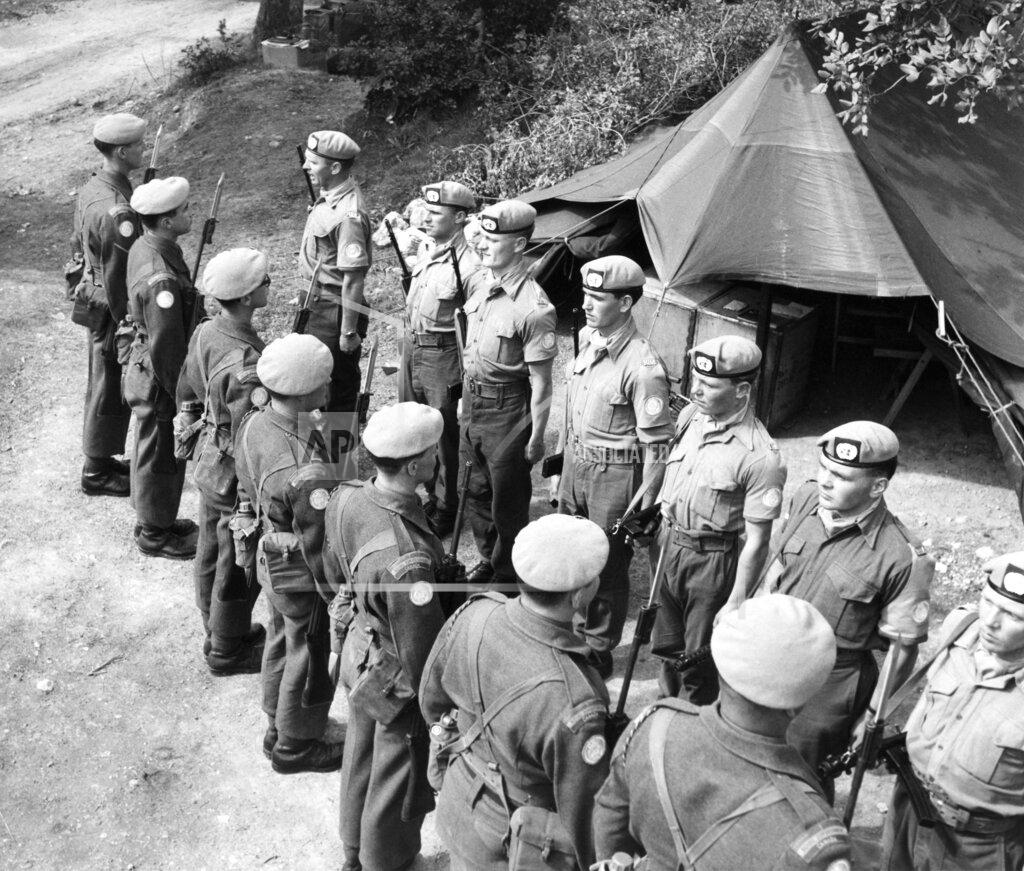
A company of United Nations soldiers, French‐Canadians of the Royal 22nd Canadian Regiment, arrived in Kyrenia on the island of Cyprus today to take over the task of keeping the peace between Greek and Turkish Cypriotes. Although Kyrenia itself has been spared from the intercommunal fighting that covered much of Cyprus, trouble broke out all around the perimeter of this harbor town. The trouble around Kyrenia was, reflected in an incident at the town’s harbor this morning when the usual quiet was broken by shouts, the noise of running feet and the sound of nearby voices in Greek.
Two carloads of Greek Cypriotes in police uniform bore down through the crowd at the end of the quay where a fisherman and his 17-year-old son were tying up their boat. The fishermen were Hassan Hussein and his son Ural. There was nothing extraordinary about them except that they were Turks. “What are you doing here, Hassan?” one old Greek called to him. “Are you not afraid? Did you hear that the United Nations was coming today?”
Since two days after Christmas British troops have been trying to keep the Greek and Turkish communities on this island from attacking each other. Yesterday the British formally handed over responsibility for the job to the United Nations. While troops from Finland, Sweden, and Ireland are still awaited, the Canadians began to relieve the British of some of their posts. Trouble broke out on the perimeter of this harbor town in recent months. On one side above it the Turkish community of Kazaphani surrendered after a five-day siege. Above Kyrenia on the other side, Temblos is the last Turkish village on the northern coast to hold out against the Greeks.
If there is a flicker of hope for the mediation that is to be attempted on this chaotic island, it comes from the fact that Sakari S. Tuomioja of Finland is acceptable to all parties to the dispute. Aside from that initial grace, Mr. Tuomioja is going to find precious little agreement to build on. The Finnish diplomat will come to Cyprus with authority to use his best endeavors to “promote a peaceful solution and an agreed settlement of the problem.” With only three months to work in, the odds against success are staggering. There is too much poison in the atmosphere for any quick and easy solution.
Since Christmas, Cyprus has been torn by the sort of warfare that no one can escape. There were not many front lines in the ordinary sense. Just about every man and youth in Cyprus holds the power of life and death at the end of his rifle or Sten gun. Each community can effect a certain amount of discipline, but it is far from complete. No roads are really safe and many villagers live in constant fear for their lives. There is no ideal solution in sight and not even a practical solution that will not be rejected with passion by either the Greek or the Turkish Cypriotes or both. Goodwill simply does not exist on this island in any perceptible quantities.
British Royal Air Force jets, based at the Colony of Aden, bombed a Yemeni army fort at Harib in retaliation for raids by the Yemen Arab Republic on Beihan and killed 25 people. Other members of the United Nations Security Council condemned the raid, although the United Kingdom representative said that it had dropped leaflets 30 minutes before the attack and said that it had acted in self-defense.
King Saud of Saudi Arabia surrendered nearly all of his power, but retained his title, after the Saudi royal family pressured him to sign a decree. Saud’s younger brother Crown Prince Faisal, was granted control of the oil-rich kingdom as the regent for the King. King Saud, after three days of pressure, submitted today to decisions of a council of the royal family and of religious leaders reducing him permanently to the role of figurehead. He was expected to leave Saudi Arabia, possibly forever, “for reasons of health.” The King signed a decree stripping him of his armed protection, of most of his revenue and half his income. But at his request the decree will not be published. The sons of the King who led a campaign defending him, particularly Prince Mohammed, are expected to leave Saudi Arabia by air within a few days.
Crown Prince Faisal, Saud’s half‐brother, is now in full control of the kingdom, although the king was left his title. The crisis began last Monday with a meeting of all leading members of the royal family except Saud, along with 34 religious patriarchs, known as ulema, and tribal leaders. The tribal chiefs had been summoned by Faisal to answer a demand by the king that his powers be restored in full. The gathering upheld Faisal and proposed to remove Saud from the throne and proclaim the prince as ruler. But Faisal insisted that Saud retain the title. All that mattered, he said, was that the King should leave power in Faisal’s hands and not interfere in public life. Details of the crisis were brought from Saudi Arabia by a person intimately associated with the royal family.
During the next six weeks, Indonesia’s President Sukarno will have to pass through one of the most dangerous periods he has faced since he became leader of Indonesia 14 years ago. Until the country’s rice crop is harvested in early May, food supplies in this normally bountiful land will remain dangerously low. Estimates are that more than two million Indonesians, most of them on this island of Java, now do not have enough to eat to remain healthy. In several areas of Java and in a few scattered pockets in Bali there are people today who are lying down in the streets and dying of starvation. Hundreds have been hospitalized from the effects of lack of food.
A Chinese Communist spokesman charged today that the Soviet delegates had “deliberately sabotaged” the African-Asian People’s Solidarity Conference meeting that ended in Algiers yesterday. Mrs. Kuo Chien, head of the 20‐member Chinese delegation, held a news conference tonight to reply to Soviet charges last night that the Chinese had disrupted the meeting with “lies and calumnies.” An African delegate, who asked not to be identified, echoed resentment later over the recurrent Chinese‐Soviet wrangling at the week‐long session. “I told the Russians and I told the Chinese that neither one of you can tell us how to fight imperialism,” he said. “They should have carried on their argument outside the meeting.”
France’s nuclear force, the military foundation for President de Gaulle’s claim to European primacy, has encountered acute technical difficulties, according to highly qualified sources. On the basis of their observations, these sources have concluded that there has as yet been no important French breakthrough in nuclear weaponry. The first phase of France’s advance inio the nuclear age is the construction of a bomber fleet capable of carrying atom bombs of the type dropped on Hiroshima in 1945. It had been thought that the French Air Force had at least a squadron of these Mirage4 bombers in operation.
The sources said, however, that France had no more than three prototype Mirage 4 bombers operational and, at most, three other bombers of this type from regular production. Both the prototypes and the production models are reported to be plagued with engine troubles and not yet capable of the flights envisaged. Consequently, there is no production line for these aircraft, as far as the sources know. There have even been hints that the French Air Force would be interested in American‐built engines if this could be reconciled with General de Gaulle’s conviction that the nuclear force must be entirely French in construction.
A few atomic bombs are ready for the Mirage 4 bombers, the sources said. The second phase of France’s nuclear effort will take the form of three nuclear‐powered submarines armed with Polaris-type missiles. This program also is lagging, the sources report. The French estimate, they said, is that the submarines will be ready by 1968 or 1970. The sources believe that two or three years should be added to this estimate.
Alitalia Airlines Flight 45 crashed into the side of Mount Somma, near Mount Vesuvius, as it was preparing to land at Naples on a flight from Rome. The Vickers Viscount turboprop airplane was carrying 45 people at 10:30 on the evening before Easter Sunday. Flight 45 was at an altitude of 2,000 feet when it hit the 3,714-foot-high mountain.
First pirate radio station near England (Radio Caroline) begins regular broadcasting.
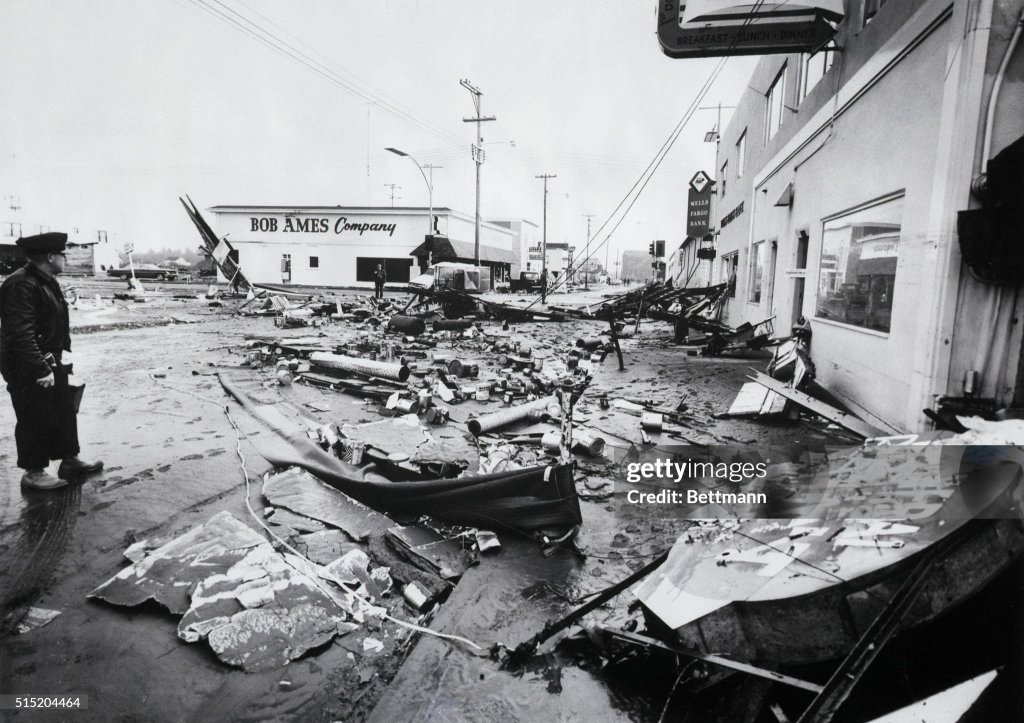
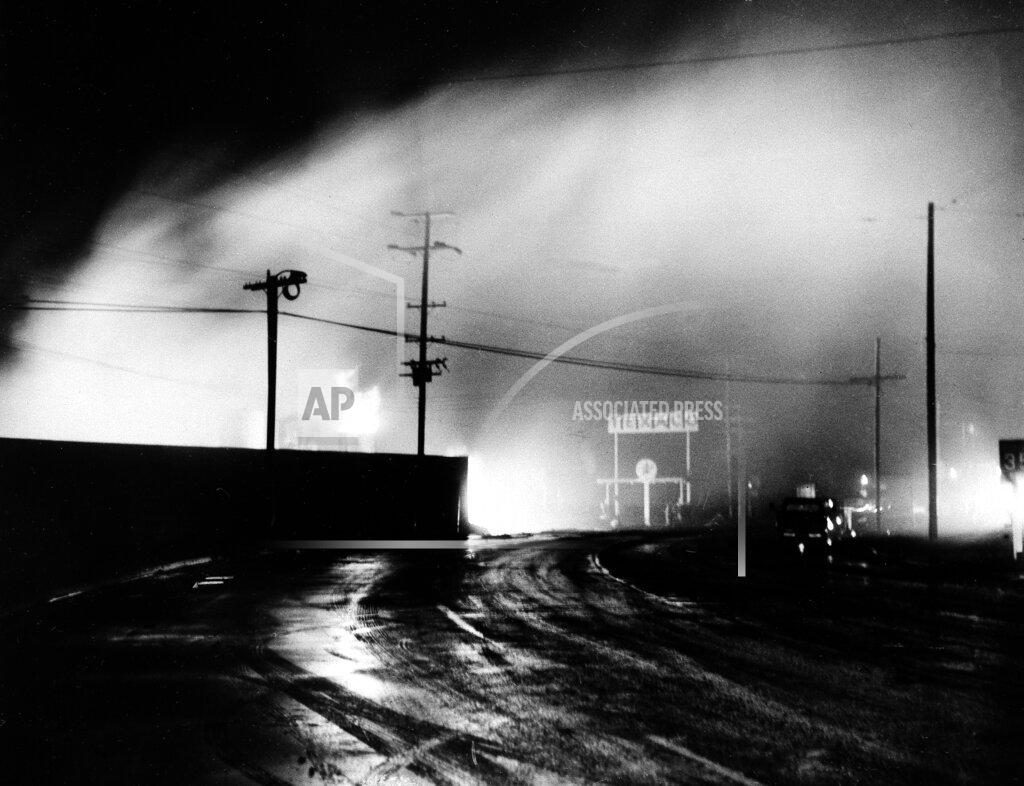
At 12:09 a.m., the wave caused by the Alaskan earthquake sent a five-foot-high wall of water across the small town of Crescent City, California, 1,400 miles from the epicenter and striking six hours after Anchorage had been struck. Eleven people drowned when the water swept four blocks in from the coast. One child drowned and three were missing when the waves caught a sleeping family on a beach near Depoe Bay, Oregon. The waves slashed at the Hawaiian Islands without major damage and finally spent themselves lapping Japan and Siberia.
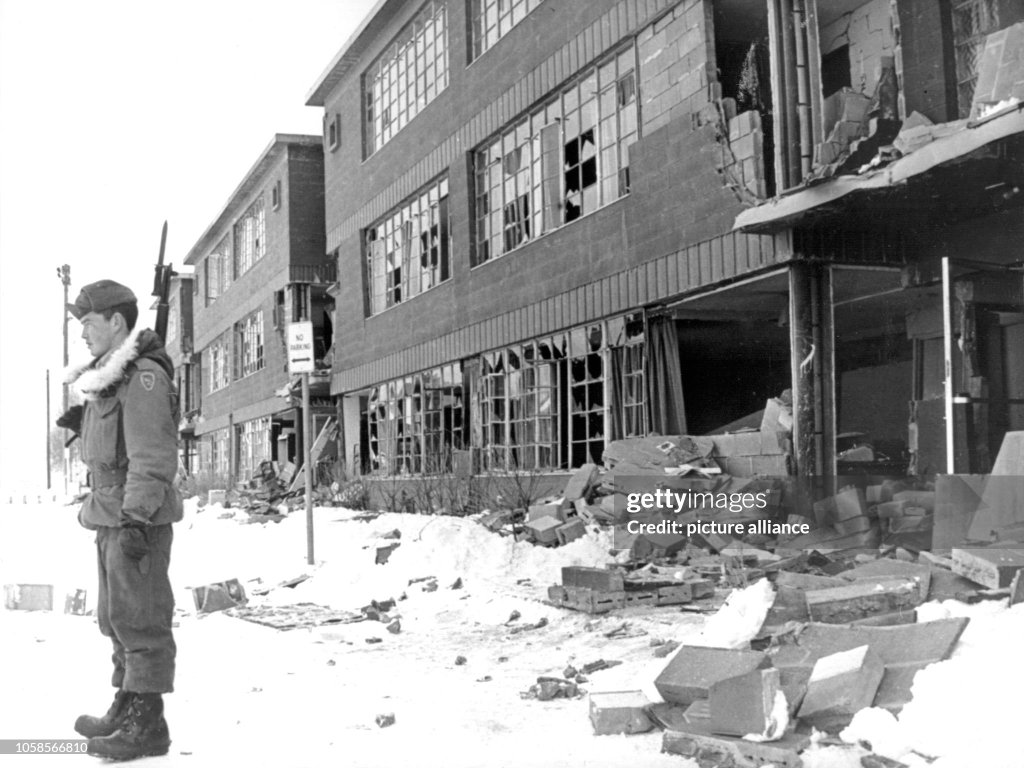
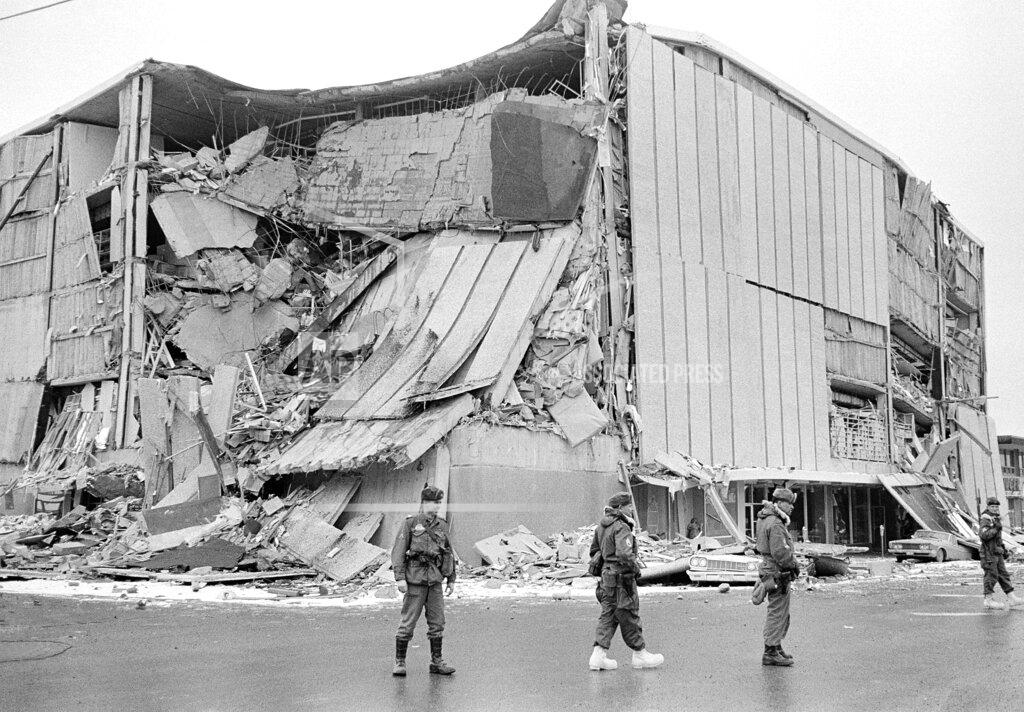
In Alaska, Anchorage, Seward, Valdez and a score of smaller communities on the GuIf of Alaska dug through frigid rubble and reeled apprehensively from at least 42 aftershocks of the temblor that occurred at 5:36 PM Good Friday evening (10:36 PM Eastern standard time). President Johnson declared the state a major disaster area and pledged all Federal resources in providing aid. Governor William A. Egan estimated the damage through the state at a minimum of $250 million. Anchorage, Alaska’s largest city, with a metropolitan area of 100,000 persons, suffered spectacular damage from the shock. Official death tallies 24 hours later ranged from seven to 16. Hard‐hit Valdez, 150 miles south on Prince William Sound, counted six dead and 24 missing. Seward, 60 miles southeast of Anchorage across the Kenai Peninsula, had three dead and 20 missing.
Troops patrolled a 30‐block area of downtown Anchorage through the day and night. No one was permitted to enter or leave the district after dark. Some large buildings in this section were swallowed up by deep fissures that opened in the earth. Others were tilted so dangerously that dynamiting was planned to avoid further danger.
President Johnson said tonight that he would soon make a personal inspection trip “to view conditions first hand” in poverty‐stricken areas of the nation. He said he had no plans, however, to fly to Alaska to inspect Anchorage and other cities hit by an earthquake Friday night. In an unscheduled news conference around the massive desk in his paneled office at the LBJ Ranch near here, Mr. Johnson also said that he had “given very strong instructions and followed through very vigorously” that Air Force planes were to observe the limits of air corridors through East Germany to West Berlin.
By doing so, he said, he hoped there would be no repetition of the incident in which three United States fliers were shot down in East Germany after their RB‐66 strayed out of the central corridor. The United States, he said, will continue to “do all we can to ease the tensions that exist.” He said he was “very happy” at the release of the three fliers. He insisted that they had not been “on any clandestine or spy mission.”
The President reiterated his disagreement with Senator J. W. Fulbright, Democrat of Arkansas, who is chairman of the Senate Foreign Relations Committee, on Cuba and Panama. He said that he had had dinner with Mr. Fulbright last Sunday, three days before the Senator delivered a controversial foreign policy address, but that they had not discussed Cuba or Panama. He also respected Mr. Fulbright’s opinions and considered them with care, he said, but he emphasized that “we do not share his views” on Panama and Cuba. Mr. Fulbright had advocated immediate negotiations of a new Canal treaty with Panama and an end to the economic boycott of Cuba.
The U.S. Defense Department moved swiftly this morning to make sure that missile and air defense systems had survived the Alaska earthquake and to organize disaster relief missions. Military installations in Alaska suffered some damage, but the early warning systems that guard North America against attacks from the Soviet Union functioned throughout the disaster. Some communications were disrupted, but there was no break in contact with the area.
Thus by 7 AM, eight hours after the first tremors struck, Lieutenant General Raymond J. Reeves, Commander in Chief for Alaska, was able to inform Washington: “The Alaskan Command still maintains its full capability to carry out its assigned mission — defense of Alaska — despite some damage to buildings and equipment.” Military units in Alaska were by that time moving to assist the stricken civilian communities, though bad flying weather and torn‐up roads disrupted the effort.
The chief of the Justice Department’s civil rights division, Burke Marshall, warned last week that continued Southern resistance to Black voting threatens to bring social chaos and a breakdown in this country’s federal system. He said that the Administration wanted to work within the tradition of federalism — reliance on state and local‐officials to handle the everyday problems of citizens, with only a limited role for the Federal Government. And he said the desire was to stay within the established mechanism for enforcing the right to vote — lawsuits in the federal courts. But he said evasion and resistance in parts of the South were posing severe tests for traditional methods. “The federal system must be made to work quickly,” Mr. Marshall said, “if we are to stay within the boundaries of law.”
A biracial committee announced today series of goals to restore racial harmony in Jacksonville, Florida, including increased employment for Blacks. The city, which experienced a series of violent racial outbursts earlier in the week, was quiet today. The committee said it would study action to “bring about a voluntary desegregation in our community of all establishments serving the public.” An integration leader here said the National Association for the Advancement of Colored People believed that public accommodations “can be desegregated without further ado, study, analysis or consideration.”
If the backers of Senator Barry Goldwater had their way, the Arizona Republican’s showdown Presidential primary with Governor Rockefeller of New York would come in a Rocky Mountain state with 86 delegates. Unfortunately for them there are no showdown primaries in the Rockies, a Rocky Mountain victory might not impress disinterested Republicans, and none of the Rocky Mountain states has 86 convention votes. California does. So the Goldwater camp is viewing California as the showdown state. The primary there will be held on June 2. The Senator heads West again next week, his campaign still suffering from his defeat by Henry Cabot Lodge in the New Hampshire primary. Like Governor Rockefeller, Mr. Goldwater is still looking for a victory.
President Johnson today named Mrs. Mary Ingraham Bunting, president of Radcliffe College, to the Atomic Energy Commission. The 53‐year‐old Dr. Bunting, a microbiologist and biochemist, will be the first woman to serve on the five-member commission. The salary for the post is $22,500 a year. In appointing a woman, President Johnson resolved a deadlock between labor and business groups that had been fighting to place a representative on the commission ever since the seat became vacant February 1. Then Dr. Robert E. Wilson, a former, oil company executive, resigned. Dr. Bunting, a mother of four daughters, is a graduate of Vassar College, Class of 1930, and did research at Yale from 1950 to 1955 under A.E.C. sponsorship. She will take a leave of absence from her post as president of Radcliffe.
The plans of Lieutenant Colonel John H. Glenn Jr. to begin campaigning for Ohio’s Democratic Senatorial nomination are facing another month’s delay that could seriously weaken his chances of winning the race. The astronaut was due this weekend to receive a report from his military doctors in Texas on whether he had recovered sufficiently from a recent concussion to retire from the Marine Corps and begin the campaign on April 1. But authoritative sources said today it was obvious he was in no condition to begin the campaign. The sources said that this meant it was probable, under military regulations, that Colonel Glenn could not leave the Marines before May 1. That would give him only four days to campaign before the May 5 primary election, and Ohio political sources agreed such a delay would seriously hurt his chances of defeating the incumbent Senator, Stephen M. Young.
Discovery of Epstein-Barr virus, the first human tumor virus, identified by pathologists English Anthony Epstein and Yvonne Barr published in “Lancet.”
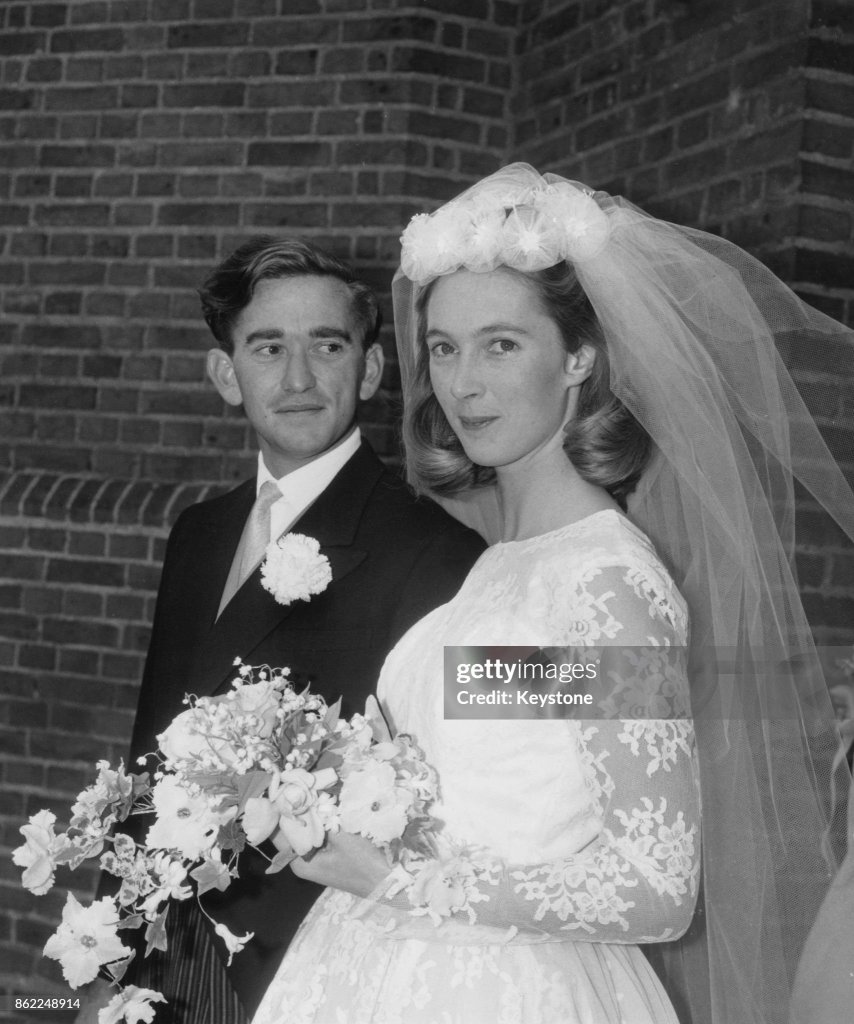
Anthropologist Jane Goodall marries wildlife photographer Baron Hugo van Lawick, at Chelsea Old Church, London (divorced 1974).
Wax likenesses of The Beatles were put on display in London’s Madame Tussauds Wax Museum. The Beatles were the first pop stars to be displayed at the museum.
Born:
Alan Kerr, Canadian NHL right wing (New York Islanders, Detroit Red Wings, Winnipeg Jets), in Hazelton, British Columbia, Canada.
Alexander Volkov, Ukrainian Soviet National Team and NBA center (Olympics, gold medal-USSR, 1988; Atlanta Hawks), in Omsk, Russian SFSR, Soviet Union.
Mike Fitzgerald, MLB first baseman (St. Louis Cardinals), in Savannah, Georgia.

 History Diaries