
Good Friday.
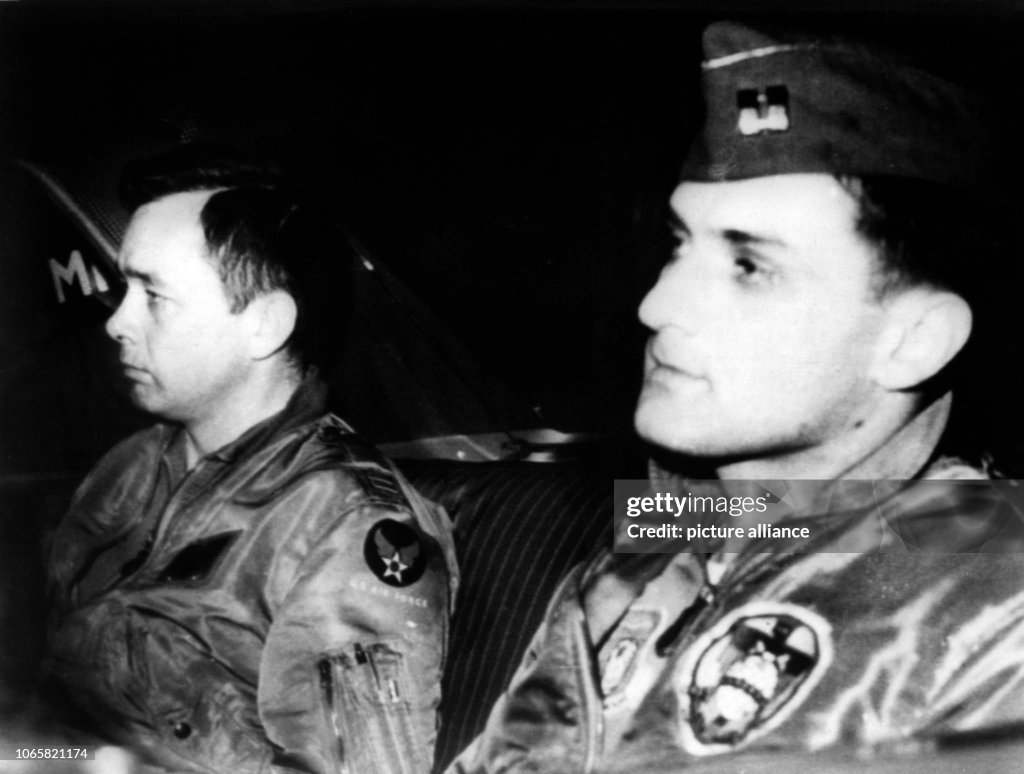
Two United States Air Force officers returned today to West Germany after 17 days’ detention in Soviet hands. Captain David I. Holland, pilot of an RB‐66 reconnaissance bomber shot down by a Soviet fighter over East Germany March 10, and Captain Melvin J. Kessler, a navigation instructor, were delivered into United States custody. Both were sober‐faced on their arrival. They looked fit. The Communist East German regime, seeking to sustain its claims of sovereign authority, said the two officers were released by agreement between the Soviet Union and East Germany after the United States had expressed regret for their “violation of East German airspace.” The East Germans have asserted that the men were guilty of espionage.
But the downing and capture, detention and eventual freeing of the American airmen were in fact entirely of Soviet undertaking. The release of the two, negotiated by Secretary of State Dean Rusk, was forecast by a White House announcement last night. Soviet Army authorities delivered Captain Holland and Captain Kessler to a United States military liaison officer at Marienborn on the East German border shortly before 3 PM. They were placed in a military sedan; the small party drove past a Soviet Army detachment standing at attention alongside the autobahn, and the sedan sped to West German territory. The automobile drove at high speed to Hanover, 50 miles to the west, where the two officers were transferred to an Air Force C-54 transport, and flown to Wiesbaden.
The route of return paralleled that of Lieutenant Harold W. Welch, the navigator of the reconnaissance aircraft that was shot down by a Soviet fighter 40 miles inside East Germany. Lieutenant Welch, who suffered a broken arm and leg when he parachuted from the plane, was released last Saturday. At the Wiesbaden base, the tall, dark‐haired officers, attired in the flying overalls they wore on their ill‐fated training mission, stepped silently from the aircraft. They were subdued in manner, showing no elation at escaping the long confinement and possible trial for espionage.
The Cambodian Government said today that it believed its border dispute with South Vietnam could be settled in “a few days.” Cambodia and South Vietnam broke off talks Monday because of the unfavorable atmosphere created by a South Vietnamese attack last week against the Cambodian frontier village of Chantrea. Today’s announcement said, however, that Cambodia would send a delegation to Saigon to resume negotiations only after Britain and the Soviet Union had fixed a date for convening a conference of world powers at Geneva to guarantee Cambodia’s neutrality and territorial integrity.
Premier Khrushchev, in a message to Prince Norodom Sihanouk of Cambodia, has expressed his indignation over the “brutal act of aggression” committed against Cambodia, Tass, the official press agency, said tonight. The Premier assured the Cambodian head of state that any Cambodian move to take the case before the United Nations Security Council would have the support of the Soviet Union, the agency said. Mr. Khrushchev’s telegram was in reply to a message received here from Prince Sihanouk last Friday. The Prince informed the Soviet Government of a South Vietnamese attack on a Cambodian border village and appealed for Soviet support for an international conference to guarantee the neutrality of Cambodia.
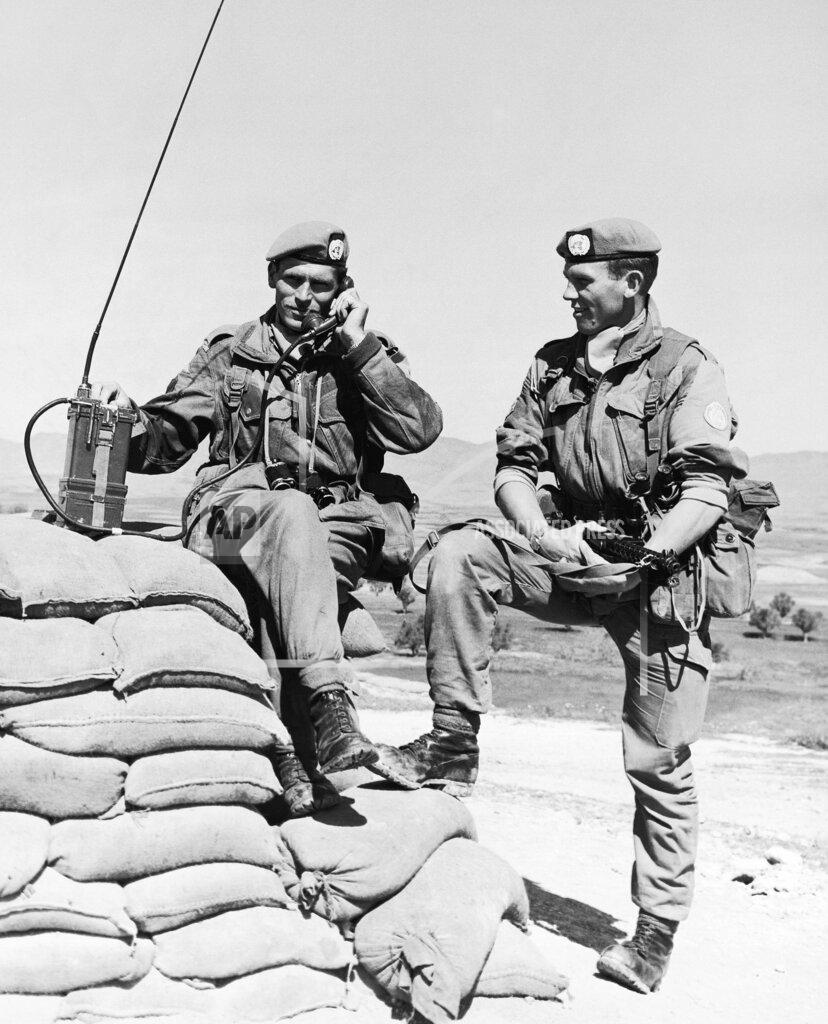
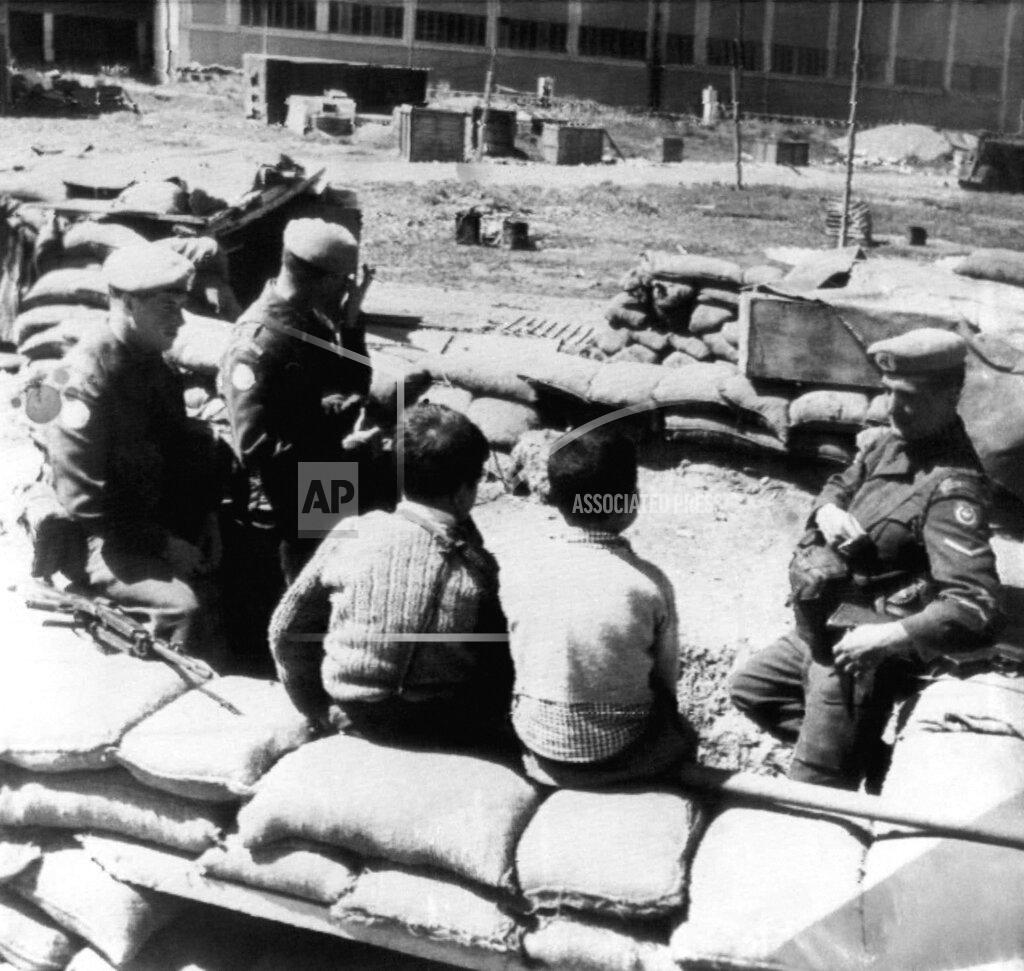
UNFICYP, the peacekeeping United Nations Force in Cyprus, became operational. With soldiers from nine nations, the force would reach a level of 6,238 troops and 173 police by June. The force has remained on Cyprus ever since and, more than 50 years later, has 1,100 personnel on the island.
The change‐over to United Nations blue seemed instantaneous and effortless at first light this morning when Lieutenant General Prem Singh Gyani formally assumed command. British soldiers at their posts all over the island were wearing blue berets, blue scarves and blue United Nations emblems on their sleeves. Three hours after the United Nations flag was raised today the first Canadian troops moved out of their encampment at Nicosia to take over British positions in Trakhonas, the troubled suburb on the northern edge of the town. Before they could get into their new positions the Canadians were involved in a minor incident typical of the sort of thing that keeps Cypriote nerves jangled and often leads to bloodshed. Three Turkish Cypriote shepherds wandered with their flock into Greek Cypriote territory and were seized by Greek Cypriotes in police uniforms. About 15 Turkish Cypriotes with rifles and shotguns then jumped from their positions and raced across a field toward the scene. Major Mike Heery, who commands a company of British paratroopers near the spot sped ahead of them to block their advance and negotiate the release of the shepherds.
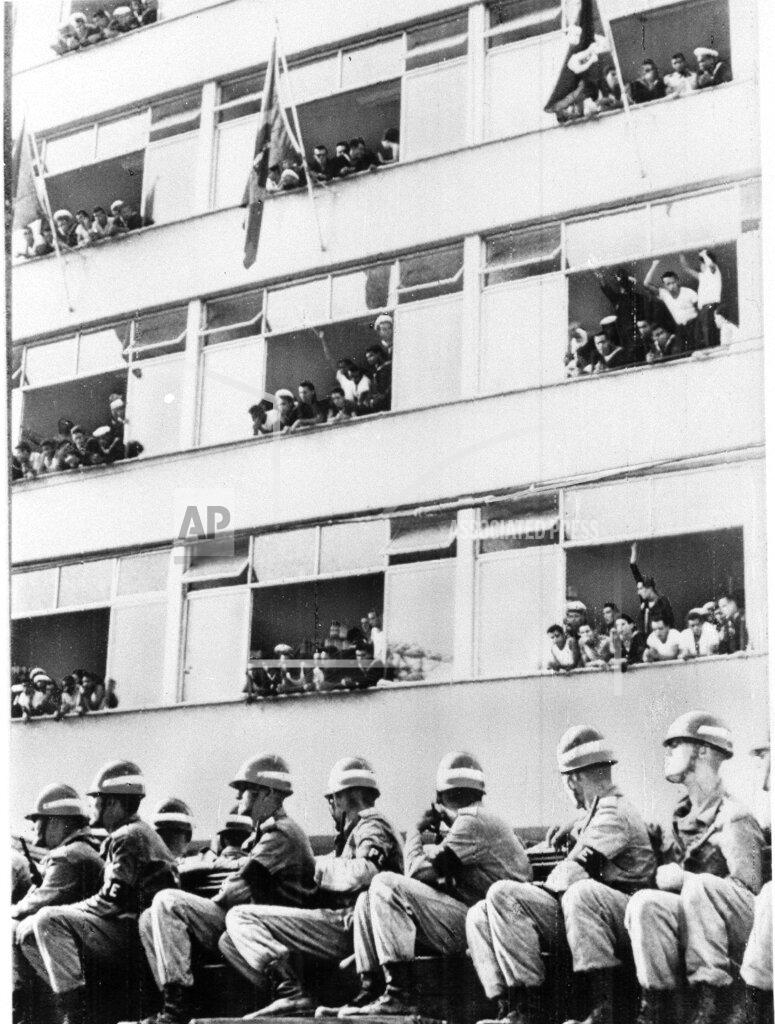
Mutinous sailors and marines surrendered in Rio de Janeiro, Brazil today but won their demands for an amnesty and recognition of their leftist association. The 1,425 enlisted men were released two hours after they had surrendered to aimy troops. President Joāo Goulart accepted the resignation of the Navy Minister, Admiral Silvio Borgos de Souza Mota, who opposed the Sailors and Marines Association as a subversive organization. The minister offered his resignation yesterday, feeling that President Goulart did not support his efforts to repress the association’s activities and cooperation with leftist labor unions.
The chief Soviet delegate to the Asian‐African People’s Solidarity Conference in Algiers charged today that the Chinese Communist representative had disrupted the week‐long meeting with “calumnies and lies.” In a 90‐minute news conference at the Soviet Cultural Center, the Soviet delegate, Babodzhan F. Gafurov, in moderate but firm tones, said his delegation had successfully countered Chinese Communist “maneuvers” to split the conference and turn the Africans and Asians against Moscow. “Contrary to their hopes of discrediting us,” Mr. Gafurov said, “the Chinese have remained isolated.” He added that the resolutions, issued at the final session today, reflected the Soviet position. “The Chinese were even forced to vote for peaceful coexistence,” he said.
Premier Fidel Castro emerged today from a political trial as the supreme judge of policy and conduct in the Cuban revolution. As such, he assailed secondary leaders of the regime, exonerated “old guard” Communists of charges raised in the trial, condemned the defendant and attacked “bourgeois ideologists” in a 4‐hourand‐40‐minute appearance before the Supreme Court. Premier Castro said that factionalism and “divisive forces” were at work in Cuba and that these had been unmasked in this trial, a hearing on the appeal of a Communist convicted of having been an informer to the police of former President FuIgencio Batista. Apart from a minor press purge, the main outcome of the trial seemed to be Dr. Castro’s assertion of his authority, answerable only “to the people,” and a hardening of the “proletarian” line of the revolution after a period in which Premier Castro gave encouragement to “intellectuals.”
The Administration has been receiving disturbing reports from Zanzibar. Communists from abroad and extremists on the island appear to be extending their influence rapidly. Precise information is still hard to obtain and interpretations of the available facts vary. But the pattern of events has led the British Government to share Washington’s concern. A series of conferences over the next week will review the Western powers’ chances of arresting the trend. Power on the island, which lies 24 miles from the coast of Tanganyika in the Indian Ocean, is shared by two groups that emerged from a January revolt against an Arab oligarchy. They are the Afro‐Shirazi Nationalist party, led by President Abeid Amani Karume, and a smaller but more energetic group of extremists and Marxists, led by the Minister of External Affairs and Defense, Sheik Abdul Rahman Mohammed, also called Babu.
Ethiopian troops are fighting civilians in the border village of Habas, a Somali Government spokesman said tonight. Somalia listed casualties as 150 Ethiopian dead or wounded, 22 Somali soldiers wounded and seven dead. There were no details of any civilian casualties. The spokesman said Ethiopian armored vehicles and a camp at Daba Goriale had been destroyed, and that much ammunition had been captured. The Government of Somalia protested to the Ethiopian Ambassador yesterday, charging attacks on four Somali northwest border posts — Daba Goriale, Durukhsi, Inia Guha and Abdulkadir — by Ethiopian artillery and military aircraft.
Pope Paul VI walked for an hour in wet and chilly weather late tonight as he led thousands of Romans and pilgrims in an open‐air Good Friday rite. The devotion commemorated the Crucifixion of Jesus. In an address at the end of the ceremony the Pontiff said that the “divine drama” of the Passion was at the center of human destinies and had given light to the world.
Radio Caroline, the famous Pirate Radio Station broadcasting from off the British Isles, begins test transmissions.
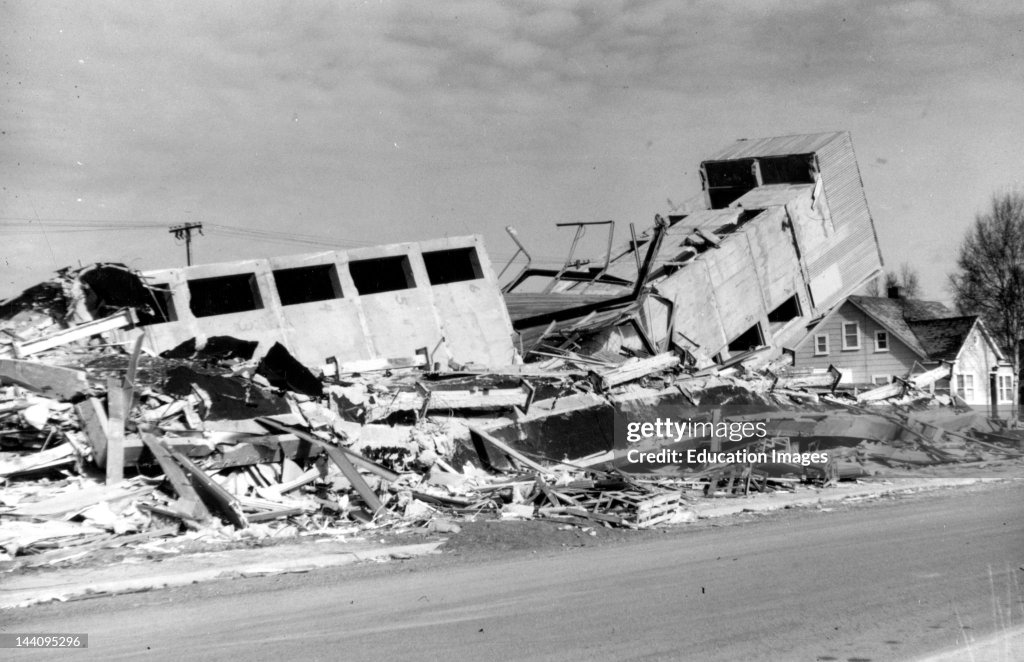
At 5:36 in the afternoon on Good Friday (0336 UTC March 28), the Great Alaskan earthquake, recorded at between 8.6 and 9.2 on the Richter scale, struck the city of Anchorage, Alaska. The tremor, the most powerful earthquake in the United States and the second most powerful in recorded history, killed 131 people and sent waves that struck the coasts of Alaska, British Columbia, Washington, Oregon and California as well as forcing the call for 300,000 residents of Hawaii to evacuate. At Valdez, Alaska, 24 dockworkers unloading a ship were killed when the dock was pulled underwater. Deemed unsafe, the entire town was moved to a location four miles away.
Word from a half dozen Alaskan cities in the area told of damage. Governor William. A. Egan called an emergency meeting of his Cabinet in Juneau. He said General Andy Lipscombe, chief of the Army’s Yukon Command here, had reported Anchorage’s main street “completely flattened.” A state trooper in Kenai said he had radio contact with Anchorage. He reported to civil defense officials here that things were “pretty tragic up there.” He said about 50 homes on Turnagain Bluff had gone over the cliff. Six bodies had been removed from the homes. The trooper said Presbyterian Hospital in Anchorage and the hospital at Elmendorf had been evacuated. Most communications with the city of 48,000 persons were cut off. All airports were unusable and a hangar collapsed on aircraft at the Elmendorf Air Force base at Anchorage.
In Los Angeles, the Coast Guard warned that a possible tidal wave from the earthquake could develop on the Pacific Coast and at Hawaii. Shipping was warned.
In Washington, a spokesman at the national headquarters of the American Red Cross said Seattle would be used as a marshaling point to rush Red Cross personnel and supplies into the stricken areas of Alaska. The spokesman said nurses had been alerted and military planes, would be requested if necessary to fly them into the earthquake area. The headquarters was not able to contact its regular staff in Alaska.
Secretary of State Dean Rusk commended Senator J. W. Fulbright today for a “thoughtful and thought‐provoking” speech about the “myths” and realities of United States foreign policy. However, the Secretary disputed Mr. Fulbright’s view of Cuba. under Premier Fidel Castro. “I think Castro is more than a nuisance,” he said. “He is a threat to this hemisphere.” Mr. Rusk also denied Mr. Fulbright’s contention that the effort to isolate Cuba economically had failed. In his speech, Mr. Fulbright said “Cuban Communism does pose a grave threat to other Latin‐American countries, but this threat can be dealt with by prompt and vigorous use of the established procedures of the inter‐American system against any active aggression.” Mr. Rusk said the Administration would not accept the Castro regime as permanent so long as it threatened to subvert other American governments and so long as it maintained military and political ties with the Soviet Union.
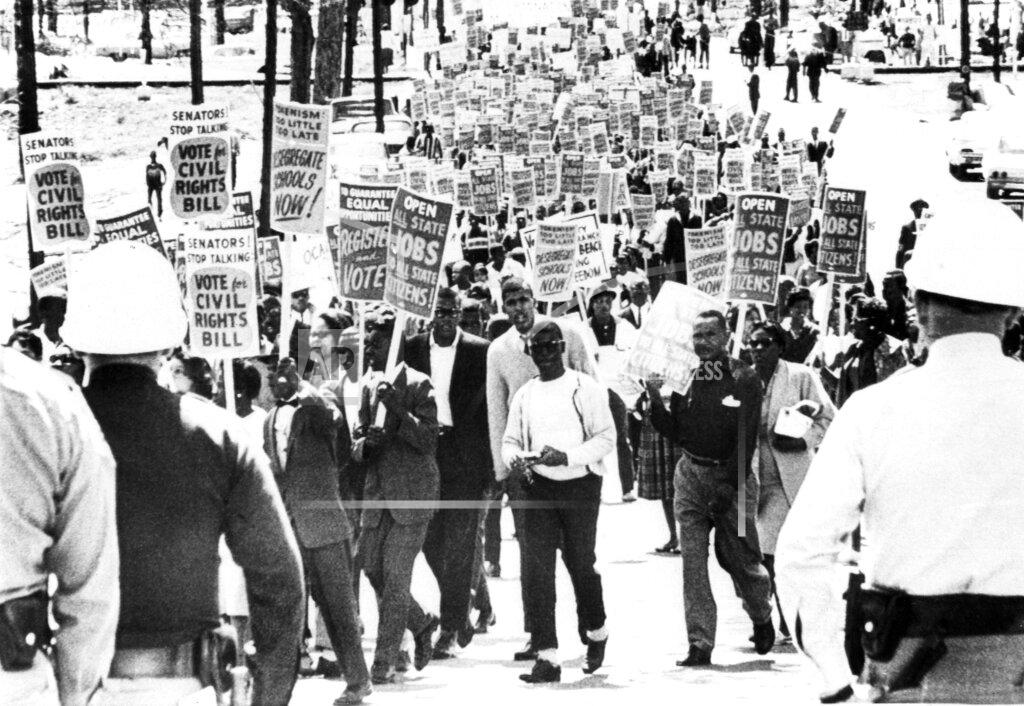
Immediately after the Senate refused yesterday to send the civil rights bill to the Judiciary Committee for 10 days, Senator Richard B. Russell said that the South had lost a battle for constitutional government — but only a battle. “We shall now begin to fight the war,” the Georgia Democrat declared defiantly. The Southern strategy for the war will be the same as it was in the 16‐day battle just lost. That is to gain time for public pressure to build up north of the Mason‐Dixon Line in support of the central thesis of the Southern Senators. This thesis is that “the so-called civil rights bill,” by giving preferential treatment to Blacks, would deprive the white majority of their private, inalienable and constitutional rights to manage their own property; and that, in many ways, it would negate the rights reserved to the states by the Constitution and destroy the constitutional balance of powers in the Federal Government.
The Southerners make no secret of this strategy. They openly proclaim it and have confidently announced they are making headway. They are under no illusion that they can kill the bill. They do hope to arouse enough sentiment against the bill so that enough Northern Senators will cooperate in its emasculation. In this battle for public support in the North, the Southerners know that the clergy is their most formidable enemy. Mr. Russell makes no secret of this. Yesterday he bitterly complained that “groups of ministers from all over the nation” were descending on Washington,” sanctimoniously moralizing over what is essentially a political (meaning a constitutional) question.”
It remains to be seen whether the Southerners’ strategy is successful. But after nearly three weeks of Southern denunciation of every section of the bill, many political observers here believe they will in the end defeat themselves by their refusal to concede that there is a moral question and that the issue is not simply one of constitutionalism. Repeatedly the Southerners have declared that the “racial problem” is no longer sectional but national. But the problem, as they see it, is “the resort to violence,” “the civil disobedience” instigated by “outside agitators.” This problem is regarded as the province of the state and local police power. It is not seen as one growing out of just grievances, long unredressed.
The California State Supreme Court ruled unanimously today that Pierre Salinger, White House press secretary until a week ago, was eligible to run for United States Senator in California. The decision set the stage for a three‐way battle for the Democratic nomination in the primary of June 2. Already formally entered in the contest are the incumbent, Senator Clair Engle, who underwent surgery for a brain tumor last August and state Controller Alan Cranston. There are nine other secondary aspirants.
Arkansas Governor Orval E. Faubus told officials of Hot Springs today to shut down illegal gambling. If they do not, he said, he will send the state police to close the mountain resort’s wide‐open casinos. Police, Chief John Ermey responded with the announcement that the gamblers must shut down after tomorrow night. He said the Police Department would not need outside help. Governor Faubus’s ultimatum came while the Justice Department was investigating the illegal gambling activities in Hot Springs, which it called the biggest in the United States. Mr. Faubus said he thought the plush casinos as well as the smaller places should close within 48 hours, but he said he would set no time limit. The Governor acted a day after the Arkansas House of Representatives adopted 91 to 3 a resolution calling on Hot Springs officials to stop illegal gambling.
President Johnson began a long weekend of rest, reading, and reflection at his ranch today. It was the President’s first holiday since his 10‐day Christmas vacation at the LBJ ranch, 65 miles from Austin on the central Texas hill country. George Reedy, White Hottse press secretary, said the President had planned no official activities beyond “reading and going over papers.” No visits from administration officials are scheduled during the Easter weekend, Mr. Reedy said, and the only house guests at the stone‐and‐white‐framed LBJ ranch house are Representative and Mrs. Jack Brooks of Beaumont, Texas.
Kosmos 27 was launched by the Soviet Union in to make the first atmospheric probe of the planet Venus, but failed to escape Earth orbit and burned up in the atmosphere the next day.
On the same day, Ariel 2, the first satellite to equipped for radio astronomy, and only the second to be launched by the United Kingdom, was put into orbit.
Born:
Gene Chilton, NFL center (St. Louis Cardinals, Kansas City Chiefs, New England Patriots), in Houston, Texas.
Clark Datchler, British vocalist, songwriter, and producer (Johnny Hates Jazz – “Shattered Dreams”), in Sutton, Surrey, England, United Kingdom.



 History Diaries