The Administration forcefully rejected today “withdrawal,” “neutralization,” or “peace at any price,” in the war against Communist insurgency in South Vietnam. Secretary of Defense Robert S. McNamara, in an hour‐long speech that was in effect a government white paper, reaffirmed the plans of the United States to accelerate military and economic support for the regime of Major General Nguyễn Khánh. He left open the possibility of direct military action against North Vietnam to curb the supply of arms and military leadership to the Việt Cộng guerrillas. “This course of action — its implications and ways of carrying it out — has been carefully studied,” he said. Mr. McNamara did not elaborate. The Secretary stressed that the war would have to be won in South Vietnam. He also drew attention to the Communists’ use of routes through Cambodia and Laos in support of the Việt Cộng insurgency. The United States and South Vietnam expressed regrets last week for a border attack by American-supported South Vietnamese forces that killed 17 persons in the Cambodian village of Chantrea.
The Defense Secretary did not elaborate on the Cambodian issue either, except to observe in a separate passage that General Khánh had shown sagacity in quickly expressing regret for the incident. Mr. McNamara’s theme throughout was that the United States planned to remain in the struggle against a Communist takeover of south Vietnam until an “independent and stable” country there made it safe to withdraw. He did not mention whether previously announced plans to withdraw most of the 15,500 United States troops in South Vietnam by the end of 1965 had been modified.
U.S. Army Captain Floyd J. “Jim” Thompson was captured by the Việt Cộng in South Vietnam after he and his pilot, Richard L. Whitesides, were shot down over the Quảng Trị Province, near the village of A Vào. Whitesides was killed in the crash, while Thompson was sent to a prison camp in North Vietnam, where he would spend almost nine years in captivity. Released on March 16, 1973, ten days short of the anniversary of his capture, Captain Thompson remains the longest serving American prisoner of war.
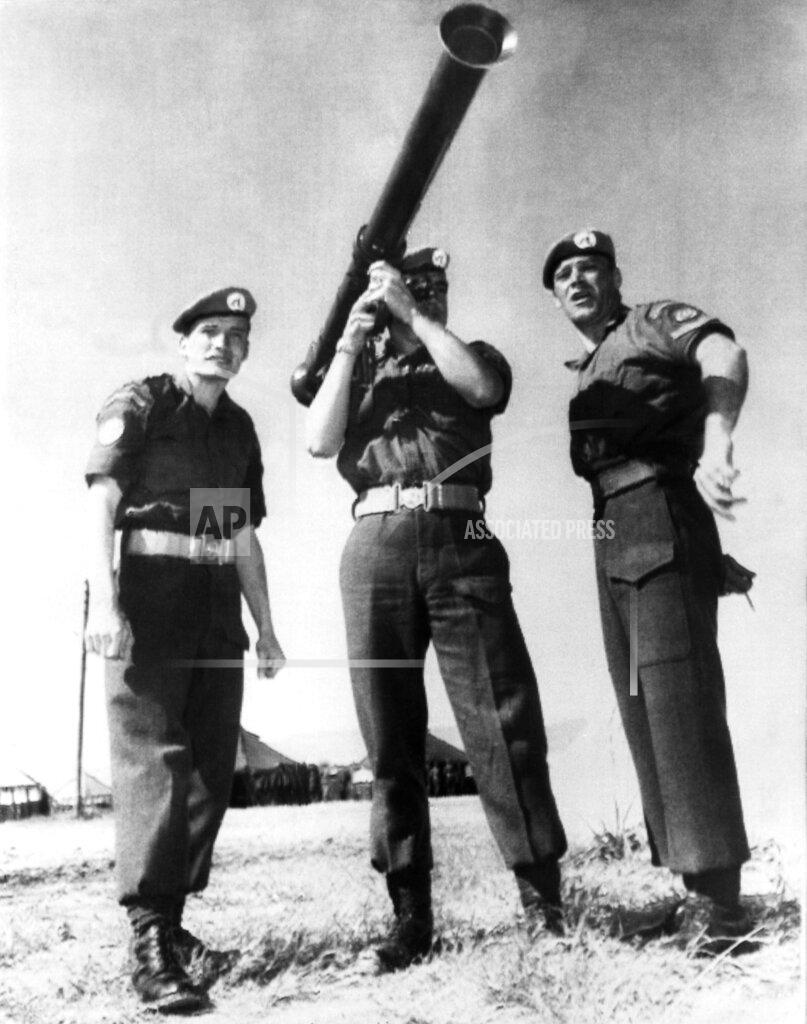
The new Marine Commandant today called the Army’s rocket‐firing helicopters an inadequate substitute for Marine jets in protecting troop‐carrying marine helicopters in South Vietnam. The air force has also been opposing Army pIans for a big fleet of armed helicopters. In a speech at the National Press Club, General Wallace M. Greene made it clear the corps had reluctantly made do with fire support from Army helicopters and light airplanes of the South Vietnamese Air Force. The four‐star Marine general visited the fighting areas in Vietnam shortly after becoming the corps’ 23rd commandant in January. He said, that while the cooperation had been excellent there, “we do not believe that this arrangement is an adequate substitute for the support which Marine fixed-wing aircraft could have provided.” The Marine chief said that after two years’ experience ferrying South Vietnamese soldiers into combat, “We have found no reason to change basic Marine concepts of helicopter tactics and close air support.”
The Cambodian Government has demanded that the United States pay reparations for the recent border raid in which, Cambodians were killed. The demand grew out of an air and ground attack on Chantrea a week ago. The attacking South Vietnamese forces were accompanied by United States military advisers. Saigon and Washington have expressed regret over the incident, in which 17 villagers were killed. Their explanation was that the attack had been a result of faulty map reading. In a letter to Secretary of State Dean Rusk, the Cambodian Foreign Minister, Huot Sambath, called on the United States to pay reparations of “one bulldozer or a powerful tractor for each of our dead” and the equivalent value in heavy equipment for the material damage caused, not only in Chantrea but also in other villages previously attacked. United States Embassy sources said the Cambodian letter was received late yesterday and was “being studied.”
The Cambodian demand for tractors was noted by observers here as being similar to a demand made by Premier Fidel Castro in May, 1961. The Cuban leader said that he would free 1,200 Cuban exiles captured in the invasion attempt the month before in return for 500 tractors and bulldozers from the United States. Negotiations to exchange tractors for the prisoners collapsed. Dr. Castro later released the prisoners in exchange for $53 million worth of medicines and food. Some observers said today that such reparations, if paid in full, might more than compensate for the loss of United States economic aid, which was halted last November at the request, of Prince Norodom Sihanouk, the Cambodian chief of state. Until that time, the aid had been running at the rate of $30 million a year.
The French Government believes that its special relationship with Cambodia, based on President de Gaulle’s influence, will induce Prince Sihanouk to negotiate a settlement of the country’s border problems. France, however, favors a convening of an international conference to guarantee Cambodia’s neutrality and territorial integrity, French sources said. This is in line with General de Gaulle’s professed view that the only possible future for Laos, Vietnam and Cambodia lies in a policy of neutrality.
The UN force charged with keeping the peace in Cyprus will go into operation tomorrow, the United Nations announced in Nicosia today. At 5 AM, Lieutenant General Prem Singh Gyani will assume command of the United Nations force and the British troops will be removed in name from the exposed peacekeeping role they have played alone since December 26. At the start the Indian commander will have only British troops and 1,000 Canadians who have arrived on the island to deploy for the peace‐keeping mission.
This afternoon, in separate visits to Archbishop Makarios, President of Cyprus, and Fazil Kutchuk, Vice President and leader of the Turkish Cypriote community General Gyani was drawn into a dispute. The archbishop informed the general that Rauf Denktash, strong man of the Turkish community here, could not be given a United Nations escort if he came back to the island. Mr. Denktash, who is president of the Turkish communal chamber in Cyprus, is in Ankara. He had planned to return tomorrow night. Because the airport is under the control of the Greek Cypriotes, he had to seek their permission and the protection of the United Nations. The archbishop said the Government had evidence of criminal offenses committed by Mr. Denktash that made him liable to arrest and prosecution. Government spokesmen would not elaborate tonight.
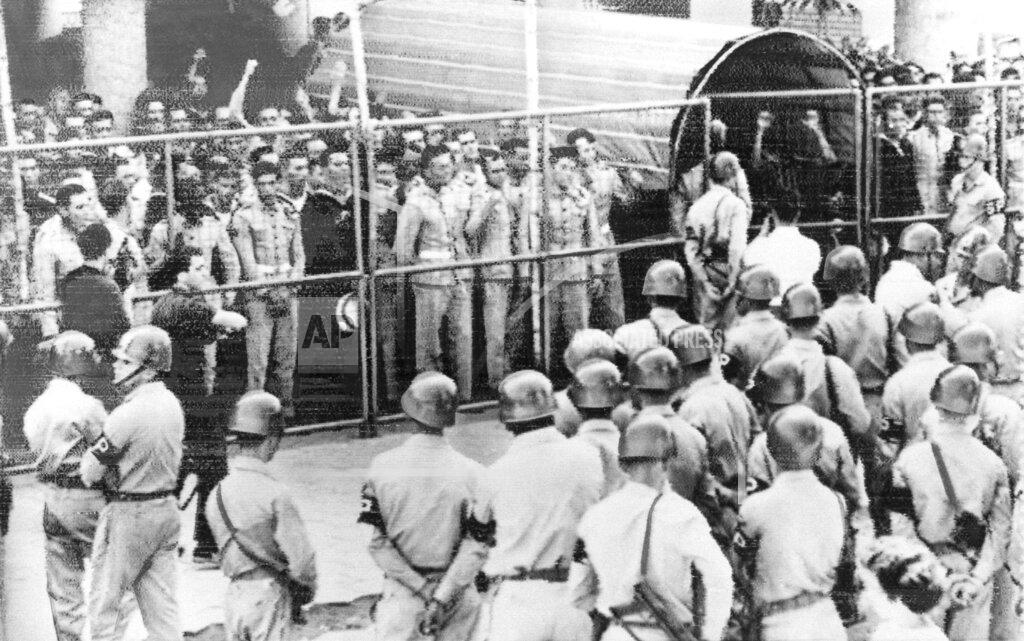
The Brazilian Navy Minister, Admiral Silvio Borgos de Souza Mota, resigned tonight after he had failed to persuade a group of rebellious sailors and marines to submit to arrest. The rebels, estimated to total as many as 3,000 men, took over the downtown building of the Metallurgical Workers Union last night. They shouted from the windows. “We want reforms! We are dying of hunger!” The enlisted men also shouted their support of President Joao Goulart, who has been carrying on a drive for reforms, including land expropriation and changes in the Constitution.
Two American fliers held by East Germany since they were shot down by a Soviet fighter March 10 were reportedly to be freed tomorrow.
The Soviet Union pledged more trade and aid for developing countries — but told them it could do much more if trade restrictions between Communist and Western nations were removed.
U. S. sources have flatly denied that Russian spies have penetrated the Central Intelligence Agency. The denial came after the charge was brought on the House floor.
Conservative Republicans grabbed for a campaign issue of “appeasement” in a foreign-policy speech by Senator J. William Fulbright (D-Arkansas).
The Zanzibar Government announced today that all British civil servants except doctors, dentists, ship’s engineers and officers must leave the island by April 30. It was understood that there were 60 British civil servants employed by the new Zanzibar Government.
Pope Paul pledged at the Holy Week Mass commemorating Jesus’s Last Supper his “firm determination” to lead the Ecumenical Council to a successful conclusion. He said the council will give to the bishops the worth which Christ intended to confer upon them.
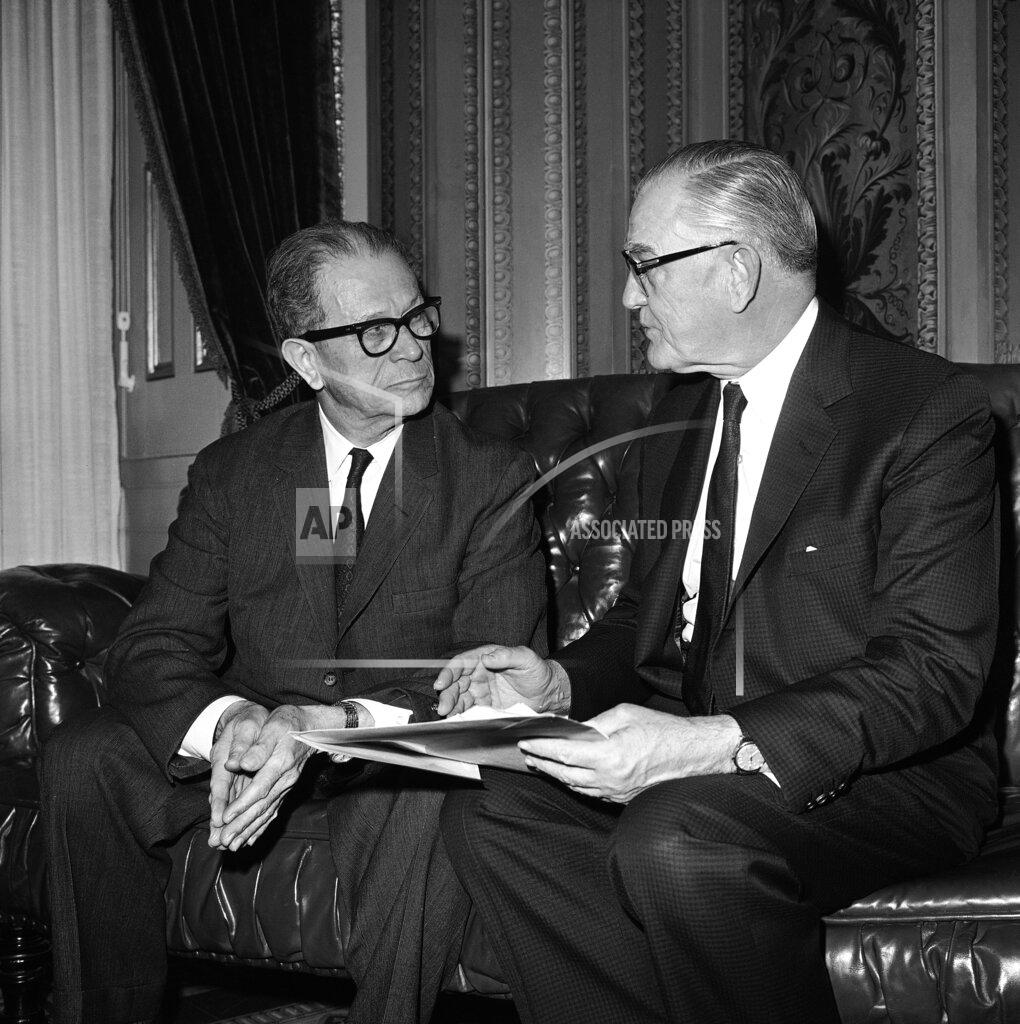
The U.S. Senate finally got squared away today for the formal civil rights battle as the bipartisan managers of the bill closed two and a half weeks of preliminary skirmishing with two easy victories.
First, the Senate voted, 67 to 17, to make the bill its pending business. Since March 9 the Southern opponents of the bill have been talking to stall a vote on calling it up for formal debate.
Second, the Senate, by a vote of 50 to 34, refused to send the bill to the Judiciary Committee for 10 days of hearings. That motion had been advanced by Senator Morse, Democrat of Oregon. It had the support of the Southerners and the Republican Leader, Senator Everett McKinley Dirksen of Illinois.
These votes cleared the way for formal debate to begin Monday, after the Easter recess. The Senate will not be in session tomorrow. As expected, only the 19 members of the Southern bloc, headed by Senator Richard B. Russell, Democrat of Georgia, opposed the motion to take up the bill. Two of them, Senators J. W. Fulbright, Democrat of Arkansas, and John G. Tower, Republican of Texas, did not vote but were paired against the motion. The margin of victory on the Morse motion to refer the bill to committee came as something of a surprise. A few days ago, Senators Hubert H. Humphrey, Democrat of Minnesota, and Thomas H. Kuchel, Republican of California, the bill’s managers, believed the vote would be extremely close. Even yesterday they thought they would probably win by no more than 7 or 8 votes. Even more surprising was the, failure of Senator Dirksen to hold even a third of the 33 Senate RepubIicans with him. The line‐up on the roll‐call was 34 Democrats and 16 Republicans for tabling, or killing, the Morse motion, and 25 Democrats and 9 Republicans against tabling.
Immediately after the vote on the Morse motion, Senator Russell told the Senate: “We lost a skirmish in the battle for constitutional government. Now we begin to fight the war.”
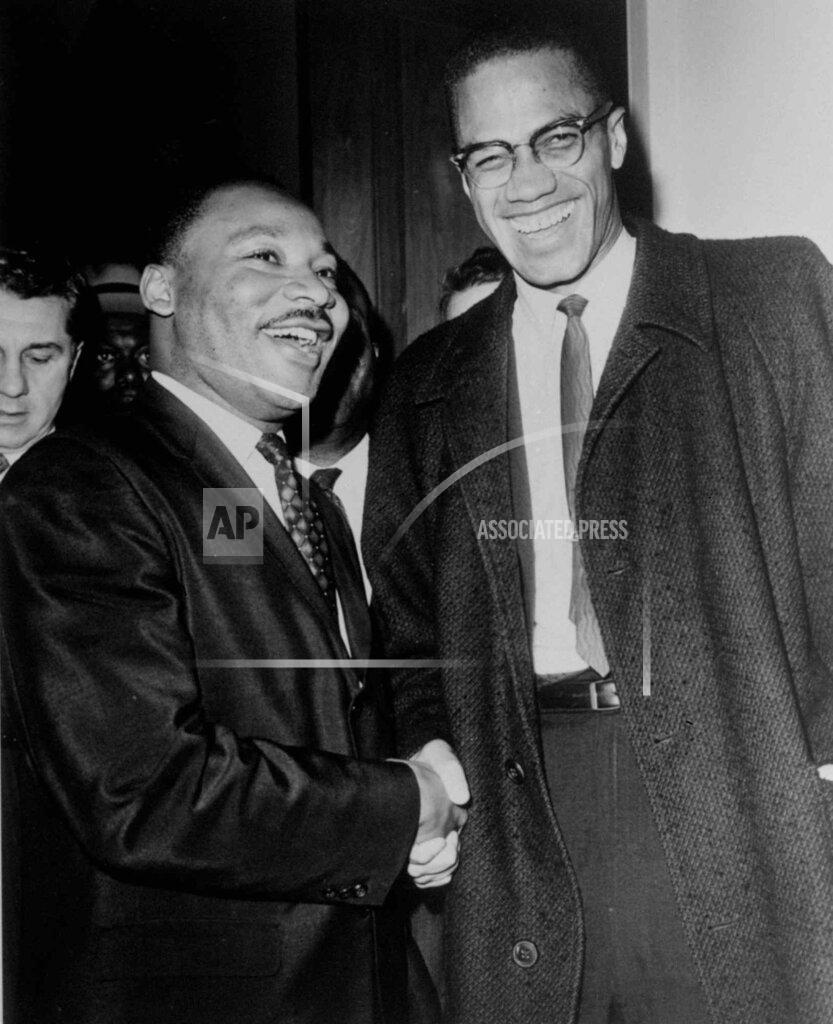
In a news conference at the Capitol, the Rev. Dr. Martin Luther King Jr., the Black civil rights leader, that steps would be taken if Southern Senators engaged in determined filibuster. Civil rights organizations are, prepared to wage a campaign of “direct action” in Washington and around the country “to dramatize the abuse of the legislative process,” he said: He said that a month of debate was reasonable. But if the debate goes beyond the first week in May, the program of direct action will go into effect, he said. Fifteen leaders of the Southern Christian Leadership Conference, which Dr. King heads, discussed plans for this program here today.
Dr. King declined to say what form the action would take, except that persuasion would first be tried to bring the debate to a close. He was reminded by a reporter that the law forbids demonstrations on the grounds of the Capitol and in the building itself. Asked if the Black leaders contemplated demonstrations at the Capitol, he replied: “At this point I would not say that civil disobedience would become necessary. But it could become necessary if Southern Senators are so determined that we must lift the issue to the surface of the consciousness of the nation.”
Malcolm X, the “black nationalist” leader, said today that he wanted the Senate to pass the civil rights bill but forecast that enforcing its provisions would lead to violence. Malcolm, who split recently with the leaders of the Black Muslim religious movement and set up his own militant group, was in the Senate gallery today during parts of the debate on the measure. On and off during the day he held impromptu press conferences in the corridors. He said he wanted the Senate to pass the House bill “exactly as it is, with no changes.” But, he said, the bill would not solve the Black problem “because you can’t legislate goodwill — that comes about only by education.”
Arizona highway patrolmen ejected about 20 singing, hand‐clapping civil rights demonstrators from the State Senate building in Phoenix tonight. In 10 minutes the 22 uniformed and about 20 plainclothes patrolmen cleared the first and second floors of the building. The demonstrators were taken to a grassy area in the center of the Capitol Mall and there released. The group had gathered for a third day of demonstrations calling for Senate passage of a public accommodations bill.
A decision was handed down yesterday by the United States Court of Appeals that could result in the release of thousands of felons who were not advised of their right to counsel at their trials. In 1963, the Supreme Court ruled that convictions under such circumstances were illegal. Yesterday the Appeals Court held that ruling to be retroactive without limit. The Appeals Court indicated that its decision would compel the release of thousands of prisoners who could not be retried because witnesses and evidence were no longer available. Yesterday’s decision, the first ruling, is expected to be the ruling, is expected to be the forerunner of similar findings by appeals courts throughout the country. The principal beneficiaries in New York State will be felons who, have been convicted more than once. The practice in federal courts, and in New York State, courts is to advise defendants of their right to counsel and, where necessary, to appoint a defense lawyer.
George Meany, president of the American Federation of Labor and Congress of Industrial Organizations, sharply attacked the Johnson Administration’s economic guidelines today as dangerous. He said he would urge the labor federation to take a strong position against them. Mr. Meany objected to the guidelines, which set general wage and price signposts for noninflationary labor agreements, because he feared they would lead to unwarranted Government controls. He also challenged the Government’s position that it, had a responsibility to assert the public interest in collective bargaining. “It’s quite obvious that if you are going to have guidelines on the question of wages, the question of prices, the question of the rate of production, you’ll have to go a little further,” Mr. Meany declared. “If we go down this road far enough, it leads to the end of free collective bargaining. As far as I’m concerned, I don’t propose that labor at any time agree to go down this road.”
President Johnson announced today an additional saving of $35 million this year in government expenditures. The largest single item — $20 million in the Area Development Program — stems from Congressional refusal to enact a requested spending authorization. The savings range downward to one item of $1,130 in the Farmers Cooperative Service of the Agriculture Department. Such economies, the President said, are “consistent with my philosophy that no saving is too small to be ignored.” He listed 62 economies in all and said there was a possibility that $15 million more might be saved between now and the end of the current fiscal year on June 30.
Lieutenant Colonel John H. Glenn Jr., said today his future political plans are up to his physicians. “I am waiting for a decision by my doctors,” he said, “and will base my future plans on what they tell me.” The 42‐year‐old lieutenant colonel is recuperating at Lackland Air Force Base’s Wilford Hall Hospital from a fall in his Columbus, Ohio, home February 26. Colonel Glenn was scheduled for retirement from the Marine Corps April 1 to seek the Democratic Senate nomination in Ohio. However, his doctor, Colonel E. W. Brannon, is not sure the astronaut will be able to meet the deadline.
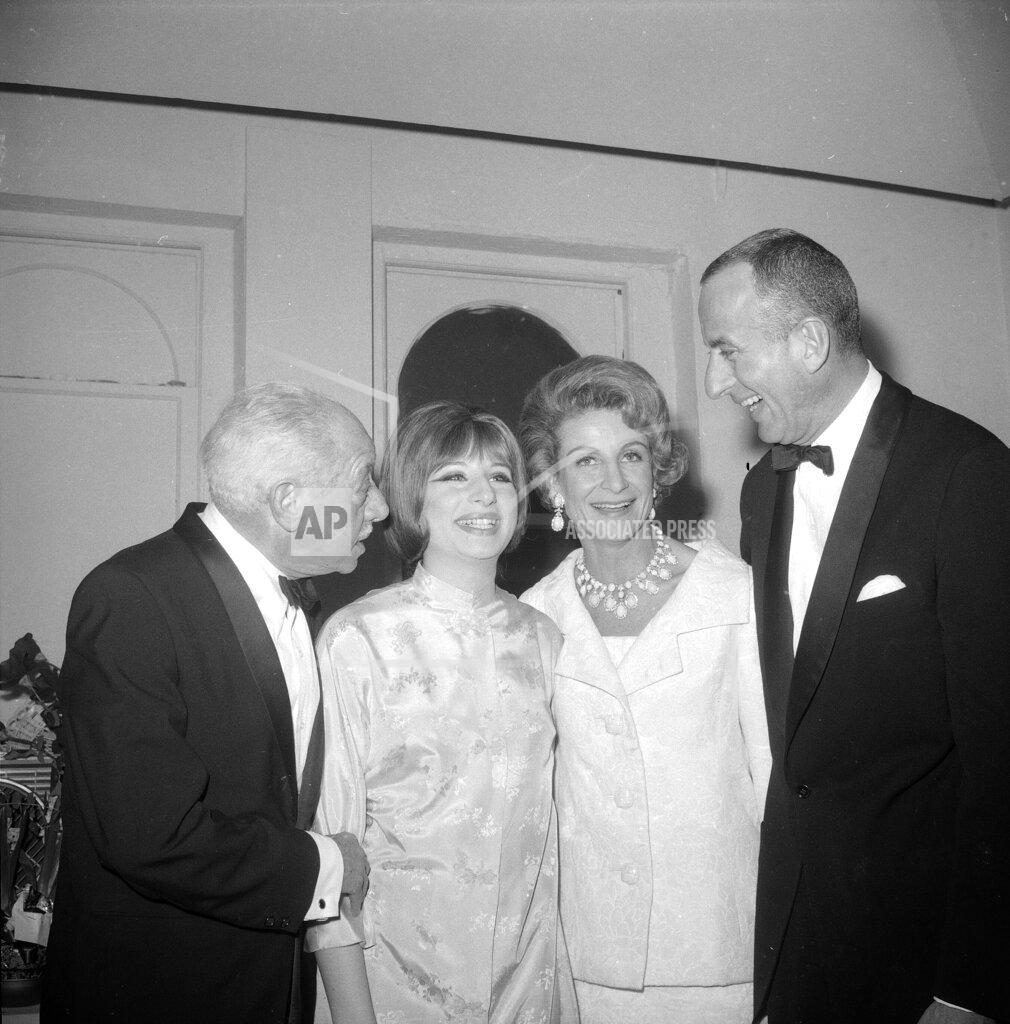
Jule Styne and Bob Merrill’s musical “Funny Girl,” starring Barbra Streisand as Fanny Brice, opens at Winter Garden Theater, New York City; runs for 1,348 performances.
“You Only Live Twice,” Ian Fleming’s twelfth James Bond novel, and the last of his novels to be published during his lifetime, was released by Jonathan Cape in the United Kingdom.
Dow Jones Industrial Average: 815.91 (+2.75).
Born:
Ulf Samuelsson, Swedish-American Team Sweden and NHL defenseman (Olympics-Team Sweden, 1998; NHL Champions, Stanley Cup-Penguins, 1991, 1992; Hartford Whalers, Pittsburgh Penguins, New York Rangers, Detroit Red Wings, Philadelphia Flyers), in Fagersta, Sweden.
Allan Bester, Canadian NHL goalie (Toronto Maple Leafs, Detroit Red Wings, Dallas Stars), in Hamilton, Ontario, Canada.
Mike Loynd, MLB pitcher (Texas Rangers), in St. Louis, Missouri.
Carl Carr, NFL linebacker (Detroit Lions), in South Boston, Virginia.
Barry “Baz” Warne, British rock guitarist and singer (The Stranglers, 2000-present), in Sunderland, England, United Kingdom.
Died:
Henry Monck-Mason Moore, 77, British colonial administrator who served as the first Governor-General of Ceylon (now Sri Lanka) after it was granted independence in 1948, serving until 1949. Moore had previously served as Ceylon’s Governor (1944–1948), and as Governor of Sierra Leone (1934–1937) and Governor of Kenya (1940–1944).
Hedwig Kohn, 77, Prussian-born Jewish physics pioneer.


 History Diaries