Leonid Brezhnev, the Communist party leader, and Secretary of State Kissinger began a series of crucial discussions with eight hours of talks in the Kremlin devoted mostly to Europe and the prospects for a new Soviet-American agreement on the limitation of strategic weapons. Spokesmen for both sides refused to comment on details of the talks, which began three days of discussions by the two nuclear superpowers in advance of a planned return visit to Moscow in June by President Nixon. But both sides sought to convey a conciliatory and friendly mood, somewhat in contrast to the sharp words in the Soviet press and the doubts expressed in private and public by Mr. Kissinger before he left for Moscow on Saturday night.
Mr. Brezhnev, the 67-year-old General Secretary of the Communist party, struck the positive tone this morning before the first session with Mr. Kissinger, which lasted three hours. Meeting with American correspondents who had accompanied Mr. Kissinger to Moscow, the Soviet leader said he was optimistic that the talks on new arms accord would prove fruitful. Mr. Brezhnev seemed relaxed and said he was pleased with the state of relations. A spokesman for Mr. Kissinger said that after a five‐hour session in the Kremlin tonight, the Secretary considered the atmosphere friendly, in keeping with the mood all day.
Chatting with the American newsmen this morning, Mr. Brezhnev had said, “Relations at this point are good.” Referring to the wide range of subjects to be covered, including some that have strained relations in recent weeks, Mr. Brezhnev said, “We have much work to do.” Mr. Kissinger stressed the Administration’s determination to maintain good relations in a toast at a luncheon given in his honor by Foreign Minister Andrei A. Gromyko. Nevertheless, he uttered the most cautionary words of the day warning that there can be no peace in the world if the Soviet Union and the United States “attempt to take advantage of each other” or “attempt to blackmail each other, or deal with each other from a strong position.”
The Soviet Union, increasingly at odds with the policies of President Anwar Sadat of Egypt, published an attack in Pravda, the official Communist party newspaper, on Cairo’s drift away from the Socialist program of the late President Gamal Abdel Nasser. Pravda’s call for Mr. Sadat to halt the “vilification” of Mr. Nasser and his policies suggested that Moscow has become both bitter and fearful that Egypt, once the anchor of Soviet influence in the Middle East, is not only moving toward the West in foreign policy, but also gradually dismantling the socialist economy that Soviet aid was intended to promote.
Syrian and Israeli forces shelled each other today for the 14th day on the Golan Heights front. An Israeli military spokesman said that the Syrians started the shelling and that Israelis did not respond immediately. A communique said that the Syrians had inflicted no casualties. In Damascus, a Syrian spokesman said Syrian tanks and, artillery silenced Israeli batteries during the day’s exchanges. As in previous days, the firing was on the fringe of the salient occupied by Israel during the war last October, but the artillery duel today shifted to the southern sector of the bulge.
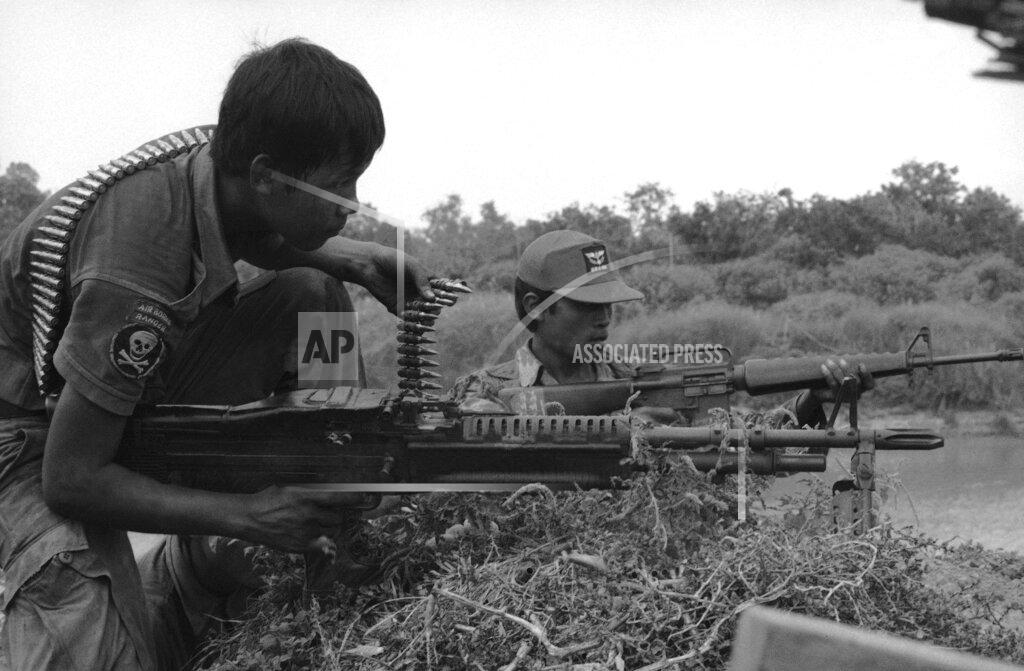
Cambodian government troops and insurgent forces fought hand-to-hand two miles east of the Communist-held former royal capital of Phsar Oudong. The battle occurred as government troops continued their attempt to free the city, which fell last week. Military sources said today that government soldiers suffered heavy casualties as they continued their attempt to retake the town of Phsar Oudong northwest of here. While they gave no figures for the government losses, they put insurgent casualties in the fighting today at 30 killed. Yesterday, the sources said, 193 insurgents were killed, and government losses were 2 killed and 21 wounded.
Meanwhile, insurgent forces today forced government troops to withdraw from positions seven miles southwest of Phnom Penh, according to military sources here. The sources said that the position at Tranoum Chroeung, two miles south of Route 4 leading to the deepwater port of Kompong Som, came under insurgent attack attack last night. Around the coastal provincial capital of Kampot, which has been under insurgent attack for four weeks, fighting today left three insurgents dead, the high command said. One government soldier was killed, the command added.
South Vietnam said at least 51 officers and civilians would be tried on charges of sabotaging the national economy. The case involved the smuggling of cognac and cigarettes in military trucks. Forty police and army officers have been dismissed or demoted as a result of the case.
A massive transport strike affected millions of Japanese as privately run railways and subway and bus services halted for periods of 12 to 48 hours. The strike, the second phase of the spring labor offensive by union members, was called to press demands for higher wages and other benefits. The Transport Ministry estimated about 20 million people were “inconvenienced.”
North Korea announced today that it had proposed talks with the United States on peace accord to replace the Korean armistice agreement signed in 1953. It said the proposal was made in a letter addressed to the United States Congress. The proposal for the talks, from which South Korea would be excluded, was reported by the North Korean press agency. It followed repeated North Korean calls for the withdrawal from South Korea of United States troops, which have continued to serve there under the United Nations flag since the Korean war.
In Washington, the State Department commented by affirming the United States position that the Korean problem should be resolved directly by the two Koreas. The department spokesman said that “the North Korean proposals “seem to be a reformulation of a series of proposals made a year ago.” According to the North Korean press agency, Foreign Minister Ho Dam suggested Saturday that the talks with the United States be held at the truce camp at Panmunjom on the armistice line between the two Koreas, or in an unspecified third country. He was addressing the North Korean legislature, the Supreme People’s Assembly.
Australia has asked the Soviet Union and the United States to restrain their naval buildup in the Indian Ocean, a government spokesman said in Canberra. The request was made on the initiative of Prime Minister Gough Whitlam and was timed to coincide with U.S. Secretary of State Henry A. Kissinger’s visit to Moscow.
The Icelandic government will ask the United States to withdraw all its forces from the Keflavik NATO base by the middle of 1976, Prime Minister Olafur Johannesson said. He told parliament that departure of the Americans now was government policy. Opposition leader Gylfi Gislason said his party, the Social Democrats, would oppose the move which “would rob Iceland of defenses.”
Irish Republic troops searched a freighter in Dublin on a tip that it was carrying smuggled weapons for terrorists and found 134 crates of small arms and ammunition. However, the Irish Defense Ministry, which had ordered the search, later said there had been a mix-up — that the arms had been ordered for the armed forces and were not being smuggled.
A tear-gas canister was thrown into the motorcade of French Premier Pierre Messmer on the first day of his official visit to the island of Corsica. Messmer was in the lead car and the canister exploded under the second car but there were no injuries. Witnesses said they saw a policeman disarmed and put into a police car by his colleagues. Messmer got a cool reception in Corte, which is in an area the local population feels has been neglected by France.
The shrimp boat Vilco, from Ft. Myers, Florida, which was detained last week in Merida, Mexico, for allegedly fishing in Mexican waters, has been fined about $4,000, Merida port officials said. The boat’s catch and fishing equipment have been confiscated.
Jorge Wajelik, director of a light engineering factory in Buenos Aires, died after being machine-gunned when he resisted a kidnap attempt in front of his suburban home. His attackers escaped, police sources said. Kidnappers succeeded in abducting metallurgical firm executive Enrique Medleshon as he drove to work in another Buenos Aires suburb. Wajelik was the eighth fatality in less than a week in a wave of violence, much of it politically motivated.
Reliable Uganda sources said that General Idi Amin’s military government had begun systematic killings of army officers believed to have been involved in an abortive uprising over the weekend. Kampala, the capital, was back to normal after the fighting. The government radio ignored the revolt.
John Dean, former White House counsel to President Nixon, testified in Federal District Court in New York that John Mitchell and Maurice Stans, former cabinet officers, were totally involved in efforts to keep Robert Vesco’s financial affairs secret at least until after the President’s re-election. Mr. Dean had been expected to be the government’s star witness in the Mitchell-Stans trial, and, as far as the prosecution was concerned, he lived up to that expectation.
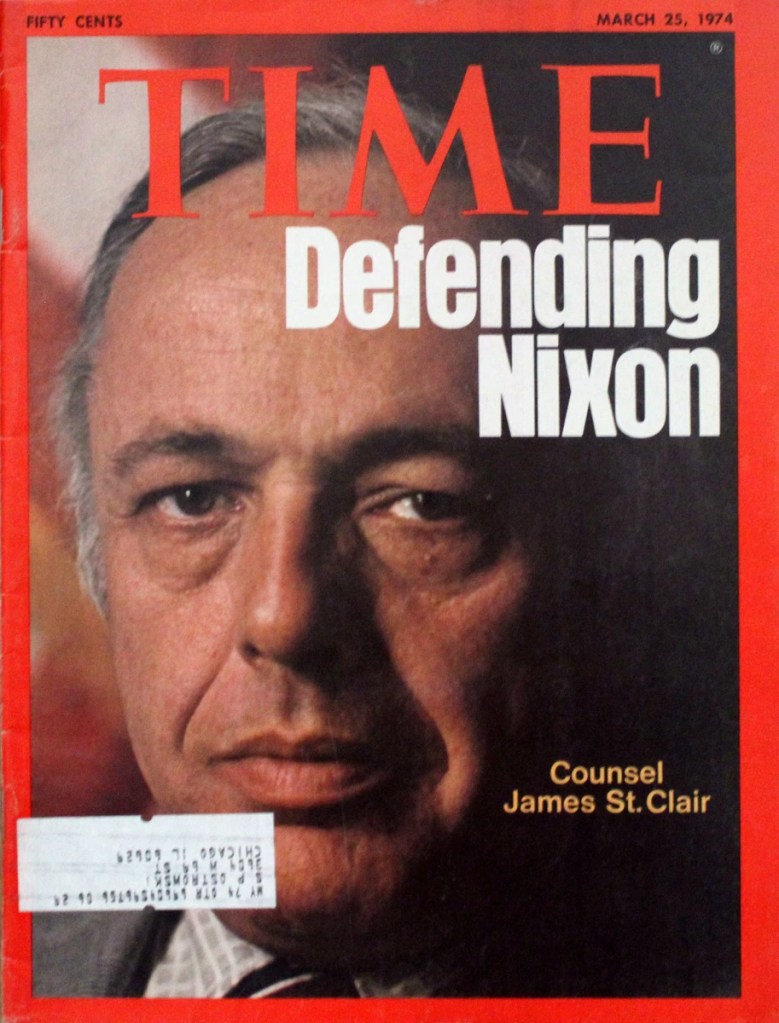
A Watergate grand jury’s secret report dealing with President Nixon will be sent to the impeachment investigators in the House tomorrow. The deadline for the last appeals to block transfer was 5 PM today, and no appeals to the Supreme Court were filed. Federal District Judge John Sirica notified House investigators that the report and supporting evidence, held since March 1 at the Federal Court in Washington, could be picked up at 9:30 AM tomorrow.
The White House escalated its criticism of the House Judiciary Committee, suggesting that its staff “should perhaps work late into the evening” to complete quickly a preliminary assessment of the impeachment evidence against President Nixon. Ron Ziegler told newsmen that “we feel that they should move within a matter of weeks” to complete the assessment.
The White House prediction of speedy enactment of mass‐transit legislation was disputed today by Senator Lloyd Bentsen, Democrat of Texas and chairman of the transportation subcommittee of the Public Works Committee. in a telephone interview from Las Vegas, the Senator said that his committee would hold hearings into July and that the legislation would not reach the Senate floor until the fall. The Senator sent a telegram to President Nixon disputing the prediction by Kenneth Cole, the President’s chief domestic adviser that the legislation would be enacted by the end of the fiscal year, June 30.
The McDonnell-Douglas Corporation, manufacturer of the DC-10 jumbo jet involved in history’s greatest air crash, said that the plane left the factory apparently lacking a critical cargo door design change even though company records indicated that the change had been made. Most experts believe that the March 3 crash of a Turkish Airlines jet near Paris, in which 346 people died, was probably caused by failure of the cargo door. Congressional hearings are about to begin on the cause of the crash.
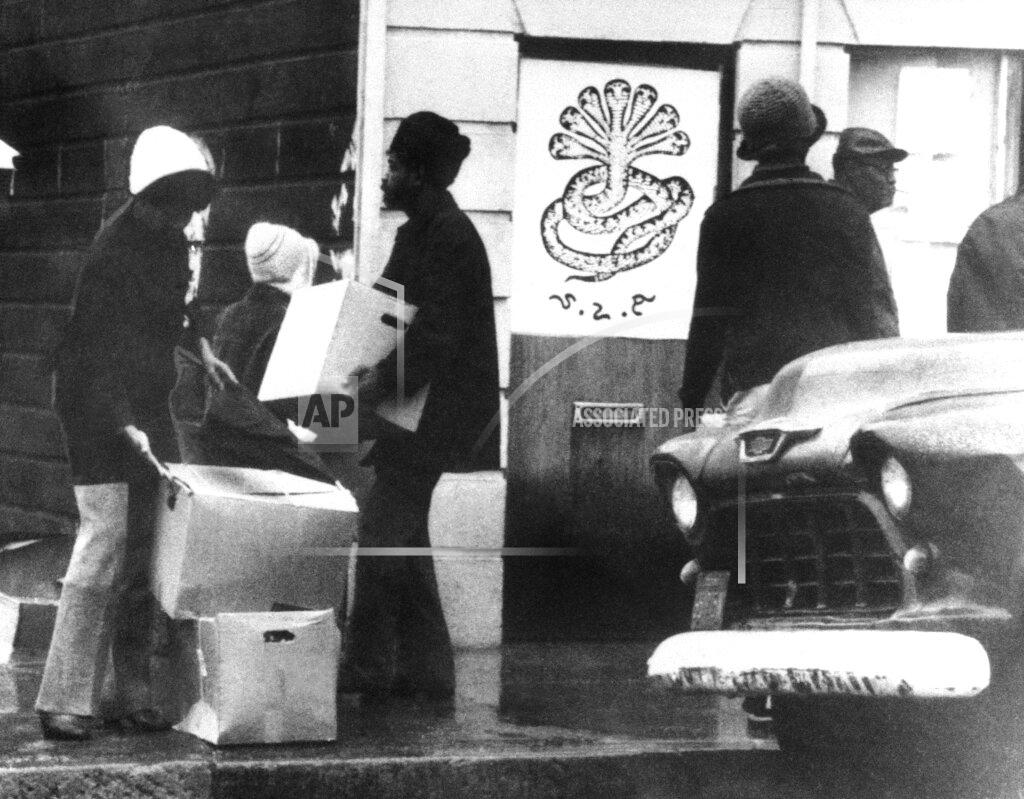
The free food program that Randolph A. Hearst hopes will lead to the release of his kidnapped daughter was resumed here today with the promised distribution of top-quality groceries. In today’s distribution, thousands of persons lined up before dawn in a chilling rain to receive boxes of food that carried a reported supermarket value of $25. This was the fifth distribution of free food, and apparently the groceries handed out today satisfied at least in part the demands of the professed kidnappers, who call themselves. the Symbionese Liberation Army.
There were more distribution centers, but the most noticeable difference was in the groceries that were handled out. Previously, most of the food was of a supplemental nature and did not contain the fresh meats and produce that the kidnappers had demanded. But this morning, those who stood in the lines were given boxes that contained up to five steaks, frozen fish, chicken and turkey, along with items such as eggs, milk, rice, macaroni and cheese, potatoes and oranges, apples and bananas.
Nevertheless, unless Patricia Hearst is released unharmed, today’s distribution was probably the last in that it reportedly exhausted the $2 million her father, a newspaper publisher, raised to finance the program. Mr. Hearst has said, however, that another $4 million will be put up by the Hearst Corporation to continue the program. But he stipulated that such funds would be available only after the release of his daughter, who was abducted from her Berkeley apartment last February 4.
Assault charges against Rep. William Alexander (D-Arkansas), stemming from an altercation with a policeman at Washington, D.C., National Airport, were dismissed. Alexander had been charged with two counts of assaulting and impeding the officer. He allegedly nudged the policeman with his car when attempting to cut across traffic lanes at the airport last December.
Former United Mine Workers President W.A. (Tony) Boyle went on trial in Media, Pennsylvania, for the Yablonski murders and two jurors were seated and nine were excused in the first day. Although thin and pale, Boyle appeared in better health and spirits than in previous court appearances. He reportedly is in poor health, still feeling the effects of a sleeping-pill suicide attempt last year. Boyle, 72, who was toppled from the union hierarchy by the reform movement that Joseph A. Yablonski started, is charged in connection with the murder of Yablonski, his wife and daughter on New Year’s Eve, 1969.
Jackson, Mississippi, agreed to hire more blacks for its police and fire departments. A consent decree was signed, ending two federal suits, one of which described the city as “the most racist municipal employer in the United States.” Civil rights attorneys said the agreement would result in the hiring of two blacks for every white hired in the Fire Department and one black for every white in the Police Department until a 35% ratio was achieved.
Kansas City bowed to pressure and closed its public schools because of a week-long teachers’ wage-contract strike. Superintendent Robert Medcalf yielded to the demands of 70 parents who occupied school board offices, insisting that the 62,000 students would not be safe at the schools because most of the teachers were absent. Medcalf said he also was concerned about the “continued destruction of district property.” At the same time, he directed attorneys to file criminal contempt charges against officers of the striking teachers’ union.
Forest Rangers were searching for a mysterious airplane that they believe dropped flares on tinder-dry grasslands in Florida’s Big Cypress Swamp, rekindling a fire that has burned more than 35,000 acres. Rangers in helicopters flew over the vast plains looking for the suspected arsonist while investigators checked out the serial number of a plane seen in the area. One official said the state was undergoing a siege of arson. Six new fires were reported near the northwest corner of the 1.4-million-acre Everglades National Park.
A New Jersey environmental law prohibiting the dumping of out-of-state garbage was ruled unconstitutional by the state Superior Court in Trenton on the ground that the ban was an unlawful interference with interstate commerce. The decision prompted a deputy state attorney general to warn that New Jersey, the most densely populated state in the country, “could become the garbage capital of the world.”
Waves pounding Hawaiian shores claimed five lives and caused extensive damage over the weekend. The 35‐foot waves churned up by a storm far to the north were the highest seen here since 1969. Four young women drowned Saturday when they were enveloped by a wave and swept to sea as they stood on the northern shore of Oahu watching the surging surf. One man drowned yesterday, when his boat capsized in high seas as he and a companion were trying to move it from one north shore anchorage to a safer place. His companion grabbed a life preserver and was rescued. Mayor Shunichi Kinura declared the entire Kona shoreline a disaster area after inspecting damage late in the afternoon. Helicopters picked up several persons in trouble as surfers and swimmers dared the raging seas in pursuit of their usual weekend fun. Coast roads on Oahu were jammed with traffic as Honolulu residents motored out to view the mountainous surf.
9th Academy of Country Music Awards: Charlie Rich and Loretta Lynn win.
The North Carolina State Wolfpack, who had lost only one game during the season, won the NCAA basketball championship with a 76 to 64 win over the Marquette University Warriors.
Dow Jones Industrial Average: 881.02 (+2.89, +0.33%).
Born:
Lark Voorhies, American actress (“Saved by the Bell”), in Nashville, Tennessee.
Al Wallace, NFL defensive end (Philadelphia Eagles, Carolina Panthers), in Delray Beach, Florida.
Mike Adams, NFL wide receiver (Pittsburgh Steelers), in Dallas, Texas.
William Cunningham, NBA center (Utah Jazz, Philadelphia 76ers, Toronto Raptors, New Jersey Nets), in Augusta, Georgia.
Finley Quaye, Scottish reggae singer and musician, in Edinburgh, Scotland.


 History Diaries