Slovakian forces counterattacked the Hungarian invaders, reportedly pushing Hungarian troops nearly to the Okna River.
The Slovak Cabinet, after a conference today on the situation. created by yesterday’s advance by Hungarian troops into Slovak territory, decided to call on Germany to make good her obligation to protect Slovak frontiers for twenty-five years as laid down in the treaty signed in Berlin yesterday. Franz Karmasin, the German minority leader; Karl Murgas, head of the Hlinka Guards, and Dr. Kirschbaum have gone to Vienna to consult German officials there. Dr. Ferdinand Durcansky, Justice Minister, sent to Budapest a second protest note today, expressing the hope that the present situation would be adjusted peaceably and that the Hungarians would withdraw.
There were sharp skirmishes today at various points along the sketchily drawn twenty-mile front extending from Remesske-Hamry to Pavlovce. The Hungarians apparently held fast to the positions gained in yesterday’s advance but did not win new ground.
Nine Hungarian planes made a raid at Spisská Nová Ves, far into Slovakia, dropping fifty large bombs: and many smaller ones. It is reported they seriously damaged the Slovak airport there, setting fire to the hangars, killing twelve Slovaks of the airfield personnel and wounding many others. Hungarian and Slovak planes engaged in fights late this afternoon over Sobrance. The Slovaks were reported to have been victors.
At Sobrance, Hungarian troops arrested twenty-five members of the Slovak Government party, including members of the Hlinka Guard.
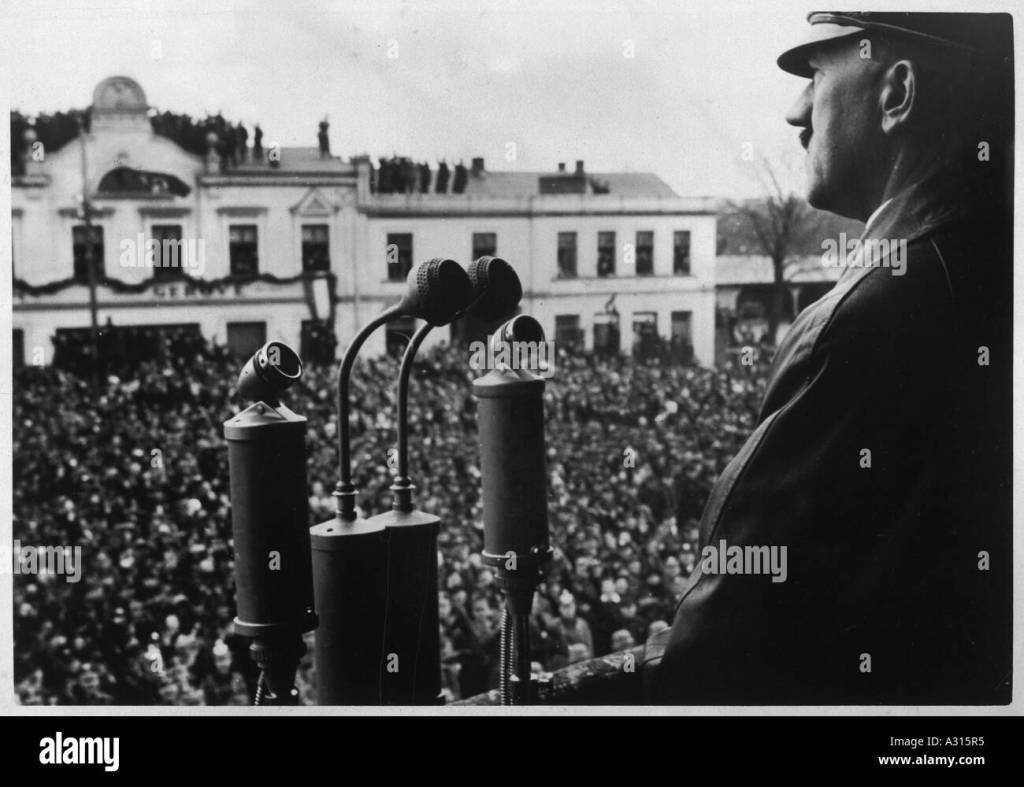
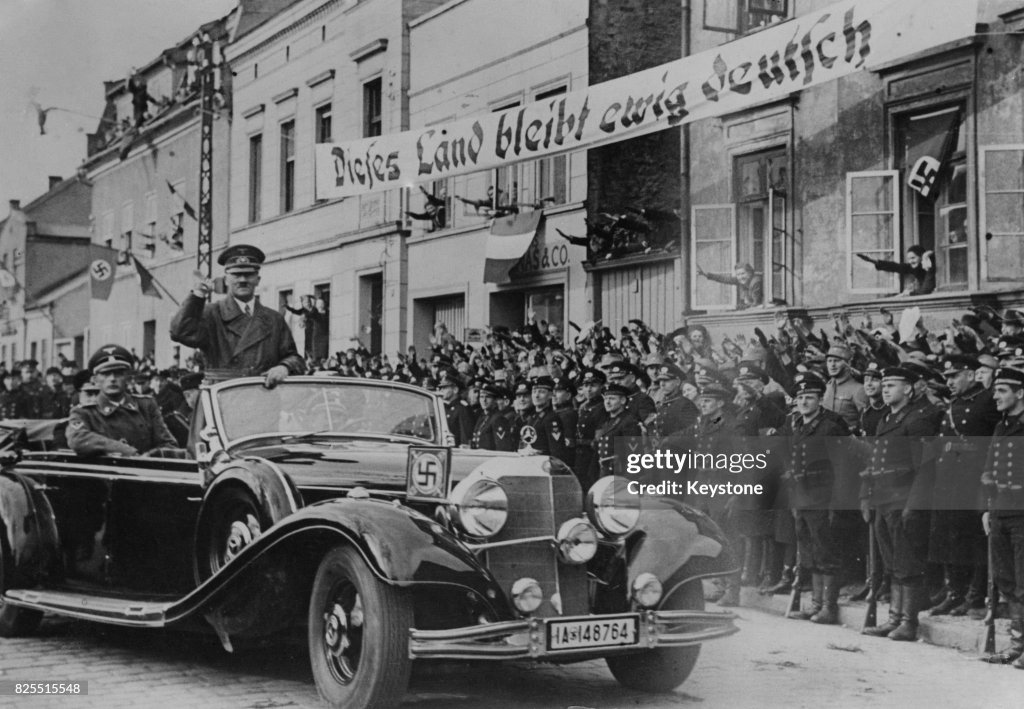
Chancellor Hitler returned to Berlin after his triumphal visit to Memel. After overseeing Memel’s return to Germany, Hitler returned to Berlin, where he stated that the “little solution” was not possible as it would mean war with Poland, and to have Danzig returned would require the liquidation of the Polish state. On 22 March 1939, (Nazi) Gauleiter Forster had announced that the elections for the Senate of the Free City due in 1939 would not be held, a violation of the constitution of the Free City.
Colonel Beck, who was part of the triumvirate which ruled the Sanacja regime and largely ran foreign policy on his own, told a meeting of the Polish cabinet that Poland should go to war if Germany made any attempt to alter the status of Danzig. Beck stated that Danzig “regardless of what it is worth as an object” had become a “symbol” in Poland that was so important that Poland should go to war over the issue. Aside from the possibility that a revolution in Poland might overthrow the Sanacja regime should it allow Danzig to be returned to Germany, Beck as part of his plans for a “Third Europe” (i.e. a block of Eastern European states under Polish leadership) had sought to develop closer economic relations with Sweden and Finland. Beck envisioned both Sweden and Finland joining the “Third Europe” block, and German plans to take back Danzig threatened to allow Germany a “choke-hold” on Poland’s main link to the sea as the port facilities at Danzig were still better developed than those at Gdynia.
Miuroslav Arciczewski, the Polish Undersecretary of State, complains to the German Ambassador about British and French intrigues in Warsaw, “which don’t take into consideration the dangers to which Poland is exposed.”
London officials took a gloomy view of the situation, foreseeing continued crisis, and the negotiations to check German aggression slowed down.
The French were also pessimistic, although a conversation in Rome between Italian Crown Prince Humbert and the French Ambassador, André François-Poncet, gave rise to hopes of a rapprochement in that direction. No particular significance, perhaps, would have attached to such a visit had it occurred at any other time. The fact, however, that it came exactly twenty-four hours after the conciliatory speech of King Victor Emmanuel was delivered in Parliament aroused a considerable degree of speculation in political circles. The French Embassy spokesman reluctantly confirmed that the visit occurred but stressed that no political reasons prompted the meeting, which had been arranged several days ago. Despite this French statement, many persons are inclined to believe that the subject of Italo-French relations, which is the foremost Italian political problem today, could scarcely have been avoided during the conversation.
Germany announced a “New Financial Plan” to bolster her expansion. The plan involves the issuance of a supplementary fiat currency.
Rumania, still stressing that her treaty with Germany did not give the Reich an economic monopoly or political stranglehold, pushed preliminary negotiations for the granting of autonomy to her Germanic and Hungarian minorities.
Germany expresses joy over the Rumanian pact. It gains control over industry, agriculture, and natural resources.
A Spanish Republican peace mission returned to Madrid from Burgos tonight with Generalissimo Francisco Franco’s conditions for the surrender of Republican Spain. The National Defense. Council under General José Miaja met immediately to consider them. Informed sources said that the negotiations were still incomplete and that the mission was expected to return in the near future to Burgos, where it had gone by airplane yesterday. These sources denied reports that General Franco would enter Madrid tomorrow and said it was highly improbable, despite his advance arrangements. that he could be ready to do so by that time even if his terms were accepted.
The peace mission was reportedly pleased with its reception in Burgos, but the nature of General Franco’s terms was not disclosed. Workers are being steadily removed from control of banks, industrial and commercial institutions which they have ruled in Republican Spain since the outbreak of the civil war.
The Bank of Spain has been placed in the hands of a governing board under Placido Retano, a representative of the Finance Ministry. José Quereda, head of the bank’s legal department, was made acting adviser to the board, which includes five officials of the institution. The bank’s head office, transferred to Barcelona in October, 1937, will be re-established in Madrid within eight days.
These changes, along with others. in Madrid and elsewhere in Republican Spain, were disclosed in a decree published in the Official Gazette by the Finance and Economy Ministry. The Madrid radio announced meanwhile that “there is nothing to report on any front.” A government report said that, since the Spring of 1937, 826 persons had been killed and 2,870 wounded in Valencia in 475 Nationalist air raids. It added that 1,110 buildings were destroyed or badly damaged by 2,284 bombs dropped by the raiders.
The news has reached here that an airplane landed near Burgos, Spain, yesterday bearing emissaries of peace from Madrid. It carried five persons, two Republican officers, one Republican government official and two Nationalist officers. Arrangements for the flight were made by shouting from opposing trenches in the University City sector of Madrid. The Republican government informed Burgos by wireless that the plane would arrive about midday. It landed, according to the report, at about 11 AM as General Gastone Gambara, Italian troop commander, was investing various Spanish Nationalist military and civil leaders with decorations awarded by the King of Italy. Ramon Serrano Suner, Minister of the Interior, and other Burgos authorities went to the airdrome.
The Republican representatives are reported to have offered to surrender Madrid under the following conditions: First, Republican Spain will recognize the Nationalist government as the only legitimate government of Spain and Generalissimo Francisco Franco as the head of the State. Secondly, Republican Spain agrees to demobilize its army immediately and disarm it. Thirdly, before Nationalist troops enter Madrid, the Republicans promise to take away all explosives placed to blow up buildings. Fourthly, the Republicans demand that the Nationalists shall not oppose the departure of a certain number of leaders of the old government.
The first three proposals, this report states, have been accepted in principle by the Burgos Government, but agreement has not yet been reached on the fourth point. Tonight’s newspapers in Madrid reveal that the Republicans are in readiness to end the war. The Heraldo de Madrid this evening states: “Peace is wanted-a sincere, loyal peace, not just the spectacle of two commanders embracing each other, but peace for all Spaniards.’ One can hardly imagine General Franco embracing General José Miaja in Madrid, thus ending this war, as two commanders of one hundred years ago did at Vergara. But that the Republican Government as well as the people is weary of war and seeks any short-cut to peace that can be negotiated is now clearly evident from the press and radio.
Many Communists rounded up after the quelling of the recent uprising in Madrid are now in a concentration camp near Guadalajara. Since the execution last week of the Communist commander, Lieutenant Colonel Antonio Barcelo, many more Communists who took part in the movement have been reported shot by the National Defense Council.
Conditions in Madrid are known in Burgos to be desperate. The authorities there have opened the last considerable food cache in the city and there is no doubt if the Nationalists’ entry is delayed their troops will find wholesale death from starvation. Further resistance on a serious scale is held out of the question, but it is clear that before marching in Generalissimo Francisco Franco will demand some symbolic act of surrender by the defenders. The Nationalist press service tonight denied rumors that persisted in Burgos that Minister of the Interior Wenceslao Carillo and General Antonio Ortega had arrived in Burgos to negotiate the surrender of Madrid.
Nationalists had completed preparations today for an offensive to crush the Republican army unless the Madrid regime speedily and unconditionally surrendered. Generalissimo Francisco Franco had an army of more than 500,000 men strung along the eastern, central and southern fronts. It was believed here that he would launch the most powerful drive of the war soon unless there was a last-minute capitulation by Madrid’s National Defense Council. Nationalists declared Madrid had not yet in any form announced a willingness to meet General Franco’s terms, but they did not exclude that possibility.
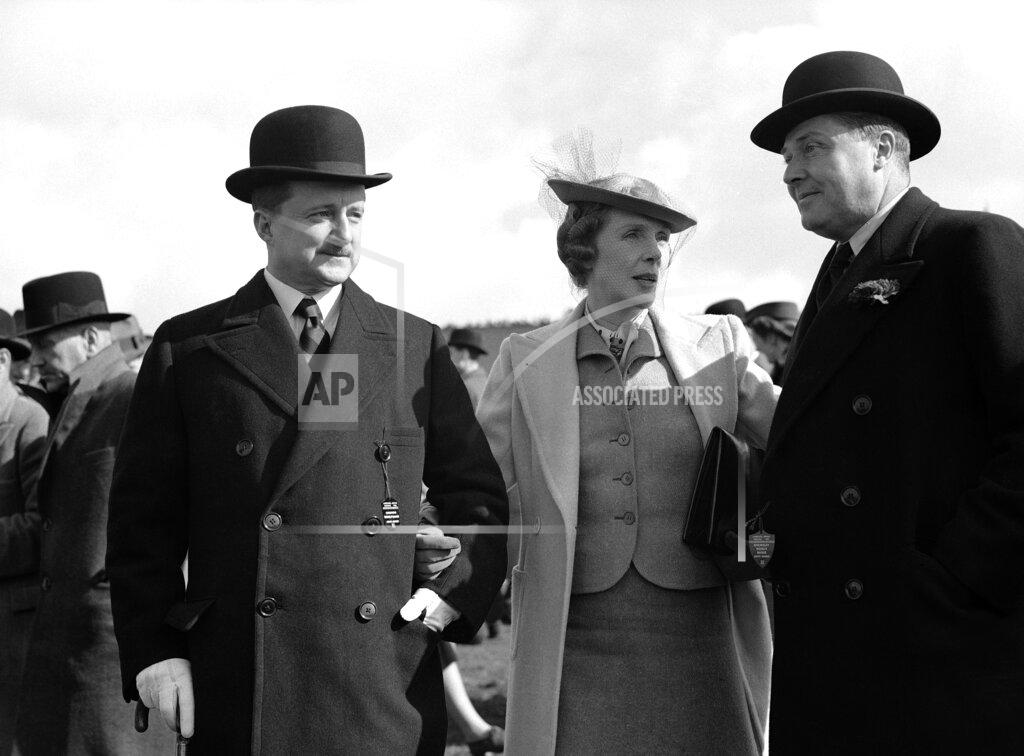
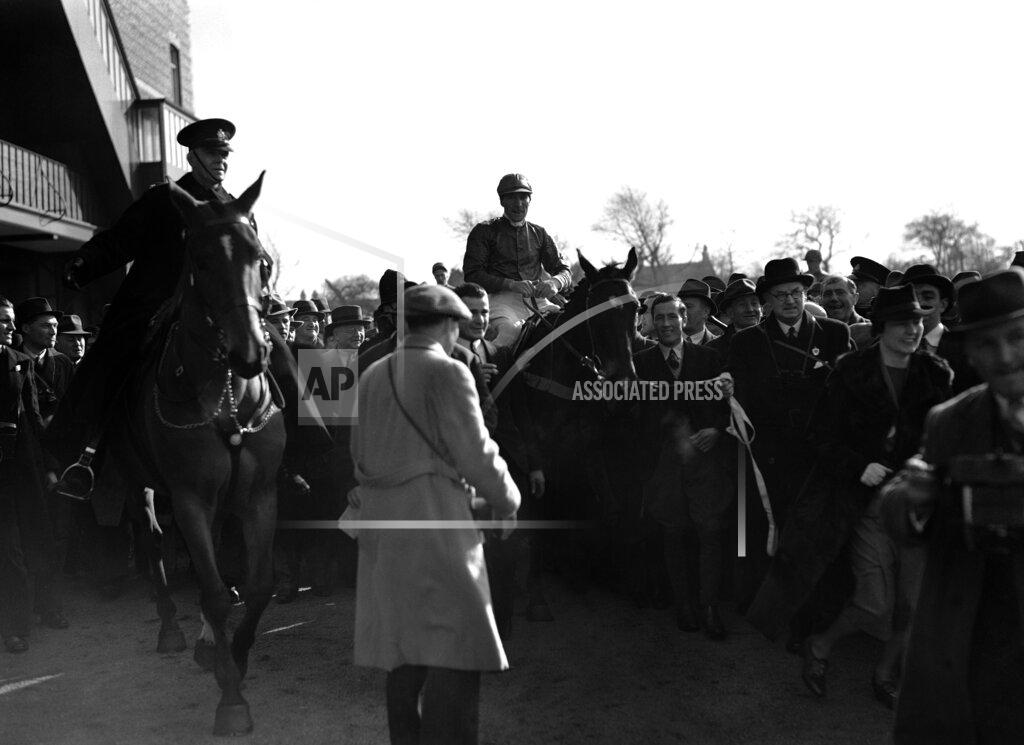
98th Grand National: Irish jockey Tim Hyde wins, riding 100/8 shot Workman.
No. 242 Squadron RAF Fighter Command, is formed as the first all Canadian squadron in the RAF.
Finland progresses with Olympic planning for 1940.
The Roosevelt Administration moved unexpectedly today to implement its business recovery efforts with a proposal to modify social security payroll taxes for old age insurance so as to save employers and employees more than $200,000,000 in the next two years and to eliminate “avoidable burdens on American productive enterprise.” In a statement to the Ways and Means Committee, which was quickly echoed by President Roosevelt, Secretary Morgenthau proposed abandonment of the “full reserve” principle, which was generally expected to build up a fund of $47,000,000,000 by 1980, and postponement of all or part of the 50 percent increase in the payroll tax scheduled to become effective in January. With the explanation at his press conference that he was not aware of the Secretary’s proposals, the President said that the Administration had been working for some time on a plan for limiting the old age reserve fund to a figure more accurately reflecting actual demands of the system. He said his recollection was that a reserve of between $2,500,000,000 and $3,000,000,000 was considered adequate.
The House of Representatives tabled today a resolution aimed at impeachment of Secretary Perkins and two aides after its Judiciary Committee had reported unanimously that there was insufficient evidence to warrant a conclusion that the officials had conspired to defeat the ends of the immigration laws. The resolution, by Representative Thomas, New Jersey Republican, sought an investigation into charges. that Miss Perkins, James L. Houghteling, Commissioner of Immigration, and Gerard D. Reilly, Labor Department solicitor, had refused to enforce the laws on deportation in the case of Harry Bridges, West Coast organizer for the CIO.
While the full committee report, in seven findings, completely exonerated the officials, the subcommittee which digested the evidence had a passage in its report which was deleted and the Republican minority issued an additional report criticizing Miss Perkins and her aides. The minority report said that there had been leniency. and indulgence to Bridges “to an unprecedented degree,” but that the record lacked “proof of any kind as to the motive actuating such leniency and indulgence.”
The House farm group, confident that its own strength could retain the $250,000,000 in parity payments for farmers in the pending billion-dollar Agriculture Department bill, today spurned an invitation to an old fashioned “log-rolling” extended by urban representatives who sought “assurances” of votes for the full $150,000,000 for relief asked by President Roosevelt. Whether the confidence of the farm bloc was justified remained in doubt tonight, for the House adjourned until noon tomorrow without reaching the controversial items of the largest Agricultural Bill in the nation’s history. It is planned to vote finally on the bill some. time tomorrow, but even this was in doubt because of the fight that is certain to come over parity payments. For the first time in many years, the attempts at log-rolling were made in the open. The efforts to swap votes was understood to have been initiated yesterday in the cloakrooms, but since many deaf ears were turned to their proposals, full-relief advocates put the proposition to their colleagues today through the loudspeaker system.
Some U.S. Senators urge caution over proposed changes to the Neutrality Act.
Only 10 of 50 Senators proposing a war levy bill have read the material. Four of them are authors of the bill. Of the fifty U.S. Senators listed as sponsors of the war profits tax measure when it was introduced in the Senate Tuesday by Senator Bone of Washington, only six besides the four real authors of the bill would say today that they had actually read it through. The measure would impose a 93 percent surtax on all taxable income above $20,000, plus a $9,880 surtax on income of $20,000, plus a 6 percent normal tax on all taxable income — to which would have to be added the State income taxes.
In Washington, Secretary of State Hull added his voice to the condemnation of the German seizure of Czecho-Slovakia. In a statement declaring that recent European events had threatened the peace of the world, Secretary Hull called for continued efforts to assure world peace “by fostering in every possible way the rule of law and the building of sound economic relationships.” He urged the American people to give whole-hearted support to this task. The statement was made at his press conference this noon. Although he had been kept informed of developments during his vacation, this was his first public expression aligning himself with the various moves made by the government since the occupation of Czecho-Slovakia. Mr. Hull then discussed the world situation with President Roosevelt at a conference in the White House this afternoon.
In New York increases of 50 to 300 percent in war risk insurance rates were announced.
Wounded in a desperate attempt to hold up a bank in his hometown of Powell, Wyoming, Earl Durand, untamed mountain man who had killed four peace officers in nine days in the greatest manhunt in the history of the State, put a bullet through his head today. Johnny Gawthrop, young bank teller, whom the 26-year-old renegade ranch hand used as a shield to try to shoot his way out of the First National Bank, was mortally wounded in the gun fight. Gawthrop, 20, was killed by misdirected shots of Powell residents who rallied to the scene, or by Durand.
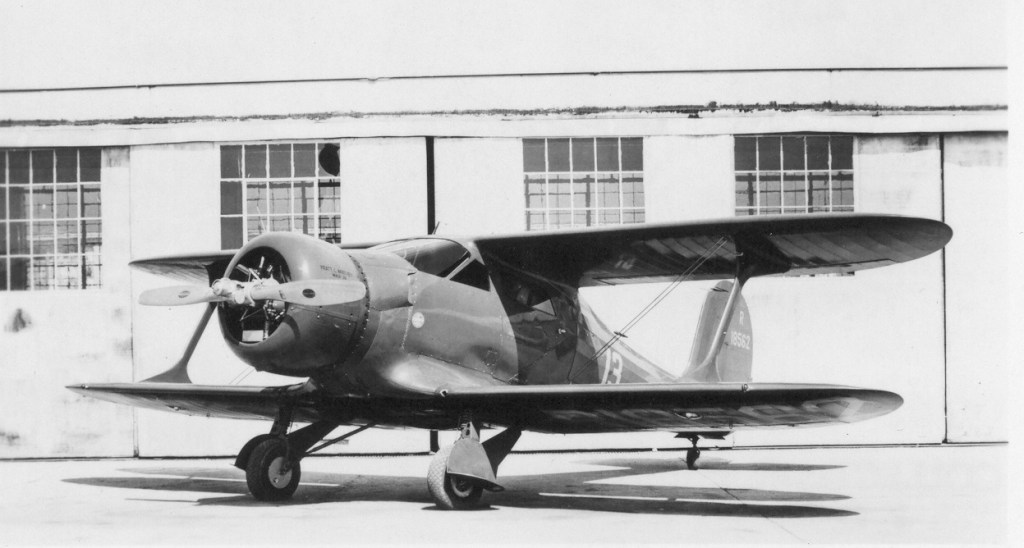
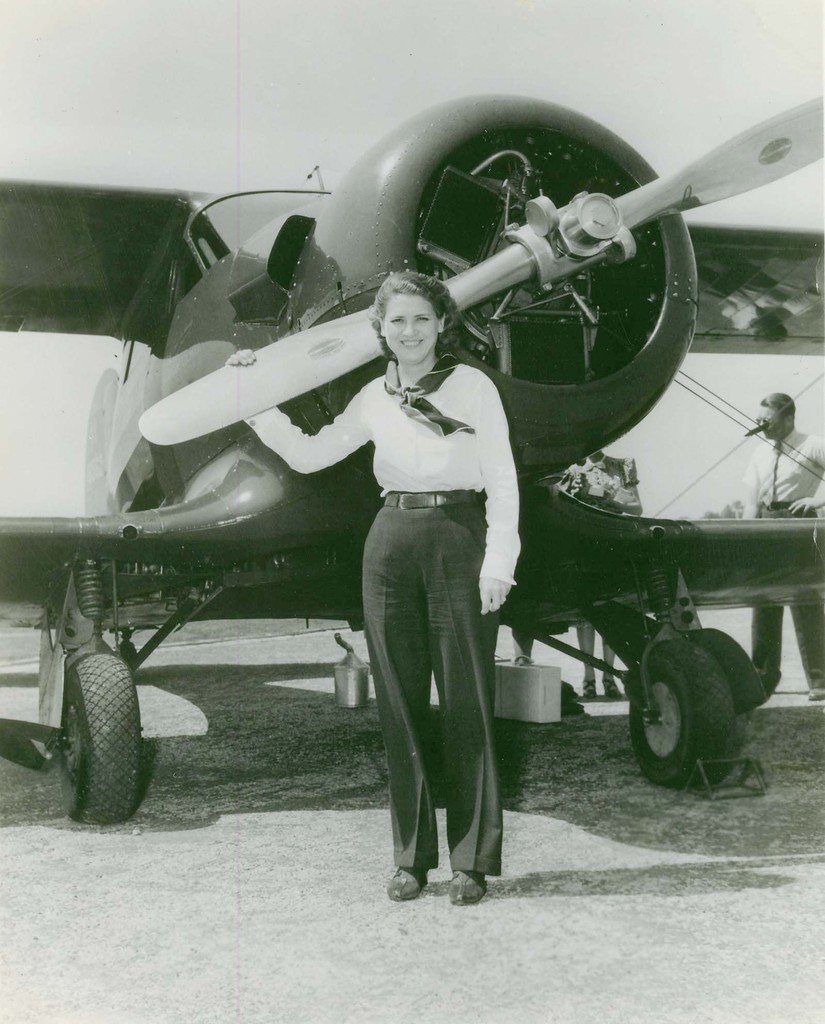
During a 2-hour, 26-minute flight over southern California, Jacqueline Cochran established a U.S. National Altitude Record for Women of 9,160 meters (30,052 feet). She flew a Beechcraft D17W “Staggerwing,” serial number 164, registered NR18562. A National Aeronautic Association official, Larry Therkelson, took the recording barograph from the airplane and sent it to the N.A.A. headquarters in Washington, D.C., for certification. The record had previously been held by Ruth Rowland Nichols.
Cochrane remembers:
“Were I to make the simple statement that I climbed to an altitude of thirty-three thousand feet, that statement in and of itself would mean nothing because I have often gone higher than that. But when I add that I did this in 1937 in a fabric-covered biplane without heating, without pressurization and without an oxygen mask, the elements of an accomplishment are added. I nearly froze; the pipestem between my teeth through which I tried to get an oxygen supply from a tank and connecting tube was inadequate for the purpose, and I became so disoriented through lack of oxygen that it took over an hour to get my bearings and make a landing. The difference between the pressure my body was accustomed to on the ground and the atmospheric pressure at 33,000 feet was such that a blood vessel in my sinus ruptured. All this was a part of the cumulative evidence that led up to cabin pressurization and mandatory use of the oxygen mask above certain altitudes.”
— The Stars at Noon, by Jacqueline Cochran, Little, Brown and Company, Boston, 1954, Chapter IV at Pages 61–62.
Former Confederates who knew Thomas Stonewall Jackson disapprove of a proposed monument to him at Manassas Battlefield as inaccurate.
“Wuthering Heights,” the film based on the Emily Brontë novel, directed by William Wyler and starring Merle Oberon and Laurence Olivier, premieres in Los Angeles.
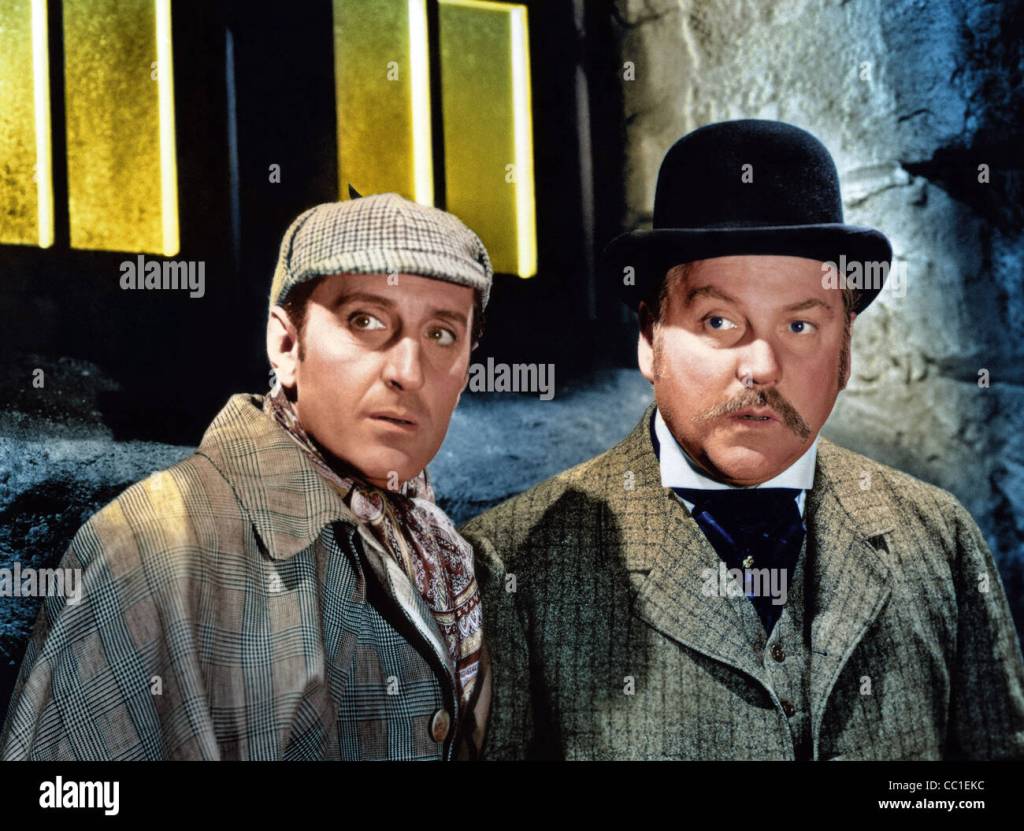
Basil Rathbone appears as Sherlock Holmes in “The Hound of the Baskervilles,” premiered in New York City.
Choibalsan was made the prime minister of the separatist Mongolian state in China.
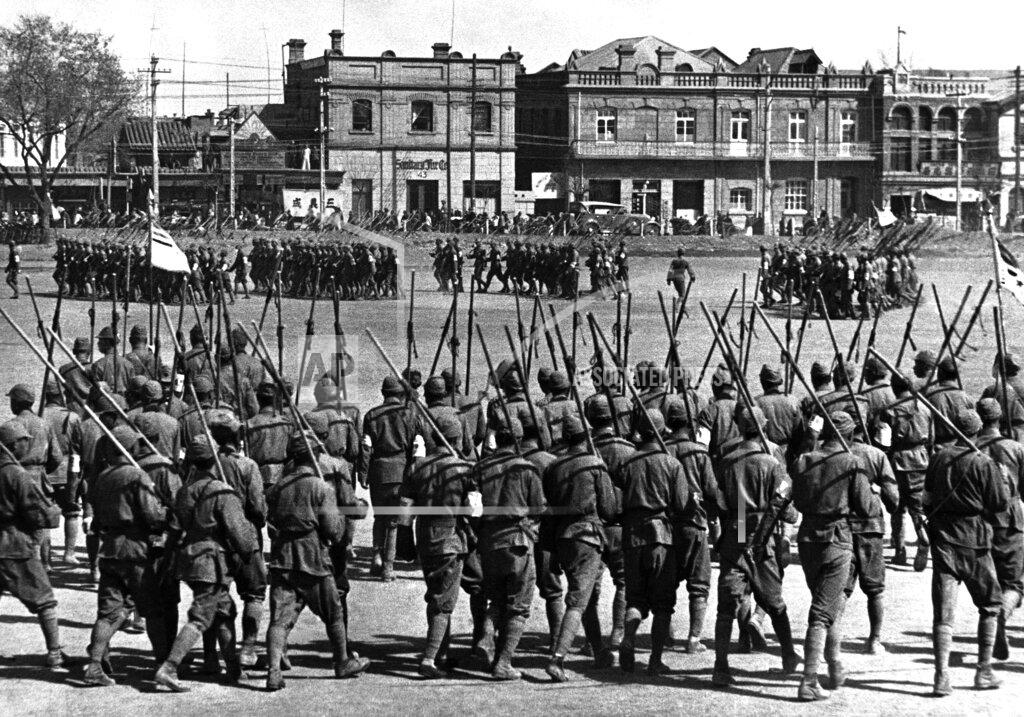
Mopping up in the town of Wucheng on the western shore of Poyang Lake, which was captured by a Japanese assault yesterday. was completed by noon today, according to the Japanese spokesman in Shanghai. Wucheng is on a narrow strip of land between the estuaries of the Siao and Kin Rivers and the Japanese attack, which precipitated the most sanguinary battle of recent months, was said to have resulted in the trapping of about 10,000 Chinese troops. Casualty figures were not given but were admitted to have been large on both sides.
Wucheng and its vicinity were subjected to a heavy bombardment by small Japanese naval craft and to intensive bombings by naval airplanes. The Japanese landing was carried out despite a profusion of water and land mines along the shore and intensive machine gun fire from a line of pill boxes only 300 feet from the water’s edge. Later, according to the Japanese spokesman, there was “a veritable hail of hand grenades” from the walls of the city and from roof tops. Another spectacular attack resulted in the Japanese capture of the town of Fengsin, thirty miles west of Nanchang, where tanks crashed the Chinese lines, throwing the defenders into confusion. The Japanese captured twenty-four pieces of artillery, ten trucks, 500 horses and sixty prisoners. They found more than 300 Chinese dead.
Military reports to Chungking said the Chinese had checked the Japanese drive toward Nanchang south of the Siao River, thirty or forty miles from the former Kiangsi capital. Nanchang dispatches deny the Japanese report of the capture of Wucheng but admit the town has been nearly leveled by Japanese artillery.
Japan has decided to relax the restrictions on the use of Tsingtao harbor by foreign vessels because of the continued improvement in conditions in the interior of Shantung Province and the gradual suppression of guerrillas. But foreign shipping companies and traders fear that the reopening of Tsingtao’s docks and wharves tomorrow will be hedged by so many military regulations as to be of little real value. Besides, currency control strictly limits foreign trade
The Japanese capture of Haichow has had a beneficial effect on conditions in Southern and Western Shantung, whence guerrillas and remnants of Chinese Government forces are speedily withdrawing. Their position is untenable because the Japanese control the Tsingtao-Tsinan Railway and also the railway south of Tsinan to the Yangtze River. An early reopening of the east-west Lunghai Railway will further handicap the defense forces. Conditions in Shantung are much better than in any other part of Japanese-occupied territory. The invading forces there are more ample than on the Yangtze Valley fronts and they have effectively cut off incoming Chinese munitions.
Five fresh Chinese divisions were rushed into the Chien Tang River front today in an attempt to block a Japanese drive from Hangchow toward the rich central sections of Chekiang Province. Guerrillas attacked Japanese who were trying to repair the Hangchow-Fuyang Railway.
Japanese warships, after four days of inaction, today resumed shelling Chinese forts off Ningpo, south of Shanghai, causing the population of the vicinity to flee in fear of a Japanese landing. Foreign reports said the Chinese were replying vigorously, apparently making an immediate landing unlikely.
The Japanese reported heavy fighting in Kiangsi Province, west of Lake Poyang and stated that 4,500 Chinese had been killed east of Wuning. This town, fifty miles west of Lake Poyang, continues to repel attackers after more than a week of fighting.
Domei, Japanese news agency, reported that Japanese troops in North Honan Province had crossed. the Yellow River from the north and said they were threatening Chengchow, junction of the east-west Lunghai and north-south Peiping-Hankow Railways. The Japanese reported they had occupied Sanliuchai, twenty miles east of Chengchow, after an all-night battle.
In the struggle along the Grand Canal in Kiangsu Province, Chinese reported defeating a Japanese unit, near Shaopo, killing 300 and sinking four steam launches. Shaopo is only forty-five miles northeast of Nanking.
The United States Embassy handed written representations to the Japanese Embassy today on the fourth bombing in recent weeks of the American Baptist Mission Hospital at Chengchow, Honan Province. Considerable damage resulted from the bombing on March 19. Americans in Peiping said that during March activity by the Japanese air force there had been ten instances. of damage to American property. One British missionary was killed and another injured during March by bombings in which several British missions were struck.
Japan envisions free reign in the East. The United States and Britain will be too engrossed with Hitler, they believe.
Dow Jones Industrial Average: 141.82 (+1.49).
Born:
[Lilian] Lynda Baron, British actress, comedian, and singer (Nurse Gladys-“Open All Hours”; Auntie Mabel-“Come Inside”), in Urmston, Lancashire, England, United Kingdom.
Naval Construction:
The Royal Navy Abdiel-class minelayer HMS Manxman (M 70) is laid down by A. Stephen & Sons Ltd. (Glasgow, Scotland).
The Nihon Kaigun (Imperial Japanese Navy) Kagerō-class destroyer HIJMS Yukikaze (雪風, “Snowy Wind”) is launched by the Sasebo Naval Arsenal (Sasebo, Nagasaki, Japan).
The Royal Navy British Power Boat 60 feet-type motor torpedo boat HMS MTB 18 is commissioned.
 History Diaries