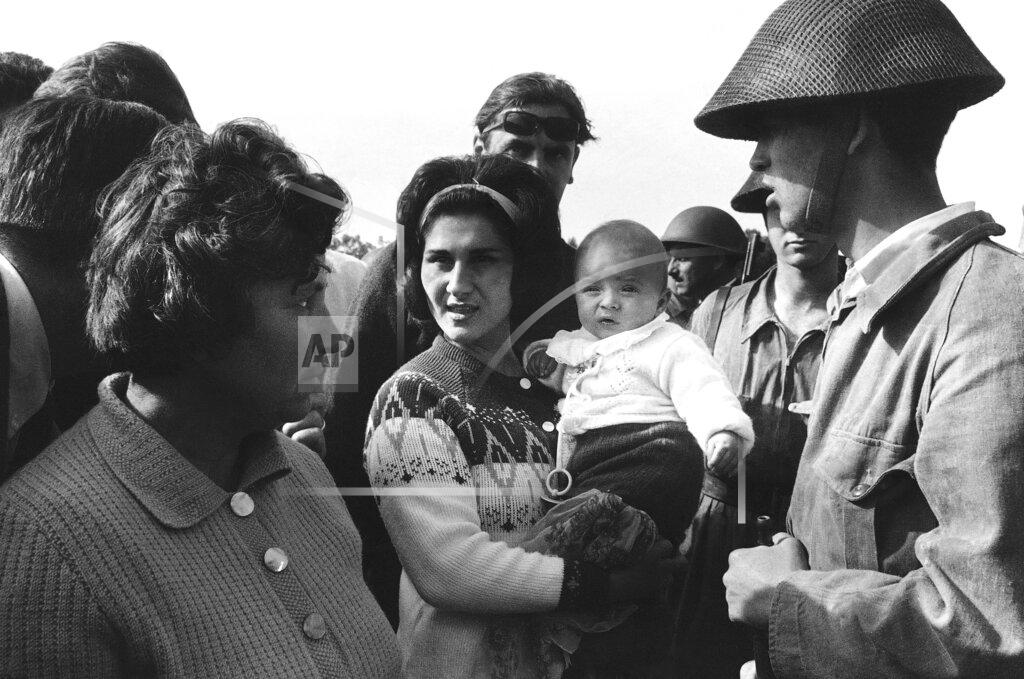
The talks between Cambodia and South Vietnam over border violations collapse and the South Vietnamese delegation departs. Sihanouk calls for a Geneva conference on Cambodia. Attempts to salvage the border negotiations between Cambodia and South Vietnam were finally abandoned today. The talks were formally adjourned and the South Vietnamese delegation left for home. No new date was set. With the breakdown of the talks, the Cambodian chief of state, Prince Norodom Sihanouk, stepped up his insistence on a multinational conference at Geneva to settle disputes over Cambodia’s frontiers.
A joint communique said that because of the raid by Vietnamese forces on the Cambodian village of Chantrea last Thursday, “the atmosphere is not now favorable for negotiations.” The Cambodian side pressed for a statement that adjournment would be only temporary, but the South Vietnamese refused any commitment to return to Phnom Penh. Vietnamese officials said that their formal acceptance of responsibility for the raid and their offer to pay compensation was the most generous satisfaction the Cambodians could expect from them. The village that was attacked is three miles from Cambodia’s border with South Vietnam.
Cambodia has protested to Washington over what she called participation of United States military advisers in the Vietnamese attacking force. be‐ fore the protest was received, however, Secretary of State Dean Rusk sent an official note to Phnom Penh admitting that Americans had been present. Dated last Saturday, the letter was delivered to Foreign Minister Huot Sambath yesterday. “Our own investigation now reveals that an American adviser was present with Vietnamese ground forces,” Mr. Rusk said in his letter, released by the United States Embassy. “Following the bombing attack about four Americans briefly landed from a helicopter with Vietnamese officers who were engaged in locating the scene of the action,” he wrote. Seventeen persons, were killed in the attack on Chantrea.
Communist guerrillas captured a Vietnamese post southwest of Saigon yesterday, but suffered heavy losses in the attack, military officials said today. A Vietnamese spokesman said 50 Việt Cộng guerrillas were killed in the assault on the Miếu Ông post in Kiến Phong Province. American military advisers in the area, however, estimated Việt Cộng losses at 20. Government losses were listed as five killed and 13 wounded.
In other weekend engagements reported by Vietnamese officers, a total of 36 guerrillas were said to have been killed, 10 wounded and 31 captured. The Defense Ministry said the Việt Cộng ambushed a Vietnamese battalion near Bạc Liêu in Ba Xuyên Province 125 miles south of Saigon on Saturday. Twelve soldiers were killed and 17 others wounded, according to the ministry.
Säkari S. Tuomioja, Finland’s Ambassador to Sweden, was reliably reported tonight to be the choice of U Thant, United Nations Secretary General, as mediator between the Greek and Turkish communities in Cyprus. The Secretary General was said to have submitted Mr. Tuomioja’s name for approval by all the parties concerned in the Cyprus crisis. Under the terms of a March 4 Security Council resolution, Mr. Thant’s choice of a mediator must be approved by Cyprus, Britain, Greece and Turkey. Of three capitals consulted, Ankara agreed to accept Mr. Tuomioja, London “was considering” his nomination and Nicosia refused comment.
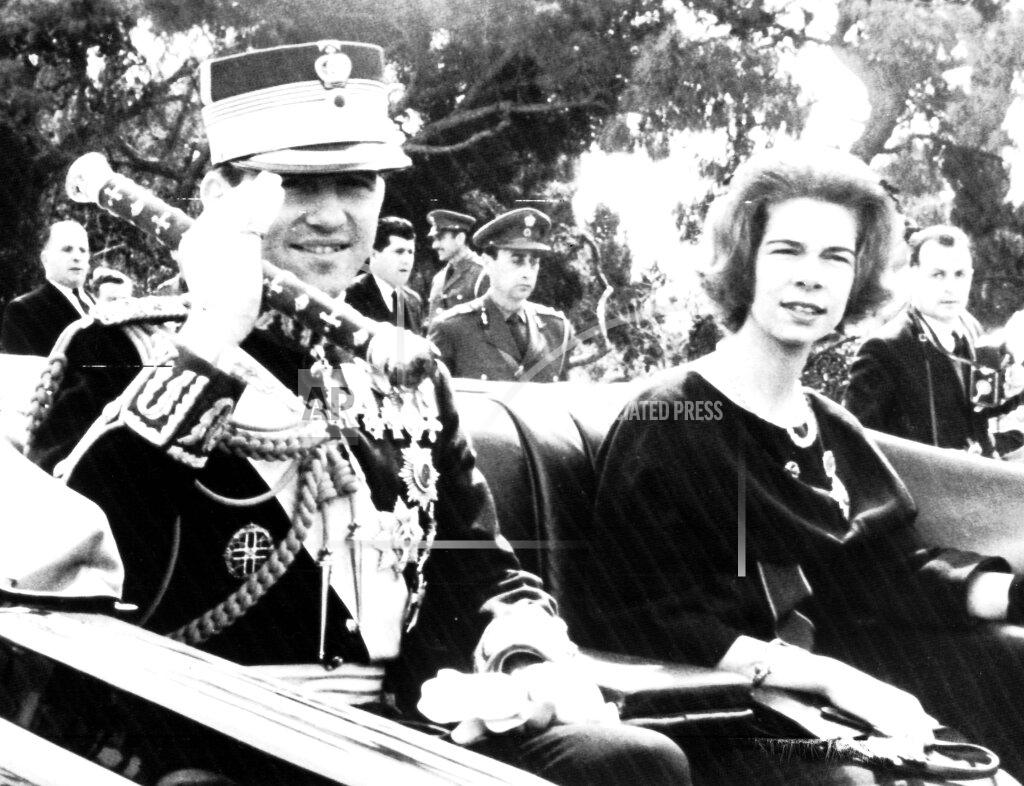
King Constantine of Greece called today for a peaceful political formula to end the deadlock over Cyprus for the sake of Greek-Turkish friendship. The 23‐year‐old Constantine, who reaffirmed Greece’s resolve to defend Cyprus if it was attacked, made his appeal in a speech from the throne shortly after taking his oath of confirmation as King before Parliament’ s 300 members. He stood with his 22‐year‐old Crown Princess Irene, as he read the text of a speech handed to him by his Premier, George Papandreou. This symbolized the fact that the government assumed responsibility for what he would say. It was an unusually outspoken outline of Greece’ s policy on Cyprus and other issues.
“The whole nation,” the King said, “shares the trials and struggles of the Greeks in Cyprus. We give them our undivided support. Preservation of friendship and alliance with neighboring Turkey constitutes a common interest. It is precisely because of that common interest that it should be recognized in good faith by both sides that the Zurich and London agreements have been shown over the last five years to be unworkable. Instead of leading to prosperity they have led to a deadlock. A new political formula must now be sought by peaceful means.”
The Supreme Court ruled today that United States courts would not question the legality of a foreign government’s expropriation of property within its own borders. The decision, which has major implications for international law, came in a suit by the Government of Cuba. The court upheld the Castro Government’s right to sue here and said its seizures must be treated as valid for purposes of litigation. The United States Government, while denouncing the Castro seizure decrees as violations of international law, had urged the results reached today. Its view, accepted by the Court, was that the whole expropriation issue was one to be settled by diplomats, not judges.
It was an 8‐to‐1 decision. Associate Justice John Marshall Harlan wrote the opinion of the Court. The dissent, a stinging one, was by Associate Justice Byron R. White. The ruling reaffirmed a policy known as the “Act of State Doctrine.” As phrased by the Supreme Court in 1897, it says: “The courts of one country will not sit in judgment on the acts of the government of another done within its own territory.” This doctrine, Justice Harlan said, “expresses the strong sense of the judicial branch that its engagement in the task of passing on the validity of foreign acts of state may hinder rather than further this country’s pursuit of goals both for itself and for the community of nations as a whole.”
The first United Nations Conference on Trade and Development (UNCTAD) opened with a session at Geneva. Representatives from 120 nations attended and the conference would last for twelve weeks.
Soviet Premier Khrushchev fired the first bitter blast of the United Nations Conference on Trade and Development today within two hours of the opening gavel. In a message read to the conference, he said that “imperialist exploitation, discrimination and artificial barriers” to trade were exhausting the wealth of the underdeveloped countries and holding back their development. Soon after the opening session adjourned, George W. Ball, Under Secretary of State and chief of the United States delegation, issued a statement that was not pugnacious. “This is a field in which we need imagination and fresh ideas,” he said. The assembled experts, he said, with their “enormous sum of experience and wisdom” can surely help to find ways of making trade “a more effective instrument of development.”
At Riyadh in Saudi Arabia, Crown Prince Faisal convened a meeting of the other brothers of King Saud of Saudi Arabia, tribal leaders and the 34 principal Muslim patriarchs, to discuss the King’s demands for a full restoration of powers that had been taken from him in 1958. The council of civil and religious leaders discussed the problems with the King, and agreed that he needed to be stripped of all remaining authority. At the end of the week, King Saud reluctantly agreed to the council’s decree, which took away “his armed protection, most of his revenue and half his income” but allowed him to remain as a figurehead monarch.
Adlai E. Stevenson said tonight that it was “urgent” to expand and improve the peace‐keeping machinery of the United Nations to deal with a new era of “violence without war.” The trend of recent events suggests that “we may have slipped almost imperceptibly into an era of peaceful settlement of disputes — or at least an era of cease‐fires while disputes are pursued by other than military means,” he added. The United States representative declared that the organization must be prepared to send out peace‐keeping forces “with the utmost speed and effectiveness” in view of the fact that “something approaching a world consensus” was developing on “a policy of ceasefire and peaceful change.”
“No analogy is ever perfect, but if the policy of containment stands for ‘limited war,’ then the policy of cease‐fire perhaps stands for limited peace,” Mr. Stevenson said. “I believe this mutation is occurring simply because the H‐bomb has made even ‘limited’ war too dangerous.”
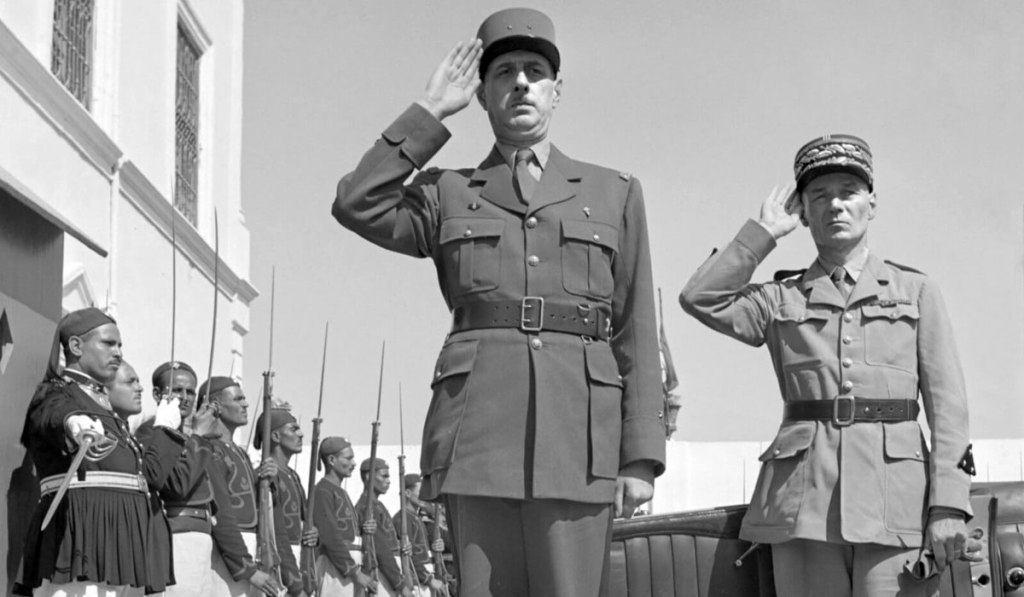
General de Gaulle headed back for Paris tonight confident that Latin America and the Caribbean need and will get French political inspiration and economic help. Sun‐burned and exuding confidence, the French President took off from Point‐a‐Pitre, Guadeloupe, after a taxing day of inspections, discussions and exhortations on the torrid tropical island of Martinique. The official view is that the French President’s journey has raised French prestige in Central America and the Caribbean and has promoted an expansion of her economic interests in the area. The tour ended as it began one week ago with resident de Gaulle preaching on France’s greatness, independence and responsibility to poorer nations. His audiences today included naval officers and sailors, departmental officials and schoolgirls and their teachers.
President Johnson warned automobile labor and management today that they must share responsibility for reaching a contract settlement this year that will not result in higher costs or prices. “We must not choke off our needed and speedy economic expansion by a revival of the price-wage spiral,” the President declared. The “public interest today, more than ever, requires that the stability of our costs and our prices be protected,” he said, and the international position of the dollar “demands that our prices and our costs not rise.” The President spoke before about 12,000 delegates and guests at the United Automobile Workers convention in Convention Hall here,
Dr. Walter W. Heller, chairman of the President’s Council of Economic Advisers, delivered the same words on his behalf to auto executives and other business leaders as part of a luncheon speech to the Economic Club of Detroit. This was the President’s first appearance before a large labor gathering since he took office four months ago. He was enthusiastically received. Mr. Johnson brought all in the hall to their feet cheering when he called on them to “give me your heart and your voice and your vote and stand up with me and be counted.”
Although the President’s comments were addressed to both labor and management, they appeared to be mainly a warning to the union, which has said it will seek contract gains of at least 4.9 percent in labor talks with automakers this summer. That would be far above the 3.2 percent figure set by the Johnson Administration as the general economic guideline for noninflationary settlements.
The Senate Rules Committee, by a series of almost unbroken party‐line votes, wrote a virtual finish to the investigation of Robert G. Baker today. Meeting throughout the day in executive session, the nine-man body voted down, one after another, Republican proposals to take additional testimony in the highly controversial case. The committee will meet again tomorrow to consider additional names of witnesses that the minority members have proposed., But the prospects of affirmative action on any appeared dim today. Senator Hugh Scott of Pennsylvania, the Republican member who has been most critical of the conduct of the investigation, told reporters at the end of today’s session: “We’ll get the same whitewash tomorrow from the same bucket that was used today.”
Visiting Beirut, Lebanon, Richard M. Nixon said tonight he would accept the Republican Presidential nomination “If the party leaders ask me to run.” On the second day of a world tour, Mr. Nixon would not say he was a candidate for the nomination. He said he felt an obligation to his business associates to advise them on foreign policy questions. He conceded he might advise the Republican party but added: “I don’t think they would accept it necessarily.”
The Supreme Court indicated today that a man’s home away from home is legally his castle, too. The Justices unanimously found unconstitutional a police search of a suspect’s hotel room without a warrant and without the permission of the suspect. They said the fact that a hotel clerk had approved the search was not enough.
In another case, the Court unanimously struck down the use of evidence obtained from an automobile, in a search without a warrant, after four suspected criminals had been removed from the car and taken to police headquarters. This search had been defended as incidental to an arrest and thus not requiring a warrant. But the Court said it could not be so justified when the car was searched at a time and place “remote” from the arrests. Together, the two cases indicated the continuing closeness of the watch the Supreme Court is keeping on illegal police searches and seizures. It was just three years ago that the Court said the products of such police activity must be excluded from evidence in state criminal trials.
The United Mine Workers and operators of soft coal mines signed a new contract today calling for a $1-a-day wage increase in each of the next two years. The present basic wage, is $24.25 a day. The contract also contains a penalty section aimed at making it prohibitively costly for unionized coal operators to buy, for resale, coal that has been mined by nonunion workers. This is a practice that has grown in recent years, according to union officials. The contract is the first new wage agreement involving the mine workers since 1958 and the first negotiated since the retirement of John L. Lewis as union president, Mr. Lewis did not participate in the negotiations, union officials said, although he was kept informed of their progress and his advice was sought at several points.
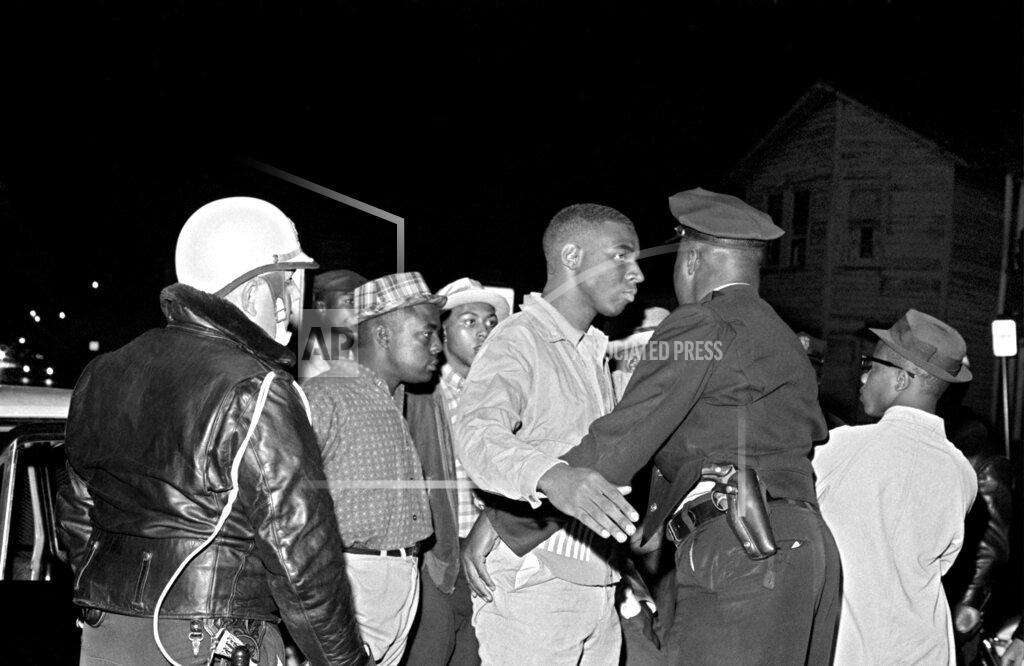
Sporadic racial rioting broke out in Jacksonville, Florida today, resulting in the death of a mother of 11 and injuries to many persons. More than 200 Blacks were arrested as the police dispersed anti-segregation demonstrators. Violence continued at night. It was the worst outbreak here since the racial riot in August, 1960. Mrs. Johnnie Mae Chappell, a Black housewife, was killed by gunfire from a passing car at about 9 P.M. as she walked along a road on the city’s northern outskirts.
Authorities reported two other incidents of violence in the same area. A white man was found lashed to a tree. He had been slashed with a razor. Another man, identified as Carlos Gonzalez of Miami, was shot in the head. His condition was satisfactory. The man bound to the tree was identified as Billy James, a 25‐year‐old floor finisher. He was taken to Baptist Memorial hospital for treatment of wounds of the face, arms and body. A DuVal County deputy sheriff who heard Mr. James’s cries for help found him lashed with ropes.
A crowd of angry Atlanta Blacks and whites engaged in a rock and bottle-throwing melee at a truck stop restaurant tonight, damaging several cars. Harold Middlebrook, active in the Student Nonviolent Coordinating Committee, said several of the demonstrators were struck by rocks but none were seriously injured. The restaurant was the scene of a similar clash last Wednesday. In a predominantly Black neighborhood, the segregated restaurant has been the scene of repeated picketing by members of the Atlanta Civic Council, a Black group.
Pierre Salinger’s candidacy for the Democratic nomination to the Senate overcame one obstacle today, but another lies in wait tomorrow. Charles A. Rogers, the registrar of voters here, adapted his certification forms to meet the circumstances of Mr. Salinger’s candidacy and then shipped the papers to the state capital. This nullified an action filed earlier in the day before the California Supreme Court asking a writ directing Mr. Rogers to certify, the candidacy.
Salinger supporters thought this had cleared the way to a place on the ballot for the former Presidential press secretary. However, Frank Jordan, the Republican Secretary of State, said: “I’ll send it right back. This has got to be decided by the courts. I don’t see how he’s going to get over the qualification of residence. He couldn’t even vote for himself.”
Attorney General Robert F. Kennedy said in New York that $5 million, or half the sum required, had been raised for the John Fitzgerald Kennedy Memorial Library. The library is to be constructed on a site overlooking the Charles River in Boston. Mr. Kennedy made the announcement after a meeting with the fundraising chairmen of 40 states at the Four Seasons Restaurant. He said fund committees would be established in each of the 50 states. Those attending the organizational meeting included Senator Edward M. Kennedy, Massachusetts Democrat, the Attorney General’s brother; Stephen Smith and his wife Jean, who is Mr. Kennedy’s sister, and Eugene Black. Mr. Black, former governor of the International Bank for Reconstruction and Development, is chairman of the board of trustees for the library.
General of the Army Douglas MacArthur suffered a severe gastrointestinal hemorrhage today and underwent emergency surgery. He was reported to have withstood the operation well. The 84‐year‐old hero of two world wars underwent surgery at Walter Reed Army Hospital last March 6 for the removal of his gallbladder and of gallstones, which had been causing obstructive jaundice. All reports following that Operation said the general was recovering satisfactorily, but hemorrhaging developed today at 6 AM and surgery was decided on. At the outset of the six‐hour operation, it was discovered the bleeding was from ruptured veins in the esophagus, the tube that bears food from the throat into the stomach.
Rock and roll singer Elvis Presley received his discharge from the U.S. Army reserve, after completion of six years of active and reserve duty.
John Lennon’s first book, “In His Own Write” was published and would become a bestseller in the United Kingdom.
Dow Jones Industrial Average: 813.6 (-1.33).
Born:
Hope Davis, American actress (“Flatliners”), in Englewood, New Jersey.
John Pinette, American comedian, in Boston, Massachusetts (d. 2014, from a pulmonary embolism).
Died:
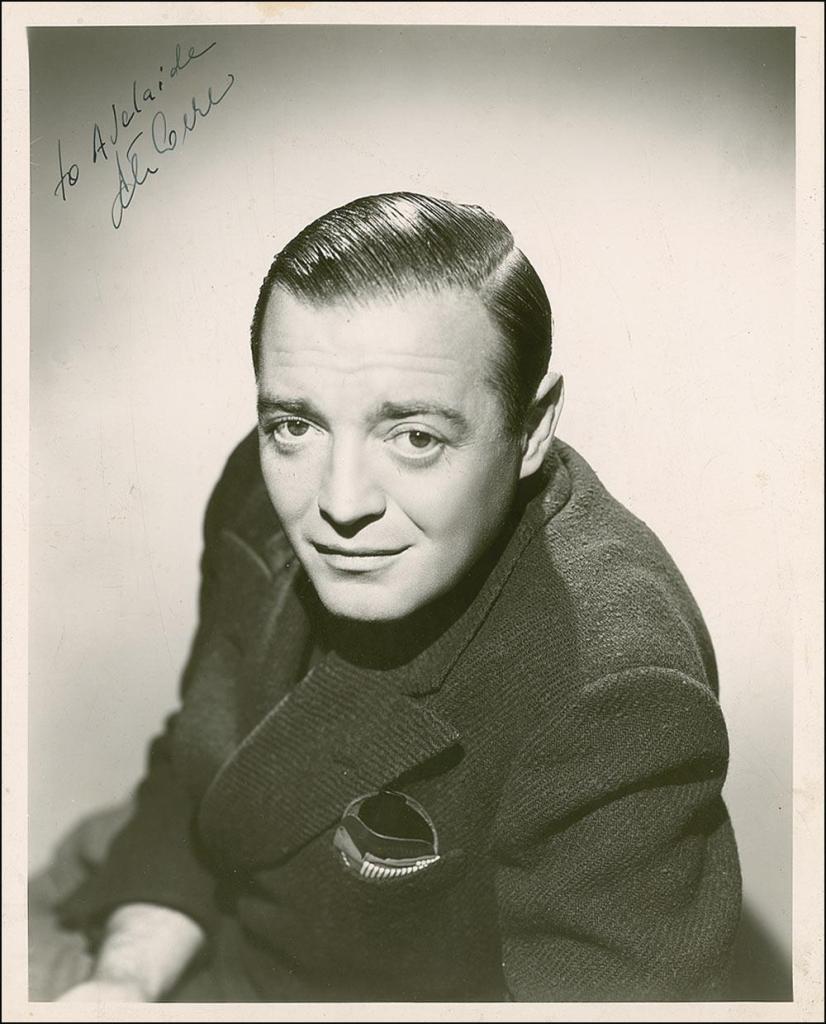
Peter Lorre, formerly known as Laszlo Lowenstein, 59, Hungarian-born American film and TV actor (“M”, “Casablanca”, “Beast with 5 Fingers”) from a stroke.
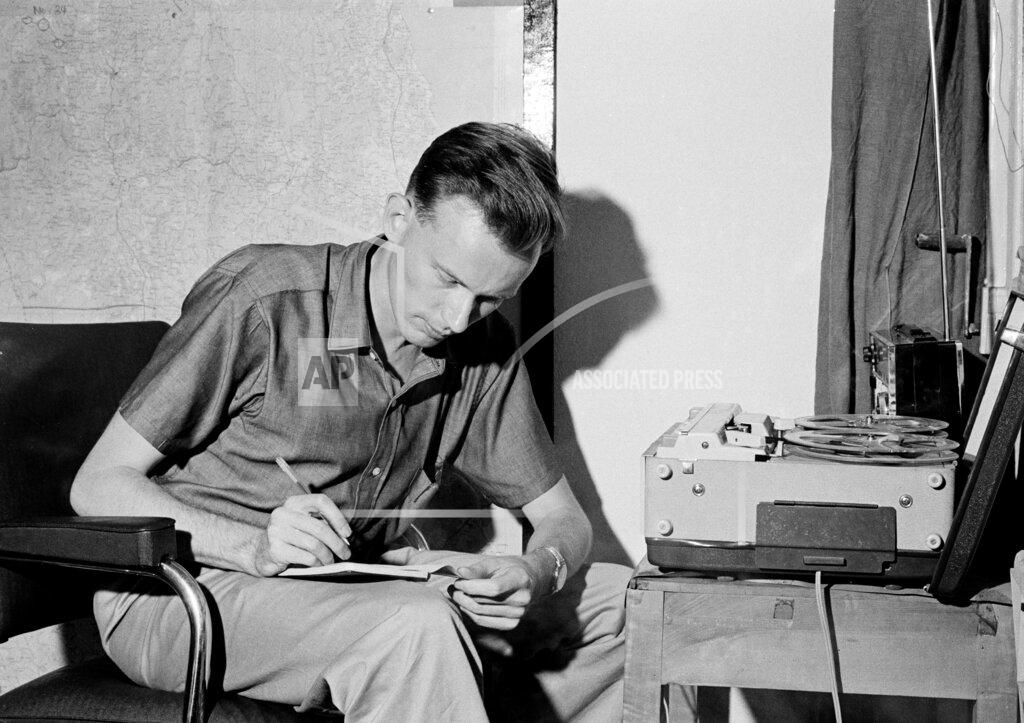
Torstein Raaby, 45, Norwegian resistance fighter and explorer, died of heart failure during a polar exploration in Greenland.
 History Diaries