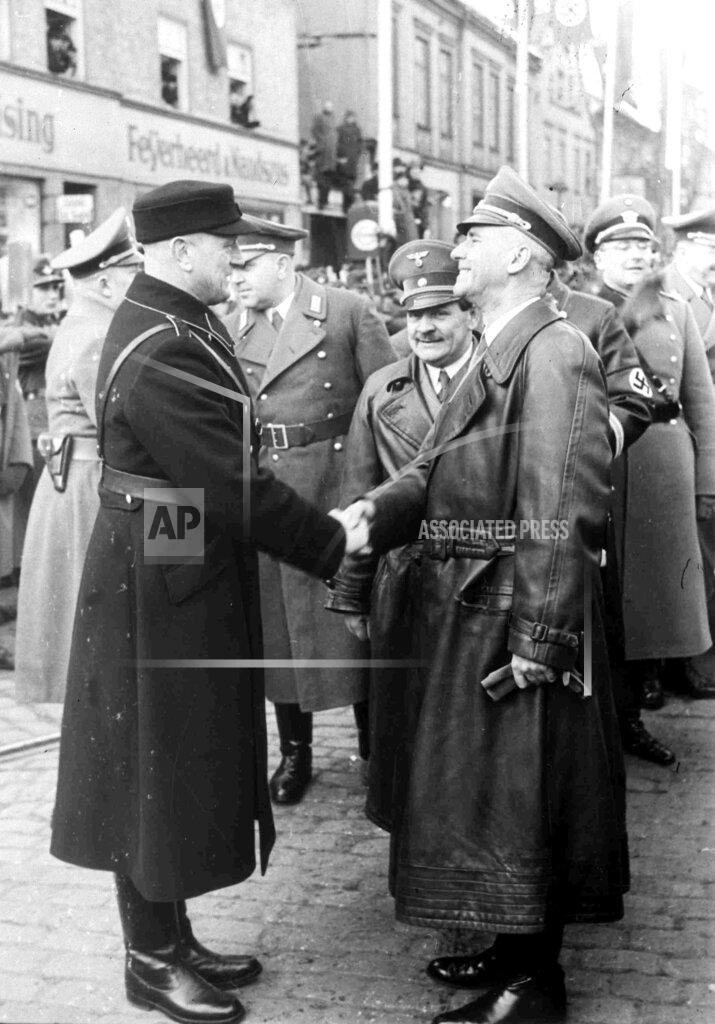
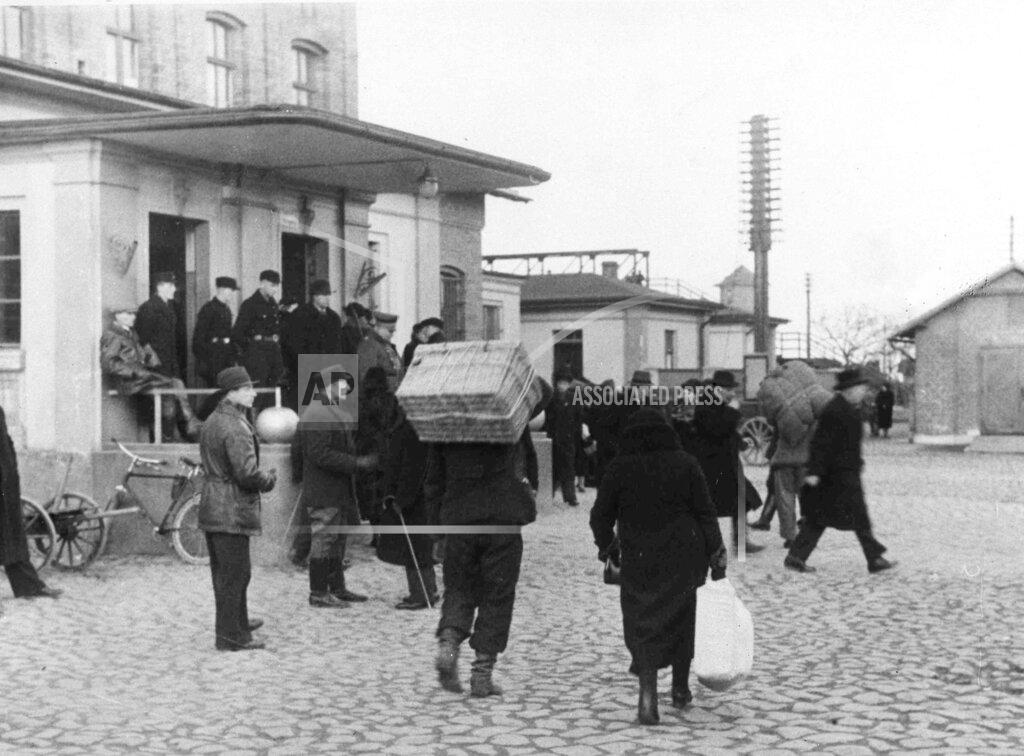
The Memel Territory is ceded to Germany after the Germans present an ultimatum to the Lithuanian government. The name Memel Territory is applied to the 1,092 square mile (2828 square kilometer) district of former East Prussia situated on the east coast of the Baltic Sea and adjoining East Prussia. In 1919 the Treaty of Versailles placed the district, containing the city and port of Memel, under League of Nations-sponsored French administration. Lithuanian troops occupied the area in 1923, forcing the French garrison to withdraw. The Allied council of ambassadors then drew up a new status for the territory, which in 1924 became an autonomous region within Lithuania with its own legislature. The 1938 electoral victory of the National Socialists in the Memel Territory was followed by the German ultimatum demanding the district’s return and Lithuania complied.
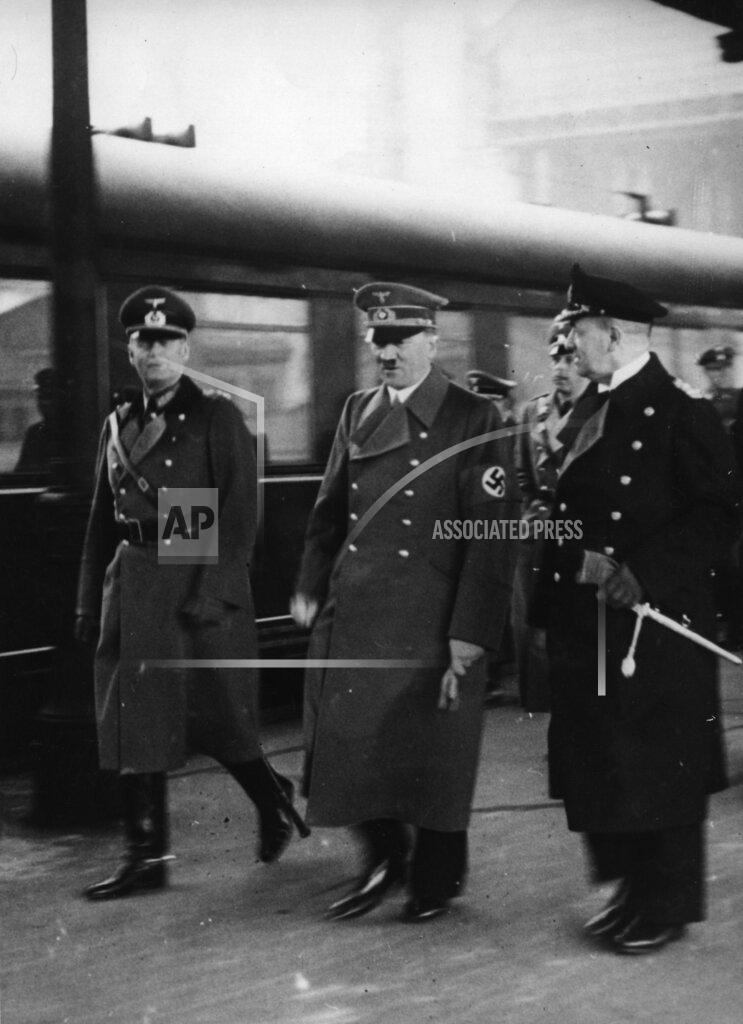
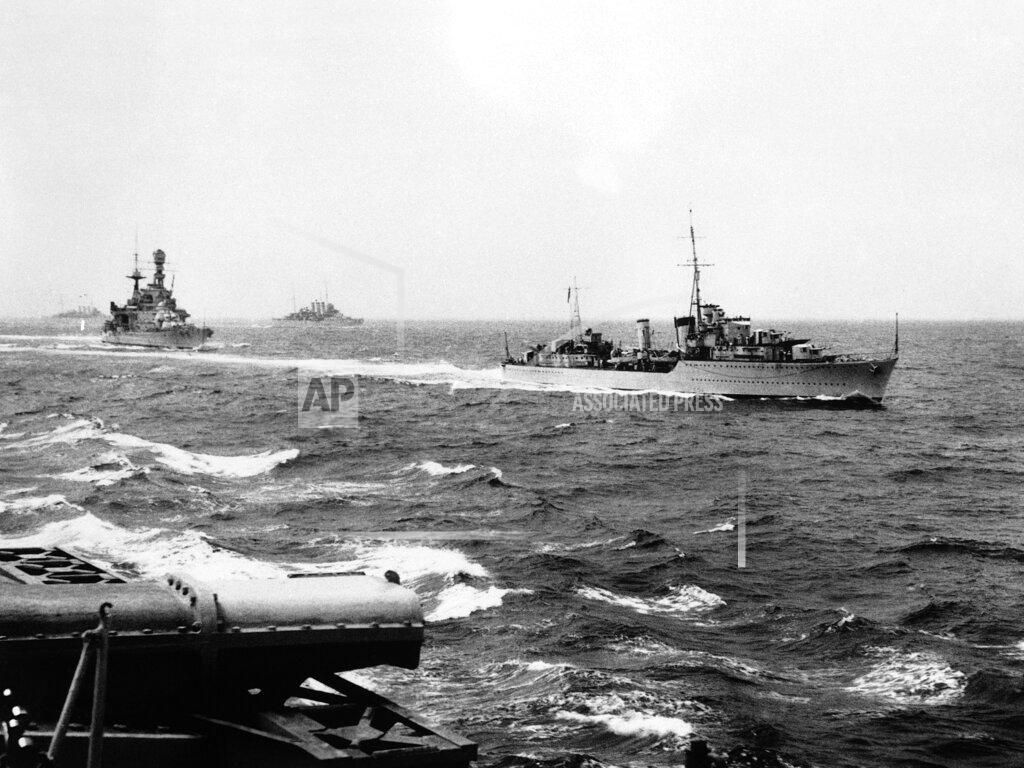
Amongst the Kriegsmarine units taking part in the occupation is the pocket battle cruiser Graf Spee. Adolf Hitler, Admiral Erich Raeder and General Wilhelm Keitel boarded the pocket battleship Deutschland at Swinemünde that evening and sailed with a fleet toward Germany’s newest territorial acquisition. Making history with lightning speed, Chancellor Adolf Hitler, “aggrandizer of the Reich,” embarked this evening aboard the battleship Deutschland en route to Memel, where tomorrow he will stage a triumphant entry into the newest territory reclaimed for the Great German Empire by another “bloodless war.”
In contrast to Austria, the Sudetenland, Bohemia, Moravia and Slovakia, which were occupied by the army, Memel apparently has been selected to give the navy a chance to take the leading role. For the Deutschland is accompanied by a good part of the German fleet, including the battleships Graf Spee and Admiral Scheer, the cruisers Leipzig, Nurnberg and Koeln, two destroyer squadrons, three torpedo boat flotillas and one tender flotilla. It is by all odds the proudest armada Memel has ever seen and it is apparently going to carry out a naval occupation before the army, which is not scheduled to start marching into Memel territory until tomorrow morning. The fleet left Swinemünde at 7 PM amid rousing cheers from the populace standing on the harbor quays. Accompanying Chancellor Hitler are Admiral-General Erich Raeder, Naval Chief of Staff; Colonel-General Wilhelm Keitel, head of the supreme command of the armed forces, and other high State and party officials.
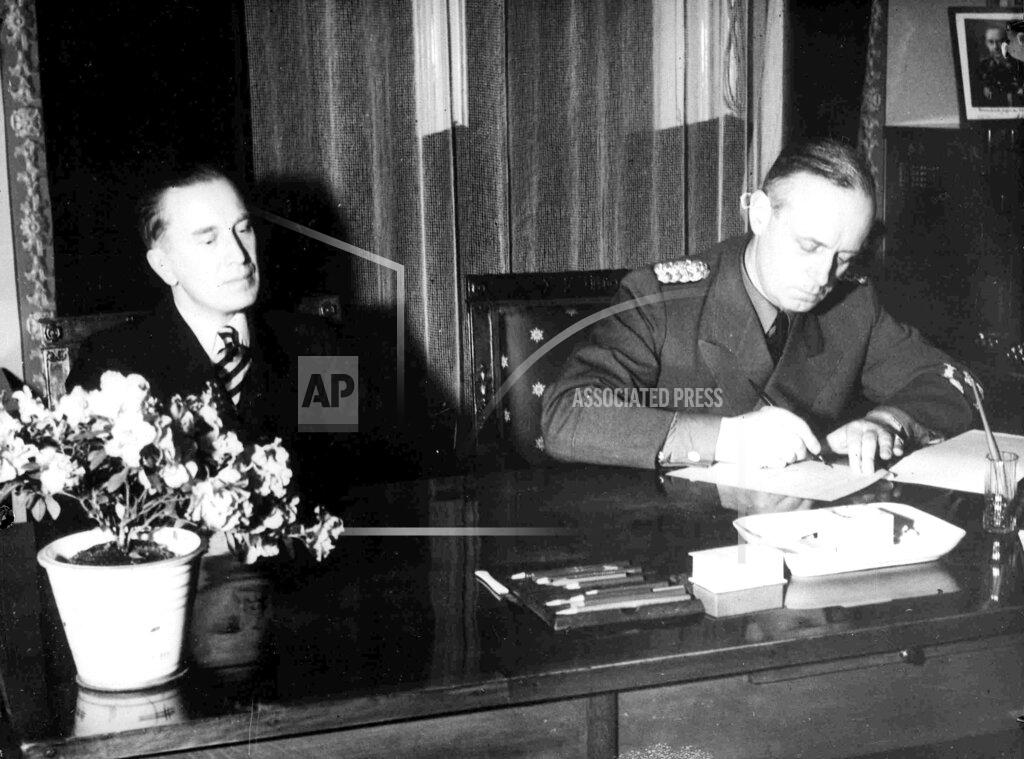
Meanwhile, at the Foreign Office in Berlin, Foreign Minister Joachim von Ribbentrop and German experts were in conference with Foreign Minister Juozas Urbsys of Lithuania and his aides, who had flown here, hammering into shape a formal treaty to give legal status to the return of Memel territory and fix future relations between the two countries. This conference lasted from 7 PM until midnight, after which Herr von Ribbentrop radioed Chancellor Hitler that the treaty had been signed and sealed. In this treaty, negotiated, according to a communiqué, “in a friendly spirit,” Memel territory is returned to Germany, effective yesterday, and the Lithuanian Government obligates itself to evacuate that territory in “orderly conditions.” All details regarding finance, citizenship and so forth are left to a future agreement.
While Germany celebrated still another territorial acquisition today the British Government ran into momentary difficulties with its proposal for a four-power declaration pledging resistance to further acts of German aggression. The difficulties came partly from Poland, which is already bordered on three sides by Germany and which is reluctant to sign any such commitment without first having an ironclad promise of help from other powers, especially Russia. But Russia is still unwilling to definitely commit herself without certain knowledge that Britain and France would support her in Eastern Europe against the next German thrust.
Britain and France in turn believe that Russia should take the lead in repelling any German attack on Rumania, just as they themselves would naturally take the lead against any attempted invasion of The Netherlands or Belgium. They still regard Rumania as an essentially Russian interest, although for each of the Western powers it is vital to keep Rumania, with her oil supplies, out of German hands. Thus, old prejudices and suspicions seemed to be at work on both the British and Russian sides. Neither side apparently was yet convinced of the other’s entire good faith, although the first decisive steps toward full Anglo-Russian cooperation were taken with the start of consultations last week.
In any case, the British and the French decided this afternoon to reconsider Russia’s original proposal of a conference instead of discussion through diplomatic channels. The British and the French now agree that a conference might be the best way of clearing up the present difficulties, although they believe a nine-power meeting would be too cumbersome. The British would prefer a four-power meeting of Britain, France, Russia and Poland or even a three-power meeting if the Poles felt afraid of antagonizing Germany too openly. It is realized here that the Poles can scarcely commit themselves publicly to an anti-German front and that Polish adherence could be achieved by a private understanding almost as well as by a public declaration.
The French Government is giving increased attention to the Italian situation. Hubert Lagardelle, a French resident of Rome and a personal friend of Premier Benito Mussolini, arrived in Paris this morning, reportedly charged with a secret mission. That he has come urging a speedy change in French policy toward. Italy, there is no doubt. What his proposals are, however, has been kept secret. Amid the intricacies of Italian policy and the present tense situation, guesses are dangerous.
Premier Daladier, according to The Associated Press, was informed Premier Mussolini was ready to discuss a rapprochement with France. That there is uneasiness in Italy, is certain. Despite the affirmations of the Fascist Grand Council, that uneasiness is growing. Reports have been current for days in military and other circles that unless the Serb-Croat dispute in Yugoslavia is immediately settled the next “liberation” push will be toward Croatia. What the Italians are asking is whether they or Germany would profit more by such a move.
With Memel occupied without, as was expected, the courtesy of a request for the assent of any of the four signatory powers of the Memel Convention, this question is being asked in Paris: Will there ever be any resistance on the East? In Paris, it is considered doubtful. In seizing Memel and probably next in taking Lithuania under his “protection,” Chancellor Adolf Hitler has thrown his left arm around Poland while his right arm has stretched into the Carpathians. Poland is terribly vulnerable and the hesitation Warsaw has shown to sign the proposed British declaration of protest, making it conditional on a Franco-British promise of active support has not proved encouraging.
Non-interventionist control around Spanish borders collapses, and troops are sent home.
Thousands of Spanish Nationalist infantry troops, Moors and Italian Blackshirt divisions are reported to be concentrated on the outskirts of Malaga in preparation for imminent offensive against Almeria, simultaneously with two other offensives directed chiefly at Madrid. Ambulances and medical supplies are reported to have left Algeciras and Cadiz for the new front.
A serious outbreak of smallpox is reported in the Spanish towns of Marbella, Fuengirola, and Estepona, near Malaga. It is declared spreading with such rapidity that the intended offensive may be postponed. A shortage of vaccine was reported. Hundreds of Spaniards from La Linea came to Gibraltar today to purchase vaccine.
The exodus from Republican Spain carried hundreds of additional refugees out of the central zone today while Generalissimo Francisco Franco withheld his fire, apparently awaiting Madrid’s surrender to end the civil war. The flight of refugees by sea to Africa was reported under way from Alicante and Cartagena. The freighter African Trader arrived at Oran yesterday from Alicante with 853 refugees. Several more groups are expected this weekend. Most of the refugees have asked that they be sent to Mexico, Cuba or Nicaragua.
Communiqués from both sides of the Spanish civil war reported continuation of the six weeks’ calm that has prevailed since the Nationalists conquered Catalonia. The status of peace negotiations between Madrid and the Nationalist officials at Burgos remained a closely guarded secret.
Rumors circulate that the Reich aims to build military air bases in Iceland.
Four hounded Hungarian Jews, after persecution in Italy, Germany, and Austria, deliberately end their lives by jumping into the sea in Sicily.
Moscow sees Britain as yielding to a six-nation parley to deal with worldwide threats.
The Palestine Conference has not been a failure, according to Fakhri Nashashibi, one of the leaders of the Arab National Defense party, a moderate faction of Palestine Arabs. In a speech before leaving London today he attacked Haj Amin el-Husseini, fugitive Mufti of Jerusalem, for refusing to cooperate with the British and as not representing the majority of the Arab population. He congratulated Britain on deciding to adopt a definite policy for Palestine. He hailed the end of uncertainty and the assurances that the Arabs would always remain the majority in Palestine. He indicated his party was ready to cooperate if the regime imposed on Palestine followed the proposals that were rejected by Jewish and Arab delegates to the conference. Announcement of the new policy is being held up because of the French President’s visit and international complications.
After reversing the vote it cast yesterday for the sharply restrictive amendment proposed by Senator Wheeler the Senate adopted today the bill giving limited powers to President Roosevelt to reorganize government bureaus and agencies. A shift today of one vote, that of Senator Chavez, accounted finally for the defeat of the Wheeler amendment, which, on reconsideration, was voted down, 46 to 44 after having been adopted yesterday, 45 to 44. The Administration forces were reported to have had a weapon in reserve today in a promise by Vice President Garner to cast a vote for the White House side if today’s ballot should have ended in a tie.
The bill’s sponsors paid for the victory with a concession, which they described as more apparent than real, in the form of a compromise amendment by Senator O’Mahoney which would forbid the President to abolish the “functions” of agencies, and by the previous acceptance of an amendment by Senator Byrd in the form of a pronouncement in favor of economy which states this to be “desirable” in connection with the Reorganization Bill, but would not bind either the Congress or the President to definite cuts in expenditures.
The upshot of the contest over the Reorganization Bill, which threw the Senate yesterday into confusion not often seen in that chamber, thus appeared to be a moderate victory for the Administration, which already has put the bill through the House. The affable manner, too, in which such antagonists as Senator Wheeler and Senator Byrnes, the latter the sponsor of the Administration bill, slapped each other on the shoulders and exchanged jokes on the floor after the issue was decided, indicated to many observers that the “struggle” over the bill probably may have been recognized all along as what is known in boxing as an “exhibition contest” rather than a fight to the finish.
The final vote by which the bill was adopted totaled 63 to 23, with the great majority of Democratic members voting together in favor of the reorganization of overlapping agencies, regardless of the fact that many of them had hoped that such reorganization would be accomplished by affirmative action by Congress rather than on the Initiative of the President, subject only to veto by the Congress. It was apparent when the Senate convened that the Wheeler amendment, which was subject to reconsideration at the opening of today’s session as the result of a motion. made late yesterday by Senator Clark, would be defeated. Senator Adams, speaking for the Wheeler group, made a final exhortation to the Senate to protect its dignity, and Senator King also spoke.
The jury in the first Philadelphia poison ring trial returned a verdict of guilty and recommended the death penalty for Herman Petrillo. The sheer number of charges in the case meant that the trials of the other defendants would take another year to complete.
Congress adopts a big defense bill. No opposition is heard. The bill, among other things, approves building Army air strength up to 6,000 aircraft.
The CIO chairman, John L. Lewis, swears that the organization will not dissolve as it makes peace with the AFL.
Medical students at Israel Zion Hospital in Brooklyn watch an operation performed in another building via television.
The USN ordered that the XF2A-1 (Brewster Buffalo) be modified by replacing the engine with a 1,200 hp (894.8 kW) Wright R-1820-40 radial engine, raised canopy, redesigned rudder, introduction of an electric instead of a hydraulic propeller and a high-altitude carburetor system.
The Republic Aviation Company’s AP-4 prototype aircraft was destroyed by an accidental in-flight engine fire; the pilot was able to bail out to safety. The aircraft will eventually be produced in small numbers as the P-43 Lancer.
In the U.S., undefeated LIU Brooklyn Blackbirds men’s basketball team topped undefeated Loyola of Chicago in the championship game of the second annual National Invitation Tournament, 44–32. LIU’s 24–0 final record was the first perfect season of college basketball’s postseason tournament era.
Pete Reiser, 0-for-3 yesterday against the New York Yankees, starts his 2nd spring training game for the Brooklyn Dodgers. He homers in his first at bat against the Cardinals, and follows with a walk and 2 singles. He will have 10 straight hits before striking out 3 times against the Yankees Orel Hildebrand on the 28th. When Jack Haley relieves Hildebrand, Reiser hits a HR off him. Reiser will go north with Brooklyn and play in an April 15th exhibition against the Yankees in Ebbets Field before being farmed out to Elmira.
In Los Angeles, the Chicago White Sox beat the Pittsburgh Pirates, 7-4, behind Vic Frasier’s 4 innings of one-hit relief pitching. Later, it is discovered that the silent Texan was pitching with a fractured skull incurred in a freak accident when he was on the bench. A foul line drive ricocheted off a railing behind the bench and struck Frasier in the head.
Gandhi exhorts the world to disarm.
Millions in China are homeless.
Japanese troops attacked Fengxin County, Jiangxi Province, China.
Assaulting strongly entrenched Chinese positions that are held by seventeen divisions, about 170,000 men, the Japanese forces in Northwestern Kiangsi Province engaged in a tremendous assault along the Siao River front, extending from the river’s mouth at Poyang Lake 112 miles westward. The river has been crossed in several important sectors. The Japanese are expected to occupy Wuning, important headquarters town at the western end of the front. The capture of Wuning would seriously imperil all the Chinese positions south of the Yangtze River.
One of the main objectives of the Japanese drive appears to be Nanchang, Kiangsi’s capital, thereby cutting the East-West railway from Chekiang co that part of the Canton-Hankow Railway still held by the Chinese. If Ningpo also is captured, China would be deprived of the last route by which supplies are obtained by rail from the coast. The Japanese Army command said preparations for this assault had been made during the long period of heavy rains, which concealed the maneuvers from Chinese fliers. The invaders reported last night that three important fortified mountains had been captured and that the advance was continuing. At the eastern end of the front the Japanese forces are less than thirty miles north of Nanchang.
The roar of artillery awakened Hangchow this morning when the Japanese forces that have been preparing for an offensive in the interior of Chekiang Province crossed the Tsien Tang River and began an advance in the general direction of the town of Fuyang. Official Japanese Army reports declare the crossing was effected without losses and that the troops were extending their lines rapidly, although battling three Chinese divisions. This development presages an advance toward Wenchow or Ningpo, or perhaps is designed to frustrate Chinese plans for new guerrilla assaults on Hangchow. Wenchow, Ningpo, Foochow and Swatow are the only ports still in the hands of the Chinese Government forces.
Recent mysterious meetings cause the press today to express the belief that the Japanese Cabinet is exploring methods by which the European situation may be utilized for the advantage of Japan’s imperial policy. This conclusion is drawn from a series of movements that had been going on since Sunday, when Hachiro Arita, Foreign Minister, paid a lengthy visit to Baron Harada, secretary of Prince Saionji, elder Baron Harada afterward conveyed Mr. Arita’s views to the elder statesman.
On Tuesday Mr. Arita conferred for three hours with Premier Kiichiro Hiranuma at his private residence. Last night the “Inner Cabinet” — composed of Baron Hiranuma, Mr. Arita, War Minister Seishiro Itagaki, Navy Minister. Mitsumasa Yonai, and Finance. Minister Yotaro Ishiwatara — conferred for five hours. Today Baron Hiranuma will visit the emperor.
The newspaper Asahi informs its readers that within the next few days it is likely that important foreign policies will be decided. At last night’s conference, Asahi declares, a full exchange of views was given, in which the Navy and Foreign Ministers participated, but final conclusions were not reached. The inner Cabinet will meet again, it said. An Associated Press dispatch from Tokyo said it was reported there that the Japanese inner Cabinet had agreed informally upon a policy of neutrality in the event of a European war.
Foreign Minister Arita on Monday, telegraphed to Joachim von Ribbentrop, German Foreign Minister, Japan’s congratulations on Germany’s actions in Czecho-Slovakia, which, Mr. Arita said, “will contribute much toward the stabilization of Europe and the cause of world peace.” Officials declined to enlarge on Mr. Arita’s terms or to explain his gratification at the disappearance of a State with which Japan has had friendly relations since its foundation. Germany has not yet replied to Japan.
The press comment, on the whole unimportant, has been inspired chiefly by the thought that Germany’s advance eastward ultimately menaces Russia. It is also well understood that Europe’s confusions reduce greatly the risks of interference with Japan’s designs in China. “It is easy to see,” said the newspaper Asahi, “that the Reich is preparing a way for future penetration of the Ukraine.”
Dow Jones Industrial Average: 139.51 (-3.90).
Born:
Rafael Cruz, Cuban-American pastor, father of Texas U.S. Senator Ted Cruz, in Matanzas, Cuba.

 History Diaries