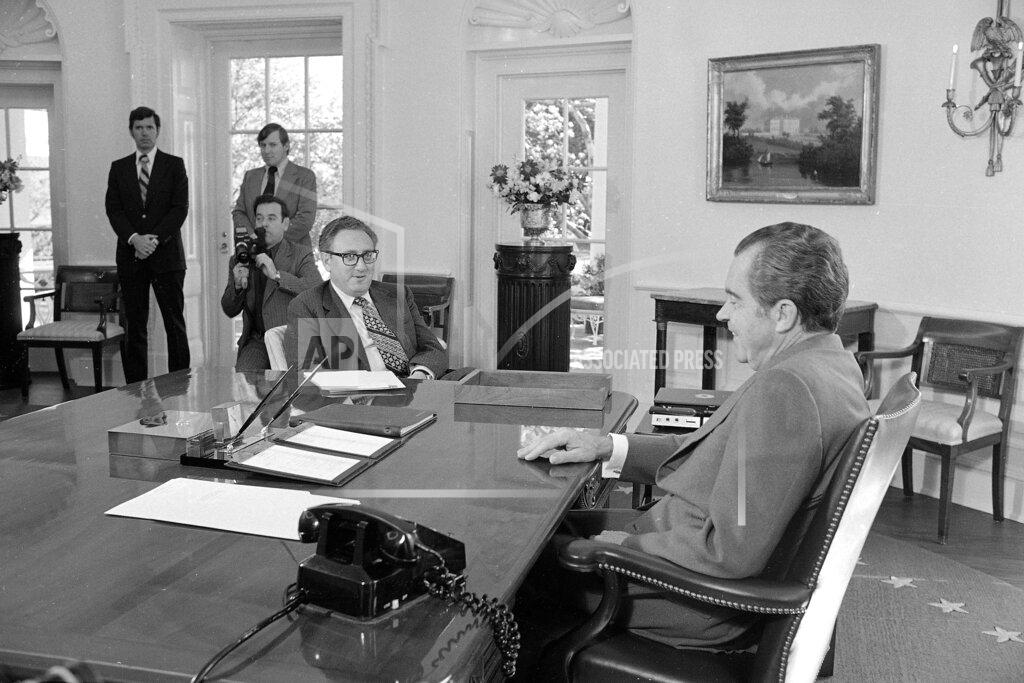
The Việt Cộng proposed a six-point plan that included detailed provisions for a new cease-fire and the holding of general elections in South Vietnam. American officials who read the plan said it was the most concrete put forward by the Việt Cộng since the Paris cease-fire agreement last year. One official said it amounted to a detailed counterproposal to various plans put forward by the Saigon Government. The document, however, was filled with strongly worded attacks on both the United States and the Saigon Government. It warned that if Washington and Saigon continued to “violate” the Paris agreement, “they must be held fully responsible for all the consequences resulting from their act,” an indirect warning that the Communists might resort to force.
Saigon’s top military negotiator said today that Việt Cộng guerrilla attacks and assassinations of civilians in the Mekong Delta had increased in the last month. The official, Brigadier General Phan Hòa Hiệp, said that guerrilla activity in the delta had increased by 11 per cent in March, compared to February. He cited the March 9 shelling of a primary school in Cai Lậy where 32 children were killed, as one of the attacks on civilian targets.
Government soldiers trying to recapture the fallen provincial capital of Phsar Oudong have reportedly succeeded in establishing a riverfront beachhead a few miles away. Phsar Oudong, which is 24 miles northwest of Phnom Penh, was overrun Monday after four days of heavy assaults by insurgent forces. Its chief value to the Phnom Penh Government is psychological because it was the royal capital in the 17th century. Heavy fighting was reported from the area today as Government soldiers pushed out of the beachhead on the Tonle Sap River and began advancing westward toward a village two miles from Phsar Oudong.
Military sources said the government soldiers had passed through one village on their way. Heavy Government casualties were reported. Another group of government soldiers trying to press toward Phsar Oudong from the north was prevented by intense insurgent fire from crossing a small river two miles from the town. Government troops and supplies continued to be ferried up the Tonle Sap River from Phnom Perth to the beachhead near Kompong Luong, which is three miles east of Phsar Oudong.
Israel has complained to the United Nations Emergency Force that Egypt has moved up new artillery on the eastern bank of the Suez Canal, an Israeli military spokesman said here today. He gave no details of the type of artillery allegedly moved up. Under the disengagement agreement, both sides are limited to about 30 short‐range artillery pieces on the front. These weapons are suitable only for defensive purposes, not for surprise attack.
Tank and artillery fire erupted again today along the Israeli Syrian cease‐fire line. The Israelis accused Syria of shooting into the 300 square miles of territory captured in the October war. Syria said she had knocked out a number of Israeli tanks and artillery batteries in yet another day of fighting across the Golan Heights front.
The French Foreign Minister, Michel Jobert, has warned the Arab oil countries that they must treat European consumers on an equal basis if they want special links with Europe. Without quite saying so, he called for removal of the embargo against the Netherlands and Denmark in return for holding the controversial Arab-European conference of foreign ministers that has so annoyed Washington. Mr. Jobert made his characteristically elliptical remarks in an interview with the Algerian Press Service yesterday. They were published in Paris today as he took off for a two‐day visit to Algiers.
“If one wants a dialogue between Europe and the Arab countries,” Mr. Jobert said, “one should not start by discriminating among European countries. It is a possible attitude, but I must say that it risks not facilitating common action in this field of cooperation with Arab countries. Either the Arabs rely on Europe and want to help Europe, which needs to strengthen its cohesion, and that must be taken into account when decisions are made, or they are more or less indifferent to Europe, particularly in relation to the United States, and in that case their decisions risk being interpreted,” Mr. Jobert said. Last weekend, the Arab oil producers lifted their embargo against shipments to the United States, but maintained their ban on the Dutch and Danes.
For the first time in many months the Nixon Administration has gained confidence that it can obtain adequate support from its European allies to share the costs of maintaining 315,000 American troops in Western Europe, officials said today. They said that their confidence was based on a preliminary agreement reached with the Bonn Government on Wednesday for $2.24‐billion in payments to offset the deficits caused by stationing troops in West Germany for two years. The Administration is hoping to get its partners in the North Atlantic Treaty Organization to cover all of the deficit in the American balance of payments resulting from the basing of United States troops.
One official estimated that the current deficit from stationing American troops in Europe was running at about $2.5‐billion a year. The West German contribution, on an annual basis, covers nearly half that deficit and represents an increase over previous agreements. Should any deficit remain, the Administration would be forced to comply with the Jackson‐Nunn amendment to last year’s military‐procurement bill. The provision, introduced by Senators Henry M. Jackson, Democrat of Washington, and Sam Nunn, Democrat of Georgia, requires that United States troops be withdrawn from Europe in proportion to the balance‐of‐payments deficit resulting from maintaining them there. However, United States officials believe that the pact with Bonn will serve as a stimulus to the other NATO nations to make up the rest of the deficit.
The British have served notice that they are reluctant to participate to any large extent in further cost‐sharing because, as their new Ambassador, Sir Peter Ramsbotham said here yesterday, Britain suffers a proportionately larger payments deficit than the United States for maintaining her own forces in West Germany.
A West German steel consortium has concluded a $1 billion agreement with the Soviet Union for an iron and steel plant to be built near Kursk, 280 miles southwest of Moscow. The West German Economics Minister, Hans Friderichs, said the plant would be the largest East-West industrial project since World War II.
Two major American Jewish organizations have asked Secretary of State Kissinger to give Soviet officials a new list of about 1,600 Soviet Jews who have reportedly been repeatedly turned down in efforts to emigrate to Israel. A spokesman for the organizations, the National Conference on Soviet Jewry and the Conference of Presidents of Major American Jewish Organizations, said that Mr. Kissinger was asked to get a pledge from the Soviet leaders on his forthcoming trip to Moscow that all or most of the people on the list will be allowed to leave. Last year, on the eve of a similar trip to Moscow, Mr. Kissinger received and later gave to Leonid I. Brezhnev, the Soviet Communist party leader, a list containing about the same number of “hardship” cases. According to a spokesman for the Jewish groups, about 400 on that list of 1,600 have left the Soviet Union.
The foreign ministers of all seven nations bordering the Baltic Sea — the Soviet Union, West Germany, East Germany, Poland, Sweden, Denmark and Finland — signed a treaty banning the dumping of solid waste into the body of water common to all of them, and to strictly control pollution from DDT and mercury.
John Patterson, an American diplomat who was the U.S. vice consul to Hermosillo in Mexico, was kidnapped by an American visitor, Bobby Joe Keesee, who demanded a ransom of $250,000 in U.S. currency and no disclosure of the kidnapping to the news media. A ransom brought by Patterson’s wife was not collected, and Patterson’s badly-decomposed body would be found in the desert 345 miles (555 km) north of Hermosillo, on July 8, with a broken skull.
The Ethiopian famine, which killed tens of thousands of people last year, is continuing to spread relentlessly to new areas in the southern and eastern areas of the country. Plans and measures to deal with the crisis in the new areas it so rudimentary that some concerned foreign and Ethiopian officials and relief workers believe that another tragedy is possible. An army mutiny and urban civil unrest, unrelated to the famine, forced Emperor Haile Selassie to replace his old appointed Cabinet on February 27 and brought an unprecedented breath of reform and liberty to this East African nation.
But there are beginning to be doubts that the new government of Premier Endalkachew Makonnen will be any more effective in meeting the Crisis in the southern and eastern area than the old cabinet, was in coping with the tragedy that hit the north‐central provinces of Wallo and Tigre last year. A foreign figure deeply involved in famine relief operations said; “Incredibly, it looks like they are going to do the same thing this year that they did last year, which means that many people are going to starve.”
At least one of three wiretaps authorized by President Nixon for “national security” reasons provided the White House with political intelligence about the Democratic presidential campaign of Senator Edmund Muskie, according to sources who have seen written summaries of the overheard conversations. A federal judge ordered the Nixon administration to turn records of the taps over to Morton Halperin, a former official who joined the Muskie campaign after leaving the government in April, 1970. Mr. Halperin is suing several present and former administration officials on the ground that the wiretap, which was not authorized by a court order, was illegal.
The Watergate grand jury’s secret report on President Nixon, locked in its briefcase, was carried back today from the Court of Appeals to Federal District Judge John J. Sirica’s chambers to be ready Monday for delivery to the House of Representatives. Although there was, still some time for an appeal to the United States Supreme Court to keep the report from going to House impeachment investigators, it appeared, unlikely that such action would be taken. The briefcase, containing evidence and an index of events bearing on Mr. Nixon’s actions during the White House coverup of the Watergate burglary; had gone late yesterday to the United States Court of Appeals for the District of Columbia Circuit. Judge Sirica had ordered the report turned over to the House, and the Court of Appeals upheld his decision yesterday, then returned the briefcase at 11:15 AM today. The final hour for any appeal is 5 PM Monday.
The federal government has designated two large areas in the Atlantic Ocean off Long Island and New Jersey as suitable sites for the dumping of sewage sludge as alternatives to the present grounds 12 miles east of New Jersey and 10 miles south of Long Island.
The Council on Environmental Quality, a federal agency, in a step that brings closer the start of offshore oil drilling in the Atlantic, implied that while such drilling was environmentally acceptable, it should not be done within 30 to 50 miles of New Jersey, Long Island or Cape Cod.
Nelson Gross, former Republican chairman in New Jersey, angrily charged the United States Attorney’s office with trying to “devastate” his law practice by calling his firm’s clients “all over the state.” He is on trial for allegedly counseling a client to hide a campaign contribution illegally and then lie about it to a grand jury. His outburst ended his two days of testimony in Federal Court in Newark.
The Senate unanimously approved legislation that would revolutionize procedures for considering the federal budget and setting national priorities. The legislation is intended to provide better congressional control over how much money the government spends and what it spends it for. It was passed in response to President Nixon’s repeated criticism of Congress for fiscal irresponsibility. The Senate bill was passed by a vote of 80 to 0 and will now go to a conference with the House, which passed a comparable bill last year.
The president of the United Auto Workers called on Congress Friday to institute temporary restrictions on foreign car imports to relieve a job situation in the industry “more disastrous than anything since the Great Depression.” UAW leader Leonard Woodcock warned in testimony before the Senate Finance Committee that unless Congress imposed quotas, foreign small car manufacturers could “seize” 30% of the American market while U.S. plants were changing over to production of more economical models. At the same time, Woodcock outlined a shift in his union’s traditional support of free trade measures. He said that his organization “rejected in its entirety” the Administration’s trade reform bill because of “woefully inadequate” provisions for compensating workers and communities hurt by imports.
Jon A. Lund, Attorney General of Maine, has filed a civil suit accusing the Exxon Corporation of having misled dealers and the public about its supply levels. Mr. Lund said the suit, filed in Kennebec County Superior Court, followed six months of investigation by the consumer fraud division of his office. He added that similar investigations were being conducted into the operations of other gasoline companies. Exxon is the largest distributor of gasoline in the state of Maine through its 80 company-owned and 282 independent outlets. The complaint asserts that while the company claimed there were supply shortages throughout the Gulf and East Coast areas, its inventories had actually increased, despite a large rise in sales. The suit also charges that production from crude oil refineries had increased.
Public education for 76,000 students in San Francisco, already in deep trouble because of a wide range of problems, is entering its third week of a teachers’ strike. Since the strike began on March 8, members of one teachers’ group have walked picket lines while other teachers tried to continue instruction. The school board has kept schools open half‐time for about half the total of students that have been attending. The school board’s offer of a 6.5 percent salary increase, plus other fringe concessions, was turned down in a vote last night that could have been changed by 23 switched ballots.
The Civil Aeronautics Board, blaming a precipitous rise in the price of jet fuel, authorized the nation’s domestic airlines to raise fares 4 percent, effective April 16. The agency also indicated that it would sanction an additional 2 percent increase on the same date if the airlines ask for it.
The builder of the DC‐10 airliner involved in history’s worst air crash said yesterday that preliminary evidence indicated the plane’s rear cargo door did not have all changes approved after the near‐crash of another DC‐10 in June, 1972. But the company, the McDonnell Douglas Corporation added: “All aircraft now flying anywhere in the world have been re‐inspected thoroughly to establish beyond doubt that they now do incorporate the necessary changes.” At the same time, the company rejected any suggestions that its resistance to a government request for a new study of the need for more cargo door changes could have had anything to do with the accident. The request was made by the Federal Aviation Administration on February 11 of this year. It was turned aside in a company letter dated February 25, six days before the crash. “To imply that a different response on our part could, have prevented the tragedy is both irresponsible and malicious,” said John C. Brizendine, president of the company’s Douglas Aircraft Division in Long Beach, California.
Most experts in this country are all but convinced that the Turkish Airlines accident on March 3 near Paris, in which 346 persons were killed, was precipitated by failure of the rear cargo door. They base their theory on three main points. The earlier incident, started with failure of the rear cargo door. The rear door from the Turkish airliner was found six miles or more from the main impact point; together with the bodies of six victims apparently sucked through the door opening. The Paris inquiry has turned up no other evidence of mechanical trouble or of sabotage. The manufacturer’s statement that the cargo door might not have had all approved modifications has its first acknowledgment of earlier reports from Paris to that effect. But the company declined to say whether the modifications that might be missing had been recommended before or after the DC‐10 in question was delivered to the Turks. The delivery was in December, 1972, six months after the near-crash that led to the changes.
The 1972 near‐crash, which is widely believed to have set the pattern the Turkish plane followed to a tragic end, involved a DC‐10 flying between Detroit and Buffalo. As it climbed at an altitude of 11,750 feet, the aft cargo door blew away. The rapid loss of pressure in the cargo hold caused the rear floor of the still‐pressurized passenger cabin to collapse into the hold. The flooring ruptured or jammed the vital control cables installed under the floor from the cockpit back to the rear engine and to the control surfaces on the tail. Despite the shutdown of the rear engine and a jammed rudder that pulled the plane sharply to the right, the pilot was able to land safely with only minor injuries to two stewardesses and nine passengers.
After the incident, the F.A.A. prepared directives that would have made mandatory several improvements to the door‐locking system. But McDonnell Douglas appealed to the man who then headed the F.A.A., John H. Shaffer, to make compliance voluntary rather than mandatory. The appeal was granted.
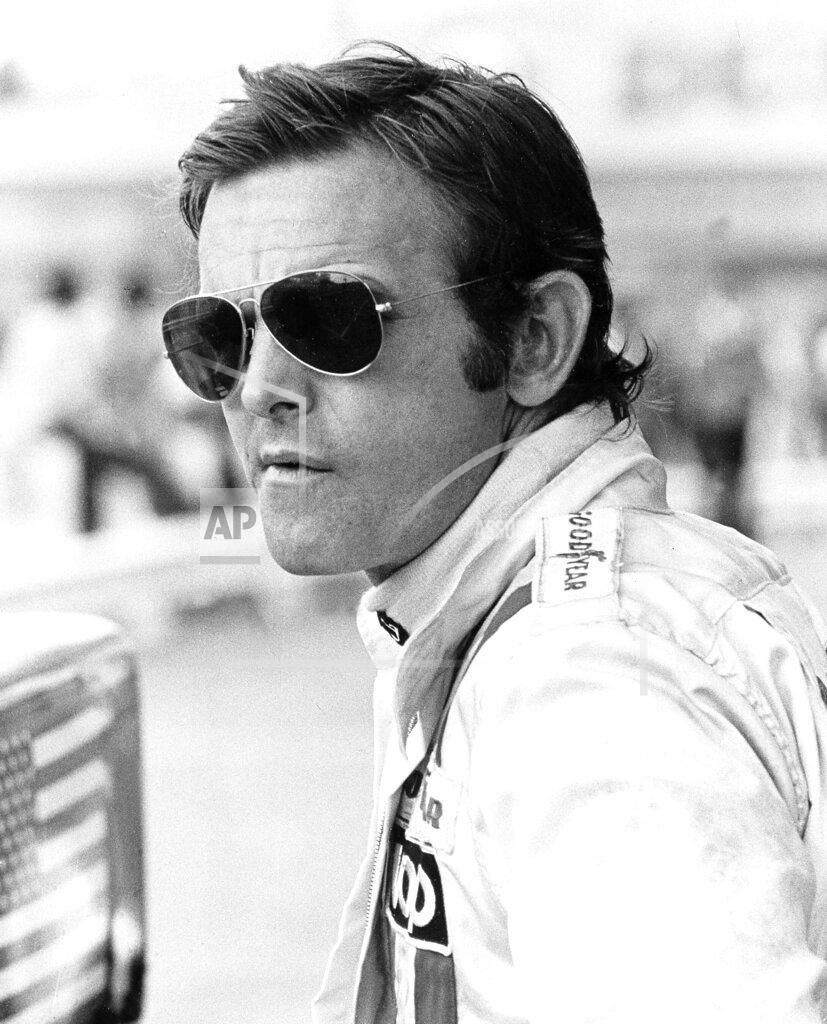
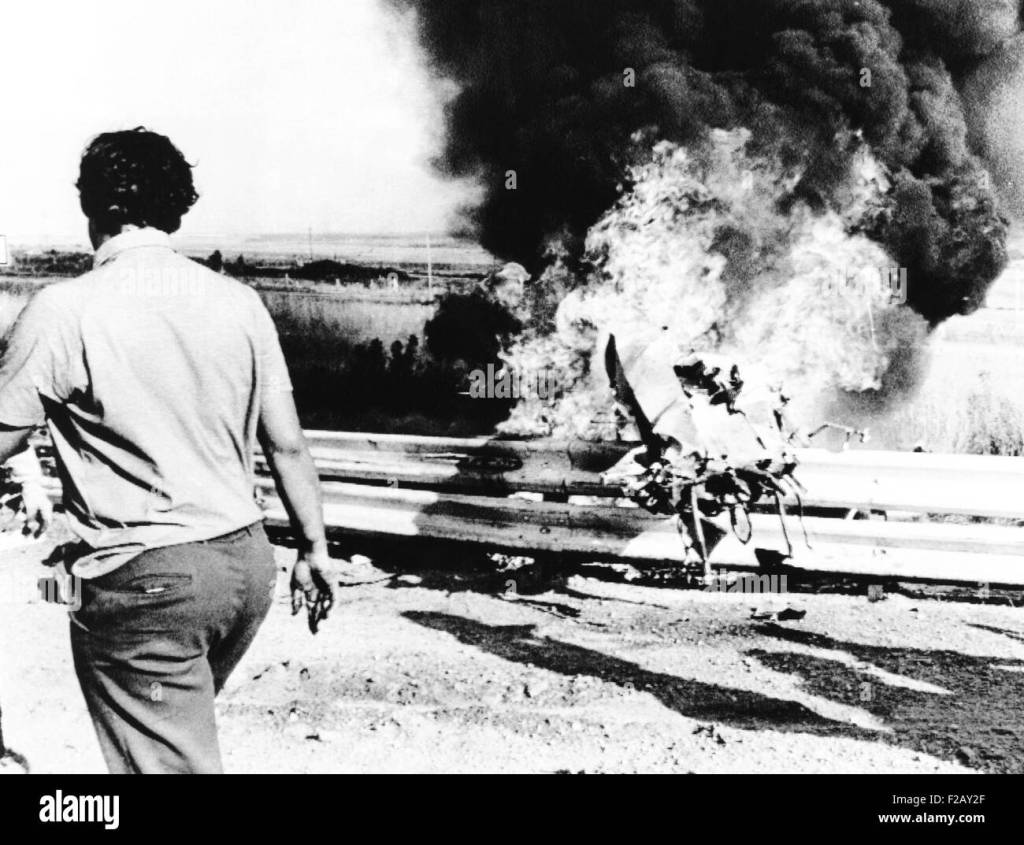
Peter Revson, America’s top road-racing driver, was killed in Johannesburg when his car crashed and burst into flames during a practice run for the South Africa Grand Prix next Saturday. He was 35 years old and was from New York.
Dow Jones Industrial Average: 878.13 (+2.66, +0.30%).
Born:
Marcus Camby, NBA center and power forward, (2007 Defensive Player of the Year; Toronto Raptors, New York Knicks, Denver Nuggets, Los Angeles Clippers, Portland Trailblazers, Houston Rockets), in Hartford, Connecticut.
Mike Mohring, NFL defensive tackle (San Diego Chargers), in Glen Cove, New York.
Bobby Neely, NFL tight end (Chicago Bears), in Atlanta, Georgia.
Tuomas Gronman, Finnish National Team and NHL defenceman (Olympics, bronze medal, 1998; Chicago Blackhawks, Pittsburgh Penguins), in Viitasaari, Finland
Jason Phillips, MLB pitcher (Pittsburgh Pirates, Cleveland Indians), in Williamsport, Pennsylvania.
Suma Kanakala (stage name for Pallassana Paachuveettil), Indian actress, game show host and producer known for Star Mahila; in Palakkad, Kerala state, India.
Bassem Youssef, Egyptian journalist and comedian, host of the TV show “Al Bernameg”; in Cairo, Egypt.
Kidada Jones, American actress and fashion designer; in Los Angeles, California.
Died:
Peter Revson, 35, American race car driver (Indianapolis 500 1971 runner-up; 2 x F1 GP wins), was killed in a crash while preparing for the 1974 South African Grand Prix.
Sam Donahue, 56, American big band jazz saxophonist, died of pancreatic cancer.




 History Diaries