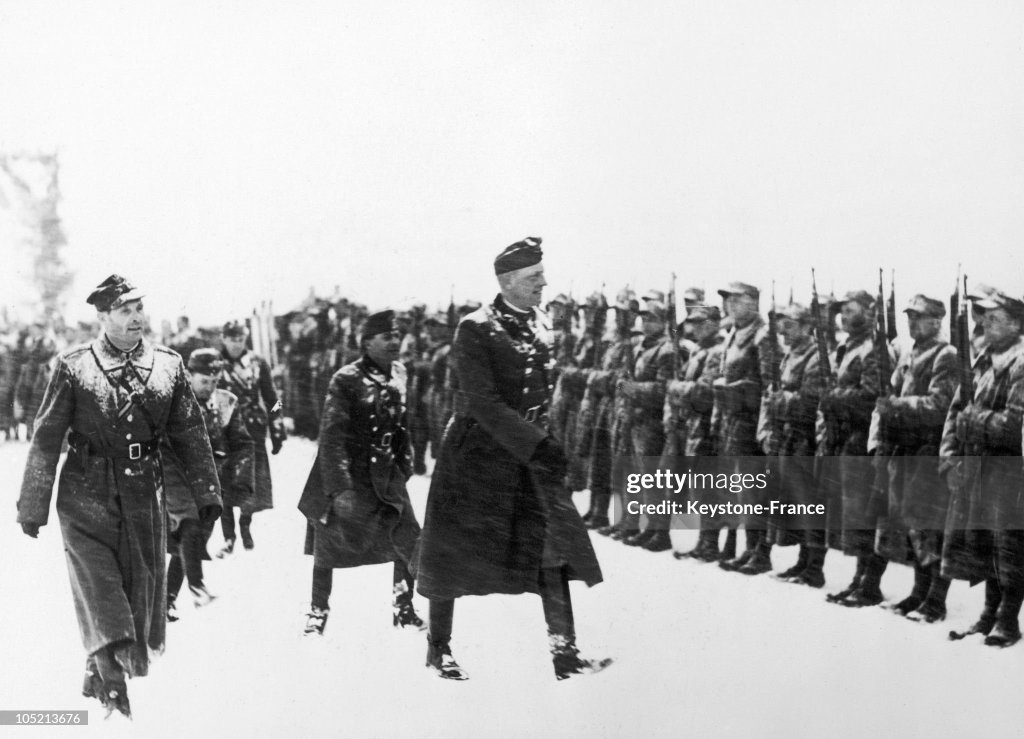
Victor Gailius, Lithuanian Governor of Memel territory, said tonight that Germany had given Lithuania a virtual ultimatum demanding cession of the territory to the Reich. He declared Lithuania had been told that if disturbances occurred before the transfer of Memel territory, German troops would march in to restore order. It was reported here, without confirmation, that an entire German army corps had been moved to East Prussia in the past few days. Informed sources said arrangements had been made between Lithuania and Germany for Lithuania to receive a guarantee of the German-Lithuanian frontier and certain facilities for the use of the port of Memel, which is Lithuania’s only outlet to the sea, in return for surrender of the territory.
The German heavy cruiser Deutschland set sail for Memel, Lithuania. Meanwhile, Germany demanded for Lithuania to send representatives to the warship on the following day to sign Memel over to Germany.
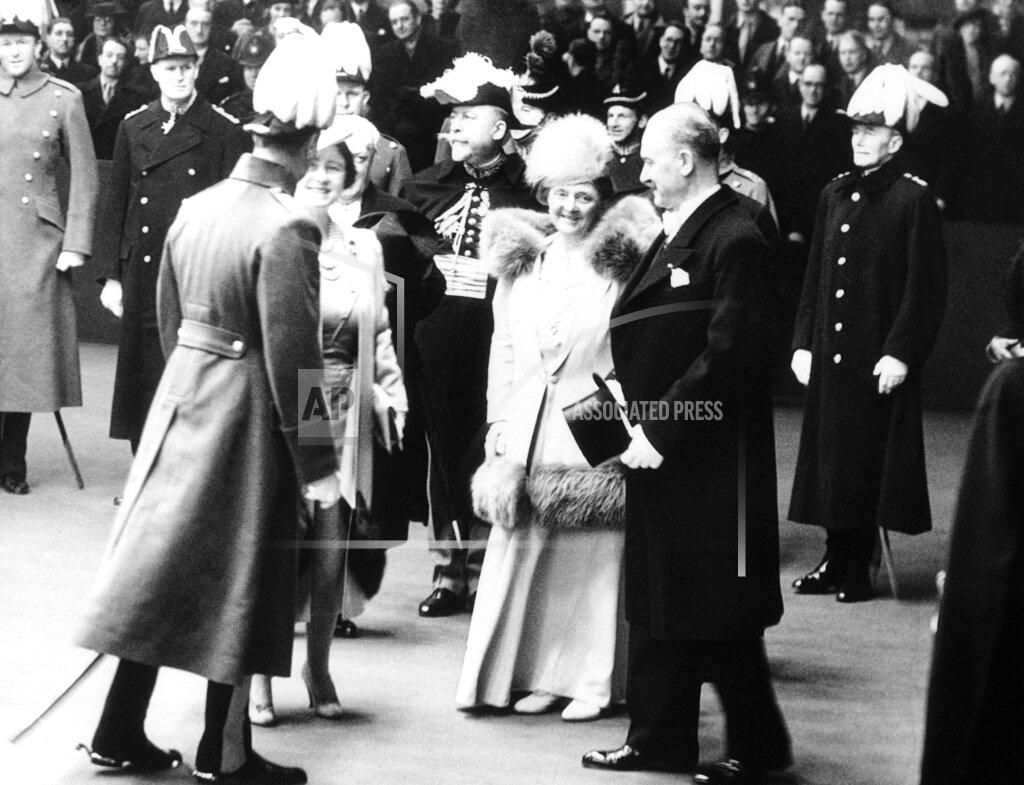
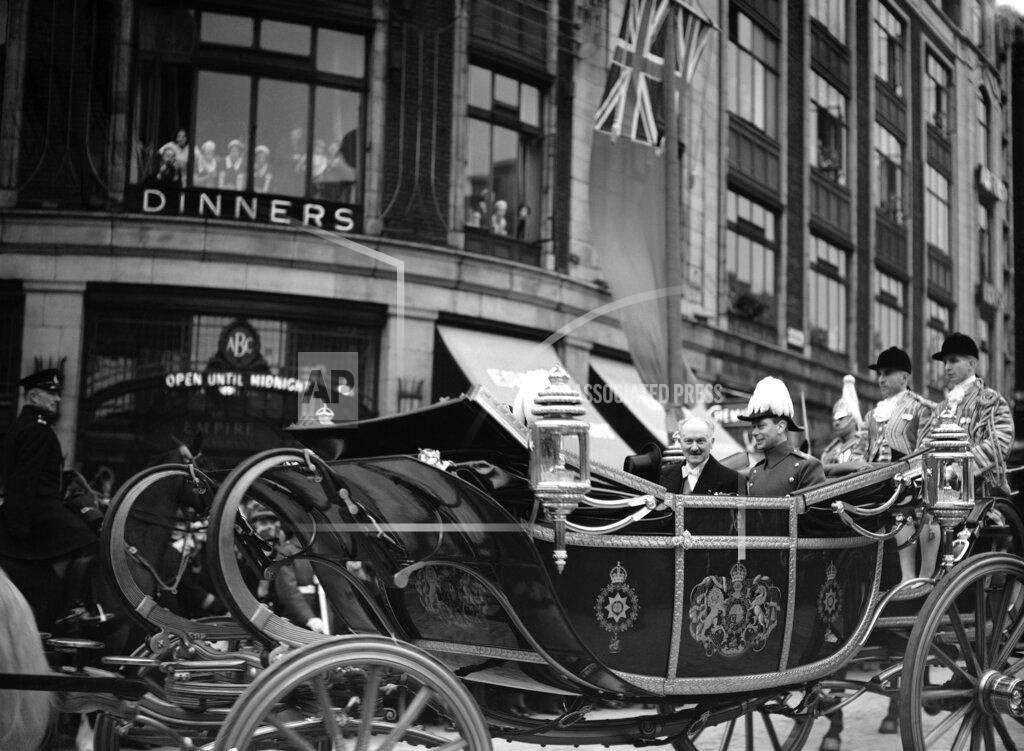
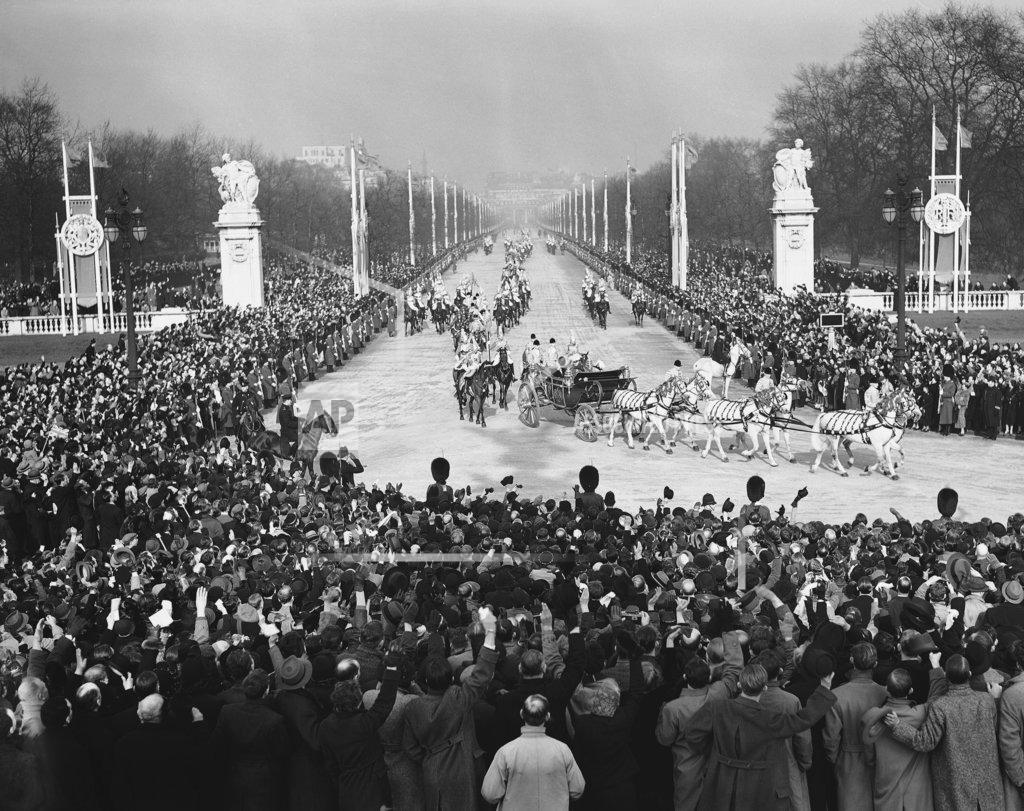
French President Albert Lebrun visited London, England, United Kingdom. British Prime Minister Neville Chamberlain attempted to persuade Lebrun to enter into a British-French-Polish alliance to contain Germany; a similar proposal was also sent to the Polish leadership via the British ambassador in Warsaw, Poland, but the Polish responded coolly. King George VI and President Albert Lebrun of France toasted each other’s country at a state dinner tonight, saying in speeches obviously prepared by their Foreign Ministers that Britain and France would stand together against international lawlessness — “above all, in our hour of danger,” in the words of the King.
While the heads of the two States were thus recognizing the German menace to Europe in far stronger speeches than might have been expected at such a formal occasion, the British Foreign Office was anxiously awaiting comments from Russia and Poland on the text of a proposed joint declaration against further aggression in Europe. With full French approval, the proposed text of such a declaration” was sent to Poland and Russia by the Foreign Office today, with the suggestion that it be signed by all four powers as a possible check to Chancellor Adolf Hitler.
On the same day, in Berlin, Germany, German Foreign Minister Joachim von Ribbentrop expressed that if Poland continued to not agree with German demands for Danzig and if Poland continued to resist signing the Anti-Comintern Pact, then the present German-Polish friendship would deteriorate.
For the third time since 24 October 1938, Germany renews its harsh demands on Poland, i.e., (1) the free city of Danzig (now Gdansk, Poland) be restored to Germany, (2) the construction of a road and railway from Germany and East Prussia across the Polish Corridor and (3) long-term guarantees of the new territorial boundaries.
Prior to 1919, Danzig was the provincial capital of German West Prussia but with the 1919 Treaty of Versailles, Danzig became a free city with its own legislature. In order to give the newly reestablished nation of Poland a seaport, Danzig was included in the Polish customs territory and was placed under a high commissioner appointed by the League of Nations. The Treaty of Versailles also created the Polish Corridor, a strip of land 20 to 70 miles (32-112 kilometers) wide containing the lower course of the Vistula River, except the area constituting the Free City of Danzig, and the towns of Toru, Grudziz, and Bydogoszcz. Free German transit was permitted across the corridor, which separated East Prussia from the rest of Germany. Although the territory had once formed part of Polish Pomerania, a large minority of the population was German-speaking and this arrangement caused chronic friction between Poland and Germany. For the third time, the Poles reject the German demands.
Ribbentrop told Lipski that der Führer was “increasingly amazed” at Poland’s refusal to accept the return of Danzig and warned that German media would soon start a press campaign asking for Danzig to “go home to the Reich”. In response to Lipski’s reports, Rydz-Śmigły ordered a partial Polish mobilization.
In Paris, Bonnet noted in a telephone call to Lord Halifax that Poland was the only nation in Eastern Europe that was capable of helping Rumania resist a German invasion. Halifax told Bonnet: “His Majesty’s Government thought it was now a question of checking German aggression, against France or Great Britain or Holland or Switzerland or Romania or Poland or Yugoslavia or whoever it might be. They saw no escape from this”. Beck was opposed to the plans of King Carol II for an Eastern European bloc, which he felt was too provocative towards Germany.
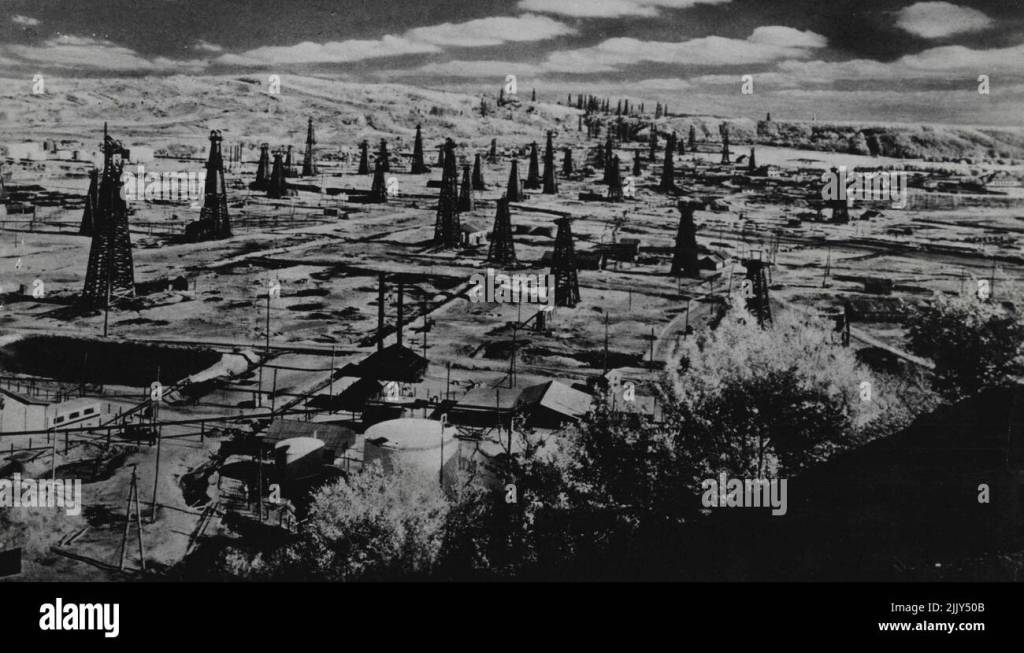
In London, Halifax approached the Polish ambassador, Count Edward Raczyński, and in Warsaw, the British ambassador, Sir Howard William Kennard, approached Beck for a plan for a joint statement to be issued calling for a bloc of Britain, France, Poland, Yugoslavia, Turkey, Greece, Romania and the Soviet Union to resist any further German invasion. Beck rejected the British plan, saying that he regarded the Soviet Union as a far greater danger to Poland than Germany and instead proposed a bilateral Anglo-Polish treaty with a promise of British support for the Polish position regarding Danzig. British elites regarded Poland as a far stronger power than the Soviet Union and Halifax later stated: “We had to make a choice between Poland and the Soviet Union; it seemed clear that Poland would give the greater value”. The quid pro quo of the British “guarantee” of Poland was that Poland in turn would be willing to protect Rumania and its oil from Germany.
Poland requested consultations with United Kingdom and France regarding German demands for Danzig. United Kingdom and France expressed willingness to go further than mere consultation and suggested a formal treaty.
The last president of Czechoslovakia, Emil Hácha, officially dissolves the Czech parliament.
Effective April 1, Germany will ration edible fats in the former Austria. Farmers there are urged to breed silkworms.
Daladier privately felt that Germany had a strong moral case for the return of Danzig, and only decided to back Poland as a way to block German ambitions to dominate Europe. Together with St. Léger and Marshal Maurice Gamelin, Daladier envisioned a bloc to consist of France, Great Britain, Poland, the Soviet Union, Romania and Yugoslavia that would resist the hegemonic claims of the Reich. Daladier saw Poland as playing a crucial role in the projected bloc that came to be known as the “peace front”, and agreed to support the Polish rights with regard to Danzig as the price for Poland playing the role that he wanted her to play.
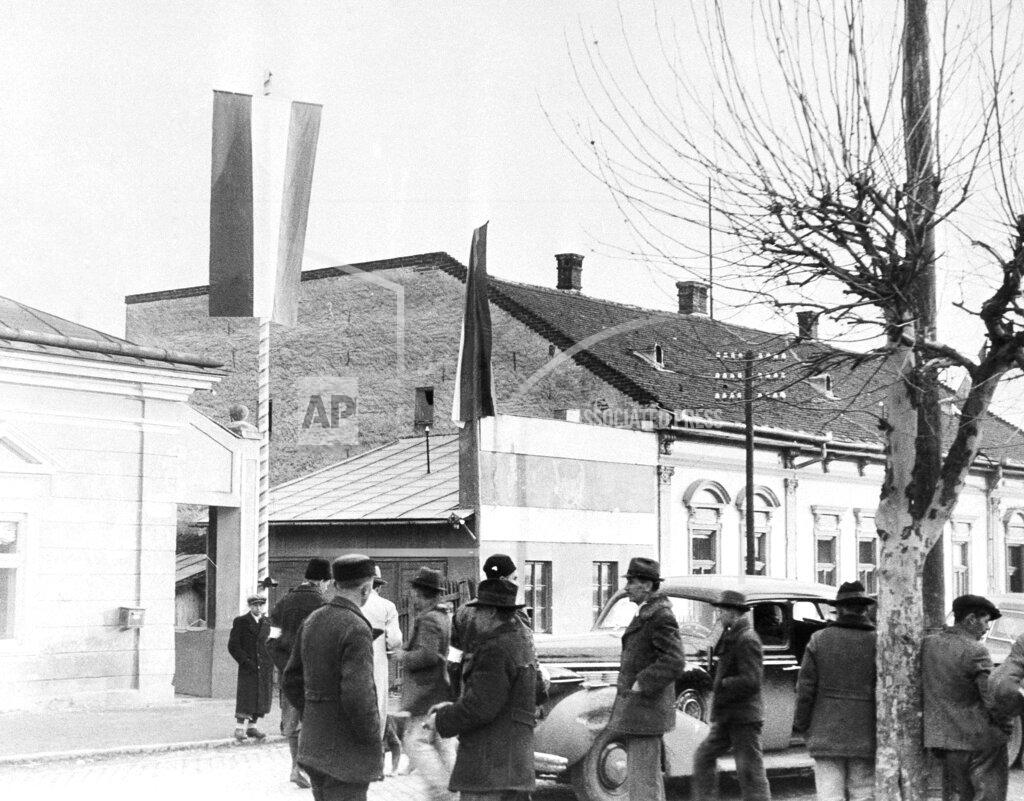
Hungary advanced “precautionary” measures on the Ruthenian-Rumanian frontier today, calling additional reservists to the colors. Foreign military observers estimated the number under arms at 500,000 with at least half of them on or near the Hungarian-Rumanian frontier. Especially strong units were believed to be in the unfortified section which, until last week, was the border between Rumania and Carpatho-Ukraine, the section of dissolved Czecho-Slovakla occupied by Hungary. With additional men expected to be called, it was estimated Hungary’s armed strength would rise to 700,000 men.
Rumania today called additional reserves to army service as a result of concern over reported concentrations of Bulgarian and Hungarian troops on her borders and the massing of German divisions in Moravia. The shooting of one German by a Rumanian Jew and the unexplained death by shooting of a German Legation secretary here caused a feeling of uneasiness, which the Prime Minister’s office endeavored to dispel. The police investigated the death of Georges Schmidz, the German Legation secretary, although German quarters insisted he had shot himself. The legation refused to comment.
An undisclosed number of French military reserves were called to the colors tonight to man the Maginot defense line facing Germany. Many of the reservists were from the last two classes to complete their compulsory military service. Naval reservists also were called. In various Paris stations many men who were mobilized last September again kissed their wives and sweethearts goodbye on the quays and boarded trains for military and naval posts. Other reservists received notices to leave tomorrow.
In Spain, Valencia awaits peace, but gets more bombs.
The Fascist Grand Council stresses Italian support of Adolf Hitler.
The British Princesses Elizabeth and Margaret are to make their first speeches — in French.
The Senate curbs President Roosevelt’s reorganization plan by one vote. Reconsideration is sought. The Senate, by a margin of one vote on an amendment to the Reorganization Bill, overrode Administration adherents late today and then, as a movement for reconsideration was undertaken, involved itself in a parliamentary dispute which was interrupted by a recess until noon tomorrow. The setback to the Administration side was adoption of an amendment by Senator Wheeler whereby. reorganization plans drawn up by the President could become effective only after a concurring majority vote of the House and the Senate. This would reverse the Administration provision in the bill authorizing reorganization, subject only to a veto by a majority vote of both Houses of Congress.
The actual vote was 45 to 44, but it became technically 46 to 43 when Senator Byrnes, leader of the losing side, switched his vote to be eligible to move for reconsideration. After a half hour’s debating and voting, however, there was no decisive action on the reconsideration issue and the victory for the Wheeler amendment was left tentative, partly because of the efforts of Senator Wheeler and his group to block the possibility of reconsideration.
Their effort almost succeeded, but Senator Borah, in accordance with his usual practice of never voting for a motion which cuts off debate, sat silent at his desk and the motion to table the motion to reconsider was lost by a tie vote, 44 to 44. The vote on the amendment came after four hours of debate which was important only for the time it consumed. Members reshuffled old arguments, with the leaders of the opposing groups using the time for an intensive drive for votes in the cloakrooms and corridors. The Administration was said privately by Senators to be especially active. One member declared that the White House or Postmaster General Farley had been in telephonic communication with virtually every Senator considered to be on the opposition side, the telephoning beginning last evening and continuing through today.
Many Senators agreed that the effort was out of all proportion to the importance of the Reorganization Bill or the Wheeler amendment, since the bill had been stripped of almost every contentious phrase which resulted in its death at the hands of the House last year after it had passed the Senate. Hovering over all of today’s activities and far exceeding in importance any action on the bill was the issue, intensified in the last national campaign, of whether the President shall have any further grants of power from Congress, regardless of how small or routine they may be. The issue drove a clear line of cleavage through the ranks of Democratic Senators.
President Roosevelt today took another long step away from business tax revision as a recovery stimulant when he said during a press conference that requests for such readjustments were coming chiefly from $1,000,000-a-year corporations and at the same time contended the burden of the proposed changes would fall heaviest on small corporations. To the chagrin of some Administration officials and members of Congress who have espoused a rapprochement of government and business through the medium of legislative economies and business tax revisions, the President strongly intimated that he had no disposition to forsake the spending-lending policy which he defended in his annual message to Congress in January.
And he indicated, furthermore, that he still stood by the principle of the tax on undistributed corporate profits. Before endorsing any departure from his spending program, the President said he would have to have an iron-clad guarantee that private business would be able to take up the slack of unemployment that would be caused by a reduction in the relief rolls as well as cuts in appropriations which would provide employment on other Federal projects for large numbers of the unemployed.
The U.S. Navy disclosed today that construction facilities were being expanded at the Philadelphia and New York navy yards to accommodate battleships up to 45,000 tons as authorized in last year’s billion-dollar fleet expansion act. Officials said that ways at both yards were being strengthened and extended, at a cost of several million dollars. Admiral William D. Leahy, chief of operations, is expected to ask for funds to start possibly the world’s largest and most powerful battleships when hearings open next week on the navy’s $700,000,000 budget request. There has been no official word, however, that President Roosevelt had approved construction of craft larger than those of 35,000 tons permitted in the treaties that Japan abrogated.
Thomas Dewey’s popularity as a presidential candidate increases sharply after James Hines’s corruption conviction.
The Franklin Institute gives a prestigious award to Dr. Edwin Powell Hubble for the study of nebulae outside the galaxy.
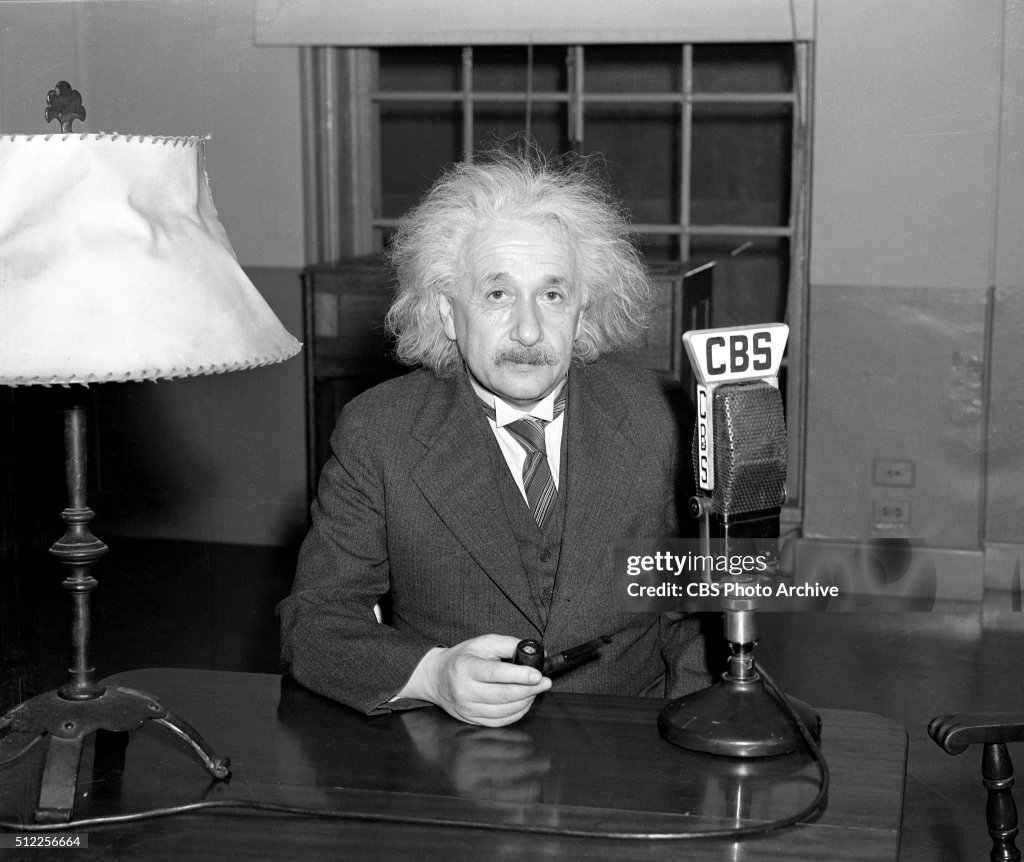
Albert Einstein asks for aid for the persecuted, and urges help to avoid a return to barbarism.
A frail 61-year-old widow protects her $1 grocery money from a robber using a broomstick.
James Stewart will star in “Mr. Smith Goes to Washington.”
The author whose book inspires the movie “The Birth of a Nation” remarries; 75-year-old Thomas Dixon marries a literary assistant.
A song, written by Irving Berlin in 1918 as a tribute by a successful immigrant to his adopted country, was recorded by Kate Smith for Victor Records on this day. Ms. Smith had introduced the song on Armistice Day, 11 November 1938, at the New York World’s Fair. It was a fitting tribute to its composer, who gave all royalties from the very popular and emotional, “God Bless America” to the Boy Scouts. The song became Kate Smith’s second signature after “When the Moon Comes Over the Mountain” and the unofficial national anthem of the United States during World War II.
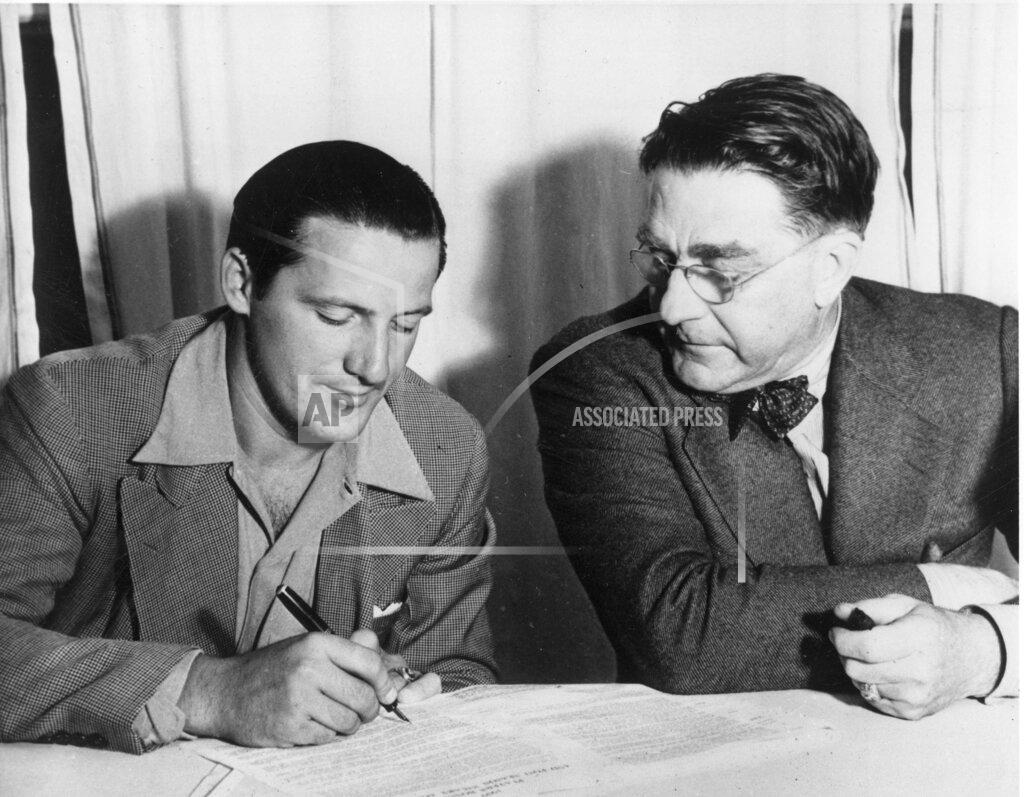
Pete Fox, Hank Greenberg, and Frank Croucher homer as the Detroit Tigers beat the St. Louis Cardinals in a Spring Training game, 7-3. For Croucher, it is a satisfying return to Lakeland. A year ago last week he was carried off the field with a broken ankle and appeared in just a few late-season games in the Texas League.
Chile rushes to aid the homeless, and buildings are being erected as part of the earthquake relief effort.
Gandhi called on the world to disarm, thinking that Hitler would follow. With European tension approaching the breaking point and war looming ever nearer, Mohandas K. Gandhi gave this correspondent today a message to the world as his contribution toward solving a situation that is rapidly becoming desperate. “I see from today’s papers,” he said, “that the British Prime Minister is conferring with the democratic powers as to how they should meet the latest threatening developments. How I wish he were conferring by proposing to them that all should resort to simultaneous disarmament. I am as certain as I am that I am sitting here that this heroic act would open Chancellor Adolf Hitler’s eyes and disarm him.”
“Wouldn’t that be a miracle?” your correspondent asked.
“Perhaps, but it would save the world from the butchery that seems to be impending.”
“Isn’t that enough for one morning?” Mr. Gandhi asked when pressed to say more.
[Ed: I’m sorry, but Gandhi was simply an idiot.]
Nationalist Major General Dong Zhao was relieved of his position and the commander of the 28th Division so he could focus on his corps-level command.
Japanese 6th Division crossed the Xuishui River west of Jiujiang, Jiangxi Province, China and marched toward Wuning. The Japanese troops under the direct command of Yasuji Okamura launched heavy artillery shelling over Chinese fortifications on the other side of the Xiushui River. The Japanese sappers under the cover of artillery fire were able to set up bridges quickly which allowed the Japanese tanks to be deployed across the river, decimating the Chinese forces in the process.
The Japanese threat to Nanchang was increased today by units which crossed the Siao River during the weekend and laid siege to towns forty to fifty miles north of the former Kiangsi capital. Having passed the obstacle of the Siao River, the Japanese now face few natural hazards on the flat open terrain between the present front-line positions and Nanchang.
A Japanese news agency dispatch from Hanoi. French Indo-China, said today that three Chinese gunmen had attempted to assassinate Wang Ching-wei, former Premier of the Chinese Government. Mr. Wang escaped, but his secretary and three other persons were wounded. The gunmen fled. Mr. Wang, leader of a pro-Japanese peace faction in the Chinese Government, fled from Chungking last January. Nothing had come of the peace overtures he made after his flight to Hanoi.
The United States Embassy today was informed that the American Covenant Missionary Society hospital had been damaged and a residence demolished Saturday by a Japanese air raid on Siangyang, 180 miles northwest of Hankow. Peter Matson of Chicago, head of the mission, reported no foreigners had been hurt in the raid.
Dow Jones Industrial Average: 143.41 (+2.13).
Born:
Tommy Davis, MLB outfielder and third baseman (All Star, 1962, 1962², 1963; World Series Champions-Dodgers, 1963; Los Angeles Dodgers, New York Mets, Chicago White Sox, Seattle Pilots, Houston Astros, Oakland A’s, Chicago Cubs, Baltimore Orioles, California Angels, Kansas City Royals), in Brooklyn, New York, New York (d. 2022).
Martha Hudson, American sprinter (Olympics, 4X100m relay, gold medal, 1960), in Eastman, Georgia.
Orb Bowling, ABA center (Kentucky Colonels), in Sandy Hook, Kentucky.
Kathleen Widdoes, actress (“As the World Turns”), in Wilmington, Delaware.
Naval Construction:
The Türk Donanması (Turkish Navy) Demirhisar-class destroyer TCG Sultanhisar is laid down by William Denny and Brothers (Dumbarton, Scotland, U.K.)
The Royal Navy “K”-class destroyer HMS Kandahar (F 28; later G 28) is launched by William Denny & Brothers (Dumbarton, Scotland).
The Kriegsmarine (German Navy) Type 1936 destroyer Z20 Karl Galster is commissioned.

 History Diaries