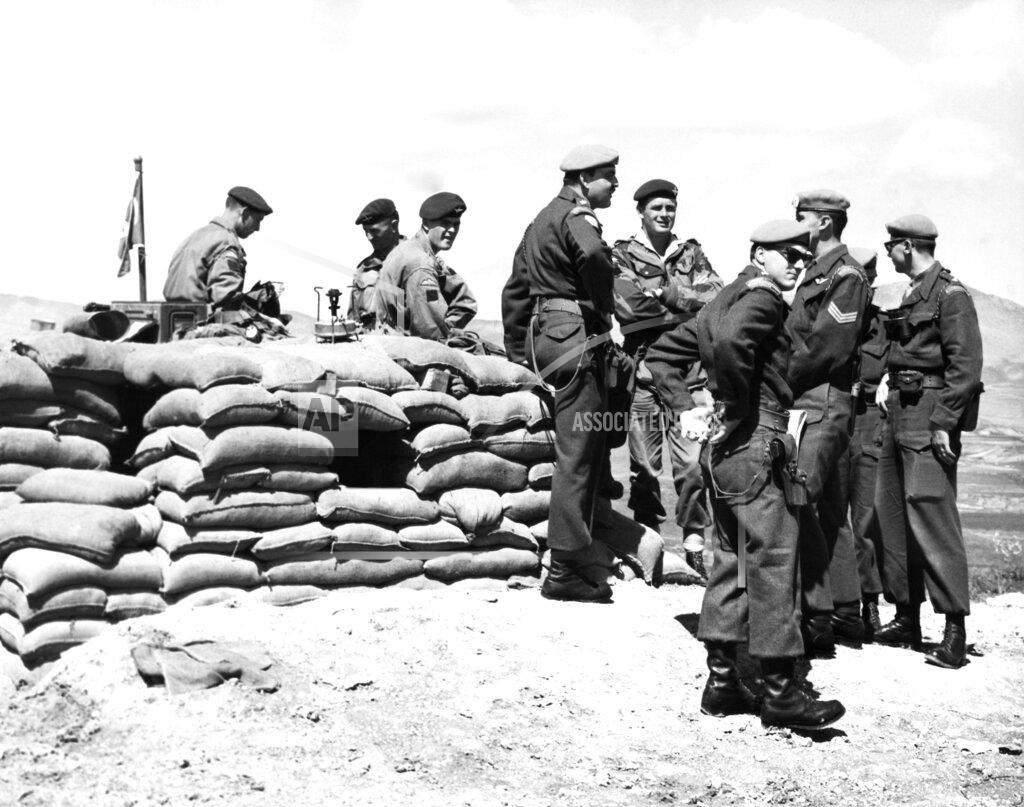
The United States and South Vietnam salvaged negotiations for a political accord in Southeast Asia today by officially expressing their sympathy to Cambodia for a border attack by American‐supported Vietnamese forces. Prince Norodom Sihanouk, the Cambodian chief of state, indicated his satisfaction that South Vietnam had accepted responsibility for the air and ground intrusion that killed 17 Cambodian villagers. The State Department described as regrettable the raid on the village, according to United Press International. But the department charged that Cambodian planes may have attacked “an unarmed aircraft in South Vietnam’s air space” after the village raid.
The swift Vietnamese and American response brightened the prospect for fruitful negotiations between South Vietnam and Cambodia as suddenly as it was darkened by news of the incident yesterday. A day of rapid developments gave officials on both sides hope that long-standing differences could be resolved. Diplomats hearing extravagant phrases from officials of the two sides reserved judgment until Prince Sihanouk makes a formal declaration. But for the moment, they said, the political climate seems clear. The most dramatic gesture of the crowded day was the flight of Vietnam’s chief negotiator, Huỳnh Văn Cao, to the village of Chantrea, where the attack took place. The former army corps commander talked with the wounded in the hospital, witnessed damage to houses and bomb craters from attacking planes and offered compensation to the villagers. “I saw it was a shameful mistake,” Mr. Cao said on his return to Phnom Penh. “Fortunately, the Government of Cambodia seems to be showing good will.”
The Vietnamese negotiator came to Cambodia Thursday as the personal representative of Premier Nguyễn Khánh to seek a solution of the border disputes that have long troubled relations between South Vietnam and Cambodia. The border of Cambodia and Vietnam was left vague when they became independent in the French withdrawal from Indochina in the mid-nineteen-fifties. The attack on Chantrea took place at the very hour the mission was flying to Phnom Penh Scheduled negotiations gave way to hurried and informal discussions over the new border crisis. Prince Sihanouk cut short his provincial tour because of the incident and returned to the capital. But he canceled his planned visit to Chantrea.
The Johnson Administration decided this week that what was diplomatically and politically desirable in Vietnam was also militarily feasible; there was no need to make the awful choice between defeat and full-scale United States involvement. And thus ended another period of anxious re‐examination here. The boasts of early victory were quietly put aside. The threats of deeper commitment were quietly shelved. The talk of negotiating a way out was again dismissed as visionary. In essence, the conclusion was the same as that reached in previous reappraisals: The United States could train, advise, equip and finance the South Vietnamese to defend themselves against Communist guerrillas. It was a conclusion reached each time by the same group of men, principally Secretary of Defense Robert S. McNamara and General Maxwell D. Taylor, the chairman of the Joint Chiefs of Staff.
The Soviet Union released today an injured United States Air Force officer, one of three crewmen of an RB‐66 reconnaissance bomber shot down over East Germany 11 days ago. The officer, First Lieutenant Harold W. Welch, navigator of the plane, was turned over to United States authorities in Magdeburg, East Germany, and brought to the Wiesbaden Air Force Hospital. He suffered a broken arm and leg when he landed in a tree after having parachuted from the burning jet. Moscow did not mention any intention of releasing the officer in a reply yesterday to United States protests on the detention of the airmen. The reply, given to Walter J. Stoessel Jr., chargé d’affaires in Moscow, was vague on whether the Americans might be tried for espionage.
The whereabouts of the two other crewmen, Captain David I. Holland of Holland, Minnesota, and Captain Melvin J. Kessler of Philadelphia, is not known. Residents of the area where they parachuted said they had not been injured. The Russians have charged that the plane was on an intelligence mission. It was downed 16 miles inside the border. The United States has insisted that the crossing of the border was inadvertent. The incident led to sharp protests and counter‐protests. Lieutenant Welch appeared to be in good spirits upon his arrival at Wiesbaden shortly before 9 PM. The 24-year‐old officer was under orders not to speak to reporters, who clustered about his stretcher as he was carried from an Air Force transport to an ambulance.
The Soviet Union warned today that efforts to make it pay its assessments for the United Nations peacekeeping operations in the Congo and the Middle East could wreck the world organization. A Soviet Government statement issued by the Soviet delegation here emphasized that Moscow would not reconsider its refusal to pay its United Nation debt. It repeated the Soviet argument that the assessments for the peacekeeping operations were illegal because they had not been approved by the Security Council. Alluding to efforts led by the United States to force Moscow to pay at least part of its arrears or lose its vote in the General Assembly, the statement said such efforts would be regarded as an “unfriendly act” toward the Soviet Union and could do “irreparable damage” to the United Nations. The statement declared that any actions designed to deprive Moscow of its voting rights in the Assembly would be considered as “the actions of those who do not care for the United Nations and who do not take into account the prospectives of its breakup as a result of such actions.”
President Johnson disclosed at a surprise meeting with reporters today that he had made a new move to resolve the United States dispute with Panama. He read a statement he had sent earlier to the chairman of the Council of the Organization of American States in which he emphasized the United States readiness to “review every issue which now divides us.” This made clear that the offer included a possible alteration in the 1903 Canal Zone treaty. The President noted, however, that his latest statement marked no change in the United States position. In markedly conciliatory language, the President expressed awareness that the Panamanian claims were based on that country’s “deeply felt sense” of its “honest and fair needs.”
The President repeated past offers to send an ambassador and special representative “any time and at any place” in order to bring the three‐month‐old controversy to an end. The President’s initiative today appeared to hinge on the use of the word “review” with reference to a settlement of United States‐Panamanian differences. In earlier diplomatic efforts to bring United States and Panamanian representatives into contact, the Panamanians had demanded an agreement to “negotiate” differences, whereas the United States insisted it would only “discuss” them. “I don’t say ‘discuss,” the President pointed out in answer to a question, “because that is a sticky word.”
The U.S. Joint Chiefs of Staff presented President Johnson with its recommendations for Operation Square Dance, a plan to totally destroy Cuba’s sugar crop in order to cause the collapse of its socialist revolutionary government led by prime minister Fidel Castro. President Johnson refused to approve the operation because of the hardship upon the general population, and would discontinue all sabotage plans against Cuba less than three weeks later.
The Indian Government announced tonight that army units were being rushed to trouble spots in eastern India as Hindu violence against the Muslim minority continued to spread. The latest outbreak occurred last night and early this morning in Jamshedpur, a steel town in the southeastern corner of the state of Bihar. The death toll there since Thursday was 51, according to official figures. Four persons were reported to have been killed when the police opened fire on a crowd. Twenty‐one persons were injured and 261 arrested, according to Indian news agency reports. An army force reported to total 1,000 took over administration of another steel town, Rourkela in Orissa state, where 29 persons were officially reported killed yesterday. About 40 United States citizens were evacuated to Calcutta. Other reports from Ca1cutta placed the toll in Rourkela Friday at 53 killed and 110 injured.
Earlier in the week similar religious violence cost at least 30 lives in Calcutta in West Bengal and in Raigarh in eastern Madhya Pradesh. The total number of deaths this week was at least 110. The police were reported to have arrested 97 persons today in Calcutta, although no new casualties there were announced. Virtually all known victims of this week’s violence have been Muslim mill workers. Most were stabbed or clubbed as they were going to or coming from work on night shifts.
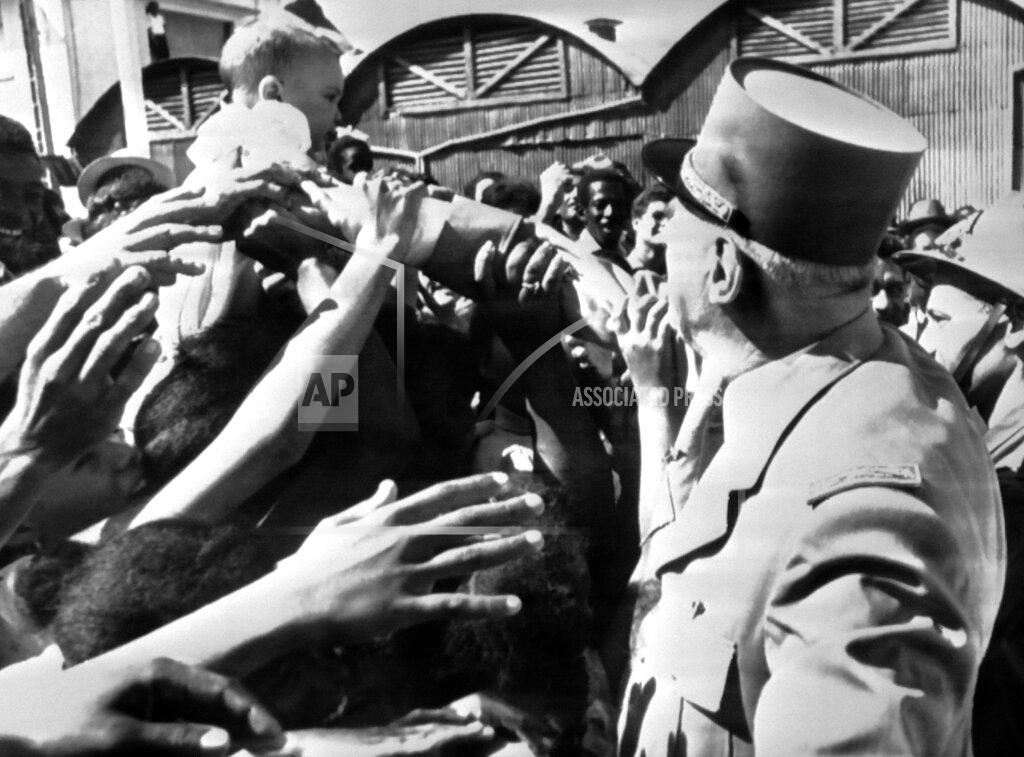
President de Gaulle arrived today in French Guiana, outpost of France, bearing his message of “grandeur” and “independence.” The French leader spoke to a crowd of about 5,000, close to one‐sixth of Guiana’s population, in the Place de Grenoble in the center of town. His speech was designed to stir the patriotism of people living far from France. He lauded France’s stability and her “fraternity for all the world.” General de Gaulle said that in Mexico he had learned that France’s position in the world had never been higher. His government is determined to maintain this position, he said. To the people of this impoverished department, the President promised a planned development. The Investment Fund for Overseas Departments has already invested the equivalent of about $6 million in French Guiana and the general gave the impression that more was to come. Both President de Gaulle’s attitude toward the United States and his confidence in France’s mission seem to have sharpened under the impact of the wild enthusiasm of the crowds in Guadeloupe, which he visited before coming here.
A new decree on the confiscation of immovable property was published in the official gazette in Zanzibar today. It said that whenever it appeared to the President of Zanzibar that it was in the national interest to acquire any property, and that such acquisition without compensation would not cause undue hardship to the owner, the president could order confiscation. On the issuance of such an order the owner of the property must transfer the property and any title documents to the director of land reform, the statement said.
In the U.S. Senate, a Southern spokesman accused New York’s two Senators today of trying to force the racial integration of schools in the South while preserving “de facto” segregation in New York City schools. Senator James O. Eastland, Democrat of Mississippi, made the charge in debating the civil rights bill with Senators Jacob K. Javits and Kenneth B. Keating, New York Republicans. He noted that the bill would authorize court action by the Attorney General to integrate public schools while specifically prohibiting the use of such power to adjust “racial imbalance” in schools.
Thus, he argued, Southern schools would be integrated while the racial imbalance in New York’s schools, which he called “de facto segregation,” would not be affected. Pointing to Senators Javits and Keating, who were among a handful of Senators on the floor today, Mr. Eastland said they were trying to “force something on us that you don’t advocate for your own state and your own people.” Senator Javits contended, in reply, that the racial imbalance in New York schools did not constitute de facto segregation and that the bill in any case would apply “across the board” to Northern as well as Southern schools. Mr. Eastland held the Senate floor for much of the day as two full weeks of debate on the bill drew to a close without any discernible progress toward reaching a vote.
The House‐approved measure provides new Federal powers for combating racial discrimination in places of public accommodation and in education, voting and employment. It would also authorize the President to withhold funds from federally aided programs in which discrimination is practiced. The immediate question before the Senate is a motion by the Democratic leader, Senator Mike Mansfield of Montana, to call up the bill for consideration. Southern Senators, holding the floor in relays, have prevented the motion from coming to a vote. Senator Richard B. Russell, Democrat of Georgia, leader of the 19‐member Southern bloc opposing the bill, is now indicating that the oratory will be temporarily halted sometime next week to permit a ballot on the procedural question.
Civil rights forces, not to be. outdone by Southern opponents, have thrown up their own well-manned command post in the Senate. “We, too, are ready to do battle,” said Senator Hubert H. Humphrey. The Minnesota Democrat, assistant majority leader, commands the bipartisan civil rights forces. As militarily precise as the Southerners’ three‐platoon system, the Humphrey forces are organized down to the last man. Some Senators have been named floor captains to discuss various titles, or provisions, of the rights bill. Others have been assigned to “military police” duties — namely, keeping check on the whereabouts of supporters of the bill so that a sufficient number will be present to answer quorum calls.
In previous civil rights filibusters the Southerners have used three teams of six men each in rotating the talking chores. But this is the first time the pro‐rights forces have formally organized for the fray. The Southerners profess not to mind. “I do not resent the fact that Senators supporting this bill are organized,” Richard B. Russell of Georgia, commander of the Southern forces, observed in a recent Senate speech.
A growing sense of civil rights militancy has come to the North in recent months. It has surprised many Blacks with its strength and frightened many whites with its potentialities. There have been school boycotts carried out against the wishes of the established civil rights organizations. There have been dramatic demonstrations, such as the recent traffic tie‐up on New York’s Triborough Bridge, that infuriated the white community. And there are promises of more demonstrations in New York, Chicago, Cleveland, Boston, and a dozen smaller cities. To many persons, the new militancy is unexpected and unwarranted. After all, they say, nowhere is the Black better off than in the Northern United States. The militant Black replies that freedom is not a relative matter. His growing militancy is manifesting itself in a way that has caught many white liberals off their guard and that seems also to have been misjudged by some of the leaders of the traditional civil rights organizations. The movement, which was characterized last summer by a few unsuccessful picket lines at places of employment, is now a full‐blown thing.
Governor George C. Wallace surveyed his audience in Wisconsin and suggested, “Let’s make believe that we’re in Convention Hall and I’ll accept the nomination.” Boos and shouts of “no” from Oshkosh State College students drowned out the applause of adults scattered through the crowd of 2,000 in the Civic Auditorium. Placards held aloft bore such messages as “Welcome Hatemonger,” “Go Home, Bigot,” “Ban the Bomb in Birmingham,” “Keep Wisconsin Clean — Can Wallace” and “We Shall Overcome.” Off to the Alabama Governor’s right, three pro-Wallace youths waved signs, which said: “Stop Washington Powergrabbin’ ” “Rights For Whites” and “Civil Rights Bill is Unlawful Grab For Power — Support States’ Rights.”
Mr. Wallace declared that he was a serious candidate in the Wisconsin Democratic Presidential preferential primary when he opened his campaign Tuesday. And he seemed undisturbed the refusal of most persons here and elsewhere in the state to accept him as such. He is unconcerned because chief objective is the defeat of the civil rights bill now pending in the Senate. The 44‐year‐old Governor and his supporters reason that a substantial pro‐Wallace vote in Wisconsin April 7 and in the Maryland primary May 19 will cause some Senators to reconsider their support of the legislation.
“Call girls and Bobby Baker and motels” have become the symbols of Washington under President Johnson, Senator Barry Goldwater charged today. Senator Goldwater said this in San Diego as he ended his first campaign swing through California, and then flew home to Phoenix. In San Diego he called again for the President to push an investigation into the affairs of Robert G. Baker, the former secretary of the Senate Democrats. That was the only way, the Senator said, that the “stigma of doubt” could be removed from the White House itself. Baker was once closely associated with Mr. Johnson, when the latter was the Senate majority leader. Speaking in San Diego, Senator Goldwater called a Senate investigation of the Baker affair “one of the most disgraceful refusals that has taken place since I came to Washington.” He contends that the Senate Rules Committee has not thoroughly investigated Mr. Baker’s activities and associates.
Senator Barry Goldwater won firmly committed pledges of 34 votes to the Republican National Convention today in South Carolina and Georgia. The Arizonan picked up 16 votes from the South Carolina State Convention, which did not even consider another candidate, and 18 from Republican district meetings in Georgia. Dean Burch, assistant director of the Goldwater organization, reached in Washington, said Mr. Goldwater previously had 53 committed delegates, and if there was no duplication in those pledged today, he would have a total of 87. A total of 655 are needed for nomination. North Carolina Republicans last month endorsed Mr. Goldwater’s candidacy but stopped short of formally pledging the state’s 26 delegates to him.
The Administration’s bill to help urban areas improve their commuter systems, which had been left for dead in the House Rules Committee nine months ago, is being revived and made ready for an attempt at final passage.
You were adopted, too. American League umpire Bill Haller calls his brother Tom out twice on strikes in a Giants spring training game. It is the only time Bill will call his brother out on strikes.
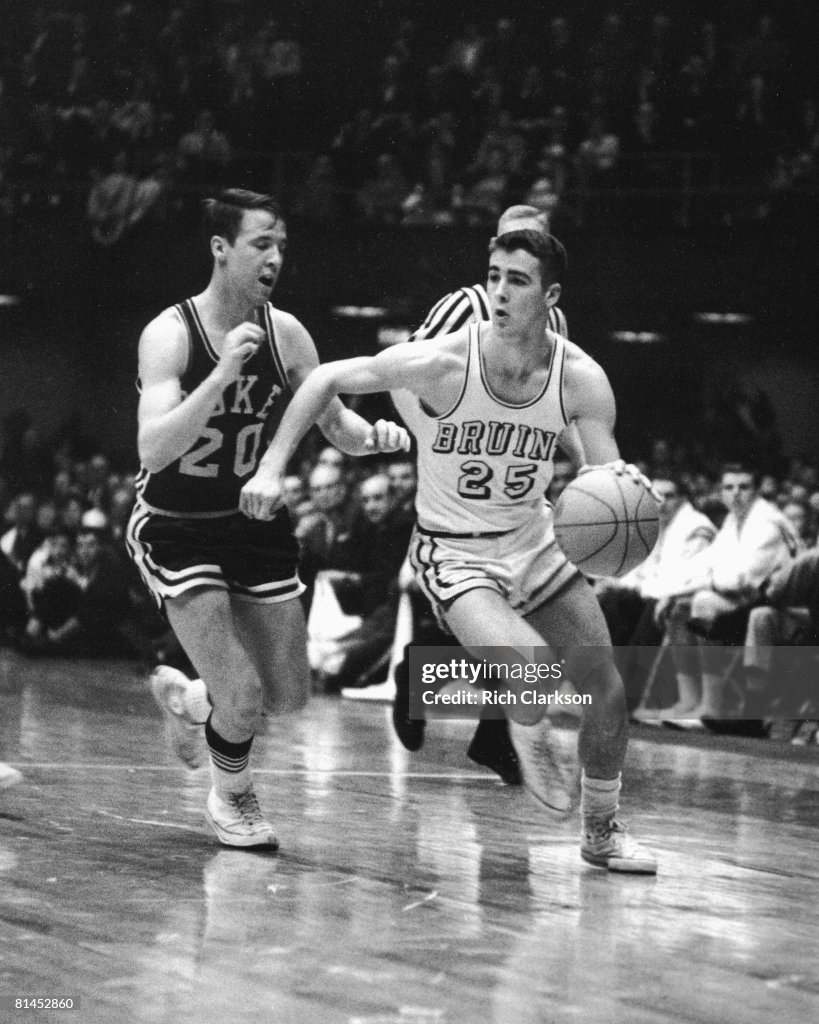
The UCLA Bruins won the NCAA basketball championship, beating the Duke University Blue Devils, 98–83, in Kansas City, Missouri. During the 1963–1964 season, the Bruins won all 26 of their regular games and the four playoff games.
“Non ho l’età,” with music by Nicola Salerno, text by Mario Panzeri, and sung by 16-year-old Gigliola Cinquetti, won the Eurovision Song Contest 1964 for Italy.
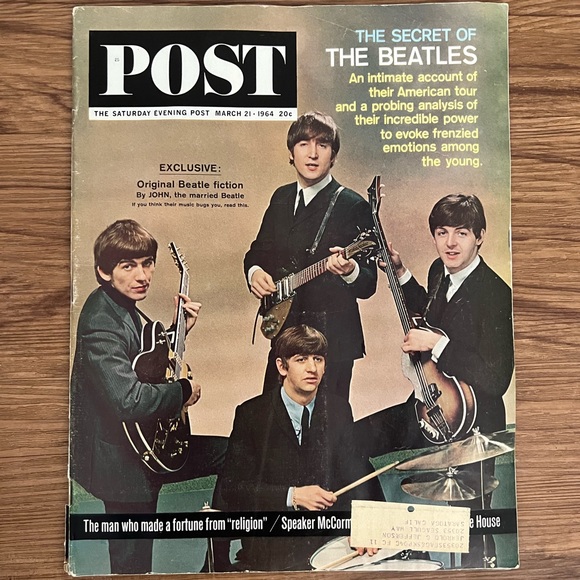
Beatles’ single “She Loves You” goes #1 in the US & stays #1 for 2 weeks.
118th Grand National: Willie Robinson aboard American-owned 12-year-old Team Spirit wins at odds of 18-1.
26th NCAA Men’s Basketball Championship: UCLA beats Duke, 98-83; Bruins first title in first title game; undefeated season (30-0).
Born:
Jim Kyte, Canadian NHL defenseman (Winnipeg Jets, Pittsburgh Penguins, Calgary Flames, Ottawa Senators, San Jose Sharks), in Ottawa, Ontario, Canada.
Bob Landsee, NFL guard and tackle (Philadelphia Eagles), in Milwaukee, Wisconsin (d. 2024).
Bruce Mesner, NFL nose tackle (Buffalo Bills), in New York, New York.
Eric Streater, NFL wide receiver (Tampa Bay Buccaneers), in Sylva, North Carolina.
Bob Ontko, NFL linebacker (Indianapolis Colts), in Kingston, Pennsylvania.
Gregg Swartwoudt, NFL tackle (New York Giants), in Northfield, Minnesota.

 History Diaries