German Foreign Minister Joachim von Ribbentrop demanded Memel from Lithuania. Nazi Germany’s foreign minister Joachim von Ribbentrop presented an oral ultimatum to Juozas Urbšys, foreign minister of Lithuania. Germany demanded that Lithuania give up the Klaipėda Region (also known as the Memel Territory) which had been detached from Germany after World War I, or the Wehrmacht would invade Lithuania and the de facto Lithuanian capital Kaunas would be bombed. The Lithuanians had been expecting the demand after years of rising tension between Lithuania and Germany, increasing pro-Nazi propaganda in the region, and continued German expansion.
It was issued just five days after the Nazi occupation of Czechoslovakia. The 1924 Klaipėda Convention had guaranteed the protection of the status quo in the region, but the four signatories to that convention did not offer any material assistance. The United Kingdom and France followed a policy of appeasement, while Italy and Japan openly supported Germany, and Lithuania accepted the ultimatum on 23 March 1939. It proved to be the last territorial acquisition for Germany before World War II, producing a major downturn in Lithuania’s economy and escalating pre-war tensions for Europe as a whole.
A Danzig Government spokesman declared today that the Free City was waiting anxiously for reunion with Germany but “our best information is that the time has not come for such a step… We are not looking for any immediate change in our status,” he said. “We must rely on Berlin to make the decision for us.” Other sources said that the return of Danzig to Germany, from which it was taken after the World War, would result from diplomatic negotiations and not from military invasion.
The Reich gets oil rights in Rumania. Despite semi-official statements that negotiations on the German-Rumanian trade agreement have not been completed, it is learned from a most reliable source that the final documents will be signed tomorrow. The same source says no new agreement has been made, but merely an annex to the old one. No exceptional status is to be granted to Germany. She will be allowed to invest large sums in oil prospecting and exploitation, it is declared, on the same legal basis as any other nation. Germany will provide agricultural equipment for Rumania, and German experts will study means of increasing oilseed production. Rumania’s agricultural surplus will be bought by Germany at prices to be agreed on later, but it is said they will assure a good profit for Rumanian farmers.
A communiqué issued by the Foreign Office in Berlin tonight says that the recall of the German Ambassadors from London and Paris and the rejection of the British and French protest notes did not constitute a mere formality but were intended to express the Reich Government’s displeasure with the attitude, especially of Britain, toward the solution of the Czecho-Slovak problem. This communiqué deals at some length with Anglo-German relations and reaches the conclusion that the Anglo-German naval pact and amity pact concluded between Chancellor Adolf Hitler and Prime Minister Neville Chamberlain in Munich are interlocking commitments in spirit, and if one is no longer valid the other also becomes nullified. Recent official British utterances, says this communiqué, would seem to suggest that Britain appraises all treaties and problems only from the viewpoint of her position of power, and thus views with antagonism any increase in the strength of the German position. In such circumstances, the official statement adds, Germany would be compelled to subject the orientation of her policy to fundamental and incisive revision.
It was earlier announced that following the departure of Robert Coulondre, the French Ambassador, last night, Count Johannes von Welczeck, the German Ambassador in Paris, had been ordered home to report. Further expansion of the diplomatic boycott of the Reich by the Western democracies, it was declared, leaves the German official quarters as emotionless as the threat of a political and economic blockade. A concerted attempt to change the “new order” in Central Europe would necessarily compel Germany to consolidate still more firmly her position there. She would then await a reaction to the question of who is for and who against the Reich. A significant comment on the seizure of Czech provinces is contained in tonight’s Deutsche Allgemeine Zeitung. It observes that in addition to having increased her territory and population it has also vouchsafed to the Reich the needed protection in Central Europe.
Police deny the wave of suicides in Prague.
Joseph Goebbels criticizes democracies, saying words such as humanitarianism and international rights should be forgotten.
Franco praises Hitler’s reincorporation of territory, but Italian Premier Benito Mussolini remains silent.
Reichprotector von Neurath bans all “unofficial Aryanization” of Jewish property in former Czechoslovakian territories. All Jews are dismissed from their jobs as municipal employees.
More than 5,000 works of “Degenerate Art” were allegedly burned in the yard of the Berlin fire station. However, there are no official records of the event (in contrast to the Nazi book burnings, which were held in public and well documented), and so little is known about the burning that it is not even certain whether it actually took place.
Britain and France push for a “Four Powers” declaration against further aggression in Europe. Poland and Russia consider the proposal. Sir Howard Kennard, British Ambassador in Warsaw, offers in the name of his government, what is called a Pact of Consultation and Resistance that includes Great Britain, France, Poland and the Soviet Union.
In the House of Lords, the Secretary of State for Foreign Affairs, Lord Halifax, says that the German occupation of Czechoslovakia was “a complete repudiation of the Munich Agreement and a denial of the spirit in which the negotiators of that agreement bound themselves to co-operate for a peaceful settlement.” A speech in the House of Lords today by Viscount Halifax, British Foreign Secretary, in which he announced that Britain was in direct consultation with other nations, strengthened the general belief — tentative as yet but gathering strength every day — that the British Government was at last seeking to build up a coalition against further fascist aggression. The consultations of which Lord Halifax spoke went on busily in London and other capitals. Uppermost in these exchanges — because of what is deemed a likelihood of a German attack against Rumania — were diplomatic consultations between London and Moscow.
So far there has been no definite result, but it is realized here that years of Anglo-Russian coolness cannot be wiped out in a day, and there is plenty of satisfaction in London with the way the talks are going. Russia is still unwilling to pledge her help to the threatened nations of Southeastern Europe without first getting a correspondingly definite pledge from Britain and France. The Russian Government has, however, suggested a conference of representatives of Russia, France, Britain, Poland, Rumania, Yugoslavia, Greece, Bulgaria and Turkey — in other words, a possible nine-power coalition whose shadowy outlines are just beginning to emerge.
Using the special powers accorded to him by Parliament, Premier Edouard Daladier today obtained the assent of the Cabinet and the signature of President Albert Lebrun to sixteen decrees. Three of them will increase the effectiveness of the army by making it possible to compensate for the men immobilized in Tunisia and on the Spanish frontier by extending the service period of those now in the army and calling to the colors “specialists” of all kinds. At the same time the army organization in the important frontier region of Metz will be doubled; that is to say, the command will be split in two and two separate army organizations will be set up in the district.
Nine of the decrees are designed to intensify production in armaments and supplies of all kinds necessary for national defense and four concern such varied matters as military information, organization of the Premier’s office and services, the right of expropriation for works of passive defense and the reorganization of blast furnaces.
Casado’s representatives met with Nationalists at an airport near Burgos to discuss an armistice.
The Roosevelt administration officially recalled the U.S. ambassador to Berlin in response to Germany’s violation of the Munich Agreement and the occupation of Bohemia and Moravia.
Condemnation by the United States of Chancellor Adolf Hitler’s conquest of Czecho-Slovakia, and a flat refusal by this government to recognize the legitimacy of the occupation were made formal and official in a note sent by Acting Secretary of State Sumner Welles to the German Embassy this afternoon.
Details of the communication, a reply to the informative note handed to the State Department Friday evening by Hans Thomsen, German Chargé d’Affaires, were withheld until tomorrow noon to give time for their transmittal to Berlin. However, it was understood to be largely a reiteration of the public statement issued by Mr. Welles soon after the occupation, in which he used so strong a term as “wanton lawlessness” in describing the German action.
Earlier in the day the Acting Secretary dispatched instructions to Wilbur J. Carr, American Minister to Czecho-Slovakia, to close the legation at Prague, in view of the realities of the situation. Mr. Welles directed the Minister to turn over the legation property and archives to the consulate-general and to leave Prague at his own convenience. He took occasion, too, to compliment the diplomat for his “highly distinguished service to his country” during the recent critical months in that part of the world. State Department officials were understood, furthermore, to be drafting an announcement ending officially the trade agreement between the United States and Czecho-Slovakia, at least so long as Germany maintains its so-called “protectorate” over the major constituent parts of the former republic.
The U.S. Secretary of Commerce, Harry Hopkins, believes the Reich is too impoverished for an extended war.
Franklin D. Roosevelt named William O. Douglas to the Supreme Court. William Orville Douglas, 40-year-old chairman of the Securities and Exchange Commission, was nominated by President Roosevelt today to the Supreme Court vacancy recently created by the retirement of Associate Justice Louis D. Brandeis. His confirmation, of which there appeared little question, would make him the youngest man to sit on the tribunal in more than a hundred years.
Born in Minnesota and reared and educated in Washington State before coming East to study law, Mr. Douglas was appointed from Connecticut, his legal residence. Although the President planned originally to name him as coming from the Pacific coast as an answer to demands that a Westerner be appointed, he was dissuaded from this course by friendly Senators, who reminded the Executive that Mr. Douglas had been nominated from Connecticut when he joined the SEC. The Douglas nomination was sent to the Senate a few minutes after it had been announced informally at the White House by Stephen T. Early, Presidential secretary. Indications were that there would be little if any dispute over his selection.
A compromise by which President Roosevelt’s request for $150,000,000 for additional relief funds would be cut $50,000,000 was reported today to have been agreed upon by several Democratic members of the House Appropriations subcommittee. They were said to have received assurances that the whole committee would accept the figure of $100,000,000 when it voted on Wednesday. Republican members were understood to be opposed to any further deficiency funds for the Works Progress Administration, and the compromise was suggested, it was said, because the Democrats wished to avoid an open split in their ranks in the face of next year’s elections.
One informed member of the House said that the question of additional relief funds was becoming acute because of the pressure brought upon members of Congress. Representative Cox of Georgia slapped a lobbyist of the Workers Alliance who allegedly threatened that the votes of the unemployed would go against him if he did not agree to vote for additional funds.
Another reason advanced for the compromise was that the economy forces, led by Representative Woodrum of Virginia, could afford to avoid the direct issue of additional funds at this time if they could obtain an investigation of relief looking to a semi-permanent policy that would cut down costs. In this connection a stiffening of members of the House Rules Committee against Administration pressure was seen.
President Roosevelt told Congress today that there was no immediate need for raising the $45,000,000,000 limitation on the public debt. He asked, however, that the $30,000,000,000 “ceiling” on Treasury bond issues be removed. The President’s expression of disinterest in increasing the overall debt limit at the present session of Congress was regarded as a reversal of an earlier Administration intention to move immediately for such permission. The change of plans was interpreted to be the result of a Congressional “revolt” led by Senator Harrison, Finance Committee chairman. Little sympathy for raising the debt limit had been shown on Capitol Hill.
The President’s recommendations were based upon a written request from Secretary Morgenthau, a copy of which he enclosed with his own communication to Congress. Secretary Morgenthau told his press conference a week ago that he would ask for removal of the “partition” on bonded indebtedness, but did not feel it necessary to have the total debt limit raised. He said the present limitation on bonds would block Treasury financing by September 1 if not changed.
Elliot Roosevelt, son of the President, sees Vice President John Garner as the leading candidate for the presidency.
Five hundred members of the CIO union bolt to the AFL.
Naval Research Lab recommends financing research program to obtain power from uranium.
The National Urban League notes a spiritual awakening to the plight of Black citizens, even in southern states.
A professor of fundamental theology of the Catholic University fears the fusion of Hitler and Stalin based upon their hatred of God.
Canada pledges support to Britain.
U.S. and Dominican officials stress Pan-American solidarity and lay a wreath on the tomb of Christopher Columbus.
The German expedition team consisting of Ernst Schäfer, Bruno Beger, Karl Wienert, Ernst Krause, and others departed Lhasa, Tibet. They studied Tibetan culture, measured the physical traits of 376 people, and took over 40,000 photographs.
Britain rushes to bolster the defense of Hong Kong, sending 15,000 troops to diminish weakness against a Japanese attack.
[Ed: This is a Catastrophic error in judgment. Hong Kong is completely indefensible. When war comes, everyone not killed outright will become prisoners.]
Chinese troops repulsed a Japanese attack across the Xiushui River near Wucheng, Jiangxi Province, China; Chinese defenders reported that the Japanese were mixing chemical weapons among traditional artillery shells. To the west of Nanchang, the primary objective, Japanese troops reached the Ganjiang Bridge.
Wenchow, in Chekiang Province, one of the few ports into “free” China not blocked by the Japanese, was bombed twice today by Japanese planes. The damage was said to be small. The casualties were put at fewer than ten. The Japanese continued their daily bombings of Siangyang and Fancheng, twin cities in Northern Hupeh on the banks of the Han River. The Chinese claimed they were repulsing all Japanese Army efforts to establish a foothold on the west bank of the Han along the route to Ichang. The Japanese were seeking to press south of the Hsiu River along the main front. Meanwhile they have landed troops on the shore of Poyang Lake at the mouth of the Kan River, which runs past Nanchang.
Squadrons of Japanese planes dropped about 200 bombs on Siangyang and Fancheng today and caused heavy damage in those major Chinese military bases northwest of Hankow. Because most of the inhabitants had fled, casualties. were comparatively few. Japanese naval commanders said. a Chinese counter-offensive along the Han River, in Central Hupeh Province, had been smashed. A great loss of life was reported in an air attack on 500 junks carrying Chinese troops across the Han at Siangyang.
Dow Jones Industrial Average: 141.28 (-0.40).
Born:
Brian Mulroney, 18th Prime Minister of Canada (1984-1993), in Baie-Comeau, Quebec, Canada.
Died:
Percy Dean, 61, British naval lieutenant and politician who received the Victoria Cross for saving men during the raid of Zeebrugge.
Naval Construction:
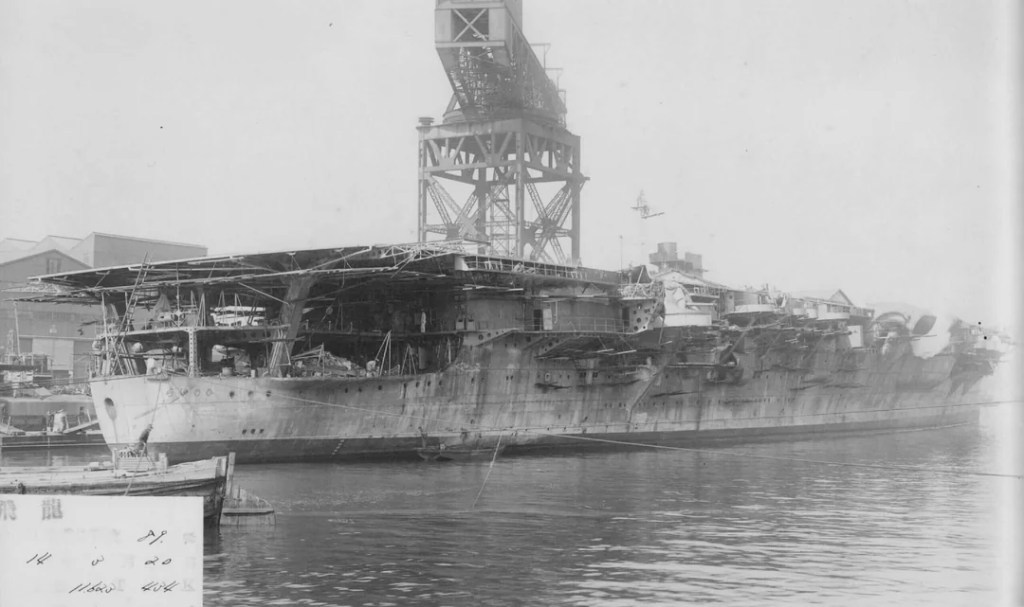
The Nippon Yusen Kaisha (Japan Mail Steamship Company) passenger liner Kashiwara Maru is laid down by Mitsubishi Heavy Industries, Nagasaki, Japan. In exchange for a 60 percent subsidy of her building costs by the Navy Ministry, she was designed to be converted to an auxiliary aircraft carrier, one of 10 such ships subsidized by the IJN. She is acquired before completion in 1941 and enters service as the Nihon Kaigun (Imperial Japanese Navy) aircraft carrier HIJMS Jun’yō (隼鷹, “Peregrine Falcon”).
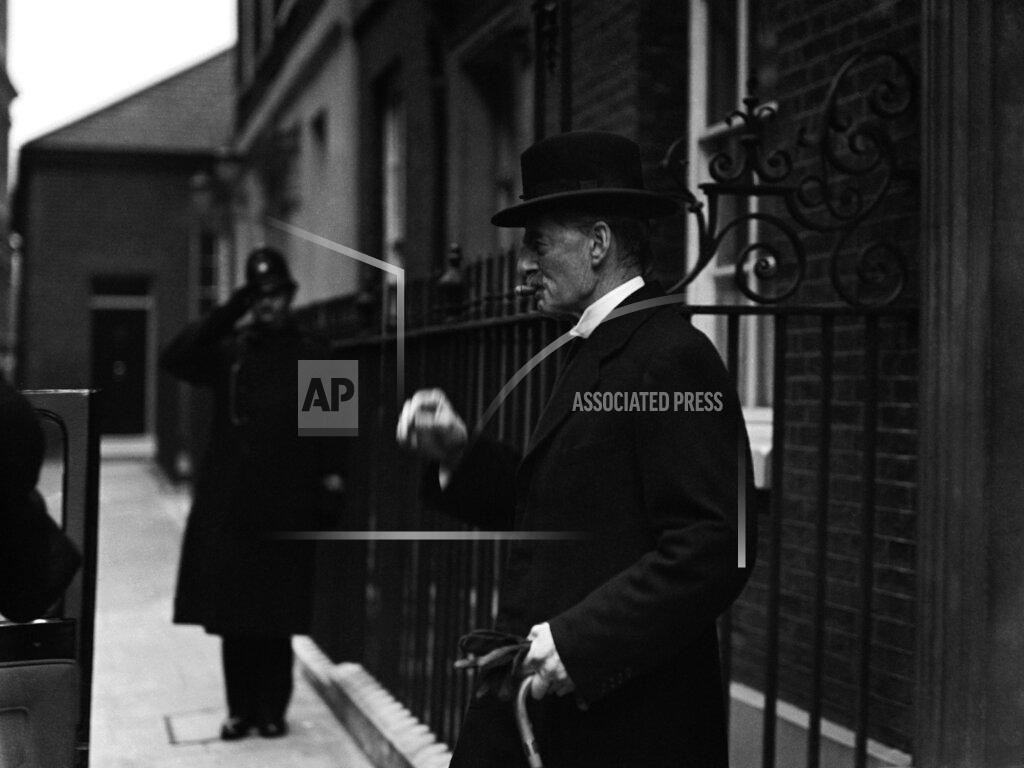
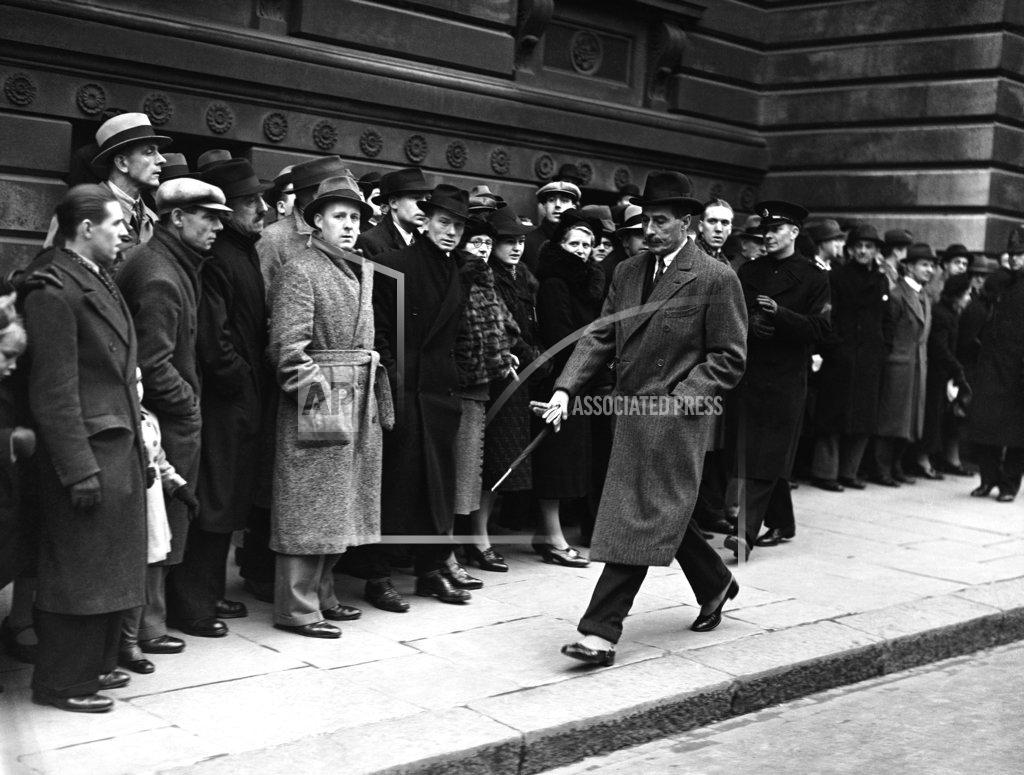
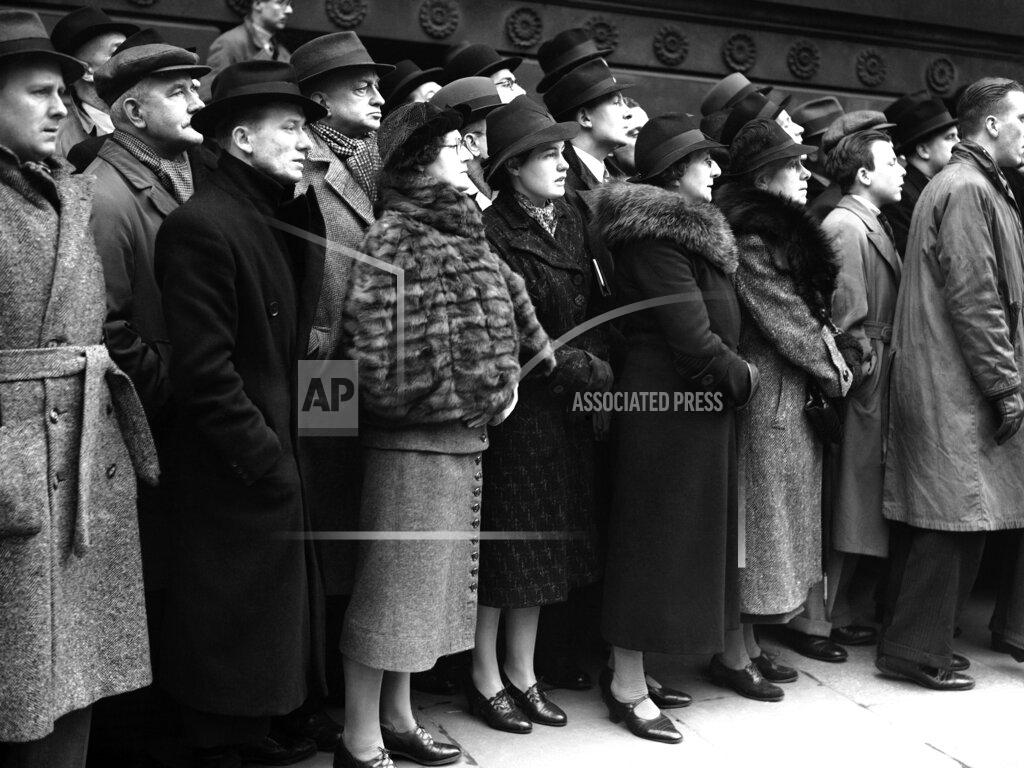
The U.S. Navy oiler USS Cimarron (AO-22), lead ship of her class of 8, is commissioned. Her first commanding officer is Lieutenant Commander William Wohlsen Behrens, USN.

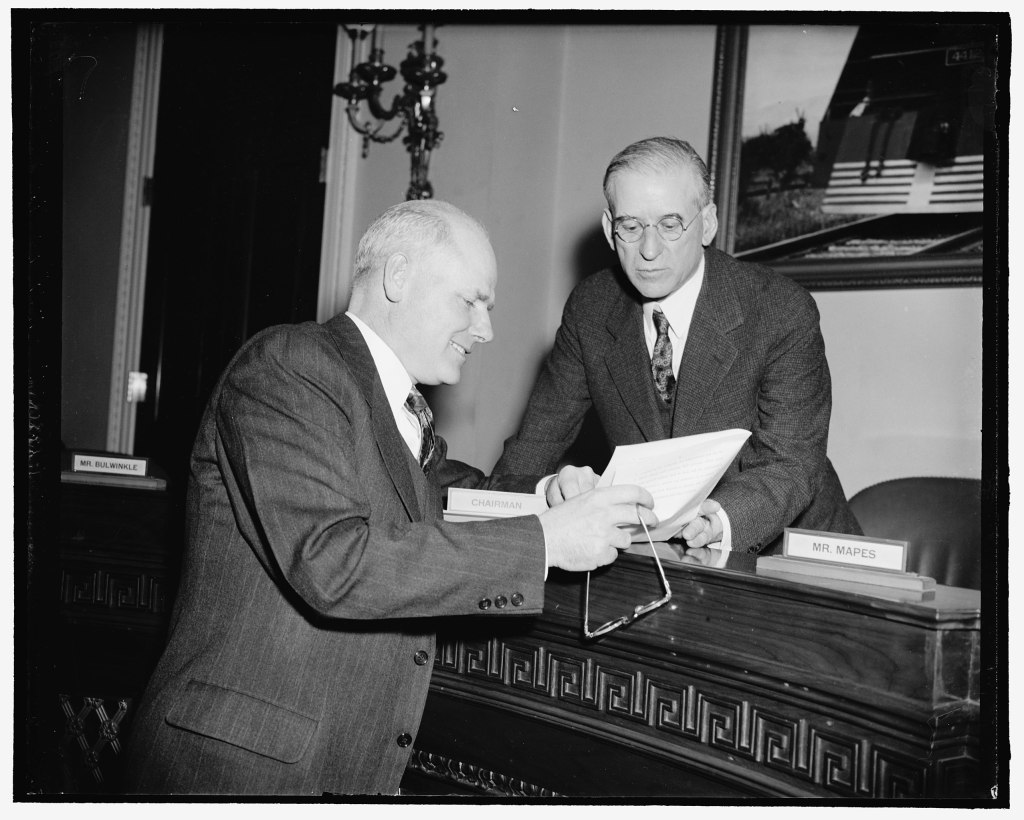
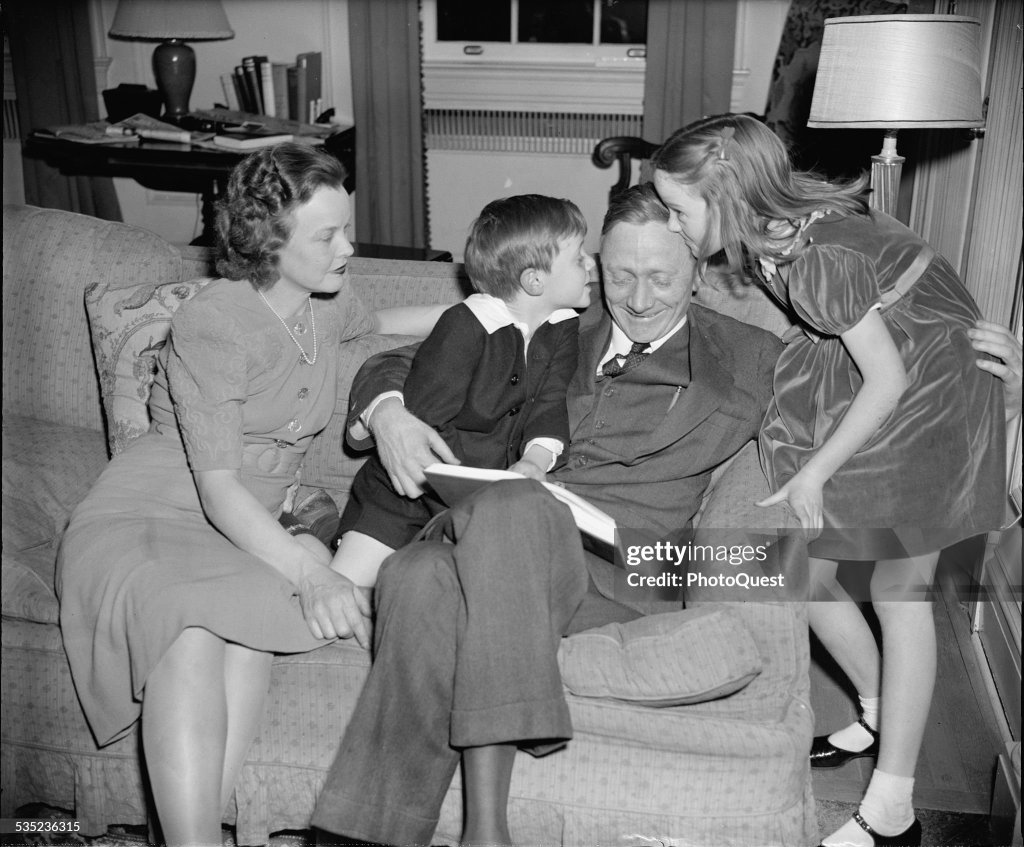
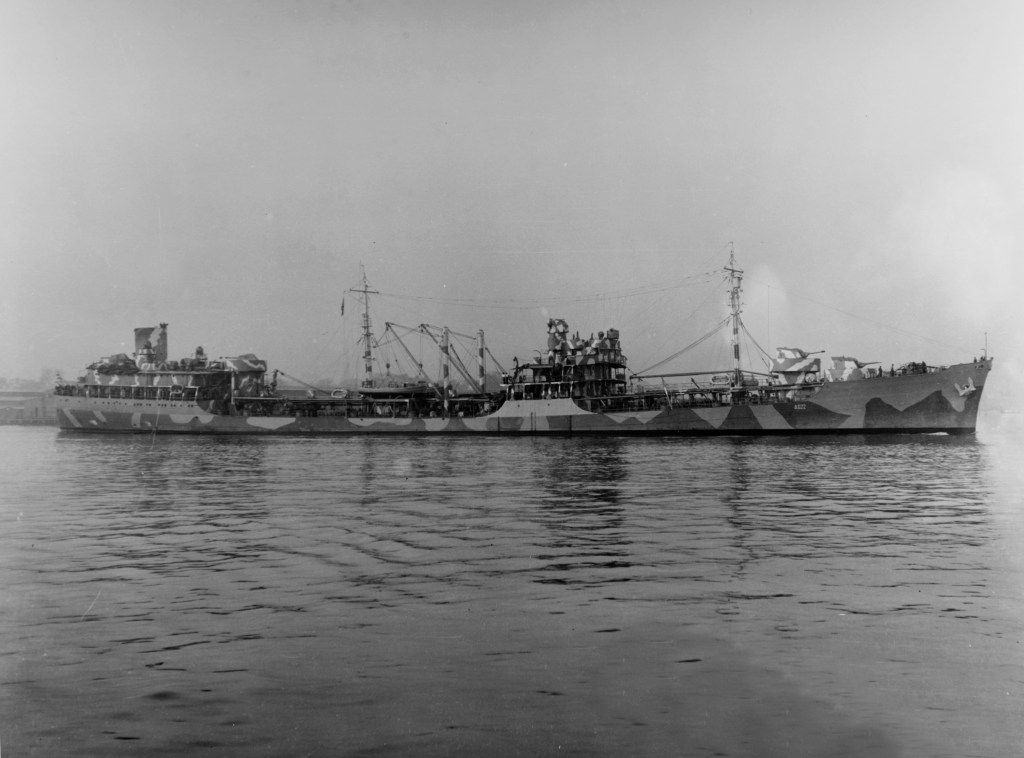
Cimarron cleared Houston 31 May 1939 for Pearl Harbor, arriving 21 July. She transported oil between west coast ports and Pearl Harbor, making 13 such voyages until she sailed for the east coast on 19 August 1940. After repairs and alterations, she began oil runs on the east coast, principally between Baton Rouge and Norfolk, until August 1941, when she took part in amphibious operations. From 5 to 16 September she put to sea with a transport convoy bound for Iceland, and voyaged north again 12 October to 5 November to refuel ships at Placentia Bay. On 15 November, she joined a convoy at Trinidad bound with reinforcements for Singapore, but was detached from the convoy 9 December at Capetown, South Africa. Returning to Trinidad 31 December, she operated from Brazilian ports to Iceland until 4 March 1942, when she cleared Norfolk for San Francisco.
Cimarron reached San Francisco 1 April 1942 and sailed the next day with the task force bound for the first air raid on Tokyo 18 April. One of two oilers with the force, she fueled the Fleet at sea before and after the raid, and returned to Pearl Harbor 25 April. She sailed 29 April, bound to join the force soon to join battle with the Japanese in the Coral Sea, but arrived after the battle concluded, fueled destroyers at Noumea, and returned to Pearl Harbor 26 May. She cleared Pearl Harbor 28 May to fuel the force which defeated the Japanese in the Battle of Midway and returned 12 June, departing 7 July to support the operation in the Solomon Islands. Using Noumea as her principal base, Cimarron occasionally reloaded at Suva and Efate. After repairs at San Francisco in November, she sailed for the forward area 18 December. She operated again out of Noumea supporting the final stages of the Guadalcanal action, then fueled out of Efate, carried cargo to Sydney, Australia, and returned to fueling at Dumbea Bay in support of the occupation of New Georgia. She returned to San Francisco (in July 1943), and then made two trips from the west coast to Pearl Harbor.
Cimarron departed Pearl Harbor 29 September 1943 with the force which raided Wake Island on 5 and 6 October, and returned to Pearl Harbor 16 October. She sailed once again 14 November to fuel in support of the Gilbert Islands campaign, returning 1 December, and sailed to San Pedro to reload 12 December to 4 January 1944. Clearing Pearl Harbor 13 January, she supported the Marshalls operation and the February attacks on Truk from Majuro until 6 June; the Marianas operation from Eniwetok until 26 August; and the Palau Islands operation from Ulithi.
After a stateside overhaul from October through December 1944, Cimarron arrived at Ulithi 26 December 1944. From 27 December to 21 January 1945 she sailed to fuel the task force launching air attacks on Indo-China and Philippine targets as part of the Luzon invasion, and put to sea once more from 8 February to 22 March for air raids on the Japanese home islands and the invasion of Iwo Jima. From 26 March to 23 May she sailed from Ulithi to fuel ships engaging in the Okinawa operation, and from 3 June shuttled between Ulithi and the areas from which the mighty carrier task forces launched the final series of raids upon the heartland of Japan. Ulithi remained her base as she supported the occupation until 10 September, when she anchored in Tokyo Bay. Operations in the Far East continued until 4 February 1946, when she arrived at San Pedro, Calif., for overhaul.
Between July 1946 and June 1950, Cimarron ferried oil from the Persian Gulf to naval bases in the Marianas and Marshalls, occasionally continuing on to the west coast. Her first tour of duty in the Korean war, from 6 July 1950 to 3 June 1951, found her fueling ships of the Taiwan Patrol at Okinawa, amphibious ships at Kobe, and operating from Sasebo to the waters off Korea to fuel task forces. Several times she entered the heavily mined waters of Wonsan Harbor to fuel the ships carrying out the lengthy blockade and bombardment of that key port.
Returning to the west coast, she gave service as a training tanker until her second Korean tour, from 1 August to 10 December 1951. During this time she spent a month at Taiwan fueling the ships on duty in the Straits, and made three voyages to Korean waters from Sasebo. Overhaul and training on the west coast preceded her third Korean war deployment from 9 April to 5 January 1953, during which her duty was similar to that of her second. Her next tour of duty in the Far East was completed between 11 April and 27 November 1953.
Cimarron sailed to the Far East again between 14 June 1954 and 8 February 1955, during which she served as flagship of the support group for Operation “Passage to Freedom,” the evacuation of refugees from Communist North Vietnam. Her pattern of operations from that time into 1963 has included support of the guardian 7th Fleet in its Far Eastern operations through deployments in 1955, 1956-57, 1957-58, 1958-59, 1959, and 1960. As of 1963, she had the longest continuous commissioned service of any active ship in the United States Navy, belying her age as she continued to provide her essential support with skill and efficiency.
Cimarron continued her service into the Vietnam War between 1965 and 1967 and received the Armed Forces Expeditionary Medal and Vietnam Service Medal for its participation in the Vietnam Advisory Campaign, Vietnam Defense, and Vietnamese Counteroffensive Phases I through III. In 1968, she was the oldest U.S. Navy ship in continuous active service. Cimarron was decommissioned and struck from the Navy List in October 1968 and sold for scrap in 1969.
Cimarron received 10 battle stars for World War II service, 7 for the Korean War, and 4 campaign stars for her Vietnam War service.
 History Diaries