Recent efforts to end the tension between Cambodia and South Vietnam are stopped as South Vietnamese ground and air forces attack the Cambodian village of Chantrea; U.S. military advisers participate, and a U.S. observer plane is downed. The United Sates and South Vietnam governments will apologize to Cambodia for the raid, but Sihanouk demands reparations.
An L‐19 observer plane of the type flown by American pilots in Vietnam was shot down in the action that took place yesterday morning just as a Vietnamese delegation was flying to Phnom Penh for border negotiations. A United States Army pilot was dragged from the wreckage of the L‐19 in serious condition and his Vietnamese observer perished, according to an Associated Press dispatch from Saigon.
In a formal government declaration, Cambodia named South Vietnam and the United States as jointly responsible for the attack. The government made a “solemn protest” in a communique issued by the Ministry of Information. In the same communique the government renewed its call for a Geneva conference to guarantee Cambodia’s frontiers and neutrality. The communiqué asked all Powers concerned to “state their intentions clearly” before Monday regarding participation in such a conference. Prince Norodom Sihanouk charged that United States personnel accompanied 12 M‐13 armored cars attacking the village of Chantrea, four miles inside a clearly marked part of the Cambodian frontier. The village was also bombed by South Vietnamese planes, and diplomats who rushed to the scene confirmed Cambodian reports that at least one troop-carrying helicopter had landed at Chantrea with three Americans on board.
Vietnamese officials in Phnom Penh for negotiations expressed incredulity over the incident and particularly over its timing. The first official negotiation session had been scheduled for this morning. Both sides hesitated as fragmentary reports of the border incident started accumulating. At midday Vietnamese officials met informally with Cambodian Foreign Ministry officials. Sources said the two sides discussed how, or whether, border negotiations should be carried on under the suddenly grave circumstances. The meeting ended with the Vietnamese awaiting a decision by the Cambodian Government. Prince Sihanouk had been out of the capital on a provincial tour all week. He is now expected to return to Phnom Penh presently. Officials said he might visit Chantrea tomorrow.
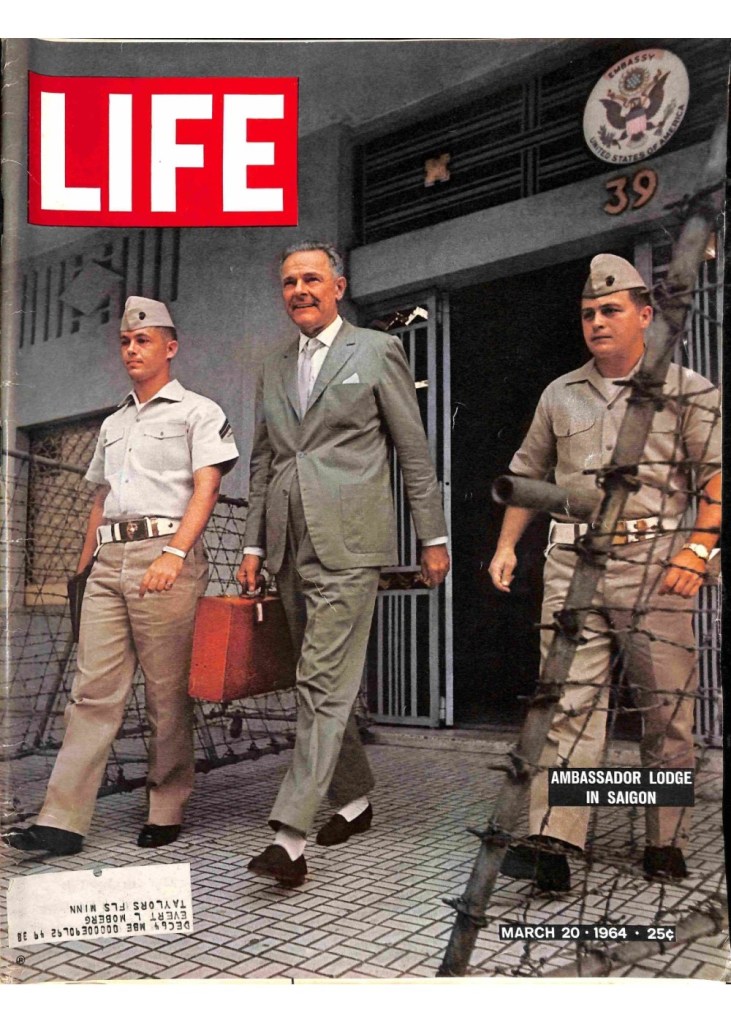
President Lyndon Johnson sends a cable to Ambassador Lodge in which he says he is intent on “knocking down the idea of neutralization wherever it rears its ugly head.”
U.S. Senators are now beginning to divide in their public positions on the war in Vietnam. Some Senators are becoming increasingly restive over Communist gains in South Vietnam and are pressing for radical changes in United States policy. Senators Wayne Morse, Democrat of Oregon, and Ernest Gruening, Democrat of Alaska, are agitating for withdrawal of United States forces from the conflict. At the other extreme, Senator Thomas J. Dodd, Democrat of Connecticut, is demanding extension of the war to North Vietnam. A spot survey of Senate opinion indicates that most members reluctantly support the present Administration policy for lack of acceptable alternatives.
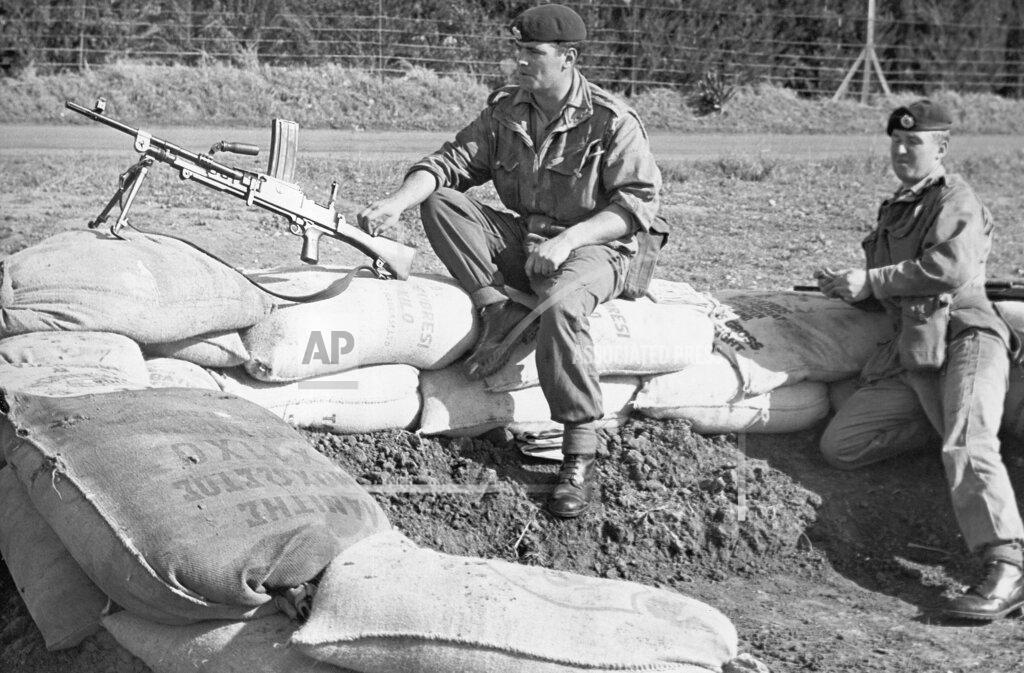
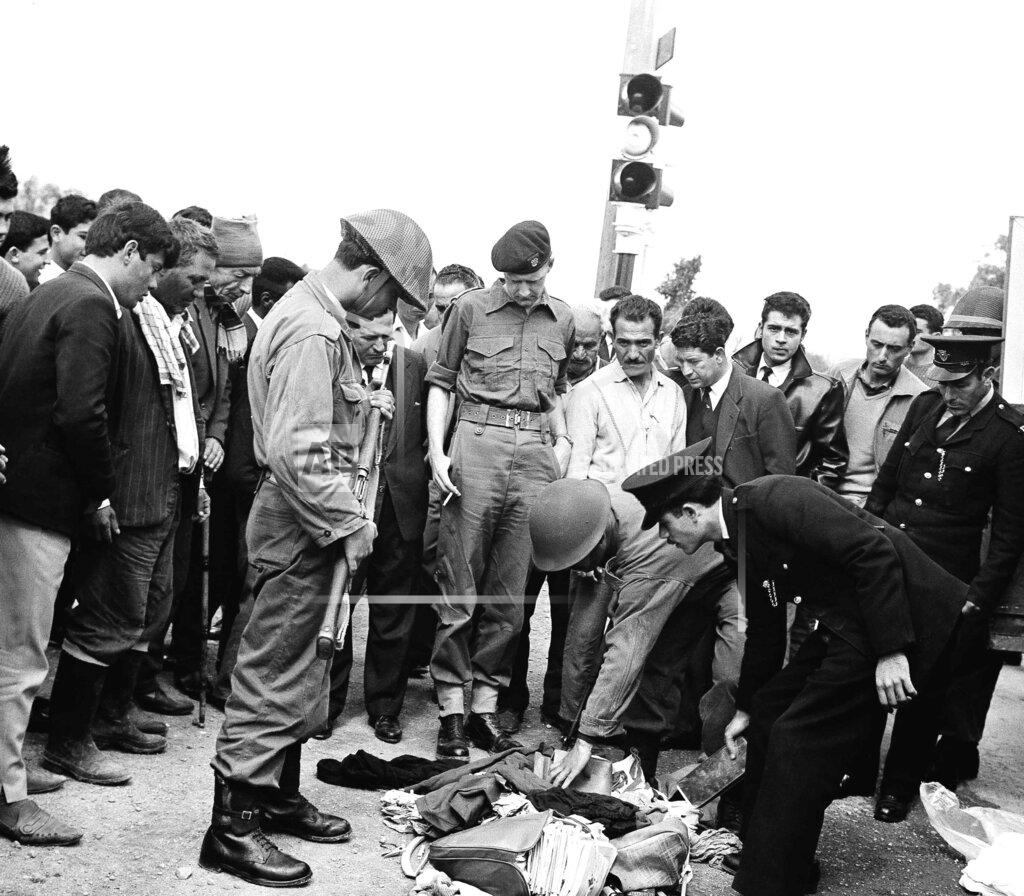
Turkish Premier lsmet Inonu warned today that “large‐scale fighting is imminent” on Cyprus. He scoffed at reports that the Soviet Union might intervene to help the Greek Cypriotes if full‐scale fighting broke out. The 80‐year‐old leader was interviewed as Turkish naval units continued maneuvers off Iskenderun, 100 miles from Cyprus. Authoritative sources said 15 United States‐built tanks had been loaded on a Turkish freighter. Mr. Inonu said if large‐scale fighting broke out between Greek and Turkish Cypriotes — the latter are outnumbered 4 to 1 — and a massacre threatened, “such a thing would leave us no choice but to intervene.” Premier Inonu talked with a correspondent while reports of Thursday’s violence in the Ghaziveran area were still coming in. He termed the attack in which seven Turkish Cypriotes were slain “clear evidence of the mentality of the Greek Cypriote leaders.” “They are people who don’t want to live in peace, who don’t want to grant peoples’ rights” he added.
President de Gaulle called today on France’s friends and allies to “adapt themselves” to French independence in world affairs General de Gaulle returned to this French Caribbean island yesterday from Mexico. Speaking at Basse‐Terre, he termed France’s independence “a new and, for us, very satisfying situation” and admonished other nations to “adapt themselves” to it. When they have done so, General de Gaulle said, and “when France also can take initiatives, have her action, have her policy, there will no longer be the shadow of a cloud between them and us.” “It is up to them,” the President said. “We hope they will acknowledge it as soon as possible.”
President de Gaulle did not mention the United States by name. He said that in Mexico, where spent four days on an official visit, he had found “a leap of confidence, a leap of friendship that was striking.” He declared that he had seen the same thing in “other foreign countries recently.” “From this,” the general said, “everybody has concluded that the international situation of our country is more brilliant and more assured than ever. We are a great nation. The whole world recognizes it. “That does not mean that we oppose those who do not threaten us, and in particular those who are our friends and allies.”
Belgium and the Congo settled their four‐year financial dispute today and laid the groundwork for a period of cooperation. After four days of discussions, Paul‐Henri Spaak, Belgium’s Foreign Minister, and Premier Cyrille Adoula reached agreement on problems unresolved since Belgium granted the Congo independence in June, 1960. Observers believe that the settlement will pave the way for an increased Belgian role in the Congo. Mr. Spaak and Mr. Adoula announced the accord at a news conference in the Premier’s green‐and‐yellow official residence on the banks of the Congo River. After having read the communiqué, Mr. Adoula shook hands with the Belgian and said, “The dispute is now behind the walls.”
Anti-Muslim rioting broke out in the Indian steel-manufacturing city of Rourkela, located in the Orissa state (now called Odisha), after a trainload of Hindu refugees arrived from East Pakistan (now Bangladesh) and described atrocities that had befallen them at the hands of Bengali Muslims. At least 115 people were killed during the night, mostly Muslims who were stabbed or hacked to death. The violence spread into the states of West Bengal, Bihar, Madhya Pradesh, Jharkhand and Chhattisgarh. By the time that the Indian Army suppressed the mayhem, the official death toll after three weeks was 346, although “unofficial estimates by informed sources put the death total at possibly 700” and the government of Pakistan said that as many as 2,000 Muslims had been massacred.
The Supreme Soviet of the Soviet Union passed a decree that provided for a more liberal system of parole and probation, allowing “conditional release from deprivation of freedom” for well-behaved and able-bodied prisoners after they had served only one-fifth of their sentences. An inmate who “demonstrated the desire to redeem his guilt through honest work” was required to stay within an administrative region designated by the government, and to work on construction projects such as chemical plants, oil refineries or factories.
Two Cubans hijacked a Cuban military helicopter today in a bloody gun battle over the Atlantic Ocean, killed its pilot, flew to Key West and asked for political asylum. Key West authorities said the dead pilot and the helicopter’s gunner would be returned to Cuba. No charges will be placed against the defectors, Sheriff Henry Haskins said. The defectors, Guillermo Santos, 20 years old, and Andres Izaguirre, also 20, told the police that the hijacking had been carefully planned. They gave the following account:
Mr. Santos was regularly assigned to the helicopter along with José Garcia, 20, the pilot, and Sergio Roque, 17, the gunner. Just before the helicopter took off from Havana, Mr. Izaguirre ran across the field from his own helicopter and climbed aboard. After the copter was airborne, Mr. Santos and Mr. Izaguirre directed the pilot to fly to Florida. He refused and a furious gun battle followed. Besides the seven shots that hit the pilot, at least two others cracked the aircraft’s windshield. Mr. Santos flew the copter to International Airport in Key West.
Bela Kun, head of the short-lived Hungarian Communist Government of 1919, who was shot as a traitor in the Stalin era, has been accorded special honors by the Soviet Government, Izvestia announced today. The Government newspaper reported that a street and a school in Leningrad, the former Soviet capital, had been named for the purged leader of the Hungarian Bolshevik revolution. Bela Kun’s widow, now living in Hungary, has been invited to attend ceremonies in Leningrad on the eve of the 45th anniversary of the first Hungarian Communist regime. Kun sought refuge in the Soviet Union after his overthrow and became a leader of the Communist International. During the Stalin purges he was branded as an “enemy of the people” and shot. He was posthumously rehabilitated after Stalin’s death.
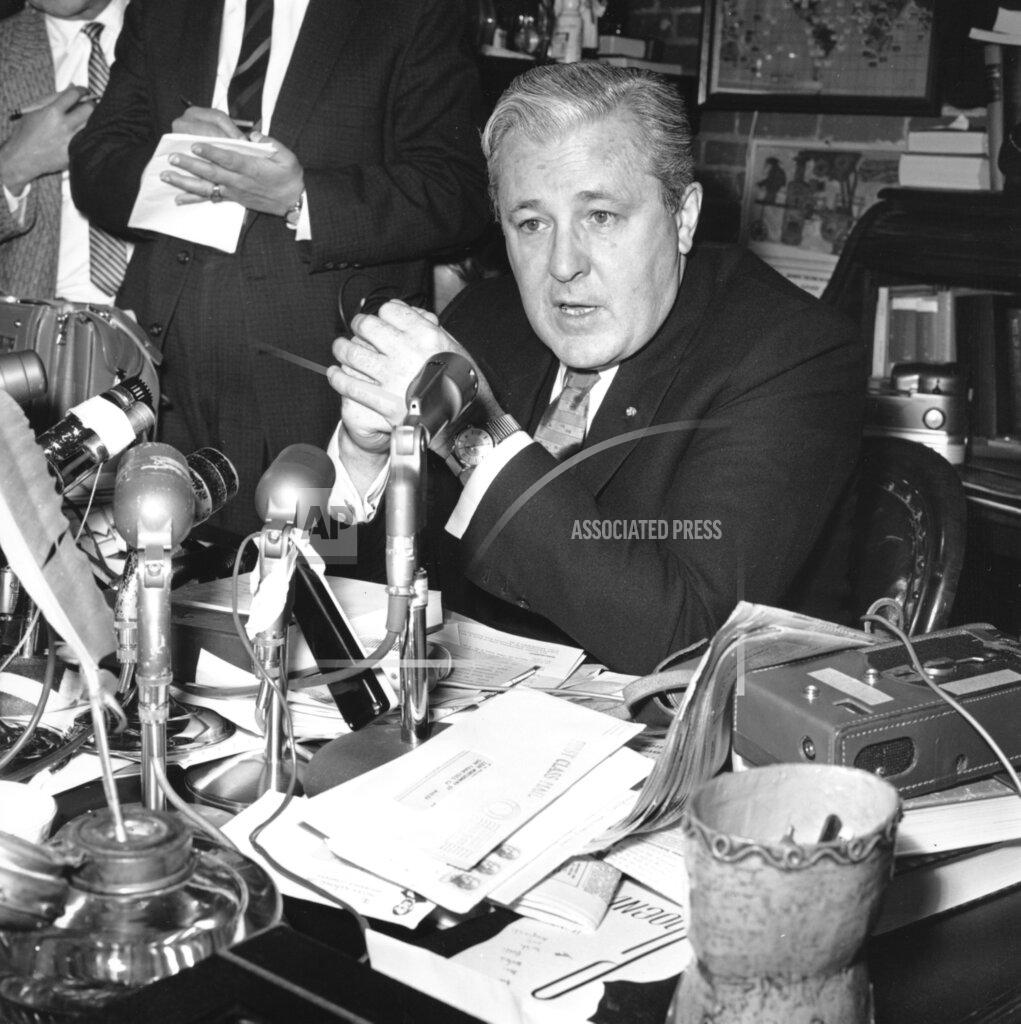
Senator Hubert H. Humphrey said today that the success or failure of the civil rights coalition in the Senate “depends in large part on the activity of the churches and large American business corporations in behalf of the bill.” The Minnesota Democrat, who is the floor manager for the bill, told reporters, “The most important force at work today on behalf of civil rights is the churches — Catholic, Protestant and Jewish.” He said that the second most important force was big business. The help that large corporations can give, the assistant Democratic leader said, “should not be underestimated.” He said that the corporations had reasons of economic self-interest for wanting the measure enacted.
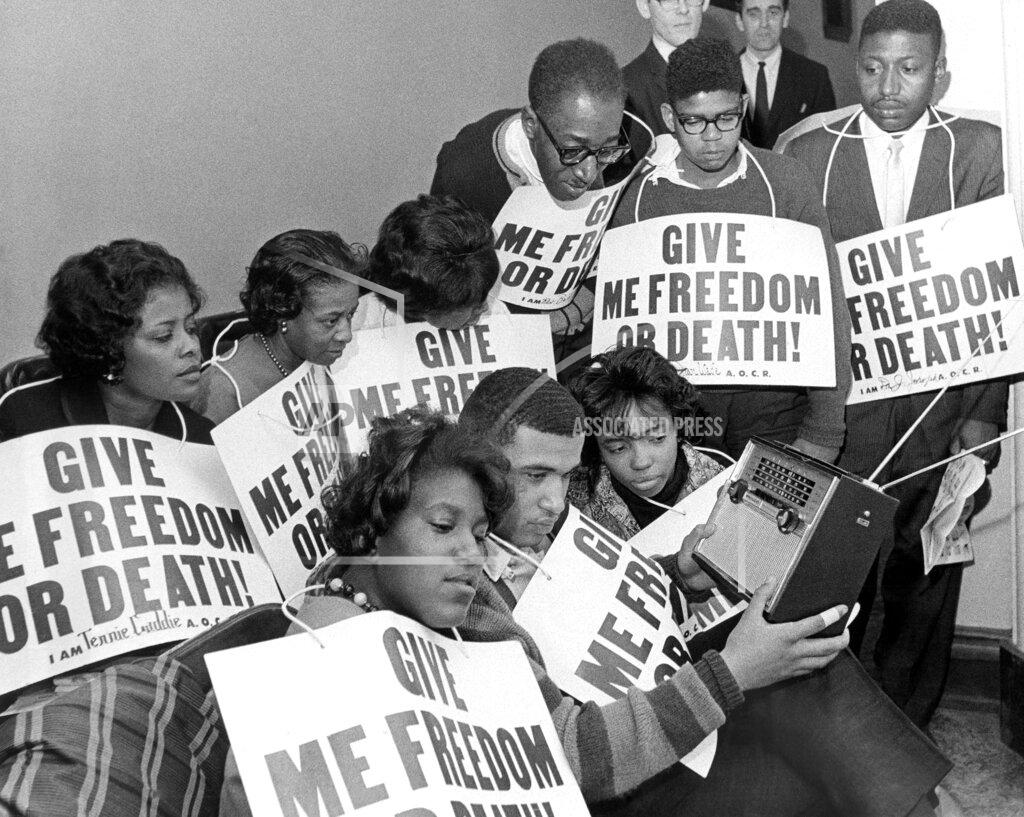
About 30 Blacks and whites ended a 104‐hour hunger strike in the Capitol tonight after learning that Governor Edward T. Breathitt had promised to take steps to call a special session of the Legislature on civil rights. They ordered hot broth, drank it in cups and left the Capitol quietly without waiting for a scheduled visit by the Governor. “I’m tired and I’m hungry,” said Mrs. Margaret Riley of Louisville. “Why should we wait for the governor? We’ve got our bargain?”
Senator Barry Goldwater asserted today that Soviet missiles were “a little more reliable than ours” because they had been tested more thoroughly. Mr. Goldwater had previously contended that United States missiles were not reliable, but he had not said before that Soviet missiles were any more so. The Arizona Republican struck hard today at the Johnson Administration’s proposal to destroy 480 B‐47 bombers if the Soviet Union would destroy the same number of TU‐16’s. He declared at a campaign stop in Oceanside, near San Diego: “I make the flat charge that Secretary [of Defense Robert S.] McNamara and the State Department are engaged in unilateral disarmament at the expense of peace and at the expense of freedom.”
Pennsylvania Governor William W. Scranton won his unemployment compensation reforms tonight while Democrats in the General Assembly nearly rioted in angry defeat. One of their number deserted, giving the Republicans precisely enough votes to pass the bill. The Senate approved the bill last week with one vote to spare. The Governor added cubits to his political stature with the legislative coup, which few thought he could execute when he submitted his program in mid‐February. The Republican majorities are paper thin in both branches of the Legislature. The achievement is expected to accelerate a movement to draft Mr. Scranton for the Republican nomination for President. He has said he will accept a draft, but will not campaign for the nomination.
President Johnson signed a $16.9 billion military bill today and then used the occasion to praise Carl Vinson, chairman of the House Armed Services Committee. Mr. Johnson said the bill marked “one of the final acts of patriotism from a man whose entire life has been an exercise in patriotism.” Mr. Vinson, a Georgia Democrat, is retiring after 50 years in Congress. The President told the military leaders, service Secretaries and Congressmen he had assembled in the White House Cabinet Room: “It’s a great honor for me to sign into law this bill, which represents a large stride forward in the strengthening of this nation’s defense — and which symbolizes the uncommon devotion of one man, Carl Vinson of Georgia, to his country.”
The head of the United Automobile Workers said today that improved working conditions in auto plants would be the union’s most important single goal in contract negotiations this year. Walter P. Reuther, the union president, also said top priority would be given this summer to creating more jobs through earlier retirements, which would be coupled with better pensions. He also promised to seek a wage increase from automakers to improve workers’ purchasing power. Talks are scheduled to open July 1 with the General Motors Corporation, the Ford Motor Company and the Chrysler Corporation on new contracts to replace those scheduled to expire August 31. The union’s contract with the American Motors Corporation expires October 16.
A Northern Democrat protested today that part of the Administration’s anti-poverty program “comes awfully close to the type of farming we most often criticize behind the Iron Curtain.” The criticism, the most stinging made during four days of hearings by a House subcommittee, came from Representative Roman C. Pucinski of Illinois. He suggested that the anti-poverty bill, President Johnson’s key domestic program for the year, “will need a great deal of revision.” Mr. Pucinski centered his criticism on the proposal to allow federal loans to nonprofit corporations so they can acquire rural land and develop it for sale as family‐size farms to low-income families.
The non‐Communist nations have not developed effective policies to meet the challenge of Communist subversion in the uncommitted and underdeveloped area of the world, Allen W. Dulles said yesterday. Mr. Dulles, former director of the Central Intelligence Agency, asserted that “we have relied too much on intelligence operations to carry this responsibility” and not enough on government action. He said the future will not be concerned so much with military defense as with battling for the minds of the uncommitted peoples. Mr. Dulles spoke on the role of intelligence in national security before 1,000 luncheon guests at the Waldorf‐Astoria Hotel in New York.
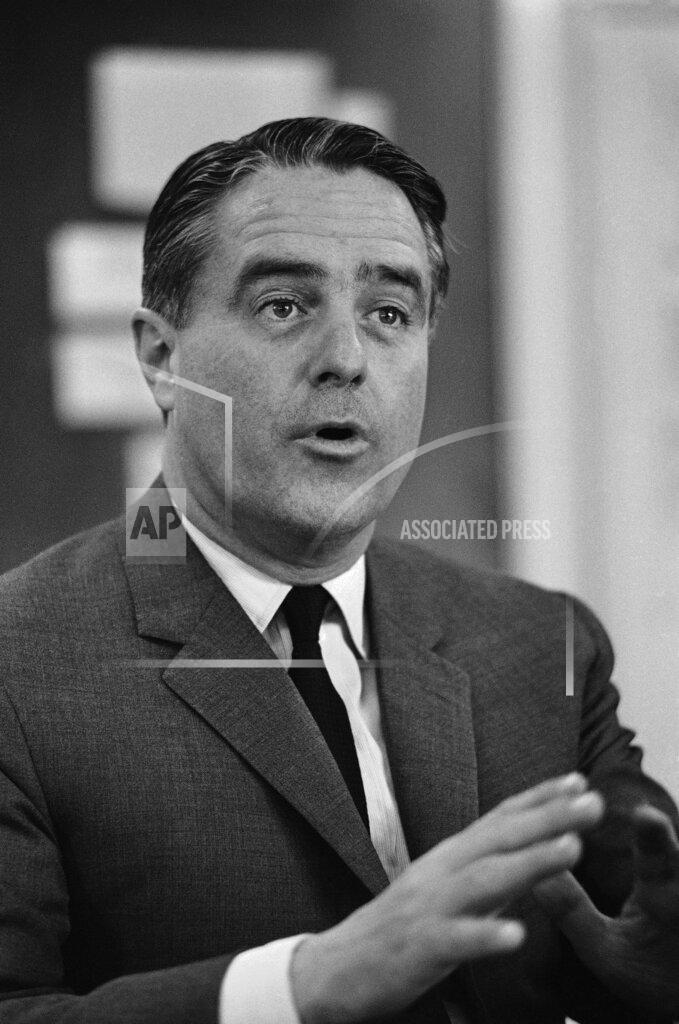
Pierre Salinger formally declared his last‐hour candidacy today for the Democratic Senatorial nomination. He said he was “prepared to take any legal action that is necessary” to get his name on the ballot. The press secretary to Presidents Kennedy and Johnson resigned his White House post yesterday. His move today threw Democrats of California into a turmoil. He smilingly but emphatically told a news conference at the Fairmont Hotel, after a sleepless night, that his candidacy was “a genuine draft — a draft inspired by the candidate himself.” Mr. Salinger has voted in Fairfax County, Virginia, on school bond proposals. This action, according to some lawyers, makes him ineligible to seek office from California.
Cassius Clay, the heavyweight boxing champion of the world, was rejected today for military service. The decision, which made him ineligible for the Army draft, was based on two standard pre‐induction qualifications tests. The titleholder, spared a two-year stint in military camps, immediately said in New York that he would establish residence there and train for his next ring fight. At the Pentagon a communiqué cleared through command channels with the care normally attached to the status of missile scientists said:
“The Department of the Army has completed a review of Cassius Clay’s second pre‐induction examination and has determined he is not qualified for induction into the Army under applicable standards. Tests given Clay included measurement of aptitudes for various skills needed in military service. Clay was given a second test after it was determined that the results of his initial test were inconclusive. Interviews conducted by experts in the field of testing and analysis of results of the two tests indicate that Clay put forth his best efforts on both occasions.”
A White House space adviser criticized tonight the prevailing scientific policy in the Government of curbing developmental projects for which there is no specific requirement. Dr, Edward C. Welsh, acting chairman of the National Aeronautics and Space Council, suggested that the nation could not maintain its progress in the space race unless it kept pushing promising technology even when useful application was not clear. The unusually candid and critical appraisal of what has come to be known as the “requirements merry‐go‐round” was presented by Dr. Welsh in a speech at the annual Goddard Memorial Dinner. The most recent example, and one that is causing considerable controversy in the executive branch and Congress, is the indecision over the future of the SNAP 10‐A (Systems Nuclear Auxiliary Power) reactor device that was developed to supply electrical power for large spacecraft.
After nearly $100 million of developmental effort by the Atomic Energy Commission, the Defense Department and the President’s Office of Science and Technology are opposing a flight test of the reactor on the ground that there is no requirement for the device. Dr. Welsh’s argument is that in promising areas of technology, the developmental efforts must not be predicated only on requirements or missions that can be foreseen. “If we had required a clearcut prior mission,” he observed, “we would probably have developed no airplanes, no spacecraft or in fact, no wheel.”
The Houston Press, one of the three daily newspapers serving Houston, Texas, published its final issue. Founded on September 25, 1911, the Press was later acquired by the Scripps-Howard chain and was sold to the rival Houston Chronicle.
ESRO, the European Space Research Organization and a precursor to the European Space Agency, was established in accordance with an agreement signed on June 14, 1962.
Dow Jones Industrial Average: 814.93 (-4.43).
Born:
Ruth Davidon, American rower (Olympics, single sculls, 6th, 1996; double sculls, 4th, 2000), in New York, New York.
Frank Ori, NFL guard (Minnesota Vikings), in Highland Park, Illinois.
Mark Johnson, NFL defensive back (Cincinnati Bengals), in Houston, Texas.
Died:
Brendan Behan, 41, Irish poet (“Borstal Boy”, “The Hostage”), novelist and dramatist, of alcoholism and diabetes.





 History Diaries