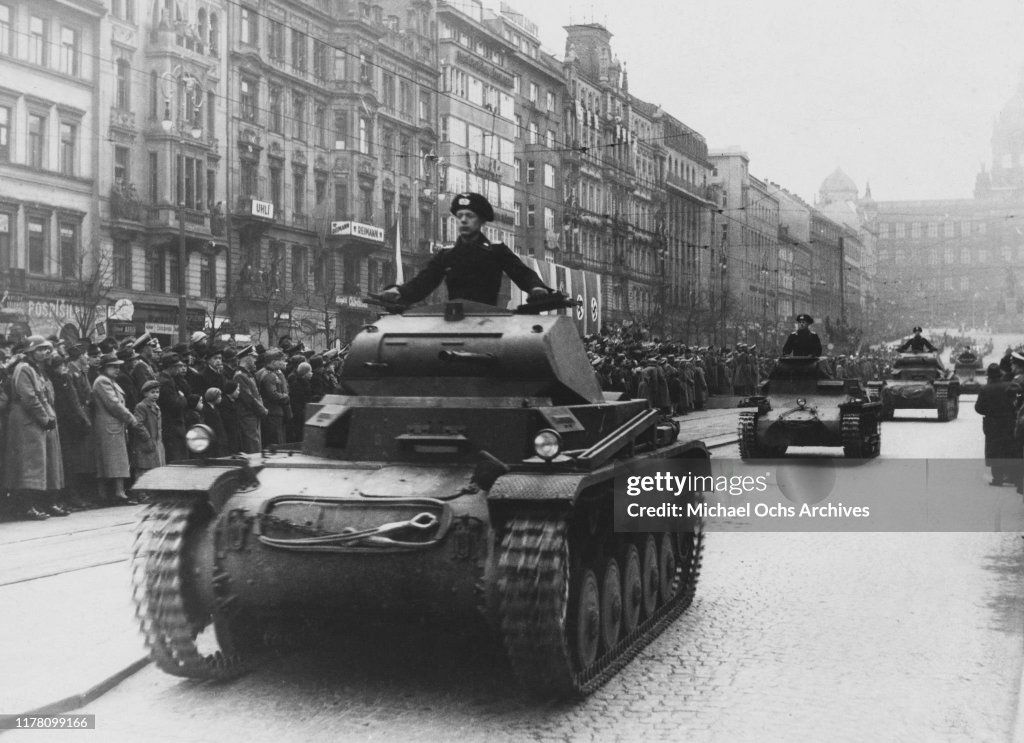
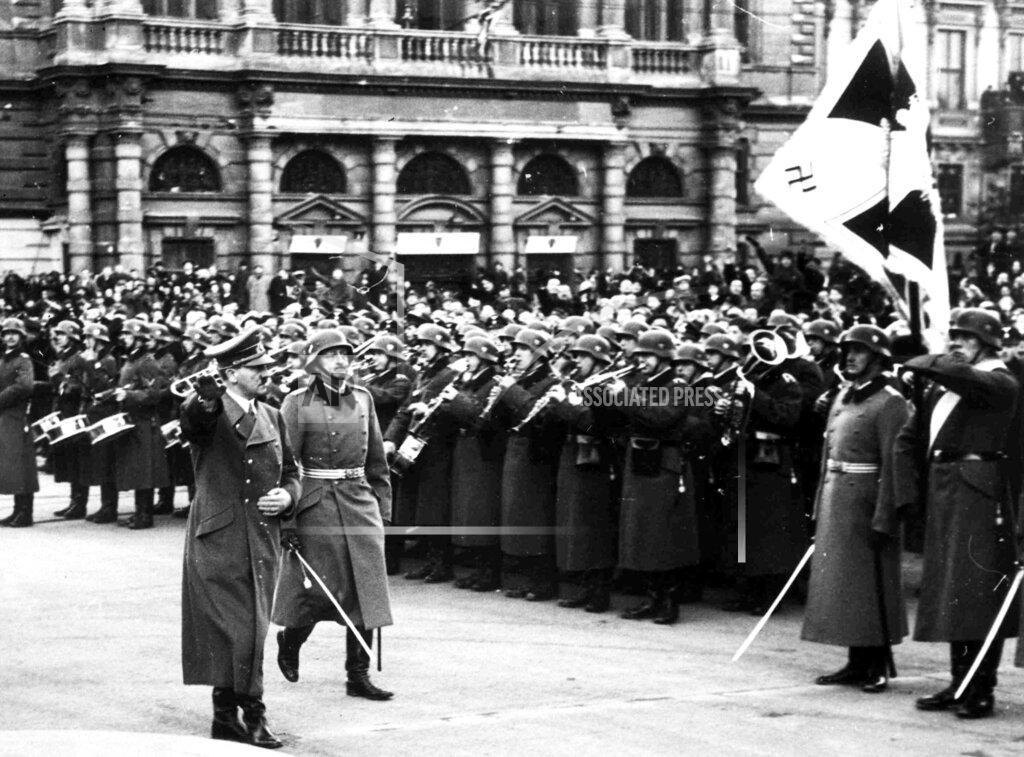
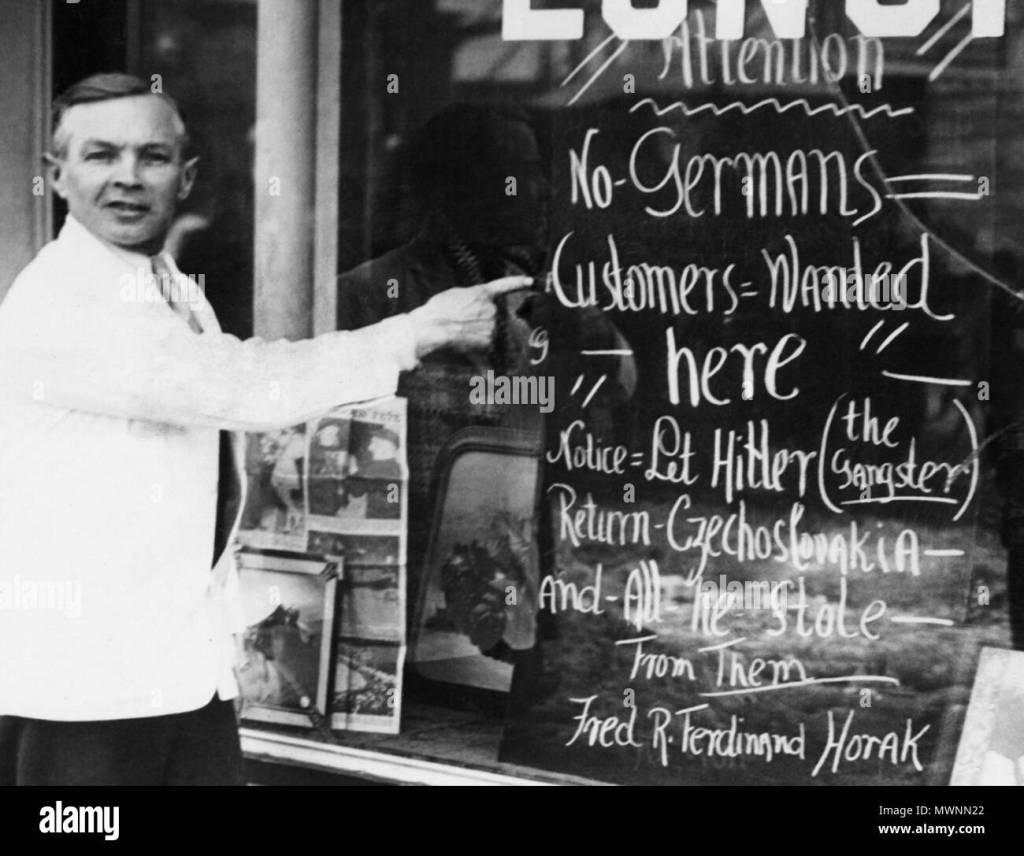
Britain and France today notified the Reich government of their refusal to recognize the juridical validity of Germany’s annexation of the Czech Provinces of Bohemia and Moravia and they added that they considered the Reich invasion of those provinces a breach of the Munich four-power agreement. This diplomatic step of the two powers was promptly communicated to Chancellor Hitler and Foreign Minister Joachim von Ribbentrop who are on their way to Berlin from Vienna. Late tonight it was announced that the joint protest had been rejected and that Dr. Herbert von Dirksen, German Ambassador to London, had been recalled to Berlin. Dr. von Dirksen’s departure practically synchronizes with that of Sir Nevile Henderson, the British Ambassador, who left for London tonight to report to his government.
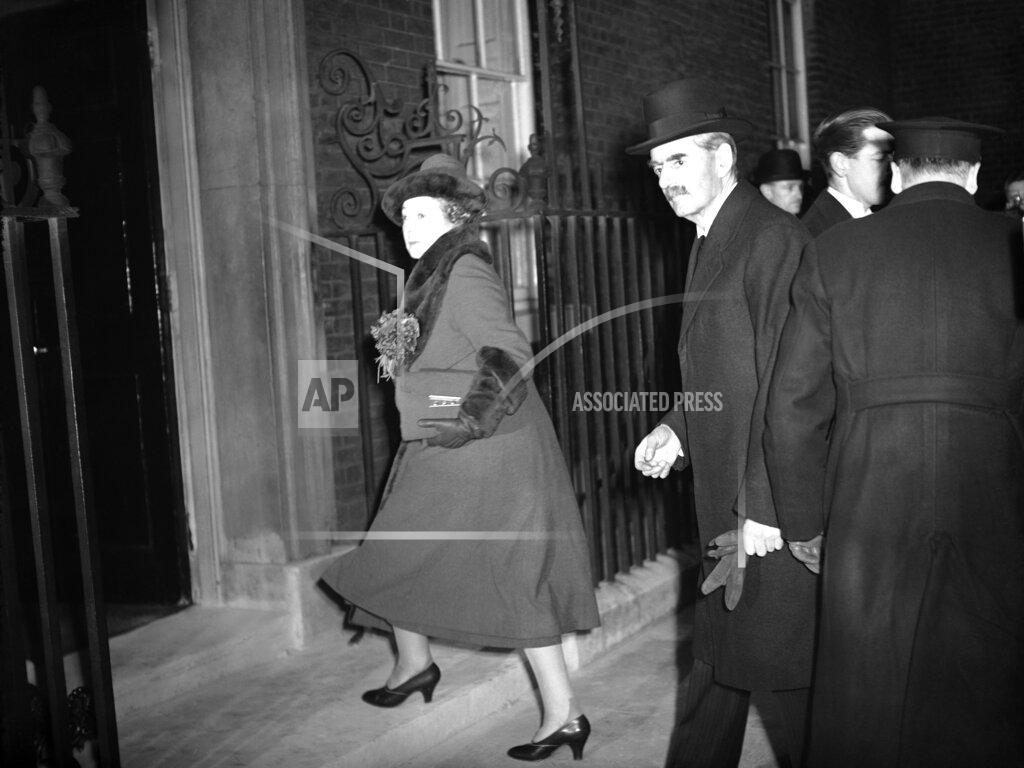
The Anglo-French protest provoked no surprise at the Wilhelmstrasse, where it was expected following the vitriolic outbreaks in Parliament and the British press and after Prime Minister Neville Chamberlain’s speech at Birmingham. It was viewed as an idle gesture in that the incorporation of the Czech provinces in the Reich is an accomplished fact. The recall of Sir Nevile obviously called for retaliatory action on the part of the Reich. Two major embassies in Berlin, the British and that of the United States, are without their envoys. The Anglo-French démarche was undertaken this afternoon through individual calls by the Ambassadors of both countries. In the absence of Herr von Ribbentrop they were received by Under-Secretary Ernst von Weiszaecker. The protest took the form of an oral declaration, which, it is learned, closely followed the British attitude as enunciated in Mr. Chamberlain’s speech.
King George writes to Prime Minister Chamberlain:
“I feel I must send you one line to say how well I can appreciate your feelings about the recent behavior of the German Government. Although this blow to your courageous efforts on behalf of peace and understanding in Europe must, I am afraid, cause you deep distress, I am sure that your labors have been anything but wasted, for they can have left no doubt in the minds of ordinary people all over the world of our love of peace and our readiness to discuss with any nation whatever grievances they think they have.”
At today’s Cabinet:
The Prime Minister said that up till a week ago we had proceeded on the assumption that we should be able to continue our policy of getting on to better terms with the Dictator Powers, and that although those Powers had aims, those aims were limited. We had all along had at the back of our minds the reservation that this might not prove to be the case, but we had felt that it was right to try out the possibilities of this course… [Chamberlain] had now come definitely to the conclusion that Herr Hitler’s attitude made it impossible to continue to negotiate on the old basis with the Nazi regime.
Britain airs the lightweight boxing championship on television. This is the first public airing of a television program in the country.
Hungarian troops tonight completed occupation of Eastern Carpatho-Ukraine, facing Rumania, and began blocking roads into Rumania. The main road in the easternmost sector, seized by a column under Colonel Baron Unger, was blocked with tree trunks and barbed wire to a depth of a quarter of a mile back from the border. Troops dug deep ditches on either side of the road.
An estimated 200,000 Hungarian troops were in Eastern Ruthenia alone for an undisclosed purpose. Excellently uniformed and equipped, they were pouring into the Eastern area, where concrete roads facilitate progress even by the heaviest trucks. The roads were being blocked, it was said, to stop all traffic with Rumania.
Beregszasz, Carpatho-Ukraine: Sandwiched between advancing columns of soldiers, hundreds of Jews were moving southward on highways and trains today hoping desperately to get out of Central Europe. Most of them seemed to be comparatively unconcerned by the military phases of the Hungarian annexation of this former Czecho-Slovak district. But they know that Hungary has just adopted legislation restricting Jewish participation in business and the professions. Their greatest concern, and the question most frequently asked, was “When Is Hitler Coming?” The nearest that Germans approached to Carpatho-Ukraine, however, was to the village of Nagyszalancz in Slovakia on the border.
The Portuguese and Spanish Nationalist governments signed a non-aggression pact.
A fascist newspaper in Italy compares Prime Minister Neville Chamberlain to Winston Churchill, the British statesman whom Italy considers a great foe. Chamberlain’s recent speech critical of Germany is called “bellicose.”
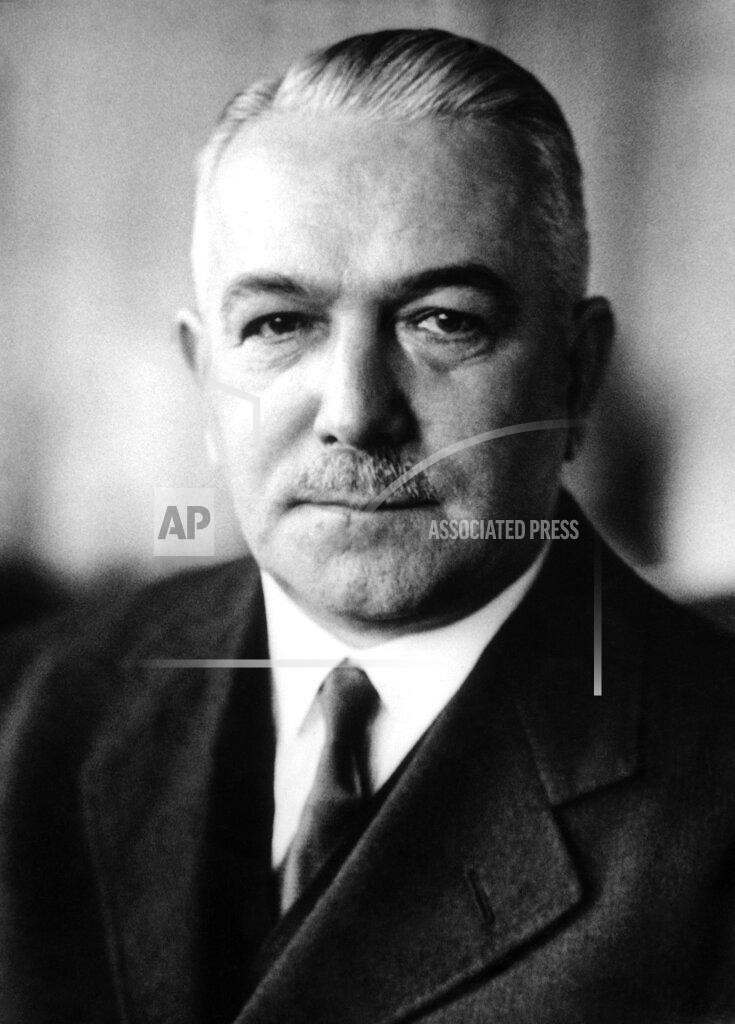
Konstantin Von Neurath is appointed Reich Protector for Bohemia and Moravia today.
New annexations place 600,000 more Catholics under Reich control.
Germany denies an economic ultimatum was given to Rumania to abandon industry.
Hungary gave Italy credit today for the recovery of her “millennial” frontier with Poland through the Hungarian annexation of Carpatho-Ukraine and promised that she would “never forget” Italy’s help. Hungarian Premier Count Pal Teleki in a telegram to Premier Benito Mussolini declared that the latter “was the first statesman in Europe who recognized the just cause of this country and who for more than ten years has given innumerable evidences of his friendship and interest in Hungary.”
In another exchange of telegrams, Hungary’s Foreign Minister, Count Stephen Csaky, told Italian Foreign Minister Count Galeazzo Ciano that Hungary “would never forget the family interest which Your Excellency has always shown toward the Hungarian cause, of which the arrival of our soldiers at the millennial frontier with Poland is one of the most precious fruits.” Count Ciano replied that he shared Count Csaky’s joy and conviction that it was an important contribution to peace.
In Madrid, Julian Besteiro, Foreign Minister in the Republican National Defense Council, broadcast over the Union Radio tonight a proposal for immediate negotiations for peace with the Nationalists.
British Secretary of State for Foreign Affairs Lord Halifax explained to the Soviet ambassador in the United Kingdom that the reason for the rejection for Joseph Stalin’s call for a multi-power conference to contain Germany was due to the lack of available personnel to embark on these negotiations.
The Russian army guards Ukraine. Stalin denies any fear of Germany.
At the 18th Party Congress, Joseph Stalin declared that the western aggressor states of United Kingdom and France were pushing Germany toward Eastern Europe, thus provoking an eventual war between Germany and the Soviet Union, a venture that he did not wish to embark the Soviet Union upon.
Soviet Foreign Minister Maxim Litvinov proposes (for the second time in a year), that France, Poland, Romania, Turkey, the UK and the USSR join together to form a pact to stop Adolf Hitler. British Prime Minister Neville Chamberlain, probably due to his distrust of the Soviet Union, found this action to be premature.
The British proposal for Palestine suggests an immigration limit for Jews of 75,000 over a five-year period and gradual control to Arabs. Delegates do not approve but Britain will most likely impose this plan. Jewish leaders call for a 24-hour strike, and for all Jews to refrain from violence or public demonstrations.
The U.S. Government moved on two fronts today to register in even more emphatic terms its abhorrence of the German absorption of Czecho-Slovakia. The State Department began drafting a note to Berlin reasserting its condemnation and declining to recognize the legitimacy of the occupation, and the Treasury applied countervailing duties against imports from Germany. The provisions of Section 303 of the Tariff Act of 1930 will come into force on April 22, applying 25 percent duties on all imports from Germany that are on the dutiable list in addition to the normal duties until shown that they are not subsidized.
While this action had long been forecast and the decision to take it was reached a week ago, before the latest German conquest was undertaken, the fact remains that the opinion of Attorney General Frank Murphy endorsing it was formally rendered only today. The announcement was made immediately. No announcement was made of the time the decision was actually reached and no other ways were taken to indicate that it was not directly connected with the Central European crisis. In the circumstances it was regarded as giving significance to the statement of President Roosevelt in his annual message to Congress on January 4. “There are many methods short of war, but stronger and more effective than mere words, of bringing home to aggressor governments the aggregate sentiments of our own people.”
The note to Germany will bring the United States into line with the other free nations, Great Britain and France, in expressing a formal protest over the seizure of Czecho-Slovakia. Great Britain and France took that action today. The withdrawal of their Ambassadors from Berlin for an indefinite period at the same time brings them into line with the United States which late last year announced Ambassador Hugh R. Wilson’s recall from Berlin. Mr. Wilson is still here and the time of his return to Germany is seemingly more remote than ever.
Washington’s imposition of 25 percent countervailing duties on all German exports to the United States, which now include those of Austria and Czecho-Slovakia, came as a stunning blow to German official and, particularly, business circles. Neither had any doubt that the new duties were prohibitive and virtually shut Germany out of her normally biggest overseas market. Pending detailed official information government quarters refused to comment but made little secret of their anger at what they regarded as not an economic but obviously a political measure designed to “punish Germany for her incorporation of Czecho-Slovakia in the new Great German Empire.”
As a result, political circles were quick to predict that Germany would immediately retaliate by stopping her purchases from the United States and possibly by even more drastic measures in line with her position as a world power. That the virtual loss of the American market is a serious matter to Germany in view of the foreign trade squeeze she is already suffering is freely conceded here. Despite all the shrinkage during the last years, German exports to America still amounted-according to American figures-to $64,625,000, which presumably include Austrian exports following the annexation.
A U.S. legislator plans to ask the House to close the German Embassy and cut all ties with the country.
Senator Key Pittman, chairman of the Senate Foreign Relations Committee, announced today that he would introduce a resolution on Monday to amend the Neutrality Act so as to permit the export of arms, ammunition, and implements of war to all belligerents in time of war on the so-called “cash-and-carry” basis. He will ask the Foreign Relations Committee to start early consideration of his proposal and the four others bearing on neutrality policy that are pending before it.
The Pittman resolution, which would repeal all existing neutrality and arms export legislation, avoids all reference to civil strife. Its author said that so far as he could see both factions in Spain could obtain arms in this country under its terms. Both sides are barred from American arms supplies by the existing law. It would have no practical effect on the Far Eastern situation, since President Roosevelt has never invoked the Neutrality Act in regard to the Sino-Japanese conflict. At the present time both Japan and China are free to purchase arms in this country but, as a practical matter, the difficulties of shipping supplies to China, because of the Japanese blockade, have prevented any extensive commerce with that country in war materials.
President Franklin Roosevelt declares April as Cancer Control Month and asks states to do likewise.
A survey shows that 67 percent of Americans approve of First Lady Eleanor Roosevelt’s decision to resign from the DAR after the group disallows African-American Marian Anderson from singing in Constitution Hall.
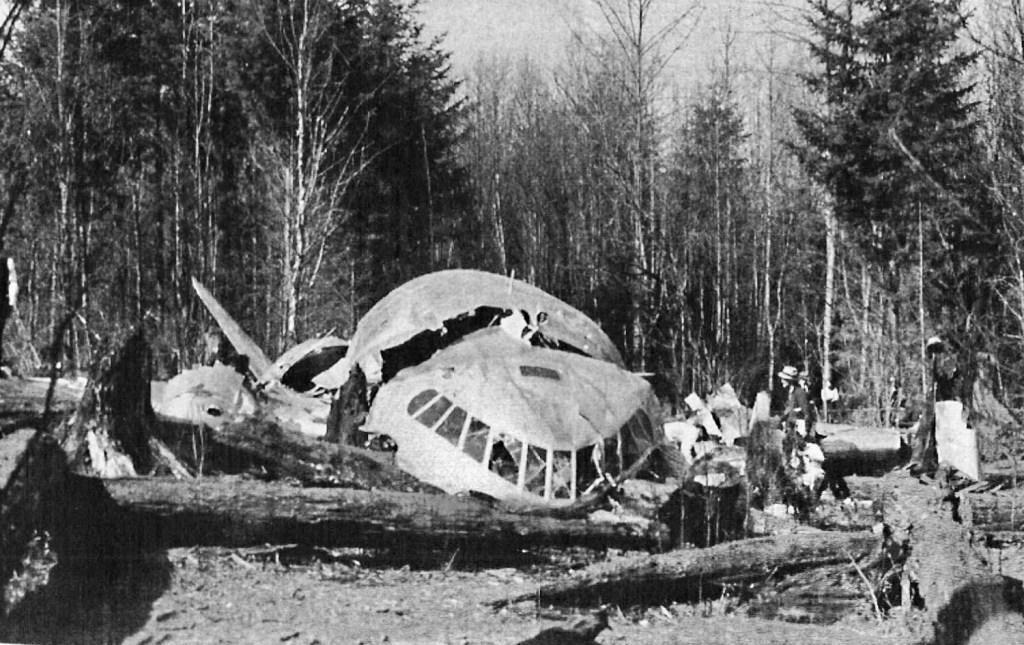
The Boeing Model 307 Stratoliner prototype crashes, killing all ten people on board. The accident results in the formation of an expanded aerodynamic research group headed by Eddie Allen, with more emphasis on pre-flight testing. The S-307, Boeing serial number 1994, was a prototype four-engine, pressurized commercial airliner. It had first flown on 31 December 1938, with Boeing’s Chief of Flight Test, Edmund Turney (“Eddie”) Allen, as first pilot (the Pilot in Command), and Julius Barr as his copilot. Allen had flown the first eighteen flights. “The performance of aircraft NX 19901 on flights prior to Test Flight No. 19 had either met or exceeded the manufacturer’s estimates.”
After takeoff, NX19901 climbed to 10,000 feet (3,048 meters) and at 140 miles per hour (225 kilometers per hour) a series of static longitudinal stability tests were performed. According to the test flight plan, side slips were to be investigated next. At 1:12 P.M. (PST) a radio message was transmitted from NX 19901 to the Boeing Aircraft Company radio station located at Seattle, Washington, which message gave the position of the aircraft as being between Tacoma Washington and Mount Rainier at an altitude of 11,000 feet.
Some two or three minutes later, while flying at a comparatively slow rate of speed in the vicinity of Alder, Washington, the aircraft stalled and began to spin in a nose down attitude. After completing two or three turns in the spin, during which power was applied, it recovered from the spin and began to dive. The aircraft partially recovered from the dive at an altitude of approximately 3,000 feet above sea level, during which recovery it began to disintegrate. Outboard sections of the left and right wings failed upward and broke entirely loose from the aircraft. Major portions of the vertical fin and portions of the rudder were carried away by wing wreckage. The outboard section of the left elevator separated from the stabilizer and both fell to the ground detached. The right horizontal tail surface, being held on by the fairing long the top surface and also by the elevator trim tab cables, remained with the fuselage. The No. 1 engine nacelle also broke loose from the aircraft and fell to the ground separately. The main body of the aircraft settled vertically and struck the ground in an almost level attitude both longitudinally and laterally at a point approximately 1,200 feet above sea level. Watches and clocks aboard the aircraft, which were broken by the force of the impact, indicated the time of the accident at approximately 1:17 p.m. (PST).
The U.S. Navy heavy cruiser USS Astoria departed Annapolis, Maryland, United States with the ashes of Japanese Ambassador Hiroshi Saito on board.
U.S. Army planes will test a new radio eye device that winks 750 million times per second and aids in blind flying.
The Army is ready to order new lighter bomber planes.
The Army speeds its drive to build a larger air force. Recruiters visit colleges to distribute flyers.
Congressional authorization puts the U.S. first in battleships, destroyers, and submarines.
Fleet Exercise No. 5 in the Caribbean Sea, participated by U.S. Navy and U.S. Marine Corps personnel, drew to a close.
The Dept. of Agriculture field tests a program of using Food Scrip, or stamps, to distribute surplus food to those on relief. The program could increase food purchases by $250 million a year.
The first National Wildlife Week is under way. Proponents seek to curb depletion of the habitat.
Alfred Hitchcock considers a film version of Daphne du Maurier’s novel, “Rebecca.”
A Congressional group flies to Ciudad Trujillo to witness the opening of Christopher Columbus’s tomb. Photographs will be permitted.
The former Indian missionary Henry Lunn is dead. The peace champion is remembered for his League of Nations tour to promote worldwide accord.
The American Baptist Hospital in Chengchow is hit twice by bombs dropped by Japanese planes. Chengchow suffers 400 casualties. The Baptist Hospital in Chengchow, an American institution, was bombed twice by Japanese planes yesterday, according to a telegram received by the United States Embassy today from Dr. Sanford Ayers of Atlanta, Georgia, the hospital superintendent. Dr. Ayers reported six casualties in the hospital compound as a result of the bombings, but said no foreigners were injured. He added that the nearby refugee camp, which is under foreign control, also was bombed and that there were “heavy casualties.”
Chengchow was attacked four times yesterday by twenty-eight Japanese planes. The civilian casualties were reported to exceed 400. Kian in Central Kiangsi also was heavily bombed yesterday. Sian, the capital of Shensi, was again subjected to intense air bombings today.
The Chinese reported that the Japanese who crossed the Han River northwest of Hankow had been “annihilated” by Chinese counter-attacks. The reports assert the Chinese are still pursuing the “fleeing remnant.” The Japanese, it is reported, are continuing to reinforce troops in the Han River sector.
Chiang Kai-shek asks the United States to institute an arms ban on Japan.
Dow Jones Industrial Average: 141.68 (-2.21).
Born:
Giannis Markopoulos, Greek composer (“Zavara-Katra-Nemia”; “24 Dances”), in Heraklion, Crete, Greece (d. 2023).
Died:
Henry Lunn, 79, English humanitarian and religious leader.
Naval Construction:
The U.S. Navy seaplane tender USS Tangier (AV-8), lead ship of her class of 3, is laid down by the Moore Dry Dock Co. (Oakland, California, U.S.A.).


 History Diaries