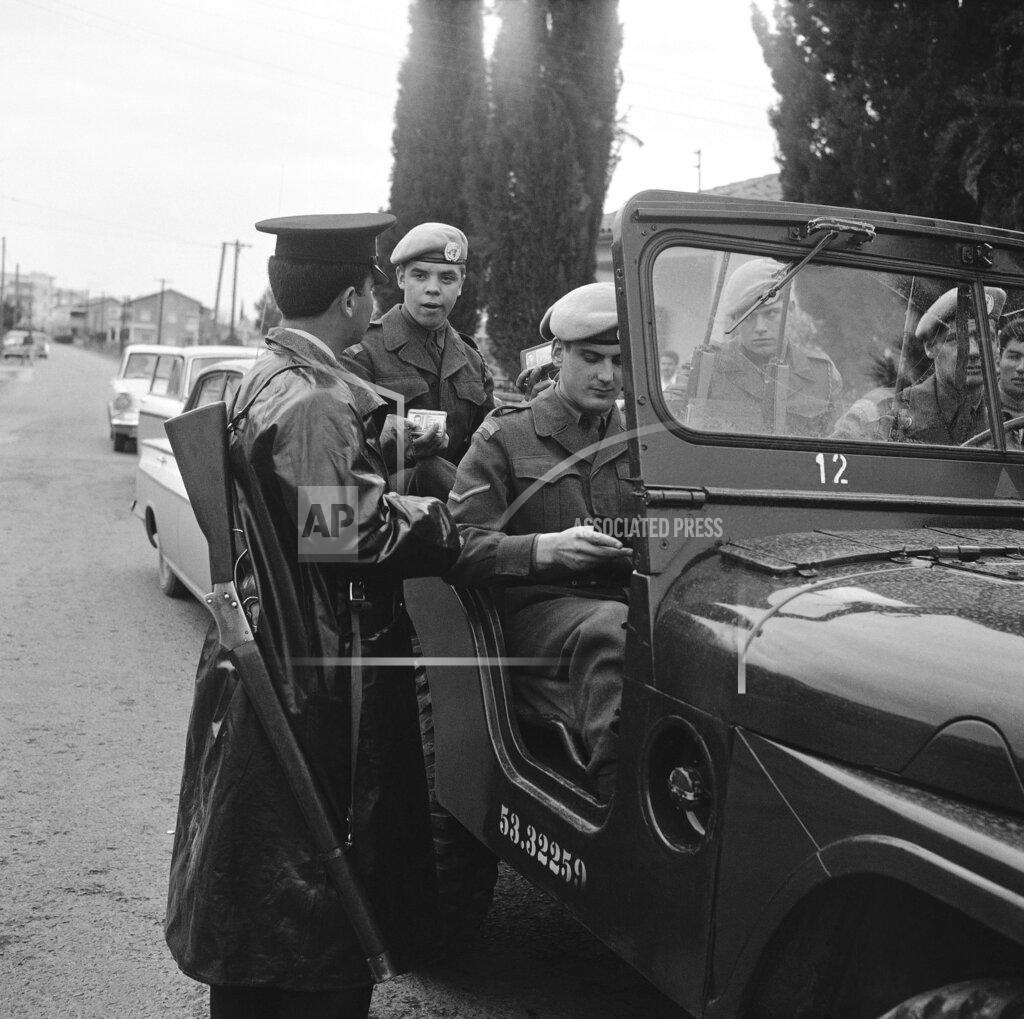
South Vietnamese Premier Nguyễn Khánh seized the diplomatic initiative in Southeast Asia today. He disclosed two moves aimed at drawing neighboring Cambodia and Laos into an anti‐Communist accord. The Premier said he was ready to re‐establish normal diplomatic relations with Laos, putting his government on record as not objecting to sending diplomatic representation to a capital where the Communist regime of North Vietnam also is represented. At the same time Premier Khánh named a delegation to meet Prince Norodom Sihanouk in Phnom Penh as quickly as possible to discuss delicate border issues. The Foreign Ministry announced that an 11‐man delegation headed by Brigadier General Huỳnh Văn Cao would fly from Saigon to Phnom Penh tomorrow morning.
Swift diplomatic developments in the last few days led officials in Saigon to the guarded hope that the North Vietnamese regime could be isolated or at least hampered in its support for the Communist insurgents in South Vietnam. Accords with Laos and Cambodia could have an immense effect on South Vietnam’s struggle against the Communist guerrillas. For this reason, American officials, including Secretary of Defense Robert S. McNamara, have been urging Premier Khánh to adopt a position of flexibility in settling old scores with neighboring countries. The aim of the talks with both Cambodia and Laos will be to cut off as much as possible border supply routes and safe havens that have permitted recent large‐scale Communist attacks.
Reliable sources disclosed that General Khánh met last weekend with General Phoumi Nosavan of Laos for a military planning session in the Vietnamese mountain resort of Đà Lạt. General Khánh left Saigon immediately after Secretary McNamara and General Maxwell D. Taylor, head of the United States joint Chiefs of Staff, ended their five‐day visit Thursday night. The sources said the Laotian general was conferring with the full support of Prince Souvanna Phouma, the neutralist Laotian Premier, who following a recent visit to Cambodia is believed to have moved toward the rightist position of favoring an accord with South Vietnam. Premier Khánh declined to discuss military aspects of his talks with the Laotians. Independent observers noted that military coordination between General Khánh and General Phoumi Nosavan would be hampered by the weakness of the Laotian general’s forces and the terrain along the Laos-South Vietnam frontier.
Meanwhile, Communist forces battered government troops today in a daylight ambush 50 miles south of Saigon. A Việt Cộng battalion of 600 men attacked a group of 300 Vietnamese regulars. Preliminary reports indicated the Government forces suffered at least 6 men killed and 26 wounded, with an undetermined number missing. Communist losses, if any, were not known. The Government troops were convoying a supply mission to Ba Than when the guerrillas ambushed them just south of the provincial capital of Kiến Hòa. The guerrillas were believed to have captured a supply of weapons. The attack was disclosed shortly after Major General Nguyễn Khánh pledged to mobilize the population for the anti‐guerrilla war. Premier Khanh threatened to shoot or imprison slackers.
In a private speech to American diplomats, Thomas C. Mann, the U.S. Under-Secretary of State for Inter-American Affairs, announced a reversal of American foreign policy in the Western Hemisphere. The U.S. Ambassadors to the nations in Latin America had been summoned to Washington for an observance of the third anniversary of President Kennedy’s Alliance for Progress initiative, and Mann set aside the American policy of refusing to recognize or aid nations where dictatorships operated in place of democratic government. Henceforward, American policy would be nonintervention in the internal affairs of Latin American republics, and an emphasis on promoting economic growth, opposing the spread of Communism, and protecting American investments. The New York Times would reveal the details of the secret meeting and dub the change in policy the “Mann Doctrine”.
Mr. Mann was quoted as having said that going back to the nineteen‐thirties, when Sumner Welles was Under‐Secretary of State, the United States had not succeeded by its opposition in unseating a dictator. He cited Juan D. Perón of Argentina and the late General Anastasio Somoza of Nicaragua. Therefore, he was said to have concluded, the United States should stop trying to distinguish among such regimes. At this point, informants said, John O. Bell, Ambassador to Guatemala, asked whether the new policy meant that there would no longer be “good guys or bad guys” as far as United States policy was concerned. Mr. Mann was reported to have replied that that was correct. He recalled that Mexico traditionally invoked the so‐called Estrada Doctrine in recognizing new Latin-American governments following coups d’état. This doctrine proclaims, in brief, that the criterion for recognition should be the effective control of the country by the new government.
The United States told the Soviet Union today that cooperation between the two countries would be jeopardized if Soviet authorities continued to detain the three crew members of a United States military plane shot down over East Germany last week. The warning was part of a statement delivered at the Soviet Foreign Ministry this morning by Walter J. Stoessel, minister counselor and the ranking officer at the embassy in the absence of Ambassador Foy D. Kohler, who is in Washington for consultations.
The key passage of the statement said that a “further delay” in the release and return of the crewmen clearly jeopardizes possibilities for expanding areas of United States-Soviet cooperation and can affect present efforts in cooperation in various fields.” Informed sources said that this was an allusion to negotiations on a United States Soviet consular convention, which have been under way since September, and to consultations on a direct air link between New York and Moscow, which the Russians are eager to establish. There had been talk of starting direct flights in time for the beginning of the summer tourist season here. Mr. Stoessel read the statement to Mikhail N. Smirnovsky, chief of the ministry’s American department.
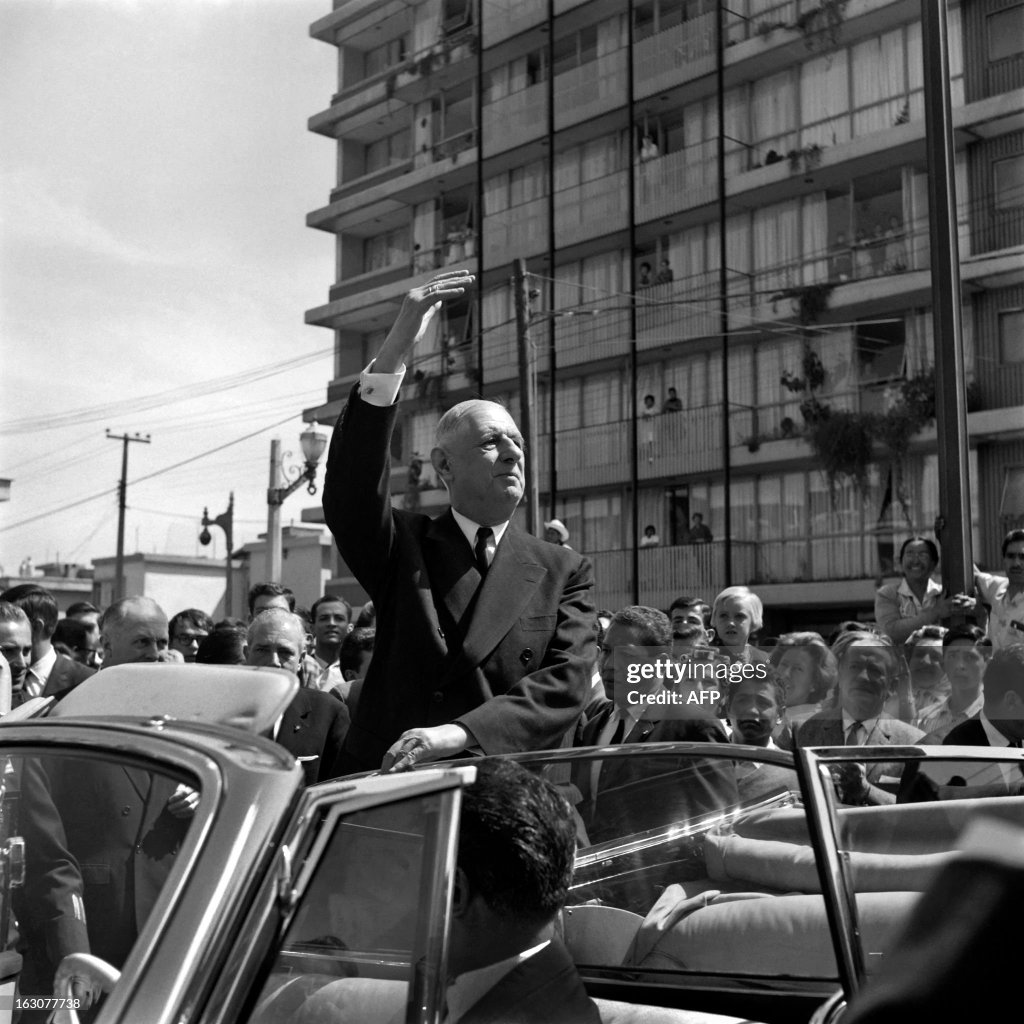
French President de Gaulle received assurances today of Mexico’s complete support in establishing closer relations not only with Mexico but with other Latin‐American nations. The assurances were given in a joint communiqué by the French President and President Adolfo Lopez Mateos of Mexico. Pledges were given of “equal devotion to the cause of peace, which can only be assured in a stable manner within respect for the independence of each, country.” The communiqué specified only in part the matters discussed by the two Presidents in their daily conversations since General de Gaulle arrived Monday. He is leaving Mexico tomorrow.
There was agreement that France and Mexico should study all means of increasing trade. There was also agreement that an interparliamentary affairs body would be created to discuss French‐Mexican problems. Plans to increase cultural exchanges were also proposed. The communiqué omitted mention of a discussion of a disposition of a long‐term credit of $150 million granted to Mexico by France last year. The communiqué, indicated the two leaders had explored the possibility of accelerated French investment in Mexico to combine with Mexican capital. It committed the two chiefs of state to efforts toward closer working arrangements between the Common Market and the Latin‐American Free Trade Association.
President de Gaulle’s visit to Mexico has been hailed in official Cuban circles as a contribution to international cooperation and “peaceful coexistence.” All Cuban newspapers and radios, which are government-controlled, have reported the visit in detail. Joint declarations by General de Gaulle and President Adolfo Lopez Mateos affirming support for the principles of nonintervention and self‐determination were stressed in the reports. The newspaper El Mundo, whose editorial page reflects the views of the Cuban Foreign Ministry, called General de Gaulle the “hero of French resistance” and said the French position “coincides happily with the Soviet doctrine of peaceful coexistence.”
Panama made an urgent attempt today to salvage the agreement worked out last week by the Organization of American States to settle her differences with the United States. Acting on instructions from the Foreign Ministry, the Panamanian delegation to the organization issued a statement that Panama was ready to fulfill the agreement “as soon as the United States is also disposed to fulfill it.” The 17‐nation General Commission of the organization’s Council met in an emergency session today. It discussed the possibility of using the Panamanian statement as the basis of another effort to mediate the dispute. Some slight improvement was indicated later when the special committee named by the commission agreed to resume its mediation efforts.
Earlier in the day the committee confirmed reports that it had intended to abandon the job. Ambassador Juan I. Plate of Paraguay, its chairman, said the group “had been frustrated,” but he declined to be more specific. It was generally believed in diplomatic quarters that the committee felt it had been thwarted by President Johnson’s reaction to its announcement last Sunday that an agreement had been reached. Mr. Johnson said Monday that there had not been a “genuine meeting of the minds” in the dispute. Making public a joint declaration that had been agreed to by the two Governments on March 12, the committee said Panama and the United States had agreed to resume diplomatic relations and begin negotiations “to seek prompt elimination of the causes of conflict relative to the Panama Canal.” Mr. Johnson was quoted as having told the committee at a White House reception Monday night that he could no longer agree to the language of the March 12 declaration. He based his objections on what he called “press reports” suggesting that Panama was interpreting the declaration to mean that the United States had consented to changing the canal treaty.
Approximately 50 Moroccan students broke into the embassy of Morocco in the Soviet Union and staged an all‐day sit-in protesting against sentencing of 11 people to death for the alleged assassination attempt of Moroccan King Hassan II.
Senator Barry Goldwater (R-Arizona), candidate for the Republican nomination for President, attacks Johnson’s handling of the war and calls for ‘victory.’ Senator Goldwater, castigating President Johnson and calling for victory in South Vietnam, wound up a successful tour of Northern California today. His departure for Los Angeles was chilled by a somewhat hostile reception at the University of the Pacific in Stockton. Students asked a number of unfriendly questions and forced the Senator to repeated defenses of his positions on civil rights, states’ rights, alleviating poverty and membership in the United Nations. Senator Goldwater replied patiently and won a good round of applause in the end. He flew to Los Angeles late today by chartered aircraft. He will continue his California primary campaign in that city and in the San Diego area for the rest of the week.
The Senator is one of three Republican candidates entered in the state’s Presidential primary. The others are Governor Rockefeller of New York, and Harold Stassen, former Governor of Minnesota. The primary will be held June 2. Senator Goldwater took off for Southern California obviously pleased with the reception given his brand of conservatism and Americanism in the small towns and cities of the north. At tiny Lampson Airport near Clear Lake this morning, the Senator climbed on the platform of an old T‐model truck and struck hard at Mr. Johnson’s handling of the war in South Vietnam. There is no longer a guerrilla war but a “battalion-sized” conflict there, he said, and added that the United States now was “fated with another South Korea.” The difference, the Senator said, is that “this loss will be a far more costly loss than the humiliating defeat we have suffered in Korea. It will mean the loss of the whole of Southeast Asia.” What is needed, he said in a later appearance, is a clearly stated purpose.
“Why can’t we make up our minds to win down there?” he asked. “We never hear the President say we will win; he only says we will contain them.”
Secretary of Defense Robert S. McNamara threw his full support today behind the Administration’s drive against poverty. Citing figures showing that, about a third of the nation’s youths fail either mental or physical examinations given by the Selective Service, Mr. McNamara said: “It is the youth that we can expect to be the most immediate beneficiaries of the war on poverty.” He said he was endorsing the “entire program” both as a citizen and as a member of the Cabinet.
His endorsement came as his fellow Republicans in Congress continued to hammer away at parts of the Administration’s antipoverty program. The program is embodied in a $962.5 million bill. It aims at helping underprivileged young people through job training and education in camps, in community centers and on campuses and at stimulating local communities through federal assistance for their own antipoverty drives. The bill would also authorize nonprofit corporations to acquire rural land and develop it into family‐size farms for sale to low‐income families.
The Republicans centered their fire on Anthony J. Celebreze, Secretary of Health, Education and Welfare. He was questioned for nearly three hours. The antipoverty program, the Republicans insisted, would undercut the authority of the Cabinet members by making Sargent Shriver a “poverty czar.” “I don’t see how you can lie down and be a doormat for this kind of operation,” Representative Peter Frelinghuysen Jr., Republican of New Jersey, commented.
The strongest gain in nonfarm employment in nearly two years was made last month, the Labor Department reported today. Normally, the number of workers on nonfarm payrolls is expected to drop by about 200,000 in February. Last month, it rose by about 80,000 to 56,949,000. The net gain of 280,000, after adjustment for seasonal influences, was the largest since the rise of 335,000 from March to, April of 1962. The figures of the Bureau of’ Labor Statistics showed strong gains in construction and manufacturing employment — the first in the goods‐producing industries since mid‐1963. Strength in trade and service employment, which have been rising fairly steadily, also contributed to the improvement. Nonfarm employment last month was up 1,575,000 over a year before. About a third of the gain was in goods‐producing industries.
The Democratic chairman of the Senate Rules Committee denounced today what he called a “brass‐knuckled attack” by Republican critics on his conduct of the Robert G. Baker investigation. Senator B. Everett Jordan of North Carolina took the floor to defend the handling of the inquiry and the majority’s decision to wind up its investigative phase. Minority members of the panel, however, hit back at the chairman for not having called several witnesses they had requested. They also challenged his interpretation of the committee’s rules of procedure. Senator Hugh Scott, Republican of Pennsylvania, charged: “The American public believes there is a massive cover up going on here in Washington. And they are right.”
Roswell L. Gilpatric, former Deputy Defense Secretary, suggested in a magazine article today that if the current détente with the Soviet Union continued, the defense budget could be cut 25 percent by 1970. This would mean that annual defense spending, estimated at $51.2 billion for the fiscal year 1965, would be reduced to $38.4 billion, a saving of $12.8 billion a year. It is the largest reduction in military spending envisioned publicly by a defense source. Moreover, as outlined by the former Pentagon official, the reduction would not depend upon either a disarmament agreement or a military breakthrough.
He also suggested that all manned bombers might be “retired from active deployment” in the nineteen‐seventies. Congress, which recently authorized $52 million for the development of a new manned bomber despite some official objections, has opposed any proposals to eliminate manned bombers from the nation’s defenses. Mr. Gilpatric, a lawyer, was the No. 2 civilian in the Defense Department, under Secretary Robert S. McNamara, for three years until he returned to private practice two months ago. His article, in the April issue of the quarterly magazine Foreign Affairs, distributed today, appeared to reflect some of the current strategic thinking by Administration leaders. The Government’s leading economic officials, for example, are already examining the consequences of a sizable cutback in defense spending on the assumption that such a cutback is possible. They are thinking of an expanding antipoverty program to offset the prospective decline in defense spending.
[Ed: Umm…. No. Welcome to the Rice Fields instead.]
Melvin M. Belli was dismissed last night as counsel for Jack L. Ruby. Mrs. Eva Grant, sister of the killer of Lee H. Oswald, accused assassin of President Kennedy, disclosed the move. She said that she had sent a letter of dismissal to Mr. Belli’s office in San Francisco. Mrs. Grant said the Ruby family was distressed by Mr. Belli’s “unsatisfactory remarks” about Dallas and its residents. “We’ve encouraged people to come and live in Dallas,” she said. “Mr. Belli’s remarks about the city were uncalled for.”
When the guilty verdict was announced last Saturday, Mr. Belli denounced the jury, the court, and the city. He termed Dallas “one of the sore spots of America.” “If this venomous infection spreads throughout the country, God save us all,” he said. “We are back a thousand years,” he continued. “The jury has made this city a shame forevermore.” The attorney’s defense in the month‐long trial was that Ruby was not guilty by reason of insanity when he shot Oswald on November 24 in the Dallas County jail. Mrs. Grant said last night that no replacement for the attorney had been selected. “There are seven or eight good attorneys in this area,” she said, “and we have talked to a few.” The Associated Press, quoting The Dallas Morning News, said the family, in the letter, had “tried to disengage” Mr. Belli after a disagreement during the trial over tactics used by the attorney. The letter said Mr. Belli “would not consent at that time, to any local adequate, competent counsel.”
Alabama Governor George C. Wallace was called a racist today in the Roman Catholic press, heard similar criticism from Protestant clergymen and drew mixed jeers and cheers from college students. The Alabama Governor’s second day of campaigning in Wisconsin for the Democratic Presidential nomination was in sharp contrast to the warm reception he had yesterday among conservatives in Appleton. Catholics were told they could not support the Wallace candidacy in the, preferential primary April 7 without sharing the evils of racism. The warning came in a column by the Rev. John T. O’Connor in diocesan newspapers with a total circulation of 256,720 in the state.
Governor Rockefeller is mounting a major effort to persuade Black Democrats in California to change their registration and vote for him June 2 in the Republican primary. Of the seven speeches the Governor made during his swing through California last week, two were addressed to Black audiences. He had spoken to another Black group when he was in the state in January. Mr. Rockefeller hopes to capitalize on his family’s extensive contributions to Black education, on his own record on civil rights during his tenure in Albany and on the animosity of many Blacks toward Senator Barry Goldwater of Arizona.
The technology demonstration satellite Kosmos 26 was launched by the Soviet Union from the Mayak Launch Complex at Kapustin Yar.
Dow Jones Industrial Average: 820.25 (+2.09).
Born:
Bonnie Blair, American speed skater (Olympics, gold medal, 500m, and bronze medal, 1,000m, 1988; gold medals, 500m and 1,000m, 1992; gold medals, 500m and 1,000m, 1994), in Champaign, Illinois.
Massimo Manca, Italian-American NFL kicker (Cincinnati Bengals), in Sassari, Italy.
Died:
Norbert Wiener, 69, American mathematician and developer of cybernetics, of a heart attack.
Joseph T. O’Callahan, 58, American Jesuit priest and U.S. Navy Commander who became (in 1946) the first Navy chaplain (and the first chaplain since the Civil War) to win the Medal of Honor.
Sigfrid Edström, 93, Swedish sports official (4th President International Olympic Committee 1952-64).


 History Diaries