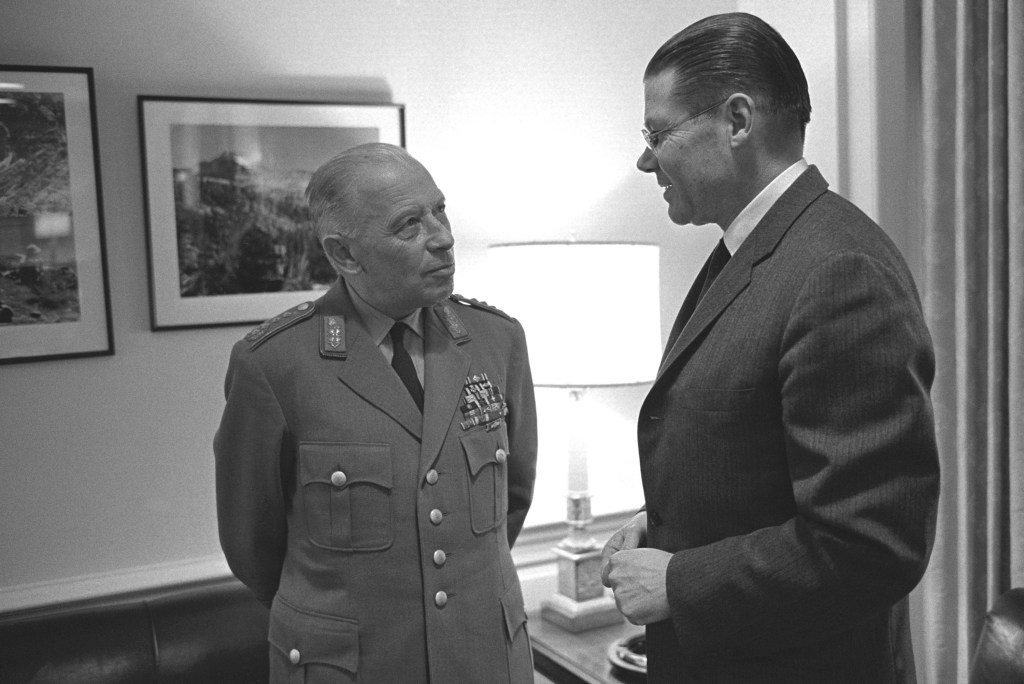
What would become known as the “domino theory” became the basis for American policy on Vietnam, after U.S. President Johnson approved National Security Action Memorandum 288 and the recommendations made to him by Secretary of Defense Robert S. McNamara. “We seek an independent non-Communist South Vietnam,” McNamara wrote, adding that “unless we can achieve this objective… almost all of Southeast Asia will probably fall under Communist dominance”, starting with South Vietnam, Laos, and Cambodia, followed by Burma and Malaysia. “Thailand might hold for a period with our help, but would be under grave pressure. Even the Philippines would become shaky, and the threat to India to the west, Australia and New Zealand to the south, and Taiwan, Korea, and Japan to the north and east would be greatly increased.”
President Johnson presides over a crucial session of the National Security Council, at which McNamara and Taylor present a full review of the situation in Vietnam as they observed it. The statement issued to the public afterwards says that the United States will increase military and economic aid to support Khánh’s new plan for fighting the Viet Cong, including his intention to mobilize all able-bodied males, raise the pay and status of paramilitary forces, and provide more equipment for the armed forces.
The New York Times reports:
    “The White House announced plans today to back a new South Vietnamese program for combatting the Việt Cộng with additional military and economic assistance.

    “An unusual White House statement following a meeting of the National Security Council, at which President Johnson presided, conceded that there had been “setbacks” in the protracted war against the Communist guerrillas.

    “But it declared that “the situation can be significantly improved in the coming months.”

    “Major General Nguyễn Khánh and his seven‐week‐old Government in Saigon “have produced a sound central plan for the prosecution of the war,” the White House said.

    “It declared that Saigon recognized “to a far greater degree than before the crucial role of economic and social, as well as military, action to insure that areas cleared of the Việt Cộng survive and prosper in freedom.” ”
Various secret decisions are also taken, including the approval of covert intelligence-gathering operations in North Vietnam; a plan to launch retaliatory U.S. Air Force strikes against North Vietnamese military installations and against guerrilla sanctuaries inside the Laotian and Cambodian borders; and a long-range ‘program of graduated overt military pressure’ intensified bombing of North Vietnam. President Johnson directs that planning for the bombing raids ‘proceed energetically,’ and within two months this will result in Operation Plan 37-64 (the number of planes and tonnages needed for each phase of the bombing scenario) and Operation Plan 32-64 (U.S. military requirements should other Communist powers enter the conflict).
An officer of the right‐wing army in Laos was shot by an unidentified gunman in Vientiane last night. The officer died this morning. He was Commandant Prasuth, Chief of intelligence at an army headquarters outside this capital. About an hour before the shooting, Kong Le, commander of the neutralist army, announced that he had come to Vientiane to say that unless greater security could be guaranteed for his neutralist troops, he would withdraw them from rightist‐dominated Vientiane. The general had come from his headquarters to Vientiane to discuss the matter with Premier Prince Souvanna Phouma, leader of the neutralist party. Since June, 1962, when the present coalition Government was formed of rightists, the leftist Pathet Lao, and the neutralists, all three factions have maintained armies.
A wisp of smoke curls from the charred end of a roof beam. The village pump still drips water and bees hover over a spilled bottle of syrup. Otherwise, nothing moves in this village; Trapeza, Cyprus is a ghost town. One hundred Turkish Cypriotes had lived here, herding goats and tending olive trees and syrup‐yielding carob trees for a living. Now everyone is gone. There had been 20 homes here. Now only the burned‐out shells of mud brick or concrete remain, and the smaller signs of the clinging fear and hatred that destroyed Trapeza. In the long struggle between the Greek and Turkish communities in Cyprus this village could hardly have drawn much notice from outside. There were no battles here, no casualties.
Nothing really happened in Trapeza except that the little Greek‐owned truck that brought load and provisions stopped coming to the village. The villagers had no truck of their own and were too frightened to venture out on their own to buy food. Gradually their stocks ran out, first matches, then kerosene, then flour. On January 17, hungry and desperate they decided to leave. Taking what animals and clothes they could, they began to load up in orderly fashion, and ended in panic. Someone had suggested that the Greek Cypriotes would try to stop them. Some of the villagers went to Kyrenia, 10 miles to the west, some to Nicosia. But most of the villagers, about 60 of them, went to Kazaphani, a village three miles into the hills away from Kyrenia. Last Monday, after a five‐day siege by the Greek Cypriotes, the Turkish Cypriotes in Kazaphani surrendered. British soldiers are protecting them now. Last Thursday, for reasons of hatred too deep for an outsider to appreciate, the deserted village of Trapeza was burned.
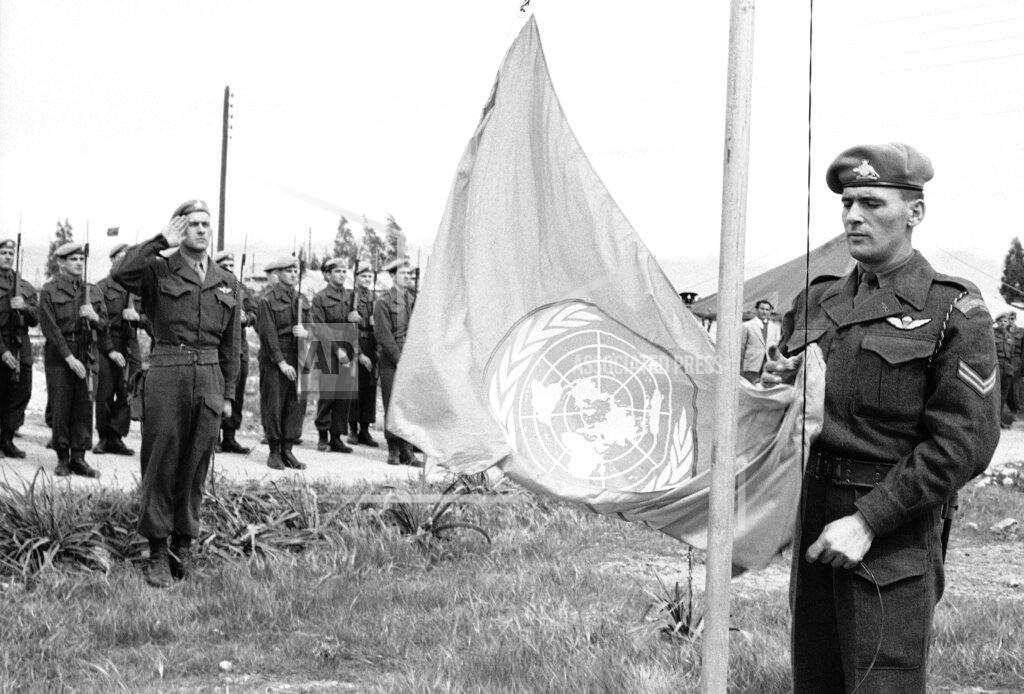
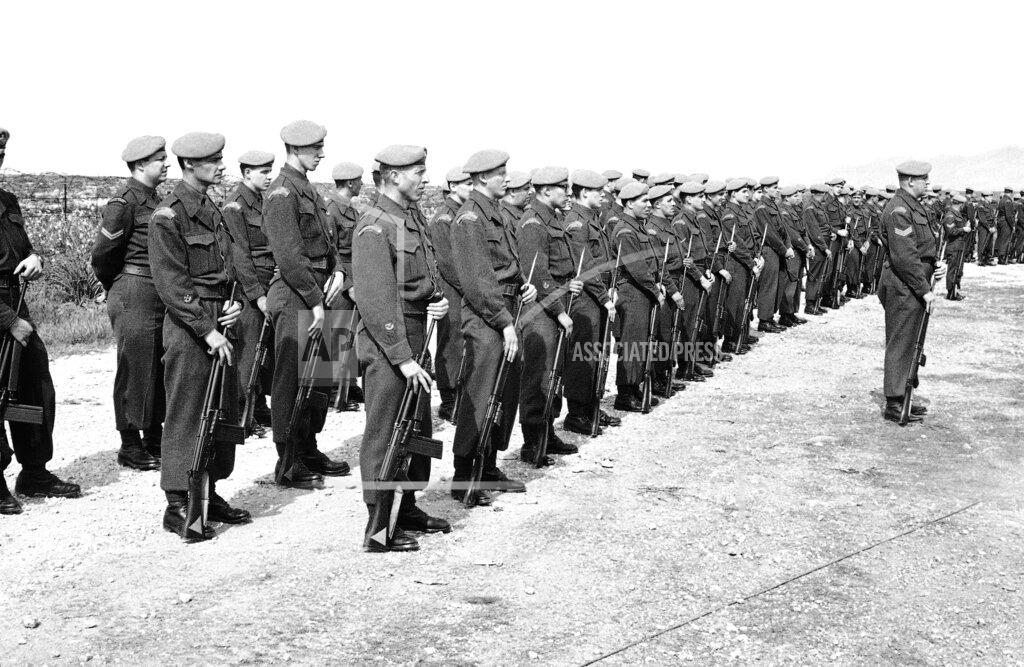
The build‐up of the Canadian contingent of the United Nations peace‐keeping force on Cyprus continued today. Scheduled arrivals will raise the total on the island to 690 men by Thursday night — two-thirds of the 1,000‐man Canadian contingent for the United Nations force, The island remained calm today. There were no indications of when the United Nations units would take the field. Discussions on the terms of reference for the force are still going on here and in New York.
Informed sources said today the three United States fliers he1d by the Russians in East Germany might be freed in a few days. The optimistic forecast was made after a United States Air Force doctor was permitted to visit one of the airmen in a Soviet Army hospital last night. The three officers bailed out over East Germany March 10, when their RB‐66 jet plane was shot down by a Soviet fighter. The Air Force doctor, Captain John L. Monroe, returned to West Berlin this morning from Magdeburg where he examined First Lieutenant Harold W. Welch of Detroit. The lieutenant was reported to have been injured when he landed in a tree. Captain Monroe said he had found Lieutenant Welch, who suffered multiple fractures, in a satisfactory condition.
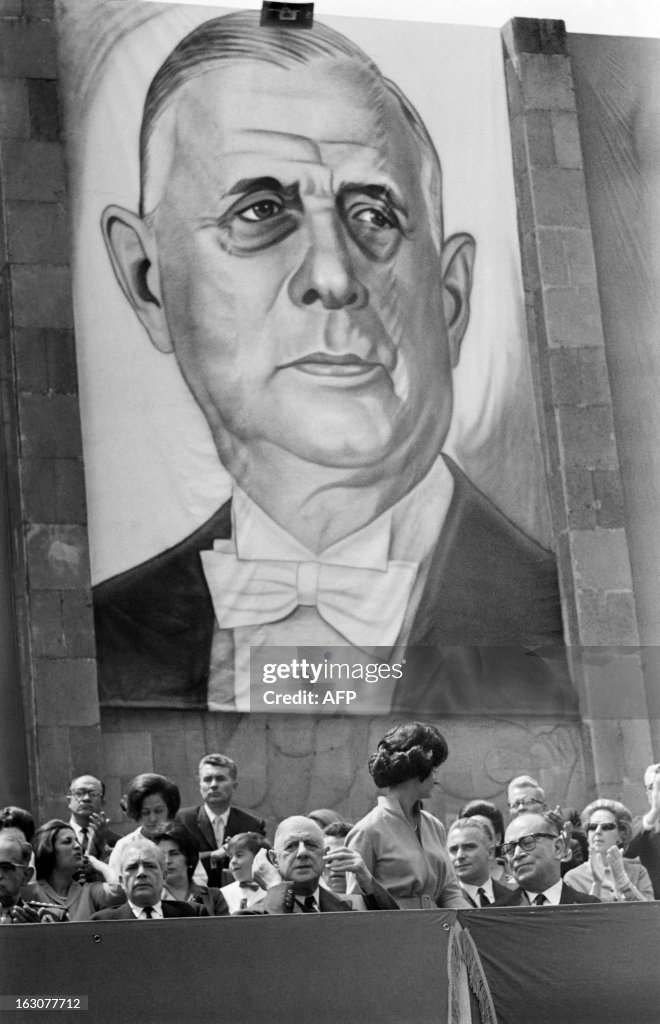
French President de Gaulle appealed tonight for closer links between Mexico and Europe, above all with France. At the same time, the French leader acknowledged Mexico’s intimate ties with the United States. General de Gaulle addressed the Permanent Commission of the Mexican Congress. This body deals with legislative matters while Congress is in recess. The strengthening of “direct political relations” between France and Mexico, General de Gaulle declared, will favor the destiny of the two peoples and “of all men.” Mexico, the general said, is drawn to France “without in any way underestimating the fact that her relations with her great northern neighbor are both natural and fertile.”
A five‐nation committee of the Organization of American States was reported today to have abandoned its mediation efforts as the United States and Panama moved farther from agreement. Members of the group worked all day on a report that was said to acknowledge that their attempt to bring the two countries together had failed. The report, diplomatic sources said, will be submitted to a closed session of the committee’s 17‐nation parent body, possibly tomorrow. Thus the controversy, which seemed to be close to settlement last weekend, would shift back to the commission set up on February 4 by the O.A.S. Council. The Council met on behalf of the Western Hemisphere’s foreign ministers under the InterAmerican Treaty of Reciprocal Assistance. The commission subsequently designated five of its members — Brazil, Costa Rica, Mexico, Paraguay, and Uruguay — to investigate and mediate the dispute.
At least three members of the mediation committee believed that the United States had accepted a conciliation formula last week and then withdrawn its acceptance. This was the interpretation the diplomats placed on the statement by President Johnson yesterday that there was still no “genuine meeting of the minds” between himself and President Roberto F. Chiari of Panama. They looked upon this as a disavowal of the committee’s announcement Sunday night that a settlement had been reached. Mr. Johnson’s remarks were said to have been prompted by statements attributed to Panamanian officials that the formula worked out by the O.A.S. committee had “vindicated” a pledge by Mr. Chiari. This pledge was that he would not resume diplomatic relations with the United States until Washington agreed to revise the Panama Canal Treaty of 1903.
Senate leaders of both parties will move next week to shut off further debate on taking up the civil rights bill unless the Southerners stop talking and permit a vote on making the measure the pending business of the Senate. Although the Southerners have been discussing the House-passed bill since March 9, they have not technically been debating it at all, but have been discussing the motion by the majority leader, Senator Mike Mansfield of Montana, to call the bill off the calendar. In 1957, the Southerners talked for eight days before permitting a vote on calling up the civil rights bill. Mr. Mansfield and Hubert H. Humphrey of Minnesota, the majority whip, who is floor manager of this year’s bill, had hoped the Southerners would again be satisfied with an eight‐day delay in taking up the measure.
The eighth day was today and Senator Richard B. Russell of Georgia, leader of the Southern forces, showed no signs of halting the oratory to permit a vote tomorrow. This afternoon Senators Mansfield and Humphrey met with the minority leader, Everett McKinley Dirksen of Illinois, and the minority whip, Thomas H. Kuchel of California, who heads the Republican civil rights team, to discuss the situation. The four leaders were understood to have agreed that unless an understanding could be reached with Mr. Russell for a vote early next week, they would have to resort to a petition to invoke cloture of debate.
Only 16 Senators are required for a motion to close debate. But two‐thirds of the members present and voting — or 67 if all Senators vote — are needed to impose cloture. The leaders of both parties hope that the Southerners will not force resort to cloture, because this would certainly set tempers to flaring, and the debate is likely to become embittered soon enough when members get down to possible amendments. The civil rights leaders do not have the votes yet to invoke cloture on debate on the bill itself. But they are confident of the votes necessary to shut off debate on the motion to take it up.
[Ed: The rule was later changed in 1975. Cloture now requires only three-fifths of those voting (60%), rather than the previous two-thirds.]
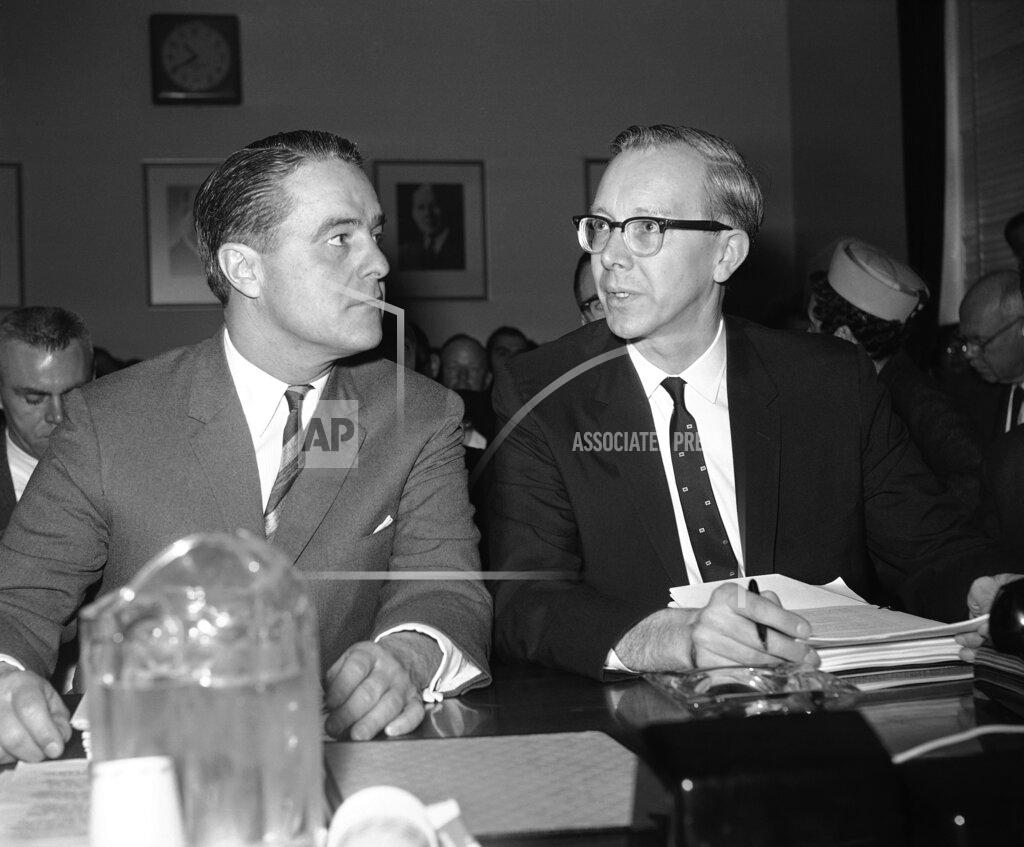
Republicans suggested today that much of the Administration’s planned war on poverty would merely duplicate existing Government programs. The first round of attacks came as the $962.5 million antipoverty bill began what will undoubtedly be a long and rocky course through Congress. The general theme of the opening day of hearings before a special subcommittee of the House Committee on Education and Labor was: Republicans like the man chosen to run the program, Sargent Shriver, but they don’t think much of the program itself. “Well, we’ve still got our shirts on” Mr. Shriver said to aides after he had been questioned for three hours by members of the committee.
Republicans centered their attacks on three points: They said the bill would give too much power to the director of the program. They said the Government already has programs to carry out many of the proposals in the bill. And they said that it was unwise to put all the proposals into a single bill covering everything from education to agriculture. Democratic committee members generally looked with favor on the antipoverty package, but they, too, suggested that there would be some changes in the Administration measure.
A special Presidential commission will recommend to President Johnson this week a massive five‐year program to revive the economy of the poverty-stricken Appalachian region. The program is the result of nearly a year’s study by the President’s Appalachian Regional Commission, headed by Under Secretary of Commerce Franklin D. Roosevelt Jr. It calls for a federal appropriation of $218 million for the fiscal year 1965 beginning July 1. This would be in addition to the President’s billion-dollar program to attack poverty throughout the nation announced yesterday.
Senate Democrats failed again today to end their five‐month investigation of Robert G. Baker. The second failure to adjourn the hearings appeared to involve at least token concessions to the Republicans, who are demanding a fuller inquiry. In a radio interview recorded last night for the American Broadcasting Company program “From the Capitol,” Senator Hugh Scott of Pennsylvania, the principal Republican critic on the committee, said that “various pressures have been brought by the White House.” He described them as “pressures, threats, inducements” and said, “I don’t know whether I’ll ever be able to tell them.” Mr. Scott also charged that he had “received threats” of retaliation “from people high in my own political party if I don’t lay off.” The question before the Democrats was whether to Insist on ending the investigation with some potentially awkward testimony unheard. This had been the decision until today.
An impasse has developed between the labor movement and the Atomic Energy Commission over filling a vacancy on the commission. The White House is caught in indecision between the opposing forces. The American Federation of Labor and Congress of Industrial Organizations is urging that a labor representative be appointed to the commission, which until now has been dominated by businessmen, lawyers and scientists. The present four commission members were reported to be recommending that a businessman be appointed.
The Federal Communications Commission awarded a large new role in communications across the Atlantic Ocean today to companies other than the giant American Telephone and Telegraph Company. The commission called for a new trans‐Atlantic cable to be built by the summer of 1965. It said that the record‐carrier concerns, those carrying messages rather than voice, should have a share in the cable’s ownership along with A.T.&T., France, and Germany. There are now three cables owned jointly by A.T.&T. and foreign countries. A.T.&T. had proposed to have the only United States share in the new cable also, and it was this view that the communications commission rejected today.
President Johnson joined 2,500 Irish New Yorkers last night in honoring St. Patrick, and he reminded them that the nation’s greatest strength lay “in the dream of freedom and hope” that brought their forebears to these shores. The forum for the President’s remarks was the annual dinner of the Friendly Sons of St. Patrick in the Grand Ballroom of the Waldorf‐Astoria. Before the President’s arrival in the city, 130,000 persons marched on Fifth Avenue in the annual St. Patrick’s Day Parade.
Joan Merriam Smith, a 27-year-old test pilot from Long Beach, California, departed from Oakland at 1:01 in the afternoon in a quest to become the first woman to fly solo around the world.
Dow Jones Industrial Average: 818.16 (+1.68).
Born:
Rob Lowe, American film actor (“St. Elmo’s Fire”, “The Stand”, “The West Wing”), in Charlottesville, Virginia.
Don Griffin, NFL cornerback (NFL Champions, Super Bowl 23 and 24-49ers, 1988, 1989; San Francisco 49ers, Cleveland Browns, Philadelphia Eagles), in Pelham, Georgia.
Regal Gleam, American thoroughbred racehorse and 1966 American Champion Two-Year-Old Filly (died 1976).


 History Diaries