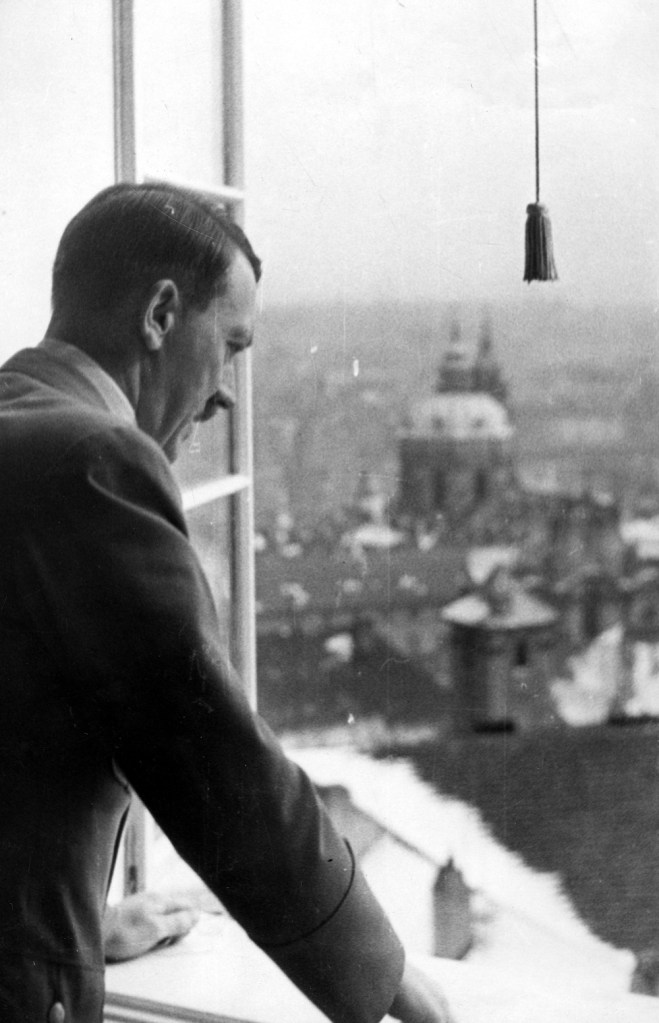
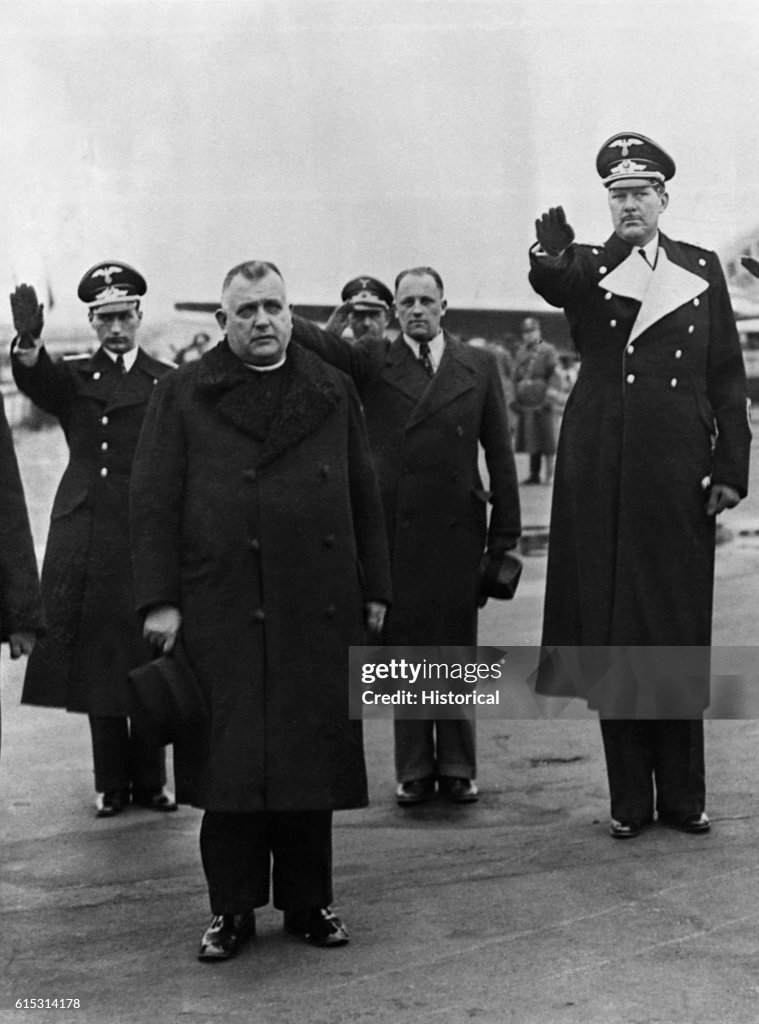
In eastern Czechoslovakia, Slovakian leader Jozef Tiso sent a telegram, originally authored by Hermann Göring, to ask for German troops to enter Slovakian borders. In western Czechoslovakia, Germany declared the formation of the Protectorate of Bohemia and Moravia, with Konstantin von Neurath as the German Protector, immediately enacting anti-Semitic laws.
Slovakia threw herself under the protection of the swastika today, joining Bohemia and Moravia in the expanding empire of Adolf Hitler. The heavily guarded German Führer, having paused in Prague long enough to receive allegiance of his new lands and proclaim new laws for most of them, continued his eastward journey through the Czech protectorate, following his armies. It was a significant anniversary for the former army corporal, who took under his rule 14,000 square miles and 2,450,000 persons in Slovakia just a day after he had become protector of the 19,030 square miles and 6.733,632 persons in Bohemia and Moravia.
Just four years ago today Herr Hitler informed the world that he was throwing aside the chains of the Treaty of Versailles and rearming Germany “exclusively for defense and thereby the maintenance of peace.” Since that day Germany’s air force has become one of the most feared in the world. Her army has grown by leaps and bounds. The Führer had this power behind him as he sat in troop-surrounded Hradschin Castle in Prague working out details for administration of the protectorate of Bohemia and Moravia. Through Foreign Minister Joachim von Ribbentrop, he issued a decree making the Bohemians and Moravians subject to Berlin but granting them a degree of self-management and cultural autonomy.
An appeal had come to him from Slovakia-which had declared its independence with his backing only two days ago-for his protection. “In supreme confidence in you, the leader and Chancellor of the Great German Reich, the Slovak State places itself under your protection,” said the message from Dr. Joseph Tiso, Catholic priest and Premier of Slovakia. The Slovak State begs you to take over this protection.”
Herr Hitler responded: “I acknowledge receipt of your telegram of yesterday and herewith take over protection of the Slovak State.” Thus, he extended his sway deep into Eastern Europe to the frontier of Carpatho-Ukraine, which Hungary announced she was annexing. Government spokesmen in Berlin were able to shed little light on the future of Slovakia. They were of the opinion, however, that it would be “more loosely” bound to Great Germany than Bohemia and Moravia. One spokesman said that the German troops already in Slovakia probably would be withdrawn soon.
Hitler decrees that Bohemia and Moravia in Czechoslovakia are now a protectorate of the Reich. Hitler declares that Czechoslovakia no longer exists. These two portions of the former Czech country will retain the names Bohemia and Moravia.
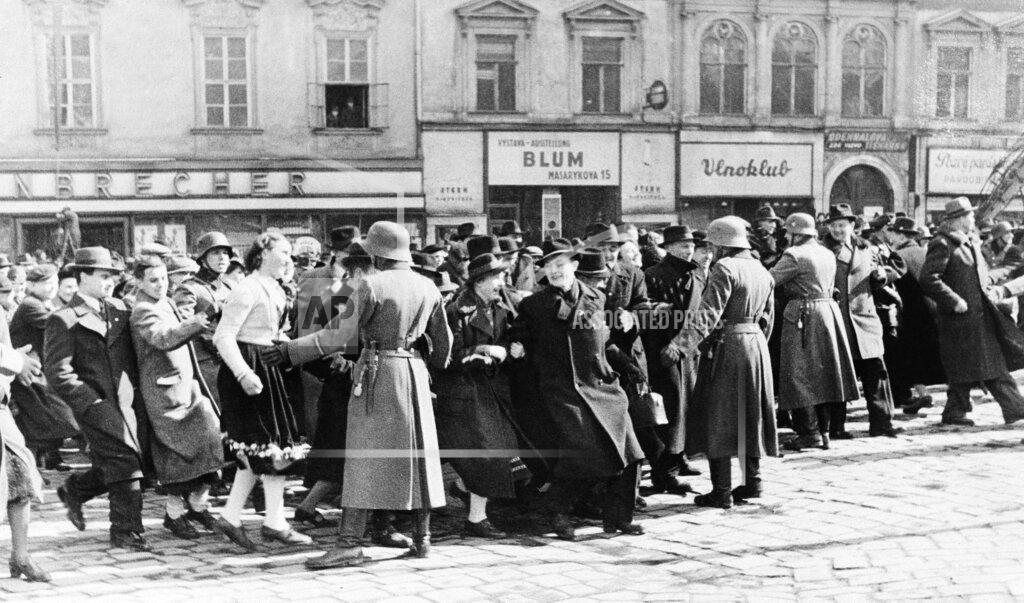
Prague entered its second day of German occupation in a mood of stolid resignation. The Czech people have apparently lost the national self-confidence they had acquired in the twenty years after the World War and their spirit appears to be broken. The crowds in the streets look on sullenly at the steady stream of troops, the line upon line of gray-green army trucks, motorcycles, and cars parked at the side of the curb and the German bombers that drone overhead.
From every house flies the swastika flag by order of the Germans, giving the streets an appearance somewhat recalling last Summer’s Czech national festival, except that the color of the flags is changed, there are no gay national costumes, only the gray of the German uniforms, and there are no laughing, jostling crowds.People pass in silence before motionless sentries standing with riot guns at the ready outside the hotels, schools, and other buildings where the military are quartered, as they go by, they half-turn in sullen curiosity.
Large numbers of Czechs pass before their national war memorial, uttering not a word but laying small bunches of early Spring flowers between the two flames of remembrance that were to have burned forever and that now may soon be extinguished. Weeping groups stand around the John Huss Monument or climb the hill commanding the city to the Hall of Honor, which is still unfinished. In general, the people are resigned to their new masters and only wenIder what fate may have in store for them under the newly proclaimed protectorate of Bohemia and Moravia.
In Prague the discipline of the German troops is excellent, although that of the Czech population appears even more remarkable. Nevertheless, it would go hard with anyone who would try to resist the occupation. Everywhere there are soldiers with bayoneted rifles and Czech police are relegated to the regulation of traffic, which has been thrown into confusion by the continuous stream of troops and army trucks. Two thousand German students and representatives of organizations of Germans living abroad marched to the courtyard of the Hradschin Castle this afternoon to cheer Chancellor Adolf Hitler, who had spent the night in the historic citadel, and hear him proclaim the protectorate.
Hungarian troops march through Carpatho-Ukraine and some reach the Polish border. Under the new government of Paul Teleki, Hungary invades neighboring Carpatho-Ukraine, independent from Czechoslovakia for one day. After heavy fighting, Hungary annexes the territory.
Three different flags fly over the Carpatho-Ukraine capital in one day.
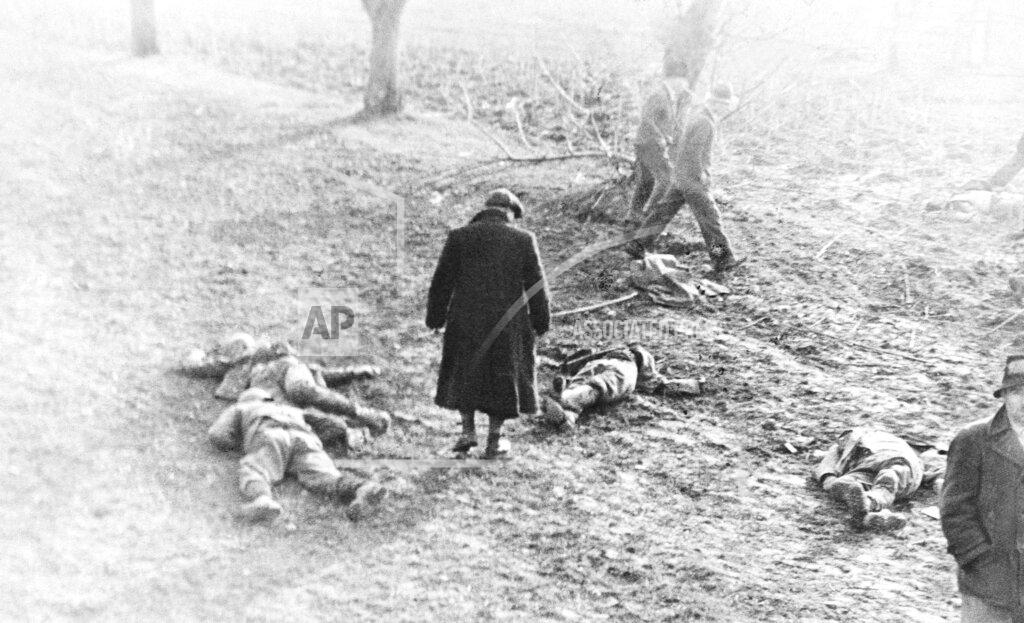
Hungarian troops storm into and subdue the Carpatho-Ukraine capital city of Huszt.
Anxiety reigns in eastern Europe after Germany overtakes Czech lands.
The news that Chancellor Adolf Hitler had proclaimed a protectorate over the short-lived independent Slovak State caused an even greater sensation in Poland today than the annexation of Bohemia and Moravia by the Germans. With Slovakia under the Third Reich’s “protection,” Poland is now surrounded on the west and south by Germany on a 1,600-mile frontier, or more than half of Po land’s entire borderline. The common border with Hungary, established today, and the narrow boundary of Rumania are now the only ones not controlled by Germany. In this situation it is urged that the construction of the projected Baltic-Black Sea canal connection of the Vistula and Danube Rivers should be hastened, together with an extension of Poland’s armament program and closer cooperation with Rumania and Hungary in order to restore the “balance” in Eastern Europe, destroyed by the latest German moves.
The Polish press appeals to other Eastern European countries southward and northward to pool their resources in order to resist German pressure. Fear, it is felt here. is Herr Hitler’s most valuable ally, as it was fear to risk war that led to the surrender of the great powers at Munich and to the Czechs last surrender at Berlin. Poland, on the other hand, it is pointed out, was free of panic and fear last September, as she is now. The Polish people, it is further said, do not want war, but they are not afraid to risk one in defense of their independence and territorial integrity; morally and militarily they are fully prepared. Warsaw is calm but watchful. Tonight, a great demonstration was held in front of the Hungarian Legation, celebrating the restoration of the historic frontier. Then, the paraders marched to the German Embassy. The situation was so tense that the police were ordered to disperse the crowd.
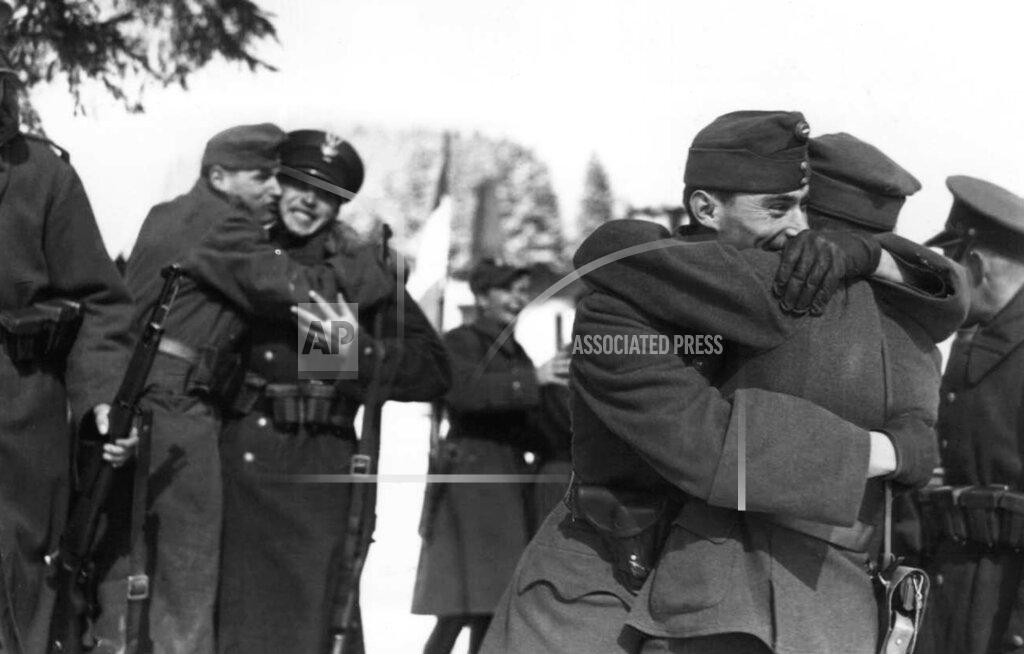
A celebration marking the establishment of a common Hungarian-Polish frontier through Hungary’s annexation of Carpatho-Ukraine developed tonight into anti-German and anti-Jewish demonstrations. The boisterous scenes here in which a crowd estimated at 1,000. shouted “Down with Germany!” and “Down with Jews!” was in contrast to those at the Polish-Carpatho-Ukrainian frontier where the Hungarians were greeted by kisses from Polish soldiers and civilians. The crowd here tried to march on the German Embassy, but was thrown back by a strong force of special police around the building. The demonstrators then turned their fury on Jewish shops in the vicinity. Several windows were smashed before the police finally restored order.
About 450 Sudeten refugees arrive safely in Poland, after leaving Prague three days ago.
In Belgrade, Yugoslavia, Regent Paul today gave an audience to a number of political leaders, which fact soon gave rise to rumors that Premier Dragisna Tsvetkovitch would resign. Such reports are certainly premature, but not wholly without foundation. The Czecho-Slovak events have created such a tense situation in Yugoslavia and have so encouraged the Croats in their autonomy aspirations that the formation of a new Cabinet of strong personalities is expected on all sides.
The Rumanian Government discussed in detail today the events in Carpatho-Ukraine. All Rumanian quarters unanimously approve the foreign policy followed by King Carol after Nicolas Titulescu’s resignation and believe it best not to undertake any military action or even occupy villages where about 40,000 Rumanians are living.
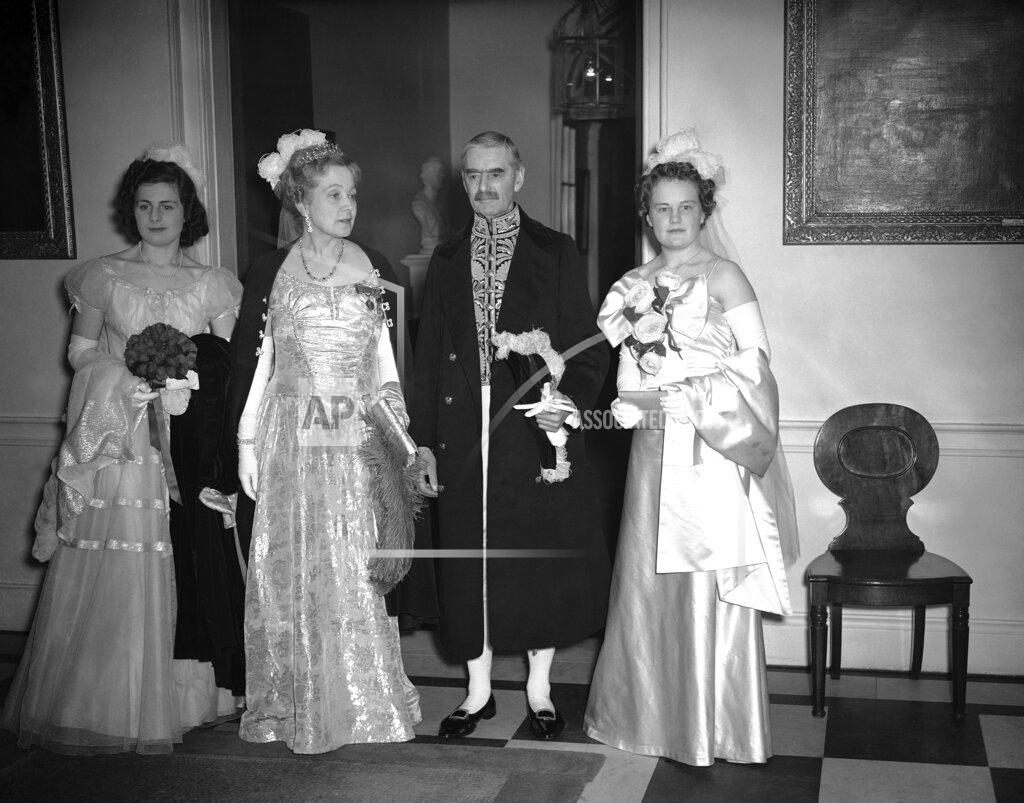
British officials are bitter over Germany’s broken promises. Britain’s Ambassador Sir Neville Henderson is recalled from his post in Berlin. While the British press of all shades of opinion crackled with indignation against Germany today, it became a virtual certainty that Ambassador Sir Nevile Henderson would be recalled from Berlin as a sign of this government’s resentment at the invasion and annexation of Czecho-Slovakia. Prime Minister Neville Chamberlain told the House of Commons his government was considering asking Sir Nevile Henderson to come to London “to report.” This was the same reason that was given in Washington last November for the recall from Berlin of Ambassador Hugh R. Wilson. And he has not yet returned to his post.
There is every reason to believe, however, that a decision to recall the British Ambassador has been reached and that he will not return to Berlin, at least not for a long time. The embassy will be left in charge of Sir George Ogilvie-Forbes, chargé d’affaires, who is rated here as a sound and competent diplomat fully able to cope with any situation. Meanwhile the closing of the British Legation in Prague in the shadow of Hradschin Castle was foreshadowed tonight with the announcement that Sir Basil Newton, the British Minister, who presented the historic ultimatum to President Eduard Benes last September, has been appointed Ambassador to Iraq, a post recently vacated by Sir Maurice Peterson, now Ambassador to Nationalist Spain.
One sign of British displeasure came today with an announcement by Sir John Simon, Chancellor of the Exchequer, that Czech gold and foreign exchange held at the Bank of England could not be handed over to Germany without the permission of the British Government. Although the amount in Czech funds here is not known, it is understood that a substantial amount of gold is held here to the credit of! the Czecho-Slovak National Bank.
The Daily Telegraph opines:
“‘Monstrous outrage' is the mildest term that can be applied to yesterday's events in Central Europe. Germany has besmirched her name with infamy which will live as long as the Nazi regime lasts. Not the least tragic feature in the whole hideous story is the destruction of the freedom of a people so gallant, so eminently fitted for their place in the comity of free nations. "It must be accounted a deplorable oversight that not a word of sympathy for them was found by the spokesmen of the British Government in yesterday's debate. The "Spirit of Munich' is dead and buried, for who can hope to 'appease' a boa constrictor?”
Britain seeks the release of Czechoslovakian men and women considered foes of the Nazi party.
The British Minister of Coordination of Defense says that the British aim is power sufficient to deter any aggressor.
The news that the British Government had virtually decided to recall its Ambassador from Berlin in the same manner that the United States had recalled its Envoy some time ago was received in Paris only late this evening, but it was considered certain that in tomorrow’s Chamber debate it would be urged that France take similar action. Before the Chamber of Deputies meets, the Cabinet will confer to consider the attitude to take and the best way for meeting its critics. Commercial negotiations now under way with Germany may be broken off. Such action would certainly strengthen the government with the Deputies who are inclined to side with those demanding strong action.
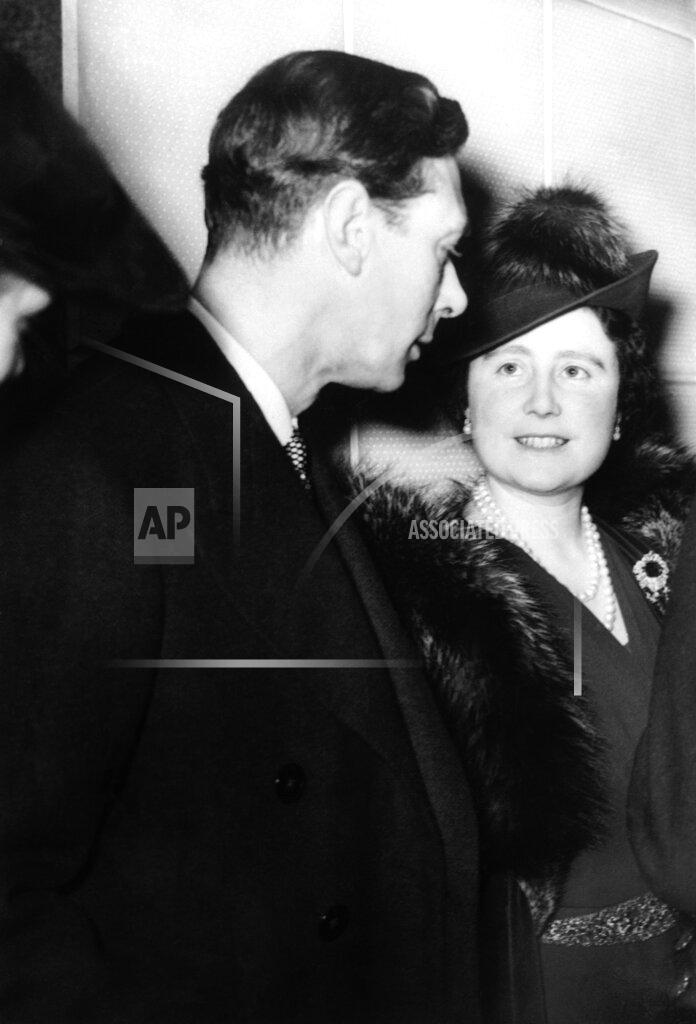
It has also been suggested that Premier Édouard Daladier and Foreign Minister Georges Bonnet should accompany President Albert Lebrun on his visit to London next week. In the Chamber tomorrow former Premier Leon Blum will lead the criticism of the present government’s foreign policy which, he will argue, has permitted, without protest, the destruction of Czecho-Slovakia and the advance into Eastern Europe of German domination.
Russians are cold to world events and believe Germany will turn on Rumania next, not Ukraine.
Over 100 appointments are announced in Madrid as Communists are ousted from government.
Jews unite to bar the British plan for Palestine, saying the proposal is not even a basis for discussion.
Sumner Welles, Acting U.S. Secretary of State, said reports on the Central European situation were constantly being received by the State Department, but that he was not prepared to make any announcement. Nevertheless, it appeared in view of the measures taken by Chancellor Hitler that the United States would close the legation in Prague and maintain American representation through a consulate or consulate general. This was what was done in the case of Austria. It also appeared probable that the reciprocal trade agreements would be abrogated and Czecho-Slovakia placed on the blacklist with Germany, where she will not receive the benefits of lower tariff rates contained in reciprocal trade agreements between the United States and other countries. It is also possible that this government may ask Germany to assume responsibility for the $165,620,270 debt of Czecho-Slovakia owed to the United States.
President Roosevelt plans to strengthen defense after the chaos in Europe, saying the world has “temporarily gone mad.”
Physicians try a new test to detect cancer. Initial results are encouraging, they say.
Calling on the United States to combat Nazi inroads in Central and South America, New York Mayor La Guardia warned Adolf Hitler today that “any pretext to get a foothold anywhere on the Western Hemisphere, in so far as the United States is concerned, is entirely verboten.” The mayor addressed the Commonwealth Club at luncheon in the Palace Hotel in San Francisco. A thousand members turned out to hear him answer assertions by Dr. Colin Ross, Nazi spokesman, who spoke before the club yesterday on “German Interests in Latin America.”
Recalling the Zimmerman note from the German Minister of Foreign Affairs in 1917 to the German Ambassador in Mexico City, Mayor La Guardia emphasized a quotation from Chancellor Hitler to the effect that “the Germany of today is no different than that of ten, twenty and thirty years ago… This preying, stupid, childish, naïve method of starting war, the same fantastic hoax, with the idea of causing fear and consternation in our ranks, hasn’t changed a bit,” the mayor added. “I suggest today that we should meet the situation.”
The Czech minister in Washington angrily refuses to hand over the Czecho-Slovakian legation to the Germans. The Czech envoy Vladimir Hurban in the United States refuses to leave unless he receives a letter from the Czech president.
Demands for an investigation of the Works Progress Administration and an accounting for relief funds granted by Congress came from Democratic sources in the House today in answer to the Administration’s request for an additional $150,000,000 to continue relief into the next fiscal year. A resolution of inquiry was introduced in the House by Representative Cox of Georgia, a frequent Administration critic. Accompanied by a companion measure to appropriate $30,000 for the task, the Cox resolution called for a “thorough investigation (by the House Appropriations Committee) of the Works Progress Administration and the administration of the laws, regulations and orders administered by it.” The committee would be called upon to report to the House at the present session, with recommendations for such legislation as deemed advisable.
Later in the day, after another meeting of the subcommittee which is considering the $150,000,000 request, Representative Woodrum of Virginia, leader of the House economy bloc, demanded in a radio address an accounting of relief expenditures. Speaking over a network of the Columbia Broadcasting System, Mr. Woodrum called for the cessation of “emotion and melodramatic appeals” usually associated with relief appropriation arguments, and for a factual approach to the problem.
Physicians try a new test to detect cancer. Initial results are encouraging, they say.
The Cincinnati Reds purchase veteran Bill Werber from the Philadelphia Athletics. According to Werber, in an interview in the Washington Post in 2008 when the former player was nearly 100, his offer from the A’s Connie Mack came late. “Mr. Mack would wait until the last second to send out contracts with letters. When I received my contract, the letter said: ‘We had a bad year [in 1938]. We had a high payroll. And we anticipate a bad year coming up.’ When I got the letter, I wrote back to him. I said: ‘I know we had a bad year. I know the payroll was high. I know we’re going to have another bad year.’ But I said, ‘In substance, Mr. Mack, what I would advise you to do is sell your ball club and get into a more profitable business.’ That was a bad error. And I never heard from Mr. Mack again. A while later, Mr. Giles called from Cincinnati and said, ‘Bill, we’ve acquired your contract from Mr. Mack.’”
Fastball pitcher Walter Johnson signs up to broadcast baseball games by radio.
The major who loaned his horse to General George Custer shortly before the Battle of Little Big Horn dies at age 91.
NHL record 10 goals in 1 period: New York Rangers (7), New York Americans (3) & a record 26 points in the 3rd period.
Japan sends troops to the Soviet border. Heavy movements of Japanese troops to Sakhalin Island and Manchukuo, Japan’s protectorate bordering Soviet Russia, were reported today by neutral foreign military observers to have been under way for the past week. The reports aroused some apprehension because they coincided with the bitter dispute between Japan and the Soviet Union over Japanese fishing rights off the East Siberian Coast.
Although Japan normally sends about 50,000 men as replacements for her garrisons in Manchukuo during March each year, it was noted that present troop movements were all toward the frontier and no relieved troops were returning.
Foreign military observers said that two Japanese divisions, of an estimated total of 40,000 men, had landed on Sakhalin Island, owned half by Japan and half by Russia. Two other divisions landed at Manchukuoan ports during the week, these reports said, and were rushed immediately to the Soviet frontier. Rashin, North Korean port near Changkufeng, where heavy Russian-Japanese fighting took place last Summer, was reported closed to all shipping except Japanese transports.
A Chinese offensive is set to begin in April. One-third of the army will be sent behind Japanese lines for guerrilla warfare.
The Chinese claim victory, repulsing the Japanese army by the Han River. Repeated attempts by the Japanese to force their way across the Han River in the vicinity of Shayang have been repulsed, Chinese official reports in Chingking assert. At Chiuko, near Shayang, it is reported, a force of 300 Japanese was badly battered today by Chinese artillery and finally driven back in an attempt to cross the Shan in small boats.
In Kiangsi the Chinese are reported putting up strong resistance against a force of 1,000 Japanese who landed Wednesday on the east shore of Poyang Lake in an offensive toward Tuchang. Tuchang, the Chinese base for East Kiangsi, has been a thorn in the flank of the Japanese for many months.
The prototype Mitsubishi A6M Type 0 (Zero/Zeke) fighter is declared ready for tests at Nagoya.
Flight Lieutenant Subroto Mukherjee takes over command of No. 1 Squadron Indian Air Force, from Squadron Leader C H Smith, becoming the first Indian to command a flight.
Dow Jones Industrial Average: 147.54 (-0.12).
Born:
Fan Kuang-chun, Taiwanese lawyer and politician, Secretary-General of the Judicial Yuan (2003-2007), in Shinchiku Prefecture, Taiwan, Empire of Japan.
Died:
Frank D. Fitzgerald, 54, Governor of Michigan, of a heart attack after a bout of the flu.
William Robert Dashiell, 75, U.S. Army Brigadier General, participated in the Philippine–American War and World War I.
Naval Construction:
The Royal Navy Net-class boom defense vessel HMS Bayonet (Z 05) is commissioned.

 History Diaries