Communist ground fire downed a United States helicopter and a spotter plane in separate actions in South Vietnam this weekend, Six American airmen were killed. Four of the United States airmen who were killed were aboard a helicopter that was hit during a government operation today in Bá Xuyên province, 100 miles south of Saigon. The two other airmen were aboard an L‐19 spotter plane that was knocked down by guerrilla fire northeast of Saigon, near the South China Sea coast yesterday. A United States spokesman said three men aboard the helicopter were killed instantly and the fourth died while being flown to Saigon. Government troops in the two operation areas killed 12 Việt Cộng guerrillas and had captured two by late this afternoon.
Elsewhere, South Vietnamese forces, operating near the Cambodian border, captured about 300 suspected Communist Việt Cộng fighters, 35 of whom immediately asked to join government forces. In this operation, at Cai Cai, 17 Việt Cộng were killed and a United States Army sergeant was wounded by a land mine. Government losses were put at four wounded.
The prisoners were flown to Tân Hiệp, 50 miles west of Saigon, aboard United States Air Force transport planes. On arrival they were marched off under guard in column formation, hands on their heads. American advisers in the area said the operation was the most satisfactory performance by the South Vietnamese Army in months. “Speed and mobility of armored personnel carrier troops were excellent,” one adviser said. “Rangers who rode with them were aggressive, air strikes and air reconnaissance were well coordinated with ground movements, local strike forces knew their area, the airlift moved without prior notice and we caught the Việt Cộng by surprise.”
Nearly all the suspected guerrillas captured were without weapons, and 50 denied in interrogation at Tân Hiệp that they were Communists. Hundreds of women and children came into the region later pleading that all the captured men be released. Some of these women grabbed the legs of soldiers, and others tried to storm a bridge over a canal leading to the Cai Cai outpost. A United States adviser, who speaks Vietnamese, said that emotional outburst might have been inspired by the Việt Cộng.
In a political development, Kim Chong Pil, second highest ranking official in the South Korean regime, arrived for a visit and pledged his Governmentʼs assistance in the war against Communist guerrillas. He was given a warm welcome at an airport ceremony.
Cambodia received a shipment of Chinese Communist military aid today. Prince Norodom Sihanouk said it arrived “at a crucial moment in our national existence.” Government sources reported Prince Sihanoukʼs acceptance speech at Pochentong Airport, but did not say what the shipment contained. “Since our liberation from conditional American aid,” the Cambodian chief of state told the Chinese Communist Ambassador, “Our two armies have been able fraternally to extend hands.”
“This aid is not conceived, as Thailand maintains, to menace the peace and encourage Cambodia to become aggressive,” the prince declared. “Our only worry is to have sufficient military force to dissuade instigators of imperialistic war who menace the Cambodian peace.” He said it was “certain” that if China, the Soviet Union, France and Yugoslavia had not helped militarily without conditions after Cambodia renounced United States aid, “our enemies would already have struck out offensively against Cambodia.”
“We are presently living in the most dangerous period of our contemporary history,” the prince asserted. “Thailand has said cynically that she will never agree to recognize our right to live free, neutrally and in our territorial integrity.” The Cambodian leader said that Prince Souvanna Phouma, neutralist Premier of Laos, “now espouses an aggressive policy in the northern territory.”
Prince Sihanouk said a Cambodian delegation would leave soon for Hanoi, capital of North Vietnam, to negotiate frontier accords and establish fraternal relations with the Pathet Lao, the leftist faction in Laos.
For the first time since December, revelers came out of bars and sang loudly in Nicosia central square early today. Cyprus seemed to be calming down and the apparent reason was the arrival of Canadian troops for a United Nations peace force. Two more Canadian planes landed at Nicosia with 64 men and six jeeps and trailers. Forty‐two Canadians arrived yesterday as an advance contingent of the 1,150 troops Canada has committed to the peace force. This island‐torn by fighting between its ethnic Greek and Turkish communities since Christmas week‐seemed to relax immediately after their arrival. Greek Cypriotes who manned fortifications Friday night expecting an invasion of Turkish troops gathered in bars last night to celebrate until the early hours.
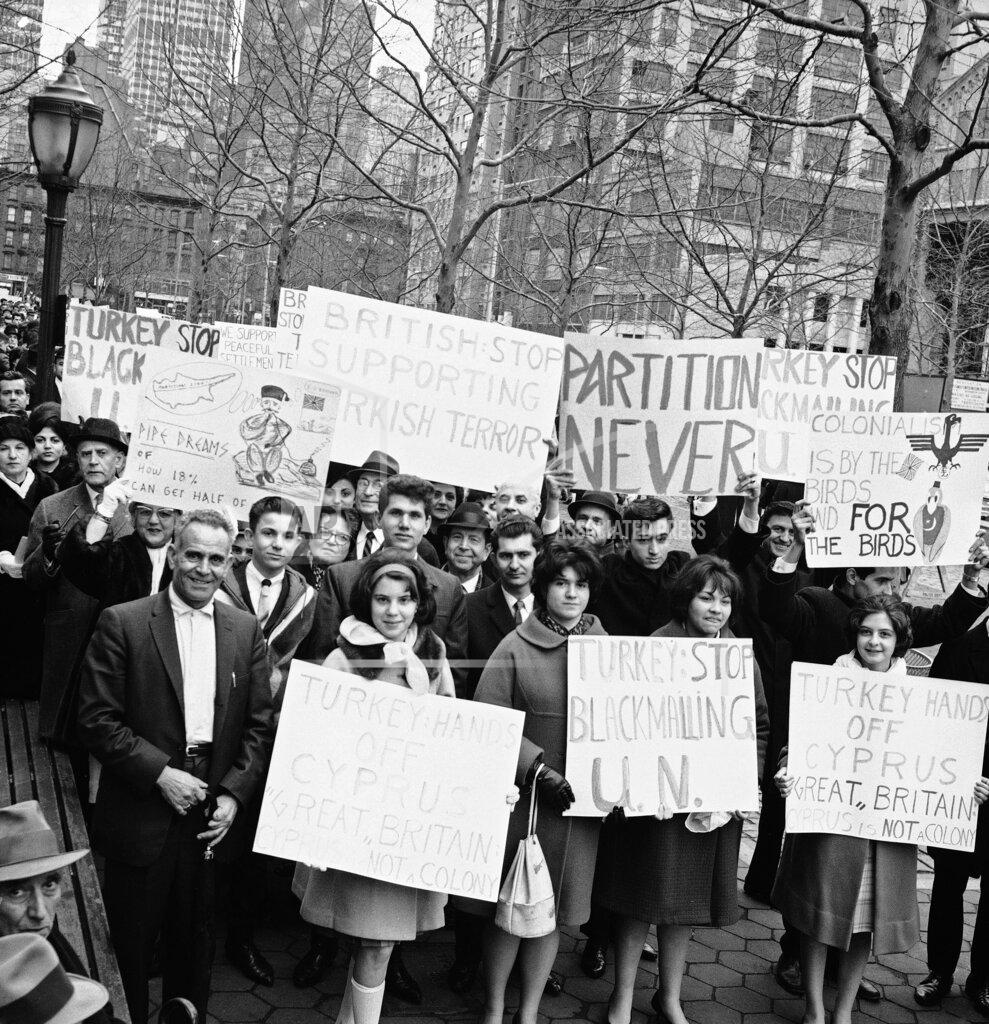
About 2,000 persons supporting the Greek Cypriote position in Cyprus held a peaceful two‐hour demonstration today across the street from United Nations headquarters in New York. The demonstration was organized by the Hellenic‐American Central Committee for Cyprus. It was designed to urge the United States to support the independence of Cyprus and to oppose outside intervention. A spokesman said the committee, which previously expressed its views in a telegram to President Johnson, represented Greek and Cypriote organizations throughout the United States. He estimated that there were 1.5 million Americans of Greek descent. The demonstrators carried flags, banners and placards supporting Cypriote independence and assailing Turkish threats to intervene. They chanted, ‘Hands off Cyprus’ and cheered the name of Archbishop Makarios, the island’s President.
A committee of the Organization of American States made a dramatic move tonight to force Panama and the United States to settle their two‐month‐old conflict. Without waiting for a formal endorsement of the two governments, the committee urged their “immediate compliance” with the settlement as drawn up Thursday. The conditions, worked out in five weeks of difficult, often stubborn bargaining, provide for the resumption of United States‐Panamanian diplomatic relations and for negotiation of all outstanding differences.
Subsequently, a United States source issued the following statement: “The United States Government and the Government of Panama as of 11 PM Sunday had no meeting of the minds on either the resumption of relations or the procedures to be followed in an attempt to solve the problems surrounding the Panama disturbances. The United States Government will welcome a resumption of relations with Panama. The United States appreciates the contribution of the O.A.S. delegation and hopes that successful conversations will result, from its endeavor.”
The settlement devised by the O.A.S. group could not be announced because the two sides failed to agree on the language of accompanying statements by President Johnson, and President Roberto P. Chiari of Panama, giving their understanding of its meaning. Ambassador Juan Plate of Paraguay, chairman of the five-nation team that has been mediating the dispute, thereupon decided to make public the agreement without the interpretive statements. Members of the committee said privately that both Washington and Panama had authorized the announcement.
The Chinese Communist party indicated today that Rumanian efforts to mediate the ideological dispute between Peking and Moscow had failed to resolve any of the basic issues. Analysts here found evidence of an uncompromising stand by the Chinese leadership in an ideological report published this morning in Jenmin Jih Pao, official organ of the Chinese Communist party. Reports from Moscow on Saturday also indicated that the Rumanian attempt at mediation had failed. Jenmin Jih Pao left open only the possibility that further talks might be held between the Soviet and Chinese Communist parties while debate within the international Communist movement continued.
The Rumanian attempt at mediation evidently was undertaken in an effort to avert a formal ideological split in the world movement. The Chinese party published an open letter to Moscow on February 4 implying, that the “revisionist” policies of the Soviet party justified organization of a separate Communist movement. A Rumanian Communist party delegation headed by Premier Ion Gheorghe Maurer was in Peking from March 3 to March 10 to discuss the ideological dissension. The delegation then went to Pyongyang for similar talks with the North Korean Communist party, which is closely allied with Peking. The Rumanians left Pyongyang today after publication last night of a joint communiqué. It said that views had been exchanged on world Communist unity and the strengthening of ties between Rumania and North Korea.
The USSR performs a nuclear test at Eastern Kazakh/Semipalitinsk.
President de Gaulle left today on a highly publicized 10‐day visit to Mexico and French territories in the Western Hemisphere. His American‐made jet plane of Air France left for Pointea-Pitre, Guadeloupe, shortly after 3 PM (9 AM Eastern standard time). He is stopping at Guadeloupe overnight and will be welcomed in Mexico tomorrow. Stern security measures surrounded the departure. The streets and highway from the Élysée Palace to Orly Airport were lined with policemen. More than 600 security guards were deployed along the taxi strips and the runway. The plane was closely inspected and its fuel examined. The French news agency reported, after the take‐off, that the pilot and the airline received threatening telephone calls last night, but there was no official confirmation of this.
President Johnson defined his Administration’s principal foreign policy objective today as the maintenance of peace in a world divided by old rivalries and confronted with the insecurities of new nations. The pursuit of this goal, he said, can be expected to bring new difficulties and frustrations, which must be faced with patience, for “sometimes the role of the peacemaker is not a very happy one.” In dealing with international crises, he cautioned, it is better to act after “reflection, evaluation and study” rather than seek simple and impulsive solutions. The President’s assessment was made in a television‐radio interview in which he reviewed 120 days of his Administration.
On major foreign policy issues, Mr. Johnson made the following points:
In Vietnam, the Administration is developing “effective and efficient” plans to help the South Vietnamese defend themselves against the Việt Cộng guerrillas. But the plans do not contemplate incursions into North Vietnam.
In the Alliance for Progress, the President will appeal in a speech before the Organization of American States tomorrow for a “united attack” to give new life to inter‐American plans for economic and social development.
On foreign aid, the request for 1965 will be in the same range as the $3.4 billion authorized by Congress this year, compared with the initial request for $4.5 billion for 1964.
The President used his hourlong interview to emphasize once again his belief that developments abroad must be assessed in the perspective of a changing and complex world that requires careful handling.
President Johnson tonight named as his major domestic objectives an attack on the causes of poverty and passage of the pending civil rights bill. He said his antipoverty plan, which will go to Congress tomorrow, will represent only “a beginning” in getting at “the roots and the causes of poverty.” He disclosed that the program would work largely through existing government agencies. As for civil rights, he said, there was “nothing more important for this Congress to do than to pass the civil rights act as the House passed it.” He said he believed the Senate would do so “in due time.”
In a discussion of the period of transition after President Kennedy’s assassination last November 22, the President was asked about security precautions for himself. It was then that he said he sometimes asked his guards “to move out so I can see some of the people.”
“I want to be a people’s President,” he said, “and in order to do so you have to see the people and talk to them and know something about them and not be too secluded. I think they [the security men] would feel better if the President kept 100 yards distance from every human being, but that is not practical.”
He was asked whether he had any one memory more vivid than others from the days immediately after the assassination. “Yes,” Mr. Johnson said. “I have rarely been in the presence of greatness, but as I went through that period, I observed Mrs. Kennedy, Jackie Kennedy, I saw her greatness, her gallantry, her graciousness, her courage, and it will always be a vivid memory.”
Senator Barry Goldwater won an endorsement of his Presidential candidacy from the California Republican Assembly tonight after a big segment of Rockefeller backers had walked out of the convention hall in Fresno or refrained from voting. The supporters of Governor Rockefeller of New York, who had called for a no‐endorsement policy in a pandemonium-marked session, followed the advice of Edward S. Shattuck, a Los Angeles lawyer. He is counsel for Governor Rockefeller’s delegate ticket that will appear on the California primary ballot June 2. Mr. Shattuck, in advising abstention from voting, charged that the Goldwater forces were violating by‐laws of the 14,500-member assembly by demanding endorsement of a candidate by a simple majority instead of by a two‐thirds majority vote.
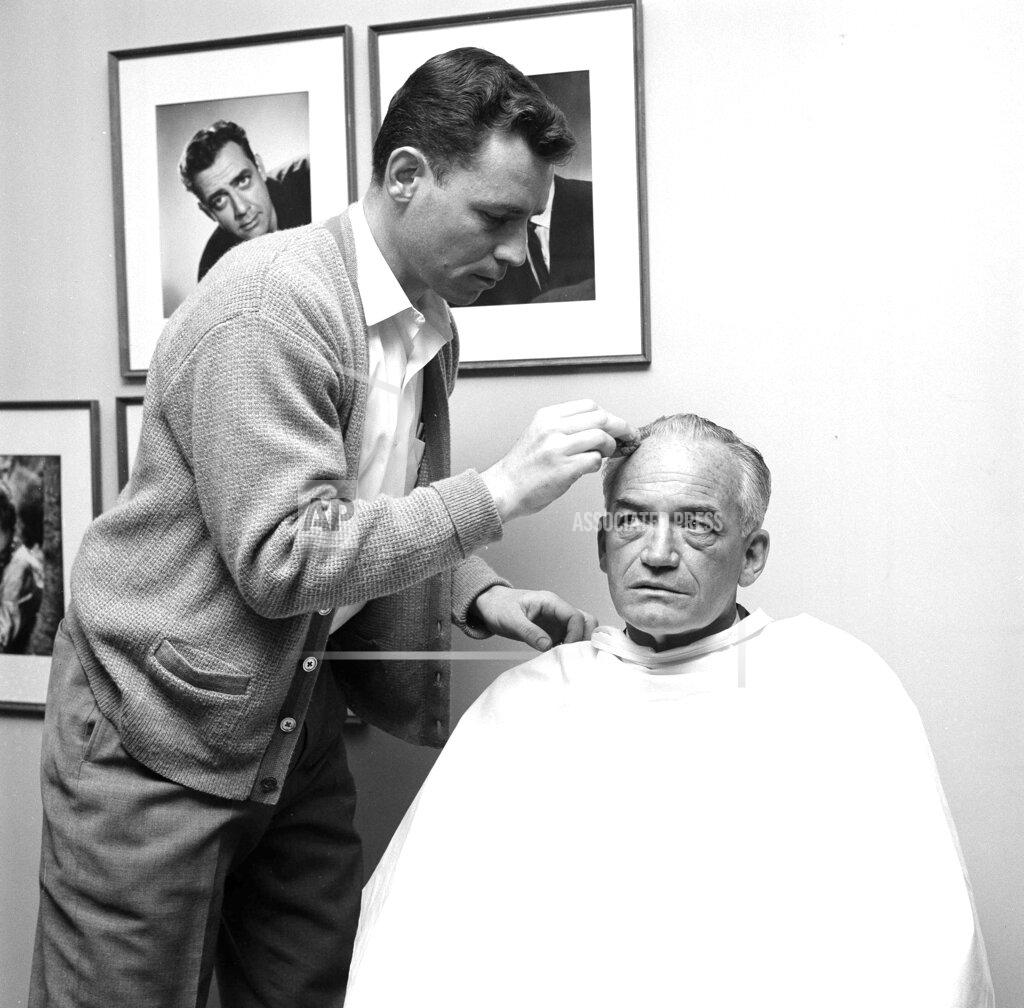
Senator Barry Goldwater said today that he was “a little bit surprised” that Republican conservatives and businessmen who had urged him to run for President “now are rather reluctant to contribute to his campaign. As a result, the Republican Senator from Arizona said on the Columbia Broadcasting System’s program “Face the Nation,” his “chief problem and frankly the only problem” is “that mercenary thing we call money.” Nevertheless, he said, “we are going to run this campaign if we have to run it on bottle tops.” The interview took place in San Francisco, where the Senator was taking a day of rest from an eight‐day campaign swing through California.
After the interview, Senator Goldwater was asked about the civil rights demonstrations that have been occurring in San Francisco. He said there was “a great resentment building up across the nation” because of such demonstrations. It is possible, he suggested, that this will have “an adverse effect” on civil rights legislation pending in Congress, although he predicted its passage “in some form.” Urging what he called more orderly means of protest, Senator Goldwater said he thought that it was “wrong to take to the streets in violation of the law.”
Senator Hubert H. Humphrey praised last night as “very appropriate” President Johnson’s remarks that no Democrat should seek the Vice‐Presidency at this stage. The Minnesota Democrat, who, like Attorney General Robert F. Kennedy, has been frequently mentioned as a possibility for the Vice‐Presidential nomination, said he concurred in “what everyone knows to be the truth — that the President will take the major part in making this decision.” Mr. Humphrey, assistant majority leader in the Senate, was asked to comment after having seen the President interviewed on television and having spoken to him later by telephone.
In what one historian would describe as “the earliest expression” of “antiwar feeling among American college students” in response to the Vietnam War, students at Yale University concluded a three-day long conference on socialism that included members of the new Students for a Democratic Society, and launched the “May 2nd Movement” (M2M), and adjourned with plans for an antiwar demonstration in New York City for May 2, 1964.
Automation and other technological changes may not be eliminating manufacturing jobs as fast as earlier estimates have indicated. This development is suggested by new studies of productivity figures carried out by the Labor Department’s Bureau of Labor Statistics. In a recently published, little-noted bulletin, the bureau’s experts indicate that their earlier estimates of the rate of gain in manufacturing output per man‐hour were too high. Just how much, however, they are not yet prepared to say.
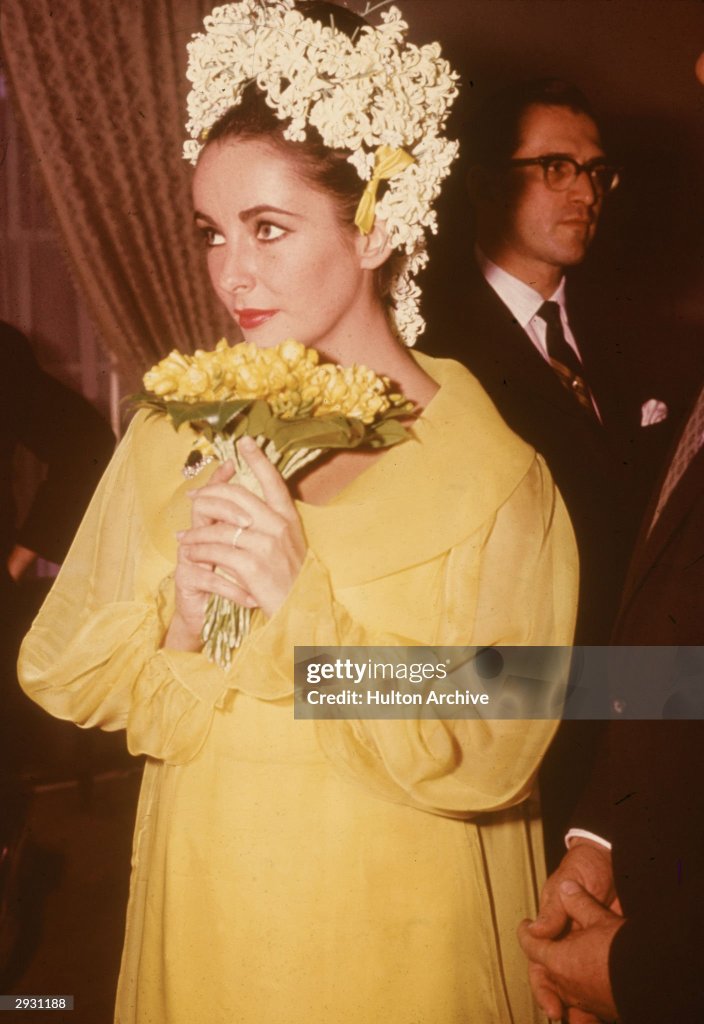
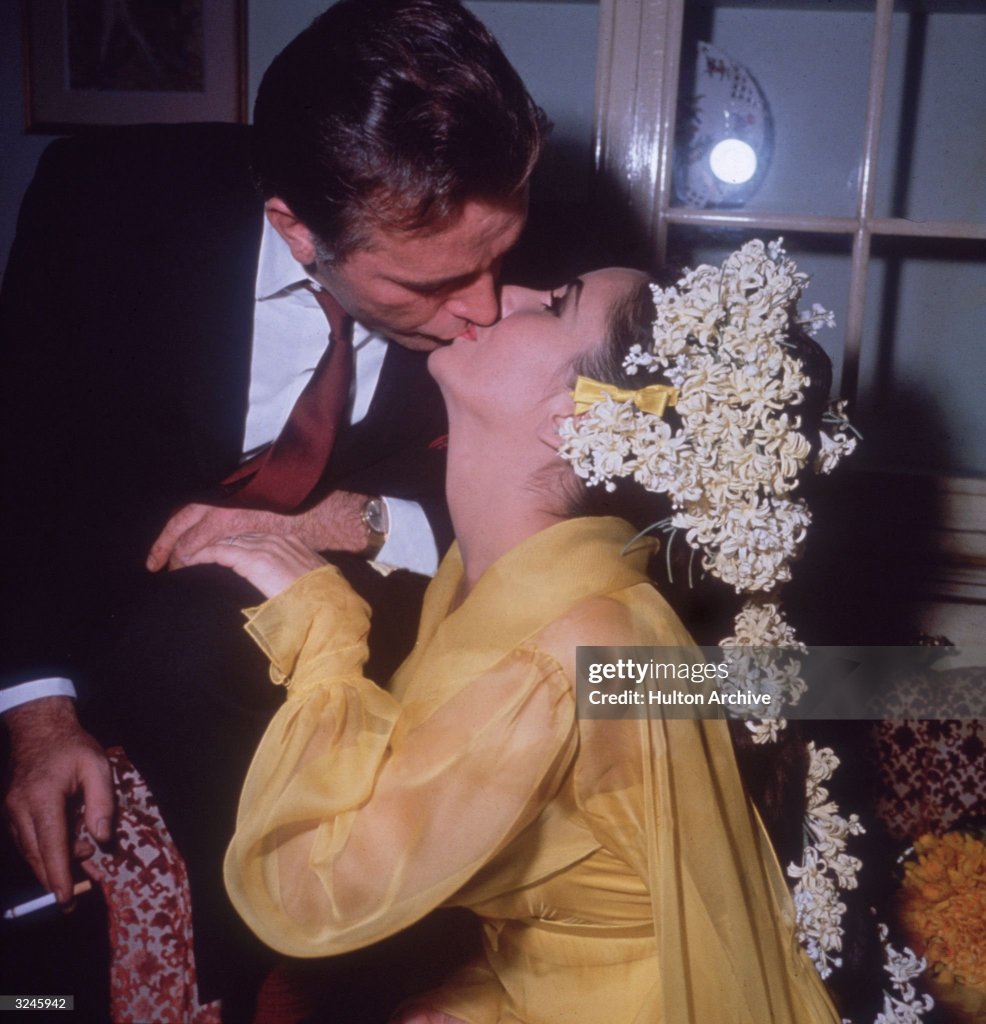
Actors Richard Burton and Elizabeth Taylor, who had co-starred in the 1963 film Cleopatra as lovers Mark Antony and Cleopatra, respectively, married in Montreal. The two would divorce in 1974, and then remarry in 1975 before divorcing again in 1976.
The Ronald Encyclopedia of Baseball is published. In it editor Joe Reichler names his all-time Cubs team (1876-1962) including: Bill Lange, Jimmy Ryan, Jimmy Sheckard, outfielders; Cap Anson, Johnny Evers, Ernie Banks, Stan Hack, infielders; Gabby Hartnett, catcher; Three Fingered Brown, Hippo Vaughn, pitchers. The manager is Frank Chance.
Born:
Rockwell (stage name for Kennedy William Gordy), American rock musician (“Somebody’s Watching Me”) in Detroit, Michigan.
Ron Hall, NFL tight end (Tampa Bay Buccaneers, Detroit Lions), in Fort Huachuca, Arizona (d. 2007).
Roland Mitchell, NFL cornerback (Buffalo Bills, Phoenix Cardinals, Atlanta Falcons, Green Bay Buccaneers), in Columbus, Texas.
Derrick Taylor, NFL defensive back (New Orleans Saints), in St. Louis, Missouri.
Shawn Heffern, NFL tackle (Indianapolis Colts), in Toledo, Ohio.
Died:
Zbigniew Jan Dunikowski, 74, Polish born “alchemist” and convicted swindler who claimed that he had discovered a process for synthesizing gold from the silica in ordinary sand. After persuading investors to purchase shares of his Belgian company, Metallex, he was arrested in 1931 and sentenced to two years in a French prison following his conviction for fraud.
Paul Cavanagh, 75, British actor (“The Woman in Green”, “Tarzan & his Mate”)

 History Diaries