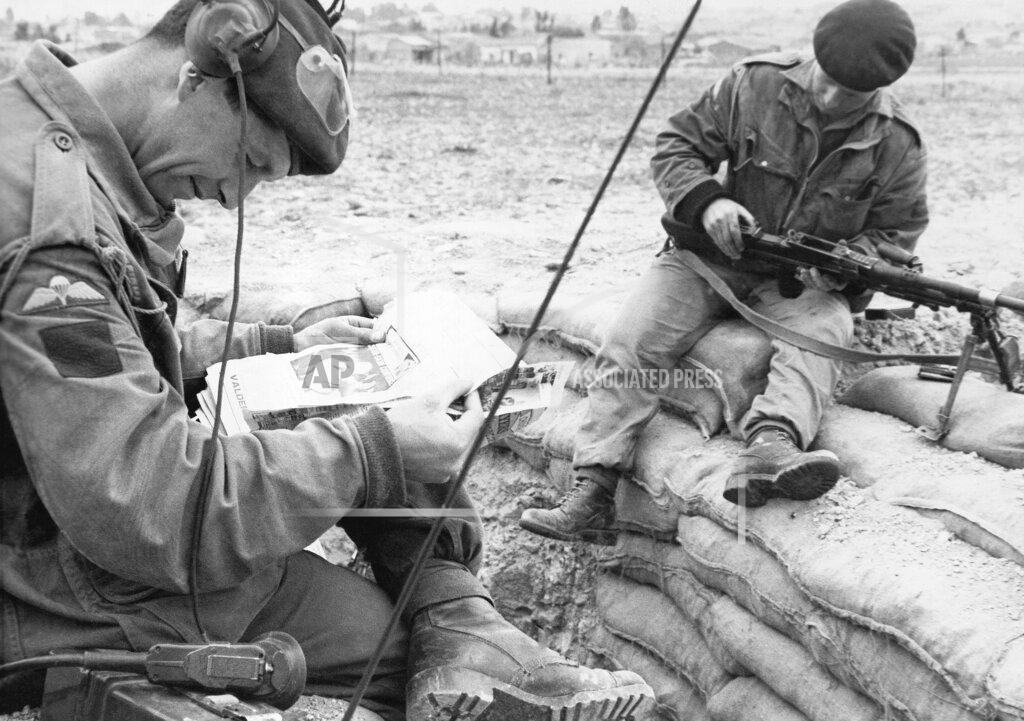
Vietnamese troops rounded up more than 500 Communist Việt Cộng suspects today in a raid on a guerrilla bivouac area near the Cambodian border, a United States spokesman reported. Two American advisers and four Vietnamese were wounded in the operation, which pounced on suspects in Kiến Phong Province about 75 miles southwest of Saigon, near where a paratroop battalion was mauled by guerrillas 10 days ago. ARVN troops also claim to have captured about 300 Việt Cộng suspects in Cai Cai.
President Johnson’s fact‐finding mission to South Vietnam has assured the President that the guerrilla war against the Việt Cộng insurgents is not going so badly as pictured a few weeks ago. The consensus of the delegation, headed by Secretary of Defense Robert S. McNamara, was that the South Vietnamese Government needed and should get additional United States military, economic and political support. Although expressions of unqualified optimism were avoided, the Government observers concluded that no drastic action, such as direct commitment of United States forces to combat, was required. Possible commando raids into Communist North Vietnam by South Vietnamese forces were given a low priority.
Authoritative sources said these views were conveyed to the President orally at the White House yesterday, after the McNamara group returned from a five‐day inspection visit to Saigon and the battle areas. Written reports were filed separately. Another meeting was scheduled for early next week, possibly Monday. The White House and other Government sources carefully avoided public comment on various pending plans for helping the South Vietnamese regime of Major General Nguyễn Khánh in the war against the Việt Cộng.
Most of the proposals that the Defense Secretary brought back to the President were based on plans originally prepared by General Khánh, official sources indicated. The plans called for the following:
- A reorganization and possible expansion of the South Vietnamese armed forces and paramilitary and police forces. These forces are now estimated at 380,000 men, including 180,000 in the Civil Guard and Self‐Defense Corps. The Việt Cộng forces are estimated at 30,000 to 35,000 regulars and as many as 100,000 part‐time fighters.
- The establishment of an “administrative corps” to handle the sizable military and economic supplies being brought in through the United States assistance programs.
- The formation of new police units, including police intelligence organizations — in effect, a new secret police. The purpose would be to improve efforts to rout out suspected Việt Cộng sympathizers. The secret police under the Diệm Government fell in disrepute but were considered fairly effective.
- The concentration of regular military forces in the Mekong Delta area, leaving other regions to the paramilitary and police units.
To support such a program, official sources said, the United States was considering an increase in supplies to equip additional military and police units, and an increase in training personnel in certain fields, especially police tactics. This would still permit the withdrawal of United States troops that have completed their training assignments, but a recent commitment to withdraw a large part of the United States’ 15,500 soldiers now appears to be in doubt.
Also contemplated is the assignment of an increased number of military advisers to the South Vietnamese forces in combat areas. But officials stressed that there was no inclination to bolster the South Vietnamese troops with United States combat units. An official source, commenting on the widely publicized proposal for South Vietnamese commando raids, made this comment: “Guerrilla raids in the north obviously were talked about, but they are not favored as significant actions. The war against the Việt Cộng will have to be won in the south and that is where South Vietnamese energies should be directed.”
The difficult job of serving as United States Ambassador to South Vietnam has been complicated for Henry Cabot Lodge by his victory last Tuesday in the New Hampshire Republican primary. The nature of the new problems thrust upon Mr. Lodge was apparent in this week’s Saigon newspapers. One report quoted him as stating that his New Hampshire triumph did not mean he would resign. Another told of demands by politicians and editorial writers in the United States that he resign and return home to participate openly in the political fray. Within the last three days the position of Mr. Lodge, who is chief coordinator of United States diplomatic, military, economic and intelligence activities in South Vietnam, has raised questions in the minds of officials here. Major General Nguyễn Khánh, the Premier, is said to be no longer certain whether in the next several weeks he will be dealing with Mr. Lodge or another United States Ambassador. These uncertainties have arisen at a moment when President Johnson is reviewing the recommendations of Robert S. McNamara, Secretary of Defense, for a greater United States commitment to the war against the Communist Việt Cộng.
In separate actions, a U.S. helicopter and a spotter plane are downed and six Americans are killed.
General Phoumi Nosavan, the Laotian rightist leader, and General Khánh of South Vietnam agree to allow South Vietnamese troops to enter Laos in ‘hot pursuit’ of Communist forces.
Communist China’s top military leader pledged Peking’s support tonight for what he called the “just patriotic struggle” of the Cambodian people against “United States imperialist policies of war.” General Lo Jiu‐ching, chief of staff, made the pledge at a meeting arranged for the Cambodian military delegation that arrived in Peking yesterday. According to Hsinhua, the Chinese Communist press agency, the meeting was attended by more than 2,000 officers and men of the Chinese Communist Army. The delegation is authorized to negotiate the purchase of arms for Cambodia’s forces. At a banquet in Peking last night for the Cambodian delegation, General Lo said Peking would side with Cambodia and give her full support if she should “encounter armed invasion instigated by the United States and its vassal states.”
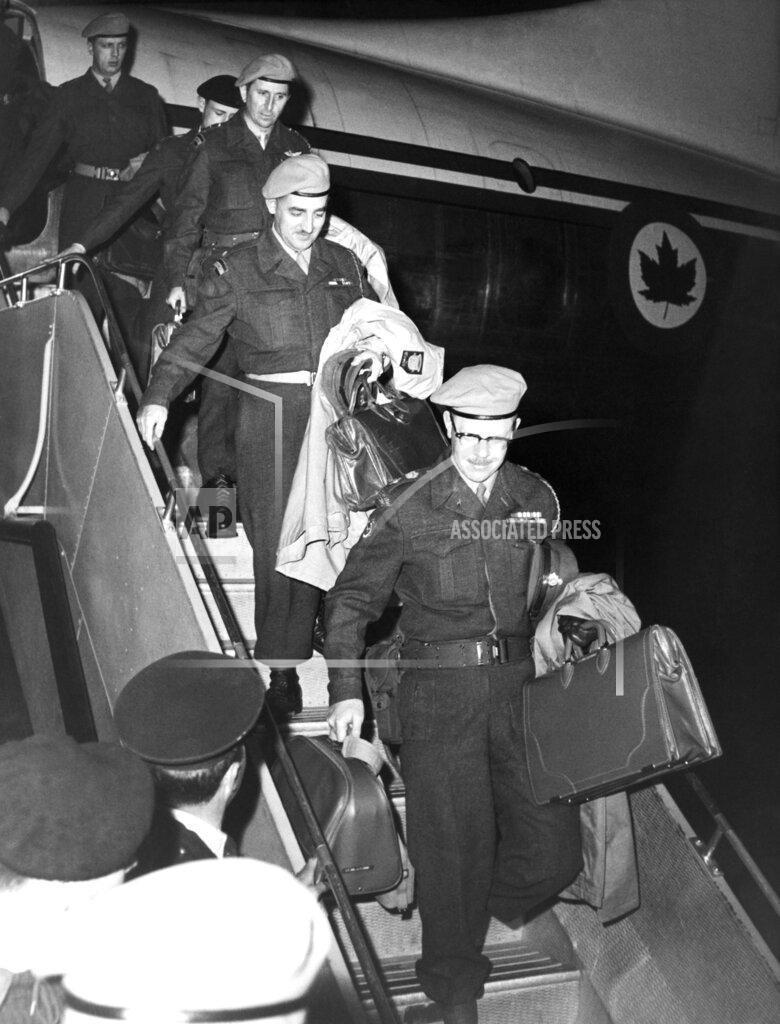
The first large contingent of the multinational UNFICYP peacekeeping force for Cyprus, with soldiers from the Canadian Army, followed in the next three weeks by troops from Ireland, Sweden, Denmark, Finland and Austria. The first blue‐bereted troops of the United Nations peace force arrived in Cyprus tonight as the threat of an imminent intervention by Turkey was lifted. Twenty‐seven Canadian officers and men of the Royal 22nd Regiment and the Dragoons and three officers of the Royal Canadian Air Force flew in from Trenton, Ontario. They were the advance party of a contingent of about 1,000 men that is expected to be in Cyprus in a week under the command of Colonel Edward A. Amy.
The dramatic tension of yesterday was replaced today by almost a dead calm. No serious incidents between Greek and Turkish Cypriotes were reported on the island for the fourth day. Highly reliable sources said that President Makarios of Cyprus received a message today from Premier Khrushchev. The message was delivered by Pavel K. Yermoshin, the Soviet Ambassador here. The contents of the note were not disclosed. Officials at the palace would say only “no comment” when asked whether the Soviet Premier had promised more moral and material support to the Greek Cypriotes.
Major General Carlos Flores de Paiva‐Chaves, temporary personal representative here of U Thant, Secretary General of the United Nations, met the Canadian contingent at the airport. The general, who is a Brazilian, said at the airport that it was too early to tell what the role of the United Nations force would be. British troops in their peacekeeping operations here have sought to come between the two communities in the clashes of the last two and a half months. Since the stronger force lies with the Greek Cypriotes, the British have found themselves in effect acting as protectors of the Turkish Cypriotes. This has produced a wave of anti‐British sentiment in the Greek community.
An impression is growing in Moscow that a Rumanian Communist delegation has failed in an attempt to mediate the ideological conflict between Moscow and Peking. The impression was initially created when Premier Ion Maurer, the head of the delegation, left Peking quietly without being given anything like the popular and official fanfare he had received on his arrival. Also, it is felt that the joint communique issued at the end of the visit was too short and too indifferently phrased to be fitting for a successful negotiation. The communiqué was published by the newspapers in Moscow. Rumanian diplomats coming from Peking have reported to their embassy in Moscow on several occasions in the last 10 days. The substance of these reports is believed to have been passed on to the Soviet leaders, but there has been no sign that might have relaxed the atmosphere. On the contrary, all signs still point to a sharpening of the conflict, according to informed sources.
A jury in Dallas, Texas, found Jack Ruby guilty of murdering Lee Harvey Oswald, the accused assassin of U.S. president John F. Kennedy, and recommended that his punishment be execution in the electric chair. Ruby’s conviction would be reversed on appeal, and he would die of cancer, in 1967, before a new trial could be held. The death penalty was fixed by a jury that returned a verdict of “murder with malice” against the 52‐year‐old nightclub operator. The jury deliberated 2 hours 19 minutes. Ruby’s lawyers denounced the verdict as a triumph for bigotry and said they would appeal.
Millions of Americans viewed the delivery of the verdict on live nationwide television. The verdict, read at 12:23 PM (1:23 PM, New York time), was as follows: “We the jury find the defendant guilty of murder with malice as charged in the indictment and assess his punishment as death.” Under Texas law, the judge must accept the sentence of the jury.
Melvin M. Belli of San Francisco, the chief defense counsel, jumped to his feet as soon as the sentence was read, and began a denunciation of the eight men and four women, all white Protestants, who had unanimously agreed on the death penalty. Mr. Belli, who had asked acquittal on the ground of insanity, pointed at the jury box and cried: “May I thank this jury for a verdict that is a victory for bigotry.”
The civil‐rights debate promises to immobilize the Senate for many weeks, raising the specter of a massive backlog of legislation. Whether a troublesome jam actually develops depends mainly of course, on the duration of the filibuster now in the warm‐up stage on the Senate floor. At the moment, nobody will hazard a prediction on how long it will last except in such vague terms as “weeks” or “months.” It is certain in any case to continue long enough to complicate and delay the handling of other parts of the Johnson legislative program.
Already, with debate under way for a single week, the work of committees has been disrupted by a rule requiring the Senate’s unanimous consent for them to meet while the Senate is sitting. The rule is rarely waived during filibusters, and this time there are signs that no exceptions at all will be granted. With the Senate convening at noon, committees have so far been able to get some work done in the mornings. Several have been meeting earlier than the usual hour of 10 AM, but it will become increasingly difficult for any of them to function as the filibuster progresses. Before long, the Senate will probably be in session daily from 10 or 11 AM, perhaps even earlier, until late evening. Then committee work is likely to come to a standstill.
Senator Kenneth B. Keating said today that “hatemongers” and “smear specialists” had aroused widespread opposition in New York State to the civil rights bill. The New York Republican told the Senate that his mail from the state was about equally divided between supporters and opponents of the measure. In the first three weeks of February, he said, it had been running 10 to 7 against the bill. About 500 letters, telegrams and postcards on the measure are now being received daily, according to his office.
The volume of opposition mail came as a surprise in view of New York’s traditional support of civil rights causes, the Senator reported. The explanation, he added, could be stated in two words — “misinformation and hysteria.” “Both have been engendered by racist propaganda which has been widely distributed in Northern states,” he declared. He said a major source of such propaganda was the Coordinating Committee for Fundamental American Freedoms, Inc. He said the committee was organized and financed by the Mississippi State Sovereignty Commission.
The Rev. Dr. Martin Luther King Jr, predicted yesterday there would be enormous civil rights demonstrations throughout the country. He urged that they be nonviolent. Violence, he said, would play into the hands of “many opponents in the South who would be happy if we turned to violence.” Dr. King’s call for “disciplined” demonstrations was made in an interview before he spoke to more than 2,500 members of the United Federation of Teachers at their spring luncheon in. the Americana Hotel. In his speech, Dr. King, who is president of the Southern Christian Leadership Conference, said that race relations had reached a crisis but he was certain that “the white majority was willing to meet the Negro halfway.”
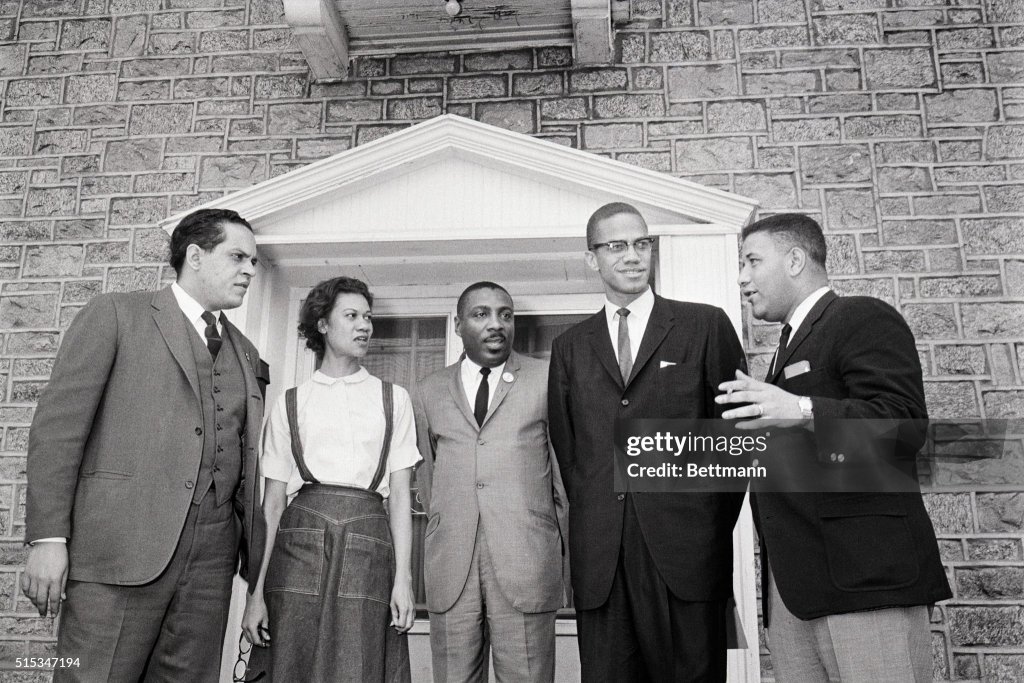
His advocacy of nonviolence was a stand opposite that taken by Malcolm X, leader of the Black nationalists, who believes that violence is the only language the white man understands. He characterized Malcom X’s “call to arms” as “ineffective and immoral.” Dr. King said that he would probably talk to Malcolm X and try to dissuade him. “Actually,” he said, “I dislike to discuss violence because sometimes discussion itself leads to it. I believe that the struggle ahead will be of massive proportions but it will be nonviolent and disciplined because the Negro, not necessarily all Negroes, have come to see that nonviolence is the best strategy.”
The Maryland General Assembly overrode tonight strong rural segregationist sentiment and its tradition of local option for counties and passed the first statewide Public Accommodations Law in a Southern state. The vote indicated a sharp shift in sentiment on civil rights. The majorities for passage were overwhelming in both houses. The result was a victory for a belated drive by Governor J. Millard Tawes to meet Black demands and head off further demonstrations. Final passage of the bill, which forbids discrimination against Blacks in hotels, motels and restaurants that do not sell liquor, was a stunning victory for the Governor, an Eastern Shore Democrat who had never before taken so strong a position on a civil rights issue.
Mr. Tawes said he was “highly pleased” with the result. He was ebullient and, pacing the anteroom of his office, he became so excited as well‐wishers pressed in upon him that he struck a match and held it before his face to light a nonexistent cigar. He called the passage of the bill “a great step forward in race relations.” The Governor has been the target of bitter criticism by both Blacks and whites for his “lack of leadership” in Maryland’s racial crisis. The Governor and a majority of legislators were anxious today about threats — implied rather than articulated by Black leaders — that Maryland was headed for new interracial conflict this spring and summer, particularly on the tradition‐bound Eastern Shore of the Chesapeake Bay. There, last month, state police used K‐9 dogs and fire hoses to disperse a demonstration by Black students in Princess Anne.
Democratic members of the Senate Rules Committee have agreed informally to authorize investigation of the charge of forgery on Robert G. Baker’s tax returns, but to wind up the committee’s investigative activities thereafter. All six members of the committee majority have agreed to this procedure. This means that the committee will take no action on a list of 14 witnesses that the Republican members have demanded be called. It also means that Walter Jenkins, an aide to President Johnson, will not be asked to explain the conflict in his previous testimony with that of Don B. Reynolds, the Maryland insurance man who wrote insurance on the life of Mr. Johnson while he was a Senator and Vice President.
The country is on the verge of a national railroad strike. The five operating rail unions, it was learned, are preparing to strike Wednesday against two major carriers, the Louisville & Nashville Railroad and the Southern Pacific Company. If the strikes occur, the nation’s railroads are expected to retaliate by immediately ordering changes in work rules in a move to eliminate jobs the companies consider unnecessary. The unions would respond by calling a nationwide walkout. This could occur within 24 hours after strikes against the L.&N. and Southern Pacific. There is another course the railroads might take. They could seek United States District Court injunctions to stop strikes against the two railroads. This was considered the less likely of the two possibilities.
About 35 members of a group that calls itself Youth Against War and Fascism picketed the headquarters of the Army and Air Force Exchange Service in New York this afternoon protesting American participation in the South Vietnam fighting. The pickets carried placards with legends such as “Stop the Slaughter in Vietnam” and “Vietnam — American Algeria” and chanted, “Stop the war in Vietnam,” and “Bring the troops home.”
The 2nd Daily Mirror Trophy motor race was held at Snetterton Motor Racing Circuit, England, and was won by Innes Ireland.
“Girl Who Came to Supper” closes at Broadway NYC after 112 performances.
Born:
Fred Stokes, NFL defensive end (NFL Champions, Super Bowl 26-Redskins, 1991; Washington Redskins, Los Angeles-St. Louis Rams, New Orleans Saints), in Vidalia, Georgia.
Donald Evans, NFL defensive end, defensive tackle, and fullback (Los Angeles Rams, Philadelphia Eagles, Pittsburgh Steelers, New York Jets), in Raleigh, North Carolina.
Alvin Walton, NFL safety (NFL Champions, Super Bowl 22 and 26-Redskins, 1987, 1991; Washington Redskins), in Riverside, California.
Doug DuBose, NFL running back (NFL Champions, Super Bowl 23-49ers, 1988; San Francisco 49ers), in New London, Connecticut.
Danta Whitaker, NFL tight end (Kansas City Chiefs, Minnesota Vikings, Chicago Bears), in Atlanta, Georgia.
Kevin Wyatt, NFL defensive back (San Diego Chargers, Kansas City Chiefs), in Norfolk, Virginia.
Kenny Flowers, NFL running back (Atlanta Falcons), in Daytona Beach, Florida.
Len Bell, NFL defensive back (Cincinnati Bengals), in Rockford, Illinois.
Richard Migliore, American jockey and commentator, in Babylon, New York.
 History Diaries