Turkey threatens Cyprus with an armed attack and intervention. Following is the text of the Turkish note on Cyprus, as issued by the Foreign Ministry today:
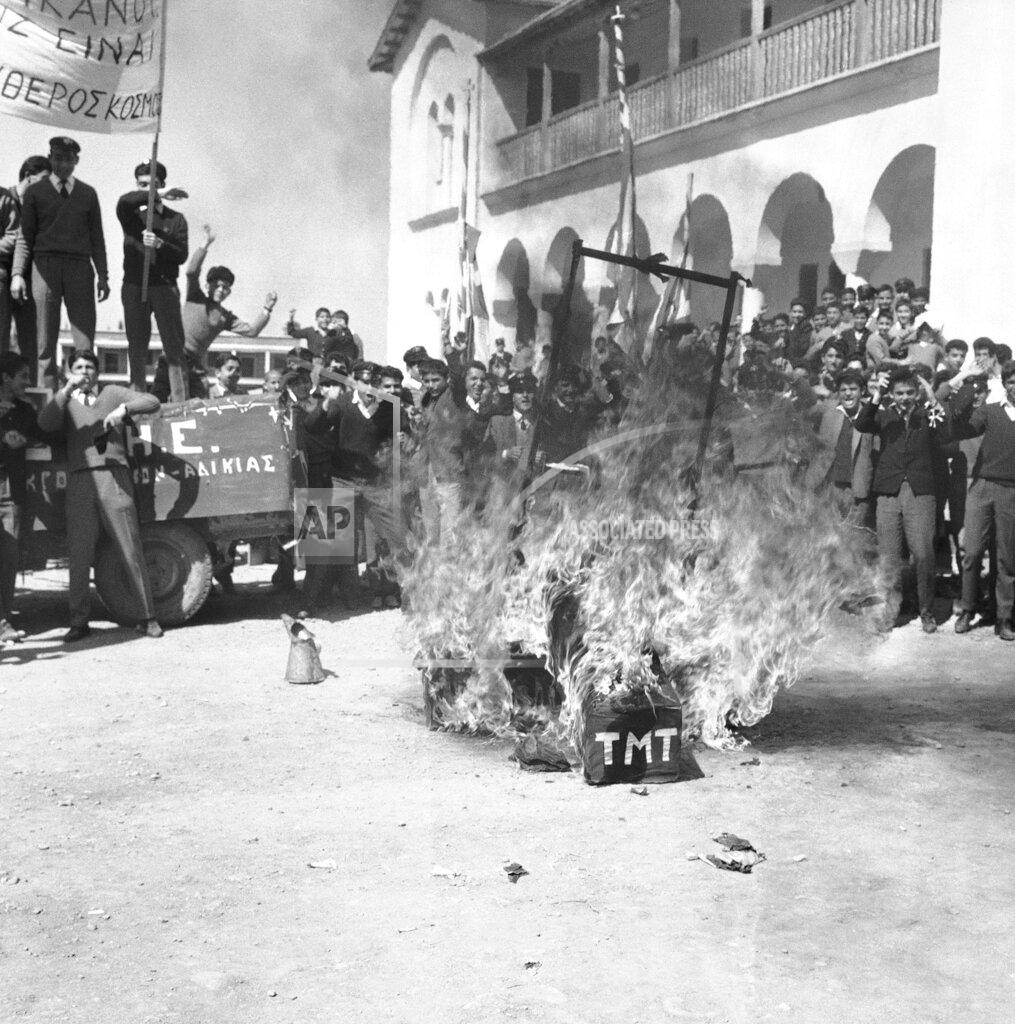
“Following the United Nations Security Council's resolution on the United Nations peace force, the Greek Cypriotes have resumed the massacre of Turks in order to achieve a final result.

“Greek Cypriote leaders and the Greek press have proudly announced that these savage attacks will continue without taking into consideration previous cease ‐ fire agreements. And they have also stated that the Turkish community will be asked to surrender unconditionally.

“Turkey, for reasons known to all, is directly interested in the events on Cyprus because Turkey is under obligation to safeguard the lives, the security and the property of more than 100,000 Turks on the island.

“The Turkish republic and the Turkish nation, which have pledged their commitment to peace on various occasions, have witnessed the bloody events on Cyprus with sorrow and emotion, but at the same time with patience and restraint.

“However, in recent days the action of aggression against the Turks on the island has taken such a turn that it obliges all of humanity to rebel.

“The massacre, which is becoming a genocide, has forced Turkey to review its peaceloving and patient attitude, which is known to the entire world.

“The Turkish Government urges that all kinds of individual or collective aggression, massacre, sacking, rebelling and rape and torture be stopped immediately. It also urges an immediate cease‐fire and observance of existing cease-fire agreements and the agreement of the green line in Nicosia. [The green line is an area dividing the Greek and Turkish sections of Nicosia.]

“The Government asks for the lifting of all sieges, the granting of free movement, the release of hostages and the return of bodies of the slain.

“If these are not observed, the Turkish Government will use its right of unilateral intervention granted by the agreement of guarantee of August 1960.”
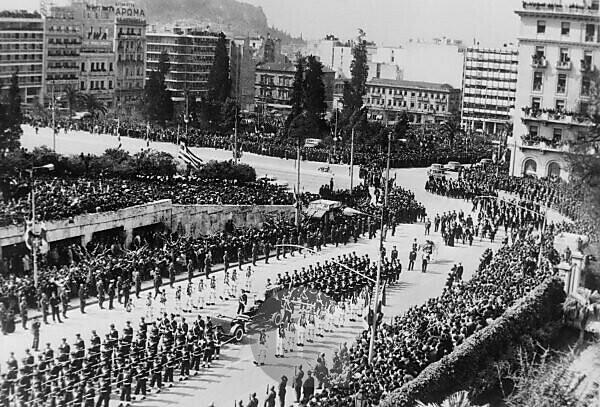
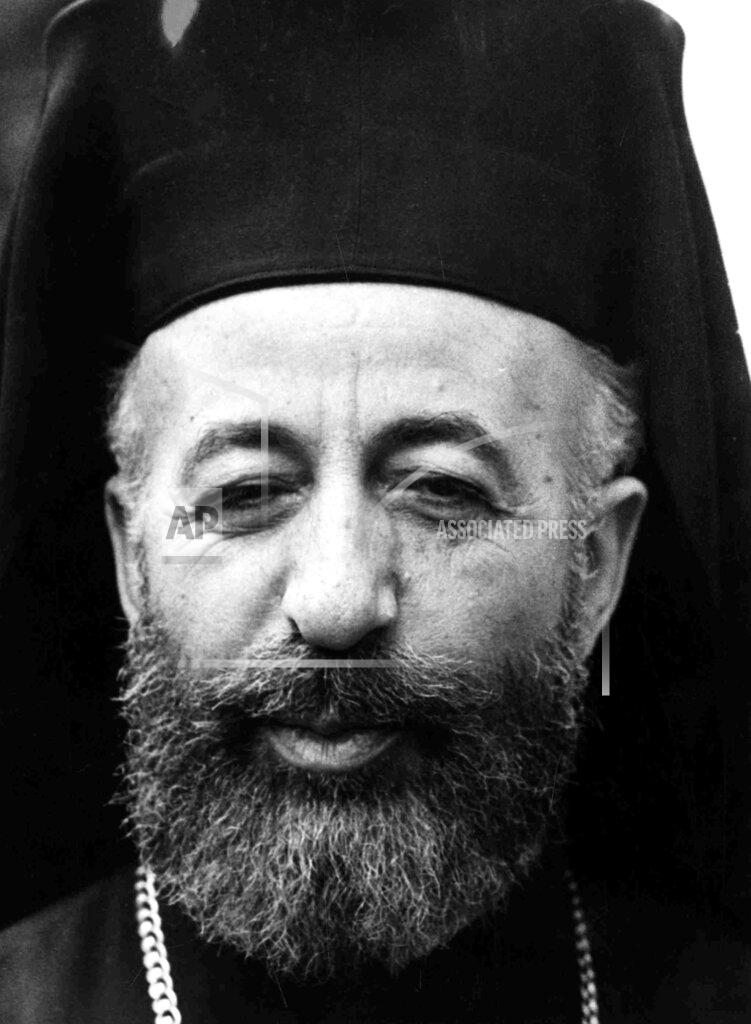
Archbishop Makarios, back in Nicosia from his trip to Greece for the funeral of King Paul, rejected the Turkish note, saying Cyprus would repulse any attack.
British Foreign Secretary R.A. Butler sought today to dissuade Turkey from military intervention in Cyprus. He called in Zeiki Kunerlap, the Turkish Ambassador, and counseled patience in view of the apparent success of the United Nations in forming an international peace keeping force. Mr. Butler asked the Ambassador to pass on to his Government Britain’s belief that restraint was more urgent than ever. The Prime Minister, Sir Alec Douglas‐Home, cut short a political tour to return to London. “I am just going back because the situation looks pretty serious and I must be on the spot,” he said after a telephone talk with Mr. Butler.
The Secretary General, U Thant, told an emergency session of the Security Council tonight that an advance party of Canadian officers was en route to Cyprus to start making the United Nations peace‐keeping force a reality. He said he had received “firm and official assurances” from Canada, Ireland, and Sweden that they would provide contingents of troops for the force, which is to keep peace between Greek and Turkish Cypriotes while a settlement of their dispute is sought. The Council approved a mild resolution reaffirming its appeal to all member states to refrain from doing anything that might worsen the situation in Cyprus and calling on Mr. Thant to continue his efforts to carry out the March 4 resolution that authorized the peace force. The unanimous vote came at 11:02 PM, after a five‐hour session. The resolution was worked out by Brazil, Bolivia, the Ivory Coast, Morocco, and Norway.
Cyprus asked for the Council meeting on the ground that a Turkish invasion of the island republic was imminent. The 11-member Council met at 6:18 PM, within three hours of the request.
A Turkish Government statement issued after a Cabinet meeting tonight said Turkey welcomed the developments that had taken place for the urgent dispatch of an international peace force to Cyprus. It said Turkey would contribute $100,000 toward the cost of the force. The statement dispelled an atmosphere of heightened tension that had followed the delivery of a note early today to President Makarios of Cyprus saying Turkey would land troops on the island if attacks on Turkish Cypriotes continued.
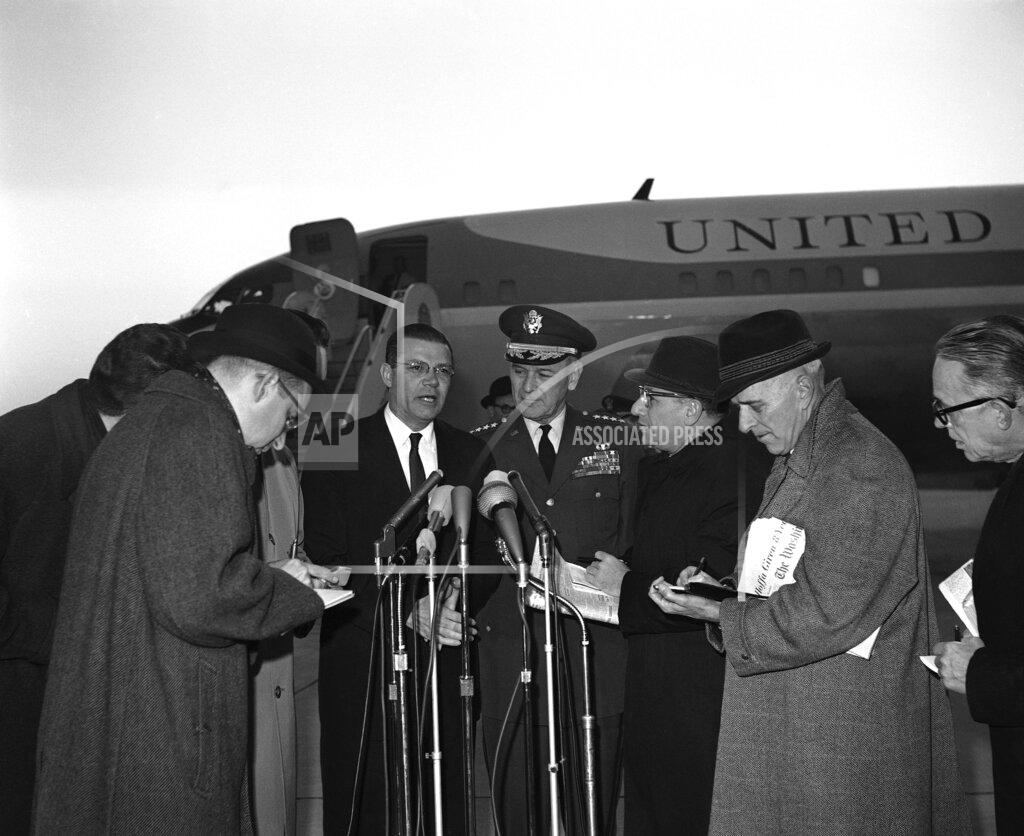
United States defense chiefs have agreed in principle to a proposal by Major General Nguyễn Khánh to extend guerrilla harassment to North Vietnam. qualified sources said today. The degree to which the United States will participate is to be decided by President Johnson. According to the sources, Defense Secretary Robert S. McNamara and Premier Khánh mapped out a shift in South Vietnam’s strategy during the American’s visit, which ended yesterday. Mr. McNamara is said to have cautioned the Vietnamese, however, against diverting resources for dramatic intrusions into Communist North Vietnam at the expense of the fundamental war effort in the south. Mr. McNamara promised additional aid to implement General Khánh’s plans for civil and military action. An estimate worked out here for the total additional aid is $50 million.
The Secretary agreed with General Khánh’s proposal to concentrate regular army groups in critical areas, notably the heavily populated Mekong Delta, while leaving other parts of the country to be defended by paramilitary forces. This strategy was advocated by General Khánh long before he seized power last January 30. It could not be effectively implemented because of inadequate training and equipment outside the regular army. The strengthening of paramilitary forces — the Civil Guard, Self‐Defense Corps, and hamlet militia — has priority in the timetable worked out by General Khánh and Mr. McNamara.
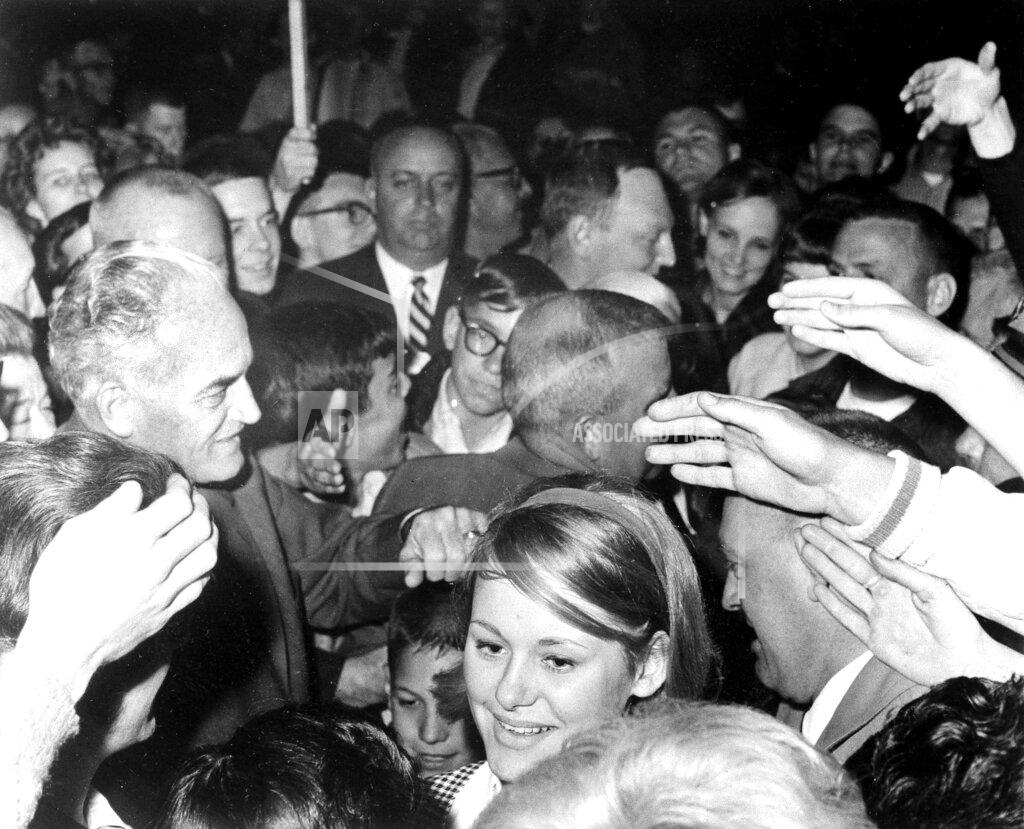
U.S. Senator Barry Goldwater suggested today that Ambassador Henry Cabot Lodge should report to a joint session of Congress on “just what is going on” in the guerrilla war in South Vietnam. Mr. Goldwater, who was defeated in last Tuesday’s New Hampshire primary by Mr. Lodge, said he was “speaking against the advice of some of my advisers.” He said he was advancing the suggestion anyway because “I feel so strongly” about Vietnam.
The Senator flew into Visalia, California from Phoenix, Arizona, today at the controls of his personal plane, a red‐and‐white twin‐engine Bonanza. Ahead of him were eight days of campaigning toward the California Republican primary on June 2. Mr. Goldwater brought up Vietnam in a speech before 3,000 students at Fresno State College. He declared that the Administration alternately said the anti‐Communists were winning and then losing in Vietnam. He suggested that Mr. Lodge report personally to Congress on the prosecution of the war there.
As an appointee of the President, it would be unusual for an ambassador to “report” to Congress in joint session. Ambassadors often testify before Congressional committees, however. Mr. Goldwater suggested that the United States should “recognize that we have to interdict” supply lines from North Vietnam, Laos, Cambodia and Red China to the Communist guerillas. Earlier in the day, Mr. Goldwater said that United States air and naval strikes against North Vietnam might be advisable. He contended that if the United States went “on as we are now” South Vietnam and all of Southeast Asia would be lost.
A 65-man patrol of the Peruvian Army came under attack from a tribe of Coquima Indians in as it attempted to follow smugglers near the Amazon basin jungles. At the Mariscal Ramón Castilla Province, near the Peruvian side of the Yavarí River marking the boundary between Peru and Brazil, one soldier was killed by a poisoned-tip arrow when his unit was ambushed, and another was killed by an arrow the next day. The Indian casualties, caused by Peruvian gunfire, bombs, rockets and napalm, were reported to be 33 dead.
Brazil nationalized the six remaining privately owned oil refineries in the South American nation, and in a separate decree, authorized government seizure of all unused farm lands that were adjacent to highways, railroad lines and canals. The decrees were signed by President João Goulart in front of a mass gathering of 200,000 people outside the Central Brazilian Railroad station in Rio de Janeiro, and left military leaders with the conclusion that they would need to remove Goulart from office.
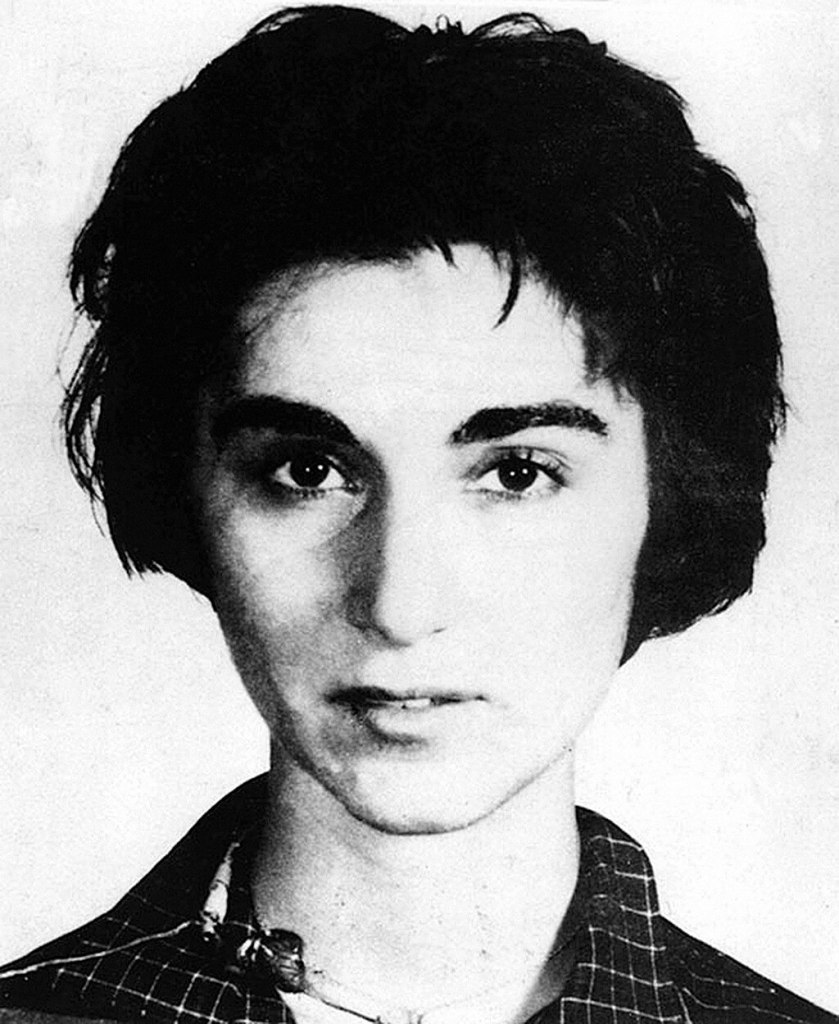
A cautionary tale in “not wanting to get involved” happened when the murder of Kitty Genovese took place outside her apartment building in the upper-middle-class neighborhood of Kew Gardens in the New York borough of Queens. New York Police Department investigators were supposedly dumbfounded to discover that 38 different “respectable, law-abiding citizens” admitted that they had witnessed the crime, but that none of them had telephoned the police until more than half an hour later, after the killer had returned to the scene a third time to stab 28-year-old Catherine “Kitty” Genovese to death. Miss Genovese, the manager of a bar, was returning from work when she was attacked.
In 1964, reporters at a competing news organization discovered that the New York Times article was inconsistent with the facts, but they were unwilling at the time to challenge New York Times editor Abe Rosenthal. In 2007, an article in the American Psychologist found “no evidence for the presence of 38 witnesses, or that witnesses observed the murder, or that witnesses remained inactive”. In 2016, the Times called its own reporting “flawed”, stating that the original story “grossly exaggerated the number of witnesses and what they had perceived”. Forty-two years later, a researcher would write in American Heritage magazine, “The true number of eyewitnesses was not 38 but 6 or 7,” and add that “The Times article that incited all this industry about an urban horror was almost certainly a misleading account of what happened.”
Winston Moseley, a 29-year-old Manhattan native, was arrested during a house burglary six days after the murder. A month later, Winston Moseley would confess to killing Ms. Genovese and two other women. Moseley would be given a sentence of death, later commuted to life imprisonment, and would live 52 more years after the murder, passing away inside the Clinton Correctional Facility in New York on March 28, 2016, at the age of 81. He was repeatedly turned down for parole, and showed little remorse for his crime, claiming that he was a victim.
Senate Democratic leaders sought today to quicken the pace of the civil rights debate by scheduling the first of a series of Saturday sessions. Their immediate objective is to halt the flow of Southern oratory long enough to permit a vote on taking up the civil rights bill. The question before the Senate since the debate began Monday has been a motion to make the House‐approved measure the pending business. Senator Mike Mansfield of Montana, the majority leader, took the floor briefly late this afternoon to announce tomorrow’s session. He served notice that it would mark the “beginning of a number of Saturday sessions.” Longer daily sessions also are planned, he said. Starting Monday, the Senate will convene at 11 AM, instead of noon. The time may be advanced to 10 AM later in the week, Senator Mansfield said.
Sessions are also expected to continue longer in the evenings than they have. In the first five days of debate, the Senate recessed no later than 8:30 PM. Southern opponents of the bill, who have been holding the floor in relays, maintain that they are not conducting a filibuster and that they will permit a vote on taking up the measure by the middle of next week. A full‐scale filibuster, aimed at preventing a vote on passage of the bill unless it is greatly modified, will then get under way.
The bill includes provisions designed to curb racial discrimination in public schools, voting rights, employment and Federal aid programs and in places of public accommodation. The 18‐member Southern bloc’s first aim is to have the bill referred to the Senate Judiciary Committee for hearings and possible amendment. A vote on this is expected to follow closely the adoption of the motion making the measure the pending business. Senator Wayne Morse of Oregon, a liberal Democrat, plans to offer a motion to send the bill to the committee with instructions to report it back 10 days later.
Senator Russell B. Long held the floor for 3 hours 56 minutes today as he took his turn in the Southern oratorical relay. This was the longest performance of the five‐day debate. Like others before him, the Louisiana Democrat was given periodic respite by lengthy questions from colleagues. This allowed him to rest his voice, but he was required to stay at his desk and on his feet. Senator Long’s prepared speech was devoted mainly to arguments for committee consideration of the bill. In one of many departures from the text, he attacked the Supreme Court for what he called “political decisions” on racial issues. He said the Court had consistently upheld the views of the National Association for the Advancement of Colored People. He suggested that all appointments to the Court in recent years had been cleared with the NAACP.
President Johnson flew 560 miles along the flooded Ohio River today, seeing whole towns under water and millions of dollars’ worth of property damage. With his Air Force jet dropping below 4,000 feet at some points, Mr. Johnson got a clear, at times shocking view of devastation in the Ohio Valley from Pennsylvania to the Mississippi. Later, in a brief stop at the Greater Cincinnati Airport here, across the Ohio from Cincinnati, Mr. Johnson ended his bumpy flight with a pledge that the Federal Government would do its “full share” to help the flood area.
He said he had seen for himself “the ravages of the worst flood in this area in more than 20 years” and knew that the American people joined him in, “deepest condolences” to the homeless and those who had suffered loss. He has directed the Army Corps of Engineers to “accelerate action” in Ohio basin flood control, Mr. Johnson said. He promised that Federal funds would be made available for restoring roads, bridges and other facilities, and for loans to farmers, businessmen and homeowners. That meant the President planned to declare the Ohio Valley a disaster area as soon as the Governors of the affected states formally requested it and as soon as necessary legal requirements had been met.
The fate of Jack Ruby, who killed Lee H. Oswald in view of television cameras last Nov. 24, was placed in the hands of the jury at 1:05 AM Saturday morning. Fighting off drowsiness, the jury of eight men and four women listened to the closing moments of a marathon summation that began at 8:22 tonight. Its verdict will be televised nationally. Seven lawyers took part in the summation. As the last one sat down, Judge Joe B. Brown turned to an obviously fatigued jury. He instructed them to retire and choose a foreman. “I assume,” he said, “that you will want to start deliberations in the morning.” The jury nodded. It will meet at 9 AM.
A charge of forgery in connection with some of Robert G. Baker’s Federal tax returns sent the Senate Rules Committee into an angry three‐hour wrangle today. This new charge was contained in an affidavit by Milton L. Hauft, who was Mr. Baker’s tax accountant in 1961 and 1962. Mr. Hauft charges that his signature appearing on two of Mr. Baker’s personal income tax returns, and one for the Carousel Motel, are forgeries. The affidavit reached the committee late yesterday through Senator John J. Williams, Republican of Delaware, who has been the committee’s most prolific informant.
Shea Stadium, home of the New York Mets, will cost $4.5 million more than had been expected. The new total is $25,532,000. A City Council Finance Committee report disclosed that the cost of labor overtime in a massive drive to have the stadium ready for the home opening of the baseball season on April 17 was a prime factor in the rise.
Dow Jones Industrial Average: 816.22 (+2.00).
Born:
Will Clark, American MLB first baseman (All-Star, 1988-1992, 1994; San Francisco Giants, Texas Rangers, Baltimore Orioles, St. Louis Cardinals), in New Orleans, Louisiana.
Dave Hoppen, NBA center (Milwaukee Bucks, Golden State Warriors, Charlotte Hornets, Philadelphia 76ers, New Jersey Nets), in Omaha, Nebraska.
Eric Wiegand, NFL center (Atlanta Falcons), in St. Louis, Missouri.
Dave Wills, American sportscaster (radio voice Tampa Bay Rays 2005-23 [with Andy Freed]), in Chicago, Illinois (d. 2023).
Died:
Catherine “Kitty” Genovese, stabbed to death in Queens, New York.
 History Diaries