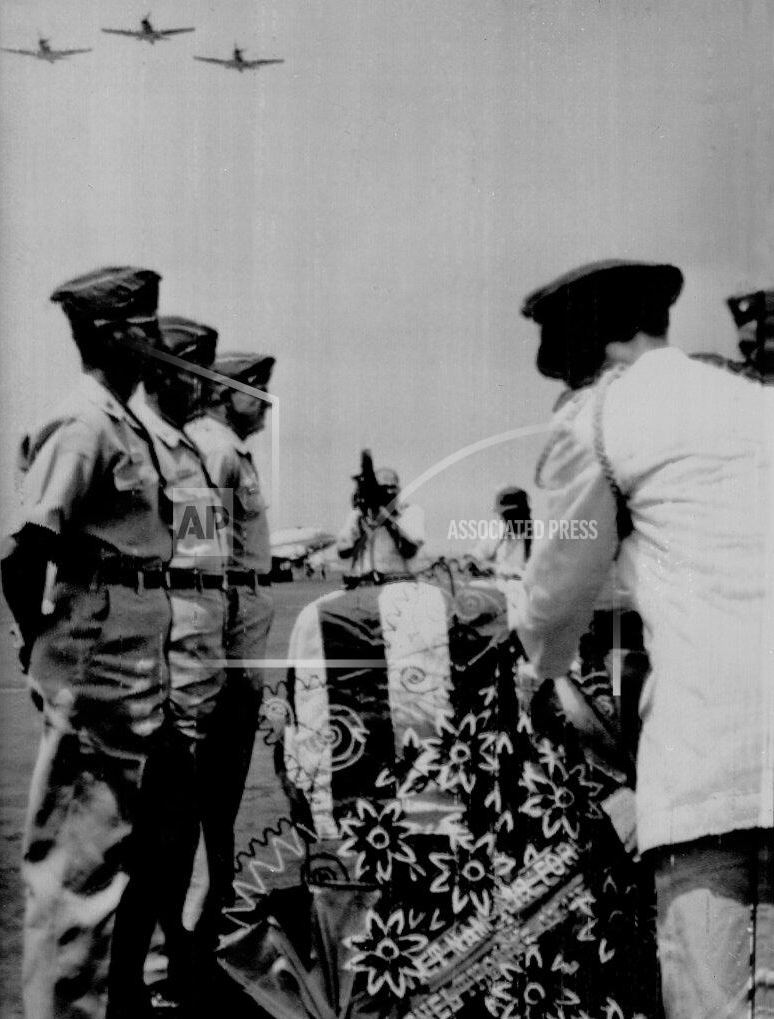
General de Gaulle will press for revision of the North Atlantic Treaty Organization, qualified sources said tonight. French pressure for revision may be accompanied, diplomats said, by a further reduction of this Government’s already tenuous ties with the alliance. NATO, in President de Gaulle’s view, must be revised to increase the military responsibility of its European members and to establish fully France’s independence from the United States. The general is said to seek the end of the present system of military integration in the alliance before the treaty comes up for review in 1969.
The general’s main objective is believed to concern the system whereby an integrated command, under an American supreme commander, directs the operations of French forces in Germany. These two understrength divisions and French air squadrons are the only service contingents directly under NATO’s integrated command. Some sources have suggested that the general will propose revision of the command system, threatening to withdraw French forces.
The prospect of a French move against the alliance has convinced diplomats that the “spiral” of differences between the United States and the French Government is bound to continue. President de Gaulle was reported to be convinced that he must maintain and expand his independent foreign policy. The general’s personal policymaking apparatus, as distinct from the Foreign Ministry, is now active in four areas and will soon become active again in NATO by his proposal for revision of existing arrangements.
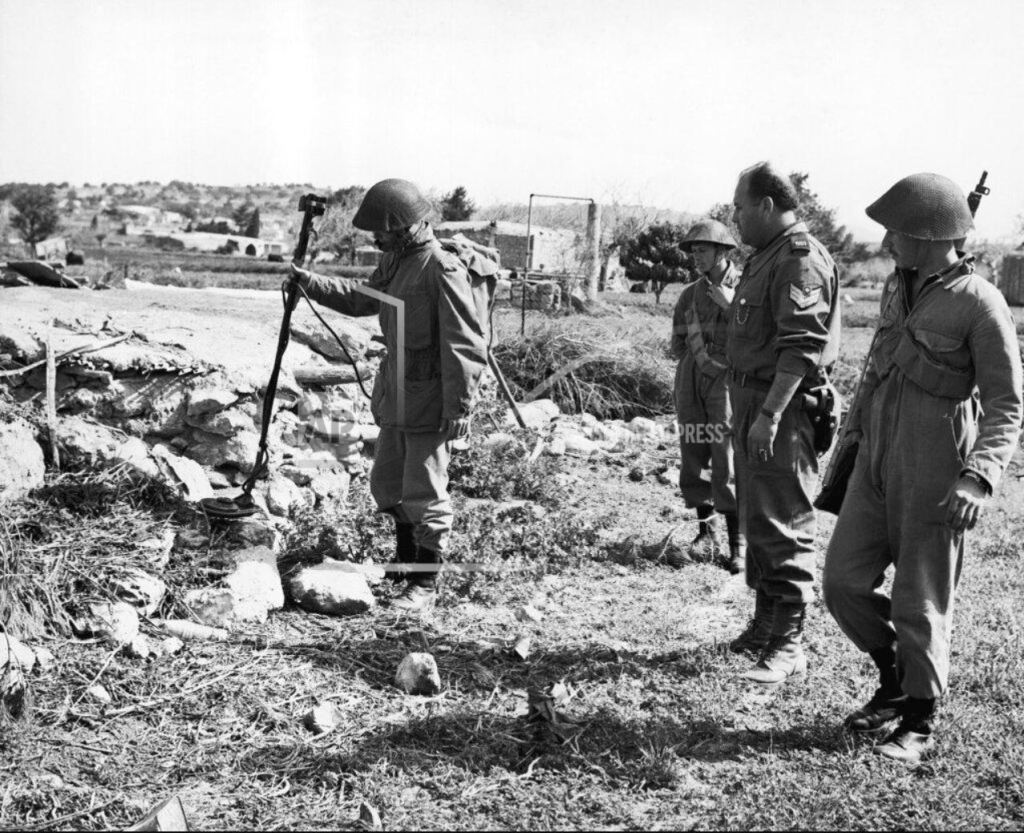
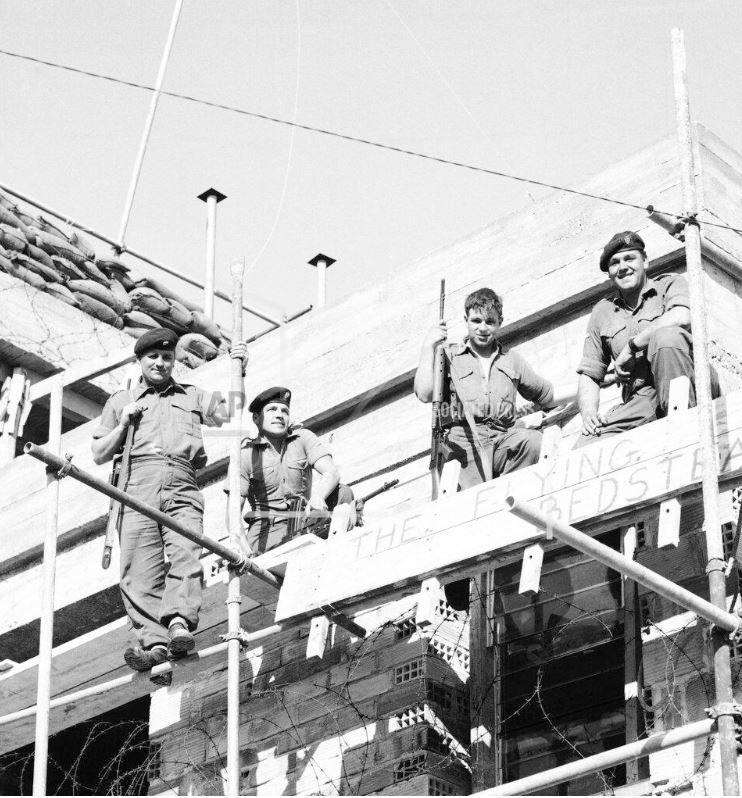
Cyprus was quiet today, but tension on the embattled island persisted. No important incidents were reported. Government offices and Greek Cypriote banks and shops were closed for the day in mourning for King Paul of the Hellenes, whose funeral took place in Athens. On the political front, Sir Arthur Clark, the British High Commissioner here, was handed a protest note this evening by the Greek Cypriote Minister of Justice, Mrs. Stella Soulioti, who is also the acting Foreign Minister. The note protested “certain parts” of a statement yesterday in the British House of Commons by Duncan Sandys, Secretary for Commonwealth Relations, on the difficult position of the British peace‐keeping force in Cyprus. A Greek Cypriote spokesman reiterated the Government position in connection with the note. He said the purpose of the British truce force was “to assist the Government of the Republic in its effort to secure the preservation of the ceasefire, the restoration of peace and the maintenance of law and order.”
“Unfortunately,” the spokesman said, “this purpose seems to have been lost sight of, and the role of the British forces in Cyprus appears to have been misconceived.” The spokesman said the Cypriote Government was not contending, as Mr. Sandys had said, that neither the Greek nor the Turkish community in Cyprus “can reasonably claim that it has legal authority to impose its will on the other.” What the Government maintains, the spokesman added, is its “unquestionable right to maintain law and order,” a right that he said was reaffirmed in the Security Council resolution on Cyprus. Sources close to the High Commission reaffirmed the British position that the role of the British truce force was to try to prevent further clashes between the Greek and Turkish Cypriotes and not to take sides in the dispute. Turkish Cypriotes were despondent over the failure of Turkey to intervene in the crisis. They seemed demoralized by the news of Turkish Cypriote surrenders and by the situation in Paphos, where the Turkish community of 3,500 is surrounded by Greek Cypriote security forces.
The Secretary General, U Thant, said tonight that he hoped to be able to announce an agreement on the formation of the United Nations peace‐keeping force for Cyprus shortly. In a written report to the Security Council, Mr. Thant expressed confidence that “contingents will be provided and the force will be established in the very near future.” “Indeed,” he declared, “I hope to be able to report to the Council some positive developments in this regard within the next day or so, since my negotiations for contingents are now coming to a head.” Mr. Thant said British troops sent to Cyprus when the fighting broke out last December between Greek and Turkish Cypriotes would constitute half of the United Nations force, which will have an initial strength of 7,000.
Cyprus was quiet, but tension in the embattled island republic remained high. Reuters reported from Ankara that diplomatic sources said Friday that Turkey was warning President Makarios of Cyprus that she would be obliged to intervene if fighting continued.
South Vietnamese and Western officials are alarmed by Cambodia’s steady drift toward the Communist orbit. Diplomatic observers said today that Prince Norodom Sihanouk, Cambodia’s chief of state, seemed bent on recognizing the Communist regime of North Vietnam as the government for all Vietnam. Such Cambodian action would make it more difficult for the Saigon Government to prosecute the war against the Communist guerrillas, who are supported by Hanoi. The Vietcong are believed to be already making some clandestine use of Cambodia as a sanctuary and entrepôt for supplies. The Hanoi radio reported that General Lon Nol, the Cambodian Defense Minister, who is on his way to Peking and Moscow for military talks and arms purchases, had stopped off in Hanoi. In Phnom Penh, the Cambodian capital, Prince Sihanouk said last night that a five‐member delegation would leave for Hanoi in a few days to negotiate a border‐demarcation agreement and a treaty of nonaggression and friendship with North Vietnam.
Diplomatic officials said Prince Sihanouk was inviting a clash with South Vietnam by seeking a border demarcation agreement with Hanoi. Any such agreement would imply recognition of Hanoi as the government for all Vietnam because Cambodia has a common frontier only with South Vietnam. Prince Sihanouk’s approach to Hanoi seems to make it inevitable that South Vietnamese forces will feel less inhibited about pursuing the Việt Cộng guerrillas across the Cambodian border.
Panama and the United States have agreed on a formula to end their two‐month dispute. Qualified diplomatic officials disclosed tonight that both sides had accepted the text of the formula, worked out by a five‐nation mediation team of Organization of American States. The announcement of the agreement was delayed as President Johnson and President Roberto F. Chiari of Panama sought to coordinate statements that are to accompany word of the accord. The announcement is expected tomorrow. The agreement provides for the immediate restoration of diplomatic relations between the United States and Panama. It also calls for negotiations, to begin within 30 days, on the settlement of differences over the Panama Canal treaty, which gives the United States effectively sovereign rights in the Canal Zone.
President Johnson approved the draft formula, the officials said, after Panama dropped her insistence on inclusion of the word “international’ to describe a proposed agreement on possibly revising the 1903 treaty. Panama, it was understood, was finally persuaded that any agreement between two countries was obviously an “international” agreement. The United States was said to have opposed the inclusion of the term out of concern that Congressional critics might feel that the Administration was committing itself to a new Canal treaty. By the new formula the two countries open the door to possible treaty revision, but they clearly do not make it a precondition to the resumption of diplomatic ties.
The United States denied twice today that a plane shot down by Soviet fighters in East Germany had been spying, and committed the prestige of its leading Soviet specialist to that denial. The specialist was Llewellyn E. Thompson Jr., who has long enjoyed a special relationship with Premier Khrushchev and other Soviet officials. He “categorically” denied as “contrary to fact” a Soviet charge that the plane had been on a military intelligence mission. He called for the release “without delay” of the three crew members, who are believed to have parachuted safely. Mr. Thompson made his oral representation in a 10-minute meeting with the Soviet Ambassador, Anatoly F. Dobrynin, at the State Department. Apparently, the Soviet diplomat brought no news about the crew or the plane and no response to the previous request that American officials be given access to the wreckage.
The plane, a Douglas RB‐66 twin‐engine jet reconnaissance craft, was shot down Tuesday and crashed near the town of Gardelegen, 16 miles inside East Germany. The Soviet Union protested yesterday against the plane’s “premeditated” intrusion of Communist‐held territory and said that equipment for aerial photography and “radio‐technical intelligence” had been found in the wreckage. The United States contends that the plane was on a training mission from its base at Toul‐Rosières. in northern France, and that it had accidentally strayed across the East German frontier. Although the State Department denied the Soviet version of the incident, it refused to comment on the kind of equipment aboard. The letters “RB” in the plane’s designation stand for “reconnaissance bomber.” It was designed to carry conventional or nuclear bombs or electronic and photographic reconnaissance equipment.
King Hussein of Jordan has been discussing with President Gamal Abdel Nasser of the United Arab Republic a possibility of replacing United States subsidies of the Jordanian economy with Arab subsidies. This was confirmed today by a dispatch from Cairo where King Hussein is in his third day of talks with President Nasser, to Falastin, a Jerusalem daily. The Jordanian press is censored before publication; therefore, the dispatch carried the weight of official approval. Jordan receives $35 million to $50 million annually in economic and military aid from the United States and the equivalent of several million dollars from Britain.
The U.S. House of Representatives voted against raising their salaries by 45 percent (from $22,500 to $32,500 annually), declining, 184–222, to approve a bill that would have raised the salaries of 1.7 million other U.S. government employees. While the original intention was to have the measure made subject to a voice vote, where it would not be clear which individual Congress members wanted to give themselves pay raises, about one half of those present supported a motion to put the matter to a roll call vote. For the record, Democrats supported the measure 149 to 86, while the Republican vote was only 35 for and 136 against.
Democratic leaders appeared stunned by the result. The bill had the Administration’s backing. Speaker John W. McCormack, Democrat of Massachusetts, had given it his open support and Representative Carl Albert of Oklahoma, the Democratic floor leader, had made the opening speech on behalf of the increases. Mr. Albert had also made a special appeal for the success of the Congressional pay rise. An air of self‐consciousness had hovered over much of the House since debate on the bill opened yesterday. Opponents of the bill served notice that they would demand a recorded vote. A number of attempts to get one today were warded off as the various titles of the legislation went under consideration for amendments.
Southern Democrats fought a delaying action today against a motion to make the civil rights bill formally the business of the Senate. The Southerners know they cannot defeat this motion. But they have been trying to delay a vote on it in the hope of rounding up enough support from Western Democrats and Republicans to send the House‐passed civil rights bill to the Judiciary Committee for 10 days of hearings. The Southerners bitterly fought the bypassing of the committee as a violation of established Senate procedure. They had the support of Senator Wayne Morse, Democrat of Oregon. Though a civil rights supporter, Mr. Morse argued that committee hearings were necessary to establish a regular legislative record. He announced that as soon as the motion to call up was passed he would move to send the bill to committee with instructions to report it in ten days.
The Southerners are hopeful of getting considerable backing from Western Senators for the Morse motion because of the pressure they are under from cattle interests for a quota on meat imports. The Senate Finance Committee has before it an amendment to another bill, which would impose such a quota. There is considerable doubt whether hearings could be completed and Senate action taken on the beef quota in the ten days that the Judiciary Committee would have the civil rights bill. Nevertheless, some Western Senators are believed eager to support the Morse motion so that they can say to their cattlemen constituents that they did everything they could to get quick action on beef imports, even to the point of setting aside the civil rights bill. In furtherance of the Southern strategy, Senator John L. McClellan of Arkansas talked this afternoon for two hours and forty‐two minutes on the evil of by‐passing the Judiciary Committee which is headed by Senator James O. Eastland of Mississippi.
Mr. McClellan’s speech was interrupted by much good‐natured by‐play between him and Senator Hubert H. Humphrey of Minnesota, the majority whip, who is floor manager for the bill. At one point Mr. McClellan thundered that the motion to take up should be filibustered for “nine years” if need be, to make certain that it went to committee before formal debate started. Mr. Humphrey asked whether, if the bill were sent to committee, the gentleman from Arkansas would guarantee not to filibuster against it when it was returned. “Yes,” said Mr. McClellan with a grin, “providing I can rewrite it.”
Union leader James R. Hoffa was sentenced to eight years in prison and fined $10,000 today for attempting to rig a federal jury — a crime the court said was tantamount “to tampering with the soul of the nation.” Despite the sentence, it is highly unlikely that the president of the International Brotherhood of Teamsters will be placed behind bars anytime soon because he intends to fight the sentence up to the United States Supreme Court, if necessary. He immediately asked for a new trial, contending that United States marshals had presented gifts to the jurors who returned the guilty verdict. Hoffa has reportedly charged that the federal government is out to “get” him because of his feud with Attorney General Robert F. Kennedy. I stand here today and state I am innocent,” the labor leader told United States District Judge Frank W. Wilson prior to the sentencing. “You stand here convicted of seeking to corrupt the administration of justice,” Judge Wilsen retorted.
Attorney General Robert F. Kennedy threw down today reports of a feud between him and President Johnson. “I have read these reports about a feud,” he said. “There is no substance to these reports.” It was his first public comment on the matter. He made it in a meeting with 30 students from the George School in Bucks County, Pennsylvania, who were visiting the Justice Department.
“I have the highest regard for him,” Mr. Kennedy said in answer to a student’s question on his feeling toward the President. “Our relations are friendly; they always have been. He has always been kind to me, to my family and to Mrs. Kennedy, both as Vice President and since then.” When a student asked him who would be the Democratic Vice‐Presidential candidate next fall, Mr. Kennedy said jokingly, “Teddy.” Senator Edward M. Kennedy of Massachusetts is his brother. Meanwhile, the Attorney General called on Wisconsin Democrats to discontinue efforts to boost him for the Vice Presidency.
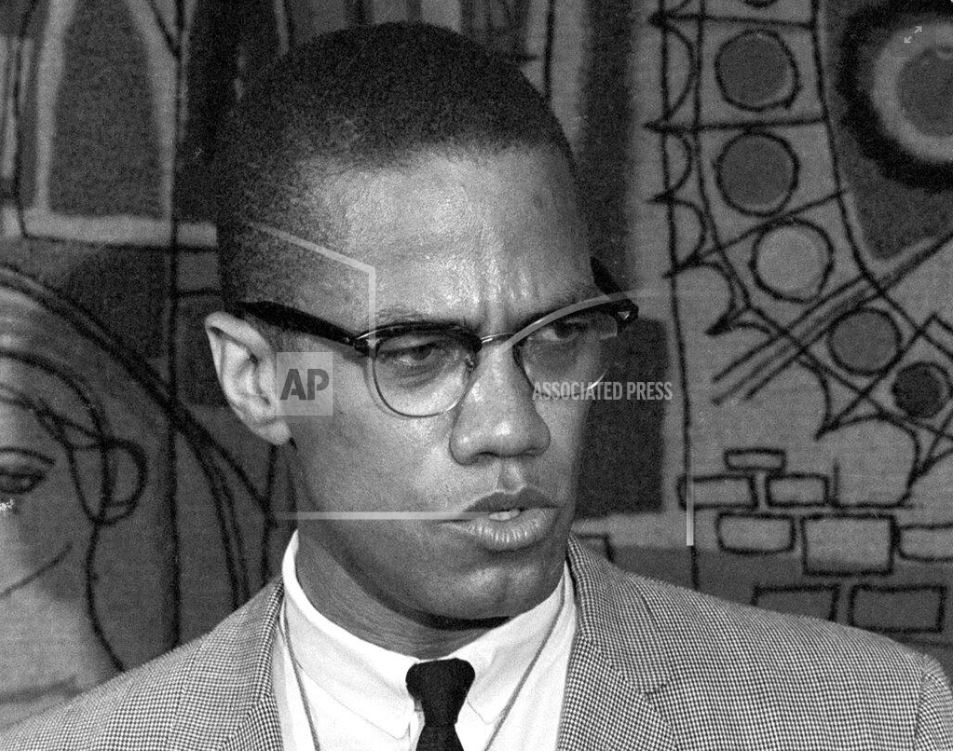
Malcolm X predicted yesterday that there would be more racial violence than ever in the United States in 1964. He declared that “Negroes on the mass level” were ready to act in self‐defense. The Black leader broke last Sunday with the separatist Nation of Islam, or Black Muslim, movement headed by Elijah Muhammad. He announced then that he would organize a broadly based, politically oriented black‐nationalist movement Composed of Muslims, Christians, and nonbelievers who were intellectually and emotionally ready to follow the black nationalist banner. Yesterday, at a news conference in the Park Sheraton Hotel here, Malcolm formally opened this drive. “There will be more violence than ever this year,” Malcolm told the reporters. “White people will be shocked when they discover that the passive little Negro they had known turns out to be a roaring lion. The whites had better understand this while there is still time. The Negroes at the mass level are ready to act. It is dangerous to deceive the white people into believing that all is well”
John W. King, the Governor of New Hampshire, paid three dollars at the Rockingham Park race track in Salem, to buy the first state lottery ticket legally sold in the United States in the 20th Century. Governor King purchased ticket number 0000001 for the New Hampshire Sweepstakes, two days after voters had approved lottery sales tickets at the state’s two race tracks and 49 state operated liquor stores. On the first day of sales, 3,600 people hoping to win $100,000 (on September 12) bought tickets. Starting on July 15, the random drawing of 332 tickets would take place to link a name to one of the 332 racehorses registered at the Park, followed by five more drawings before 11 of the horses would run at Rockingham. In all, six people, randomly associated with the winning horse, would each receive $100,000 before taxes.
S. N. Behrman’s play “But for Whom Charlie” premieres in NYC
“Symphony in D for Cello and Orchestra”, composed by Benjamin Britten, was given its first performance. Britten, an Englishman, conducted the Moscow Philharmonic Orchestra in the debut of his work, and dedicated it to Russian cellist Mstislav Rostropovich.
6th Grammy Awards: Days of Wine & Roses, Barbra Streisand wins 2.
Dow Jones Industrial Average: 814.22 (+0.35).
Born:
Tony Terry, American soul singer and actor (“With You”), in Pinehurst, North Carolina.
Curt Pardridge, NFL wide receiver (Seattle Seahawks), in DeKalb, Illinois.
Jimmy Norris, NFL defensive back (New York Giants), in Asheville, North Carolina.
Mike Ariey, NFL tackle (Green Bay Packers), in Bakersfield, California.
Cam Plante, Canadian NHL defenseman (Toronto Maple Leafs), in Brandon, Manitoba, Canada.
Died:
Abbas al-Aqqad, 74, Egyptian journalist, poet and philosopher.


 History Diaries