Prime Minister Harold Wilson told Parliament that his minority Labor government intends to renegotiate Britain’s membership in the European Economic Community and then put the results to a nationwide referendum. No mention was made of any plans to nationalize additional sectors of the economy except, in a highly tentative form, in the case of Britain’s North Sea oil resources. These were the strongest elements in what otherwise was a carefully modulated Labor Party program submitted to Parliament that had the numbers — but clearly lacked the intention, at this stage — to defeat Mr. Wilson’s new Government. When the Labor Party was in power from 1964 to 1970 the government sought membership in the Common Market. But there was considerable opposition within the party.
This opposition grew after the Conservative victory in 1970, and Mr. Wilson, to preserve party unity, felt obliged to side at least partly with those who opposed membership. This caused a new split in the party. But by the time the recent election was called, differences on the issue had been papered over, and official party policy called for a conveniently undefined degree of renegotiation of membership terms. Now, with Labor forming minority Government, a policy calling for drastic renegotiation of British membership faces potential opposition not only from the Conservatives but also from the Liberal Party.
King Baudouin of Belgium talked to political leaders as the process of forming a government began after Sunday’s general elections. Among those the king met was Leo Tindemans, leader of the Dutch-speaking wing of the Social Christians, who won 72 seats in the 212-seat national assembly. Tindemans is included among those seen as likely to be appointed premier.
Portuguese armed forces were ordered off a state of alert imposed four days ago, an official spokesman said in Lisbon. The alert was ordered after agitation among junior officers over policies for Portugal’s African territories. The spokesman said there would be no official communique on the matter.
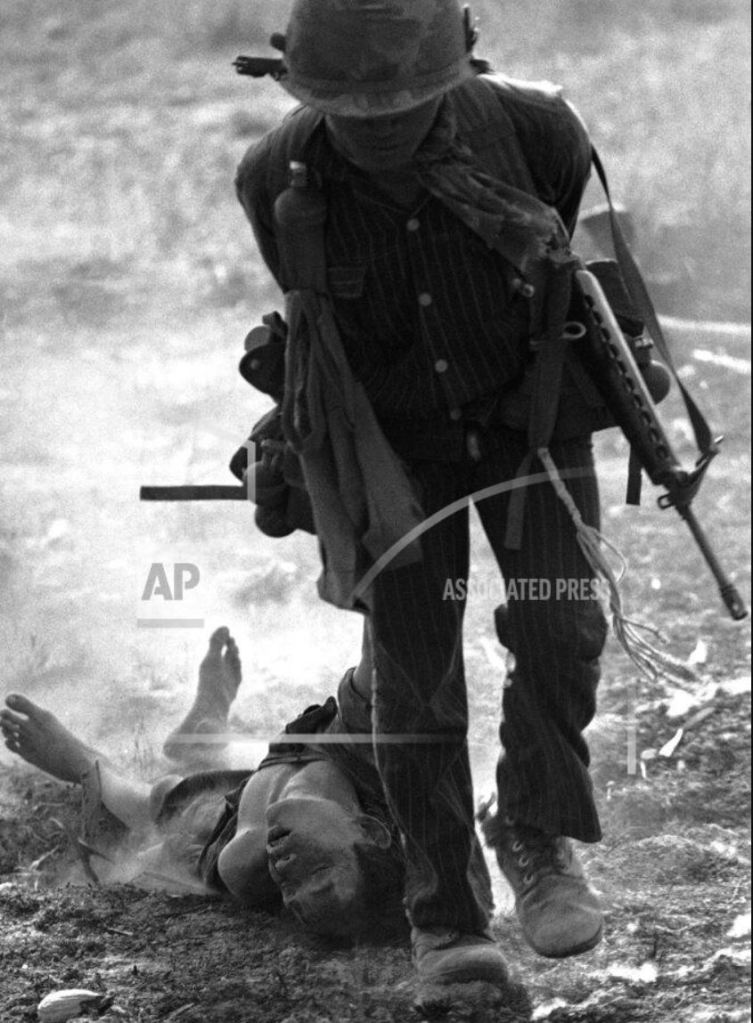
South Vietnamese military negotiators boycotted a scheduled meeting with the Việt Cộng today to protest the shelling of a government school in the Mekong Delta Saturday. A South Vietnamese spokesman, Lieutenant Colonel Lê Trung Hiền, said his government had sent a note to the Việt Cộng asking for a joint investigation into the mortar attack, in the town of Cai Lậy. The latest official figures showed 32 dead and 56 wounded. The Communists did not reply to the note, so the colonel said, the South Vietnamese decided to boycott the scheduled chief delegates’ meeting.
Buddhist leader Thích Thiên-Ân, 34, of the militant Ấn Quang faction charged that South Vietnamese police barged into a morning prayer service at his pagoda and arrested 142 monks. He speculated the arrests might be linked to an anti-government demonstration by monks Monday at Saigon’s Chí Hòa Prison, where he said more than 300 monks were imprisoned.
Four leading Cambodian politicians have left the country and defected to the rebel government of deposed Prince Norodom Sihanouk, political sources in Phnom Penh said. They were identified as Ing Kiet, one-time public works minister; Khek Sisoda, former Commerce Ministry official; Sieu Sophon, a Takeo province magistrate, and Siv Hak, an official of the government’s oil refinery and distribution complex.
Cambodian Government forces cleared a five‐mile strip of Route 4 from here to the coast today, opening it to the important provincial town of Kompong Speu, the Cambodian command reported. Government troops, following a successful assault yesterday against a rebel command post in the Kdei Lovea pagoda, 20 miles west of Phnom Penh, swept west and linked up with a government column coming from Kompong Speu, 30 miles from the capital. Insurgent forces cut the road 10 days ago along a five‐mile stretch between Kompong Speu and Phnom Penh. The road still remained cut west of Kompong Speu at a point 42 miles west of Phnom Penh. In the seaport town of Kampot, 85 miles southwest of the capital, Government reinforcements continued to arrive to bolster defenses against 3,000 insurgents threatening the town, diplomatic sources said. Cambodian transports were ferrying in supplies and troops to Kampot from the deep‐water port at Kompong Som, 40 miles to the west.
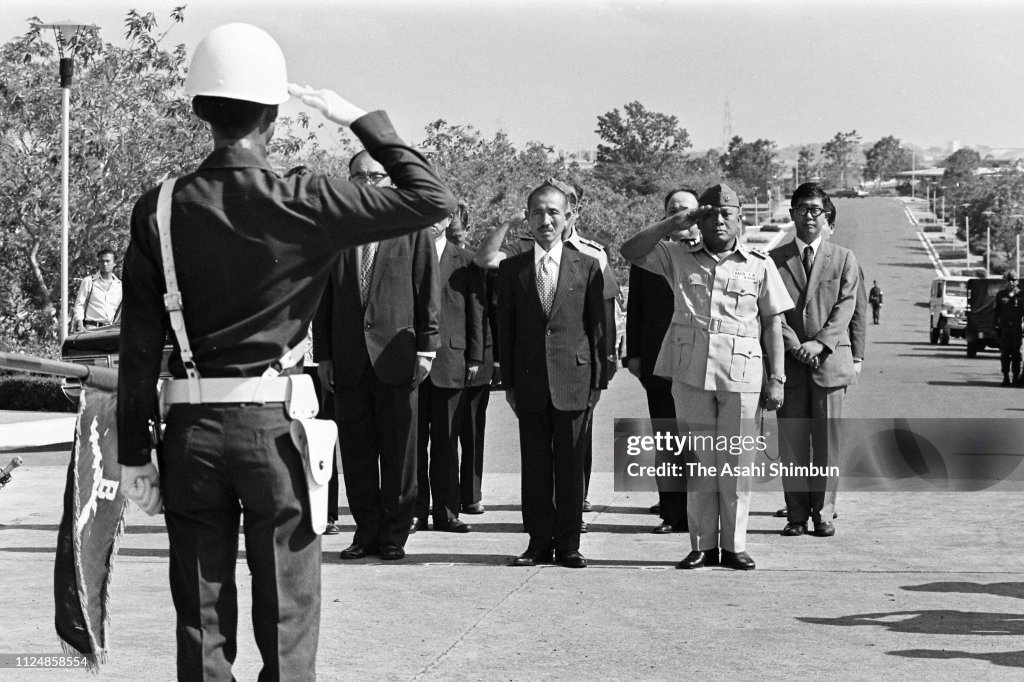
Second Lieut. Hiroo Onoda of the Imperial Japanese Army, who came down from a mountain hide‐out in a Philippine jungle on Saturday, returned to his native land today to an outpouring of patriotic emotion. The lean intelligence officer, who was ordered to stay behind on Lubang Island when the Japanese Army pulled out almost 30 years ago, stepped smartly, almost jauntily, from a chartered Japanese Air Lines jet this afternoon to the greeting of his aged parents and they cheers of a flag‐waving crowd. Lieutenant Onoda, dressed in a new blue suit his brother had taken to Manila for him, bowed smilingly and shook hands with his 86‐year‐old father, Tanejiro, who leaned on a cane, and his 88‐year‐old mother, Tamae, who sat in a wheelchair.
The emergence of the erect lieutenant with shaven head and wispy, mustache and chili whiskers has clearly captivated the Japanese people. It has been front‐page news for three days. His moves in the Philippines were covered live by Japanese television by means of satellite and his return today was shown on television in detail. Lieutenant Onoda’s ordeal has tremendous appeal to the Japanese, a deeply emotional people. The tragedy of his 30 years of deprivation in the jungle seemed to stir the deepest and most melancholic feelings in people here. The lieutenant has come out of the jungle during a time of self‐examination by the Japanese, especially the postwar generation. While they enjoy the material benefits their hard work has brought them, they have begun to despise the label “economic animal.” They have started to believe that Japan must stand for something more, though few here seem to know just what.
Thousands have fled their homes on Australia’s eastern seaboard fearing new floods from approaching Cyclone Zoe. Huge waves were battering sea walls and beaches as the storm generated 60-m.p.h. winds and torrential rain. Already three persons have died and large areas of New South Wales and southern Queensland were flooded after three days of rain.
The military mutiny that began two weeks ago is continuing in the Ethiopian Air Force, informed sources reported today. The airmen are said to be demanding the ouster of 21 officers. The sources said enlisted men at the air force bases in Asmara and Debra Zeit, near Addis Ababa, were “being insubordinate, threatening their officers and refusing to come to work.” The mutiny, which began February 25, subsided in the 35,000-man army and 2,000-man navy last week after Emperor Haile ‘Selassie promised pay increases lor enlisted men and noncommissioned officers and a number of officers were transferred.
According to the sources, mutineers in the 3,500‐man air force complained that while the government had acceded to army and navy pressure against unpopular officers, it ignored similar demands from air force enlisted men. A new strike by air‐traffic Controllers closed the airports at Addis Ababa and Asmara yesterday, and riot policemen wielded clubs to disperse students demonstrating. for political freedoms. The airports had opened only a few hours earlier after a four‐day general strike.
The Congress of Guatemala voted to proclaim General Kjell Laugerud Garcia the winner of the March 3 presidential election in which neither he, nor challenger Efrain Rios Montt, had won a majority. Opposition candidate Efrain Rios Montt immediately challenged the decision and asked for support from the people.
Chile’s military junta agreed to pay Cerro Corp. of the United States $41.8 million for copper investments nationalized by the nation’s ousted leftist government. It was the first compensation arrangement for three U.S. copper companies that were seized in 1971. An official said talks were going well with the other two companies, Anaconda and Kennecott.
Argentine President Juan D. Peron appointed a right-wing Peronist to run the violence-plagued province of Cordoba, where a police revolt two weeks ago toppled Governor Ricardo Obregon Cano, an alleged Marxist. The new leader is Duilio Brunello, 48, a history teacher.
An unsafe electrical system was blamed for a Sao Paulo, Brazil, fire in the 25-story Crefisul Bank building Feb. 1 in which 179 persons died, a police report said. Investigators said the fire began in wiring for ceiling lamps and window air conditioners on the 12th floor.
Carlos Andres Perez was inaugurated to a five-year term as the 40th President of Venezuela, succeeding Rafael Caldera.
President Nixon drew the battle line for a confrontation with the House Judiciary Committee and its request for White House evidence. Press secretary Ron Ziegler reported that the President is likely to refuse the committee’s request for more evidence, and he challenged the committee to define “impeachable offense” before asking for more White House evidence. The White House said that the Judiciary Committee would get the same evidence as special prosecutor Leon Jaworski, but Jaworski has declared that not enough evidence was turned over to him.
Vice President Gerald Ford cautioned against the President taking too tough a stance. The House Judiciary Committee is considering a subpoena. There were complaints that the White House leaked committee counsel John Doar’s request for evidence before committee members learned what was contained in the request. Committee chairman Peter Rodino stated that the committee’s requests for evidence were as specific as possible. Representative Jerome Waldie warned that the White House has placed a barrier between the Judiciary Committee and itself, which makes the use of subpoenas highly likely. Waldie threatened that the President could now be impeached on obstruction of justice charges. Even Republican Representatives Robert McClory and Thomas Railsback conceded that the committee has the right to any White House evidence it wants.
President Nixon’s attorney James St. Clair spoke with reporters about the impeachment issue. St. Clair maintained that the White House wants to cooperate with House Judiciary Committee counsel John Doar regarding the impeachment probe. He declared that the committee has been supplied with all of the evidence it requested regarding ITT and the milk fund. Questioned about impeachable offenses, St. Clair said he doesn’t foresee the President facing impeachment for refusing to comply with a subpoena.
St. Clair insisted that President Nixon ordered an investigation of alleged hush money for the Watergate defendants, and the attorney indicated that the President wouldn’t honor a subpoena to testify in the trials of his former aides who have been indicted on Watergate charges.
Representative Wilbur Mills again stated that Congress’ investigation of President Nixon’s income tax returns will lead to the President’s resignation.
The defense continued to cross-examine star prosecution witness Harry Sears in the conspiracy trial of John Mitchell and Maurice Stans.
The finance committee to re-elect President Nixon no longer exists; the money left over in it will go into a trust fund.
Ted Bundy’s second known victim, Donna Gail Manson, 19, disappears from Evergreen State College in Olympia, Washington. Donna was last seen this night, at her college. She told her roommate she was planning to attend a jazz concert that was being held on campus. She was last seen between the dorms and the library, walking in the direction of the concert. She was never seen again. Serial killer Bundy later confessed to her murder just days before his execution. Her remains were never found.
A bill restoring the death penalty in federal criminal cases appears headed for Senate passage today, despite passionate opposition from Senators Philip A. Hart (D-Michigan) and Harold E. Hughes (D-Iowa) and threats from Senator Edward M. Kennedy (D-Massachusetts) to add a handgun licensing amendment. The bill is backed by the White House and sponsored by Senators John L. McClellan (D-Arkansas) and Roman L. Hruska (R-Nebraska). It lays out guidelines on when to impose the death penalty and it also would make it mandatory for the first time in cases involving espionage, treason, murder during skyjacking, kidnaping and transportation of explosives, and assassination of the President, foreign chiefs of state and the chief justice of the United States.
A federal court ordered an end to work stoppages in part of southern West Virginia’s coal fields where 27,000 miners are striking in protest of state gasoline allocation policies that deprive them of enough fuel to drive to work. The temporary restraining order enjoined 27 United Mine Workers Union locals from engaging “in a strike or concerted work stoppage.” It was not known how many miners were covered by the order and there was no immediate response from the UMW. The strike, in its third week, has disrupted steel and railroad companies. U.S. Steel Corp. has said 30,000 employees would have to be laid off by the end of the week.
The Nixon Administration told Congress it wanted specific authority to impose mandatory wage and price controls on the construction industry after April 30, when the law authorizing general wage and price controls expires. The Cost of Living Council’s general counsel, Andrew Munroe, told a Senate banking subcommittee that the construction industry was an area that “still has some problems.” The Administration last month also asked for specific authority to impose mandatory controls on the healthcare industry.
A Detroit drug company is launching a nationwide search for three mislabeled hypodermic syringes that could accidentally cause abortion or premature birth, the Federal Drug Administration announced. It said Parke Davis & Co. was recalling 48,470 syringes that were distributed to 400 hospitals and four wholesale drug firms. The syringes contain Pitocin, a powerful hormone used to contract a woman’s uterus after delivery of a baby. Four of the syringes, however, were mislabeled as containing the flu vaccine Fluogen. One of the four has already been recovered. Sources said Pitocin also could aggravate vascular disease in a chronically ill or elderly patient.
Senator Harold E. Hughes (D-Iowa) has lifted the “hold” he put on promotions for two senior aides of Admiral Thomas H. Moorer, chairman of the Joint Chiefs of Staff, in connection with the 1971 military spying case, Senate sources said. It was understood that the two men, Navy Captain Arthur Knoizen and Air Force Colonel Bennie Davis, had convinced the Senate Armed Services Committee staff that they did not know Yeoman I.C. Charles E. Radford, as a member of a military liaison unit, had obtained documents from the National Security Council and passed them on to Moorer’s office.
The Soviet Mars 6 space probe, one of two explorers launched in 1973, entered the Martian atmosphere at 9:05 UTC and, after its descent was slowed by a parachute, returned data to Earth for 3 minutes and 44 seconds, although most of what was transmitted was unusable because of the deterioration of a computer chip. At 9:11 UTC, seconds before retrorockets were to fire to allow a soft landing, all contact with Mars 6 was lost and the probe crashed on Mars at a speed of 61 meters per second, equivalent to 136 miles (219 km) per hour.
Dow Jones Industrial Average: 887.12 (-1.33, -0.15%).
Born:
Chris Carr, NBA shooting guard and small forward (Phoenix Suns, Minnesota Timberwolves, Golden State Warriors, Chicago Bulls, Boston Celtics), in Ironton, Missouri.
Craig Dingman, MLB pitcher (New York Yankees, Colorado Rockies, Detroit Tigers), in Wichita, Kansas.
Mike Moten, NFL defensive tackle (Arizona Cardinals), in Daytona Beach, Florida.
Yash A Patnaik, Indian television and film producer; in Bhubaneswar, Orissa state (now Odisha), India.
Marko Bošnjak, Slovenian judge of the European Court of Human Rights, the court’s vice president since 1922; in Ljubljana, SR Slovenia, Yugoslavia.
Died:
Lis Groes, 63, Danish politician and the first woman to serve as the Danish Minister for Trade and Industry (from 1953 to 1957), later the leader of the Dansk Kvindesamfund women’s rights organization, 1958 to 1964.
Nikolay Korolyov, 56, Soviet Russian boxer, USSR heavyweight boxing champion between 1936 and 1953.
Brigadier General Alberto Bachelet, 50, Chilean Air Force officer who opposed the 1973 Chilean coup d’état, died of a heart attack while imprisoned in Santiago. In 2006, his daughter Michelle Bachelet, who was 22 at the time of his death, would become the first woman s President of Chile.
Billy Fox, 35, Senator for Ireland’s Seanad Éireann, was murdered after being kidnapped by five gunmen of the Provisional Irish Republican Army while he was visiting his girlfriend’s home in Clones, County Monaghan, Ireland.


 History Diaries