The Czecho-Slovakia has government ousted the Slovak premier, Joseph Tiso, placing him under house arrest, along with other prominent ministers and members of the Hlinka Guards. In response to Czecho-Slovakian President Emil Hácha’s sudden moves to consolidate power within Czecho-Slovakia, thus threatening German attempts to divide the nation, Adolf Hitler issued an ultimatum for Czecho-Slovakia to hand over Bohemia and Moravia, moving up the German schedule for the occupation of the remainder of Czecho-Slovakia.
It was officially announced that Dr. Joseph Tiso, ousted Premier of Slovakia, had addressed a formal appeal to Chancellor Adolf Hitler, requesting his intervention in the Czecho-Slovak crisis. The text of the appeal was not published but its urgency apparently was considered of sufficient gravity to warrant a midnight conference at the chancellery between Herr Hitler, Foreign Minister Joachim von Ribbentrop and other government officials. The conference was still continuing early the next morning, but no official comment on the nature of the discussions was forthcoming.
The sudden turn in the impasse between the Czech and Slovak authorities made German official quarters more communicative and early comments this morning were definitely to the effect that the Reich would not tolerate any attempts by the Prague regime to circumvent or sabotage commitments reached by the four-power conference at Munich or the arbitration award by Germany and Italy in Vienna.
The Reich, it was made plain in informed quarters last night considers Czecho-Slovakia an integral part of its sphere of influence in Central Europe. Such an assumption, it was further explained, takes it for granted that the Prague government would unequivocally accept the realities of the Munich and Vienna decisions which definitely took cognizance of Slovakia’s autonomous rights.
Ousted Slovak Prime Minister Tiso meets with Chancellor Adolf Hitler in Berlin.
Hitler drafts a secret order calling on Czechs to submit to military occupation without resistance.
Whether the Czecho-Slovak Republic will remain in its present form on the map of Europe a few days hence or whether Slovakia will become virtually a province of Germany was still uncertain at midnight. Today was one of minor conflicts in Slovakia and incessant incitement to Slovaks in broadcasts from Vienna. Despite official assurances of disinterested neutrality in the conflict received from Germany, it became clear during the day that the Slovak separatist group was receiving the strongest possible encouragement from Vienna and to a slightly less extent from Berlin.
In so far as Czecho-Slovak sovereignty in Slovakia is concerned, this was completely established yesterday morning when a sudden move by President Emil Hacha and Premier Rudolf Beran to forestall a Slovak putsch scheduled for today clarified the situation in Bratislava. Hardly had this been done when the German pressure in the reverse direction began to make itself felt. It was the result of the orders given late last night to troops and gendarmerie to evacuate a number of public buildings in Bratislava, which were promptly occupied by Hlinka Guards, with the consequent violent anti-Czech broadcast at 11 PM.
So far as can be ascertained officially Germany has not retreated from her curt declaration of disinterestedness. At the same time the German press and radio have been inspired to an orgy of anti-Czech propaganda recalling that of the crisis of last September including the usual “atrocity” propaganda. This increased in intensity throughout the day. Finally, it was learned in Prague tonight that there were heavy German troop concentrations on the bank of the Danube opposite Bratislava, ostensibly for the protection of the German minority. Apparently under the pressure of this news the new cabinet list was issued. It showed that the original plans of Prague had gone awry. Josef Sivak refused the Slovak Premiership and Pavel Teplansky, who yesterday was Prague’s principal hope as Deputy Premier, was not carried over into the new government.
At 2200 hours, Austrian Nazi leader Arthur Seyß-Inquart visited Slovakian leaders, demanding them to proclaim independence immediately, otherwise Germany would no longer support their movement.
In Spain, General José Miaja’s Republicans drove Communist rebels from flaming headquarters in the heart of Madrid today and fought a sharp artillery engagement with Nationalist gunners at the edge of the city. The peace-seeking National Defense Council, formed before dawn Monday and forced to fight for power over the Communists all week, felt the fury of Nationalist guns just as it seemed to be getting the upper hand over the Communist rebels.
A dispatch from the French border town of Hendaye said the Republicans’ Madrid radio station had announced that the Communists had made such progress in the western part of Madrid that General Miaja was considering calling further reinforcements from outside the city. This announcement came after the station had previously declared that “the revolution is finished.”
Nationalist artillery on the southeast fringe of the city opened up in the morning while General Miaja’s motorized troops, with eighteen field guns, were driving the Communists from the first of two headquarters and clearing virtually the whole length of broad Calle de Alcala, which cuts diagonally through the capital. The boom of guns on the Republican-Nationalist front mingled with the din of artillery and machine-gun fire within the city. Then, about 11 AM, the fighting at the front died down.
Reports published abroad that the fighting indicated that the Franco forces had begun their threatened offensive against Madrid were denied last night at Burgos, the Nationalist capital] Inside the city, the National Defense Council’s troops used their field guns and fired at the Communist party’s provincial headquarters. Its occupants were captured. some of them as they tried to dash through the lines with small suitcases. An hour later the loyal troops routed both men and women rebels from the cellars of the Communist central headquarters.
Other Communists dislodged earlier from a stronghold in Plaza de la Independencia, in the middle of the city, fled to a nearby maternity hospital, where they defied arrest. The hospital was filled with about 1,000 patients, expectant mothers and those with newborn infants. Barricades erected by the rebels in Plaza de la Independencia were demolished by General Misja’s men after the Communists had been driven overnight from their fortress in the square.
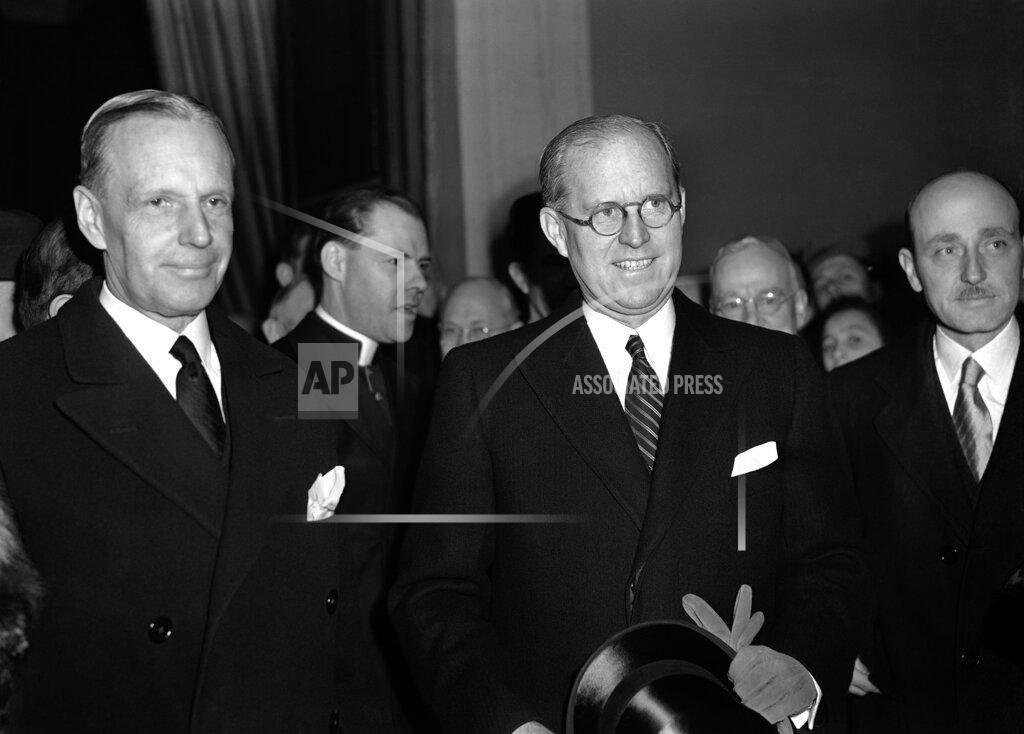
Rome’s inhabitants began pouring into the square before St. Peter’s long before dawn to gain vantage points from which to view the culminating ceremony of today’s lengthy rites attending the coronation of Pope Pius XII. Ambassador Kennedy arrived to attend the coronation as the representative of President Roosevelt. Forty foreign missions were to witness the ceremony, but Germany was not represented.
Pope Pius selected Cardinal Maglione to succeed him as Papal Secretary of State. The Cardinal is regarded as a strong supporter of the democracies and his candidacy was reported to have been opposed by the fascist States.
A correspondent from the British ‘Practical Motorist’ magazine takes a spin in the new ‘Volkswagen’.
The Reich claims to map 135,000 square miles of Antarctic territory.
The Soviet Union is stronger because of the purgings of recent years and the Communist Party has now reached a state of stabilization where methods of mass purging are not needed, according to Joseph Stalin, secretary general of the Communist Party, in an address before the party congress last night. The end of his long report was released for publication today. “The chief internal task of the Soviet State now lies in peaceful, economic-organizational and cultural-organizational work,” he said. “Concerning our army, punitive organs and the political police, they will address their spearpoint now, not at the interior of the country, but without, at external enemies.”
But in this address — his first public reference to the treason trials of Marshal Mikhail Tukhachevsky, Vice Commissar Gregory Piatakoff and Nikolai I. Bukharin — he made it clear that there would be no relaxing of vigilance against foreign spies and Soviet citizens whom they may enlist as tools, for such will be a source of danger to the Soviet regime as long as it is encircled by capitalist states. Mr. Stalin’s report on behalf of the party’s central committee, containing a hopeful statistical analysis of the country’s economic development in comparison with capitalist countries, was delivered, as are all his speeches, quietly and with an entire absence of bombast or hysteria.
New talks between Malcolm MacDonald, Colonial Secretary, and Jewish delegates today left the Palestine Peace Conference still deadlocked over Britain’s plan to make the Holy Land an independent Arab State. The possibility of some last-minute compromise was not ruled out, however, as a British spokesman said the talks, begun unexpectedly yesterday at Mr. MacDonald’s request, would be continued tomorrow night. The spokesman added that the Colonial Secretary wished to discuss with the Jews points raised in their “final appeal” memorandum submitted last night to the British Government.
Quiet soundings were taken by Democratic leaders at the U.S. Capitol in Washington today in an effort to discover what reception will be accorded to President Roosevelt’s expected message, or supplemental budget estimate, on Monday asking for the $150,000,000 which Congress struck from his original deficiency relief estimate. The result of these soundings appeared to be inconclusive.
Apparently, much will depend on the fresh reasons Mr. Roosevelt can assign for needing the money at this juncture. Representative Martin of Massachusetts, Republican floor leader in the House, said that the members on his side of the aisle were “open minded” on the question and that “we want to get the facts.” Some Democratic members seemed to be in the same frame of mind.
Interest was greater on the House side, since the Presidential request will be acted upon first in the lower chamber. The first hurdle it must cross is the deficiency subcommittee of the Appropriations Committee. This body voted overwhelmingly to cut the first figure from $875,000,000 to $725,000,000.
The joint committee of the American Federation of Labor and the Congress of Industrial Organizations, appointed as a result of President Roosevelt’s demand for an end of the three-year interunion war, will resume its negotiations at the Hotel Biltmore at 10 o’clock tomorrow morning. Its seven members — four from the AFL and three from the CIO — adjourned early yesterday after a five-hour session which failed to reach an accord.
Some of those close to the conference felt that some progress had been made, inasmuch as John L. Lewis, CIO president, who flatly rejected an AFL peace proposal in 1937, agreed Friday night to reconsider it when the joint committee reconvenes on Monday. The AFL plan is based on the theory that there are no obstacles to the return to the AFL of the CIO unions that had withdrawn from and been suspended by the AFL, but that there should be careful consideration before the admission to the AFL of some twenty new CIO unions to protect existing AFL unions from jurisdictional conflicts.
Many Catholic churches in the United States remained open all night to hear both the broadcast from Vatican City and special programs of music and addresses. Broadcasters of all four major U.S. radio networks intend the carry the ceremony.
Union musicians, engineers, and firemen threaten to join the four-day old strike in Washington, D.C. Efforts of Labor Department conciliators to find grounds for agreement in the four-day-old strike affecting thirteen hotels here continued today under the shadow of a threat by union firemen and engineers to cease work and thus deprive the buildings of heat and in some cases electricity. The workers were still at their posts this evening. Reports also were heard that union musicians might threaten to refuse to cross picket lines around the hotels, but spokesmen of this union said they considered orders for a walkout “extremely remote.”
Latest reports today on the separate sessions of Labor Department officials with representatives of the union and the hotels said that little progress had been made. The workers were still holding out for a “union shop,” and the hotels for a “preferential shop,” under which the hotels would agree to hire union members only if they considered them qualified. Union spokesmen say that 2,000 hotel workers were on strike but the hotel officials put the number at 904 and say they are getting along very well with substitute help.
The Southern Tenant Farmers Union announced today its withdrawal from affiliation with the United Cannery, Agricultural, Packing and Allied Workers of America, a Congress of Industrial Organizations affiliate. The order for withdrawal was issued by the executive committee of the STFU after a referendum completed yesterday. In its announcement the STFU accused the CIO union of being Communist controlled and said that the break had come after a struggle of many months between the two organizations. The STFU, an independent union organized in 1934, was affiliated on an autonomous basis in 1937 with the UCAPAWA.
The withdrawal notice ascribes to Donald Henderson, head of the CIO union, “arbitrary and irresponsible actions. culminating in an attempt to disrupt the Southern Tenant Farmers Union by violating the agreements between that organization and the international union, by suspending the officers of the STFU and by attempting to set up a union dual to the Southern Tenant Farmers Union. Such conduct on the part of a union official,” the statement proceeds, “would be incomprehensible without the knowledge that Henderson’s actions are not designed to help our union or the Southern sharecroppers but to impose Communist control over the largest bona fide agricultural workers’ union in the South.”
Accountants determine the worth of the Pepsi-Cola Company to be $7.9 million.
A proposal by Senator Pittman that the United States build warships in its navy yards for Brazil and other Latin-American nations received the endorsement of the State Department today, giving rise to the general assumption that it was an integral part of Administration efforts to tighten hemisphere defenses.
Sumner Welles, Acting Secretary of State, said that his department was heartily in favor of the general objectives of the proposal put forward by the chairman of the Foreign Relations Committee. While the navy was noncommittal, informed diplomatic quarters understood that its officials had been consulted. Senator Pittman has announced that he would offer next week a measure to authorize “all” Latin-American nations to build warships in United States navy yards “at the lowest competitive prices.”
The United States Army Air Corps issues Air Corps Proposal Number 39-640 for a medium bomber with a bomb load of 3,000 pounds (1,361 kg) a range of 2,000 miles (3,219 km) and a top speed over 300 mph (483 km/h). Burnelli, Consolidated, Douglas, Martin, North American Aviation (NAA), Boeing-Stearman and Vought-Sikorsky all enter designs. The Martin Model 179 will be the winner and turned into the B-26 Marauder.
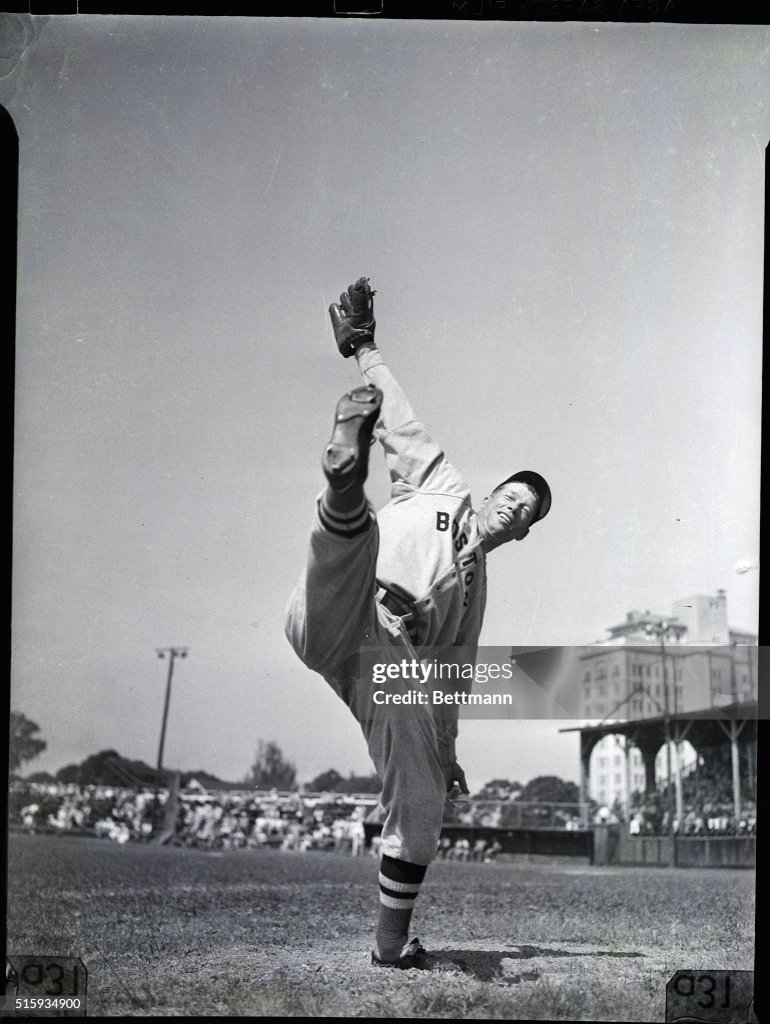
Earl Averill refuses the contract offered to him by the Cleveland Indians.
A Japanese offensive through Central Hupeh Province has left 3,500 Chinese dead during the last two weeks, the Japanese reported today. They said more than 20,000 Chinese were wounded in the drive. Japanese columns pushed northward today toward Siangyang and Fancheng, 175 airline miles northwest of Hankow, and attempted to cross the Han, with their objectives the Yangtze River cities of Ichang and Shasi.
In North China guerrillas continued widespread daily raids. In one such raid Chinese guerrillas entered Taierhchwang, the Shantung Province village where the Chinese had won their only outstanding victory of the war. The irregulars killed twenty Japanese soldiers and escaped with arms and ammunition. Other guerrillas attacked the Japanese at Pankuti, West Shantung, inflicted 100 casualties, and seized a number of rifles and machine guns.
Six Japanese divisions, comprising an estimated 125,000 troops, spread through mountainous Shansi Province in an effort to complete a year-long campaign against isolated bodies of Chinese troops. The Chinese admitted the loss of Tsinglo, an important point sixty miles northwest of Taiyuan, but reported they had killed 300 invaders. Other engagements in the area were said by the Chinese to have resulted in 500 Japanese deaths.
Dow Jones Industrial Average: 151.77 (-0.51).
Born:
Lorraine Hunt, American businesswoman, and former Lieutenant Governor of Nevada, in Niagara Falls, New York.
Leonardo “Flaco” Jiménez, American Grammy Lifetime Achievement Award-winning Tex-Mex and conjunto accordionist (Texas Tornados), in San Antonio, Texas.
Jim Cunningham, NFL fullback (Washington Redskins), in Connellsville, Pennsylvania.

 History Diaries