The Madrid battle flares anew. Mobile units of the Republican Army rolled into Madrid from Valencia today and began blasting out Communists revolting against the regime of General José Miaja and his program of “a worthy peace” with Nationalist Generalissimo Francisco Franco. Bringing into action tanks, mortars, and field guns, the army sliced through and surrounded Communist emplacements in the neighborhood of the old bullring on Madrid’s east side. The rebellious forces relied chiefly on hand bombs, but were unable to cope with the weapons of the forces called into action by General Miaja.
Estimates on the number of casualties were lacking, but an official announcement said 14,000 of the rebellious soldiers had surrendered since yesterday. The Communists, who started their revolt Tuesday, had taken up positions at the eastern end of Calle Alcala at the edge of Plaza Manuel Becerra. As soon as the troops from Valencia arrived, they swung into action. A fierce battle raged around the square for several hours before the government announced it had gained the upper hand.
Communist snipers took pot shots at the approaching Loyalist troops from doorways, housetops, and street corners and gave way only after their positions were made untenable. After being routed from the square and from Calle Alcala, the Communists put up a fight under cover of a few scattered hills beyond the bullring. Heavy mortar fire, however, tore big gaps in their ranks, while machine gun detachments encircled them in an ever-tightening grip. A few groups of Communists finally surrendered. Later there was a rush of their fellow rebels over to the mobile army to lay down their arms. The erstwhile rebels joined in shouting “Long live the Republic” and fraternized with the Loyalist forces whom they had been fighting a few minutes before.
With only a few diehards still holding out, the main body of the mobile army and the surrendered Communists marched back to the center of the city as if nothing had happened. With the east side Communists quelled, the government said only three Communist strongholds were left within the city, including the labor headquarters. The Communists were led by Lieutenant Colonel Jose Barcelo, former commander of the First Army Corps, and Lieutenant Colonel Francisco Bueno, who formerly commanded the Second Army Corps. They were said by the government to have promised their support last Sunday after the overthrow of the regime of Premier Juan Negrín.
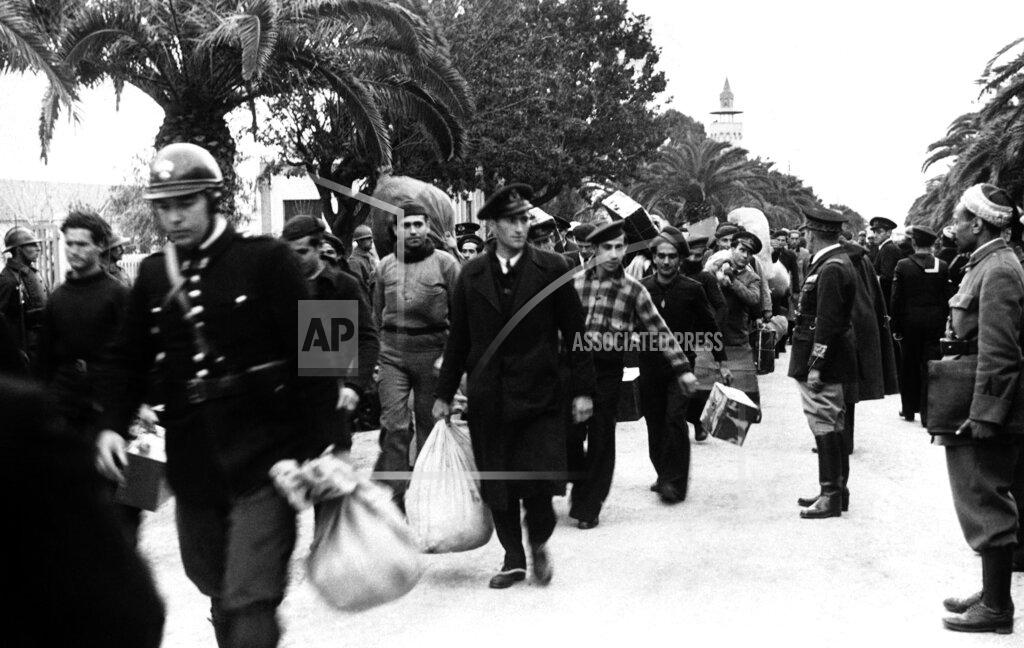
Franco’s navy frees the Stangate, the British ship that broke the blockade, after British destroyers arrive.
An American ship, the Erica Reed, runs the Franco blockade with no ill consequence.
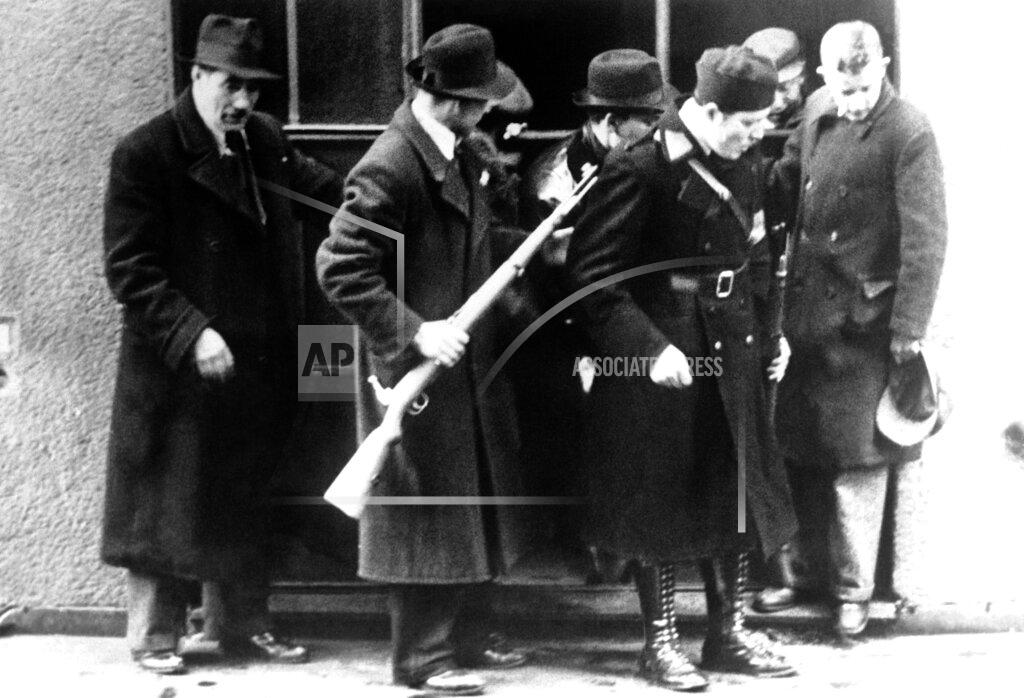
Czecho-Slovakian President Emil Hácha ordered the arrest of Slovakian political leader Jozef Tiso. The Prague central government in the early hours this morning re-established Czecho-Slovak authority by a well-planned and carefully executed blow against a group of Slovaks, including many members of the Hlinka Guard, who were plotting the overthrow of the new Constitution. They had planned to proclaim Slovakia’s independence, relying on Germany’s support and subsequent protection.
The Slovak Government has been dismissed and several Ministers, including Premier Joseph Tiso, have been placed under house arrest. The leaders of the conspiracy, Dr. Yojtetch Tuka (sentenced in 1927 to fifteen years in prison for high treason in Hungary’s interests and released after the Munich settlement); the Slovak Propaganda Minister, Sano Mach, together with M. Farkas and M. Jastak, Hlinka Guard chiefs, were arrested. The fascist anti-Semitic Hlinka Guard has been disarmed and most of its leaders arrested and interned in Moravia.
Walther von Brauchitsch was awarded the Grand Cross of the Order of the White Rose of Finland.
The Eighteenth Communist Party Congress opens in Moscow. After a series of economic negotiations between Germany and the Soviet Union, Premier Josef Stalin addresses the Party Congress, conceding points to Germany over Britain and the rest of the west. Stalin says he wants to pursue economic relations with all countries and not be pushed into military action. He declared that the Munich period of appeasement was already ended.
Stalin, in the opening address of the eighteenth All-Union Communist Party Congress tonight, charged the powers pursuing the policy of non-intervention in Spain with encouraging aggressors with the object of involving other countries in a war into which the nonintervention powers would step when the combatants were exhausted. Specifically, he intimated that France and Great Britain had ceded parts of Czecho-Slovakia to Germany with the desire to bribe Germany to launch a war against the Soviet Union.
Germany is now disappointing them, he continued, and instead of moving against the Soviet Union is pressing for further concessions in the West. Part of Mr. Stalin’s address was devoted to denouncing the press of Britain, France and the United States, which, he said, by creating noise over the Ukraine, were trying to “arouse the fury of the Soviet Union against Germany to poison the atmosphere and provoke a conflict without any apparent cause.”
The British Home Minister Sir Samuel Hoare suggests that Britain, France, and the three dictators meet for talks to preserve peace. He also wants the blessing of the United States. The chance of freeing the people of Europe “from a nightmare that haunts them and from an expenditure upon armaments that beggars them” was pictured by Sir Samuel Hoare, British Home Minister, in a speech tonight, as the “greatest opportunity that has ever been offered to the leaders of the world… Five men in Europe — three dictators and the Prime Ministers of England and France — if they worked with singleness of purpose and unity of action,” said Sir Samuel, “might in an incredibly short space of time transform the whole history of the world. “These five men, working together in Europe and blessed in their efforts by the President of the United States of America, might make themselves eternal benefactors of the human race. Our own Prime Minister has shown his determination to work heart and soul to such an end. I cannot believe that other leaders of Europe will not join him in the high endeavor upon which he is engaged.”
Coming from a member of the “inner Cabinet,” this flight of official imagination followed up yesterday’s authoritative hint that Prime Minister Neville Chamberlain foresaw disarmament discussions later this year “if all goes well.” It was an attempt by the most effective speechmaker in the Cabinet to turn Europe’s thoughts toward peace. There was an element of wishful thinking in it, as there was in yesterday’s statement by a highly placed government spokesman, but there is reason to believe it was intended to offset the emphasis that had been placed upon the armed strength of this country in recent weeks.
All non-Italian Jews must leave Italy by midnight tomorrow.
Huge crowds pray at the tomb of Pius XI.
President Roosevelt told an economy-bent majority of the House Appropriations Committee today that in a special message to Congress on Monday he would renew his request for a $150,000,000 deficiency relief appropriation. His statement followed a press conference announcement that his January estimate of relief needs remained unchanged. Democratic members of the Appropriations Committee, who were called to the White House by the President, disclosed afterward that a survey of relief needs by Colonel. F. C. Harrington, WPA Administrator, had determined Mr. Roosevelt against implementing his recovery program by any retreat from his original $875,000,000 request for the rest of the fiscal year. As the committeemen left the White House, they did not appear convinced that any change had occurred to warrant restoration of the $150,000,000 clipped from the original relief request two months ago. Several of their number stated privately that they would vote against the $150,000,000 unless an investigation showed that it was necessary.
That sentiment found expression later in a move within the committee to call in State and local relief administrators for questioning. Returning to the Capitol from the White House, Chairman Woodrum of the Appropriations subcommittee which cut the $150,000,000 from the President’s first request, said: “I have not seen or heard anything that makes me feel I made a mistake. We are having deficiency hearings now. I do not see how anything could be done for a week or ten days until we are through with the pending requests.”
AFL and CIO talks fail to reach an agreement. Representatives of the American Federation of Labor and the Congress of Industrial Organizations failed to reach an agreement last night in a five-hour conference at the Hotel Biltmore on any of the peace plans proposed as a result of President Roosevelt’s demand for an end of their three-year-old controversy. After discussing various peace proposals from 8 P. M. until after 1 AM, they adjourned until 10 o’clock Monday morning at the Biltmore.
The Administration will ask Congress. to authorize Latin-American nations to use United States Government shipyards for building warships when the yards are not required for construction of United States ships, it was revealed tonight when Senator Key Pittman, chairman of the Foreign Relations Committee, stated that he would introduce a bill in Congress next week to permit this.
Senator Pittman said that his bill was an Administration measure intended “to induce Latin-American nations to spend their money for warships in the United States rather than foreign countries.” He explained that “foreign nations,” including Great Britain and Italy, had constructed ships for Latin-American countries “at prices slightly under ours,” but asserted emphatically that his measure, while providing free use of United States government yards, did not mention competitive prices.
The Senate’s Unemployment and Relief Committee studied possible separation of the CCC from the proposed Public Works Department; the Banking and Currency Committee heard Chairman John H. Fahey of the HOLC oppose expansion of the FHA mortgage insurance; the Naval Affairs Committee heard testimony opposing development of a naval base at Guam.
The House considered the Interior Department appropriation bill, received various measures and resolutions and adjourned at 5:02 PM until noon Monday. Several committees continued inquiries.
James Hines offers to resign his Tammany post after his conspiracy conviction, but the resolution is tabled after members protested against his resignation.
The Shirley Temple film “The Little Princess” opens in New York theaters.
A high school principal explains traits that employers expect from girls today, including slimness, a sweet voice, and the ability to “speak pure American.”
The oldest living Shaker observes her 104th birthday. Her eyesight is so keen that she still sews.
President Roosevelt expressed happiness today over the economic and financial agreements that were concluded with Brazil yesterday. Speaking at his press conference, the President said he looked for the arrangements to improve and stabilize trade between the two countries and aid currency stabilization. They help business not only in this hemisphere but all over the world, he added.
Sumner Welles, acting Secretary of State, said at his press conference that there was nothing specific along the same lines under consideration at the moment with other Latin-American countries. There had been certain intimations received from other governments with regard to certain matters in which they were interested, he added, but none of those questions had, as yet, reached the point where he could comment on them.
Asked if Chile would be the next country with which the United States would undertake negotiations for closer economic cooperation, Mr. Welles said there was nothing definite under way. Of course, he pointed out, government agencies here were always prepared to give favorable consideration to any requests for cooperation that might arise, but there was nothing under discussion.
An official bulletin expressing the expectation that a plan of accord in the controversy between the Mexican Government and expropriated oil companies might be reached within a week was issued tonight after a meeting at the National. Palace between President Cardenas and Donald R. Richberg. The bulletin also expressed the hope that, after a few more conferences between the Chief Executive and the representative of the American and British oil companies. involved, only technical details will remain for the study by experts.
The Indian party congress at Tripuri rejected a radical plan backed by Subhas Chandra Bose to send the British government an ultimatum demanding Indian independence.
17 villages are damaged by hailstones in Hyderabad, India.
Chinese press reports give the casualties in Wednesday’s air raids on Ichang, Yangtze international “treaty port,” as between 2,000 and 3,000. These reports say that a third of the city was destroyed and two-thirds of it damaged. Information from American sources at Ichang confirms the Chinese estimates as to the extent of the destruction and places the casualties at 1,500. It appears certain that the raid was among the most disastrous of the Sino-Japanese war. The Japanese planes attacked heavily built-up portions of the city and achieved demolition by the use of incendiary bombs, which set raging fires. There are a number of Americans at Ichang, but it is reported that no foreign casualties resulted from the bombardment.
Meanwhile, messages to the British Consulate here report that the English Baptist Mission Hospital at Sian was bombed three times in the Japanese air raid on the Shensi capital on Wednesday. Two Chinese nurses are said to have been killed, the main building of the hospital badly damaged and its operating theater demolished. Foreigners on the premises escaped unhurt. The hospital, in an isolated section of the city, was marked by three huge British flags.
The United States protests the bombing of Ichang. American missions are attacked in spite of the flag waving overhead. United States Consul General Paul R. Josselyn submitted a protest to the Japanese authorities at Hankow, China last night because of the bombing of American property in Wednesday’s air raid on the city of Ichang. Emphasis was added because of the fact that the two American mission properties bombed were conspicuously marked by American flags. In addition, the consulate here had last June handed to the Japanese maps showing the exact location of American property at Ichang.
Seventeen bombs were dropped on the two compounds of the American Mission [Episcopal]. In the first raid six bombs were dropped on the Meihua Compound, where the American flag was flown on the chapel, and four bombs were dropped on the football field, where a twenty-foot flag was flying. In the second raid seven bombs were dropped on the Erhmalu Compound, where one huge flag was flying and another painted on the ground. One foreign-style building was wrecked and three others badly damaged. There were no casualties at the mission in either attack.
Japanese planes drop fifty bombs on Weinan, a city near Sian, China; casualties are estimated at 1,500. Weinan, forty miles northeast of Sian, the capital of Shensi Province, was bombed by Japanese planes, according to Central News. The reports say seven planes dropped fifty bombs, destroying forty buildings.
Air mail letters from foreign missionaries in Ichang, which arrived here today, described the Japanese bombing there Wednesday. One letter says that in one of the three attacks planes dropped bombs starting at the American Church Mission compound and continuing to blast a wide swath through the heart of the city. Six bombs fell in the American Meihua school compound which was well marked with United States flags. Walls were razed and buildings wrecked. In the American Church Mission compound, buildings were damaged and two large United States flags on the ground were almost obliterated by debris. Deaconess Elsie W. Riebe escaped injury when one bomb fell within fifteen feet of her.
Japan’s Parliament says the war in China cannot end while Britain supports China.
Dow Jones Industrial Average: 152.28 (+0.95).
Born:
Irina Press, Soviet 80m hurdles runner and pentathlete (Olympic gold 1960, 64), in Kharkiv, Ukrainian SSR, Soviet Union (d. 2004).
Bill Heath, MLB pinch hitter and catcher (Chicago White Sox, Houston Astros, Detroit Tigers, Chicago Cubs), in Yuba City, California.
Naval Construction:
The Kriegsmarine (German Navy) light cruiser “Kreuzer O” is laid down by Germaniawerft in Kiel (werk 606), Little work is ever done, as the ship is never completed, and broken up on the slip in 1942–1943.
The Royal Navy Tribal-class destroyer HMS Tartar (F 43; later G 43) is commissioned. Her first commanding officer is Captain G. H. Warner, DSC, RN.



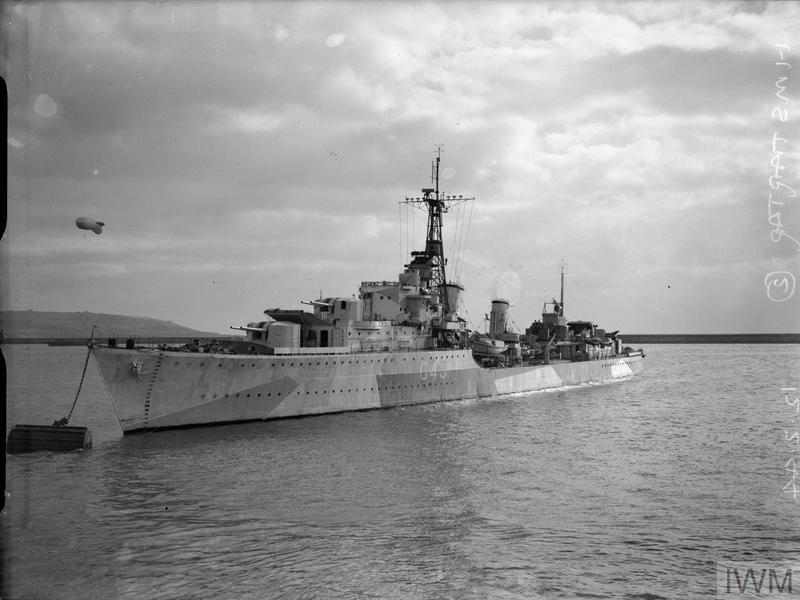
https://en.wikipedia.org/wiki/HMS_Tartar_(F43)#Construction_and_career
Battle Honours: NORWAY 1940-41 – BISMARCK Action 1941 – ARCTIC 1941 – MALTA CONVOYS 1942 – NORTH AFRICA 1942-43 – SICILY 1943 – SALERNO 1943 – MEDITERRANEAN 1943 – NORMANDY 1944 – ENGLISH CHANNEL 1944 – BISCAY 1944 – BURMA 1945
The ship was Paid-off and placed in the Reserve Fleet there early in 1946 after de-storing and reduction to Reserve status. She was used as an Accommodation Ship for Reserve Fleet personnel before being placed on the Disposal List in 1947. Sold to BISCO for breaking-up on 6th January 1948 this destroyer arrived at J Cashmere’s yard in Newport, South Wales for demolition on 22nd February 1948. This destroyer had an outstanding record of service during WW2 having gained 12 more Battle Honours and served in most major Theatres of War. Only three others of this Class of 16 Fleet Destroyers built for the RN survived hostilities.
 History Diaries