A meeting of Arab oil ministers scheduled in Cairo today to discuss the removal of the Arab oil embargo against the United States was postponed and is now expected to take place Wednesday in Tripoli. Representatives of only six of the nine Arab countries that imposed the embargo arrived in Cairo for the meeting. They decided that nothing could be done without the other three — Algeria, Libya and Syria. These countries apparently oppose the removal of the embargo without more evidence of progress on Israeli withdrawal from the Golan Heights.
The on‐again, off‐again conference on a review of oil restrictions, adopted after the Middle East war in October, appears to have become a test of Arab political unity. The United States has been exerting diplomatic pressure since December for an end to the embargo, which Secretary of State Kissinger has called “inappropriate” in view of American efforts to bring about a Middle East settlement through the Geneva peace conference, with military disengagement as a first step. President Anwar el‐Sadat of Egypt has said that the embargo should be lifted in view of United States efforts that brought about disengagement on the Sinai front with Israel.
Sheik Ahmed Zaki al‐Yamani, the Saudi Arabian Minister of Petroleum Affairs, who came here for the meeting, has been quoted in recent press interviews as having said that the embargo no longer served a useful purpose and should be ended. He said today that “there cannot be a meeting of the Arab oil ministers without the Algerians.”
In Israel, members of the Knesset approved a motion of confidence in the new coalition cabinet that had been formed by Prime Minister Golda Meir, with a margin of 62 to 46 in favor, and nine abstentions.
Premier Golda Meir of Israel and her new cabinet took the oath of office in Parliament after having received a vote of confidence. The new government is a coalition of the same parties that made up the previous administration, which has been serving in a caretaker capacity since the general election on December 31. The coalition’s components are Mrs. Meir’s Labor alignment, the National Religious party and the Independent Liberals, holding a total of 68 seats.
The Central Intelligence Agency tried last year to assess prospective oil sources abroad and found it difficult, Richard Helms, former CIA director, said in testimony given to the Senate Foreign Relations Committee last year and only now released. Helms said getting information from American oil companies about prospective prices and supplies “is one of the hardest jobs we have.”
Britain’s 280,000 coal mine workers began their return to work after ratification of a new pay package, starting with the night shift at 11:00. British coal miners returned to work, ending a four-week strike that idled 280,000 colliery workers, brought down the Conservative government and threatened the national economy with chaos. The National Coal Board said chances for a quick return to full coal production were favorable. The miners went back to the pits, beginning with the Sunday night shift, after ratification of a $230 million pay package.
Leonid I. Brezhnev, the Soviet leader, today accused the West of hindering progress at the European Security Conference in Geneva by introducing unimportant issues and personally appealed to other leaders to join him in winding up the talks at “the highest responsible level.” At the same time, Mr. Brezhnev dismissed the Solzhenitsyn affair as “not a problem” for the Soviet Union. He said that no single writer like Aleksandr I. Solzhenitsyn could slow up accommodation between East and West. The Communist party leader also asserted that the Soviet Union had no intention of establishing, with the United States, a world dominance of superpowers, as China, France and other nations have charged.
Mr. Brezhnev made his comments in an hour‐long interview with a group of French correspondents, most of them visitors, at Moscow’s Vnukovo diplomatic airport, before he flew to the Black Sea resort of Pitsunda for two days of talks with President Pompidou of France. The Soviet leader accused the French press of “biased” reporting that sometimes verged on “an anti‐Soviet campaign” and undermined trust between France and the Soviet Union. He said he was not specifically referring to French coverage of the Solzhenitsyn affair. Though Mr. Brezhnev did not cite any examples of what he termed “biased coverage,” he appeared to be reflecting Soviet sensitivity over French charges of Soviet‐American dominance, complaints that Moscow had not consulted Paris during last fall’s Middle East fighting and, despite his denial, the extensive coverage of the Solzhenitsyn affair.
Belgium elected a new parliament, with opinion polls forecasting slight gains for minority parties that were demanding more autonomy for the country’s French and Dutch-speaking regions. The three traditional parties, Social Christians, Liberals and Socialists, which made up the last coalition government, registered a loss in popularity in a pre-election poll. Elections were held in Belgium for all 212 seats in the Chamber of Representatives. The new Belgian Socialist Party of Prime Minister Edmond Leburton won the plurality of seats, with 59, after gaining 34 since the 1971 vote, while the Christian People’s Party of former Prime Minister Leo Tindemans finished with 50. The two parties tied with 27 seats each of the 106-seat Belgian Senate.
A British freighter and an Indian freighter have reported objects in the Atlantic Ocean off the Liberian coast of Africa that could be the gondola of missing U.S. balloonist Thomas Gatch Jr., according to Lloyds of London. The sightings were not conclusive but the information was passed to the U.S. Coast Guard, Lloyds said. Gatch was last sighted February 21 over the Atlantic but the floating objects sighted by the ships were about 1,500 miles southeast of his February 21 location.
The death toll from the explosion of a Việt Cộng mortar shell in a schoolyard in Cai Lậy town, Định Tường Province, rose to 32 today, South Vietnamese officials said. Twenty‐three children were killed in the blast yesterday, and nine more died later in a hospital.
Heavy fighting broke out in the Mekong Delta 60 miles west of Saigon yesterday and South Vietnamese Government warplanes raided Communist forces, government military officers here said today. The officers said that 32 Việt Cộng and North Vietnamese soldiers were killed in two battles and two air strikes, and that the Saigon side suffered three men killed. The fighting was reported to have been centered around the district capital of Kiên Bình, where both sides began offensive operations a month ago.
The costs of military and economic aid programs in Southeast Asia, which dropped sharply with the withdrawal of American forces from South Vietnam, is beginning to rise again. The increase is attributed by Administration officials to inflation and the continued fighting in South Vietnam. The Administration is proposing to give South Vietnam about $2.4‐billion in military and economic aid in the fiscal year beginning on July 1. The requests represent about a 65 percent increase in aid from the level approved by Congress for this fiscal year. In addition, the United States will spend $463‐million for its own forces in Southeast Asia, largely for air units based in Thailand for possible use in Vietnam. When military and economic aid to Cambodia and Laos are included, the total American spending in Southeast Asia in the coming fiscal year would be nearly $3.5‐billion.
South Korea has ruled that foreign newsmen who report unannounced political arrests or criticisms of the constitution — acts banned by decree January 8 — would be free from fear of punishment if they filed such reports outside Korea. Such reports, if filed from inside Korea, could draw sentences of up to 15 years from a military court.
Ethiopia’s general strike was called off tonight and labor unions announced that the approximately 100,000 workers would be back tomorrow. A delegation from the Confederation of Ethiopian Labor Unions called on Emperor Haile Selassie to tell him that the strike — the first in the history of Ethiopia — was over. The unions had won concessions from the government on a 16‐point list of demands. The emperor tonight told the delegation that he deplored their strike even though he agreed they had justifiable grievances. They should have asked the government to redress these, he said; without plunging the nation into a general strike. Earlier, the government had agreed to a union demand that essential service workers no longer be banned from organizing or striking.
A private report by international economists has concluded that India faces an economic crisis marked by critical food shortages in the next few years. The carefully worded report by the World Bank, circulated in Washington and New Delhi, says that India must import at least 10 million tons of grain in the next five years, that she will need $12 billion in aid over that period — far more than the government had predicted — and that assistance from oil-producing nations is crucial.
Voting was held in El Salvador for the 56 seats of the national assembly, as well as for mayors of the Central American nation’s 261 municipalities. San Salvador’s President Arturo Molina, whose National Conciliation Party was expected to win most of 56 legislative assembly seats and 261 mayor posts, was among early voters in the first election since a bloody but unsuccessful coup in 1972-triggered by alleged fraud at the polls. Strict security measures were in force after attempts by a left-wing guerrilla group to sabotage the current election.
Gunfire and bombings were reported in Argentina, continuing the violence which began 10 days ago with a police revolt. In Buenos Aires, the headquarters of a rightwing Peronist labor union was hit by two antitank grenades. Some masonry was knocked down but there were no injuries. In Cordoba, where the police revolt toppled the provincial government, several bombs exploded and an electrical plant guard was shot at. In Salsipuedes, also in Cordoba province, youths supporting the overthrown leftwing governor hurled gasoline bombs at the town hall.
Senator Thomas F. Eagleton (D-Missouri) attacked a proposal in the Pentagon’s budget to build 34 “airborne warning and control system” aircraft at a cost of $2.5 billion. He urged the Senate Armed Services Committee to scrap the plan, saying it would only mean tax money down the drain. He said General Accounting Office analysts agreed with him.
[Ed: MORON. The E-3 AWACS planes have proven to be worth their weight in gold. It’s a Congress of baboons, Always. No Exceptions.]
Patricia Hearst, who was kidnapped February 4 in Oakland, California, asserted in a tape-recorded message to her parents yesterday that not enough was being done to bring about her release. She spoke for 11 minutes on the tape that was left in the women’s restroom of a San Francisco restaurant. The tape contained a statement from the professed kidnappers, the group that calls itself the Symbionese Liberation Army.
“I don’t believe you’re doing everything in your power,” she said in a barely audible voice. “I don’t believe you’re doing anything at all. You said it was out of your hands; what you should have said was that you washed your hands of it.” The 20‐year‐old daughter of the newspaper executive, Randolph A. Hearst, spoke for 11 minutes on the tape that was left in the women’s restroom at a restaurant near downtown San Francisco. In addition to the message from Miss Hearst, there was a statement from the professed kidnappers, the group that calls itself the Symbionese Liberation Army. It was the fifth taped communiqué from the group since February 4 when Miss Hearst, a student at the University of California at Berkeley, was abducted from her apartment.
Two members of the House Judiciary Committee, expressed concern today about President Nixon’s refusal to give up six Watergate tapes for the committee’s investigation on whether to recommend impeachment of the President. They said that continued refusal would almost certainly lead to a subpoena for the tapes, and predicted that a refusal in the face of a subpoena could lead to the issuance of a contempt citation by the full House. The two Representatives, Robert McClory of Illinois, the second‐ranking Republican on the committee, and Robert W. Kastenmeier, a liberal Democrat from Wisconsin, made their remarks on the American Broadcasting Company program, “Issues and Answers.” Mr. Kastenmeier contended that should the President be found in contempt of Congress by refusing to turn over the tapes, that in itself would be grounds for impeachment.
The two Representatives asserted that Mr. Nixon was not giving the committee full cooperation. They said they still hoped to meet their deadline of April 30 for deciding whether to recommend impeachment. The President has said repeatedly that he would cooperate with the House committee and the special Watergate prosecutor, Leon Jaworski.
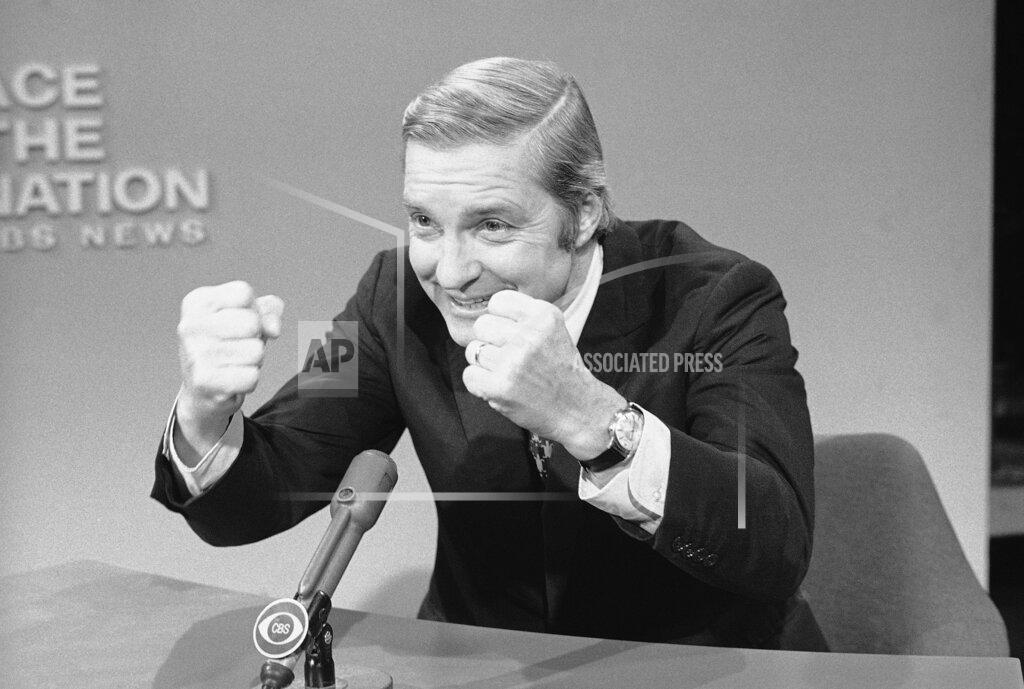
On another program, Republican Senator Charles H. Percy of Illinois said he was “distressed” by Mr. Nixon’s refusal to comply with Mr. Jaworski’s full request for tapes and documents. Speaking on the Columbia Broadcasting System’s TV program, “Face the Nation,” the Senator said that the White House chief of staff, General Alexander M. Haig Jr., had pledged that all tapes requested by Mr. Jaworski would be turned over.
The White House and the Environmental Protection Agency have collided over administration proposals for a drastic revision of the 1970 Clean Air Act. Sources said Russell Train, administrator of the E.P.A., firmly opposed several of the amendments to the act desired by the Office of Management and Budget, the Federal Energy Office and the White House Domestic Council. Consequently, the timetable for the act’s revisions has been set back while the White House decides to yield or force the issue and possibly Mr. Train’s resignation.
The Consumer Federation of America, rating the voting records of members of Congress, said neither house “did much to protect the consumer” during the 1973 session. “Of 13 key issues which came before them last year a majority of senators voted for the consumer only seven times,” the group said in a statement. “… The record of the House of Representatives was better than the Senate. Of eight key votes, a majority of members of the House supported the consumer on six.” The federation said only Senator Philip A. Hart (D-Michigan) and Gaylord Nelson (D-Wisconsin) scored 100% in its ratings for 1973.
The Watergate scandal has damaged the nation’s economy and the Nixon Administration’s ability to deal with economic affairs, the leaders of the two foremost business associations said on a television show. E. Douglas Kenna, president of the National Association of Manufacturers, and Arch Booth, chief officer of the Chamber of Commerce of the United States, called for prompt action to restore confidence in America’s leadership by weeding out the guilty in Watergate from the innocent. “… Our country essentially runs on confidence. I think the securities markets depend on confidence,” Kenna said.
Pamphlets sent to jurors in the Wounded Knee trial brought the arrest of Richard C. Carlson, 40, of Albany, Minnesota, on a charge of attempting to influence a juror. An FBI agent said the pamphlets — one entitled “Renegades — the Second Battle of Wounded Knee” and the other containing a 1937 papal encyclical on communism — had been received by a number of jurors in the St. Paul trial of American Indian Movement leaders Dennis Banks and Russell Means. The two are charged in the 1973 takeover of Wounded Knee, South Dakota.
The Pennsylvania Crime Commission has concluded in a 1,404-page report that police corruption in Philadelphia is “ongoing, widespread, systematic and occurring at all levels of the police department.” The commission has accused the police and the administration of Mayor Frank Rizzo of actively attempting to block its investigation, begun 18 months ago, by such action as arresting state troopers serving as agents of the crime commission and of failing to act when presented with concrete evidence of graft.
Three armed men kidnapped the wife of a Decatur, Georgia, store manager Saturday night and released her unharmed hours later after her husband had paid about $20,000 in ransom, police said. They said K-Mart manager William Daniel, 36, had been met at his home by three armed men who had bound and gagged his wife, Patricia, 30. She was later recovered, bound with tape, in the trunk of a car near the site where Daniel had turned over the money he had got from the store’s safe. It was the fourth reported kidnaping of a K-Mart executive or member of his family since Christmas, authorities said.
The Federal Aviation Administration must decide by Wednesday whether to fight a suit that threatens to disconnect, at least temporarily, all airport X-ray anti-hijacking devices. The Aviation Consumer Action Project, a Ralph Nader organization, recently obtained a federal court ruling that the FAA had improperly started the anti-hijacking screening procedures without public notice and opportunity for public comment. A federal judge ordered the practice halted but granted a stay until Wednesday so the FAA could appeal.
Six valuable paintings destined for the Joseph H. Hirshhorn Museum in Washington, D.C., were stolen over the weekend from Hirshhorn’s estate at Greenwich, Connecticut. Abram Lerner, director of the museum which is to open in the fall as part of the Smithsonian Institution, said the theft apparently took place early Saturday. The paintings included two by Winslow Homer and works by Edward Hopper, Thomas Eakins and Adolphe Monticelli. Mr. and Mrs. Hirshhorn were at their home in Naples, Florida, at the time. Hirshhorn has given his collection of more than 6,000 paintings and 3,000 pieces of sculpture to the nation. The Smithsonian estimates the value to be more than $50 million.
The Federal Bureau of Investigation said that it had “positive identification” of two more suspects in the kidnapping of 8‐year‐old John Calzadilla of Dix Hills, Long Island, New York, and that arrests and the recovery of the $50,000 ransom were imminent.
When most Americans shop for groceries, they are not aware that they are competing for much of the food they buy with people in Japan, Western Europe, the Soviet Union, China and most of the rest of the world. Other factors, obviously, have had an inflationary effect on food prices, but experts agree that one major reason for some of the sharp increases in the last couple of years is the sudden and vast expansion of agricultural exports from the United States.
Lawrence Hurwit and Lee Goldsmith’s musical “Sextet” starring Dixie Carter, closes at Bijou Theater, NYC, after 9 performances.
Born:
Christopher Isaac “Biz” Stone, American entrepreneur, co-founder of Twitter, in Boston, Massachusetts.
Died:
June Harrison, 48, actress (“Land of the Lawless”).


 History Diaries