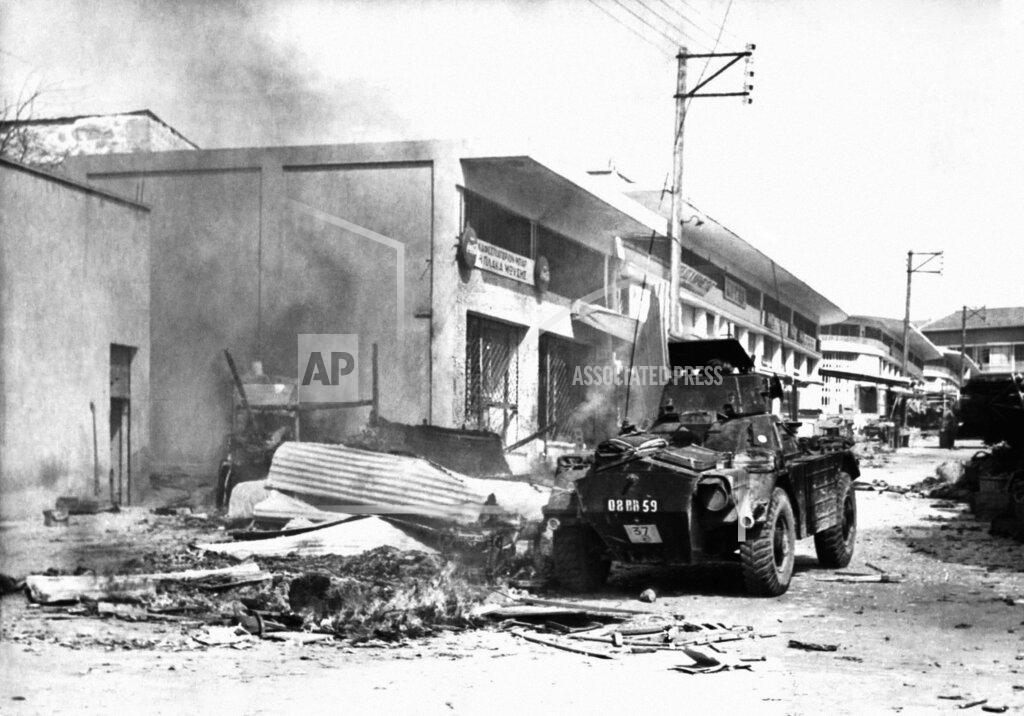
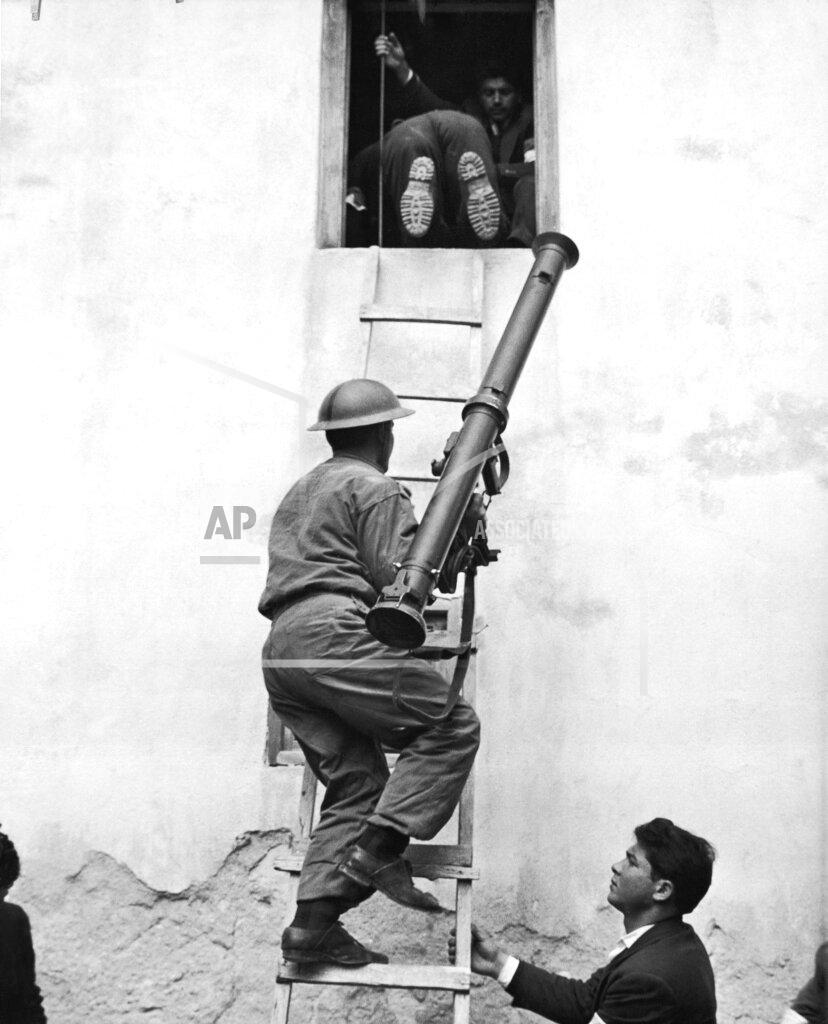
Bitter fighting raged today between Turkish and Greek Cypriotes in Paphos, on the southwest coast of Cyprus. A Greek Cypriote spokesman said one Greek was killed and a Turkish Cypriote spokesman said 15 Turks were wounded. Casualties on both sides were believed to be higher. The British military spokesman in Paphos said British troops in the town were “fired on by Cypriotes, and fired back on a number of occasions.”
At the United Nations, the Secretary General, U Thant, warned Cyprus, Greece and Turkey that continuation of the “senseless violence” could lead to “even more tragic consequences.” The Turkish Government rejected José Rolz Bennett as mediator in the Cyprus crisis, saying he did not have the qualifications for the task.
The fighting began at 6:10 A.M. At 9 P.M., according to British and Greek Cypriote spokesmen, the fighting had halted. Violence between the two communities broke out December 21. The tension stemmed from efforts of the Greek community to amend the Constitution in ways that the Turkish Cypriotes regard as imperiling their safeguards as a minority. The Greek Cypriote spokesman said that Greek security forces in Paphos, “not wishing to jeopardize the lives of women and children, have halted their advance so arrangements for evacuation of women and children may be agreed upon.” He added: “The Turkish defenses have broken down and the rebels are abandoning their positions one after another, concentrating in a small area in the center of the Turkish quarter in which several hundred women and children also have taken refuge.”
The spokesman said the Turkish Cypriotes were considering acceptance of Greek Cypriote terms. These, he said, were that the Turkish Cypriotes abandon and destroy all their fortifications and “accept the authority of the legal forces to patrol the whole town, including the Turkish quarter, thus ensuring the security of the whole population.” A Turkish Cypriote spokesman said there was no question of accepting the Greek Cypriote conditions. He added, “We will never surrender our arms because if we do, we will be slaughtered by the Greeks.” A British spokesman here said “the situation is still critical and the confident tone of the Greek Cypriote statement is not supported by our information.”
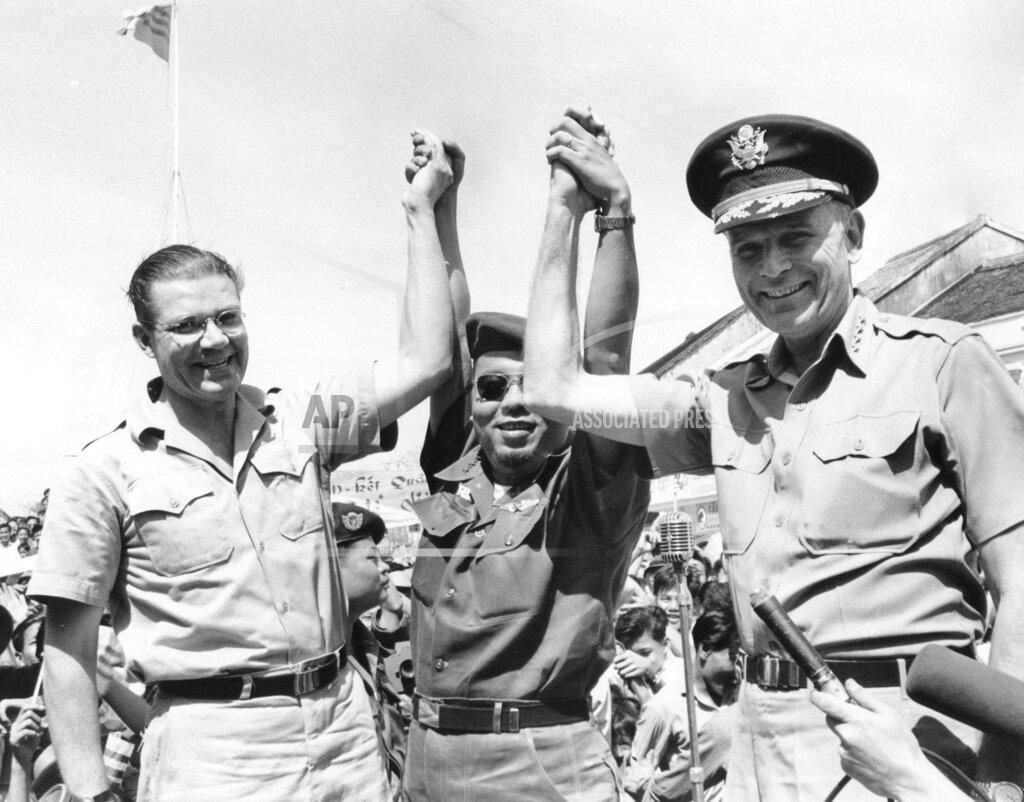
In South Vietnam, Major General Nguyễn Khánh takes McNamara and Taylor on a tour of the countryside to demonstrate U.S. commitment to his regime. One U.S. helicopter accompanying the group crashes and two U.S. airmen are killed. Secretary of Defense Robert S. McNamara barnstormed the countryside today to dramatize America’s commitment to support Khánh and his new Government in their anti‐Communist war effort. Military briefings were short and almost incidental to the apparent main purpose of letting Premier Khánh show off the Secretary of Defense and the Chairman of the Joint Chiefs of Staff, Maxwell D. Taylor, to his people.
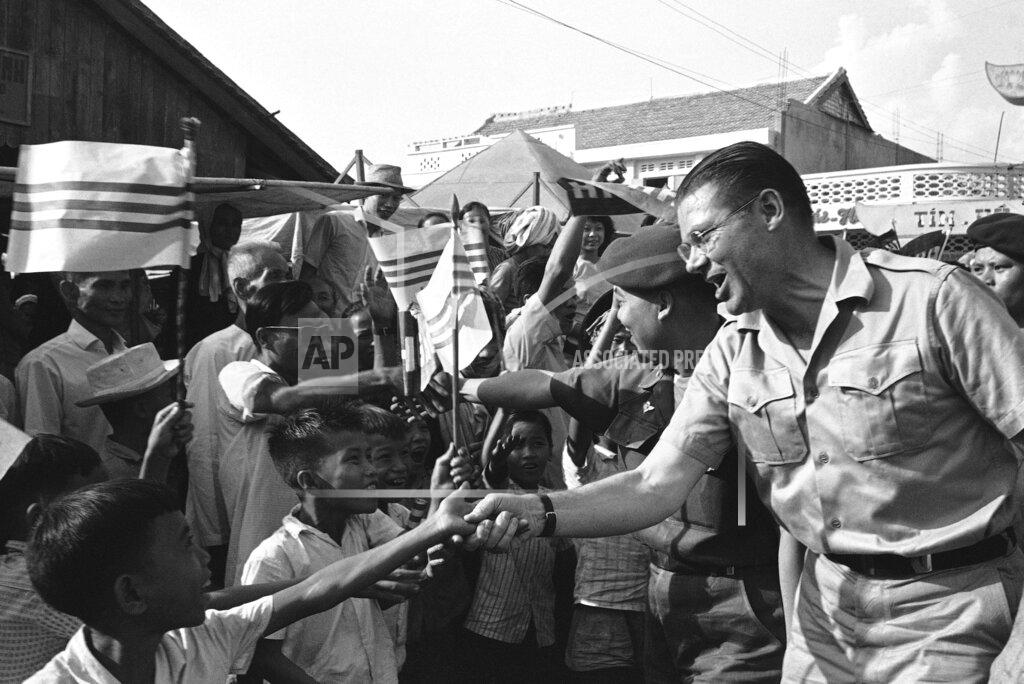
The two highest officials of the American defense establishment spent the afternoon shaking hands with wizened old village men, patting children’s heads, jumping in and out of helicopters and shaking more hands. Mr. McNamara was genial and almost folksy. The resemblance to a political campaign tour was manifest. “We would make a good team,” Premier Khánh said, amid backslapping and joking.
Pulled aside for a moment, Mr. McNamara said, “The thing which we want to emphasize is that Khánh has the full and complete support of President Johnson and our whole Government and I want to let his people know this.” It has become clear by the second day of the visit that a main goal is to press the campaign to build Premier Khánh’s stature as national leader in the hope of preventing another coup d’état. Qualified sources said Mr. McNamara had put himself at Premier Khánh’s disposal for the tour, the Secretary’s fourth since the United States stepped up its advisory, support and military assistance program more than two years ago. Premier Khánh suggested a barnstorming tour and the Americans agreed.
The official party visited three towns in the Mekong Delta, where the Việt Cộng insurgents are strongest. Escort aircraft and armed helicopters accompanied the officials although bodyguards were forced aside when Premier Khánh and McNamara pushed through the village crowds. Tragedy marred the tour when one of the helicopters crashed from a low altitude near here. Two American enlisted men were killed. Mr. McNamara, who was not immediately told of the crash, later issued a statement saying: “This plane was providing protection to my party over enemy territory. I am grieved beyond words.”
Việt Cộng guerrillas attacked the town of Cần Thơ, Mr. McNamara’s and General Khánh’s first stop, only last night. They fired mortars and small arms into an oil storage area outside town, setting three tanks on fire and destroying nearly 400,000 gallons of fuel. Fire swept the residential part of Cần Thơ last week. In his first speech of the day, Mr. McNamara offered a United States contribution of 500,000 piasters, nearly $7,000, for relief to the homeless. Premier Khánh offered an equal amount from the Vietnamese Government. Mr. McNamara’s speeches were translated sentence by sentence except for his last line, the national cheer, which he spoke in Vietnamese. Raising his hands above his head he shouted, “Vietnam muon nam!” meaning. “Vietnam a thousand years!” Crowds waved American and Vietnamese flags and repeated the cheer as General Khánh, General Taylor and Mr. McNamara clasped hands.
But when Robert S. McNamara, the Secretary of Defense, arrived in Saigon yesterday, the cheers of organized demonstrators could not conceal a widespread mood of frustration and pessimism. United States officials were saying privately that the prospects of defeating the Việt Cộng were slight or negligible. United States field advisers summoned from the provinces said that despair was more evident in Saigon than in the countryside. “This is the first time I have found Saigon gloomier,” said one official who is posted in an area heavily infiltrated by Việt Cộng insurgents. The Việt Cộng have tightened their political and military grip on the countryside in recent months but the focal point of crisis is now Saigon. Two military coups d’état since Nov. 1 when the unpopular regime of President Ngô Đình Diệm was toppled have nearly paralyzed the central administration. Political and military officials in the provinces have been complaining that they have not received detailed instructions from Saigon in months.
Cambodia’s chief of state, Prince Norodom Sihanouk, said today that his efforts to win neutral status for his kingdom had collapsed because of United States hostility. A broadcast said that Prince Sihanouk, at an emergency conference, said he might open negotiations with Communist North Vietnam and the Laotian pro‐Communist Pathet Lao. The prince said that because of the United States attitude there was no hope of convening an international neutrality conference in Geneva or a restricted four‐power conference here. He declared that American counterproposals were “inacceptable and inadmissible” and that he had issued orders that they be rejected.
Meanwhile, William P. Bundy, U.S. Assistant Secretary of State for Far Eastern Affairs, left today for Bangkok for talks believed aimed at persuading Thailand to participate in a four‐power conference on Cambodian neutrality. South Vietnam accepted Prince Sihanouk’s proposal for a meeting of the United States, Cambodia, Thailand and South Vietnam.
[Ed: In 1964’s galaxy of idiots, Norodom Sihanouk is a particularly dim little star.]
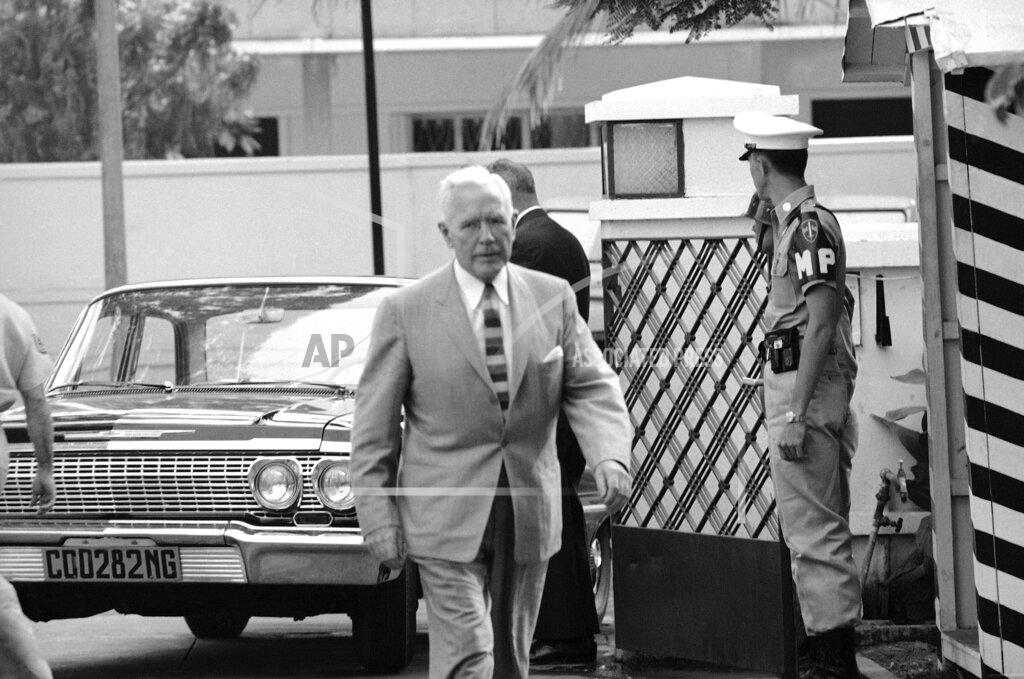
A bomb exploded outside the United States Embassy in Libreville, Gabon, last night and the front of the building was riddled with bullets from a passing car, presumably containing Frenchmen. The building was closed at the time and there were no injuries. It was the second attack on the embassy in two days. On Friday night a small bomb exploded in the driveway, cracking several windows and splattering the walls with mud. Embassy officials have little doubt that both attacks were by embittered French civilians. William Courtney, the American chargé d’affaires, who lives about 200 feet from the embassy, said he saw two Europeans in a Simca car drive slowly past the building at the time of the shooting. At first, he thought that the car had backfired. The bullet holes were found an hour later, at 10:20 P.M., after a bomb had exploded in a garden about 50 feet from the building. The bomb caused no damage.
The embassy attributed both attacks to mounting anti‐American sentiment among French residents of Gabon, who number nearly 6,000. The country, a former French territory, achieved independence August 17, 1960. Since an unsuccessful coup d’état against Mr. Mba three weeks ago this normally sleepy seaport capital has been seething with rumors of “American subversion.” Many Frenchmen are convinced that the United States actively supported the coup, which was crushed by French troops after a brief but bitter battle in which at least 18 soldiers were killed, according to the official French figure.
American officials believe that some French authorities took part in spreading the rumors. French antagonism toward Americans reached a peak last week during four days of violent anti‐French and anti‐Mba rioting. The cars of many Frenchmen were stoned and overturned by Gabonese demonstrators, but Americans driving official vehicles were allowed to pass and were sometimes cheered. After surveying the damage last night Mr. Darlington drove to the residence of Paul Cousseran, the French Ambassador, woke him up and returned with him to inspect the grounds.
The United States was reported tonight to have accepted a new compromise formula for a settlement of its differences with Panama. The text was drafted by a subcommittee of the Organization of American States charge with mediating and investigating the two‐month‐old dispute. Panama has asked for at least two more days to study the formula, which provides for an immediate restoration of diplomatic relations and for “discussions and negotiations” of all outstanding differences, including those concerning the Panama Canal.
High‐altitude RB‐57 reconnaissance planes with several advantages over the U‐2 are reported to have been flying missions over Communist China for some time. Although the Department of Defense denies the report, informed sources say various models of the American‐built RB‐57 have been collecting data on Communist Chinese military and industrial capabilities for several years.
U.S. Senator Kenneth B. Keating renewed today his demand for a full Congressional review of the war in South Vietnam and the United States role in it. The New York Republican made public a list of questions he addressed to the State and Defense Departments on the current situation and “the actions now being taken to improve it.” “The people have a right to know where we are going and what we are doing in Vietnam,” Senator Keating said in a speech he inserted in the Congressional Record. In his questions to the Defense Department the Senator asked, in part, whether any decision to take action against North Vietnam would be made by the United States or by South Vietnam and whether Congress would be consulted.
Ambassador Henry Cabot Lodge and Attorney General Robert F. Kennedy appeared today to be holding trump cards in the nation’s first Presidential primary tomorrow in New Hampshire. Citizens will gather in town halls and polling places up and down the state, primarily to take part in the annual ritual of conducting municipal affairs. But few will be able to ignore the national impact of the Presidential test.
Just after midnight in Dixville, a mountain hamlet, nine voters cast New Hampshire’s first ballots. Three were for Richard M. Nixon and three were for Henry Cabot Lodge. Governor Rockefeller received two votes, and Senator Barry Goldwater received the ninth vote. The nine voters unanimously favored selling sweepstakes tickets, even though the town has no liquor store in which they can be sold.
Closing quotations of pollsters on the eve of the balloting indicated that Governor Rockefeller’s rising stock and Senator Goldwater’s attempts to brace against a slide were bringing them almost neck and neck in the Republican race. But what appears to be developing as a late boom for Mr. Lodge, the United States Ambassador to South Vietnam, despite his denials that he is a candidate, has caused worry in both camps.
Senator Goldwater awaited the results of the New Hampshire Presidential primary with apparent serenity. He said he was confident of victory. Mr. Goldwater, who wound up his campaign Saturday and returned to Washington, spent the morning catching up on correspondence. Then he worked with advertising executives and cameramen on film strips to be used as political advertisements in California and elsewhere and did a brief “stand‐upper” appearance for a network news camera.
After three hours of parliamentary skirmishing today, the U.S. Senate settled down to “extended debate” on the House‐passed civil rights bill, the broadest civil rights measure ever considered by Congress. The Democratic leader, Mike Mansfield of Montana, predicted just before the Senate met at noon that the debate would extend “for months.” After a strategy meeting with his band of 18 Southern Senators, Senator Richard B. Russell, Democrat of Georgia, told reporters: “I see no room for compromise on our part. We will fight to the last ditch.”
The lead‐off speakers for the Southern bloc were Senator Russell and Senator Lister Hill, Democrat of Alabama. The Senators who spoke initially for the bipartisan coalition of civil rights supporters were Mr. Mansfield, Senator Jacob K. Javits, Republican of New York, and Senator Hubert H. Humphrey of Minnesota, the Democratic assistant leader, who is floor manager of the bill. Senators Russell and Hill spoke at length. Although they contended that few Senators knew what was in the bill of 11 sections, they advanced no arguments against it that had not been made repeatedly during committee hearings last summer and fall and during House debate last month.
The burden of their speeches was that the bill gave unconstitutional powers to the Federal Government and deprived the states of powers reserved to the states and to individuals. Thus, they argued, the civil rights that the bill intended to give to Blacks would involve the violation of the rights of white citizens to manage their property as they saw fit. The speeches of Senators Mansfield, Javits and Humphrey were short. The burden of these was that the time had come when an ancient grievance must be redressed by specific federal law with enforcement powers.
Congress was told today that the Administration had moved to bar Federal construction funds from hospitals that insist on “separate but equal” facilities. The move follows the Supreme Court decision last week to let stand a lower court ruling that hospitals built with Federal Aid may not segregate patients or staff. The Administration policy was disclosed by Anthony J. Celebrezze, Secretary of Health, Education and Welfare, in testimony supporting a $1,385,000,000 extension of the Hill‐Burton Hospital Construction Act.
The United States Supreme Court ruled in New York Times Co. v Sullivan that under the First Amendment, a state was limited in its power to award damages for libel arising from criticism of public officials acting within the scope of their duties. L. B. Sullivan, the police commissioner of Montgomery, Alabama, had been awarded US$500,000 in damages in a libel suit against The New York Times after the Times had run an advertisement on March 29, 1960, accusing Sullivan of overseeing “a wave of terror” against African-Americans.
President Johnson asked Congress today to create a national commission on automation and technological change. The 14‐member commission would study the probable pace of technological change, the problems such change will bring and the means of speeding and increasing the benefits of advancing technology. The commission members would be drawn entirely from outside of the government. Mr. Johnson’s plan was sent to Congress today along with a detailed report on the nation’s current manpower problems.
The Administration’s war on poverty, still subject to objections among its key planners, may include a proposal for screening needy youths by lowering the draft registration age to 16 or 17. Lowering of the draft regulation age — but not induction into the military service — has been recommended by some of those seeking to agree on a program. However, the proposal has not been approved by President Johnson.
One of the firmer plans in the antipoverty program, which is changing almost daily, would be creation of a two‐part jobs corps to train unskilled and unemployed youths identified during Selective Service examinations. Under one phase of the job corps, about 100,000 youths between 16 and 21 would be enrolled in camps for one‐year periods. The other phase would provide for enrollment of about 70,000 youths, also between the ages of 16 and 21, in job training centers where they would be taught remedial reading and job skills.
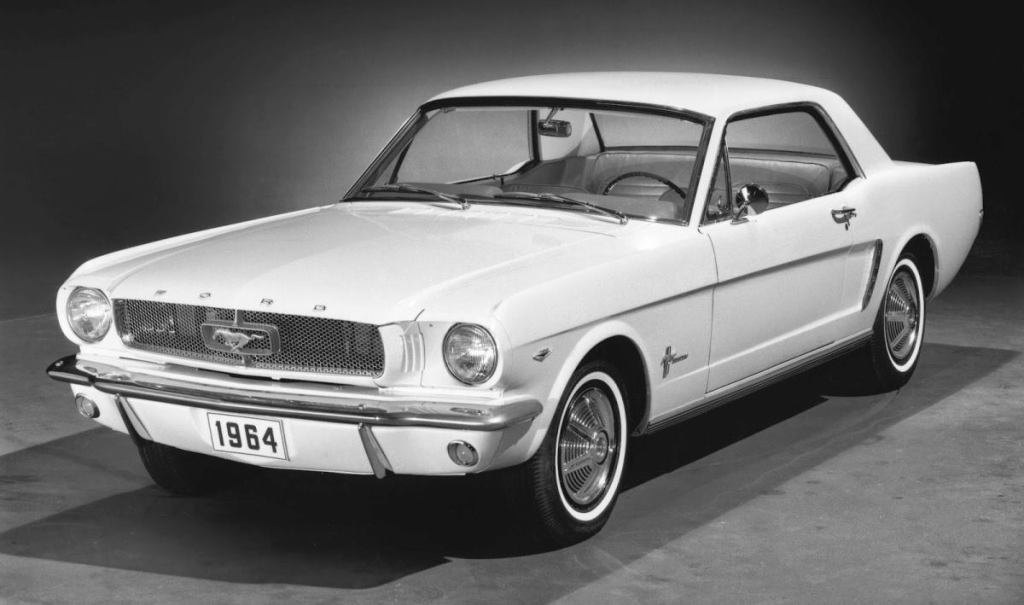
The first Ford Mustang rolled off the assembly line at the Ford Motor Company factory in Dearborn, Michigan. A researcher would note later that what he believed to have been the first Mustang marked for shipment (based on having the lowest vehicle identification number that had been found to exist, 100211) was sent to fill an order by the Hull-Dobbs Ford dealership in Winston-Salem, North Carolina, but added that “no record… has been discovered that indicates the VIN number of the first Mustang to roll off the line on that Monday”, and that any promotional photo of the first car “typically… would picture a pre-production car purposely placed at the head of the line”.
A woman found on a sidewalk in Tulsa, Oklahoma, was saved from death despite having a body temperature of only 59.5 °F (12 °C) on arrival at the Hillcrest Medical Center. After 90 minutes, here temperature was recorded at 67 °F (19 °C). A physician at the hospital, Dr. Edward Jenkins, credited the survival of Mrs. Marie Adams to the fact that she had been drunk and that the alcohol in her system led to an unusually quick loss of body heat and a drastic reduction in her body’s need for oxygen. Mrs. Adams’s injuries were limited to numb fingertips and pain in her throat and chest.
The ACLU charges the White Sox with violating the rights of MLB pitcher-writer Jim Brosnan.
Creighton University’s Paul Silas grabs Midwest record 27 rebounds against Oklahoma State.
Dow Jones Industrial Average: 807.18 (+1.15).
Born:
Juliette Binoche, French actress (“The English Patient”, “Unbearable Lightness of Being”), in Paris, France.
Phil Housley, Team USA and NHL defenseman (Hall of Fame, inducted 2015; Olympics, silver medal, 2002; NHL All-Star, 1984, 1989-1993, 2000; Buffalo Sabres, Winnipeg Jets, St. Louis Blues, Calgary Flames, New Jersey Devils, Washington Capitals, Chicago Blackhawks, Toronto Maple Leafs), in Saint Paul, Minnesota.
Keith Smith, NBA shooting guard (Milwaukee Bucks), in Flint, Michigan.
Died:
Paul von Lettow-Vorbeck, 93, General of the Imperial German Army during World War One, and known as Der Löwe von Afrika (“The Lion of Africa”) for his defense of Germany’s African colonies against a much larger force of Allied troops.
 History Diaries