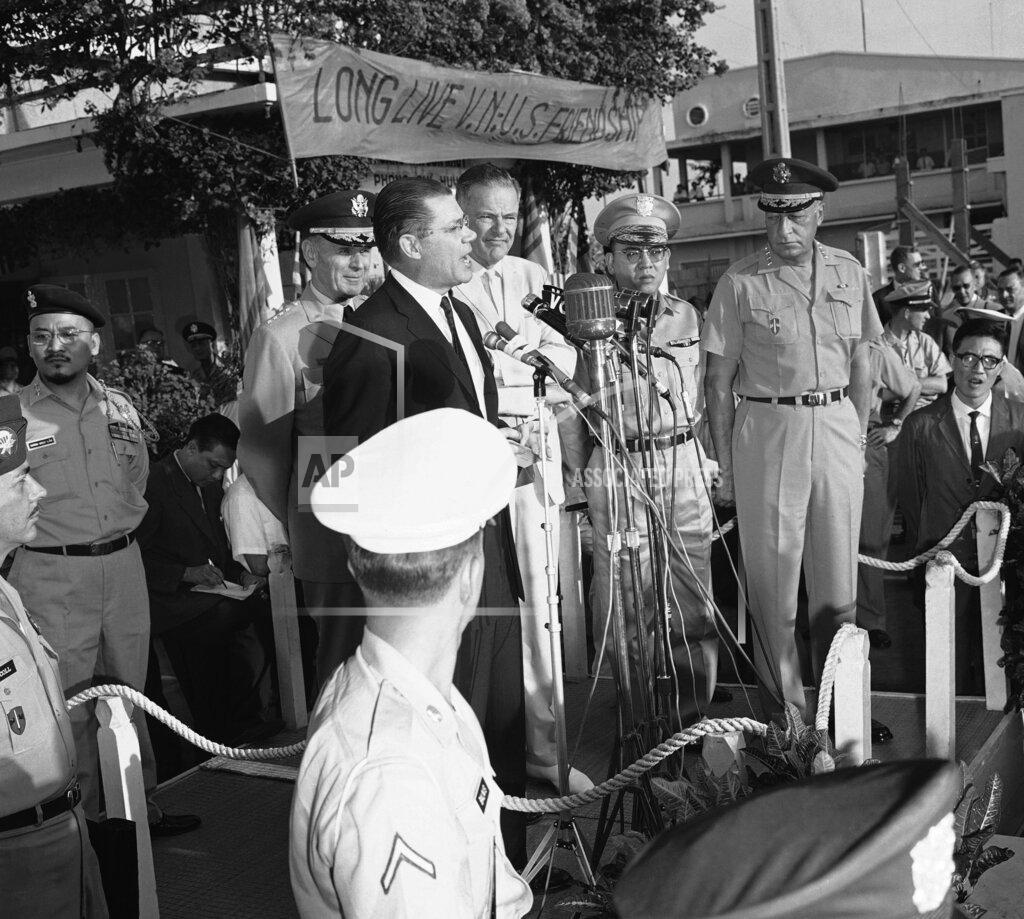
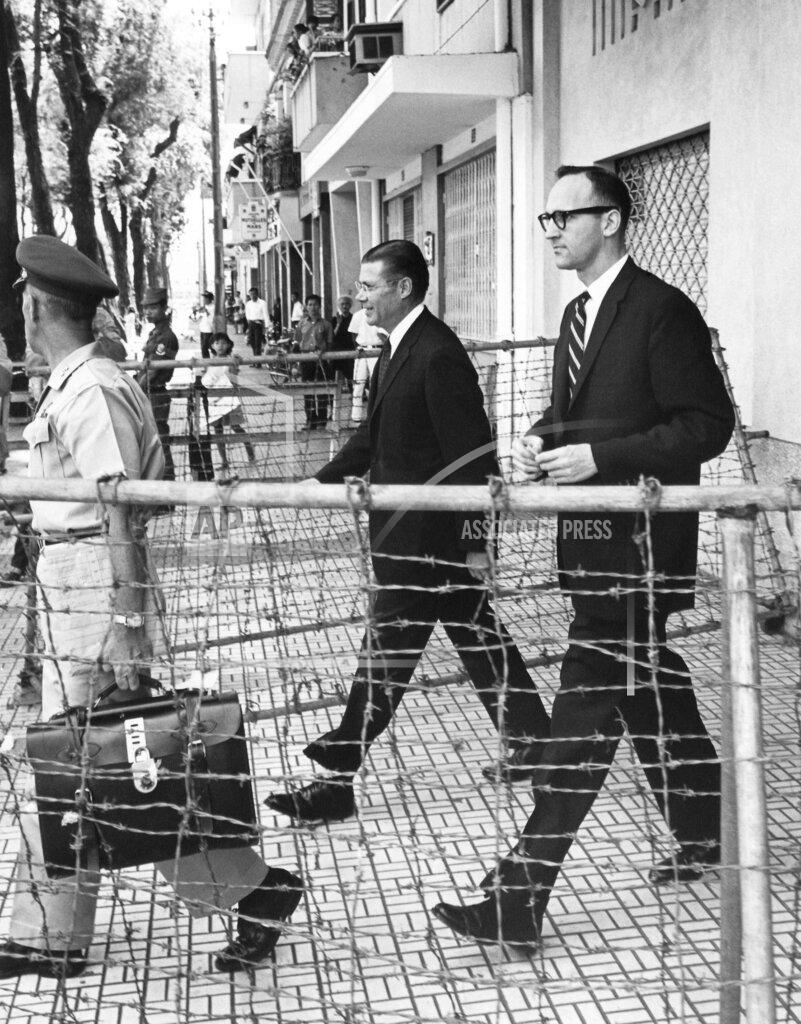
Defense Secretary McNamara and General Taylor, Chairman JCS, visit Vietnam on a four-day fact-finding mission; they are briefed by General Khánh and Ambassador Lodge and McNamara announces that “We shall stay for as long as it takes to… win the battle.”
Major General Nguyễn Khánh briefed Defense Secretary Robert S. McNamara and a high‐level United States task force today on the increased resources he considers necessary to his plan to make the countryside safe from Communist insurgents. Qualified sources said Mr. McNamara reaffirmed Washington’s full support for the new Premier in private briefings on the first day of his fact‐finding mission in South Vietnam. In outlining his government’s national “pacification” plan, General Khánh was said to have made no specific request for an increase in American aid. Nor did Mr. McNamara make any offers during his first formal session with the Premier this afternoon.
Among the detailed requirements General Khánh listed, according to informants, were more light weapons for South Vietnam’s paramilitary forces — local units that are not part of the national army. These units, mainly the Civil Guard and Self‐Defense Corps, bear prime responsibility for manning outposts throughout the country and for protecting fortified hamlets. The latter are stockaded settlements established to help the peasants resist the guerrillas. These paramilitary forces have suffered the greatest losses of weapons in the war against the Communist Việt Cộng. During 1963 the South Vietnamese Government reported that more than 8,000 modern United States and French weapons were captured by the Việt Cộng. Of about 4,000 weapons the government troops were said to have captured, many were unserviceable homemade arms. McNamara spent nearly three hours with General Khánh in an informal chat in the Premier’s office and at a formal military briefing at general staff headquarters. The two men also were alone together for about 20 minutes during a ride between meetings.
Mr. McNamara arrived this morning on his fourth mission to South Vietnam since Washington started its massive assistance program late in 1961 to defend the country from Communist rebels. He will report his findings to President Johnson for decision on future policy. In the American party, besides the Defense Secretary, were: Gen. Maxwell D. Taylor, Chairman of the Joint Chiefs of Staff: John A. McCone, Director of Central Intelligence; William D. Bundy, the new Assistant Secretary of State for the Far East; David E. Bell, administrator of the Agency for International Development; Donald M. Wilson of the United States Information Agency and William H. Sullivan, who heads the task force on South Vietnamese policy problems.
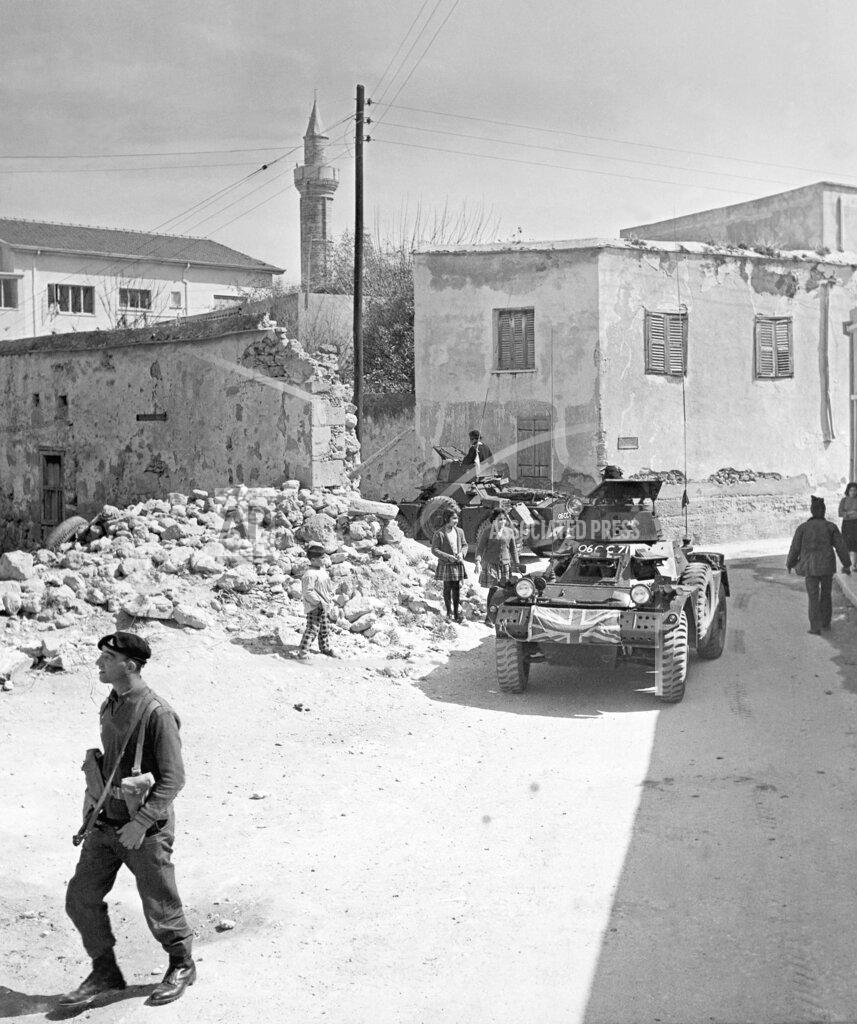
Today it was the turn of the Greek Cypriotes to weep. They wept here for their dead and dying, for their wounded and for friends and relatives still in Turkish Cypriote hands after yesterday’s clash here. Yesterday was the day of Turkish Cypriote sorrow; only 49 Turkish hostages of 207 missing were released by the Greeks in Nicosia. By tonight in Paphos, 228 Greek hostages had been released by the Turks and 55 were said to be still in Turkish custody. The percentage of those returned was much better, but still the Greeks of Paphos wept.
The Greek Cypriotes took a beating here yesterday. They lost, by a British count, six dead and 23 wounded, of whom six are said to be in extremely critical condition. The Turkish casualties were put at one dead and seven wounded. So Paphos mourned today under a warm Mediterranean sun that belied the tension and hatred. And flames of violence licked out over the island once more.
There was violence in the foothills north and east of Paphos. Greeks surrounded the Turkish village of Mallia and overran the village of Lapithou, where they took more than 20 hostages. There was violence again on the northern coast near Kyrenia, when, as it has almost every day, firing broke out between the hostile communities in and around Kazaphani. Violence also was reported around Kythrea, northeast of Nicosia, and around Athienou, southeast of the capital. So widespread were the incidents and so difficult for the overtaxed British truce forces to pin down that the only thing that seemed certain was that the incidents were increasing in number and gravity each day.
So serious, in fact, that Lieutenant General Prem Singh Gyani, who has been named to head the proposed United Nations truce force; Major General Richard Carver, commander of British truce force, and Polycarpos Georghiàdes, the Greek Cypriote Minister of the Interior, came here to try to dampen the fires. When they landed in a helicopter behind the central police headquarters, a crowd of 1,000 Greek Cypriotes cheered the United Nations commander. But quickly the atmosphere became tense as the crowd shouted “Release the hostages” and “Send the English home.” The two officers kept their composure in the milling throng, but it was clear that they were not pleased.
King Constantine took over supervision today of all official plans to honor his father, King Paul, before the monarch’s burial Thursday. Kings, other heads of state, and a wide representation of royal and nonroyal dignitaries are expected to attend the funeral. The body of King Paul, who died Friday, will be buried privately at the Tatoi royal estate, 16 miles north of Athens. Constantine, who was seen last night keeping vigil over his father’s flag‐covered coffin, held conferences today on ceremonial problems with commanders of the white‐kilted evzones of the royal guards. Four evzones, rifles reversed, stood guard over the coffin in the Hall of Trophies of the Royal Palace in Athens. It will be taken tomorrow to the Metropolitan Church, where it will stay until the funeral. Queen Mother Frederika, 47‐year‐old widow of King Paul, who kept a sleepless watch at her dying husband’s bedside, appeared in public today and seemed composed.
Premier Amin el‐Hafez accused the United States and Britain today of aiding what he called Israel’s plans for expansion at the expense of the Arabs. President Johnson’s speech in February in New York, pledging American cooperation with Israel in research on the distillation of sea water through nuclear methods was regarded here as “an aggressive act,” General el‐Hafez said. He announced Syria’s “all‐out support” for Communist China’s claim of sovereignty over Taiwan and for the admission of the Peking regime to the United Nations. As Soviet‐built jet planes whined overhead and Russian tanks rumbled past the reviewing stand, General el‐Hafez made a 75‐minute speech at a celebration marking the revolution that brought his Baathist party to power a year ago. General el‐Hafez announced Syrian support for the principle of peaceful settlement of border disputes, but added, “We reserve our right to Palestine.”
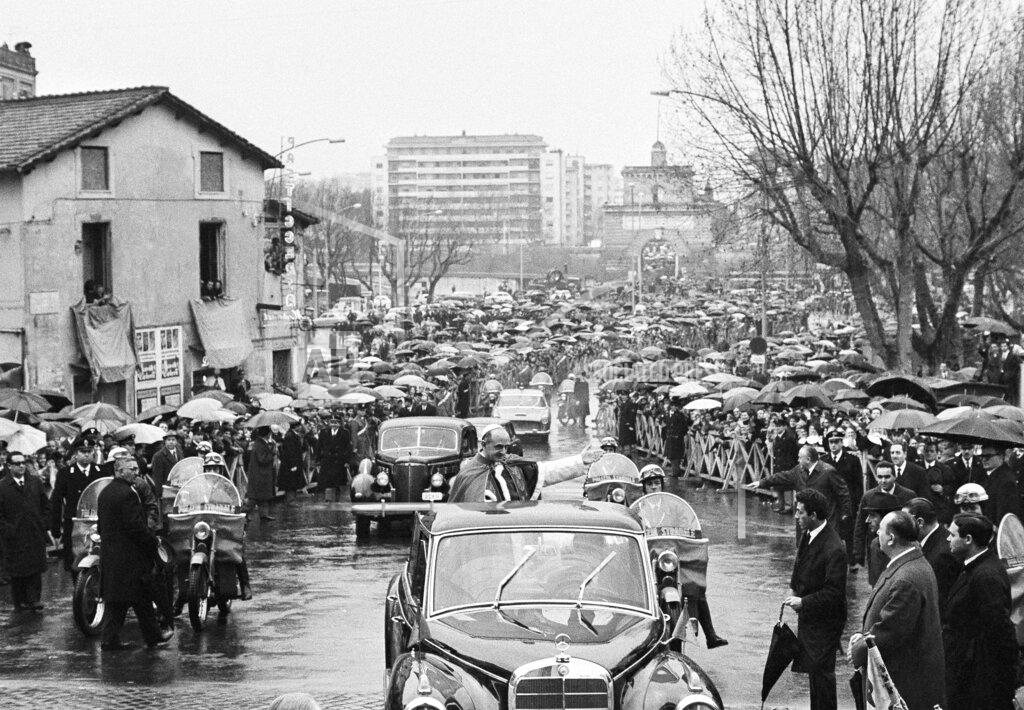
Pope Paul VI called today for a “dialogue” between Roman Catholics and Protestants with the aim of finding common ground. The Pontiff was speaking at a mass offered by him in St. Peter’s Basilica this morning to commemorate the 400th anniversary of the end of the Council of Trent. About 5,000 pilgrims from Trent and other places in Northern Italy were in the congregation. At noon, car horns blared a greeting and firemen clambered up aerial ladders and waved as the Pope appeared at a window overlooking St. Peter’s Square to bless several hundred vehicles assembled there. The vehicles had paraded across the center of Rome to the Vatican after a mass celebrated at the Colosseum in honor of St. Frances of Rome, patron saint of motorists, whose feast day is tomorrow.
In a short speech, the Pontiff urged prayers for all motorists. He said they were rendering an important service that was becoming more and more complex and dangerous. Churchmen commenting on Pope Paul’s address in the basilica stressed the warmth with which they said he had spoken about the Catholic desire for peace with Protestantism. They pointed out that the Vatican’s new ecumenism, or effort to promote Christian unity, had so far been directed mainly at Eastern Orthodoxy. It was recalled that Pope Paul’s most noteworthy ecumenical gesture up to now was his meetings with Athenagoras I, Greek Orthodox Patriarch of Constantinople (Istanbul), in Jerusalem, January 5 and 6. The Pope and the Patriarch agreed that talks on doctrinal unity should be opened.
Karol Wojtyla was enthroned as the Roman Catholic Archbishop of Krakow at the Wawel Cathedral in Poland’s city of Krakow. In 1978, Archbishop Wojtyla would become Pope John Paul II.
Zanzibar’s revolutionary Government nationalized the island’s agriculture today. All farms and clove plantations immediately became the property of what the regime calls the Zanzibar People’s Republic, according to official word reaching here. The Government also seized certain private buildings and a number of private clubs that catered specifically to white, Asian, Arab or African membership. These clubs were held to be “racial.” Armed guards stood at the entrances of at least eight clubs tonight.
A DC-3 airplane, operated by Taxader Air Lines, crashed in Colombia while making a flight from Pereira to Bogota, killing the 25 passengers and five crew.
In Washington, Senator Hubert H. Humphrey appealed today to Democratic and Republican supporters of the civil rights bill to put aside considerations of partisan advantages and pull together for passage of the measure intact. In an interview on the eve of the long‐awaited Senate battle, the Minnesota Democrat, floor manager of the bill, said: “We need the same degree of bipartisan cooperation in the Senate as they had in the House. This is not a partisan issue. This is a national and moral issue, and if we succeed, as I know we will, it will be because men like Senator Everett McKinley Dirksen, Senator Thomas H. Kuchel and other Republicans have put the interest of their country above any partisan advantage.”
Senator Dirksen of Illinois is the Senate Republican leader. Senator Kuchel of California will lead the Republican team in charge of various sections of the bill, as Mr. Humphrey, the majority whip, heads the Democratic team. The battle gets under way tomorrow when Mike Mansfield of Montana, the majority leader, moves to take up the measure passed by the House February 10 by the lopsided vote of 290 to 130. Mr. Mansfield’s motion is debatable, and the Southern forces are expected to talk against it for several days.
Mr. Humphrey sought to reassure Republican supporters of the bill that no deal would be offered by the Administration whereby the bill would be watered down so as not to risk a defeat on a motion to close debate. Closure, as it is called, requires approval by two‐thirds of the Senators present and voting, or 67 if all members are recorded. “Everything is going to be talked over with the Republicans — strategy, tactics and timing,” Mr. Humphrey said. “We have obligations not only to the Republicans in the Senate but to those of both parties in the House who were so faithful and effective.” Later, on the National Broadcasting Company’s television program, “Meet the Press,” Mr. Humphrey declared “there will be no wheels, no deals, no compromise that will fundamentally alter this bill.”
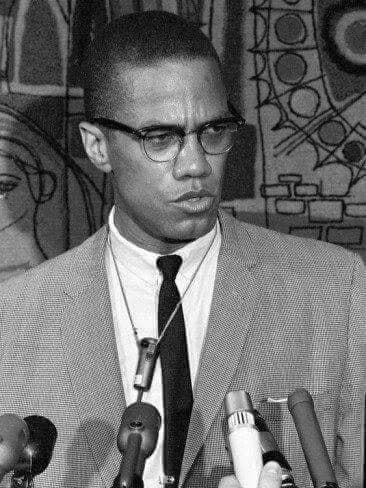
Malcolm X, who had been suspended from the Nation of Islam, announced in New York City that he was forming a black nationalist party. “I remain a Muslim,” he told reporters, “But the main emphasis of the new movement will be black nationalism as a political concept and form of social action against the white oppressors.” Three days later, he incorporated his new organization as Muslim Mosque, Inc. and established a headquarters at the Hotel Theresa in the Harlem section of New York City, at 125th Street and Seventh Avenue. Malcolm X called a 11:00 A.M. press conference at Park Sheraton Hotel, at which he issues copy of his March 8th statement and his telegram to Elijah Muhammad. The press conference in Tapestry Suite of Park Sheraton Hotel, New York is to an audience of 6 that listened as Malcolm X read a prepared statement and a telegram he sent to Elijah Muhammad.
In part of his prepared statement he said: “Internal differences within the Nation of Islam forced me out of it. I did not leave of my own free will. But now that it has happened, I intend to make the most of it. Now that I have more independence of action, I intend to use a more flexible approach toward working with others to get a solution to this problem.”
Two days later, on March 10th, Malcolm X told Ebony magazine that the Black Muslim leaders have “got to kill me. They can’t afford to let me live… I know where the bodies are buried. And if they press me, I’ll exhume some.”
New Hampshire’s Republicans will choose Tuesday among five declared and at least two undeclared candidates for the Presidential nomination.
Or will they?
No one is sure who will win here — and some think no one will. The most common prediction is for a fragmented vote, with no conclusive outcome. In that event — if no Republican contending here wins a clear and undisputed victory — the effect will probably be to intensify the party’s search for some candidate other than the so‐called front‐runners, Senator Barry Goldwater of Arizona and Governor Rockefeller.
Thus, the real gains in the New Hampshire primary could be scored by someone not even involved here — someone like Governor William W. Scranton of Pennsylvania. Nevertheless, the front‐runners have been campaigning in New Hampshire as if the whole race would be settled in this state on March 10. Senator Goldwater says he will come in first, with about 40 percent of the vote. Ambassador Henry Cabot Lodge, he suggests, will poll a heavy write‐in vote and nose out Governor Rockefeller for second place. Governor Rockefeller’s spokesmen, on the other hand, say their champion will come in first, with more than 30 percent of the votes. Ambassador Lodge, they suggest, will poll a heavy write‐in vote and nose out Senator Goldwater for second place.
Richard M. Nixon forecast today a “very close” vote in the New Hampshire Republican Presidential primary, with Ambassador Henry Cabot Lodge cutting significantly into Governor Rockefeller’s total. The former Vice President said he thought the write‐in vote in New Hampshire Tuesday would be “unprecedented” in size. He, did not predict how he, himself would figure in this vote. He said he had no intention of making any announcement soon about his own plans in regard to the Republican Presidential nomination.
Supporters of Henry Cabot Lodge wore the broadest smiles of all today among the campaign forces left in New Hampshire, two days before the Presidential primary. The Ambassador reasserted in Saigon today that “I am not a candidate,” but his volunteer corps here brushed this aside. On this pleasant Sunday afternoon, many New Hampshire residents were on the road visiting relatives or out on the ski slopes. But random calls to those who could be found at home disclosed that the name Lodge was being most frequently mentioned among those discussing the campaign at all.
Senator Barry Goldwater and his advisers are turning their attention to the California primary, even before the votes are counted in the New Hampshire election. Mr. Goldwater’s campaign manager, Denison Kitchel, said he believed that Governor Rockefeller would attempt to make the John Birch Society and Social Security the main issues in the California Presidential primary, to be held June 2. The California primary, in which 86 pledged delegates to the Republican National Convention will be elected, is the last primary before the convention, and may be decisively important. The New Hampshire primary, which will be held Tuesday, is the first of 1964.
Born:
Lance McCullers, MLB pitcher (San Diego Padres, New York Yankees, Detroit Tigers, Texas Rangers), in Tampa, Florida.
John Teltschik, NFL punter (Philadelphia Eagles), in Floresville, Texas.
Charles Crawford, NFL running back (Philadelphia Eagles), in Bristow, Oklahoma.
Peter [Ped] Gill, British drummer (Frankie Goes to Hollywood – “Relax”), in Liverpool, England.
Amy Alkon, American advice columnist (“Ask the Advice Goddess”) and author (“Good Manners for Nice People Who Sometimes Say F*ck”), in Farmington Hills, Michigan.
 History Diaries