Communist supporters of former Premier Juan Negrín, refusing to join the new National Defense Council, attempted to carry out a coup d’état in Madrid at dawn. Although the situation has not yet become normal, the council has the upper hand and announces the rebels are holding out only in a few strongholds. Republican war planes in the afternoon bombed a group of soldiers led by Communists, the Madrid radio announced. It was said the Communists had been led to believe the Republican air force was in the hands of the Communists. “This is quite false,” the announcer added.
While General Miaja sought a three-week truce, according to Associated Press dispatches from Paris, his regime strove to cope with Communist outbreaks in Albacete, Cuenca, Guadalajara, and Murcia also. Nationalist sources said Republican fliers had bombed houses on the outskirts of Madrid suspected of sheltering Communists. It was officially stated that the officer in command at the Republican naval base at Cartagena reported the revolt there had been quelled and that National Defense Council forces were in full command. It was not stated whether he referred to the rebellion that occurred Sunday against the Negrín government or a later uprising.
The revolt in Madrid began in the old Hippodrome and the working class quarter of Cuatro Caminos. Residents of Madrid first learned that anything was seriously amiss in the city in mid-morning, when the Madrid wireless station announced a Communist uprising. Machine-gun fire and rifle shots were heard in the morning, but by afternoon the Communists in the Hippodrome had surrendered. For a while people were not allowed to circulate in the streets without special passes, but this prohibition was later lifted. Street car and underground services were restricted. At 2:30 in the afternoon a broadcast assured the Madrid public they need not be alarmed when Republican war planes flew over. Nationalist machines also passed over in observation flights. Entry into the capital was restricted, but the general impression in the city was that the trouble would soon be over.
Nationalist radio insists that Franco will conquer Madrid as he conquered Barcelona, and no amnesty will be given. “Generalissmo [Francisco] Franco needs no foreign intervention or pacts to arrange Madrid’s surrender — he will conquer Madrid as he conquered Barcelona, as he arrived at the Mediterranean Sea and as he arrived at Catalonia’s French frontier.”
This blunt statement, broadcast by the Nationalist radio station in Burgos, gave Spain and the outside world today some idea of the trend that the latest developments in Spain might take. Press comment indicates that the events of yesterday and Sunday in Madrid and Cartagena contained no element of surprise for any one in Nationalist Spain.
The flight to France of Premier Juan Negrín of the Republican regime, the establishment of a Republican defense junta headed by General José Miaja and the harsh recriminations in the Madrid press against “traitorous” leaders are regarded as inevitable events that are “finally seen to be opening the eyes of foreign sympathizers with these supposed Spanish upholders of truly democratic ideals, broad religious tolerance and general social betterment.”
Virtually all Leftist Republican and Marxist political leaders, the press here declares, have taken sufficient means out of the country to assure their living comfortably in safe refuges that they prepared long ago. One newspaper says: “Even though confiscated jewelry, art treasures and other private wealth valued conservatively at several hundred million gold pesetas had to be abandoned in the old castle fortress overlooking Figueras when the retreating Republicans murdered the Bishop of Teruel and forty-one other political prisoners at the last minute before they dashed across the frontier into France, it appears that Azaña, Prieto, Largo Caballero, Alvarez del Vayo, Martinez Barrio, Giral, Casares, Quiroga, Companys, Aguirre and the rest of their coterie will not be dependent on the charity of the countries that give them asylum.”
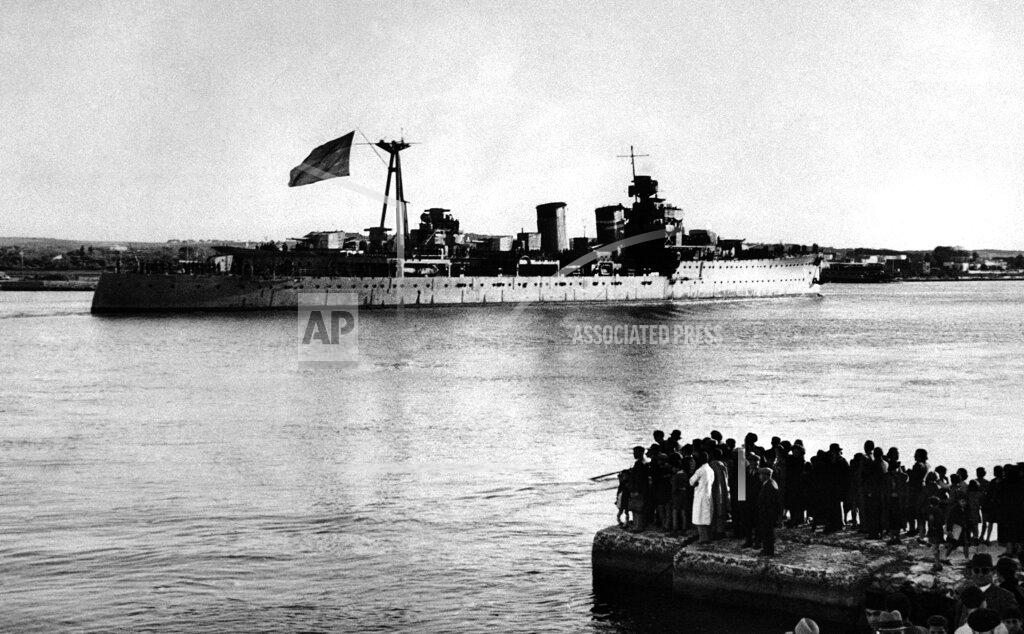
The Cartagena Uprising was suppressed. The merchant steamship Castillo de Olite carrying over 2,000 Nationalist troops was sunk by shore batteries, in one of the last naval actions of the Spanish Civil War.
The Spanish Republican fleet sails into internment at Bizerte, Tunisia.
According to news reaching France from Spanish Nationalist forces outside Madrid, street battles were in progress tonight in the Jarama section between General José Miaja’s troops and Communists. The Communist movement was said to be growing, despite broadcasts over the Madrid radio urging the people to have confidence in the new National Defense Council. Republican planes were said to have been bombing buildings on the outskirts of the city suspected of being Communist refuges.
Informed sources in Paris reported that General José Miaja, head of the day-old Madrid regime, was trying to arrange a three-week armistice by direct negotiation with the Nationalists as merely “a pause before surrendering.” One of the Republican broadcasts warned Madrid residents that army planes would bomb Communist strongholds.
“There is no reason for alarm,” it declared. “It is the Republican aviation in the service of the National Defense Council which flies over Madrid. Salute the comrades!” A few minutes later the planes roared over the city, dropping their bombs in zones held by Communists. Apparently General Miaja’s planes limited their bombings to Communist strongholds in the Cuatro Caminos section of Northern Madrid. A National Defense Council communiqué said resistance was limited to that quarter.
Generalissimo Francisco Franco tonight watched the Republican-Communist fighting in Madrid, convinced that it would save him trouble. General Franco is anxious to take the city without further destruction. Nationalist sources said that if Republican troops should wipe out the Communists, that news would be welcomed here. The Burgos regime classifies many of the Communist leaders as “criminals.”
Surrender overtures were expected soon from General José Miaja, unless the internal situation in Madrid upset his plans. Nationalist newspapers insisted General Franco would not barter with the Republicans. Nationalist sources pointed out it was unlikely that General Franco would order an attack on Madrid, asserting that the internal situation there might result in the city’s fall soon with little if any fighting.
Hitler hands the former Czech province of Ruthenia, obtained through the Munich Agreement, over to Hungary.
The Bible still outsells Mein Kampf in Germany.
The Czech police patrol the Ukraine area after a change in Carpatho-Ukraine government.
Armand Călinescu became Prime Minister of Rumania.
Rumania will honor the body of the patriarch, Miron Cristea.
The U.S. German Consul states that Hitler’s “heir” is already chosen, but no announcement is forthcoming.
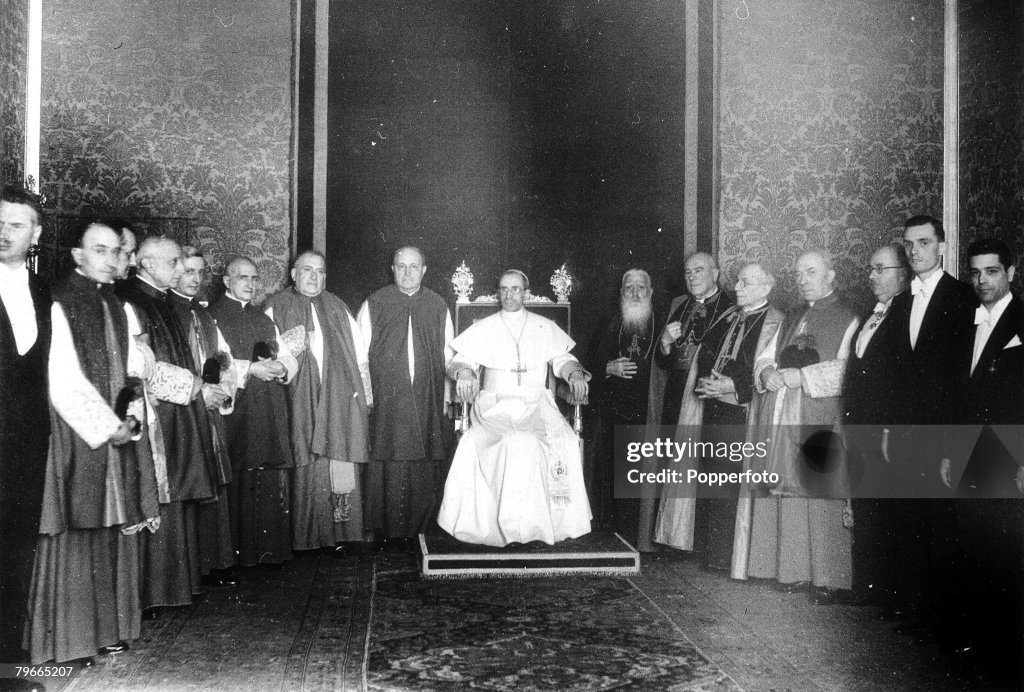
Pius XII will review pleas that he head a world religious order during crisis.
The Vatican bans all reporters after the press reports on a meeting between the Pope and German Cardinals.
The foreign policy of the United States is designed not only to preserve peace in the Western Hemisphere but to “make some contribution to the preservation of peace in other parts of the world,” Senator Barkley stated on the floor of the Senate today. He spoke for nearly two hours defending the Administration’s conduct of foreign relations, the speech coming just before the Senate) passed the $358,000,000 Air Corps expansion bill, vehicle for a week’s debate on foreign policy, by a vote of 77 to 8.
He declared that the Neutrality Act had not tended to preserve the world’s peace by its operation — a view which was confirmed later in the day by President Roosevelt at the White House. The two statements, coming so closely together and doubtless made after consultation between Mr. Roosevelt and the Democratic leader of the Senate, led to the conclusion that the Administration would soon seek repeal or revision of the Neutrality Act.
Thus far, Administration leaders in Congress have blocked efforts to consider changes in the act, although its “cash and carry” section expires by limitation May 1. They wanted to see how the foreign policy debates prompted in both houses by the bills to carry into effect President Roosevelt’s emergency national defense message of January 12 demonstrate any changes in public sentiment.
President Franklin Roosevelt openly states opposition to the current neutrality laws. President Roosevelt came out definitely today against the neutrality legislation that has been on the statute books for the last three years. Opposition also was declared by the President to the revived Ludlow Resolution, which a group of twelve Senators and associates of similar views in the House are seeking to have Congress enact. It calls for a constitutional amendment which would require a popular referendum for a declaration of war outside the American hemisphere, except in case of an attack on the United States or its possessions.
The President made his position known in response to questions at his press conference. Asked whether the neutrality legislation had contributed to the cause of peace, he replied that if the question could be answered categorically, he would say no. Then, when he was asked if the neutrality law had contributed in the other direction — to war — he replied that, in some respects, yes. But he was not prepared to go into details. As for the Ludlow Resolution, he considered it was better to keep the war powers vested where they are, in the representative system of the government structure.
It was the most forthright declaration the President has made against the neutrality laws. Yet his statement occasioned little surprise, for he indicated the way his mind was working in his annual message to Congress in January, while the dissatisfaction of the Administration with the legislation has long been apparent. His statement was considered particularly important, however, because of the sharp focus into which he drew his views, and the contribution his remarks made to the growing debate on American foreign policy and its objectives.
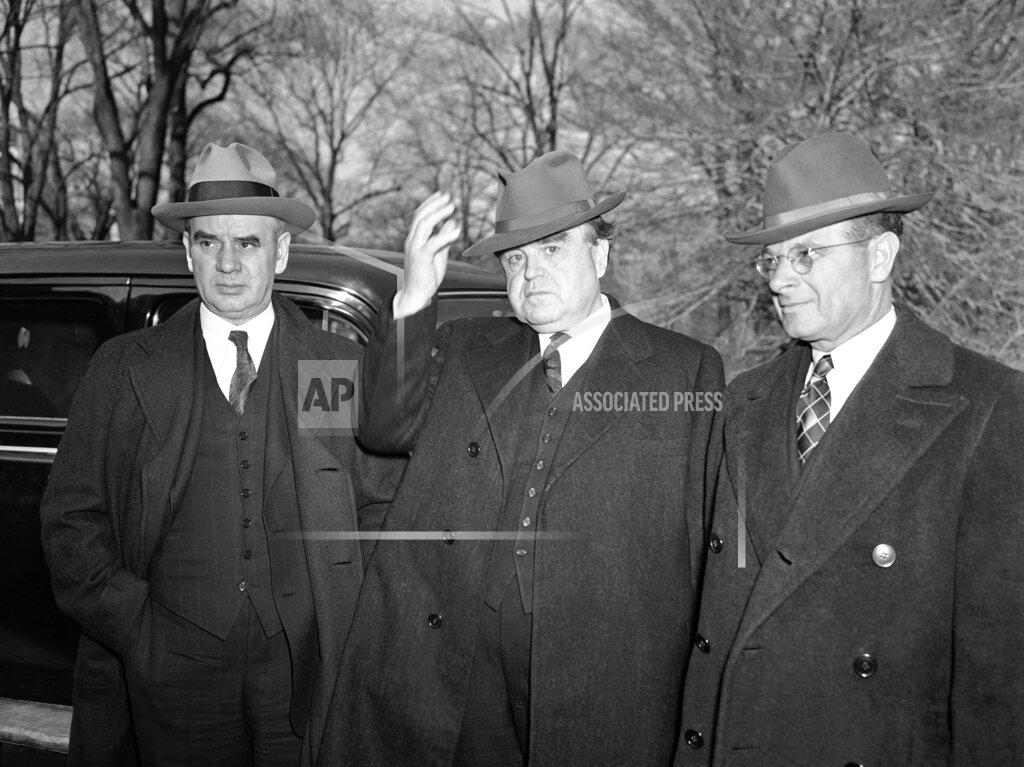
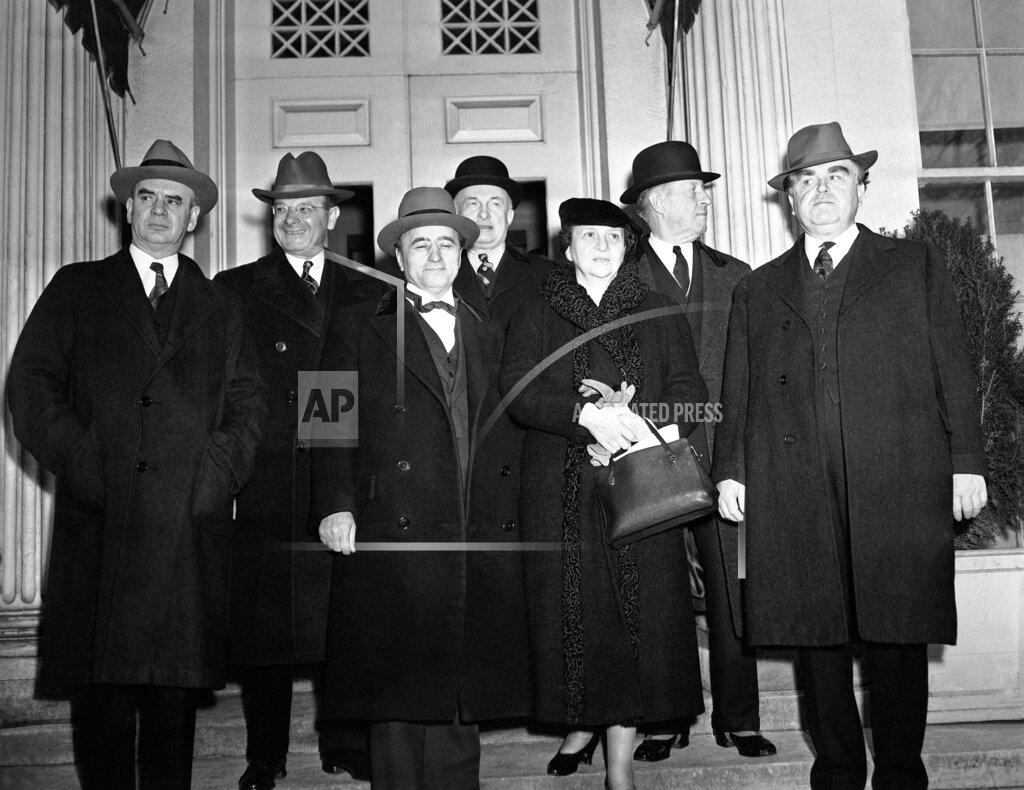
After President Roosevelt had requested committees of the American Federation of Labor and the Congress of Industrial Organizations to explore every possibility for peace and unity in the labor movement, the CIO today proposed solving the problem by forming a new organization, the American Congress of Labor. The new congress would “supersede and embrace” the AFL and the CIO and would include the independent Big Four railway brotherhoods. After the White House session, the AFL spokesmen rejected the proposal, asserting that it offered no possibilities for peace and “was not even designed for serious consideration.”
The labor peace conferees will reconvene at 10 AM tomorrow in the Department of Labor Building. They will be joined by Daniel J. Tobin, president of the International Brotherhood of Teamsters, who declined appointment on the AFL committee last week, but reconsidered his decision. The AFL committee is composed of Harry C. Bates, chairman; Matthew Woll and Thomas A. Rickert. The CIO committee consists of John L. Lewis, Philip Murray and Sidney Hillman.
President Roosevelt is expected to summon a White House conference of Secretary Morgenthau, Under-Secretary Hanes and other Treasury tax experts within two or three days, probably tomorrow, to frame tax revision proposals to be made to Congress in the interest of increased business recovery. This information became current this afternoon coincidental with a White House press conference, where the President uttered a series of remarks which, on the whole, encouraged the more optimistic backers of the movement for government-business peace.
The President denied that he had made up his mind to press for $150,000,000 additional for work relief for the present fiscal year, as reported at the Capitol yesterday. The President declined to be drawn into a discussion of the Congressional economy drive, explaining that he wanted to avoid dissension on the subject. He turned off as of no immediate importance the question of raising the national debt limit $5,000,000,000 to $50,000,000,000, a move opposed by the economy group in Congress.
Admiral William Leahy, Chief of Naval Operations states that the U.S. fleet’s air force is now superior to any in the world.
A war objector confesses to tossing a bomb into the audience at the Chicago Grand Opera Company in 1917, and says he is glad no one was hurt.
Ousted UAW president Homer Martin starts an independent union.
American Hebrew Magazine awards President Franklin Roosevelt a medal for promoting religious tolerance.
The Father of the Dionne quintuplets does not understand why the British King and Queen ask the children to travel 180 miles to Toronto, rather than travelling to the United States to see them in their nursery.
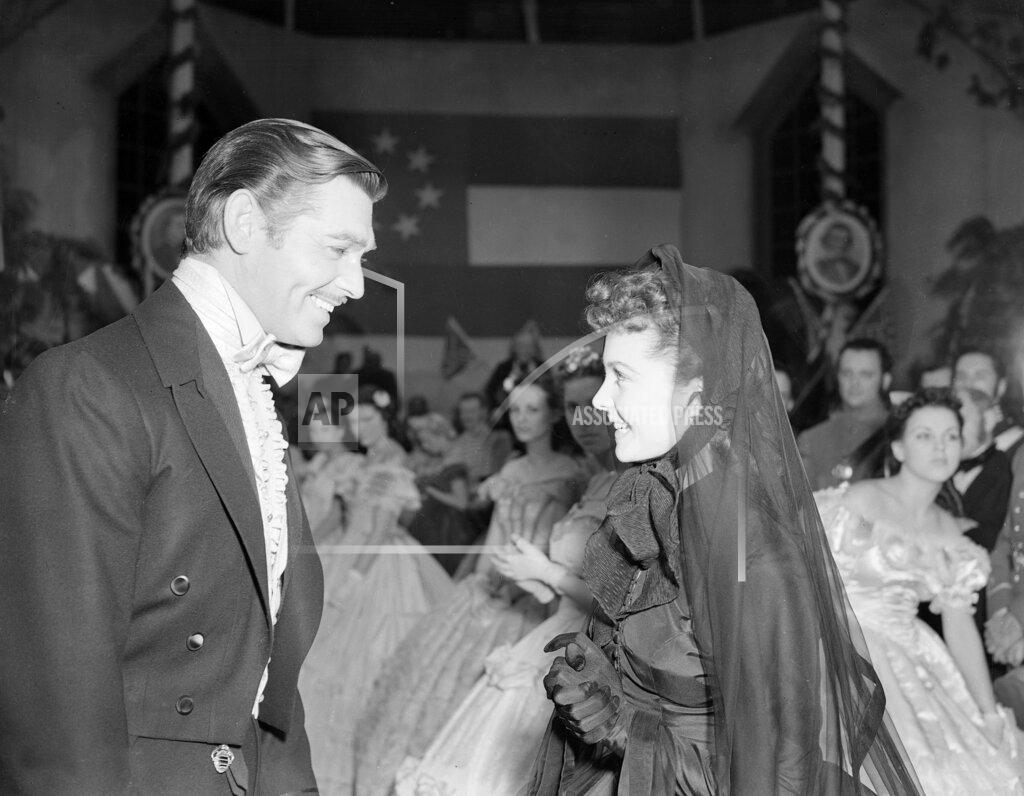
Clark Gable’s wife Rhea obtains a divorce on grounds of desertion. He has announced that he will marry actress Carole Lombard.
Glamour magazine begins publishing.
Guy Lombardo & The Royal Canadians first record “Auld Lang Syne.”
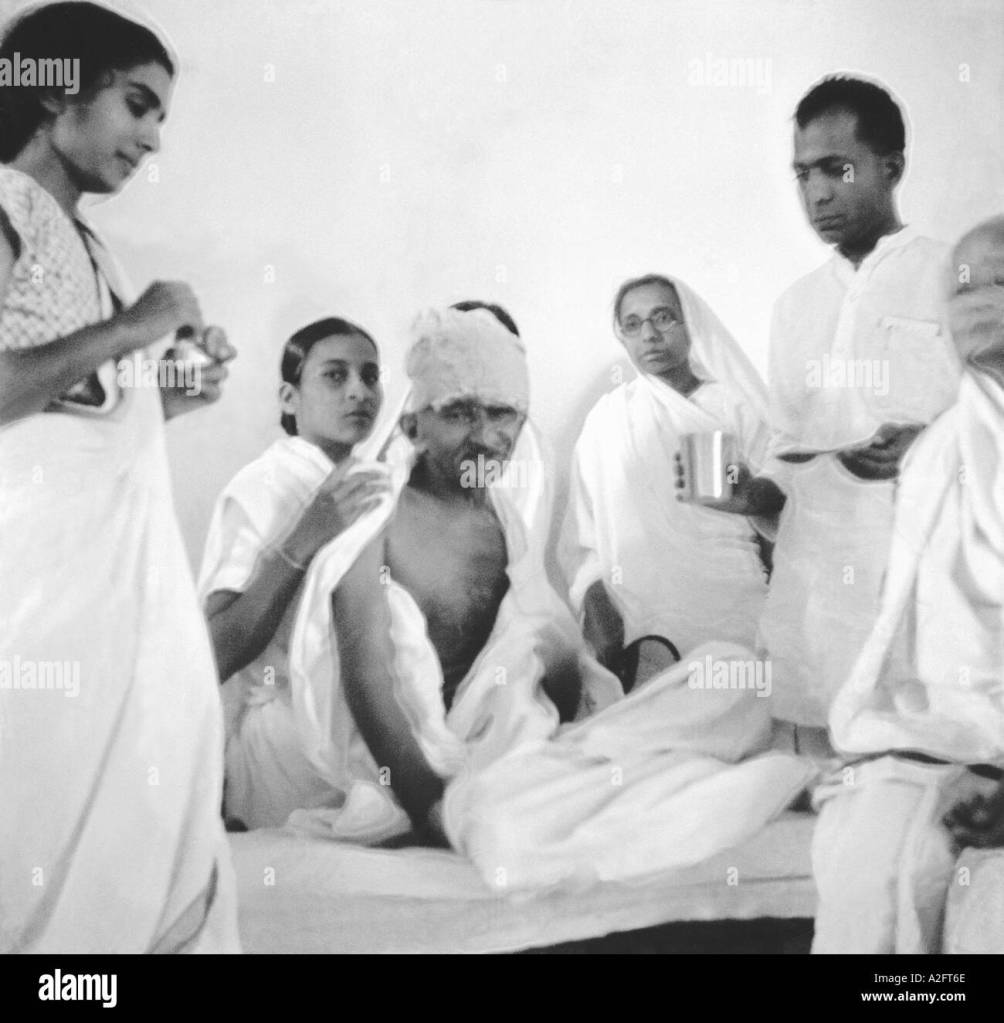
Gandhi ends his fast, sipping orange juice after reform concessions are made. Gandhi ended his four-day fast and accepted an invitation from Viceroy of India the Marquess of Linlithgow to attend a political conference in New Delhi.
Choibalsan ordered the arrest of Prime Minister Amar of the separatist Mongolian state in China.
The Chinese admit the loss of Chungsiang on the Han River, 170 miles northwest of Hankow, but say they still are contesting the Japanese drive into Central Hupeh, west and north of Chungsiang. The Chinese also contend the Japanese have made no headway west of the Han River. Observers in Chungking believe the new Japanese offensive may develop into a prolonged push west of Chungalang toward Tchang, about 240 miles southwest, and north toward Siangyang, up the Han Valley. The drive toward Siangyang, it is believed, would be a maneuver connected with a general attack on Sian, the capital of Shensi Province. The Chinese are tearing up the tracks of the Peiping-Hankow Railway between Sinying and Chengchow and of the Lunghai Railway between Chengchow and Loyang to hinder Japanese operations across Western Hunan Province. The rails are being used to extend the Lunghai Railway from Paoki, in Shensi, to Lanchow, in Kamu Province.
Chungking representatives of mission hospitals in Northern Honan have been advised to immediately rush through supplies scheduled to be sent to the region before the Loyang-Chengchow section of the Lunghai Railway is removed. Ningsia, the capital of the semidesert northern border province of Ningsia, was bombed by fifteen Japanese planes Sunday, the Central News reports. Other Chinese cities bombed on Sunday were Tenan, the Communist center in Shensi, Hancheng, on the Shensi Shansi border, and Fancheng and Biangyang in Northern Hupeh. The destruction and casualties in these raids were not reported.
The assignment of caring for wounded Chinese soldiers in transit from the fronts to base hospitals over an area embracing the active war zones of five provinces has been given to the National Christian Service Council for Wounded Soldiers in Transit. The organization was formed last year by American and Chinese Christians to supplement the regular services for the wounded. The Christian group is setting up 120 stations along the routes between the fronts and the rear in Shensi, Shansi, Honan, Hupeh and Kwangtung. At these stations workers will provide food, water, bedding, and first aid for the injured. Heretofore merely a supplementary organization, the council now assumes a prominent role. It has received government appropriations totaling nearly 300,000 Chinese dollars.
The Japanese reported steady progress today in a renewal of fighting designed to block off China’s Communist-dominated Northwest armies and strengthen the Japanese position in Central China. Japanese armies were reported driving westward across Hupeh Province, more than 500 miles west of Shanghai, against an army of 300,000 Chinese. Japanese said this Chinese army south of the Lunghai Railroad and west of the Peiping-Hankow line was an obstacle to cooperation between Japanese armies in North and Central China.
Although Japanese reports pictured the Chinese force as in retreat, Chinese reported that their armies were matching rifles against artillery and aerial bombs and checking the invaders. In Northern Kiangsu Province, Japanese reported continued success but admitted strong Chinese opposition. This area, between Shanghai and Japanese-occupied Shantung Province, is in the territory presumably under Japanese occupation.
Dow Jones Industrial Average: 149.37 (+0.53).
Born:
Marion Marlowe, American singer (“Arthur Godfrey & Friends”), in St Louis, Missouri (d. 2012).
George Hultz, NFL defensive tackle (St. Louis Cardinals), in Moss Point, Mississippi.
Naval Construction:
The Вое́нно-морско́й флот СССР (ВМФ) (Soviet Navy) Project 7U-class (Storozhevoy-class) destroyer Sposobny (Способный, “Capable”) is laid down by 61 Kommunara (Nikolajev, U.S.S.R.) / Yard 200.
The Nihon Kaigun (Imperial Japanese Navy) B1 type submarine I-15 is launched by the Kure Naval Arsenal (Kure, Japan).
The Вое́нно-морско́й флот СССР (ВМФ) (Soviet Navy) Project 7-class (Gnevny-class) destroyer Bystry (Быстрый, “Fast”) is completed.
 History Diaries