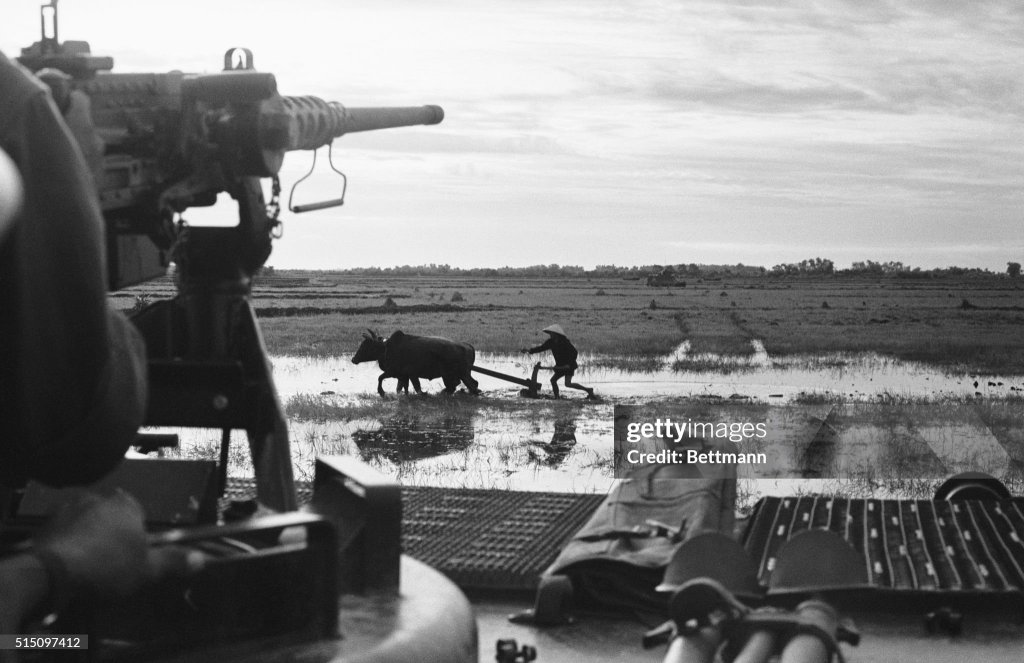
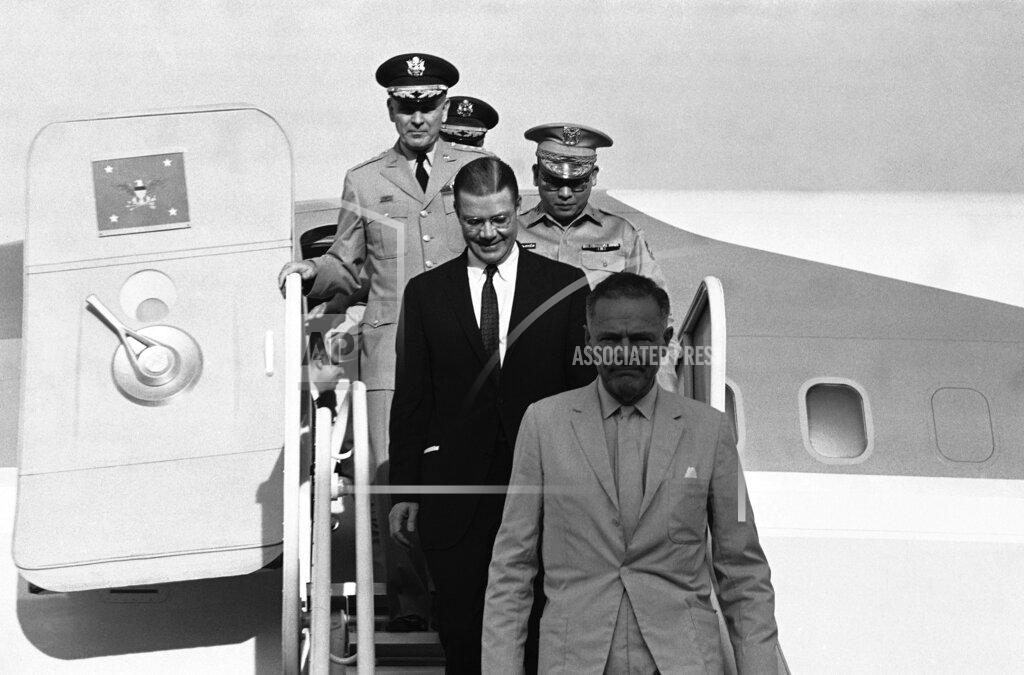
In a 15-page policy paper. General Khánh sets forth a comprehensive reform program to rebuild South Vietnam’s political and administrative structures and raise the standard of living. Premier Nguyễn Khánh announced yesterday a, one‐year reform program to rebuild South Vietnam’s political and administrative structure. The program was rushed to completion on the eve of the arrival of the United States Secretary of Defense, Robert S. McNamara, on a mission to evaluate the war effort against the Communist guerrillas. It calls for the progressive decentralization of governmental machinery and injections of youth and responsibility into the Administration. Discipline will be tightened. Mr. McNamara flew in this morning. He promised cheering crowds of young Vietnamese the fullest United States support for “as long as it takes” to defeat the Việt Cộng rebels.
Praising General Khánh for his “leadership and military ability,” Mr. McNamara said emphatically: “The United States intends to cooperate with the new Government here in the extensive national program to mobilize Vietnam’s military, civilian and economic resources against the Việt Cộng.” Premier Khánh’s comprehensive “plan of action” which covered 15 pages in the Vietnamese text, has been scrutinized for the last three weeks. American advisers worked closely with Vietnamese officials on the phrasing of key passages as well as on specific proposals. In producing such a policy platform, General Khánh and his American supporters hope to set South Vietnam’s hitherto faltering Government on a path of stability.
“Plans like this are only the first steps,” said one American official, “and they’re only on paper.” Both Americans and Vietnamese officials believe the true test of Premier Khánh’s staying power will be how quickly and effectively he can put his concepts into execution. “The Government has solemnly pledged to deploy all its efforts to establish the basic institutions in the record time of one year,” Premier Khánh said, “laying a solid foundation for the task of national salvation and development.”
For the war effort against the Communist guerrillas General Khánh proposed modifications in the basic strategy of grouping peasants together in fortified hamlets for protection. “The previous strategic hamlet program followed the principle of building too many hamlets too quickly,” the general said. “We shall be more realistic, insist on quality rather than quantity, giving equal stress to the security factor and to the living standard of the population.”
In a press conference, President Johnson says that the United States will move armed forces to and from South Vietnam depending on the need; he also says no decision has been made on removing U.S. dependents from Vietnam. The President’s statement at a news conference was the first official suggestion that more men would be sent as advisers to the South Vietnamese Army if they were needed. However, Mr. Johnson did not predict an additional commitment of forces. He made the, point, he said, only to indicate that the occasional withdrawal of men whose missions were completed should not be taken as a sign of flagging American interest in the defense of South Vietnam. A careful evaluation of future policy, the President said, must await the return from Vietnam next week of a study group headed by Secretary of Defense Robert S. McNamara.
He made only an oblique reference to differences with President de Gaulle of France, saying that “we want to believe that there are no irreconcilable differences between us.” Like Secretary of State Dean Rusk yesterday, the President made no critical remarks about French diplomacy. Mr. Johnson ignored French advocacy of “neutralization” for Southeast Asia and repeated the Administration’s view that Paris had not made any “specific detailed” proposals to end the war in Vietnam.
“A good deal” of the decision on future American troop movements, the President said, will depend on their report. Mr. Johnson was careful to speak of the U. S. forces as advisers and trainers of the South Vietnamese, a phrasing that is intended to make clear that the United States has not formally committed its own troops to battle there. Speculation about an American withdrawal from Vietnam has persisted side by side with speculation about a greater United States involvement and possible extension of the war into North Vietnam. Both types of speculation derive from past Administration statements. Talk of a withdrawal began after an official announcement last fall that most U.S. troops in Vietnam would be able to return home by the end of 1965. Further, as predicted, the first 1,000 men were withdrawn in December, leaving an American force now said to number 15,500.
Mr. Johnson said that the policy of withdrawals had not been properly understood. Troops would be recalled, he asserted, only when they complete a particular mission, as did several hundred military policemen among the 1,000 brought home in December. From time to time, others will be withdrawn, but if additional men are needed, they will be sent, he added. The Administration was “just as interested in South Vietnam as we have always been,” he said.
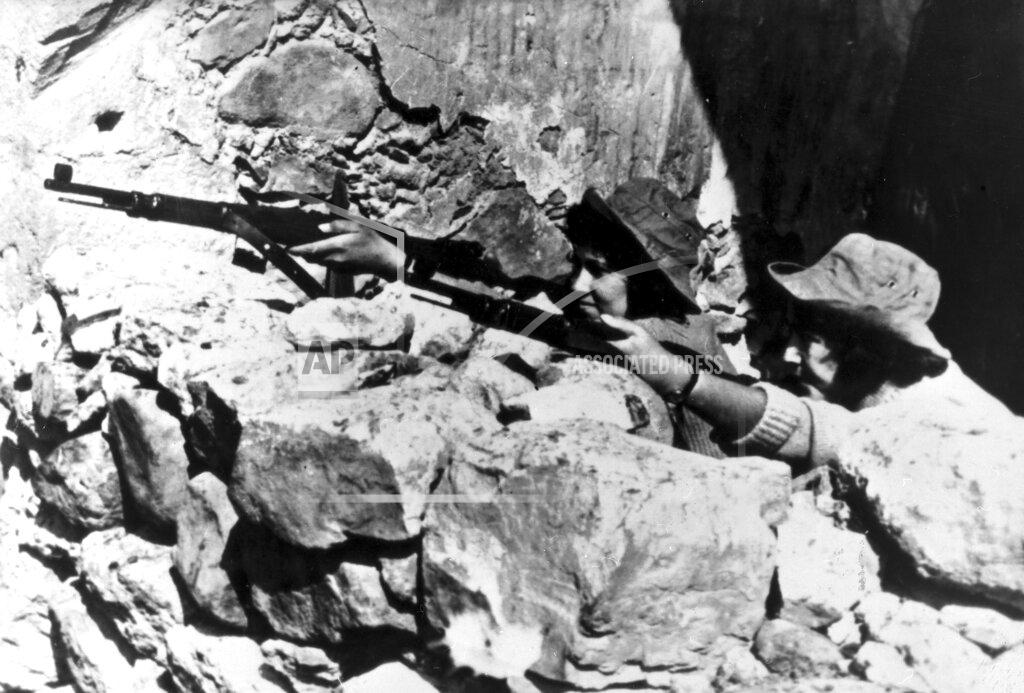
In scattered clashes, the ARVN reports killing 52 Việt Cộng and capturing 33.
The United States has assumed the initiative in diplomatic moves to bring about a four‐power conference to guarantee the borders and neutrality of Cambodia. At the conference an effort would be made to establish international supervision of Cambodia’s frontiers. This would have the effect of impeding the Communist Việt Cộng guerrillas in their use of Cambodia as a sanctuary and supply base for operations in South Vietnam. It was understood that Thailand and South Vietnam had been urged to accept the proposal for such a conference put forward last month by Prince Norodom Sihanouk, Cambodian Chief of State. In the opinion of some military observers here and in Vientiane, capital of Laos, the Vietcong may be making more extensive use of Cambodian territory than of what is known as the Hồ Chí Minh Trail. The trail, named for the President of North Vietnam, extends from North Vietnam through Laos to South Vietnam and has been used to send cadres and war supplies to the Việt Cộng.
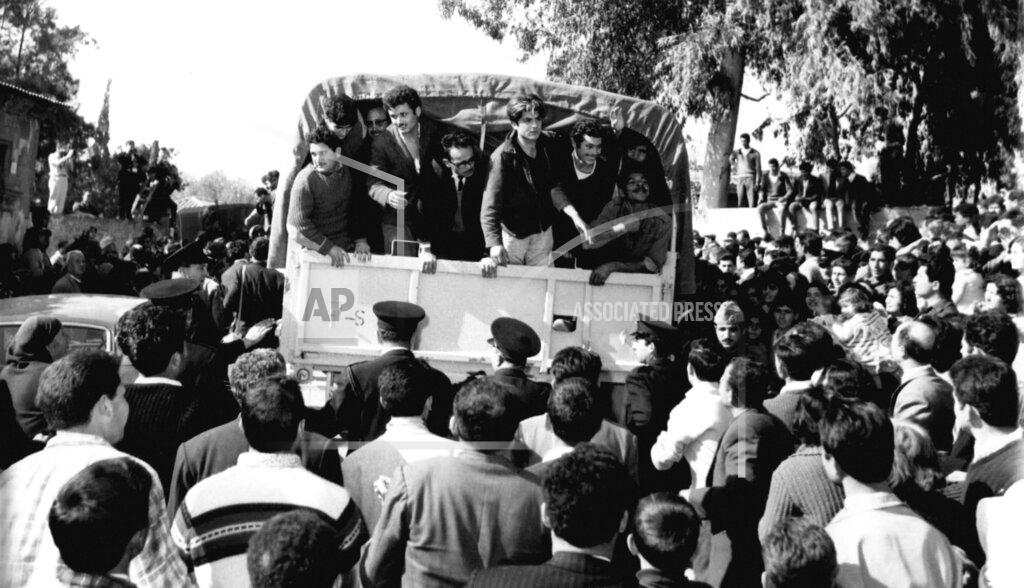
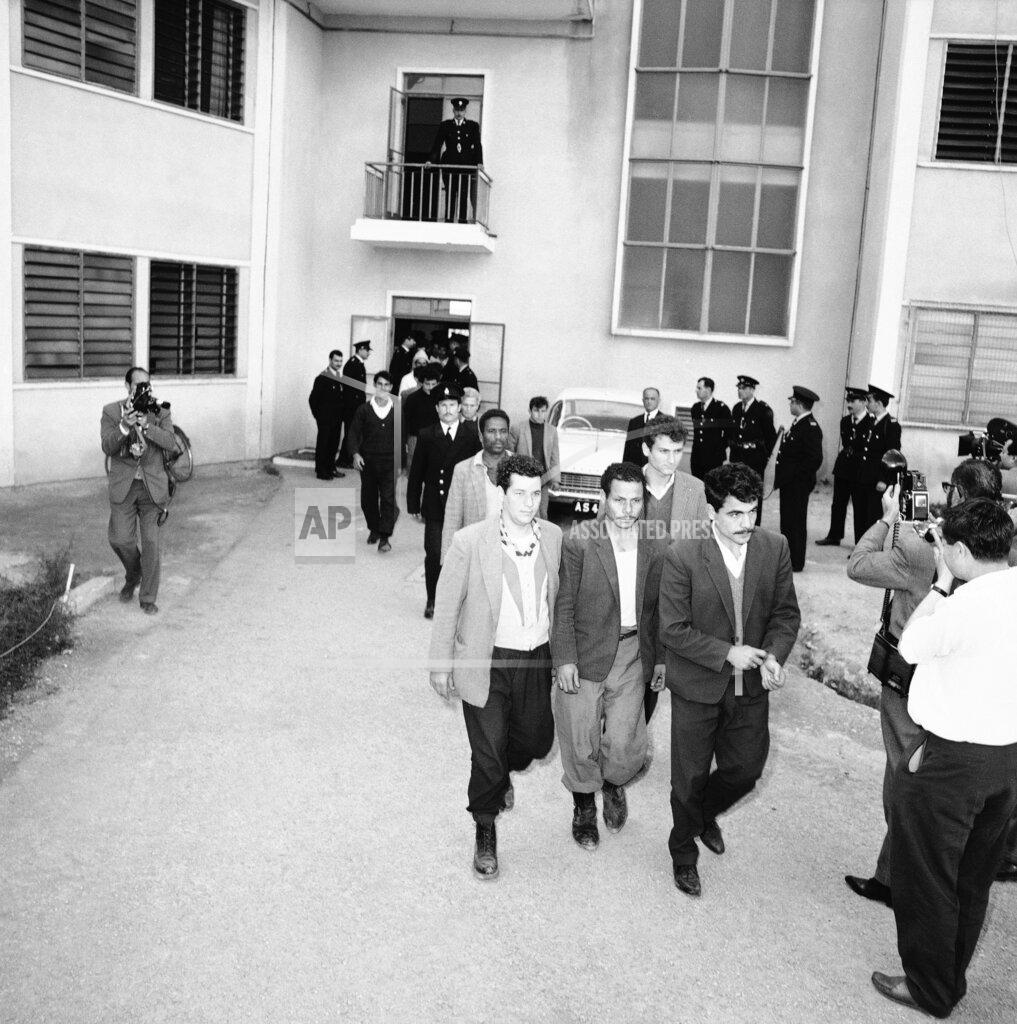
In Cyprus, new intercommunal fighting was reported at Paphos and at other points. Forty‐nine Turkish Cypriote hostages were released at Archbishop Makarios’s request. The Turks had listed 207 persons missing. Turkish community leaders were shocked by the small number of hostages.
Questions of cost threatened today to delay the forming of the international peacekeeping force for Cyprus. The Secretary General, U Thant, told all member nations that some of the countries he had asked to provide troops could not do so unless voluntary contributions from other states helped to meet their cost. The resolution approved unanimously by the Security Council last Wednesday specified that each country providing troops for Cyprus would pay its own expenses. It also said that the Secretary General might ask for voluntary contributions from other members. Mr. Thant is depending on those voluntary contributions. Today he gave the first official estimate of costs. He said a “very tentative” figure was $6 million for the three‐month period, “to be met in cash by the United Nations through voluntary contributions.” Unofficial estimates of the total cost have run as high as $50 million for the three months.
The North Atlantic alliance appeared today to be distinctly hostile to Poland’s proposal for a nuclear arms freeze in Central Europe. The members of the alliance are studying the plan and a collective discussion by the North Atlantic Council is expected. But after the first reading of the proposal most of the NATO delegations were unimpressed by the contents of the plan and were suspicious of its motives. The principal criticism is that the plan calls for a freeze on nuclear weapons in Poland, Czechoslovakia and East and West Germany but does not affect more powerful nuclear missiles in the Soviet Union aimed at targets in the alliance countries. The Polish Foreign Minister, Adam Rapacki, made the details of the plan public Thursday. The details were circulated among the diplomatic missions in Warsaw five days earlier.
The Soviet Union assailed the Government of West Germany tonight in a statement of unusual harshness. It charged that the West German leaders were the principal cause of continuing tension in Europe and that a “new Hitler” might well arise. Moscow accused Bonn of “double‐dealing,” of seeking to restore the “Reich” and of wanting to turn the West German Army into the “strongest army in Europe.” It warned that the policies of Chancellor Ludwig Erhard’s Government could not lead to a “normalization” of relations with the Soviet Union. The Soviet declaration was in the form of an “authorized statement” of about 4,000 words issued by Tass, the official press agency. Such statements by Tass are only slightly less authoritative than declarations issued by the Soviet Government itself.
The government of the People’s Republic of China issued the new list of simplified Chinese characters, following up on the first reform of 1956, with a complete list of 2,236 revisions of traditional Chinese characters. The Jianhuazi Zongbiao required fewer strokes and were easier to write.
Asadollah Alam resigned as Prime Minister of Iran to take the job of minister of the Shah’s imperial court, and was replaced two hours later by Hassan Ali Mansur. Mansour would be assassinated less than a year later, dying on January 26, 1965.
President Johnson forecast better economic times for the country at a televised news conference at the White House today. He spoke with unqualified optimism as he called attention, to recent economic gains. He predicted good news in a pending announcement of business investment plans and expressed pleasure at the early reaction to the recent tax cuts. Mr. Johnson attributed part of the improvement in the economy to the business community’s anticipation of the tax reduction.
The unemployment rate is going down, employment is going up, capital investment in new plant and equipment is rising, the price news is “reassuring” and the stock market is hitting new highs, the President said. He announced that he would appear on nationwide television March 15 to report to the people on his first 100 days in office. Mr. Johnson fenced self‐confidently with reporters who questioned him on political topics. He reiterated his hope for Senate passage of the civil rights bill that has passed in the House. And he dismissed with a brief statement of disagreement allegations by Senator Barry Goldwater that United States missiles were undependable.
The President was asked whether there was any justification for continued Government subsidization of tobacco growers, in view of the report by the Surgeon General of the Public Health Service that smoking was a health hazard that caused lung cancer. Mr. Johnson replied that the Surgeon General’s report was one of a series in which other Government agencies would participate before final recommendations were made to the Department of Health, Education and Welfare.
Local officials in Atlantic City are becoming increasingly concerned over the possibility of major civil rights demonstrations during the Democratic National Convention, which opens in Convention Hall on August 24. National leaders of both the Congress of Racial Equality and the National Association for the Advancement of Colored People are known to be considering demonstrations while the convention is in session. Their actions, spokesmen for both organizations say, may include a march on Atlantic City as well as attempts to seat at the convention all‐Black delegations from some states of the Deep South, particularly Mississippi.
When James R. Hoffa came here seven weeks ago to stand trial on jury‐tampering charges, he was at the peak of his power. When he left this week, the myth of his invincibility lay shattered about him. The abrupt switch in the fortunes of the cocky, ruthless president of the International Brotherhood of Teamsters was the doing of a jury that convicted him on two counts of master‐minding an effort corruptly to influence the jury at his trial in Nashville in 1962 for allegedly accepting illegal payments from an employer. The Nashville jury haggled for three days and finally reported that it could not agree. The final vote was seven to five for acquittal. The four women and eight men here showed no such indecision. After hearing nearly six weeks of testimony, arguments, objections and motions, it took them less than six hours to convict Hoffa and three of his co‐defendants and to acquit two others.
As crushing a blow as the verdict was to Hoffa, it promises to bring about no rapid change in his status as $75,000‐a‐year head of the 1.5 million member truck union — the nation’s largest and most powerful labor organization. Informed sources within the union said that there would be no immediate revolt against the 51‐year‐old Teamster boss. In fact, they indicated, no attempt will be made to unseat him from the union’s top post certainly unless the United States Court of Appeals sustains the conviction and quite probably not until the Supreme Court acts. Estimates of how fast the legal mills will grind are always uncertain, but the speculation among lawyers was that it would take a year before the Appeals Court acts and another year, in the event the Appeals Court sustains the conviction, before the Supreme Court acts. Hoffa, meanwhile, is expected to retain his post without serious challenge.
The $50,000 Fermi Award for atomic scientists — the largest monetary honor conferred by the Government — faces curtailment by a Congressional committee concerned that the honor may have been abused by the scientific community. The Joint Congressional Committee on Atomic Energy has approved legislation prohibiting the Atomic Energy Commission from automatically giving $50,000 with the annual award. Instead, the commission would be forced to obtain Congressional authorization for the amount of the award, with the expectation that it would range considerably below $50,000. Behind the unannounced committee action is a feeling among members that the $50,000 tax‐free award in many cases has outweighed the actual contributions some of the recipients have made to atomic energy. There is also a belief that the award has been passed around a too‐restricted group of scientists who were in a position to influence the selection. The committee’s concern was brought to a head by the decision last year to give the award to Dr. J. Robert Oppenheimer, the nuclear physicist who served as scientific director of the atomic bomb project at Los Alamos, New Mexico, in World War II.
Senator Barry Goldwater wound up 21 days of campaigning in the New Hampshire primary with a prediction that “I have it made.” Mr. Goldwater was also drawn by a voter into a long, introspective discussion of his tendency to “shoot from the hip” in public statements and policy judgments. The Arizonan said he did shoot from the hip occasionally but said he usually “hit the target.” Mr. Goldwater is a candidate in the nation’s first Presidential primary election, which will be held next Tuesday.
Pennsylvania Governor William W. Scranton’s availability for the Republican nomination has ceased to be merely passive. Recent events and utterances strongly indicate an active interest. For example, before his hard-hitting political speech in New York last Tuesday, he made an unannounced trip to the same city and met with Leonard W. Hall, of former Republican national chairman, and his law partner, Fred Scribner, of former Under Secretary of the Treasury. Mr. Hall, to whom many attribute kingmaker qualities, is an experienced strategist in the political art of capturing a nomination. He has declined to join Governor Rockefeller’s organization. But he talked with former Vice President Richard M. Nixon as recently as Thursday night in Washington. Governor Scranton has expressed dissatisfaction with some elements in his own party and is known to be ready to join, or lead, a “stop Goldwater” movement in the July convention if the Arizona Senator moves within reach of the nomination.
A survey of New Hampshire Republicans shows that Governor Rockefeller has been winning the largest share of the undecided vote. The check of sentiment made by The New York Times in every part of the state indicates that no candidate is winning a majority of the uncommitted electorate, but that the New York Governor’s share is nearly twice as large as that of Senator Barry Goldwater of Arizona.
Henry Cabot Lodge, the Ambassador to South Vietnam, was pictured by supporters today as willing to allow his name to go on the Oregon primary ballot as a Republican candidate for the Presidency. Robert R. Mullen, national coordinator of the Draft Lodge Committee, told a news conference that he had been “assured” of that by the Ambassador’s son, George Cabot Lodge of Beverly, Massachusetts.
The gamblers of Hot Springs are locked in a struggle with the federal government to maintain their control of the biggest illegal gambling operation in the United States. The enterprises flourish with the support of the 30,000 residents of Hot Springs. Gambling has been a major feature of life here since Civil War times. The gambling places are wide open. They are on the pattern developed in the legal casinos operated in Nevada. The conduct of gambling is defined by Arkansas statute as a felony, punishable by up to three years in the State Penitentiary. But no gambler is prosecuted in Hot Springs.
11th ACC Men’s Basketball Tournament: Duke beats Wake Forest, 80-59.
Born:
Wanda Sykes, African-American comedienne (“Black-ish”), in Portsmouth, Virginia.
Bret Easton Ellis, American writer (“American Psycho”), in Los Angeles, California.
Denyce Graves, American mezzo-soprano (“Carmen”), born in Washington, District of Columbia.
Jennifer McCarters, American country singer (McCarters – “The Gift”), in Sevierville, Tennessee.
Mikhail Viktorovich Popkov, Russian serial killer, rapist, and necrophile, former Siberian police officer, in Norilsk, Krasnoyarsk Krai, Russian SFSR, Soviet Union. He committed the sexual assault and murder of seventy-eight girls and women between 1992 and 2010 in Angarsk, Irkutsk, in Siberia, and Vladivostok in Far East, although he has confessed to and is suspected of at least eighty-three in total. One police source believes the true toll of victims is ‘closer to 200’. Popkov raped most of his victims aged 18 to 50 before killing them with axes, hammers, knives, screwdrivers and spades.
Vladimir Smirnov, Kazakhstani cross-country skiing world champion; in Shuchinsk, Kazakh SSR, Soviet Union.
Jeff Criswell, NFL tackle and guard (Indianapolis Colts, New York Jets, Kansas City Chiefs), in Grinnell, Iowa.
Carl Carter, NFL cornerback (St. Louis-Phoenix Cardinals, Cincinnati Bengals, Tampa Bay Buccaneers, Green Bay Packers), in Fort Worth, Texas (d. 2019).
Wayne Edwards, MLB pitcher (Chicago White Sox), in Burbank, California.
Died:
Franz Alexander, 73, Hungarian-American psychoanalyst and physician, pioneer of psychosomatic medicine and psychoanalytic criminology.

 History Diaries