Iranian armor and infantry made a major attack across the Iraqi border 100 miles northeast of Baghdad but were beaten back by Iraqi troops, a Baghdad military communiqué said. Reports from Tehran confirmed the fighting, the fourth clash in as many days. The Baghdad communiqué said Iranian casualties ran to about 50% and indicated the attackers numbered in the hundreds. Iraqi losses were reported as four killed and seven wounded. In a similar clash earlier yesterday, Iraq accused Iran of continued provocations against her borders and said nine Iraqi soldiers had been wounded. The army general command said that on Tuesday, three Iraqi soldiers were killed and 12 wounded.
The Administration should insist on the closing of the Suez Canal to the warships of the United States, the Soviet Union and all other outside powers, Senator Henry M. Jackson (D-Washington) said in a Senate speech. He said there were indications that the canal would be opened and that such an action would favor the Soviet Union in what he described as its strategy of establishing primacy in the Persian Gulf, an area on which Japan and Europe were nearly totally dependent for oil.
An unprecedented general strike in Ethiopia put increasing pressure on the new government to produce, or at least promise, prompt economic and social reform. The strike by the Confederation of Ethiopian Labor Unions representing 80,000 to 100,000 workers was taken as an indication that Emperor Haile Selassie’s agreement to adopt a new constitution with a more democratic government was being received coolly by many Ethiopians.
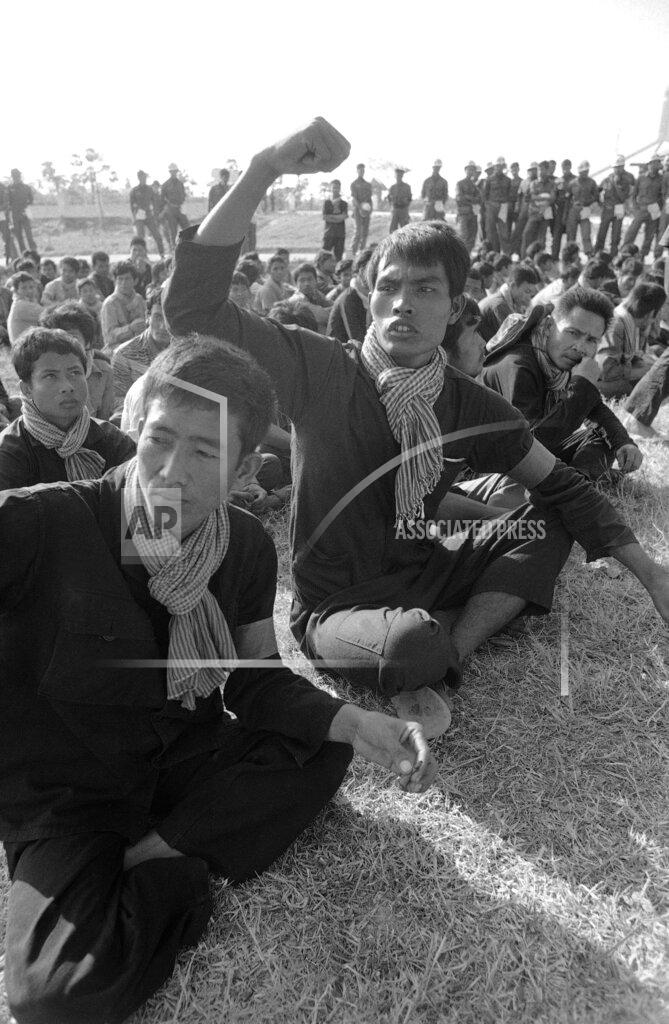
The South Vietnamese government accused the Việt Cộng today of terrorist acts; including the tossing of two hand grenades into a pagoda filled with refugees from the war. The Saigon command said 11 persons had been killed and 30 wounded in the pagoda. The command also charged that the Việt Cộng had shot to death a crew member of a helicopter involved in exchanges of prisoners of war and had killed, two hamlet officials.
Deputy Secretary of State Kenneth Rush ended a one‐day visit to South Vietnam promising continued United States support. During his stay in Saigon, Mr. Rush met with President Nguyễn Văn Thiệu and Premier Trần Thiện Khiêm. “Our discussions have confirmed to me the wisdom of our common policies,” Mr. Rush said in a departure statement. “I have been deeply impressed with the patience and the skill with which the Vietnamese Government, despite all difficulties, is seeking to bring about implementation of the Paris agreement.”
Mr. Rush said the United States agreed with South Vietnam that “massive” North Vietnamese cease‐fire violations and troop build‐ups were responsible for the continuing Indochina war. “I have every confidence in the ability of the forces of the Republic of Vietnam to contain this threat,” he said. “It is the United States policy to support the efforts of the South Vietnamese people to defend themselves and build a better life.”
The command spokesman, Lieutenant Colonel Lê Trung Hiền, said the attack on the helicopter 31 miles north of Saigon with small‐arms fire had been a “calculated attack because they fired at the aircraft only on its return trip, when they knew none of their comrades were aboard.” Despite the attack, which killed a flight mechanic, South Vietnam continued the prisoner exchanges with other aircraft “to show our goodwill,” Colonel Hiền said.
Eric Varley, the United Kingdom’s new Secretary of State for Energy, announced the end of the three-day work week that had been implemented at the beginning of the year. A day after settling the coal miners’ strike, Britain’s new Labor government announced that the three-day work week would end at midnight tomorrow. The move came amid indications that other unions were beginning to press for new contracts in view of the 35 percent wage increase granted the miners. Speculation that the Wilson government would be unable to hold the inflationary line against union demands led to a weakening of the pound and a further decline of stock prices.
A powerful bomb blasted the front of the British army’s central Belfast headquarters, hurling tons of rubble across the street, shattering windows and touching off a fire in a store. No injuries were reported. The blast came shortly after security sources reported that the Irish Republican Army was using women to smuggle dismantled bombs into the heavily guarded downtown area to pierce the army’s security wall.
Dissident Basque Bishop Antonio Anoveros was summoned by the papal nuncio to Vatican talks in Madrid while the Spanish government denied reports that it was prepared to terminate its 1953 church-state concordat over the bishop’s actions. Bishop Anoveros and his vicar invoked the wrath of the Franco regime for authorizing distribution of a homily in their Basque diocese decrying “oppression of peoples” and urging more civil rights for Basques.
The Soviet labor camp term given Viktor Khaustov was described by fellow dissident Andrei D. Sakharov as another link in the Kremlin’s “chain of repression.” Khaustov, 35, was sentenced to four years in a labor camp and two years in Siberian exile for anti-Soviet agitation.
Diplomats in Brussels are predicting that the change in the British government may spell further stagnation for the already troubled European Common Market. The diplomats expect Prime Minister Wilson to carry out his campaign pledge to renegotiate the terms of Britain’s membership in the Common Market.
Secretary of State Kissinger said he would recommend a presidential veto of the trade bill if the Senate upheld the House version, which ties trade credits and improved tariffs for the Soviet Union to the removal of Moscow’s barriers to emigration.
East and West Germany took a decisive step toward normal relations by agreeing to establish permanent diplomatic missions in each other’s capitals. The accord was reached after East Germany made a major concession by agreeing to let Bonn represent West Berlin. Bonn State Secretary Guenter Gaus said he and East German Deputy Foreign Minister Kurt Nier had agreed on a formula guaranteeing West Germany’s right to represent West Berlin. The formula, to be presented to their governments, provides for Bonn to set up a representative office in East Berlin and for East Germany to set up a similar office in Bonn.
A cockpit voice recorder that could give vital clues on what caused the world’s biggest air disaster has been found, an official said in Paris. The recorder, which tapes conversations among crew members, was found by police in the forest north of Paris where 346 people were killed in the crash of a Turkish jetliner. A spokesman for an inquiry committee said the device was “in a bad state but we hope to draw something from it.”
Guatemala’s left‐leaning opposition has vowed to paralyze the country by strikes of nonviolent resistance if the apparent victory of its candidate in the Presidential election of last Sunday is not upheld. Although the conservative Government has already proclaimed its own candidate as President‐elect, opposition sources said they hoped that mass protests would lead to a military intervention to reverse the official election results. Government, military and well‐placed diplomatic sources have all supported in private comments the general impression that the authorities resorted to extensive fraud to insure the victory of their candidate, General Kjell Eugenio Laugerud Garcia. The opposition’s offensive began last night with a series of protest meetings in different parts of town. Riot policemen were called out to stop the demonstrations and, by nightfall, tear‐gas fumes hung heavily over downtown Guatemala City. Several students were arrested, but no one was seriously injured.
The governor of the Argentine province of Cordoba has formally resigned, it was reported in Buenos Aires. The resignation of Ricardo Obregon Cano, more than a week after he was ousted by police who claimed his government was Marxist-infiltrated, could clear the way for a peaceful solution of the problems in the province. Eight people have been killed in clashes between police and supporters of the former governor.
Secretary General Waldheim, back from an inspection of drought‐stricken areas of West Africa, said today that thousands were dying and “the worst is definitely not over.” Mr. Waldheim gave a grim account of conditions in six affected countries — Niger, Chad, Senegal, Upper Volta, Mali and Mauritania — and called for a bold international effort of enormous scope” to rehabilitate the area.
Six persons were indicted on charges stemming from the break-in of Daniel Ellsberg’s psychiatrist’s office. John Ehrlichman and Charles Colson were among those indicted. G. Gordon Liddy, Eugenio Martinez, Felipe de Diego and Bernard Barker were also indicted; unindicted co-conspirators include Egil Krogh, David Young and E. Howard Hunt. Colson insisted that he is innocent and threatened to expose national security secrets in the course of his defense. The pressure on Ehrlichman to plea bargain is increasing.
Today’s new indictments only added to the existing troubles for the Cubans who were involved in Watergate. Eugenio Martinez and Virgilio Gonzales had been released from prison after serving time for their part in the Watergate break-in. Now Martinez has been indicted again. Martinez said his lawyer will fight the case to its end; DeDiego stated the break-in was justified; Barker indicated that all three Cubans to plead not guilty because their orders were presented to them as being a matter of national security.
House Judiciary Committee members complained that presidential attorney James St. Clair was attempting to limit the scope of their impeachment investigation. St. Clair’s letter to the committee ignored some of its requests for evidence. Representative Robert Drinan declared that the committee will establish the criteria for impeachment, not the President or St. Clair, and he called for subpoenaing the requested evidence. But committee counsel John Doar and chairman Peter Rodino urged a delay of the subpoena so Drinan withdrew his motion. Republican Representative Tom Railsback said he will support subpoenaing more material if needed. Doar warned that a subpoena is inevitable if St. Clair refuses to turn over necessary documents, and the Republican counsel agreed with Doar.
The prosecution presented what it considered damaging testimony in the Maurice Stans-John Mitchell trial in New York City. Prosecution witness Harry Sears testified for a third day regarding Robert Vesco’s secret contribution to the Nixon re-election campaign and how it was handled by Mitchell and Stans.
President Nixon won two tentative victories in the House in his fight over crude oil price levels and a “windfall profits” tax against the oil industry. The House reversed itself and voted to kill a proposed mandatory rollback in domestic crude oil prices that Mr. Nixon had cited as the main reason why he vetoed the emergency energy bill. The House Ways and Means Committee, meanwhile, approved in principle a temporary five-year windfall profits tax on crude oil prices that was close to the graduated tax that Mr. Nixon had proposed. The committee also agreed to a “plowback” feature to let some tax money be used for exploration and development.
A telephone bomb threat sent White House guards searching through the Executive Mansion. No bomb was found. An anonymous person phoned the main switchboard at midmorning and said a bomb had been placed in an area set aside for the White House press. Secret Service agents searched not only the press section but other sections of the White House as well, looking in closets and desks and querying employees. The building was not evacuated and President Nixon’s daily activities were not interrupted.
An 8-year-old Long Island boy kidnaped as he walked home from school Wednesday has been returned in good condition to his parents, the FBI said. First reports said the boy, John Calzadilla, was found in New Jersey, about 100 miles away from the New York suburb where he was lured into a car by a woman who told him his grandmother was ill. There was no report as to whether any ransom had been paid for the boy’s release. Police Commissioner Eugene R. Kelley of suburban Suffolk County said the boy’s father, Michael Cala Calzadilla, 38, of Dix Hills, New York, was not wealthy. Reports Wednesday had identified him as a wealthy tire wholesaler.
A vice president of Diamond International Corp., the match-making firm, said a solicitation by Democratic Governor Kenneth M. Curtis of Maine prompted him to give $1,000 illegally to the 1972 presidential campaign of Senator Edmund S. Muskie. The executive, Ray Dubrowin, also said he gave $5,000 illegally to President Nixon’s reelection effort after a visit by Vincent F. DeCain, a Transportation Department official and former Diamond officer. Dubrowin pleaded guilty in federal court in Washington to a two-count criminal information filed by Watergate prosecutors charging the firm with an illegal political contribution and Dubrowin personally with consenting to it. He was fined $1,000 and the company $5,000.
A would-be kidnapper shot and killed himself and a security guard in Jacksonville, Fla., after an attempted abduction of a wealthy contractor, police said. Contractor Bobby Jacobs was in fair condition in a hospital with a gunshot wound in the chest. Police said Jacobs and a man identified as Raymond A Beaucheane drove to an apartment complex in the contractor’s car. Jacobs jumped out, ran into a guardhouse and told security officers he was being kidnaped. Beaucheane ran up, grabbed one of the guards, shot a second in the back and then shot Jacobs. After that, Beaucheane shot himself in the throat. The dead guard was identified as Thomas Hardin, 26. Beaucheane, 30, had an “extensive arrest record,” police said.
In a sign that inflation may be abating, the Labor Department reported that wholesale prices rose only about a third as much last month as they had in January.
An oceanographer at Duke University in the U.S. announced confirmation at in Durham, North Carolina, that the American warship USS Monitor had been located on August 27, almost 111 years after it sank (on December 31, 1862) in the Atlantic off Cape Hatteras and the state of North Carolina.
For the first time in the history of the “Miss World” beauty pageant, the reigning titleholder was dismissed. Marjorie Wallace of the U.S. had been crowned Miss World on November 23, 1973, but failed to abide by the pageant organizer’s requirement of maintaining “a first-classic public image” by having multiple celebrity boyfriends.
Jan Hoffmann of East Germany crowned 12 years of dedication tonight with a near-perfect performance to win the men’s title at the 1974 world figure skating championships.
The National Basketball Association expanded into an 18‐team league yesterday for the 1974‐75 season by establishing a franchise in New Orleans. There was also a strong indication that San Diego would be accepted into the league when the owners meet again within two weeks. Two groups have applied for a franchise in the southern California city.
Dow Jones Industrial Average: 869.06 (-10.79, -1.23%).
Born:
Jenna Fischer, American TV actress (“The Office”), in Fort Wayne, Indiana.
Larry Bagby, American actor and musician (“Buffy the Vampire Slayer”), in Marysville, California.
Tobias Menzies, English actor (“Outlander”, “The Crown”), in London, England, United Kingdom.
Antonio de la Rúa, Argentine lawyer, co-founder of the ALAS Foundation and presidential advisor; in Córdoba, Argentina.
Died:
Lewis W. Douglas, 79, U.S. Ambassador to Great Britain 1947 to 1950, and former director of the U.S. Bureau of the Budget, 1933 to 1934.





 History Diaries