In Madrid, General Segismundo Casado leads a military coup against radical Republican Premier Negrín. Premier Negrín and his ministers fled by air to France, while General José Miaja, defender of Madrid from 1936-1937, set up the new National Defense Council. The Republican fleet escaped from Cartagena and sailed to the Tunisian port of Bizerta, where it surrendered to the French government and accepted internment. The Miaja government introduced the policy of “peace with honor,” a program rejected by the Spanish Communists. This led to fighting within the capital. Eventually Premier Miaja defeated the Communists and began negotiations on a political compromise with the Spanish Nationalists. Unable to secure assurances for leniency, the National Defense Council had no recourse but to surrender unconditionally to General Francisco Franco.
The Republican government of Premier Juan Negrín was superseded last night by a National Defense Council headed by General Segismundo Casado, Commander in Chief of the army in the Madrid zone. In a manifesto denouncing Premier Negrín and his colleagues “for their evident incapacity” the Council declared that “we shall resist to the utmost limit.” The seizure of control was effected peaceably. Madrid was calm early today.
Dr. Negrín was overthrown a few hours after he had issued a decree transferring to himself the command of the five Republican armies and of all to be organized in the future. Under Dr. Negrín’s decree Colonel Francisco Galan was made commander of the naval base at Cartagena, where Nationalists attempted an uprising yesterday morning. Although the Nationalists reported that the uprising at Cartagena had been successful, neutral sources supported Republic contentions that it had failed.
The new National Defense Council is supported by the army, Socialists, Left Republicans and Anarchists. It has the support of General José Miaja, Commander in Chief of all Republican forces under the Negrín regime. On it the Socialists are represented by Julian Besteiro and Eduardo Valls; the Left Republicans by Miguel San Andres; the Socialist General Union of Workers by Wenceslao Carrillo, and the Anarcho-Syndicalist Workers Confederation by Señor Gonzales Marin. Señor Besteiro, who is a well-known moderate Socialist leader, represented Spain at the coronation of King George VI of Britain.
In its manifesto the new council declared that “the gravity of the moment compels us to no longer obey this handful of men in whom we have no confidence.” It added that members of the Negrín government had been preparing to flee abroad but that steps were taken to prevent their leaving. “We cannot allow a privileged few quietly to make their escape to foreign countries,” the statement added. “Negrín said, ‘Let us stand or fall together.’ Very well, so let it be. We shall resist to the utmost limit. Spaniards, long live Spain!”
After the statement had been broadcast General Casado declared: “We shall resist until we are able to sign an honorable peace. The people of Spain are struggling for their independence and they will continue to struggle until such a peace is offered them. We want a Spanish peace or a fight to the finish. Spaniards, long live the Republic! Long live Spain!”
The Nationalist Government of General Francisco Franco tonight reorganized the City Council that is expected to govern Madrid after the city’s anticipated surrender. Twenty-six Councilors and ten Lieutenant Mayors were named to assist Mayor Alberto Alcocer. The Nationalists’ Madrid City Council, which was organized shortly after Nationalist troops reached the gates of Madrid on November 6, 1936, has been functioning at Valladolid.
So far 1,842 cases of art that were sent to France for protection during the civil war have been returned to Spain in good condition.
For the second time within six weeks, former Premier Juan Negrín of the Spanish Republic with all his Ministers entered France today as refugees. All arrived at Toulouse this evening by airplane. It appeared that their flight had been well organized before the revolt of the military junta in Madrid yesterday.
The Nationalist War Chronicle, commenting on Madrid peace pleas, tonight declared the end of the war could come only on the terms of Generalissimo Francisco Franco. The new Madrid Defense Council, headed by General José Miaja, the Chronicle said, was composed of men “too well known during tragic Red rule” to leave any doubts about what was meant by an “honorable peace.”
Official spokesmen in Burgos declined to comment on General Miaja’s broadcast declaring “we want peace, but a worthy peace.” But the Chronicle article, signed as usual by “Spectator,” said the “so-called ‘honorable peace’” asked by the opposite side came very late. While General Franco’s headquarters disclosed nothing of its plans, there was a general belief that the most powerful offensive yet seen in the war was in preparation.
General José Miaja was reported to have told Premier Juan Negrín some days ago that further resistance would be vain and to have pointed out that Julian Besteiro, a member of Madrid’s new Defense Council, had been advocating peace at any price for the past year. Commenting on the Defense Council’s first announcement that it intends to carry on the war, The Times of London’s correspondent declared that if this was the case “the alleged incompetence of Premier Negrín is not a satisfactory explanation of the break between the central junta and him.”
“The situation at Cartagena is equally confused,” the article declared, “after the revolt there yesterday, when a group of Nationalists seized the wireless station.
Czecho-Slovakian President Emil Hácha dismissed the Ruthenian government in an attempt to quell nationalist sentiments that was breaking apart his country.
German Cardinals confer with the Pope, and hope to promote an understanding of the church’s role in the Reich. The first step toward negotiations between the Holy See and Nazi Germany to explore the possibility of a reasonable modus vivendi whereby the church, without abandoning its principles and prerogatives, may be spared the persecution it now suffers and enabled to continue its pastoral mission, is seen by many in the audience the Pope granted to the four German Cardinals this morning. The four Cardinals — Adolf Cardinal Bertram, Michael Cardinal von Faulhaber, Karl Josef Cardinal Schulte and Theodor Cardinal Innitzer — were received collectively and remained with the Pope for about an hour and a half. Very great importance is attributed to the fact that the German Cardinals were the first received after Pius’s elevation to the Pontificate. All the Cardinals participating in the conclave will be received by the Pope in the next few days, it being the custom, especially for those not residing in Rome, to pay their respects to the Pontiff before returning to their respective lands. In the ordinary way they are received individually, and the fact that the four Germans were received together places the audience in a totally different class from the ordinary leave takings.
The Rumanian premier, who led both the country and the Rumanian Greek Orthodox Church, dies in France of pneumonia. King Carol II appointed Armand Calinescu as the Prime Minister of Rumania. Armand Calinescu becomes Prime Minister of Rumania after the death of Patriarch Cristea.
Belgian King Leopold tonight took the unusual and dramatic step of sending Premier Hubert Pierlot a letter warning political parties that they were shirking their responsibilities. The letter, which caused a sensation in government circles, followed the dissolution of Parliament by the King at the request of his ministers and the ordering of new elections on April 2. In his letter the young King read a severe lesson in constitutionalism and good manners to his ministers, Parliament and people. “At a moment when all our efforts should be directed toward the consolidation of national union,” he wrote, “the decision to dissolve Parliament constitutes an action of which I fully realize the gravity. But, faced with the impossibility of constituting a durable government that can direct public affairs in agreement with the stable Parliamentary majority — an imperious requirement in the present circumstances — there remains only one resource, to appeal to the nation.”
The Palestine conference gets new British proposals, including one for a bicameral legislature dividing control, with the lower house elected by population, and the upper house, which would control important issues such as immigration, giving the Jews parity. There is also an idea for cantons around the country, each with some self-rule.
It was reported late tonight that martial law had been proclaimed in Rashid, Iraq, about six miles from Baghdad, and in surrounding districts because of an uprising in the military barracks at Rashid. Many arrests were made. The Government of Iraq issued a brief statement attributing the disturbances to “troublemakers.” Usually when there is trouble in Iraq communications are immediately curtailed.
A rapidly changing situation, likely to develop any number of complications, arose today as the U.S. House of Representatives began consideration of the Cochran-Warren governmental reorganization measure with a bitter partisan debate. The event which seemed to change the House picture radically was the favorable reporting by the select Senate Committee on Reorganization of Senator Byrd’s bill, which differs in nearly every essential feature from the Cochran-Warren measure. The House Republicans, who had virtually given up hope of stopping the Cochran-Warren bill, met in caucus late this afternoon and, while deciding nothing as a body, emerged virtually agreed that the minority side would support the Byrd bill as a substitute for the House measure.
They hoped some Democrat would offer it as a substitute tomorrow, on the theory that many Democrats who voted last year to recommit the Reorganization Bill could be separated from the present Administration forces. More than two-thirds of the Republicans are against the House bill, and many of them gave unqualified endorsement to the Byrd bill late today. Giving hope to these Republicans was a review of the picture existing about this time last year, when the earlier Reorganization Bill was recommitted by the House by a majority of eight votes, with seventy-seven Democrats who are still in the House backing recommital. It appeared to observers tonight that the next two days would determine whether there was to be House Democratic solidarity over an issue which split the party last year. On several occasions this year the House Democratic membership has been far from unanimous.
New assurances that no additional taxes would be sought this year and that a real “breathing spell” was being taken in the New Deal’s crusade for economic and social reform came from Administration sources today in additional efforts for business appeasement. Emanating directly from the Treasury and indirectly from the White House, these guarantees ordinarily would have sent the government-business peace movement bounding forward. However, they were accompanied by information, more directly from the White House, that President Roosevelt would take occasion within the next few days to renew his demand for $150,000,000 as a supplemental appropriation for WPA for the current fiscal year.
This is the same $150,000,000 which Congress recently cut from the President’s requested $875,000,000 in a move for business-encouraging economy, and signs were quick in developing today that the Capitol and White House would likely go into another bitter battle the moment the demand is renewed. Many behind the movement wondered, naturally, what this would do to the cause of business appeasement, and so withheld their zeal over the new assurances from Administration quarters today.
The Senate votes by almost 2–1 to increase Army Air Corps planes by 6,000. The House had only approved 5,500. In its first important test of strength on the new national defense plans, the Senate today blasted party lines in voting nearly two-to-one to increase the Army Air Corps’ equipment to 6,000 planes, or 500 more than approved by the House in its consideration of the $358,000,000 air defense bill. The vote, 54 to 28, came on an amendment offered by the Senate Military Affairs Committee.
With this show of strength in the Senate for larger defenses, Administration leaders took new hope of saving the proposal, recently rejected in the House, to improve the harbor facilities in the island of Guam. They also were led to expect comparatively easy sailing for the $499,000,000 War Department appropriation bill, including funds for 784 new combat planes, which was passed on Friday by the House in record time and without amendment.
A few hours before the Senate vote was taken on the airplane increase, Admiral Leahy, Chief of Naval Operations, appeared before the Senate Naval Affairs Committee to urge restoration of the $5,000,000 for harbor improvements at Guam. The fund was contained in the original draft of the Administration’s Naval Air Bases Bill.
Admiral Leahy told the committee that Guam was of “inestimable value” as a possible defense base. He insisted, however, that the navy had no immediate intention of fortifying the island, but wished to improve the harbor to make it more usable for seaplanes. Meanwhile, indications in administrative quarters were that this government intends to continue or, rather, resume larger scale experiments with lighter-than-air craft as a defense weapon.
In connection with the Navy Department’s consideration of bids by the Goodyear-Zeppelin Corporation for a new experimental airship, Assistant Secretary Edison said the department had an “obligation” to continue its work in this line. The new ship was authorized by the last Congress after bitter debate over the wisdom of lighter-than-air craft in view of the crashes of the Shenandoah, Akron and Macon.
Henry L. Stimson, Secretary of State in the cabinet of President Herbert Hoover, gave sweeping endorsement yesterday to a foreign Policy of “affirmative action” against the fascist nations as the best preventive of a general war and called for joint naval measures with France and Britain in case of a concerted attack on the European democracies by the powers of the Rome-Berlin-Tokyo axis.
Contending, in a letter to the editor of the New York Times, that foreign policy cannot safely be limited to a defense of the Western Hemisphere or the continental boundaries of the United States, Mr. Stimson placed his approval upon recent policies of the Roosevelt Administration in the foreign field as outlined in the President’s address to Congress in January.
Calling for support of the President by “all parties and citizens” in a foreign policy “adequate to meet the emergency of the present world,” Mr. Stimson, however, differed sharply with some domestic measures of the Administration, “in conflict with the foreign policy in which I concur. In his January address to Congress the President truly stated that the success of a national foreign policy depends upon having behind it a strong and united people,” he wrote.
The Homer Martin faction of the UAW bans Communists, Nazis, and fascists.
A doctor shares information with the Southeastern Surgical Congress that common boils cause paralysis and, if near the spine, even death.
Rear Admiral Thomas C. Hart appointed to command the U.S. Asiatic Fleet.
Chilean ex-Nazis support the president of Chile.
Mohandas Gandhi reportedly is growing weaker as his fast in Bombay, India enters its fourth day.
Japan plans a navy equal to the strongest modern fleet. Japan is not a Totalitarian state, nor opposed to Britain, France, or the United States, Foreign Minister Hachiro Arita says. A six-year Japanese naval replenishment and expansion plan, costing 1,693,000,000 yen and designed to give Japan a navy equal to the strongest fleet afloat, was announced today. The items are: New construction, 1,205,000,000 yen; naval. aviation, 300,000,000 yen; marines and land establishments, 188,000,000 yen. The latter two will be completed in five years. Explaining the plan to the Budget Committee of Parliament, Admiral Mitsumasa Yonai reaffirmed Japan’s old demand for naval parity in the new terms of a one-power standard. He enumerated the four governing principles on which the navy had worked out its plans:
First, the Japanese Navy must be equal to that of the strongest naval power.
Second, the United States’ new plan and Britain’s four-year plan have been taken into account.
Third, the navy must have sufficient power to deal with any international friction arising over the construction of the “new order” in East Asia, though he hoped friction would be alleviated by diplomatic efforts.
Fourth, in the event that powers whose relations with Japan are important further increase their fleets, Japan’s plans will be revised.
Dow Jones Industrial Average: 148.84 (-0.65).
Born:
Christopher “Kit” Bond, (Senator-R Missouri, 1987-2011; Governor of Missouri, 1973-1977 and 1981-1985), in St. Louis, Missouri.
Cookie Rojas, Cuban baseball second baseman and outfielder (All-Star, 1965, 1971-1974; Cincinnati Reds, Philadelphia Phillies, St. Louis Cardinals, Kansas City Royals) and manager (California Angels, Florida Marlins), in Havana, Cuba.
Marshall Starks, AFL cornerback (New York Jets), in Rockford, Illinois (d. 2016).
Dick Mills, NFL guard (Detroit Lions), in Indiana, Pennsylvania.
Jerry Naylor, American rock vocalist (Crickets), in Stephenville, Texas.
David Spielberg, American actor (“Jessica Novak”, “The Practice”), in Weslaco, Texas.
Died:
Ferdinand von Lindemann, 86, German mathematician (Proving π is a transcendental number).
Naval Construction:
The U.S. Navy Gleaves-class destroyer USS Livermore (DD-429) is laid down by the Bath Iron Works (Bath, Maine, U.S.A.).
The Marine Nationale (French Navy) Mogador-class contre-torpilleur (large destroyer) Volta (X 62) is commissioned.



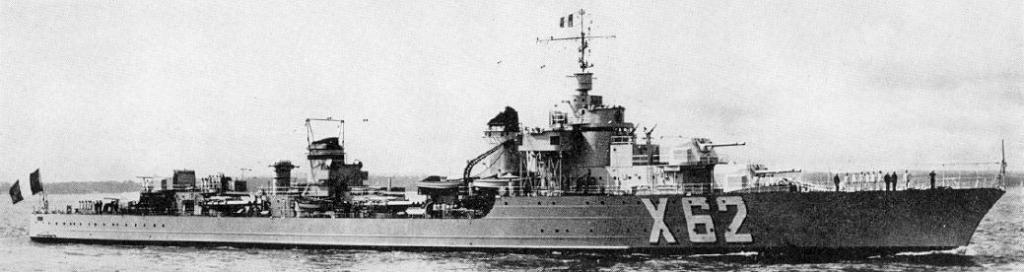
Volta, with her sister Mogador, comprised the 6th Large Destroyer Division (French: 6e Division de contre-torpilleurs) and was assigned to the Force de Raid based at Brest when the war began. This group’s purpose was to hunt German blockade runners and raiders and to escort convoys that might be in danger from the same. From 21–30 October 1939 the Force de Raide escorted the KJ.4 convoy to protect it against the heavy cruiser Deutschland which had sortied into the North Atlantic before the war began. A sortie by the battleships Gneisenau and Scharnhorst into the North Atlantic on 21 November prompted the Force de Raide to sail from Brest to rendezvous with the British battlecruiser HMS Hood and patrol the area south of Iceland, but the German ships were able to return safely under the cover of heavy weather without being engaged.
Volta was refitted at Brest between January and May 1940 and a number of minor changes were made. The necessary improvements identified for the main armament during her sea trials a year earlier were finally implemented, the canvas cover for the back of the turrets was replaced by a rolling door, new radios were installed, and shields were fitted to the anti-aircraft machine guns and the searchlights. A SS-6 sonar was fitted in June 1940, but proved to be ineffectual.
On 3 July 1940, following the Fall of France, Volta was at Mers-el-Kébir when the British attacked the French fleet in an effort to destroy the French fleet in order to prevent it from being captured by the Germans. Despite the attack, Volta fired 88 shells at a British destroyer — a performance rated by her gunnery officer as her best up to that point — before managing to escape to Toulon in the company of the battleship Strasbourg and a number of other destroyers.
After the Armistice with Germany in June 1940, the French Navy decided to increase the anti-aircraft strength of the Mogador-class destroyers and installed two 13.2 mm Browning machine guns on platforms attached to the sides of the No. 3 gun mount in December 1940 – January 1941. This was a version of the American .50 caliber M2 Browning re-chambered to use the standard French 13.2 mm ammunition and with its rate of fire increased to 1000 rounds per minute. It was fed from 1000-round flexible belts, but had no greater range than the older Hotchkiss machine guns already fitted on Volta. Plans were made at the same time to replace the Hotchkiss machine guns with another twin 37 mm Mle 1933 mount and another pair of Brownings, but a shortage of weapons prevented this plan from being fulfilled. However eight 7.5 mm Darne machine guns were fitted, more for the crew’s morale benefit than any real usefulness, and more OPL 1 meter (3.3 ft) rangefinders were fitted at the aft end of the center deck house to improve coverage of the rear sky arcs and to increase the number of aerial targets that could be engaged.
In the autumn of 1941 the mitrailleuse de 25 mm contre-aéroplanes Modèle 1940, a naval adaptation of an Army anti-aircraft gun, became available. So Volta was modified between August and November 1941 with two single 25 mm guns where the Hotchkiss machine guns had been mounted. Their platform was widened and one additional Browning machine gun was added on each side of the platform. The Hotchkiss guns were moved to the upper deck on either side of the after deck house. A degaussing cable was added during this same refit. Later in the year the SS 6 sonar was scheduled to be replaced by a French copy of the British ASDIC, but it was still sitting on the dockside when Volta was scuttled in Toulon Harbor when the Germans tried to seize the fleet on 27 November 1942 to prevent it from defecting to the Allies. She was raised on 20 May 1943 by the Italians, but no effort was made to repair her. Volta was bombed and sunk on 24 November 1943 and later refloated and scrapped in 1948.
 History Diaries