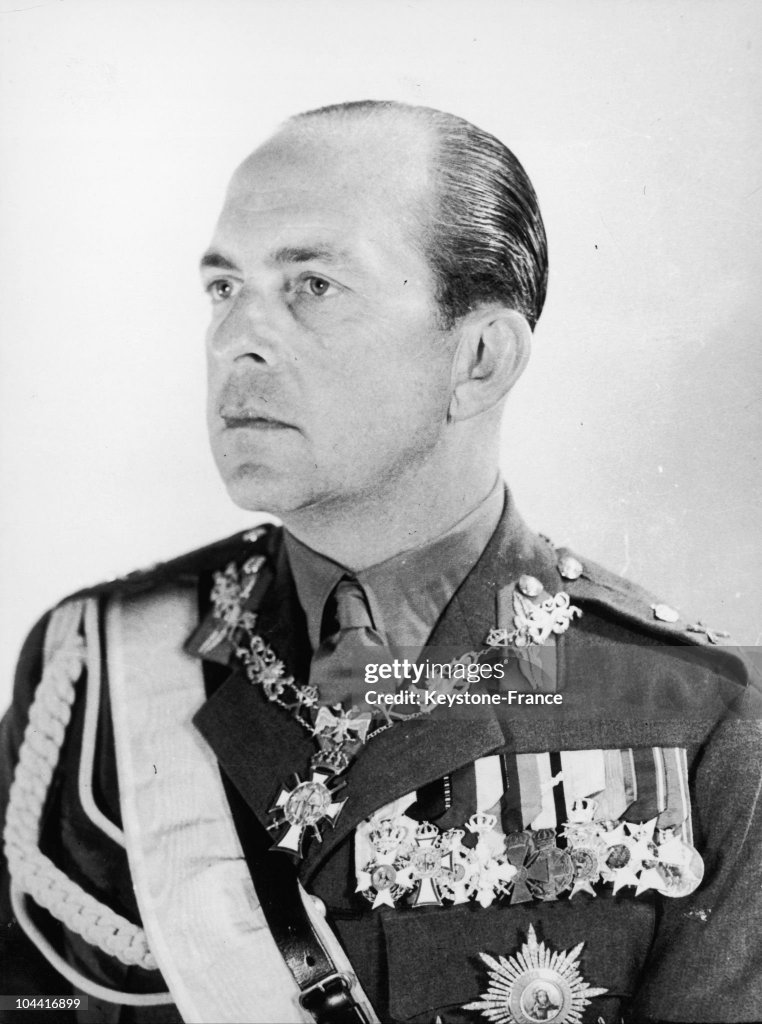
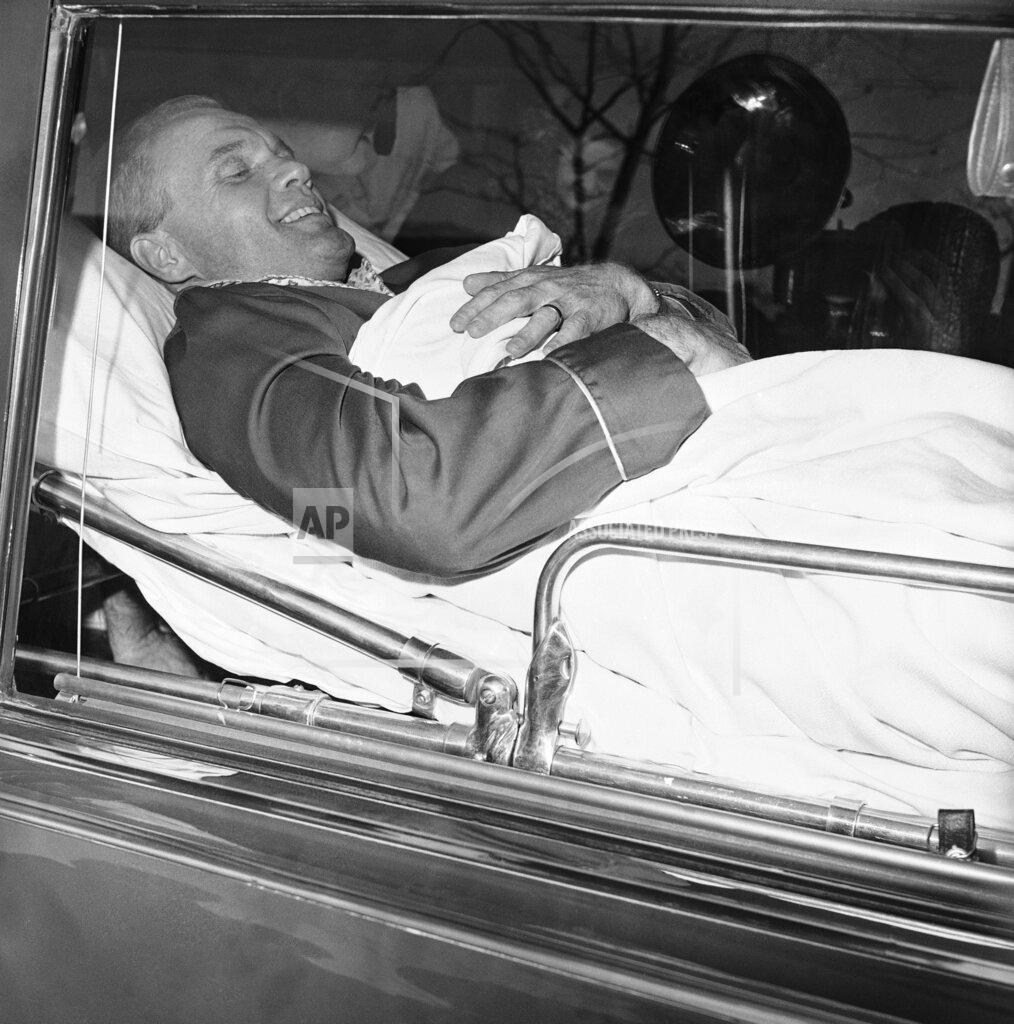
King Paul of Greece died at the age of 62, of post-operative complications following surgery for stomach cancer. His 23-year-old son became King Constantine II. Queen Frederika, his wife, was at his bedside at the Tatoi summer palace when the 62‐year‐old King died at 4:12 PM. The death was certified by the King’s physician, Dr. Thomas Doxiades. The Queen, her eyes bloodshot from lack of sleep, wept bitterly as she kissed the King for the last time. Three hours later, their only son, 23‐year‐old Crown Prince Constantine, was proclaimed King at the royal palace in Athens. It is not yet known whether he will take the title of Constantine XIII or Constantine II. His grandfather styled himself Constantine XII to symbolize Greece’s link with the Byzantine Empire. The last Byzantine emperor, known as Constantine XI Palaeologus, lost Constantinople in 1453 to the Turks.
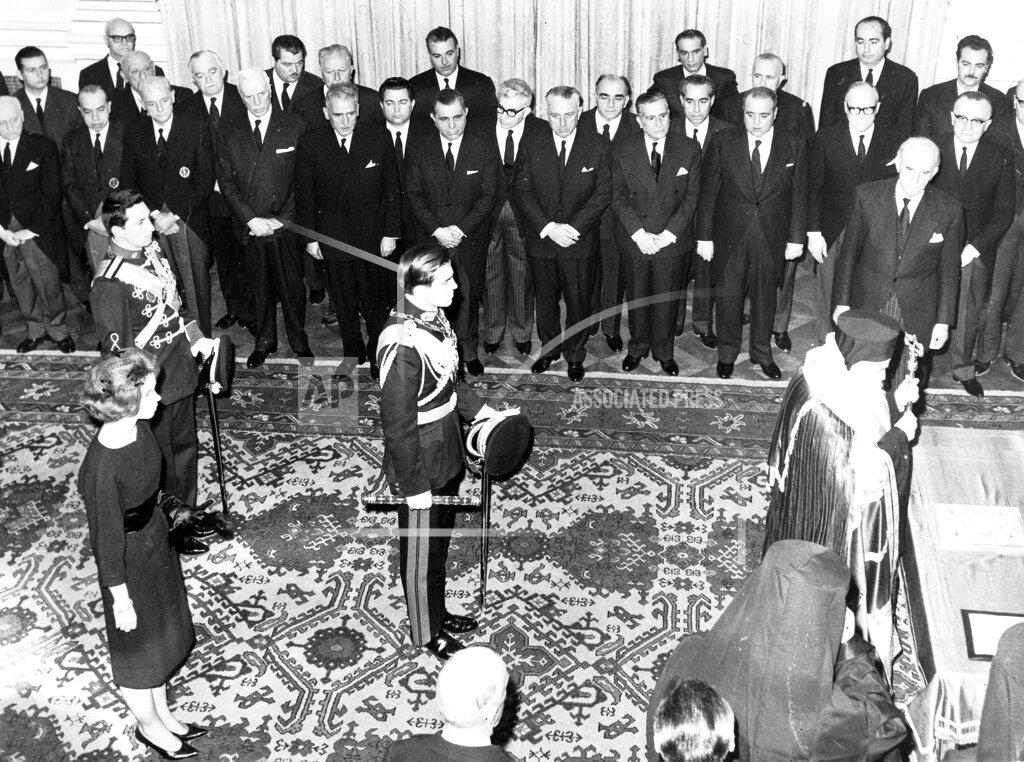
Today, Constantine, who was named Regent February 20, on the eve of a major operation on his father, was proclaimed King in the presence of Government officials, the hierarchy of the Greek Church, leading judges and military authorities and members of Parliament. Taking the oath, he said; “I swear in the name of the Holy Trinity to defend the established religion of the Greek peoples, to guard the Constitution and laws of the Greek nation and to preserve and protect the national independence and integrity of the Greek state.” King Paul had been ill with blood clots in the right leg and left lung since his operation two weeks ago for stomach cancer. Kidney trouble set in three days ago. Palace sources disclosed tonight that the King’s physicians had told him a month ago that an operation was necessary immediately. Although in great pain, he refused, fearing that an operation might cause anxiety because it would come just before the general elections of February 16. On February 19, King Paul collapsed after Greece’s new Center Union Government had been sworn in.
In a nationwide broadcast tonight, King Constantine said he told his father a few hours before death of the “demonstrations of love” by the Greek people for their dying monarch. “I thank my people and bid them farewell,” Constantine quoted his father as having replied.
President Johnson said yesterday that the death of King Paul of Greece deprived the American people of “a true friend.” In sending messages of sorrow to the new King, Constantine, Queen Frederika and Premier George Papandreou, the President said King Paul’s “steadfast devotion and unwavering faith to Greece and the Greek people provided leadership in times of strife, unrest, readjustment and recovery.”
The Communist Việt Cộng guerrilla movement in South Vietnam is striving to develop its own political identity and to give the impression that it is operating a full-fledged Government. This effort reached a high point with the holding of the second congress of the South Vietnam National Liberation Front between January 1 and 8. The front, set up by North Vietnam more than three years ago to serve as a political facade for the guerrilla war, is believed by some experts here to be deliberately built up by the Hanoi regime in recent months for both internal and international reasons.
The front’s ostensible top leaders are a French‐educated lawyer, Nguyễn Hữu Thọ, and a Montagnard, one‐time French Army officer, Ibih Aleo. Like most of the front’s members, they are South Vietnamese and have a long record of anti‐French struggles. There is no question that the liberation front is controlled by North Vietnam and the efforts to give it a separate political identity are carried out in concert with Hanoi. But the growing activity is viewed in some quarters here as an important political development in terms of the over‐all situation in Vietnam. How much of the front is on paper and how much of it really exists is, of course, one of the main questions. A second unanswered question is how much influence it has among the South Vietnamese.
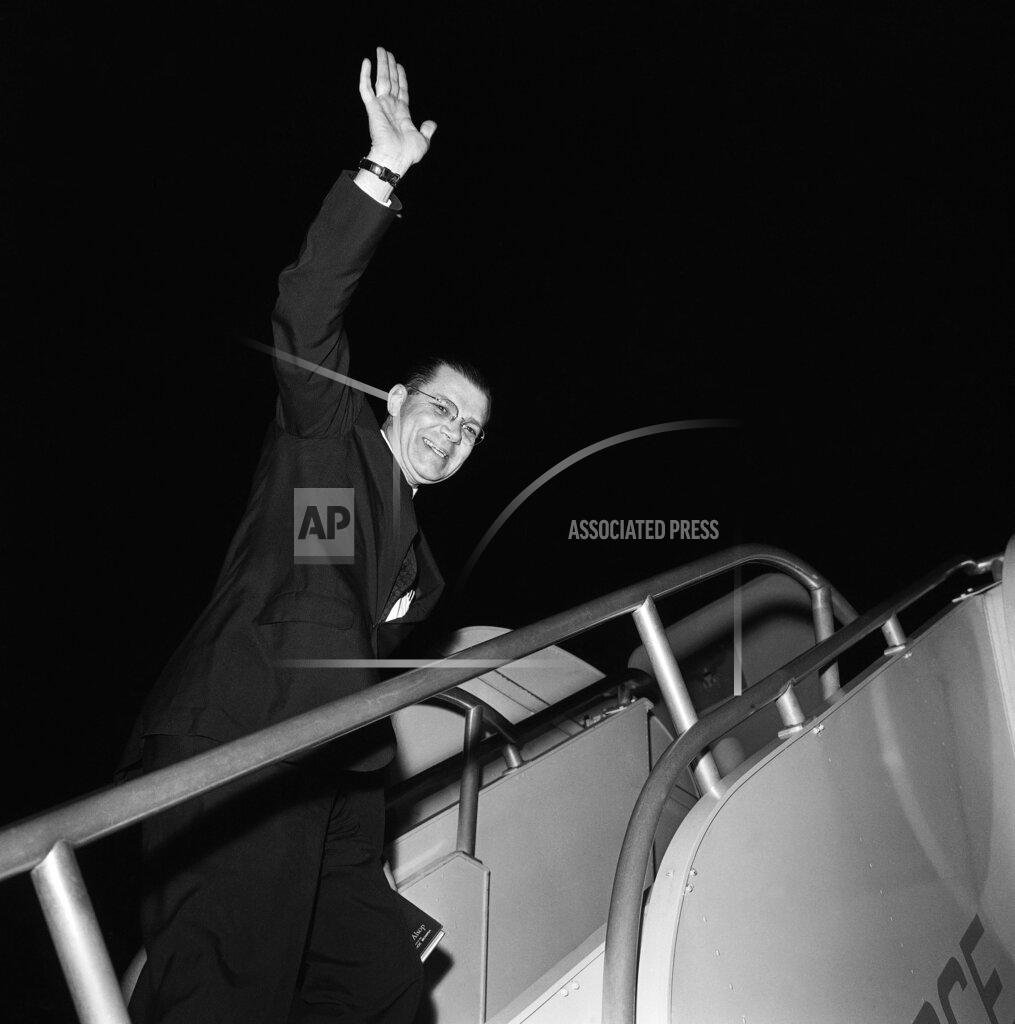
Defense Secretary McNamara said today that he would assure the Government of South Vietnam that the United States would continue as long as necessary its support of the war against the Communist guerrillas there. Mr. McNamara, accompanied by General Maxwell D. Taylor, Chairman of the Joint Chiefs of Staff, and other officials, arrived in Hawaii by air en route to another inspection tour of South Vietnam.
Secretary of State Dean Rusk refused at a news conference today to be drawn into criticism of President de Gaulle on French diplomacy. Mr. Rusk was obviously not surprised by questions based on reports implying a growing divergence of policy between France and the United States and mounting concern in the Administration. He held to a planned response that he had no official indication of any divergence. The Secretary praised French economic and cultural influence in Cambodia, and described French assistance to South Vietnam as important.
He said he had no information that France was plotting the overthrow of Major General Nguyễn Khánh, Premier of South Vietnam, or otherwise promoting the “neutralization” of the region. He said he was unaware of any French proposals there or elsewhere for a change of Western policies. He said he “frankly” did not know whether there was any disagreement with France about the need to make peace in Asia through accommodation with Communist China. Mr. Rusk said talk of neutralizing South Vietnam tended to undermine morale there, but he would not blame France for inspiring or encouraging such talk. He said he did not like France’s recognition of Communist China, because it might be mistaken for encouragement in Peking.
Extensive command shifts and realignments in the Pacific are under discussion in Washington. A separate Southeast Asia command, independent of the Pacific command, and a new United States command structure in South Vietnam are included in the proposals. Also envisaged is the creation of a separate Korean command and a realignment of command responsibilities along most of the eastern coast of Asia. There are sharp differences in Washington about the desirability of the changes, and they have both service and political implications. At present, the Commander in Chief, Pacific, with headquarters in Hawaii, commands the entire area and has Army, Navy, Marine and Air Force units under his command. The Pacific has been, traditionally, a naval command. Recently Admiral Ulysses S. Grant Sharp Jr. was selected to succeed Admiral Harry D. Felt as Commander in Chief, Pacific, when Admiral Felt retires in June.
General Paul D. Harkins, senior United States general in South Vietnam, reports to Washington through Admiral Felt; South Vietnam and the other nations in Southeast Asia are part of the Pacific command. General Harkins will reach retirement age in a few months and the proposed command changes will, if they take effect, be made about that time, it is believed. The realignment of command would, in effect, require General Harkins’s successor to report directly to Washington rather, than through Hawaii. General Harkins is the senior of about 19 United States generals in South Vietnam. He heads the military efforts of the United States there and directs the activities of 15,500 United States military advisers and training personnel.
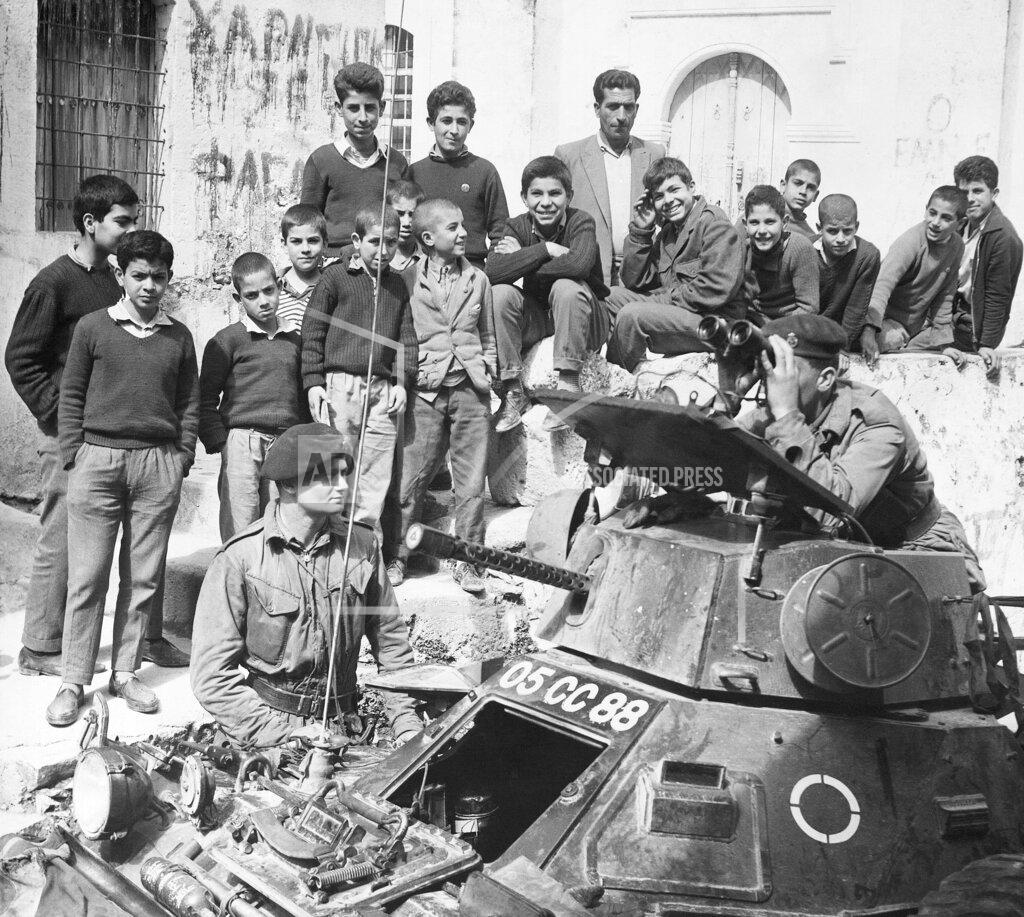
Lieutenant General Prem Singh Gyani of India was named today to command the United Nations peacekeeping force in Cyprus. The force was approved Wednesday by the Security Council. Sweden was the first country to respond to the appeal for troops that was made by the Secretary General Thant as soon as the resolution providing for the force was passed. The Swedish Government notified Mr. Thant today that it was conditionally prepared to furnish one battalion for the three months the resolution set as the duration of the force. A condition laid down was that Sweden must not be the only neutral nation taking part in the force. Brazil has refused Mr. Thant request for troops. The Irish Mission said the Irish Government had announced that a number of points would have to be clarified before it could answer Mr. Thant’s request.
President Johnson has told Premier Khrushchev that he is “seriously mistaken” about the nature of the crisis in Cyprus and the United States Government’s efforts to restore peace there. The President wrote to the Soviet leader Wednesday. The letter was made public today. The President agreed with a thought expressed in a note from Mr. Khrushchev a month ago that it was in the interest of all to avoid aggravating the situation in the eastern Mediterranean. The President’s letter added: “We should all strive not to inflame passions from without. I can assure you that this is the firm intention of my government, and I sincerely hope… that it is also that of your government.”
The letter to Mr. Khrushchev was made public by the White House after the President had received a 10‐minute courtesy call from Cyprus’s Foreign Minister, Spyros Achilles Kyprianou. However, press aides said the timing was coincidental, and the President’s visitor said Cypriote issues had not been discussed. The Foreign Minister said he considered that the United Nations Security Council resolution on a peace‐keeping force for Cyprus invalidated the treaty permitting intervention in Cyprus by Britain, Greece and Turkey as guarantors of Cypriote independence. After first denying that the treaty gave the guarantors the right to intervene, he said later that if such power was implied it had been superseded.
President Johnson’s letter of fewer than 200 words was in reply to Premier Khrushchev’s 1,400‐word message of February 7 to the heads of government of the United States, Britain, Greece, Turkey and France. The Khrushchev note, made public at the time by Moscow, advanced the view that the “Cypriotes are fully capable of straightening out their own affairs.”
The original version of the Soviet Union’s MiG-25 supersonic jet fighter, referred to in the West as the “Foxbat”, was flown for the first time. “These amazing aircraft”, an author would note, “were to sustain the biggest development program in history, leading to forty-nine versions, of which thirty-three flew and more than twenty entered service.”
The literacy test for Mississippi voters was upheld as three judge panel of the U.S. District Court in Jackson ruled, 2–1, that the state law did not violate the U.S. Constitution. The U.S. Department of Justice had brought suit to challenge a requirement that voters had to be, within the judgment of a county official, of good moral character and that they had to be able to read and write, and to be able to interpret selected sections of law. Historically, the literacy test had more often disenfranchised African Americans than white residents. The tests would be outlawed for federal elections by the passage of the Voting Rights Act of 1965.
The Senate adopted tonight a farm bill containing a triple subsidy on cotton and imposing on wheat processors a part of the cost of supporting wheat at a government‐set price. The vote was 53 to 35. The hotly disputed measure now goes to the House, where the Democratic leadership hopes to pass it quickly to make it effective this year. President Johnson praised the Senate for its action and expressed hope that the House would proceed to passage of the bill after taking quick action on a countrywide food stamp plan for needy families.
After passage of the farm bill, Senator Mike Mansfield of Montana, the Democratic leader, announced that he intended to call up the civil rights bill when the Senate meets at noon Monday. Senator Wayne Morse, Democrat of Oregon, immediately served notice that he would move Monday to send the civil rights bill to the Senate Judiciary Committee with instructions to report it back to the Senate in 10 days.
How the House leadership can gain speedy action on the farm bill is uncertain. It is considered likely that the measure will have to be sent to a Senate-House conference to resolve differences over an amendment adopted by the Senate. Last year the House approved a four‐year cotton bill similar to the Senate’s bill. Today, by a roll‐call vote of 46 to 43, the Senate limited the program to two years.
Senator Barry Goldwater, buoyed by large and friendly crowds, said today he would “have to guess” that he could win 40 percent of the vote in the New Hampshire primary and lead all of his five opponents. Last week Mr. Goldwater said he hoped to win 35 percent of the vote. Mr. Goldwater toured central New Hampshire today under sunny skies. It was a day that well illustrated the demands, rewards and occasional absurdities of primary campaigning. The Arizona Senator discussed his prospects in next Tuesday’s Republican Presidential Primary with reporters on a Laconia sidewalk and on the lawn of the Deerfield Town Hall. He said that the estimates of his vote made by him and his advisers were going up “almost hourly,” and said that his private polls indicated that his popularity had been “increasing consistently” for the last three weeks.
Jack L. Ruby said he first thought of killing Lee H. Oswald the night of November 22, the day President Kennedy was assassinated, a police sergeant testified today. Ruby made this statement on November 24, only 10 minutes after killing Oswald, and gave two motives for shooting the alleged assassin of the President, Sgt Patrick T. Dean testified. The 52‐year‐old night‐club operator “wanted the world to know the Jews do have guts,” the sergeant said Ruby told him. Also, Ruby said he disliked Oswald’s “sarcastic sneer” at a midnight news conference at the city jail on November 22, the witness said. Ruby had gained entrance to the conference by mingling with out‐to‐town newsmen.
This testimony by the final witness for the prosecution was the state’s most potent blow at the defense argument that the shooting was unpremeditated and that Ruby was suffering from a brain seizure when he killed Oswald in the basement of the jail. Melvin M. Belli, chief counsel for Ruby, was unable to shake Sergeant Dean’s testimony in a one‐hour cross‐examination. District Attorney Henry M. Wade rested the state’s case at 2:55 PM.
Alarm bells rang in the corridor as the defense called its first witness, “Little Lynn,” a former striptease dancer who was performing at Ruby’s Carousel club last November. Seven prisoners had escaped from county jail cells on the sixth floor of the courthouse. Two of the prisoners made their way to the second‐floor corridor. Little Lynn, waiting in the corridor, became hysterical when she saw a bogus pistol in the hand of one of the prisoners. Nine months pregnant, she slumped to the floor, screaming, “He’s after me.” But she revived and was able to take the witness stand after a delay of several minutes.
Meanwhile, Mr. Belli, in a brief opening statement, said he would prove that Ruby could not have planned the shooting of Oswald. His voice became tender as he told the jurors he was about to call as his first witness Karin Lynn Bennett, “Little Lynn.” He said Little Lynn had awakened Ruby with a phone call at 10:05 Sunday morning, November 22, to ask him to send $25 for her overdue rent. This was five minutes after the time that Oswald was supposed to have been moved from the city jail to the county jail, Mr. Belli noted. Ruby arose, went downtown to the Western Union office and wired the $25 to Little Lynn, who lives in Fort Worth, Mr. Belli said. The money order receipt was stamped at 11:17 AM, he continued, and the Western Union office was half a block from the jail, where at that moment Oswald was being led from his cell. Ruby shot Oswald a few minutes later.
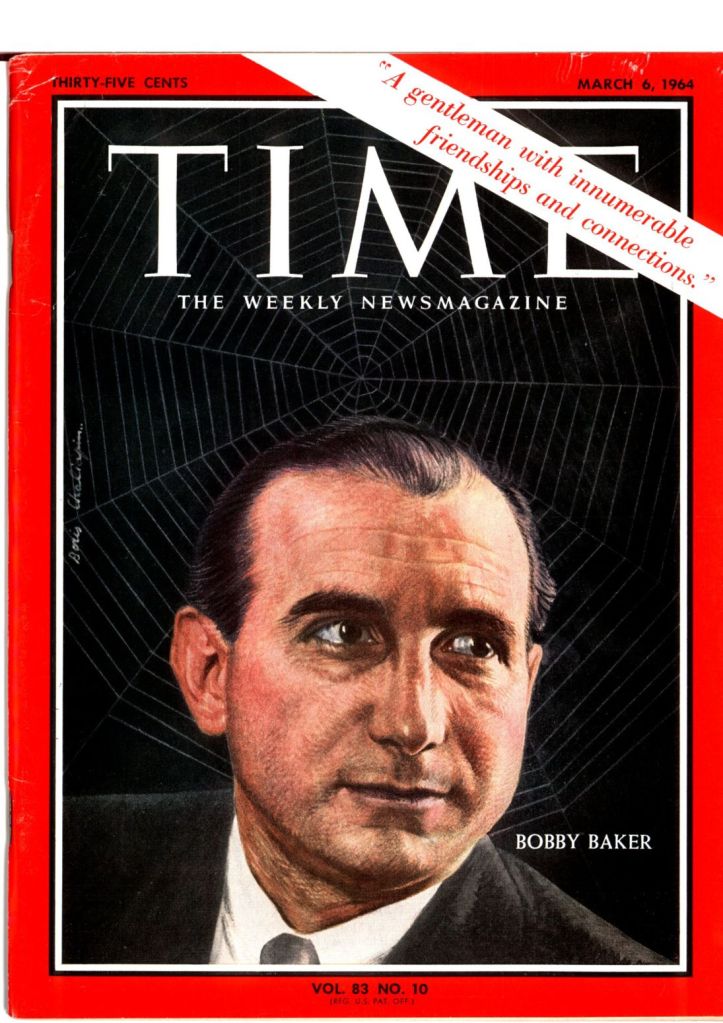
Robert G. Baker, who has been reticent under Senate investigation, said today he was having “a very interesting life” and might run for public office. The 35‐year‐old former Senate page boy from Pickens, South Carolina, whose financial activities are still under study by the Senate Rules Committee, did not reject the possibility of seeking the Governorship of South Carolina some time in the future. “I have no idea what I am going to do,” he said when asked if he still dreamed of the Governor’s mansion. But he added that “politics is what I know best” and said there was “a distinct possibility” that he might seek public office. Mr. Baker, who was reached by telephone in his home in the Spring Valley section of northwest Washington, told a reporter his mail had been running “40‐to‐1 in favor of my position” since he invoked the Fifth Amendment’s protection against self‐discrimination before the Senate committee.
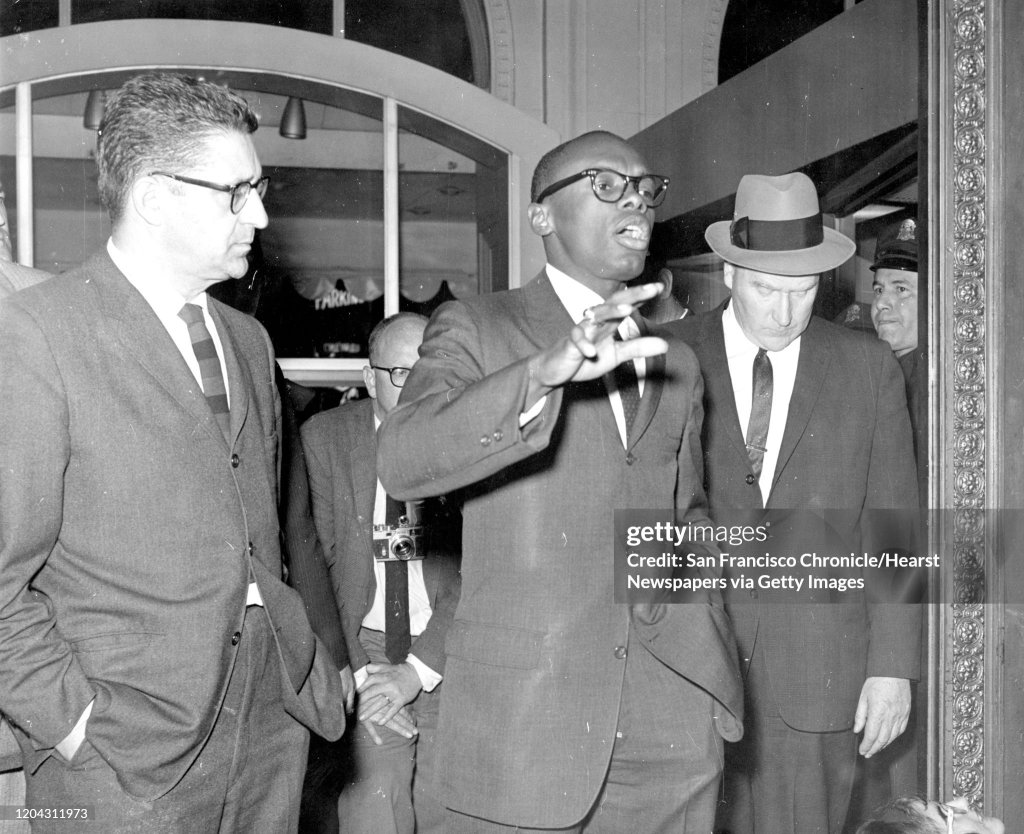
Hundreds of people in San Francisco went to jail after huge demonstrations that started March 1, 1964, at the Sheraton-Palace Hotel. The protests moved later that spring to the Cadillac dealership on Van Ness Avenue, and spread that fall to U.C. Berkeley and other college campuses. The issue was jobs — jobs for African-Americans and other minorities who were shut out of the best jobs in what everyone thought was the most liberal city in the West. The protesters had an unlikely leader: Tracy Sims, an 18-year-old college dropout, who was chairwoman of the Ad Hoc Committee to End Discrimination. Sims was arrested several times, sentenced to jail, and in the end, signed a pact with the Hotel Employers Association of San Francisco, which represented not only the Palace, but all of San Francisco’s major hotels. The hotels essentially would hire more minority applicants and place them in responsible jobs.
A 504-foot-long tanker, the Bunker Hill, exploded and sank in 300-foot-deep water in Puget Sound near off the coast of Anacortes, Washington. Five members of the crew, including the ship’s captain, were killed, while the U.S. Coast Guard was able to rescue 25 others from icy water. The ship, which was empty at the time and would normally have carried a crew of 44, had departed and was on its way to pick up a cargo of gasoline at Portland. As a result of the accident, the National Maritime Union would successfully lobby for inflatable life rafts to be placed on all ships owned by companies that had contracts with NMU members.
English-American actress Elizabeth Taylor’s is granted her 4th divorce, from American entertainer Eddie Fisher, after nearly 5 years of marriage.
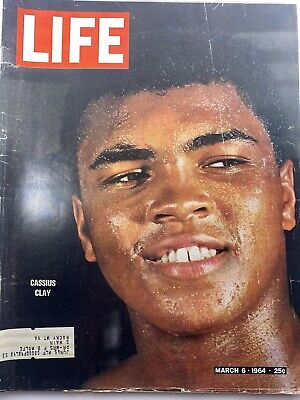
American boxer Cassius Clay announces the change of his name to Muhammad Ali. Boxing legend Cassius Clay joins the Nation of Islam and changes his name to “Muhammad Ali”, calling his former title a “slave name.”
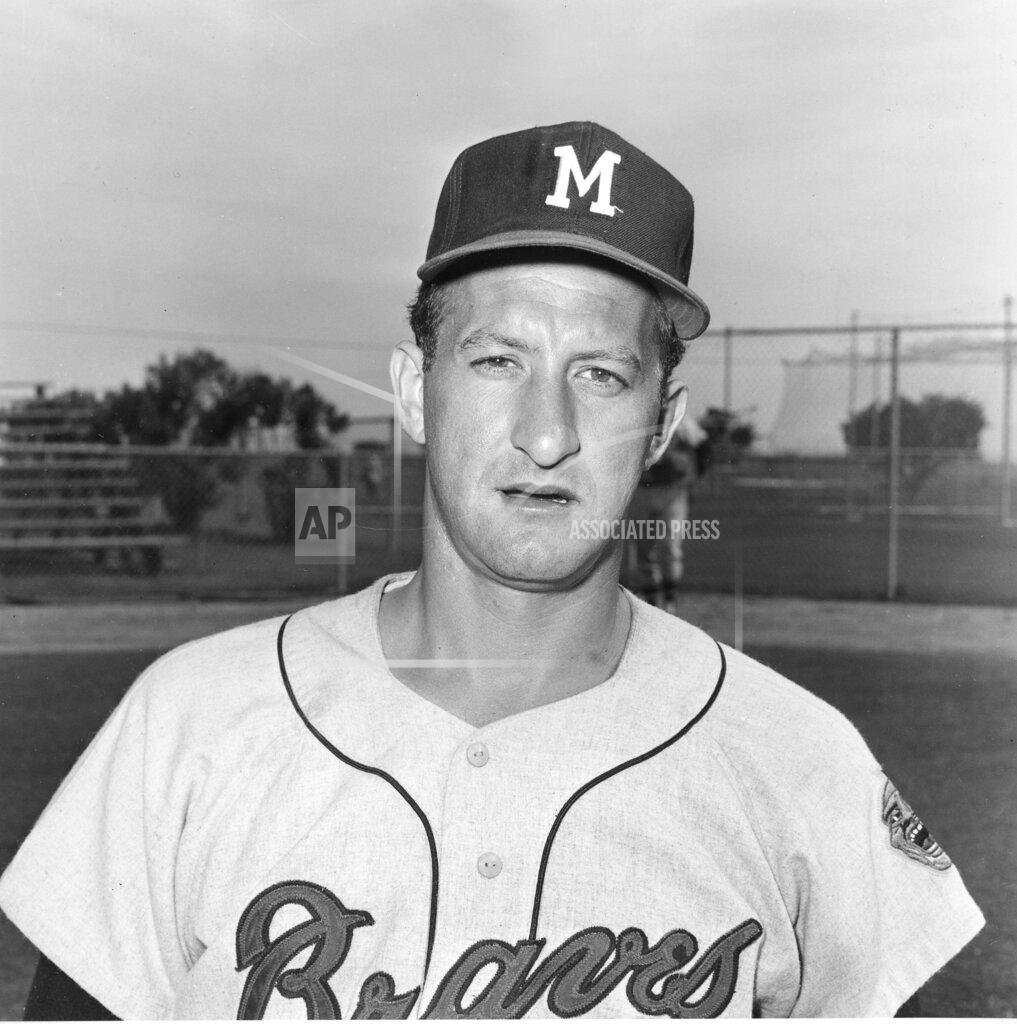
Tom O’Hara runs world record mile (3:56.4).
Dow Jones Industrial Average: 806.03 (+2.26).
Born:
Madonna Wayne Gacy [Stephen Bier, Jr.], American musician (Marilyn Manson), in Fort Lauderdale, Florida.
John Thomas, NFL tackle (New York Jets), in Cincinnati, Ohio.
Died:
King Paul I, 62, King of Greece (1947-1964).
Edward Van Sloan, 81, American actor (“Frankenstein”, “Dracula”).


 History Diaries