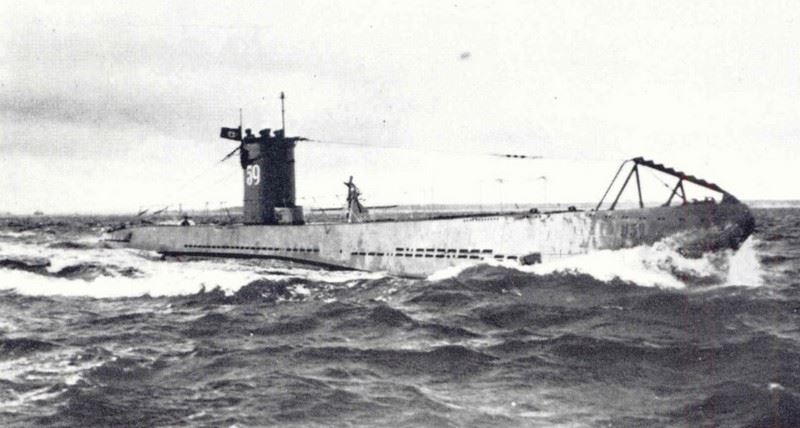
The boat began her career by training with the 5th U-boat Flotilla from March to December 1939. She was declared operational on 1 January 1940 with the 1st flotilla. She was assigned to the 22nd flotilla on 1 January 1941, then the 19th flotilla on 1 July 1944. The last two assignments were as a “school” boat.
She carried out 13 patrols in which she sank 17 merchant ships (total tonnage 34,130 GRT), two auxiliary warships (total tonnage 864 GRT), and damaged a tanker (8,009 GRT). A further victim was declared a “total loss” (total tonnage 4,943 GRT).
She was scuttled in the Kiel Arsenal at the end of the war. The wreck was broken up in 1945.
The failure of Dr. Negrin’s Spanish Communist Government to sue for peace resulted in a civil war within a civil war on the streets of Madrid, Spain. The National Defense Council, led by Colonel Casada, triumphed in the struggle for control of the Republic and tried to negotiate peace terms with General Franco. In the meanwhile, Dr. Negrin, accompanied by his Cabinet and Russian advisers, flew out of Madrid to safety.
Generalissimo Francisco Franco directed batteries of loudspeakers against the Republican lines on the Madrid front today, appealing to the defenders of the capital to surrender without further bloodshed. Amplifiers carried the words of the Nationalist propagandists over the trench tops to Republican guards several hundred yards away. One of the appeals was: “Surrender! Our troops can walk into Madrid any time El Caudillo (“The Chief” — General Franco) decides.” The Nationalists also rocketed into the city cardboard cartridges filled with propaganda sheets reminding the Republicans that Catalonia had been “liberated.”
Nevertheless, the Nationalists took precautions against any surprise maneuvers. Sentinels at advance posts in University City, Casa de Campo, West Park and Carabanchel were kept on the alert. Occasionally the Nationalist besiegers felt out the enemy lines by turning on salvos of artillery and machine-gun fire. Nationalist officers reported that the only response to such salvos was an occasional rifle crack. Reports circulated in Burgos that “some elements of Madrid” have made overtures for unconditional surrender and that only the Communist leaders were holding out for a last-ditch fight.
With tension with Germany now mounting, the Polish General Staff begins elaborating the “West” defense plan on this day. It was assumed that the Polish Army, fighting in the initial phase of the war alone, would have to defend the western regions of the country. The plan of operations took into account the numerical and material superiority of the enemy and, also assumed the defensive character of Polish operations. The Polish intentions were defending the western regions that were judged as indispensable for waging the war, taking advantage of the propitious conditions for counterattacks by reserve units and avoiding it from being smashed before the beginning of Franco-British operations in Western Europe. The operation plan had not been elaborated in detail and concerned only the first stage of operations.
The British and the French estimated that Poland would be able to defend itself for two to three months, and Poland estimated it could do so for at least six months. While Poland drafted its estimates based upon the expectation that the Western Allies would honor their treaty obligations and quickly start an offensive of their own, the French and the British expected the war to develop into trench warfare, much like World War I. The Polish government was not notified of the strategy and based all of its defense plans on promises of quick relief by the Western Allies.
The Polish Sejm passed today the first three-year part of Poland’s great fifteen-year investment plan. The initial period will be devoted chiefly to national defense, on which, apart from the current needs of the fighting forces, 1,200,000,000 zloty are to be spent or “invested” out of the total investment of 2,000,000,000 zloty. The plan is separate from and in addition to the ordinary annual budget in which the expenditure of the Ministry of War for 1939 figures as 800,000,000 zloty, the same as in 1938. This extraordinary expenditure was said to be due to the vital needs of Poland for industrialization and economic development. To make this development possible, Poland must be reasonably secure in a military sense. The arming of her two great neighbors, Germany and Russia, gives her no alternative but to mobilize the full strength of the nation.
The tension between the Czechs and Slovaks has reached a stage that already threatens the unity of what remains of the Czecho-Slovak Republic after Munich. Leading Slovak politicians have recently indulged in pronouncing separatist slogans and emphasizing that an independent Slovakia must be the final goal of all Slovaks. These tendencies have been quite openly supported by the Reich’s coordinated press, particularly the Voelkischer Beobachter.
The Vienna radio daily broadcasts in the Slovak language attacking the Prague Government and advocating the establishment of an independent Slovakia. At the same time the Slovak Government is pressing hard on Prague to obtain financial support for an autonomous Slovakia whose first official act was to dismiss. 10,000 Czech civil servants. While doing so Bratislava sent a member of the Cabinet to Berlin to negotiate concerning economic cooperation, not informing the Prague Central Government of its intentions previously-although matters concerning foreign affairs should be handled by the Prague Foreign Ministry only. At the last minute, Prague announced it had been informed of the Slovak Minister’s trip, but only in order to save the last vestiges of its prestige in Slovakia.
The Slovak Government met today and discussed the recent conversations in Prague and Berlin. The Slovak Cabinet also deliberated on the demand the Czechs made during the recent Prague negotiations in order to secure the republic’s territorial integrity. The demands were: First, that the Slovak Government issue a declaration of loyalty for the Czecho-Slovak Republic and that the army and foreign policy problems concern all provinces. Second, that the Slovak Government prohibit statements contradicting this declaration of loyalty. Third, that no separate Slovak army be established.
The Czechs demanded that the Slovak Government accept these demands immediately. The Slovak Government will meet at Bratislava Monday to discuss what the Slovaks are calling the “Czech ultimatum.” Bratislava accuses the Czechs of abusing Slovakia’s unfortunate financial situation in demanding its “surrender.” Dr. Karol Sidor, one of the more or less open sympathizers of Slovak independence, is reported to have presented his resignation yesterday during the joint meeting of Czechs and Slovaks in Prague. He finally withdrew it, however.
Germany now pays firms in vouchers, rather than in cash. The terrific strain to which Germany’s vast armament and building programs are subjecting government finance is illustrated anew by the fact that the army in particular, and several other government departments as well, are now paying industry for deliveries made not in cash, or bills, or treasury notes, but “acknowledgment vouchers.” These are, in effect, simple IOU’s stating that the government department issuing them owes the respective company so much money.
These vouchers, which first began to appear last November, presumably as isolated and temporary expedients, have now reached a total estimated at 1,000,000,000 marks, which raises them to the dignity of a regular and not particularly voluntary credit instrument. Approximately half of them have already found their way back to banks as collateral for loans taken up by firms receiving them but unable to wait for payment. The government has assured the banks that the vouchers will be honored in due time but by their very nature they are welcomed neither by firms receiving them nor by banks.
Bills and treasury notes with which payments were made heretofore bore interest of approximately 4½ percent but the “acknowledgment vouchers” bear no interest, which means that the firms receiving them must support the interest burden, especially if they borrow money on them from banks.
British Ambassador Sir Nevile Henderson sought tonight to reconcile Britain’s accelerated rearmament with her desire for peace. Speaking at the opening exercises of the founding of the Cologne branch of the German-English society, Sir Nevile, declared that no party or statesman in England “would for one moment contemplate an aggressive war.”
He then added: “Every British party and statesman and individual would, in self-defense, always be compelled to resist by force any threat to their own independence or to their vital interests.” He quoted assurances from both Prime Minister Neville Chamberlain and Foreign Secretary Viscount Halifax that Britain’s armaments were for defense alone.
The Italian press interprets the new pontiff’s peace views as reproof of democratic pacifism.
The friendship of President Franklin Roosevelt and Pius XII gives rise to renewed diplomatic talks.
The theory that Irish terrorists attempted to blow up a railway bridge northwest of London today is held by the police following a struggle on the railway track between a signalman and a man carrying a parcel. As they struggled the man called to one of three companions, waiting in a car, “Shoot, Paddy!” A shot was fired that missed the signalman. While he ran for help the man escaped in the car with the others.
Fires today in two Birmingham department stores were believed to have been started by inflammable material in a rubber container placed in an envelope. The fires were similar to others that have been attributed to Irish Republican Army sympathizers. The possibility that the Irish extremists may have headquarters in a small house near London where bombs are manufactured is being investigated by Scotland Yard. London has been thoroughly searched and detectives are convinced the headquarters are not here.
The Royal Navy “T”-class (First Group) submarine HMS Thetis (N 25) commences sea trials. She will be lost in June in an accident.
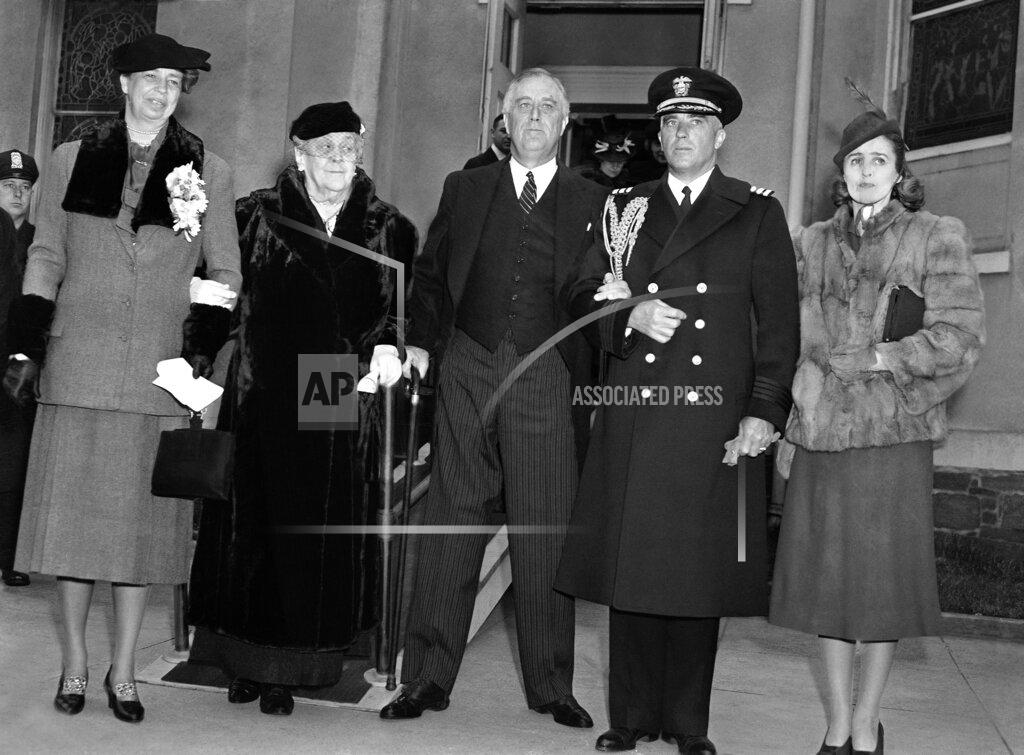
On the sixth anniversary of his first inaugural, President Roosevelt returned to the nation’s capital today from the simulated naval warfare he helped to umpire during the past two weeks and, after a brief rest at the White House, went across Lafayette Square to historic St. John’s Episcopal Church to pray for guidance in the remaining two years of his Administration. Following the brief and simple service, which was attended only by members of his immediate family, the Cabinet and a few friends, the President went directly to the Capitol, where he made the principal address at the exercises marking the 150th anniversary of the first Congress of the United States under the Constitution.
His bronzed face beaming, the President came down the ramp of his special train just before 9 AM after an overnight run from Charleston, South Carolina, where he disembarked yesterday from the flagship Houston. Wherever he went during the day friends and officials remarked on his improved physical appearance. At the train, at the church and at the Capitol, and when he entered a downtown hotel for the annual Cabinet dinner later tonight, Mr. Roosevelt was received with an enthusiasm uncommon to Washington crowds used to Presidential appearances.
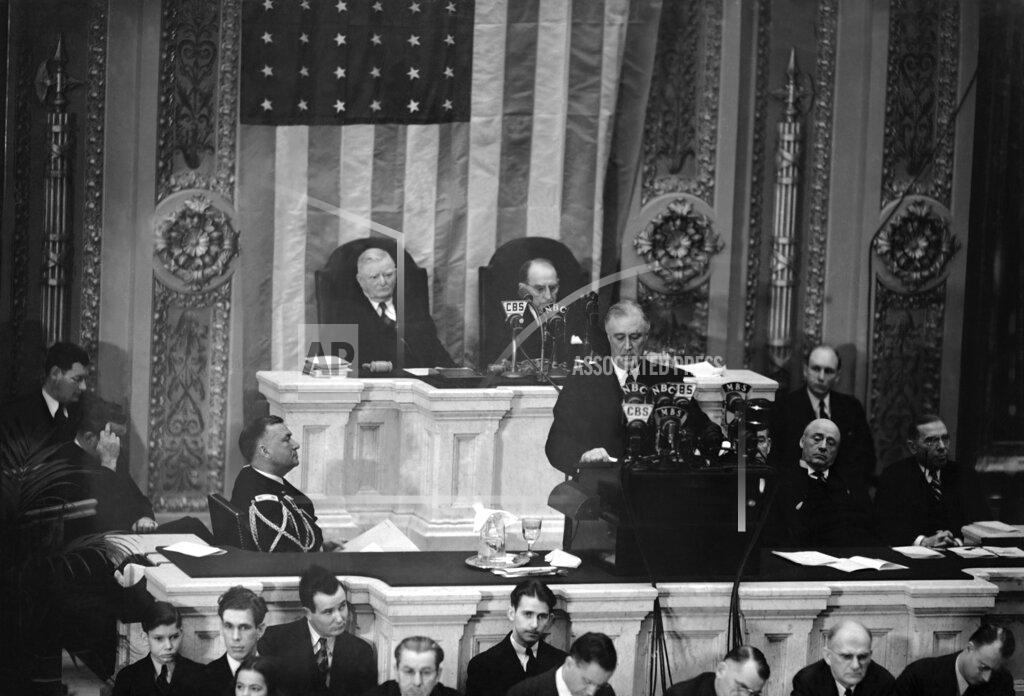
Congress celebrates the 150th anniversary of the first Congressional meeting. A challenging assertion that the United States will not approvingly watch the return to the world of tyrannical autocracy and religious persecution and a warning to the American Government to profit by the same restraints which made it great from the start, were respective contributions by President Roosevelt and Chief Justice Hughes to the 150th birthday celebration today of the first Congress under the Constitution. These two men personified the executive and judicial branches of the American representative democracy at the observance, which included also as participants both houses of Congress, the entire present membership of the Supreme Court, the President’s Cabinet, three-score diplomats of foreign governments, and a large gathering of citizens and distinguished visitors who crowded every inch of the gallery that rims the House chamber. “Today, with many other democracies,” President Roosevelt said, “the United States will give no encouragement to the belief that our processes are outworn, or that we will approvingly watch the return of forms of government which for two thousand years have proved their tyranny and their instability alike.”
Both he and Chief Justice Hughes paid tribute to the spirit that has animated American institutions for the past century and a half. “Here in this great hall,” the President said, “we are assembled, the present members of the Government of the United States of America-the Congress, the Supreme Court and the Executive. Our fathers rightly believed that this government which they set up would seek as a whole to act as a whole for the good governing of the nation. It is in the same spirit that we are met here today, 150 years later, to carry on their task. May God continue to guide our steps.”
Chief Justice Hughes referred more particularly to the operations of the government of three separate branches. All were partners, he said. “We work in successful cooperation,” he added, “by being true, each department to its own function, and all to the spirit which pervades our institutions-exalting the processes of reason, seeking through the very limitations of power the promotion of the wise use of power, and finding the ultimate security of life, liberty and the pursuit of happiness, and the promise of continued stability and a rational progress, in the good sense of the American people.”
President Franklin Roosevelt opens labor peace talks at the White House with representatives of the AFL and CIO.
Homer Martin, president of one faction of the United Automobile Workers of America, opening the special convention of his supporters today, bitterly criticized “the dictatorship of John L. Lewis,” asserting that this. “dictatorship” was in a “partnership” with “the communist dictatorship of the proletariat.” Applauded enthusiastically in these attacks, the former Baptist preacher pledged no respite in his fight against the Communists, promised that contracts with employers would be adhered to in responsible fashion, and asserted that the convention was designed as a declaration of his union’s autonomy from domination by Mr. Lewis or by Communists. Mr. Martin steered away from an attack on the Congress of Industrial Organizations. In his advance text he had written that “we have had bitter and evil compromise forced upon us by the dictatorship of the CIO” When he spoke he substituted “John L. Lewis” for “CIO” and his mention of the name elicited many boos from the 400 delegates and several hundred spectators.
General Electric patents an x-ray of one million volts.
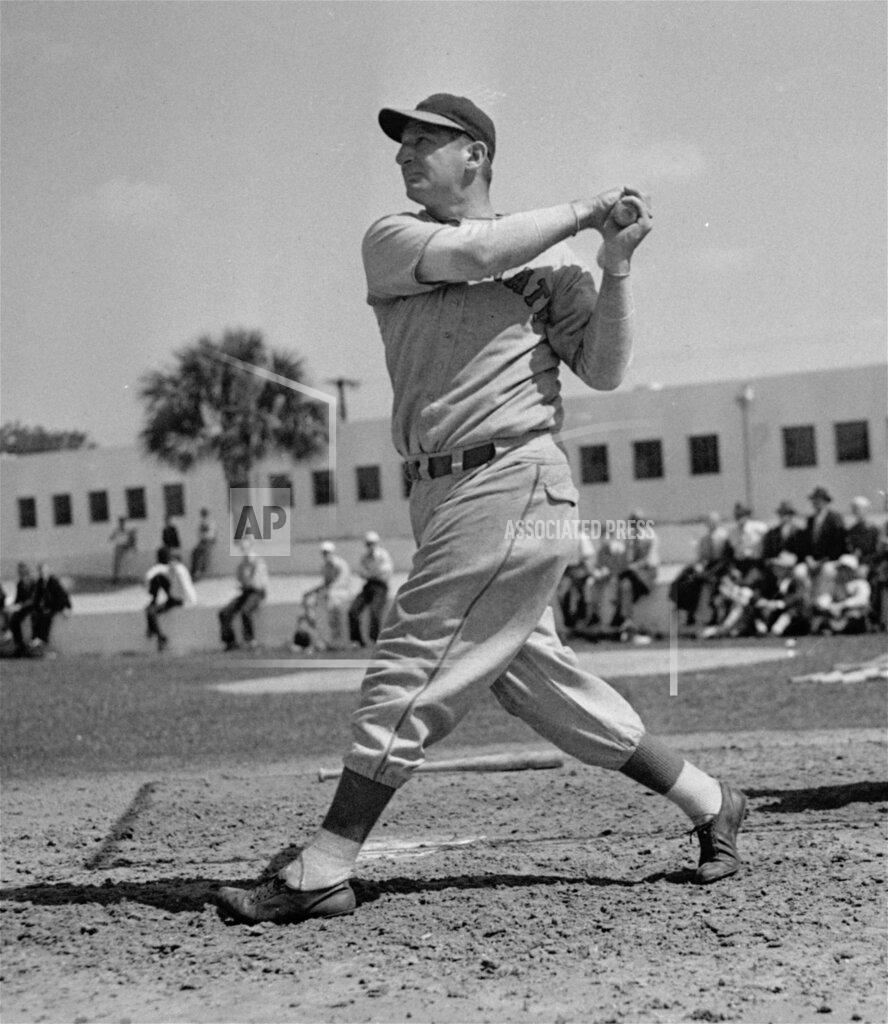
Joe DiMaggio accepts a salary of $26,500 from the New York Yankees.
Conductor Bruno Walter arrives in the United States. He refuses to conduct in Germany under Hitler’s rule.
A dispatch to the newspaper Asahi from Heinking, Manchukuo, said that eleven Soviet Russians were killed today in a clash on the Manchukuo-Siberian border near Manchuli. The casualties were said to have been inflicted when 100 Russians charged across the border, the scene of recurrent minor fighting in recent weeks.
Japanese officers said today that their troops had captured Haichow, coastal terminus of the east-west Lunghai Railway and the last Chinese-held port north of Shanghai. Haichow is 275 miles north of Shanghai. Further south in Kiangsu Province other Japanese forces, moving northward along the Grand Canal, routed Chinese defenders at Paoying, between Lake Tatsung and Lake Paoying, 190 miles northwest of Shanghai. The advance gave the Japanese control of all the canal north of the Yangtze except for a 30-mile section north of Paoying. The canal is important in transportation through Kiangsu. The Japanese had isolated Hwaian, important North Kiangsu trading center.
Chinese reported that guerrillas in Suiyuan, a northwest province, had attacked a Japanese airfield at Kwanchengtze and set fire to ten planes. Other guerrilla attacks were reported on Japanese garrisons at Taikan, in East Honan, with 100 Japanese casualties, and at two North Shansi cities with fifty casualties. The Japanese announced that a thirteen-day mopping-up drive in Central and Southern Hopeh Province has resulted in the killing of 4,311 Chinese, while 490 were seized. Japanese losses were said to be 58 dead and 152 wounded. The Japanese were reported to be planning to enlarge their westward drive from Hankow along the north bank of the Yangtze by striking at unconquered areas south of the river.
Chinese reports said the invaders were massing troops for campaigns against Nanchang and Changsha, the capitals of Kiangsi and Hunan Provinces, with four Japanese divisions assuming positions near Yochow, 140 miles upriver from Hankow, to renew efforts to open a way to Changsha, eighty-five miles south of Yochow. West of Hankow the Chinese reported increasingly heavy fighting and a stalemate in Japanese efforts to cross the Han River. Japanese military reports from Suchow said Japanese aircraft had bombed and sunk 200 junks, carrying Chinese soldiers across Lake Hungtze on the western border of Kiangsu.
Although the four capitals concerned are reticent regarding the matter, it became known here today that Washington and London had filed almost identical protests to Chungking and to Tokyo concerning the situation In Shanghai’s International Settlement. The representations to Chungking declared that precarious tension would continue as long as the Chinese Government continued to direct, finance and encourage political terrorism and assassinations.
The representations to Tokyo, which were in strong terms, pointed out that a permanent betterment of conditions in the International Settlement could not be expected as long as the outlying sections, which are controlled by the Japanese, permit gambling, vice and sales of narcotics, thereby creating a natural rendezvous for criminals. The American, British and Italian commanders of the defense force of the International Settlement today were visited by Japanese army and navy representatives who informed them of the details of the new agreement with the Municipal Council regarding the control of terrorist activities. All felicitated the Japanese on the outcome of the negotiations and volunteered to continue cooperation in the maintenance of safety in the Settlement.
The new understanding does not give the Settlement police or foreign defense forces the right to pursue assassins and other criminals who flee from the Settlement into areas under Japanese control. When asked whether the conclusion of the new agreement would lead the pro-Japanese Nanking regime to modify its charge that the Settlement and French Concession were hostile areas the Japanese spokesman refused comment, saying the Japanese “are not running or directing the Nanking regime,” It is understood, however, that if the political assassinations cease the Nanking spokesman is likely to withdraw his recent “declaration of silent war” against the Settlement, French concession and foreign coastal and inland shipping.
Informed quarters here consider the new agreement will merely afford a breathing space and will not be effective long unless China and Japan do their part in maintaining order, China ordering the terrorists to withdraw from the Settlement and Japan cleaning up the lawless vice areas adjoining the Settlement.
An American expert on Japan states that financial collapse is not imminent for Japan.
Dow Jones Industrial Average: 149.49 (+0.73).
Born:
Jack Fisher, MLB pitcher (Baltimore Orioles, San Francisco Giants, New York Mets, Chicago White Sox, Cincinnati Reds), in Frostburg, Maryland
Naval Construction:
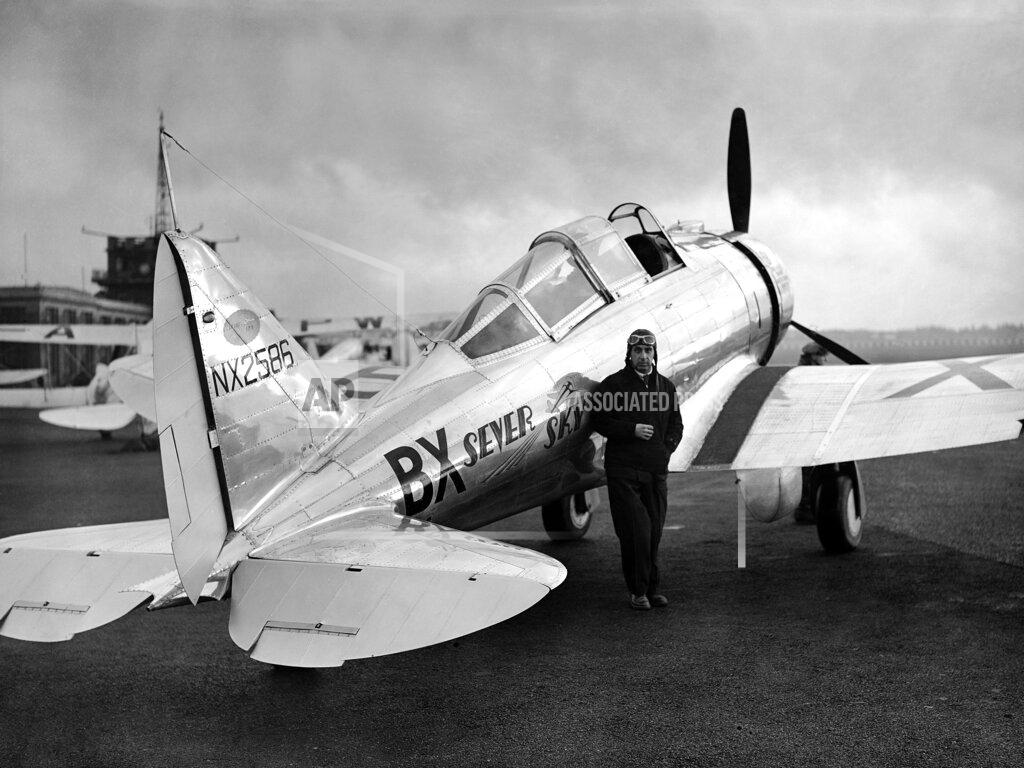
The U.S. type T3-S2-A1 civilian tankers (later naval tankers, then escort carriers) SS Seakay and SS Markay are launched by the Sun Shipbuilding & Drydock Co. (Chester, Pennsylvania, U.S.A.). They later become the U.S. Navy oilers USS Santee (AO-29) and USS Suwannee (AO-33), then later the escort carriers USS Santee (AVG-29, then ACV-29, finally CVE-29) and USS Suwannee (AVG-27, then ACV-27, finally CVE-27).
The Вое́нно-морско́й флот СССР (ВМФ) (Soviet Navy) “ShCh” (ShChuka)-class (5th group, Type X) submarine ShCh-214 is commissioned.
The Kriegsmarine (German Navy) Type IIC U-boat U-59 is commissioned. Her first commanding officer is Oberleutnant zur See Harald Jürst.
The Regia Marina (Royal Italian Navy) Soldati-class (First Group) destroyer Corazziere is commissioned.
 History Diaries