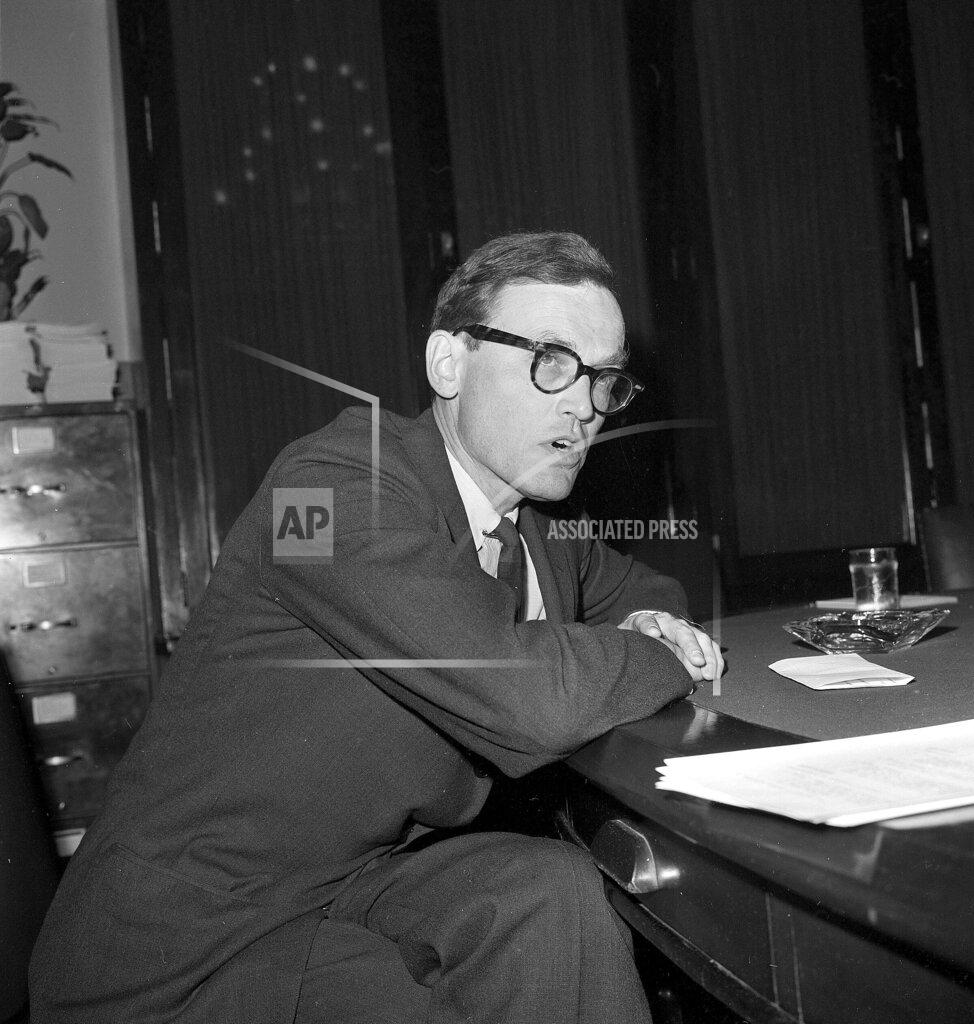
Secretary of State Dean Rusk talked optimistically today of the prospective outcome of the war in South Vietnam. “It’s a mean, frustrating and difficult struggle, but we think it can be won,” Secretary Rusk said after he had testified in closed session before the Senate Foreign Relations Committee. His statement contrasted with recent reports of the war against the Communist guerrillas, but it was consistent with the official view that has been expressed here in recent days. There was no comment from any official source whether the United States was considering slowing the schedule calling for withdrawal before the end of 1965 of most of the 15,500 United States troops in South Vietnam.
Nor was there any indication that the Administration still considered seriously any program that might bring about the expansion of the fighting into North Vietnam, by guerrilla activity or blockade. The possibility of such an expansion was strongly implied last week but official sources today tended to withdraw from that alternative. Instead, they stressed the present combat strategy, which is directed chiefly against the insurgents in South Vietnam. Meanwhile, the Administration prepared for an on‐the‐spot survey. The Pentagon announce Secretary of Defense Robert S. McNamara would leave for Saigon Thursday at midnight, at the head of a toplevel group of officials. General Maxwell D. Taylor, Chairman of the Joint Chiefs of Staff David Bell, administrator of the Agency for International Development, and William H. Sullivan, head of the government task force in charge of South Vietnamese policy problems will accompany Mr. McNamara.
Secretaries Rusk and McNamara were luncheon guests of President Johnson at the White House today. It was assumed that the South Vietnamese situation was the main subject of discussion. Secretary Rusk appeared before the Senate committee in closed session. The committee chairman, Senator J. W. Fulbright, Democrat of Arkansas, reported afterward that the Secretary of State had discussed Cyprus as well as South Vietnam. Senator Fulbright said that Secretary Rusk had not been “defeatist about the situation” in South Vietnam. Indeed, he said, the Secretary had asserted that the situation there was “not desperate or hopeless.”
United Nations Secretary General U Thant says that he sees no effective role for the UN in the Vietnam conflict. If the United Nations were called upon to take on certain duties, either to restore law and order or to perform peacekeeping functions, Mr. Thant declared, it is doubtful that it could do so effectively. Mr. Thant said that there were a number of reasons for keeping the United Nations free of involvement in South Vietnam, and he specifically noted that this was a “cold war” matter. The Secretary General volunteered these opinions during a luncheon with the United Nations Correspondents Association: His remarks set off speculation that some approach had been made to the United Nations—most likely of an unofficial and tentative nature —and that he was eager to rule out such a move before it developed. United Nations spokesmen insisted that no proposal for United Nations help had been made and that Mr. Thant had brought up South Vietnam as an illustration of the kind of issue in which United Nations activity was unwise.
President de Gaulle appeared tonight to be moving toward some form of initiative in the Cyprus crisis. Information Minister Alain Peyrefitte said after a Cabinet meeting that a positive move by France on settlement of the crisis, when the time came for it, should not be excluded. Mr. Peyrefitte’s guarded comments immediately aroused speculation on the possibility that GeneraI de Gaulle was considering acceptance of an invitation by President Makarios of Cyprus to mediate in the conflict between Greek and Turkish Cypriotes. The invitation was issued February 20 in the course of an interview given by Archbishop Makarios to the Paris newspaper Le Monde.
While the French appeared to be considering a mediation role, Greece was swept by a wave of anti‐American demonstrations over the Cyprus issue. The Greeks have accused the Americans of favoring the Turkish Cypriotes. The Greek Premier deplored violent manifestations. No French initiative should be expected in the coming weeks, Mr. Peyrefitte said. This was seen as an indication that President de Gaulle wanted to allow the United Nations every opportunity to settle the issue. The President spoke at some length on the Cyprus question during the Cabinet meeting, informed sources said. It is reported that he outlined steps France might take.
The French Government is not optimistic about the prospect of a United Nations solution of the crisis. Mr. Peyrefitte indicated that the Government was opposed to the resolution presented by the smaller powers of the Security Council. This calls for establishment of a peacekeeping force on the island by the United Nations. Mr. Peyrefitte described the proposed resolution as “merely getting at the effects and not the cause.” The minister gave the impression that France would abstain when the proposal was voted upon by the Security Council. The Information Minister also criticized the agreement that established the independence of Cyprus. This was reached by Britain, Greece and Turkey after a conference in Zurich in 1959.
United States officials are reported to have been informed through diplomatic sources that President de Gaulle is contemplating a major economic agreement with the Soviet Union. He is also said to be determined to torpedo the forthcoming round of international negotiations on tariff cuts. General de Gaulle recently dismayed Washington by recognizing Communist China and proclaiming his support for a policy of neutralizing the Indochina area, where the United States is deeply committed to the anti‐Communist Government of South Vietnam. The report of a pending economic deal between Moscow and Paris has been bolstered by the visit to President de Gaulle yesterday by Nikolai V. Podgorny, a member of the Soviet Communist party’s Presidium.
The French Government will support Communist China’s application to join the United Nations, officials said here tonight. President de Gaulle’s Government will also back Peking’s admission to bodies affiliated with the world organization, such as the United Nations Educational, Scientific and Cultural Organization and the World Health Organization. At a meeting today of the World Health Organization in Geneva the French delegate voted to seat the Chinese Communists. The health agency voted. nevertheless, to seat the delegation of the Chinese Nationalists. In Washington, the State Department said the United States would continue to oppose a seat for Peking in every United Nations agency.
An inter‐American committee drafted a new formula tonight designed to bring about the restoration of diplomatic relations between Panama and the United States. It also provides for a conference between the two countries to decide what changes may be required in the 1903 treaty governing the Panama Canal. Members of the five‐nation mediating team appointed last month by the Organization of American States worked all day on the settlement formula. Committee sources said it was drawn from statements made on Saturday by President Johnson and last night by President Roberto F. Chiari of Panama. Both leaders said they were’ eager to end the seven-week-old dispute. It was not certain whether the new text would satisfy Panama’s demand for assurances that the United States was prepared to negotiate possible changes in the treaty.
The Villarrica Volcano erupted with a roar today, spreading new terror a day after its first eruption started avalanches that buried a village in southern Chile and drove thousands from their homes. Refugees officially estimated at 30,000 huddled in blinding rain on the mountains. Rescue teams fought floods and mud to try to get food and supplies to the area, 500 miles south of Santiago. Press reports put the toll at 22 dead and 35 missing. The official figures were 7 dead and 25 missing. Reports from the scene indicated the toll would run higher. The immediate concern was the fate of several hundred villagers of Conaripe. It was wiped off the map by an avalanche of mud and rock when the 9,325‐foot volcano erupted yesterday.
The Kingdom of Saudi Arabia and the United Arab Republic resumed diplomatic relations after six years, following a meeting between Prince Faisal and President Nasser at the Arab Summit in Cairo.
The Tsurugisan Quasi-National Park was founded in Japan.
The opening efforts to amend the Administration’s farm bill were swamped in the Senate today. By votes of 80 to 12, 69 to 20 and 63 to 30, the Senate rejected amendments aimed at revising cotton provisions as the Democratic leadership pushed to clean up the bill this week. Some 17 amendments to the cotton‐wheat measure still were pending but it began to appear that the bill would survive major attempts to change it. The first test was an amendment by Senator John G. Tower, Republican of Texas, to substitute a temporary program for direct price‐support payments to farmers for the bill’s cotton provisions. Mr. Tower’s unsuccessful plan would have reduced payments until they became “unnecessary” by 1970. Twenty‐one Republicans joined 59 Democrats to knock down the amendment. Twelve Republicans favored it.
A similar fate was dealt an amendment by Senator Allen J. Ellender, Democrat of Louisiana who is chairman of the Senate Agriculture Committee, on a vote of 69 to 20. He sought to alter proposed Government subsidies to mills. This change, he said, would be $421 million cheaper for the Government than the Administration measure. The bill as it stands provides for a reduction in the cost of cotton to American textile mills to enable them to purchase cotton at the same price as foreign mills. This would be done by a federal subsidy, presumably to cotton handlers or brokers, who could sell cotton to domestic textile mills at about 24½ cents a pound, the same world price now enjoyed by foreign plants.
The Consumer Price Index, completely revised to reflect how city‐dwellers are spending their money nowadays, rose in January to another record. The index increased one-tenth of 1 percent to 107.7, the Labor Department reported today. This means it cost $10.77 in January to buy the same products and services that cost $10.76 in December and $10 from 1957 to 1959, the period that is used as a base of 100. The big rise was in food prices, especially those of fresh vegetables, eggs, coffee, sugar and candy. The costs of operating an automobile also rose, primarily because of increased gasoline prices. The unrevised index, which the Labor Department will continue to compile through the middle of this year, showed no increase in January. It remained at the record December level of 107.6.
The District of Columbia was given $338 million today to operate for the coming year. The House approved with little or no debate the amount recommended by its Appropriations Committee. The budget was $25 million larger than the amount appropriated last year, but the five members of the Appropriations Subcommittee for the District of Columbia cut $19.4 million from the city government’s requests. The House rarely questions or debates the subcommittee’s decisions.
Robert G. Baker signed his name to bank loans aggregating more than $2.5 million in 24 banks and other lending institutions during the last four years he served as secretary to the Senate’s Democratic majority, the Senate Rutes Committee disclosed today. The information, along with other data on Mr. Baker’s financial situation, was placed in the record by Loren H. Drennan, an accountant on the committee’s investigation staff. The compilation showed that as of last November 1, Mr. Baker’s personal liability under notes then current and unpaid totaled at least $683,334. This was exclusive of more than $1 million in current bank and mortgage loans in which he shared liability with certain of his associates. It also excluded Mr. Baker’s borrowings from eight other banks that Mr. Drennan said he had not yet analyzed.
Senator Barry Goldwater indicated today that he favored a resumption of U‐2 and other reconnaissance flights over the Soviet Union. In reference to the “codes of behavior and morality” that he said candidates should hold, the Arizona Republican appeared to make his first criticism of Governor Rockefeller’s divorce and remarriage. Mr. Goldwater, a candidate in the New Hampshire Republican Presidential primary next Tuesday, went on a hand‐shaking tour with his wife, Peggy, and made an unusual promise. He said he would not make any political promises. The Senator’s views on aerial spying were drawn from him by a question from a member of a crowd of about 75 persons in the town of Hudson.
He was asked if he favored using the newly revealed 2,000 mile‐an‐hour A‐11 interceptor airplane for spying on the Soviet Union. “I think,” Mr. Goldwater said, “we should spy on the heartlands of our enemies in any way we can.”
“They do it to us,” he said. He said he would use “any method at our disposal to gain information on our enemies, whoever they are, and that includes the U‐2.” Mr. Goldwater said he did not know whether the A‐11 would be adaptable to reconnaissance work and that he had not known of the existence of the airplane before it was announced by President Johnson.
Governor William W. Scranton of Pennsylvania plunged fulI tilt into the national political arena last night. He not only delivered an indictment of the Democratic party for “the deadlock in democracy,” but also aimed glancing blows at sundry, but unidentified, leaders of his own party.
John J. McKeithen won the Louisiana governorship today by the smallest margin ever given a Democratic candidate for that office in this century. The 45‐year‐old lawyer, farmer and member of the State Public Service Commission held less than a 2‐to‐1 lead tonight over Charlton H. Lyons Sr., a Goldwater Republican.
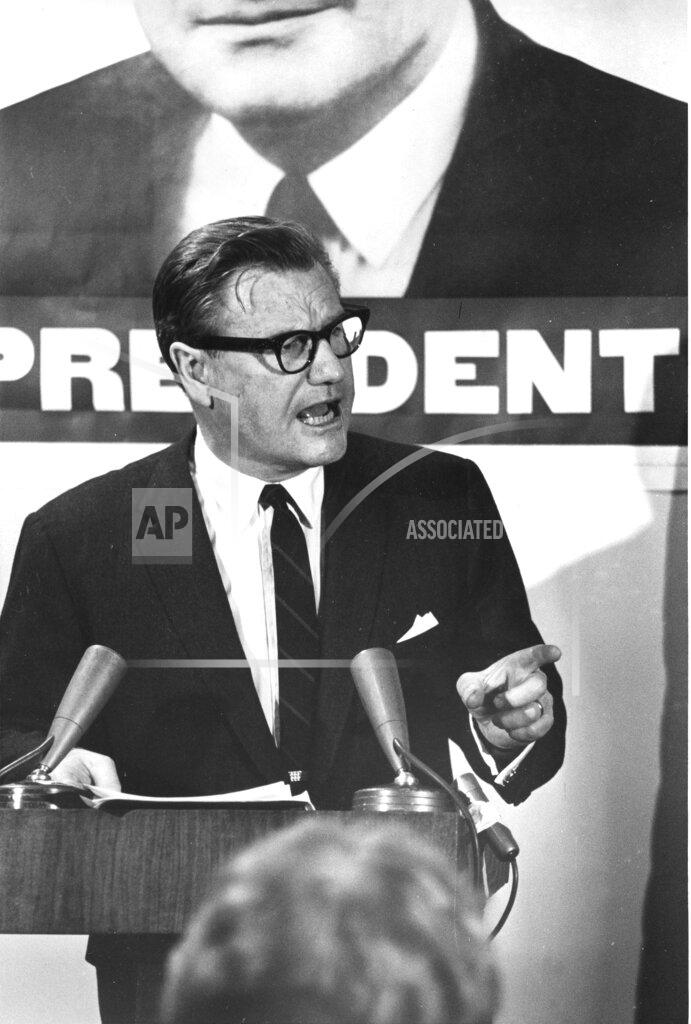
New York Governor Rockefeller signed his two major crime bills today despite opposition from bar and civil rights groups challenging their constitutionality. The Governor defended the bills — which have been dubbed the “no‐knock” and “stop‐and-frisk” bills — as needed to strengthen law enforcement in an era in which crime is increasing four times as fast as the population. By far the more controversial is the “stop‐and‐frisk” bill, which permits a policeman to detain a person in a public place when he “reasonably” suspects him of having committed a felony or serious misdemeanor. The policeman may demand identification and search the person for weapons. The “no‐knock” bill permits a Policeman, with court approval, to execute a search warrant without advance notice to the occupants of a building if there are grounds to believe that advance notice would permit the destruction of criminal evidence or endanger the policeman’s life.
For the first time in New Jersey a Negro has been chosen by a major party for a seat in Congress. William L. Stubbs of Newark, a deputy city tax collector, was selected by the Republican party in Essex County last night as its candidate in the 11th Congressional District.
President Johnson will speak at a Democratic fund‐raising dinner in Atlantic City on May 9, the party announced today. The $100‐a‐plate dinner, arranged by the Democratic State Committee, will be held in Convention Hall, where the party’s national convention is scheduled to convene Aug. 24. The President’s agreement to address the guests was announced here by Thorn Lord, Democratic state chairman.
Northern Dancer made his victory in the Flamingo look easy today. The little Canadian‐bred “won big” in the 1⅛ ‐mile race for derby‐aged 3‐year‐olds, finishing two lengths in front of Mr. Brick. The Flamingo, run for the 35th time, is the main preview race to the thoroughbred racing triple crown contests of the Kentucky Derby, the Preakness and the Belmont Stakes. Northern Dancer was ridden by Willie Shoemaker.
Dow Jones Industrial Average: 805.72 (+2.97).
Born:
Laura Harring, Mexican-American actress (“Mulholland Drive”; “General Hospital”) and Miss USA 1985, in Los Mochis, Sinaloa, Mexico.
Lisa Ann Poggi, American actress (“Candyman”; “Loving”), in Grand Rapids Michigan
Bob Kudelski, NHL right wing (NHL All-star, 1994; Los Angeles Kings, Ottawa Senators, Florida Panthers), in Springfield, Massachusetts.
Ross McKay, Canadian NHL goalie (Hartford Whalers), in Edmonton, Alberta, Canada.
Rod Jones, NFL tight end (Kansas City Royals, Seattle Seahawks), in Richmond, California (d. 2018, suicide). Following a recent diagnosis of early-onset dementia at age 54, Jones shot himself in the head in his Seattle home and died several hours later at Harborview Medical Center. His family decided to donate his brain to the Boston University School of Medicine for CTE research.






 History Diaries