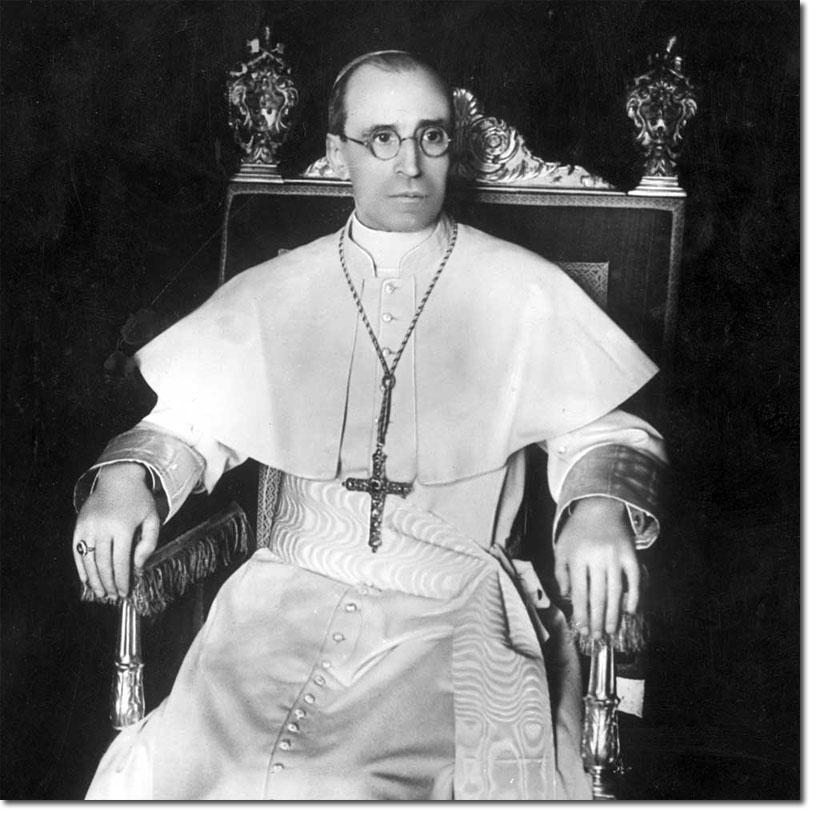
Papal Secretary of State Eugenio Maria Giuseppe Giovanni Pacelli is elected to succeed Pius XI as pope. He becomes Pope Pius XII. He had served for several years as the papal secretary of state and chief advisor to Pope Pius XI. The new pope had a reputation for a strong will, an astute character, and diplomatic skill. Pius XII immediately set out to avoid a general war in Europe, but his efforts did not reflect a change in policy from Pius XI.
Before becoming pope, Cardinal Pacelli served as a Vatican diplomat in Germany and as Vatican Secretary of State under Pius XI. His role during the Nazi period has been closely scrutinized and criticized. His supporters argue that Pius employed diplomacy to aid the victims of the Nazis during the war and, through directing his Church to provide discreet aid to Jews and others, saved hundreds of thousands of lives. Pius maintained links to the German Resistance, and shared intelligence with the Allies. His strongest public condemnation of genocide was, however, considered inadequate by the Allied Powers, while the Nazis viewed him as an Allied sympathizer who had dishonored his policy of Vatican neutrality.
Some post-war critics have accused Pius of either being overly cautious, or of “not doing enough”, or even of “silence” in the face of the Holocaust. Supporters have held that he saved thousands, if not tens or hundreds of thousands of Jews by ordering his Church to provide them with sanctuary and aid, and that he provided moral and intellectual leadership in opposition to the violent racism of Nazi ideology.
As Secretary of State, he had been a critic of Nazism and helped draft the 1937 Mit brennender Sorge anti-Nazi encyclical. In his 1939 Summi Pontificatus first papal encyclical, Pius XII expressed dismay at the 1939 Invasion of Poland (without ascribing blame); reiterated Catholic teaching in support of universal brotherhood; and endorsed resistance against those opposed to the ethical principles of the “Revelation on Sinai” and the Sermon on the Mount. At Christmas 1942, once evidence of the industrial slaughter of the Jews had emerged, he voiced concern at the murder of “hundreds of thousands” of “faultless” people because of their “nationality or race”. The degree of Pius’s efforts to block Nazi deportations of Jews remains a matter of scholarly debate. Upon his death in 1958, Pius was praised emphatically by the Israeli Foreign Minister, and other world leaders. President Dwight D. Eisenhower called him a “foe of tyranny” and a “friend and benefactor to those who were oppressed”. His insistence on Vatican neutrality and avoidance of directly naming the Nazis as the evildoers of World War II became the foundation for contemporary and later criticisms from some quarters.
The Nazi regime disapproved of Pacelli’s election as Pope. Historian of the Holocaust Martin Gilbert wrote: “So outspoken were Pacelli’s criticisms that Hitler’s regime lobbied against him, trying to prevent his becoming the successor to Pius XI. When he did become Pope, as Pius XII, in March 1939, Nazi Germany was the only government not to send a representative to his coronation.” Joseph Goebbels noted in his diary on 4 March 1939 that Hitler was considering whether to abrogate the Concordat with Rome in light of Pacelli’s election as Pope, adding, “This will surely happen when Pacelli undertakes his first hostile act.”
In 1943, plans were allegedly formulated by Hitler to occupy the Vatican and arrest Pius and the cardinals of the Roman Curia. According to Rev. Peter Gumpel, a historian in charge of Pius’ canonization process, the Pope told leading bishops that should he be arrested by Nazi forces, his resignation would take immediate effect and that the Holy See would move to another country, specifically Portugal, where the College of Cardinals would elect a new pope. Some historians argue that the reason Hitler wanted to capture the Pope was because he was concerned Pius would continue speaking against the way the Nazis treated the Jews. However, the plan was never brought to fruition, and was reportedly foiled by Nazi general Karl Wolff.
An inscription at Yad Vashem states that Pius XII’s record during the Holocaust was controversial, and that he negotiated a concordat with the Nazis, maintained Vatican neutrality during the war and, formerly stated that he took no initiatives to save Jews. In 1985, Pietro Palazzini was honored by the museum, where he protested the repeated criticisms against Pius, on whose instructions Palazzini declared to have acted. Palazzini, a theological advisor to the Pontiff, had taught and written about the moral theology of Pope Pius XII. David G. Dalin argues in The Myth of Hitler’s Pope that Yad Vashem should honor Pope Pius XII as a “Righteous Gentile”, and documents that Pius was praised by all the leading Jews of his day for his role in saving more Jews than Oskar Schindler. David Rosen has taken exception to the caption, stating when Pius died both Moshe Sharett and Golda Meir sent telegrams stating that when darkness reigned over Europe, he was one of the few who raised his voice in protest. “What Yad Vashem says is not necessarily wrong,” conceded Rosen, “but it doesn’t give us all the information.” Rabbi Rosen later quoted historian Martin Gilbert, who says that Pius saved thousands of Jews.
*
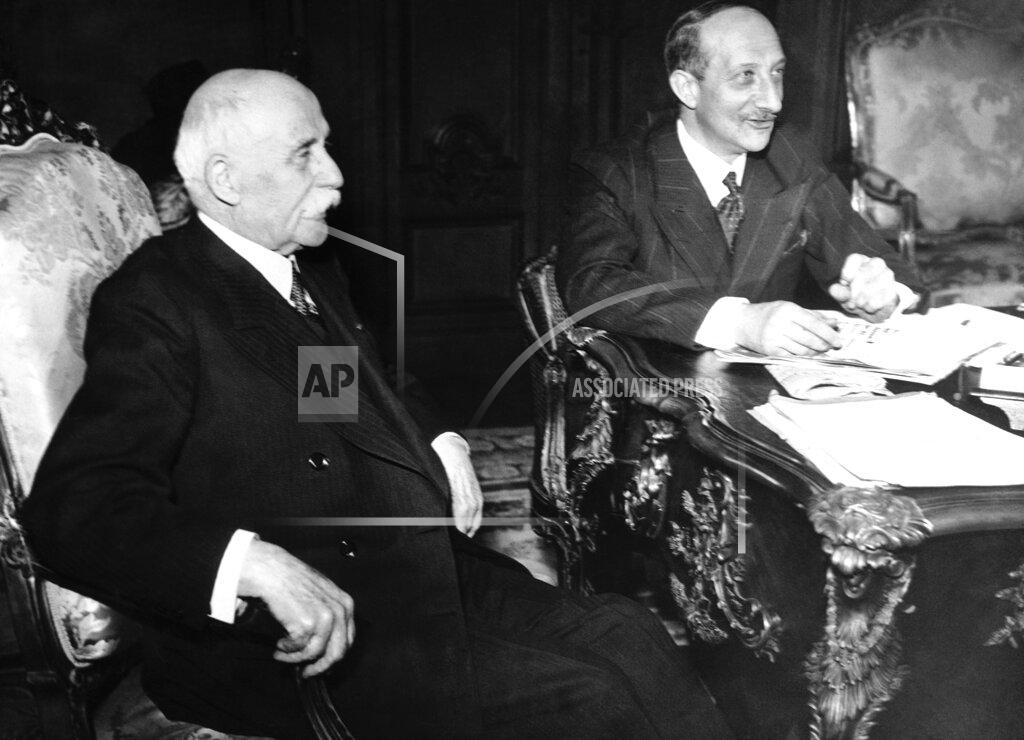
Marshal Philippe Pétain was today formally appointed French Ambassador to Spain and his nomination was accepted by Generalissimo Francisco Franco’s government in a telegram to Foreign Minister Georges Bonnet. This was described as being very cordial in its expression of satisfaction at the outcome of aH recent negotiations. Premier Édouard Daladier and M. Bonnet jointly proposed the Marshal’s name to the Cabinet and within a few weeks of his eighty-third birthday the great war-time leader and Marshal will embark on a new career. He is expecting to take with him his Chief of Staff, General Vauthier, and M. Gazel, Counselor of the Embassy at Brussels who is a specialist in economic affairs and was for a time stationed in Madrid before the civil war.
Marshal Pétain has indicated that he does not wish to remain very long in Spain, but no time limit has been fixed for the length of his mission. Notification to the French Government of the acceptance of the Marshal as Ambassador by the Franco régime was also conveyed by Quinones de Leon who is acting here as an agent for the Burgos government. Charles Rochat, Director of Political Affairs at the Quai d’Orsay left yesterday to inform the Spanish Government officially of its recognition by France. He had his first interview this evening with Count Francisco Gomez de Jordana, Burgos Foreign Minister.
Marshal Philippe Pétain, who taught Generalissimo Francisco Franco many years ago at France’s war college, was named Ambassador to Nationalist Spain in the hope he would win his former pupil away from Italian and German influence. The appointment of the 83-year-old World War hero, leader of the defense of Verdun, coincided today with a new French effort to bring the 31-month-old civil war to an end with unconditional surrender of the Spanish Republicans.
Cooperation with the Nationalists to close French ports to shipments of all supplies to Republican territory was one of the first signs of pressure on the Madrid régime. A civil court at Marseille authorized representatives of the Franco government to seize all Republican property being loaded at that port, which has been the Republicans’ principal supply point. The French were understood to have agreed further that Nationalist agents might seize all Spanish vessels in French ports, even if their home ports were still in Republican hands.
Nationalists reported today that three Republican naval officers had been sentenced to death in what was said to be a spread of revolutionary activity against the Madrid regime. Disaffection in the Republican zone, Nationalist sources said, spread to the naval forces because of the supposed plan of Republican officials to establish offices aboard war vessels. Official reports in Burgos said three destroyer commanders had been sentenced to death. They were said to be Hermenegildo Frances of the Lazaga, Juan Rufino of the Almirante Miranda and Manuel Garcia of the Escano. The commanders, Nationalists said, protested against the suggestions of some Republican leaders that their ships be kept ready for immediate departure for foreign ports.
Three political leaders in Murcia also were reported by Nationalists to have been shot. Reports here said a Republican “committee of urgency” in Murcia was drafting plans for sending war vessels out of Spanish waters rather than permit their capture by Generalissimo Francisco Franco’s fleet. Nationalist dispatches said the Republican military intelligence service agents had seized 229 persons in Madrid who had advocated surrender of the capital. “The final hour has come and the Reds [Republicans] are ready to officially confess their defeat,” one Burgos newspaper asserted.
Nationalist officers reported tonight that hundreds of refugees were risking their lives to flee from Madrid. Many, the Nationalists said, crossed the Manzanares River on Madrid’s outskirts under fire from machine guns in Republican trenches. They told of others crawling under cover of darkness into the Nationalist lines through “no man’s land” zones in University City, Parque del Oeste and Casa del Campo. Generalissimo Francisco Franco’s officers said they gave food and clothing to the refugees, whom they described as half starved, before sending them to villages behind the lines. These sources said the refugees told of a “reign of terror” within besieged Madrid, with Republican secret service agents hunting down those suspected of Nationalist sympathies and offering rewards of 1,000 pesetas for information about Franco sympathizers.
In London, a bomb exploded on an aqueduct for the Grand Union Canal near Stonebridge Park. In Wednesbury, Staffordshire a bomb exploded on an aqueduct for the Birmingham Canal Navigations. Both devices only damaged the concrete walls of the beds of the canals. It has been speculated that, had the dynamite been placed 18 inches lower, they would have caused considerable flooding over the lower-lying adjoining fields.
Howard Carter, archeologist, died in London at age 62. He led the discovery of the Tomb of Tutankhamen in 1922.
Britain piles up civil defense aids, including sandbags and gas masks.
A Hawker Hurricane fighter was sent to Canada in preparation for license production.
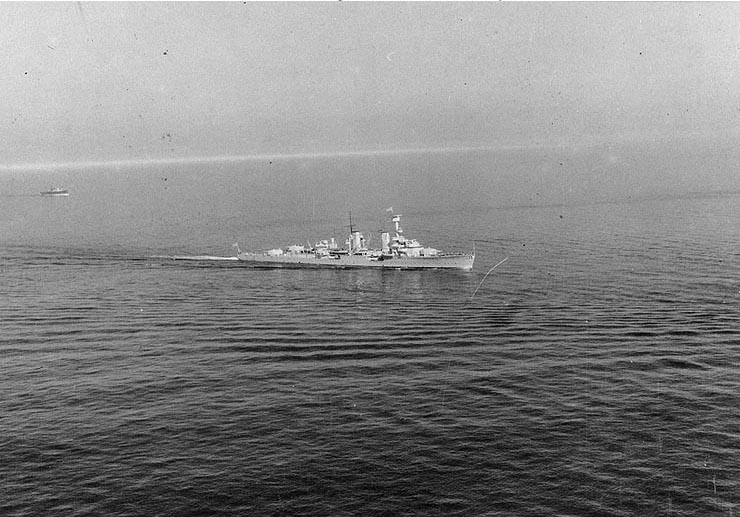
HMS Acasta began aiding Vickers-Armstrongs in testing ASDIC equipment for the Argentinian light cruiser La Argentina.
British Premier Neville Chamberlain assured Dr. Chaim Weizmann, Rabbi Stephen S. Wise, and other Jewish leaders today that the British suggestions for the establishment of an independent State in Palestine, as outlined to the Jewish delegates to the Palestine Conference, were not the final word of the British Government. As a result of this meeting, which was held in Mr. Chamberlain’s office in the House of Commons, the Jews agreed to an informal discussion tomorrow with Malcolm MacDonald, Colonial Secretary; Richard A. Butler, Under-Secretary for Foreign Affairs, and other British delegates to the conference.
There was an official admission today that the British suggestions — which the Cabinet discussed at its weekly meeting — no longer were the proposals of the British delegation for discussion by the conference, but the outline of a new policy that the British intend to impose in the Holy Land. Although the British have not given up hope that both the Arabs and the Jews by some miracle might agree to their suggestions, it has become an open secret that the Cabinet plans to produce its own solution. It is acknowledged that in the last week the conference has been devoted not to attempts to reconcile the two sides but to sweeten the pill which both sides must swallow.
Although the secrecy that the British have attempted to impose in an effort to work out their plan was not lifted today, there were definite indications as to how the conference — which from the beginning has not been a conference, as the Arabs do not recognize the Jews — is reacting. The Jews, faced with the British proposal, which they say would freeze them into a permanent Palestine minority under control of the Arab majority, stand ready to break off the conference and appeal to the world, with special emphasis on Great Britain and the United States.
The Palestine Arabs rejected today the British proposals in their entirety and submitted instead counter-proposals which envisaged an immediate election in Palestine of a Legislature (which on the present basis of forty-five Jews to every 100 Arabs, would be overwhelmingly Arab); the appointment of a Cabinet by this Legislature; the election of an Arab president; and the restriction of the constitutional conference which the British want to call in the Fall for the consideration of a treaty between the new state and Britain. Such a plan is unacceptable to the British.
British groups seek funding for victims of fighting in Palestine, especially children.
A call in the U.S. Senate for a new and bolder offensive against high-speed federal spending was sounded today by Senator Harrison, one of the leaders of the Congressional economy group, in a statement which had as its climax a demand to retain the statutory limit on the public debt at the present figure of $45,000,000,000. The Mississippi Senator announced specifically his opposition to the Administration’s purpose, recently disclosed by Secretary Morgenthau, to raise the debt limit to $50,000,000,000 in anticipation of further large borrowings.
His statement on this point was of high significance as he heads the Finance Committee which would be required to investigate and pass upon the debt increase request. Furthermore, he is rated as one of the shrewdest and most effective behind-the-scenes operators in the entire Congress. Mr. Harrison proposed, moreover, a cooperative effort by the executive and legislative branches in mapping a long-range fiscal program which, if followed “unflinchingly and without political consideration,” he added, would “bring hope and encouragement to our people and financial stability to our government.”
Senator H. Styles Bridges of New Hampshire said last night that President Roosevelt’s statement of his Administration’s foreign policy issued on February 3, was an entirely different policy from that which he outlined on January 31 at his conference with members of the Senate Military Affairs Committee. In his February 3 statement President Roosevelt denounced as “a deliberate lie” reports that in his talk with members of the Senate Committee he had placed America’s defense frontier on the Rhine or in France and declared that his foreign policy had not changed, was not going to change and was against any “entangling alliances.” Senator Bridges did not specify just how the President’s foreign policy, as expressed in his statement, differed from his foreign policy as indicated in his talk with members of the Senate committee, but left the inference that in his talk the President indicated greater friendliness toward France and Great Britain, as opposed to Germany and Italy, than in his statement.
The compromise Governmental Reorganization Bill was reported favorably today by the Special House Reorganization Committee with the prospect that it will be considered by the House next week under an unusually liberal allotment of time for debate. The committee vote was strictly along partisan lines. The Republicans, Representatives Taber of New York, Gifford of Massachusetts and Dirksen of Illinois, left the room, denouncing what they called “rush tactics.” They said the majority would not even let them discuss amendments which Mr. Taber suggested, nor would the majority agree to public hearings on the measure. The bill would empower the President to determine what agencies, except several named, should be reorganized in the interests of economy and efficiency, and consolidate them by executive orders which become effective sixty days after issuance.
Secretary Morgenthau told a Senate subcommittee that in the event of war Congress’s advice would be asked on the use of the stabilization fund. Senator Glass led an attack on extending the President’s power to devalue the dollar.
The Massachusetts Legislature votes to ratify the U.S. Bill of Rights — 147 years late.
The president of the General Electric Company urges Congress to balance the budget to restore confidence.
The Chaplin film, “The Great Dictator,” sees delays after the leading lady Paulette Goddard accepts a role with Bob Hope on another movie.
A John Wayne movie, “Stagecoach,” directed by John Ford, is released. The film will make Wayne a major star.
Four bodies were recovered and twenty to thirty-five other persons were missing tonight following a fire which swept the century-old Queen Hotel, in Halifax, Nova Scotia, causing damage estimated at $800,000. The final death toll would reach 28. The four charred bodies were removed from the still-smoldering ruins late today and firemen said two other bodies could be seen in the wreckage. Some of the bodies were burned beyond recognition. The authorities said they were unable to make an estimate of the dead until the ruins cool sufficiently to permit a search, possibly early tomorrow. There were 117 persons in the building when the fire was discovered at 6 AM.
Mohandas Gandhi decides to fast in protest of lack of democratic reforms in India. Gandhi initiated another fast to force the ruler of the small state of Rajkot to implement political reforms. The British viceroy secured a compromise between Gandhi and the ruler of Rajkot, but the fast restored Gandhi’s prestige.
Japan pays Britain $20,000 in compensation of bombing its territory in Hong Kong.
Japanese forces in Northern Kiangsu Province captured the city of Hwaian after a two-day offensive as they sought to extend actual control over large areas already nominally theirs. Hwaian, an important commercial center straddling the Grand Canal, is about 200 miles northwest of Shanghai. Observers expected the Japanese to fan out through the prosperous countryside to consolidate control northward to the Lunghai Railway.
Severe fighting continued in the Han River sector of Hupeh Province, with the Japanese reporting steady advances in this westernmost push along the middle Yangtze Valley.
Japanese authorities warned all foreign vessels to keep at least forty miles away from the Sheyang River estuary, northeast of Hwaian, after Saturday, because they planned “special operations” to mop up Chinese forces utilizing the river to transport supplies.
Several thousand fresh soldiers from Japan have arrived in China at Tsingtao to reinforce the armies in China. The incoming troops appeared much younger than the men who formed the units that arrived in China at the outbreak of the undeclared war. They wore new uniforms and had new equipment and immediately began training maneuvers, including trench-digging, erection of barbed-wire entanglements and bayonet practice, using the city’s public grounds and beaches. It was expected that the soldiers would be sent inland to join the anti-guerrilla campaign in North China, Further reinforcements were believed en route.
Japan adds significant funds to its budget for warfare: 5.27 billion yen to cover warfare expenses against China and arming for a Soviet clash.
Japan’s Empress gives birth to a daughter, Takako, Princess Suga.
While all Japan responded with deep feelings of appreciation, the Japanese Government today accepted the offer of President Roosevelt to send the ashes of former Ambassador Hirosi Saito to his homeland on a cruiser of the United States Navy. The national sentiment upon this unexpected honor conferred by the United States in tribute to the memory of the diplomat is epitomized in this sentence from the daily column of the newspaper Yomiuri: “The friendship of Americans and the soul of Hirosi Saito are calming the waves of the Pacific.” The Japanese are pointing out that the President, by his order, has broken precedent to make a friendly gesture at a time of exceptional difficulty. The offer of a warship to convey the coffin of an ambassador who died during service is not infrequent, but rarely has a government paid such honors to a retired ambassador.
[Ed: Sadly, that feeling will not last…]
Dow Jones Industrial Average: 146.96 (-0.19).
Born:
Takako Shimazu, [Takako, Princess Suga], fifth and youngest daughter of Emperor Shōwa and Empress Kōjun, in the Tokyo Imperial Palace, Tokyo City, Empire of Japan.
Manch Wheeler, AFL quarterback (Buffalo Bills), in Augusta, Maine (d. 2018).
Died:
Howard Carter, 65, British archaeologist and Egyptologist who found King Tutankhamun’s tomb.
Naval Construction:
The Koninklijke Marine (Royal Netherlands Navy) Gerard Callenburgh-class destroyer HrMs (HNMS) Philips van Almonde is laid down by Koninklijke Maatschappij De Schelde (Vlissingen (Flushing), The Netherlands). The ship is never completed; Blown up on the slip on 17 May 1940 to prevent her capture by the Germans after several attempts to launch and tow her to England her had failed.
The Royal Navy Egret-class sloop HMS Pelican (L 86; later U 86) is commissioned. Her first commanding officer is Commander Lennox Albert Knox Boswell, RN.


 History Diaries