The U.S. Joint Chiefs of Staff submit a memo (168-64) requesting ‘Removal of Restrictions for Air and Ground Cross Border Operations,” effectively eliminating Laos as a sanctuary.
The French Embassy protested today against accusations by Premier Nguyễn Khánh that French agents were plotting to assassinate him. The embassy denied the charges. The chargé d’affaires, Georges Perruche, asked the Foreign Minister, Phan Huy Quát, to make sure that the charges were not repeated, an embassy spokesman said. The protest was made by telephone, the spokesman said, and was based only on published reports of Premier Khánh’s statements. The Premier said yesterday that French agents had put a price of 300 million piasters — about $4 million — on his head in an assassination plot. “We cannot take this story seriously,” the spokesman said. “It is childish, absurd and ridiculous.”
Western diplomats speculated that Premier Khánh might be trying to prepare for a break in diplomatic relations with France. They see no other reason for his making a statement that has not been verified through any other source. Mr. Perruche asked the Foreign Minister for evidence to support the charges, the spokesman said. Premier Khánh declined such a request yesterday, indicating that not all the alleged agents had been identified. The animosity between France and South Vietnam stems from President de Gaulle’s efforts to bring about neutrality as a solution to South Vietnam’s struggle with Communist insurgency. Premier Khánh and the American advisory mission favor pursuing the anti‐Communist war and consider neutrality only a preliminary to a Communist takeover. High American officials have been outspoken lately against the French influence here, but up to now Premier Khánh has not made open statements against Vietnam’s former colonial ruler.
Two Vietnamese are killed and 10 injured by a grenade tossed into a crowded market place in Duc Ton, 80 miles south of Saigon.
South Vietnam has welcomed Cambodia’s proposal for four‐power talks to guarantee Cambodian neutrality, the official press agency said today. The announcement indicated that the United States and Thailand, the other two nations mentioned by Cambodia, might have reacted favorably. The South Vietnamese Government announced last week it would ask for the views of the United States and Thailand before replying. Prince Norodom Sihanouk, Cambodia’s chief of state, proposed February 22 that the four meet. Otherwise, he has said, he will enter into mutual assistance treaties with Communist China and North Vietnam.
Five members of the Security Council introduced a compromise resolution today that would empower the Secretary General, U Thant, to establish a peace‐keeping force in Cyprus and appoint a mediator to seek “a peaceful solution.” Adoption of the resolution is generally expected. After the Council adjourned, Mr. Thant conferred with British, Finnish, Irish and Swedish delegates about their possible participation. The resolution was presented by Carlos Alfredo Bernardes of Brazil on behalf of himself and the representatives of Bolivia, Ivory Coast, Morocco and Norway. They took over the responsibility of finding a solution of the Cyprus impasse last week after Mr. Thant acknowledged that he had been unable to break the deadlock.
Immediately after Mr. Bernardes spoke, the Council adjourned until tomorrow to give Nikolai T. Fedorenko, the Soviet representative, time to get instructions from Moscow. Czechoslovakia dropped out of the negotiations that produced the proposal and this has led to fears that Mr. Fedorenko might veto it. The Soviet Union and Czechoslovakia are expected to abstain, rather than vote for the proposal, because of their belief that the Security Council, not Mr. Thant, should determine the arrangements for the force.
According to reliable sources, the resolution is acceptable to Cyprus. Spyros A. Kyprianou‚ Cypriote Foreign Minister, told other delegates that he intended to use the extra time in an effort to persuade Mr. Fedorenko to vote for it, or at least abstain. Official spokesmen said the resolution was acceptable to the United States and Britain. A Turkish source said it contained constructive elements and it was understood that Turgut Menemencioglu, Turkish Ambassador to Washington, had recommended that his government accept it.
As Greek fleet units set out to maneuver in the southeast Aegean, off Cyprus, two representatives of Archbishop Makarios came to Athens today and saw Premier George Papandreou. They were Andreas Araouzos, Cyprus Trade and Industry Minister, who is also acting Foreign Minister, and Polykarpos Yiorkadjis‚ Interior Minister. The ministers said they had brought a reply from Archbishop Makarios to a personal message from Premier Papandreou last week proposing a coordination of policies and actions between Athens and Nicosia. After his meeting with the ministers, Mr. Papandreou said there was a full accord. “Our basic aim is peace for Cyprus,” the Premier declared. “Our common will and desire is to see an international peace force in Cyprus and a United Nations mediator appointed to find a political solution.”
Greek Cypriotes seized two Turkish Cypriotes, including a branch bank manager, as hostages today as tension between the island’s two communities remained high. There were sketchy reports of two or three other kidnappings of Turkish Cypriotes.
The Soviet Union issued a blanket condemnation of Western disarmament proposals today and all but dismissed the 17‐nation disarmament conference in Geneva as an exercise in futility. Foreign Minister Andrei A. Gromyko, in an unusually bitter statement, accused the United States of having submitted a plan that was “not a disarmament proposal” at all but a “proposal for stepping up the arms race.” The Soviet Union, Mr. Gromyko said, had advanced the only genuine plan for general and complete disarmament combined with effective controls. Mr. Gromyko’s statement was in the form of an interview covering more than half a page in tonight’s edition of Izvestia, the Government newspaper. The interviewer was a member of the paper’s editorial staff whose name was not given.
Western diplomats said tonight that on first reading the statement did not seem to contain any opening on which new conversations could be based. This, combined with the bitter tone and the blanket rejection of past Western proposals, seems to indicate that the East‐West deadlock on disarmament has again become complete, the diplomats said.
President Roberto F. Chiari indicated tonight that he thought President Johnson’s comment at a news conference Saturday had laid the groundwork for a solution to the impasse in the United States‐Panama dispute. Mr. Johnson had said that the 60‐year‐old Panama Canal Treaty “perhaps would require adjustment.” In a statement, Mr. Chiari said Mr. Johnson’s position was not in conflict with Panama’s requisites for renewing diplomatic relations.
In Washington members of an Organization of American States team seeking to mediate the dispute said they thought Mr. Chiari had broken the deadlock. Panama broke relations with the United States January 10 during three days of anti‐American riots. President Chiari has repeatedly declared that Panama would not re‐establish diplomatic relations until the United States gave assurances it would negotiate a new Canal treaty. The United States has been equally insistent that it would not discuss United States-Panama problems until diplomatic relations were re‐established and would not negotiate with prior conditions attached.
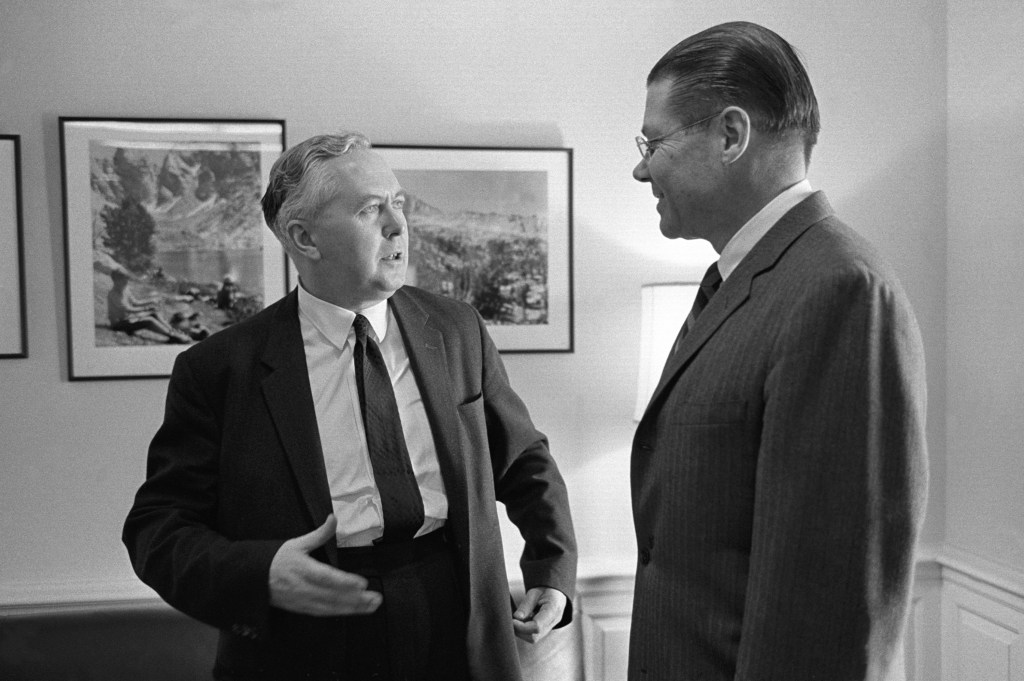
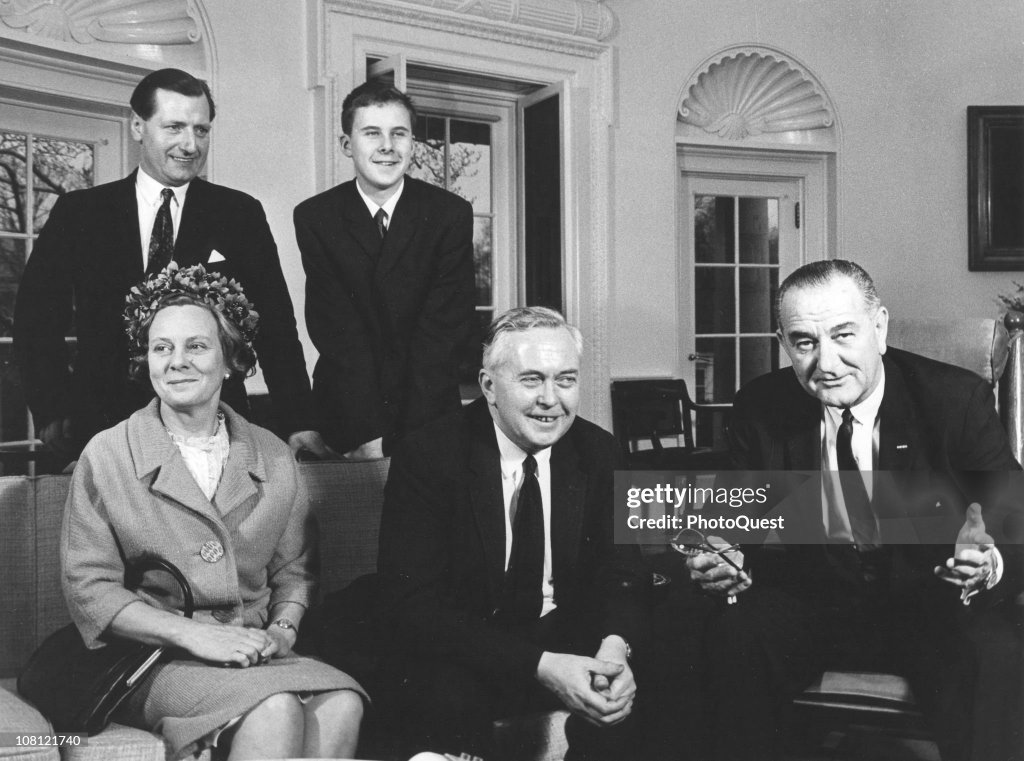
Harold Wilson, leader of the British Labor party, conferred with President Johnson today as the high point of three whirlwind days of conferences with United States foreign policy officials. Mr. Wilson, who may become Britain’s Prime Minister before the end of the year, came to Washington to establish new contacts and improve old ties with people in the Johnson Administration. Mr. Wilson, who had met President Johnson several times in the past, spent 50 minutes in the conference, which he described as an “enjoyable” and “frank” talk. He made a similar political reconnaissance visit here last year, before President Kennedy’s assassination. According to all accounts, he has this time impressed officials with his growing assurance of Labor’s prospects for victory. Mr. Wilson’s visit has also conveyed the impression that foreign policy will not be an issue in the British elections.
President Joseph Kasavubu of the Congo suspended the parliament indefinitely, after more than half of the 137 deputies of the Central Assembly failed to appear in Léopoldville, whether out of fear of arrest or because of joining a rebellion against the Congolese government.
Mount Villarrica, a volcano in Chile erupted suddenly, triggering an avalanche that buried the village of Coñaripe. Twenty-two people were reported killed and 35 others missing.
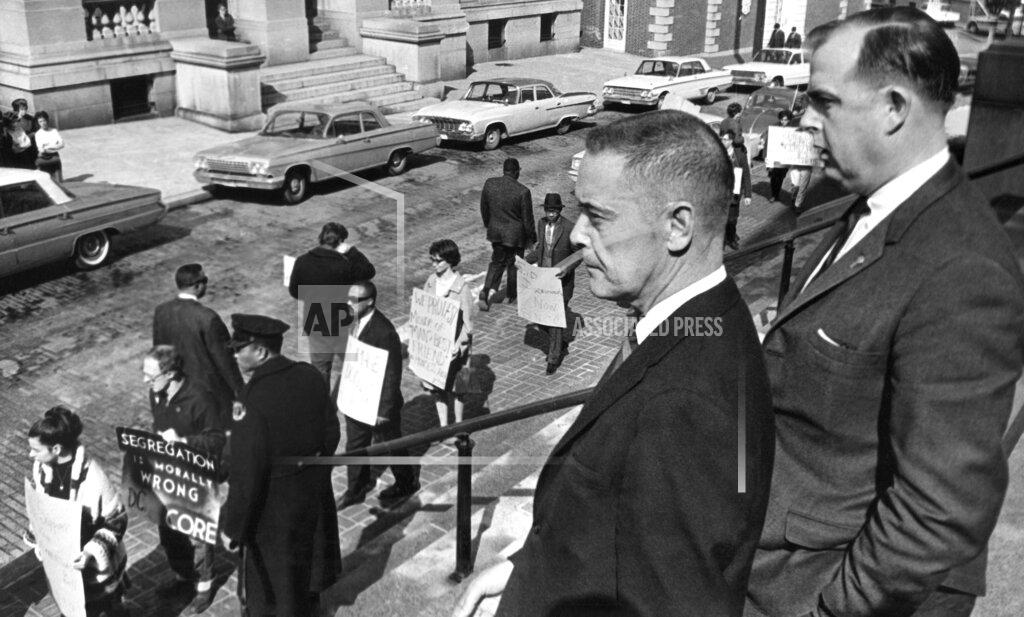
A decision that hospitals built with U.S. federal aid may not segregate their patients or their staffs was left standing today by the Supreme Court. The United States Court of Appeals for the Fourth Circuit, dividing 3 to 2, handed down the decision last November. It held unconstitutional a provision of the Federal hospital aid law authorizing separate-but‐equal facilities. Today the Supreme Court declined to review the case. As is customary in such actions, it gave no reasons. But the circumstances made it all but certain that the effect would be a new and broad assault on racial practices in the South.
The NAACP Legal Defense and Educational Fund, which handled the case, hailed the Supreme Court’s action, saying it would “affect 2,000 hospital and medical facilities throughout the South.” Jack Greenberg, director counsel of the fund, said the decision would “put an end to keeping Negroes out of white hospitals or segregating them within the hospitals, and requiring them to give up their Negro doctors and hire white doctors if they wanted treatment.” He went on: “It will be an entering wedge for Negro physicians into the mainstream of medical practice in the South. We wait to see whether the medical profession will voluntarily follow the law or whether a long, hard process of litigation such as we have had with schools will be necessary.”
The immediate legal effect will be in the Fourth Circuit, which covers Maryland, Virginia, West Virginia and North and South Carolina. All federal courts there are now bound by the rule against hospital segregation. The other Southern states are in the Fifth Circuit, except for Arkansas, which is in the Eighth, and Tennessee, in the Sixth. These other circuits could differ with the Fourth, but the best guess is that they probably will not.
The United States Supreme court upholds a lower court’s decision ordering a reapportionment of Texas congressional districts, an action instituted in Houston by five Republicans. The decision apparently means the Texas legislature must act before the next election or the state’s 23 national representatives must be elected at-large. The ruling is hailed as a victory for the Republican party in Texas.
Governor William W. Scranton of Pennsylvania proposes a strict quarantine of Cuba to shut off Russian oil shipments to Fidel Castro’s Red regime. In an interview the governor says he first would seek the cooperation of allies in imposing the quarantine, but would not shrink from using military force if the quarantine could not be achieved otherwise. He says flatly he will not accept the Vice-Presidential nomination if he is not drafted for the top spot on the Republican ticket.
A Polish-born agent defecting to the west in 1961 gives information leading to the arrest of communist bloc agents in countries outside the United States. Michael Goleniewski, 41, also says Russian secret police have cells operating in the central intelligence agency and in the state department, but the FBI checks these statements and finds them “not consistent” with a story in a New York City newspaper that the cells are operating, and that the secret police and Communist parties in Italy and America share in the distribution of 1.2 million dollars in CIA funds.
Joseph Clyde Amsler, the first of three Sinatra kidnap defendants to take the witness stand, testifies that all the time he was a nervous participant in the scheme, he thought it was a hoax engineered for publicity purposes. He tells the court that when he told Frank Sinatra Jr. how upset he was, Sinatra cheered him with anecdotes about Laurel and Hardy, old-time comedy team.
Washington awaits disclosures about a big black government limousine sent to Friendship airport near Baltimore to meet Edward Levinson, who invokes the 5th amendment in the Bobby Baker scandal probe. Levinson is one of the operators of the Fremont, a Las Vegas hotel and gambling casino. The name of the government official to whom the limousine was assigned — not Baker — may be disclosed soon.
The jury in the trial of James R. Hoffa, president of the International Brotherhood of Teamsters, and five other defendants is expected to begin considering its verdict tomorrow. The jury‐tampering trial entered its final phase today as Government and defense lawyers began their arguments to the jury. They are expected to finish tomorrow. United States District Judge Frank W. Wilson will then instruct the jury of four women and eight men before they retire to reach a verdict.
General Douglas MacArthur, 84, enters Walter Reed army hospital in Washington for study of abdominal complaints. He is accompanied on the flight from New York City by his wife and his ranking military aid. His air force plane is met by the surgeon general of the army and he is whisked to the hospital in an army staff car. There is no immediate disclosure of the exact nature of the general’s complaints.
After modifications, a U-2 spyplane was able to successfully land on an aircraft carrier, as pilot Bob Schumacher brought the high-altitude jet down onto the USS Ranger (CVA-61). Previously, the plane’s use had been limited to sites within a 1,500-mile radius of a U.S. base, and some areas of the globe were beyond its reach until it could operate from a mobile airstrip.
The New York World’s Fair announced yesterday “the biggest box office in history”: $35,219,602 on 28,034,987 tickets. That was the state of its advance sale on Saturday, the day it stopped selling $2 tickets for $1.35. Most of the sales were made in large blocks to corporations and institutions. Banks and investment houses, for instance, took 10 million tickets. The concerns will continue to sell these tickets at reduced rates to the public until they are sold out.
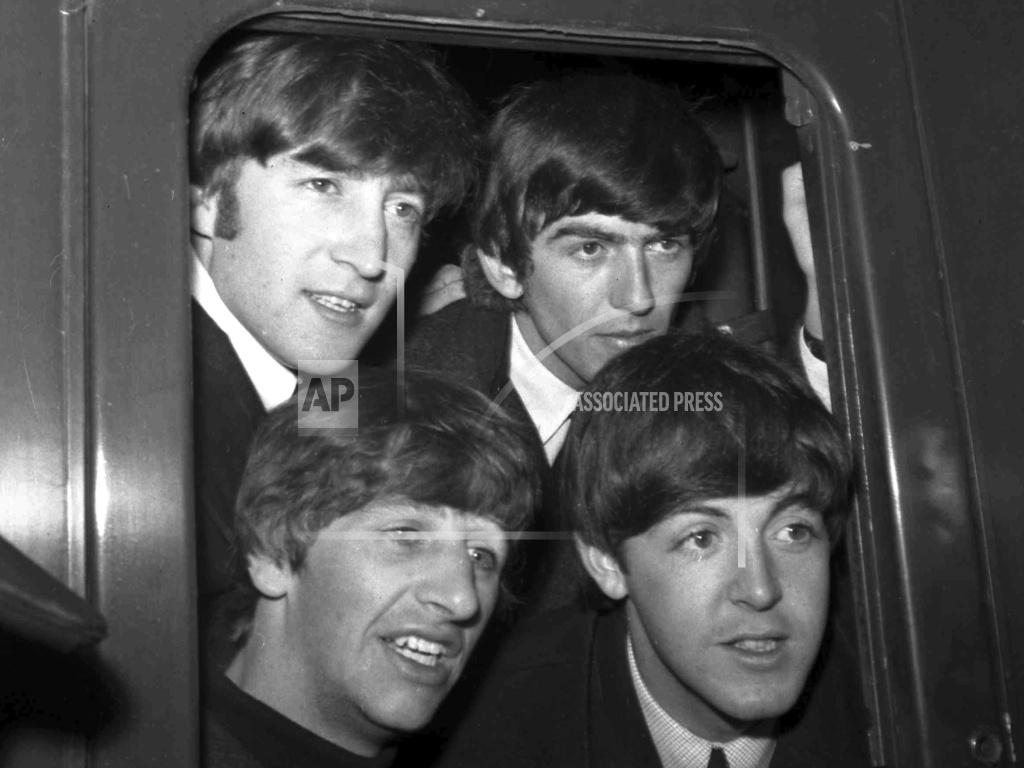
Beatles begin filming “A Hard Day’s Night”, George Harrison meets future wife Pattie Boyd.
Undefeated University of California at Los Angeles, the nation’s No. 1 team, trounced California tonight 87‐57, for its 25th consecutive victory. The UCLA Bruins, who have only one game remaining, led by as much as 31 points in the second half. Gail Goodrich and Walt Hazzard again led the way for UCLA. Goodrich topped all scorers with 23 points and Hazzard scored 18, in addition to setting up many Bruin points with his passes. UCLA closes its season Friday night against Southern California.
Dow Jones Industrial Average: 802.75 (+2.61).
Born:
Michael Brooks, NFL linebacker (Pro Bowl, 1992; Denver Broncos, New York Giants, Detroit Lions), in Ruston, Louisiana.
Mike Perrino, NFL tackle (Philadelphia Eagles), in Chicago, Illinois.
Tim Layana, MLB pitcher (Cincinnati Reds, San Francisco Giants), in Inglewood, California (d. 1999, in an automobile accident).
Laird Hamilton, American big-wave surfer and co-inventor of tow-in surfing, in San Francisco, California.
 History Diaries