
Prime Minister Heath, deprived of his majority in Parliament by Britain’s voters, declined to resign. His action raised the prospect that Mr. Heath’s Conservatives, outnumbered by the Labor party in the House of Commons, would try to remain in power. Thus, Britain faced one of the gravest crises in her modern political history. The last time when neither main party won an over‐all majority was in 1929. There was no official word. But sources close to Mr. Heath said that he had told Queen Elizabeth tonight that he wanted to stay in office despite his party’s failure to win an over‐all majority in the general election yesterday.
A few hours earlier, Harold, Wilson, the leader of the Labor party, said that he was prepared to form a new Cabinet. Labor also failed to win a majority, but it holds five more seats than the Conservatives. With the virtual stalemate between the two big parties, the balance of power in the new House would be held by smaller ones, including the Liberals, Scottish and Welsh Nationalists and the Members from Northern Ireland. If Mr. Heath carries on with a minority government, despite his campaign bid for a “fresh mandate” and a “strong” majority, the question is for how long. He could go down to defeat quickly in the new House of Commons if a majority voted “no confidence” on some issue that arose for debate. If that occurred, it is expected that he would ask the Queen to call for Mr. Wilson to form a new Government. Any call for a new election is regarded as unlikely until sometime later after the party leaders have a chance to try to win support in the House.
The Liberal party, after its spectacular gain in public support in yesterday’s election, finds itself with a handful of seats atop mountain of votes. With one more result to be announced tomorrow, the Liberals had received 6 million votes, or 19.3 percent of the total cast. The Labor party had 11.6 million, or 37.2 percent, and the Conservatives, 11.9 million, or 38.1 percent. Yet the Liberals were expected to receive only 14 seats, compared with 301 for the Labor party and 296 for the Conservatives. Jeremy Thorpe, the 44‐year‐old leader, who has brought his party from insignificance to being a major political force, said today that the situation was “intolerable.”
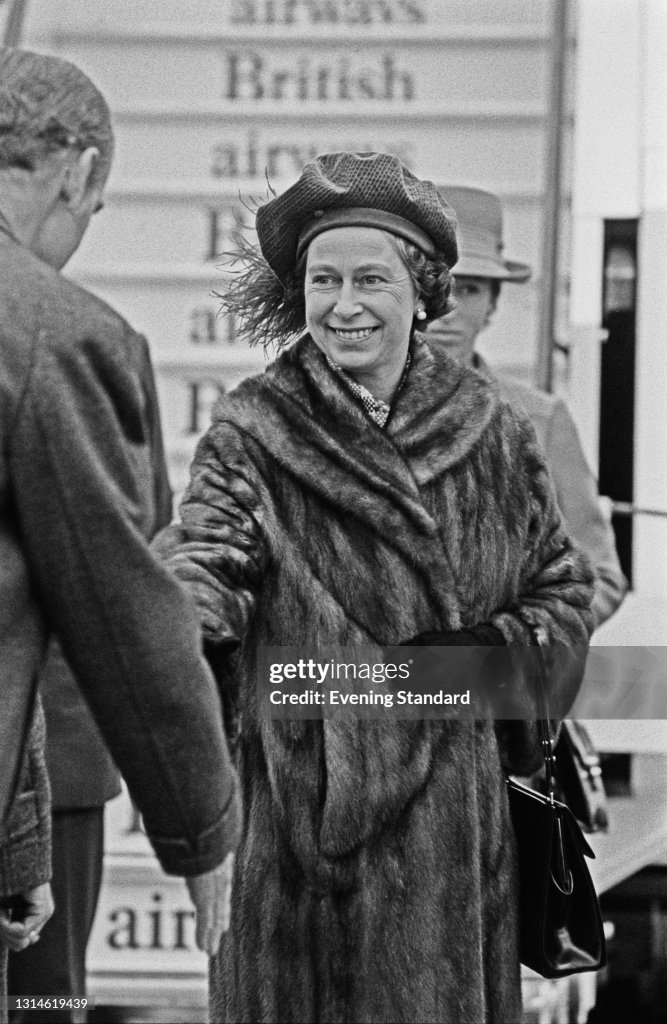
Queen Elizabeth II interrupted her trip to Australia and flew back to London in order to meet with Prime Minister Edward Heath, whose Conservative Party had lost its majority in the February 28 elections. Heath told the Queen that he was confident that he could assemble a coalition to form a minority government.
The British pound fell sharply and London stock prices toppled in chaotic trading in a dramatic reaction to the loss of ground by the Conservative government in the national elections. The pound fell 4 cents against the United States dollar, but regained some of its losses, closing at about 1.85 cents lower at less than $2.29.
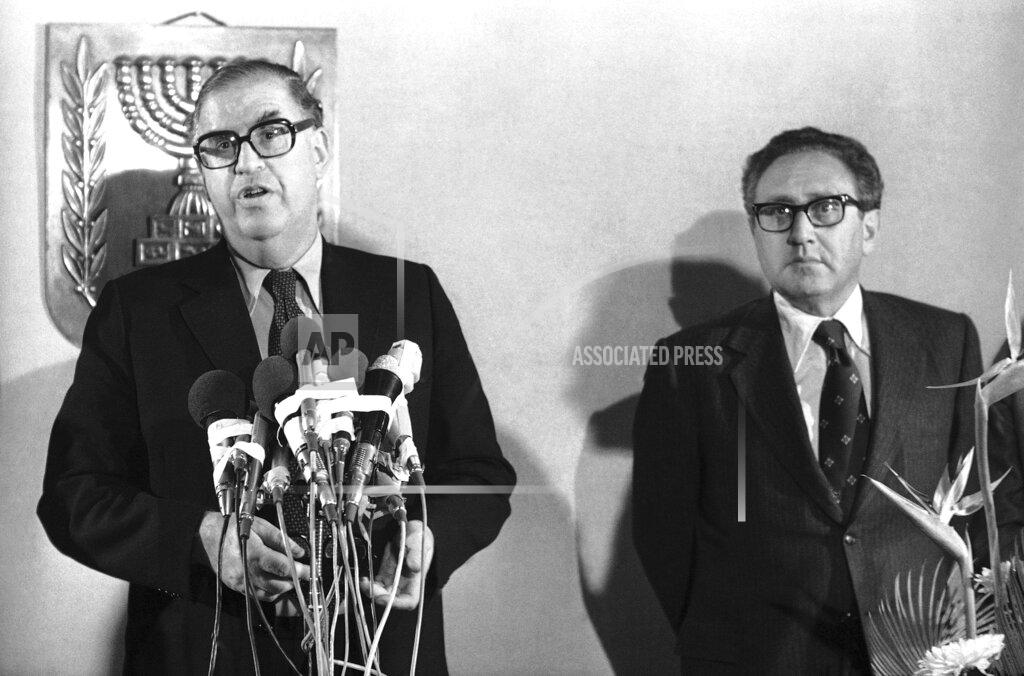
Israeli prisoners held by Syria, long the focus of dispute that prevented troop-pullback negotiations, received their first visit from Red Cross inspectors. Meanwhile, Secretary of State Kissinger arrived in Damascus for talks with President Hafez al-Assad. At the end of the session between President Assad and the Secretary of State, both American and Syrian spokesmen indicated that talks on the separation of forces would continue after Mr. Kissinger left here tomorrow on his way to return to the United States. There was no announcement that any firm agreement had been reached on how negotiations between Israel and Syria would take place. The Syrian spokesman said that Mr. Assad had not accepted the Israeli ideas presented to him by Mr. Kissinger and had offered one in return, which Mr. Kissinger “will study in order to continue the talks on disengagement of troops.”
The Soviet Union and the United States struck clearly discordant notes in Cairo today on the ways of achieving a peace settlement in the Middle East. Secretary of State Kissinger ended a 24‐hour Cairo visit filled with demonstrations of mutual friendship and attended a flag‐raising ceremony at the American Embassy this morning celebrating the resumption of full diplomatic relations between the United States and Egypt. He praised President Anwar el‐Sadat as “Egypt’s great leader” and spoke of the personal warmth that has emerged between him and Mr. Sadat and Ismail Fahmy, the Foreign Minister. He stated more explicitly than in the past that he counted on Egyptian support in his effort to bring peace to the area. He made it clear that he would come back to the area soon and fully intended to push on with his personal mediation.
The Soviet Foreign Minister, Andrei, A. Gromyko, arrived few hours after Mr. Kissinger’s departure for Israel. He recalled that he had been here many times and that all his visits had borne “practical” results, apparently an allusion to the Soviet Union’s long‐standing economic and military support for Egypt. He pointedly stated that the long association between the two countries was based on the Soviet‐Egyptian Friendship Treaty of May, 1971. That treaty stipulated among other things that the two governments remain in constant consultation on important developments — an obligation that Moscow is known to feel Cairo has not been observing during Mr. Kissinger’s “shuttle diplomacy.” Mr. Gromyko also underlined the prime importance of the Geneva peace conference as a means to achieve a Mideast settlement. This was interpreted by Western diplomats here as implied criticism of Mr. Kissinger’s personal diplomacy.
Endalkachew Makonnen took office as the new Prime Minister of Ethiopia, two days after he and 18 other cabinet members had resigned (including Prime Minister Aklilu Habte-Wold) and gone into hiding. Endalkachew called a press conference and promised reforms, stating also that he had the support of the Ethiopian Army. The newly appointed Premier said today that he believed that most Ethiopians, including the armed forces, would be willing to give him “a fair chance” to govern in the wake of a military mutiny this week that brought down the old Cabinet. The army and the police appeared so far to be accepting the appointment of Endalkachew, a 46‐year‐old member of the nobility chosen for the premiership yesterday by Emperor Haile Selassie. Reports from the northern city of Asmara said, according to United Press International, that dissident troops were removing roadblocks.
However, the choice of Mr. Makonnen was bitterly criticized by students and other Ethiopian radicals, and there were demonstrations in the streets of Addis Ababa during the day. These were dispersed by troops and policemen.
In a strange marriage of civilian democracy and military power, all three candidates in the Guatemalan presidential elections Sunday are high‐ranking army officers. The unusual formula was worked out by Guatemala’s three political groupings after the armed forces indicated privately that they would not accept a civilian successor to President Carlos Arana Osorio, a general, who cannot seek reelection. As a result, this Central American republic, with its long tradition of political violence between civilian factions, has enjoyed one of the quietest election campaigns in its history.
But even with three army officers — two generals and a colonel — running a close race for the presidency, the armed forces are still in a position to either uphold or reject the choice of the voters. According to sources close to the military, the officer corps is deeply divided between those who believe that the genuine winner should be recognized and those who favor victory for the official candidate at all costs. This division may be emphasized if no candidate receives more than 50 per cent of the votes cast and a second election between the two leading vote‐getters must take place in Congress, where the Government has a clear majority.
In Argentina, Córdoba’s governor, deputy governor and 80 of their aides and supporters who had been taken prisoner in a right‐wing police revolt that began on Wednesday were released tonight. It was not immediately clear whether the governor, Ricardo Obregón Cano, a left‐wing Perónist, would attempt to re‐assume his post. On Thursday, the local ministry of justice swore in the provincial president of the Chamber of Deputies, Mario Dante Agodino, a conservative Perónist, as the new interim governor. Mr. Agodino then announced that he would call gubernatorial elections for Córdoba in September. The three-day old revolt by more than one-third of Córdoba’s 2,000 policemen began on Wednesday when Governor Obregón Cano dismissed the police chief, Lieutenant Colorado Antonio Domingo Navarro, who was alleged to have organized bombing attempts against left‐wing Perónists, including an attempt against the home of Deputy Governor Atilo López.
An attack on a new opera for “negating” the Chinese Cultural Revolution was deemed significant today because for the first time in China’s current ideological campaign a specific group of people were identified as targets. Until now, in the month since the campaign began, criticism has been directed only at two specific persons — Confucius, dead 2,000 years, and Lin Piao, the general believed to have died in a plane crash in 1971—who were accused of following revisionist policies. Moreover, in addition to denouncing the authors of the opera — a government committee from northern Shansi Province — the attack also criticized the opera’s “backers,” one of whom might be Premier Chou En‐lai. For the opera, titled “Three Trips Up to Tao‐feng,” was performed at the North China Drama Festival in January under the sponsorship of the cultural group of the State Council, which Mr. Chou heads. Chiang Ching, Chairman Mao’s wife, is believed to be one of the prime backers of the new campaign for ideological purity.
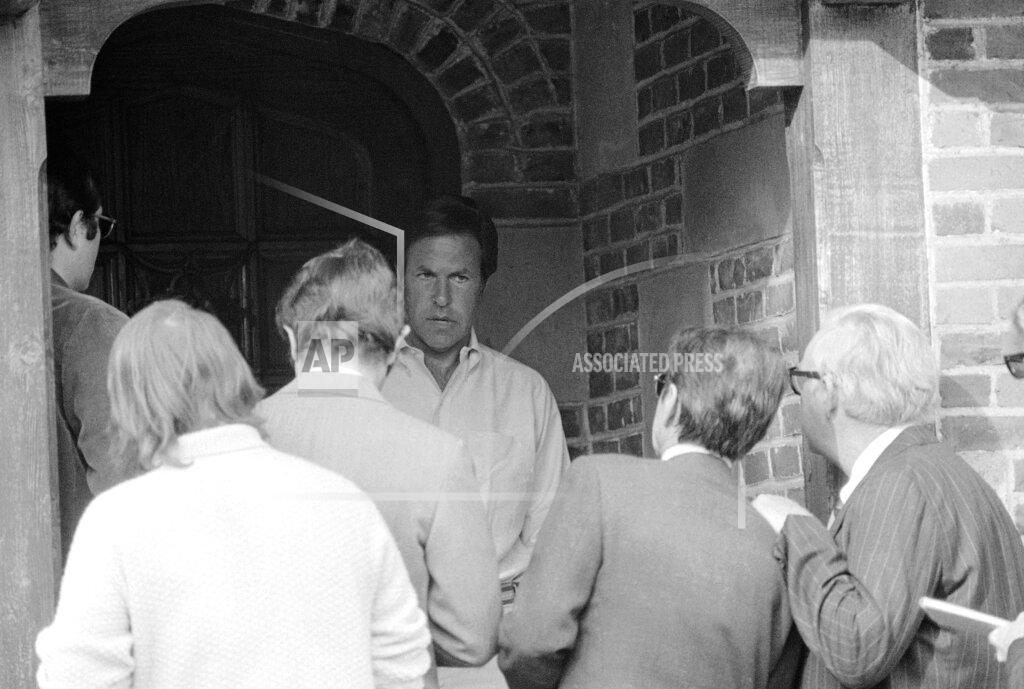
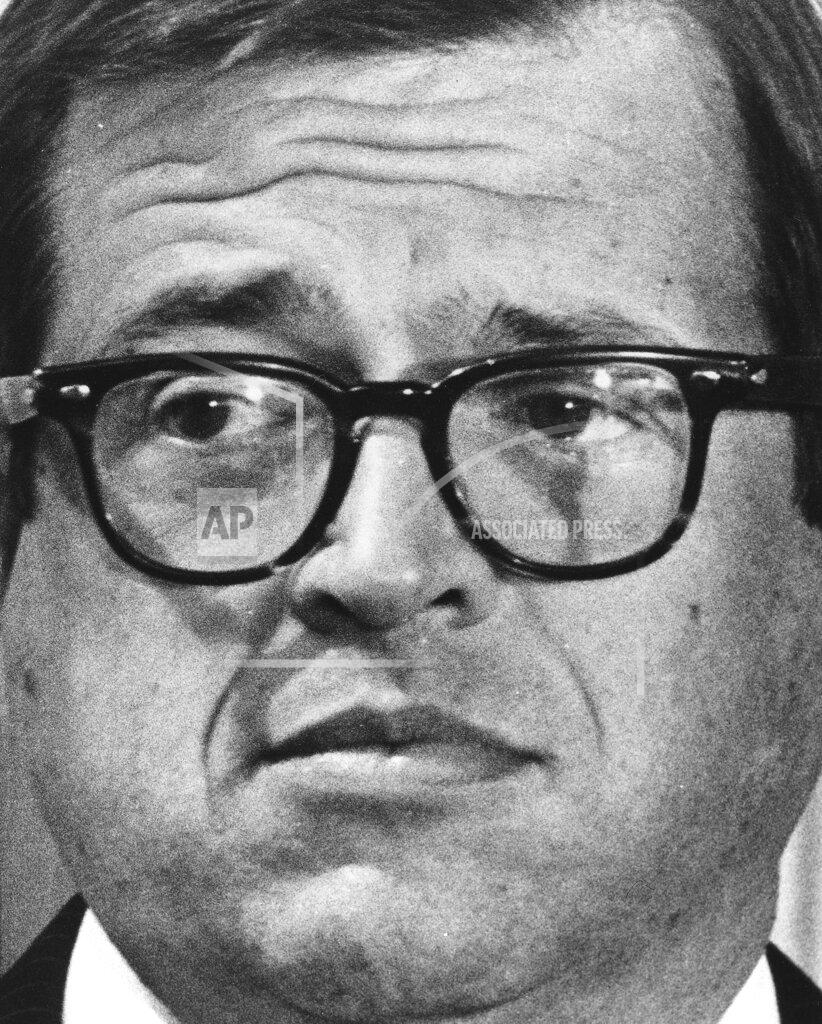
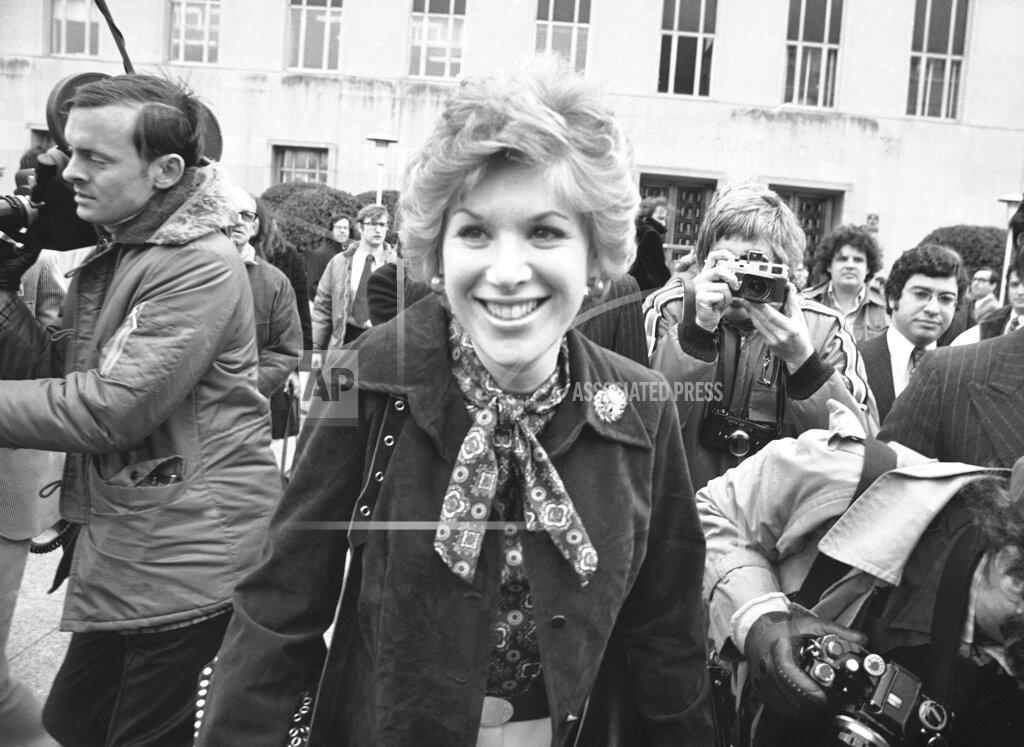
Seven former high-ranking aides to U.S. President Richard M. Nixon were indicted by a federal grand jury in Washington. The grand jury declined to name any persons believed to be connected, but not indicted, issuing the list as a secret report for a federal judge’s consideration, but in June, President Nixon himself would be identified as one of the persons who had been named by the grand jury on March 1 as an unindicted co-conspirator. The former White House staffers charged with conspiracy to violate election laws were U.S. Attorney General John N. Mitchell; White House Chief of Staff H. R. Haldeman; domestic affairs advisor John Ehrlichman; White House counsel Charles Colson; and aides Gordon C. Strachan, Robert Mardian and Kenneth Parkinson. Mitchell, Haldeman, Ehrlichman and Colson would serve prison sentences ranging from seven to 19 months. Watergate special prosecutor Leon Jaworski said that the trial could last four months. The grand jury turned over a sealed statement to Judge John Sirica, allegedly with evidence linking the President to the cover-up. Sirica will decide what to do with the statement soon.
The long line of would‐be spectators that started forming two hours before the 11 A.M. hearing in which seven Nixon Administration and campaign aides were indicted was exiled to the corridor outside the small, wood‐paneled courtroom in which Judge Sirica presided. The focus of attention was on a group of 21 persons — 9 men and 12 women — of whom 15 were black and six were white. This was the Watergate grand jury, formed some 21 months ago.
The White House reacted to the Watergate indictments. Assistant news secretary Gerald Warren said that the judiciary system will deal with the indictments, and no further comment is needed. President Nixon’s son-in-law David Eisenhower said that the President is not worried about the indictments.
Vice President Gerald Ford and the leaders of both houses of Congress asked Americans to remember that indictments prove neither innocence nor guilt. The Democratic National Committee reacted to the Watergate indictments with applause at their Washington meeting.
Vice President Ford flew into Phoenix today to implore fellow Republicans to retain their faith in their party and halt a threatened Congressional sweep by liberal Democrats.
Judge Sirica requested that all persons involved with the case remain silent. H.R. Haldeman agreed to speak with reporters in Los Angeles, but refused comment on the Watergate indictments. Former White House counsel Charles Colson spoke out, however, and insisted that his conscience is clear and his innocence will be established. Kenneth Parkinson also maintained that he is innocent of the charges against him.
Former Attorney General John Mitchell had no comment regarding the Watergate indictments. Mitchell and Maurice Stans are facing trial in New York City. Assistant prosecutor James Rayhill implied that the jury should convict Stans and Mitchell; defense attorney Walter Bonner immediately demanded a mistrial. Judge Lee P. Gagliardi in Federal District Court in New York abruptly suspended the conspiracy‐perjury trial of John N. Mitchell and Maurice H. Stans, two former Cabinet members, for what he said were “apparent excesses” by the chief Government prosecutor in his opening statement. He said that he would rule Monday on demands by defense attorneys for a mistrial.
President Nixon expressed the hope that trials arising out of the new Watergate indictments “will move quickly to a just conclusion.” He also cautioned the nation to remember that the accused are presumed innocent unless found guilty.
Senator George McGovern called for a quick impeachment trial against President Nixon.
The Democratic National Committee adopted, over the muffled objections of the party’s state chairmen, a new set of rules governing the selection of delegates through proportional representation to the presidential nominating convention in 1976. The main purpose of the new rules is to broaden participation in the choice of the next Democratic national ticket and, at the same time, to bury the angry debate about “quotas” for blacks, women and youth in the rules that guided the Democratic convention in Miami Beach in 1972.
The Internal Revenue Service decided today to surrender the home telephone records of David E. Rosenbaum, a New York Times reporter, without conceding any wrongdoing in obtaining the records. Commissioner Donald C. Alexander wrote the newspaper’s lawyers today that toll call records for the reporter’s home in Bethesda, Maryland, were being returned to the Chesapeake and Potomac Telephone Company of Maryland, from which they were subpoenaed in January. The records were obtained, without any notice to Mr. Rosenbaum or The Times, in connection with an IRS investigation into an alleged unauthorized disclosure of tax information by an agency employee.
An all‐black section in a dormitory at Barnard College that has existed since 1969 for black students who wanted it is scheduled to be eliminated at the end of the current school year, despite the protests of 18 black women who live there. The action, disclosed this week when the black students registered an official protest to college officials, was a response by Barnard to a two‐year‐old order of the State Board of Regents that had called for an end to voluntarily segregated living arrangements by last September in any college or university that maintained them. The women who live on the seventh floor of Brooks Hall, known on the campus as “7 Brooks,” said in interviews yesterday that they were seeking legal advice to contest the move.
In Ann Arbor, Michigan, Elmer Tackett, hospitalized with terminal leukemia, confessed yesterday to the Pontiac school bus bombings of 1971 that followed white protests of court‐ordered school desegregation in the city. Mr. Tackett, 54 years old, speaking before his attorney and a handful of Detroit‐area news media representatives, said that he alone had carried out the bombing of the 10 school buses on the eve of the first day of busing to achieve racial desegregation. He said he had bundled the dynamite and had lighted the fuses. Mr. Tackett, saying that his doctor had told him he had two weeks to live, said he was making the confession “to clear my conscience.” Mr. Tackett said he was a security official of the Michigan Ku Klux Klan at the time of the incident and carried out the bombings on the instructions of an anonymous caller. He said a masked accomplice had aided him but he could not identify the accomplice.
The family of Thomas L. Gatch, the missing trans‐Atlantic balloonist, said today that the Pentagon has identified a section of the ocean where he might be adrift but so far has refused to renew its search. “We are extremely dissatisfied with the search effort to date,” said Mr. Gatch’s niece, Mrs. Jocelyn Armstrong of New York City. She and Mr. Gatch’s two sisters met with newsmen in the backyard of his home here charting his possible location.
The Pentagon ordered a second search today of a broad mid‐Atlantic area for missing balloonist Thomas Gatch Jr. The new search will be in an area approximately 95,000 square statute miles approximately 1,230 statute miles south‐southwest of the Azores.
A black bear found wandering in downtown Cookeville, Tennessee was captured in the community room of a bank Friday after it had put two girls to flight and then lumbered up to a motel and banged on the door. Police Lieutenant Fred White said the 350-pound animal had been spotted shortly after midnight by two Tennessee Tech coeds walking down a street. “They ran for about a mile before they stopped at a restaurant and notified authorities,” White said. The officer said the girls had not stopped long enough to give their names.
George Harrison announces his concert tour of U.S. in November.
Rick Barry equaled a National Basketball Association record yesterday when he was fined $1,000 for “making bodily contact” with a referee. The lean star forward of the Golden State Warriors bumped Referee Mark Schlafman in a game at Cleveland on February 9 after being given a technical foul. Barry shouted and then ran into the official. He was given a second technical and ejected.
The Atlanta Falcons can have a winning National Football League season, believes Andy Maurer, a guard. “I think they have everything they need to win a championship,” he explained. “It’s just a matter of the players ignoring Van Brocklin.” Norm Van Brocklin happens to be the head coach.
Dow Jones Industrial Average: 851.92 (-8.61, -1.00%).
Born:
Stephen Davis, NFL running back (Pro Bowl 1999, 2000, 2003; Washington Redskins, Carolina Panthers, St. Louis Rams), in Spartanburg, South Carolina.
Hiroyasu Shimizu, Japanese speed skater, 1998 Olympic gold medalist and winner of five world championships in the 500-meter race; in Obihiro, Hokkaido, Japan.
Jeff Libby, NHL defenseman (New York Islanders), in Waterville, Maine.
Julie Andrieu, French food critic and host of multiple cooking shows on television; in Neuilly-sur-Seine, Paris, France.
Rogelio González Pizaña, Mexican drug lord with the alias “El Kelin”, co-founder of Los Zetas paramilitary and criminal organization; in Mexico (murdered 2015).
Died:
Bobby Timmons, 38, American jazz pianist and composer, of cirrhosis of the liver.
Larry Doyle, 87, American baseball second baseman (National League MVP 1912, National League batting champion 1915; New York Giants), of tuberculosis.




 History Diaries