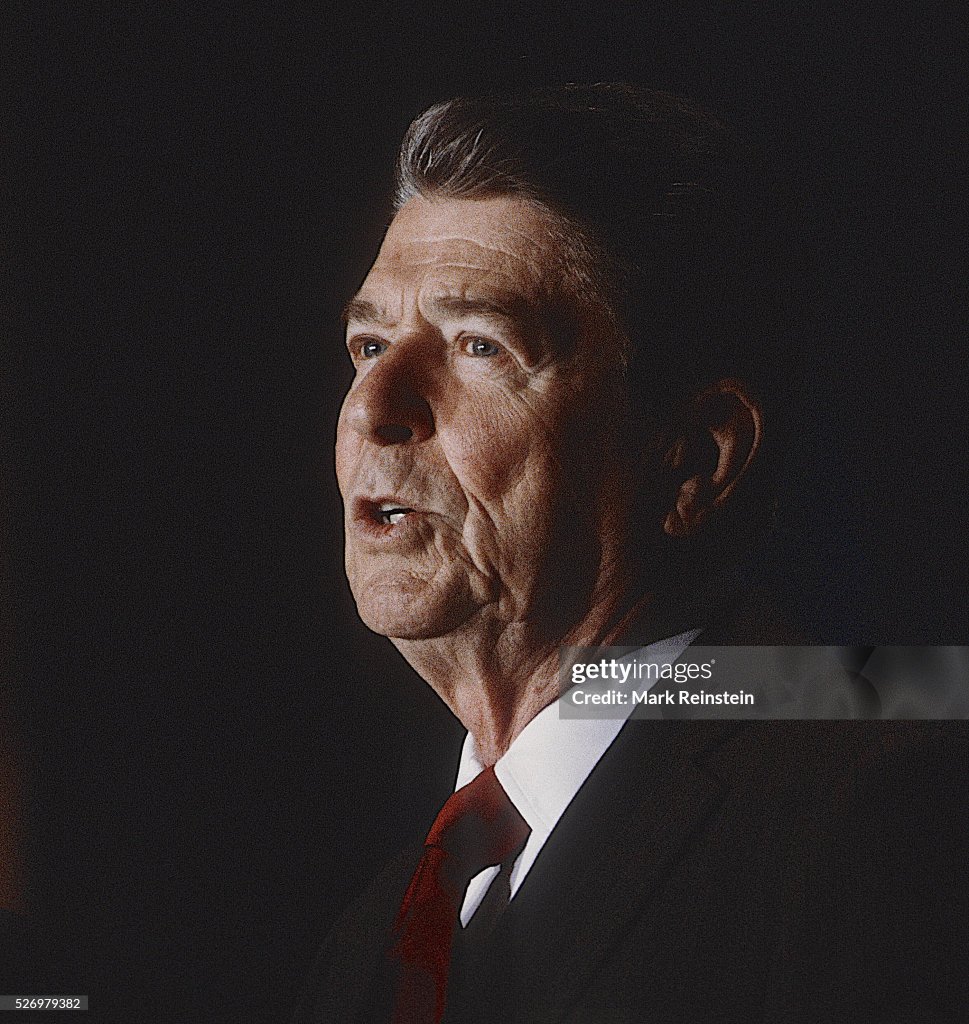
The War Powers Act was assailed by Secretary of State George P. Shultz. He said that debate over use of the law had made it impossible for the United States to conduct a “sensible” policy in Lebanon, and he urged Congress to consider an alternative approach to avoid setbacks to American interests. Urging a new approach to protect American interests, he called on Congress to review the law, which was enacted in 1973 to limit the President’s authority to commit forces without Congressional approval. Mr. Shultz discussed the limitations imposed by the War Powers Act in testimony before the Senate Appropriations subcommittee on foreign operations, where he was also questioned about Central America and other Middle East issues. He was asked, in particular, to justify a plan to sell Jordan 1,600 shoulder-fired Stinger antiaircraft missiles worth $133 million.
A withdrawal of French troops from Lebanon was considered likely. The Foreign Ministry said that France “cannot alone bear the responsibility of the international community in Lebanon,” but Paris said a pullout was not imminent. Defense Minister Charles Hernu said France would not immediately withdraw, United Press International reported. “There will be no departure for the moment,” he reportedly said. France’s 1,250-member contingent of the international force is the last to remain in Beirut. The United States and Italian contingents of the force, sent to Lebanon 18 months ago, completed their evacuation last weekend. The British withdrew their troops earlier.
Turkey’s Parliament unanimously approved a government proposal to lift martial law in 13 of the country’s 67 provinces. But martial law was extended for at least four more months in the other 54 provinces. The major urban centers of Istanbul, Ankara and Izmir are among the cities where martial law will remain. After four months, the government will review the situation. The 13 provinces where martial law will be lifted on March 20 are small, mostly quiet and scattered throughout the country.
Polish authorities briefly detained Father Stanislaw Malkowski, a supporter of the outlawed Solidarity labor federation, and seized 56 documents during a five-hour search of his apartment. A longtime critic of the government, Malkowski was relieved of his parish duties under pressure from the authorities in the late 1970s, becoming what he described as a “free-lance priest.”
Anthony Wedgwood Benn, leader of the left wing of Britain’s opposition Labor Party, was returned to Parliament as the winner of a special election in the central English mining town of Chesterfield. The election was called after the retirement of Labor’s Eric Varley. Benn, 58, has been absent from Commons since a disastrous Labor defeat in last year’s general election cost him his old Bristol constituency. In the special election, the candidate of the ruling Conservative Party came in third, with the candidate of the Social Democrat-Liberal alliance finishing second.
Britain is Western Europe’s worst offender in exporting acid rain to neighboring countries, causing damage to wildlife, forests and historic monuments, an environmental group charged. “The situation in Northern Europe, and now in parts of Britain, is critical,” the Friends of the Earth said in London, citing scientific research to show that sulfur dioxide from burning coal and oil “is the main cause of the problem.”
French Transport Minister Charles Fiterman said today that he had reached agreement with truck drivers on some of the grievances that led them to blockade roads across the nation last week. “This discussion has ended in a positive conclusion and a certain number of decisions have been made,” Mr. Fiterman said after a five-hour meeting with representatives of France’s two main trucking associations, independent truckers and trade unions. Among concessions to the truckers were a delay in an expected increase in fuel taxes and measures making delivery of goods and passage across France’s frontiers easier. The truckers’ annoyance at cumbersome customs procedures, aggravated by a slowdown by French and Italian customs officials, brought on the 10- day blockade. Their action caused huge traffic jams in France and neighboring countries before it was called off last Friday.
Charles M. Lichenstein, the outspoken U.S. envoy at the United Nations who invited Soviet and other diplomats unhappy with the New York location of the U.N. headquarters to “sail into the sunset,” announced his own departure from the American delegation. Lichenstein said he will join the Heritage Foundation, a conservative Washington think tank.
A House subcommittee, saying it wanted to “send a message” about human rights to the Reagan Administration and governments in Central America, voted major restrictions today on military and economic aid for El Salvador. The panel, the subcommittee on Western Hemisphere affairs, also approved a prohibition on further participation by United States forces in military training exercises in Honduras. The two decisions, both by voice vote, came as the subcommittee shaped the Central American section of next year’s foreign aid bill and forwarded its recommendations to the parent panel, the House Foreign Affairs Committee. The forwarding vote passed, 5 to 1. Much of the section is based on recommendations made by the Kissinger Commission that President Reagan set up to study Central America. But the commission never envisioned tight restrictions of the type enacted by the subcommittee today.
On the other side of Capitol Hill, Secretary of State George P. Shultz told the Senate Appropriations subcommittee on foreign operations that El Salvador was making “a great deal of progress” on human rights. But he conceded that “as a last resort” the United States must be willing to “walk away” if progress did not continue. The House Foreign Affairs Committee will take up the full foreign aid bill next Tuesday. House officials said there was a good possibility the bill would then be sent to the floor and voted upon. But they expressed doubt that the Senate would act this year on a foreign aid bill since foreign aid traditionally commands a low priority when an election is pending.
A total of 16 bombs exploded in Chile’s three main cities overnight, wounding three people and damaging electricity facilities, police sources said today. Six bombs exploded in Santiago as residents of poor neighborhoods demonstrated against the military Government and erected barricades, the sources reported. A taxi driver and his two passengers were wounded in one of the explosions, which cut electricity to nine suburbs of the capital. Four bombs exploded in Valparaiso, Chile’s second biggest city, and six went off in Concepcion, the sources said.
Ecuador has sent troops to protect oilfields and pipelines in its eastern jungle after a strike raised fears of sabotage, oil industry and military sources said today. The state-owned oil company said the four-day-old strike was affecting production but gave no details. Oil sources said Ecuador’s average production of 240,000 barrels a day had been reduced. The sources said oil continued to flow through the pipelines, but road blockades by strikers hampered delivery of fuel and equipment to the oilfields. Some fields had stopped drilling, they said. The strikers, residents of Lago Agrio, the main town in the oil-producing area, are demanding $8 million from the Government to improve roads and water and power supplies.
South Africa freed a prominent Namibian black nationalist after almost 16 years of detention. The freed prisoner, 69-year-old Herman Toivo ya Toivo, is regarded by many of his followers as the “father” of nationalism in the territory. South Africa released from 16 years of imprisonment the co-founder of the South-West Africa People’s Organization, the main group battling to end South African control of Namibia. Herman Toivo ja Toivo, 69, was taken from Robben Island prison, near Cape Town, to Windhoek, capital of Namibia, and freed. He had served 16 years of a 20-year sentence on security charges. Toivo in 1958 helped found the forerunner of SWAPO, now headed by Sam Nujoma, and is viewed by many blacks as the “father of liberation in Namibia.” His release came as South Africa was withdrawing troops from conflict with SWAPO guerrillas in southern Angola, a move that could lead to independence elections in Namibia.
UNESCO, faced with the threat of a withdrawal by the United States, has agreed to a U.S. congressional review of its activities, diplomats said. The diplomats, who requested anonymity, said the agreement came after two meetings last week between Amadou Mahtar M’Bow, director general of the U.N. Educational, Scientific and Cultural Organization, and Rep. James H. Scheuer (D-New York), chairman of the House Science and Technology Committee. The Reagan Administration announced in December that the United States would pull out of the organization at the end of this year because of excessive politicization and “unrestrained budgetary expansion.”
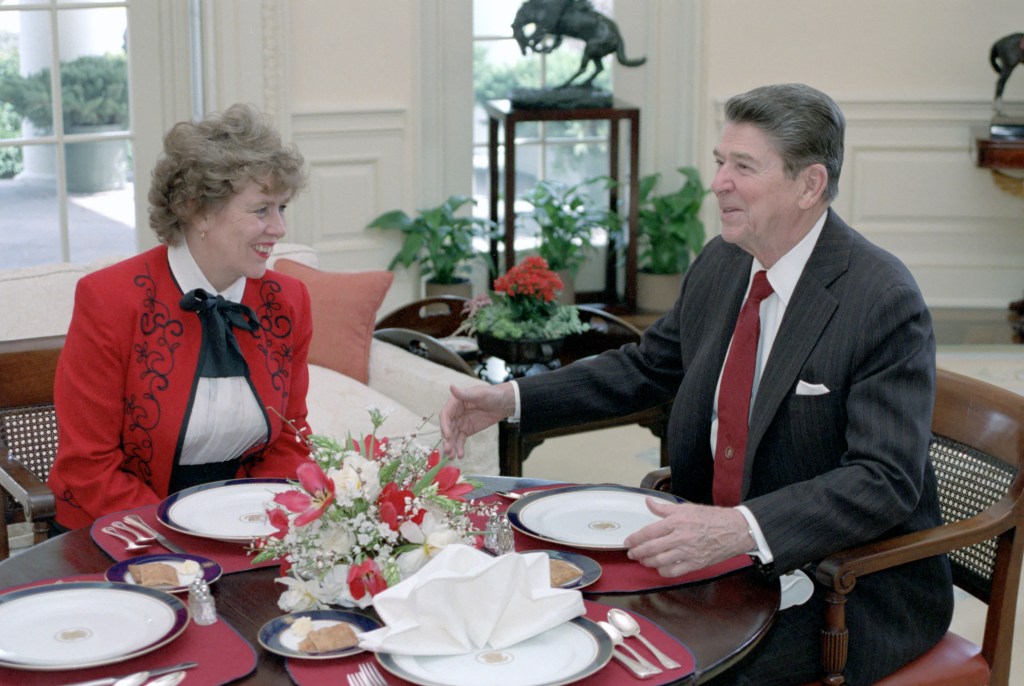
President Reagan welcomes the Prime Minister of the Kingdom of Morocco, Mohamed Karim-Lamrani, to the White House.
The USSR performs a nuclear test at Eastern Kazakh/Semipalitinsk.
President Reagan’s ability to deflect his challengers’ attacks and escape blame for his policies appears to be emerging as a key factor in the Presidential campaign. A New York Times/CBS News Poll shows he has persuaded many people that he and his programs have been victimized by Democrats, past and present, and that any President is relatively unable to control events.
President Reagan decided to ask Congress again to allow employers to pay teenagers less than the $3.35-hourly minimum wage for summer jobs, Administration sources said. These sources, saying they could not comment publicly on Reagan’s decision made during a meeting of the President’s Cabinet Council on Economic Affairs, said the revived proposal will be shaped by the Labor Department and the Office of Management and Budget.
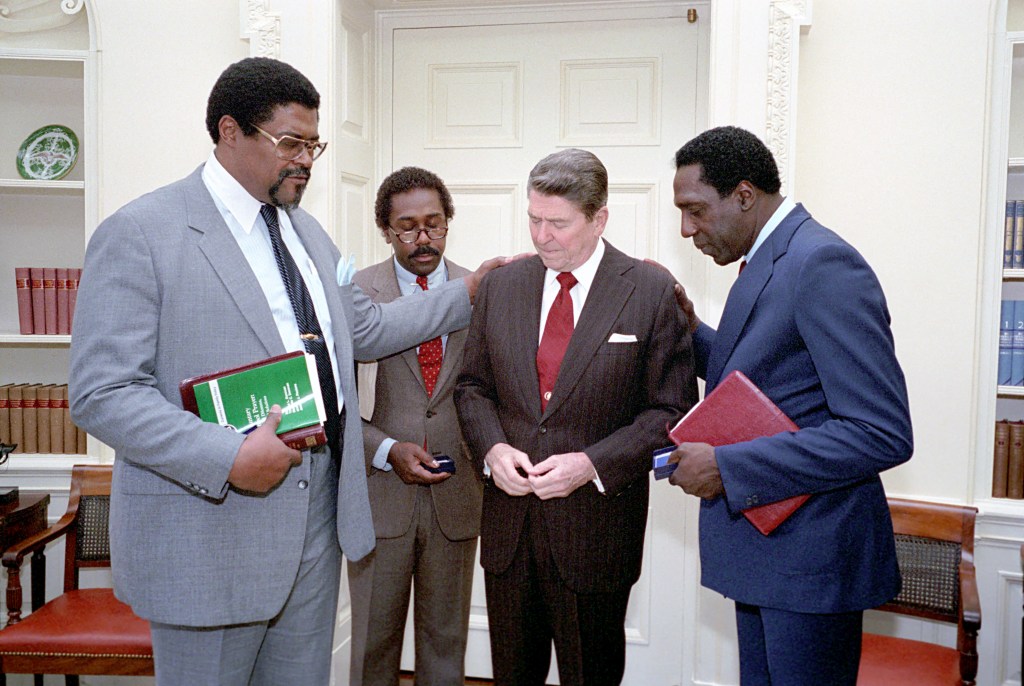
President Reagan receives congratulation letters for his efforts on prayer in schools from Concerned Women for America (CWA).
About $50 billion in tax increases over four years, including additional revenues from liquor, cigarettes and telephones, were approved by the House Ways and Means Committee. The panel, meeting behind closed doors through the day and evening, was drafting a bill that will be a key part of the House’s contribution to the deficit-reduction effort under way in both chambers of Congress.
An angry Senate committee chairman accused the Defense Department of covering up defense contractors’ waste and fraud by “muzzling” a whistle blower who was ordered not to testify about military auditing practices. Sen. William V. Roth Jr. (R-Delaware) said at a hearing of his Government Affairs Committee that A. Ernest Fitzgerald, a longtime critic of military procurement practices, had been told he could not testify in his capacity as deputy assistant Air Force secretary for management systems. “There’s been, in effect, a cover-up.” Roth said. But Fitzgerald told a news conference that the decision not to testify was his.
FBI Director William H. Webster said the fear of terrorism in the United States is worse than the reality so there is no need to “push a panic button and alter our society.” Webster told the Washington Press Club that fear dates back primarily to last October’s suicide attack on the U.S. Marine base in Beirut, which killed 241 American servicemen. But in the United States last year, there were only 31 terrorist incidents, compared to 51 the previous year and 42 in 1981, Webster said. “We have a good handle” on domestic terrorism, chiefly because of “an intelligence apparatus that is second to none,” he said.
The Senate passed a sweeping bill that toughens the sanctions America can take against those who let U.S. high technology get into the hands of the Soviet Bloc. The bill passed on a voice vote at the end of a four-day debate capped by a session that lasted well into the night. The bill, which now goes to a conference with the House, also would prohibit the sale and transfer of nuclear technology and sensitive materials to countries that have not signed the nuclear non-proliferation treaty.
A bill setting ground rules in case a convention is called to amend the Constitution to require a balanced budget was introduced in both the House and the Senate. The proposal would limit the scope of the constitutional convention to just the balanced budget amendment and the time for deliberations to 120 days. So far, 32 state legislatures have called for a constitutional convention for a balanced-budget amendment-just two states shy of the three-fourths majority required for the automatic convening of such a panel under Article V of the Constitution.
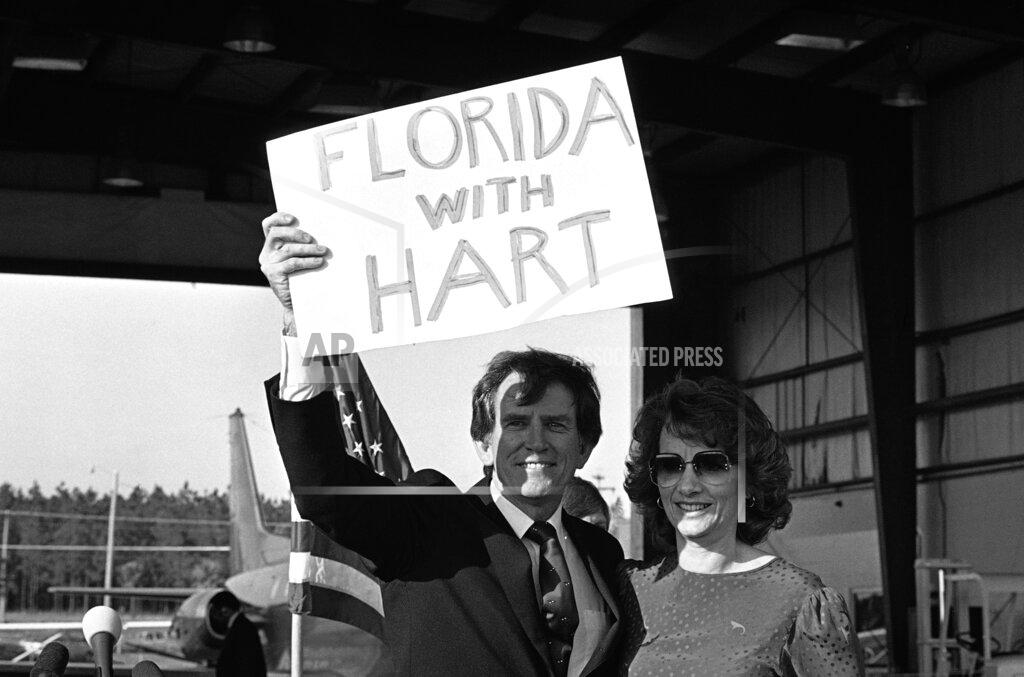
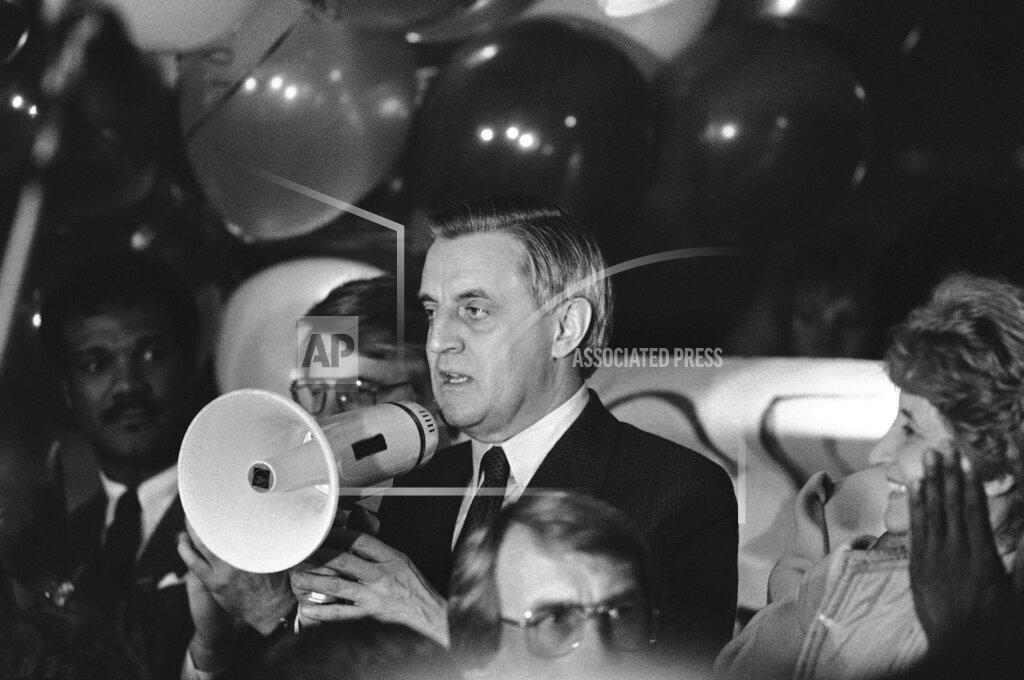
Ernest Hollings and Reubin Askew joined Alan Cranston in withdrawing from the Democratic Presidential campaign in the aftermath of the New Hampshire primary. At the same time, Walter F. Mondale said he no longer considered himself the front-runner as a result of Gary Hart’s upset victory Tuesday. Mr. Mondale said, “It is clearly a two-man race and it is very close.” Senator Hart said in Birmingham, Alabama, that the former Vice President was “the captive candidate of the institutions in Washington.”
Edwin W. Meese 3rd was questioned about his finances, his commitment to civil rights and his readiness to act independently of the White House at the opening of confirmation hearings by the Senate Judiciary Committee on the nomination of President Reagan’s former counselor to be Attorney General.
A federal appeals court reinstated the guilty verdicts of four officers of Teamsters Local 600, headquartered in St. Louis, on charges of conspiring to arrange $280,000 in severance payments to themselves. The appeals court said a lower court had improperly overturned the convictions and sent the case back to the lower court to consider the defendants’ request for a new trial. The appellate court said the men authorized the payments” knowing that to do so would bankrupt the union.”
Former President Richard M. Nixon has decided against purchasing a $1.8 million Park Avenue cooperative apartment in Manhattan, his office said. The Nixons are no longer interested in moving from their sprawling Saddle River, New Jersey, home to the co-op because of all the controversy and publicity sparked by the choice, a spokeswoman for Nixon said. She said the Nixons had no immediate plans to look elsewhere. Nixon had said he wanted to move to Manhattan because his wife, Pat, who has had two strokes, wants to be closer to her doctors.
Kevin H. White and contractors met regularly in a Boston hotel room, according to a former city official, George N. Collatos. He said he had arranged the meetings and that Mayor White attended them to collect political contributions.
The Dalkon Shield was denounced by a federal judge in Minneapolis as “an instrument of death, mutilation and disease.” The judge, Miles Lord, accused three top officials of the A.H. Robins Company of putting profits above the health of women after he approved a settlement of seven lawsuits involving the intrauterine birth- control device for an amount estimated at $4.6 million.
Union employees of the United States Steel Corporation’s Johnstown fabricating plant in Pennsylvania today rejected proposed contract concessions, killing any hope of survival for the century-old facility. The vote was 324 to 255 to reject the offer, which included cuts in pay from $10.67 to $7.87 an hour, reduced benefits and fewer vacation days and holidays. Negotiators had said a rejection would lead to the plant’s closing. The plant is one of six money-losing operations the company says it plans to close beginning in April. It also plans to curtail production at 24 other facilities. The Johnstown plant once employed 2,200 people but has been operating at reduced levels for several years.
New Hampshire’s largest paving company has been convicted of rigging bids on millions of dollars’ worth of Vermont highway projects over six years. Pike Industries, Tilton, New Hampshire, its president, Milo Pike, and vice president, Bruce Homer, were found guilty Wednesday on three counts of antitrust violations and mail fraud. “The Government had the finest antitrust attorneys in the country and we had the best defense lawyers in the state of Vermont, and they beat us,” Mr. Pike said as he left Federal District Court in Rutland, Vermont.
Paul Crafton, who has been accused of impersonating a professor at two central Pennsylvania colleges, was sentenced Wednesday to three to nine months in jail. The sentence by Judge Harold Sheely of Cumberland County came just hours after another judge put Mr. Crafton on probation and compelled him to do community work for offenses at one of the schools. “The total academic integrity of our colleges and universities requires that this type of conduct not be condoned,” Judge Sheely told the 60-year-old man.
Maximum safe levels for EDB in fruit similar to those set for grain products last month will be announced today, according to officials of the Environmental Protection Agency. But they said that unlike its action for grain products, the agency will not order an immediate suspension of all use of the pesticide on fruit.
Some women in Silicon Valley in California are founding their own companies. They are an assertive breed of women who are taking advantage of the free-wheeling entrepreneurial spirit that marks that center of the American computer and electronics industry. Like the men who are starting companies, they work about 80 hours a week.
Landsat 5 & ham satellite Oscar 11 launched into polar orbit.
Dow Jones Industrial Average: 1159.44 (+4.81).
Born:
Alexander Steen, Canadian NHL centre (NHL Champions, Stanley Cup-Blues, 2019; Toronto Maple Leafs, St. Louis Blues), in Winnipeg, Manitoba, Canada.
Jeremy Richardson, NBA small forward and shooting guard (Atlanta Hawks, Portland Trailblazers, Memphis Grizzlies, San Antonio Spurs, Orlando Magic), in Allentown, Pennsylvania.
Naima Mora, American fashion model, born in Detroit, Michigan.
Died:
Jackie Coogan, 69, American actor (Uncle Fester-“The Addams Family”; “The Kid”; “Oliver Twist”), of a heart attack.




 History Diaries