Prime Minister Pierre Elliott Trudeau announced today that he had decided to resign after more than 15 years as head of the Canadian Government. He said it was “the appropriate time for someone else to assume this challenge.” Mr. Trudeau, 64 years old, whose fondness for the dramatic gesture has been as characteristic of him as the red rose he habitually wears in his lapel, made his announcement during a paralyzing snowstorm and while Parliament was in recess. But he did not do so in any public appearance. He communicated his decision in a hand-delivered letter this morning to Iona Campagnola, president of his Liberal Party. Miss Campagnola, who read the letter at a news conference this afternoon, said Mr. Trudeau would remain in office as leader of the party and head of Government until his successor is chosen in a national convention.
Moscow vetoed a French proposal in the United Nations Security Council that would have sent an international peacekeeping force to Lebanon. The proposal was backed by 13 members of the 15-member Council. The proposal, which would have authorized an international contingent to replace the American and European troops of the multinational force in Beirut, was supported by 13 members of the Council, including Nicaragua, India and Zimbabwe whose support had been thought uncertain by Western delegates. Only the Soviet Union and the Ukraine, which is part of the Soviet Union, opposed the measure. Since the Soviet Union is a permanent member of the Council, however, its negative vote constituted a defeat of the resolution.
Amin Gemayel arrived in Damascus and conferred with President Hafez al-Assad of Syria over the future of Lebanon. The visit took place amid extraordinary security precautions in the Syrian capital.
President Reagan participates in a briefing on the General Advisory Committee on Arms Control and Disarmament’s review of Soviet compliance with arms control.
A new, long-range Soviet cruise missile is nearing combat readiness and a second such advanced weapon is being tested in preparation for possible deployment aboard submarines near U.S. coasts, Rear Adm. John L. Butts, director of naval intelligence, told the House Armed Services Committee. They may well represent the “counter-deployments” the Soviet Union has threatened against the United States to counter new U.S. ground-based nuclear missiles in Western Europe, Butts testified. He said the Soviet SS-NX-21 cruise missile, with a range of 1,900 miles, could be deployed “as early as this year.”
Late in the 1980s, the United States may be able to test a ground-based laser system that could be capable of shooting down incoming Soviet nuclear missiles, presidential science adviser George A. Keyworth told a Washington seminar at the Brookings Institution, a private, nonprofit research group. The system could provide the basis for the defensive shield against missiles that was urged last March by President Reagan in what has become known as his “Star Wars” speech, Keyworth said.
The Soviet Union announced that it has established a 200-mile economic zone around its shores. Last March 10, President Reagan proclaimed a marine economic zone in which the United States “will exercise sovereign rights in living and non-living resources within 200 miles of its coast.” The Soviets in 1977 established a 200-mile fishing zone, and the new decree speaks of Soviet “sovereign rights with a view to prospecting, developing and preserving natural resources, both living and non-living, on and under the seabed and in water above.” The decree apparently includes claims to oil and natural gas within the zone.
Austrian President Rudolf Kirchschlaeger said he believes that a reassessment of East-West hostility is under way in both Moscow and Washington, providing reason for cautious optimism about a possible thaw in relations. At a Washington news conference the day after he met with President Reagan, Kirchschlaeger said that nearly all Western leaders who attended the Moscow funeral of Soviet President Yuri V. Andropov last month came away with some hope for improvement in East-West relations.
Mikhail S. Gorbachev, the youngest member of the ruling Politburo and the one considered closest to Yuri V. Andropov before the Soviet leader’s death, seemed to affirm his high standing in the hierarchy today when he addressed voters only two days before Konstantin U. Chernenko, the party leader. Speaking in connection with elections next Sunday to the Supreme Soviet, the nominal Parliament, Mr. Gorbachev focused on economic issues, listing many of the experiments and programs that had been begun under Mr. Andropov in an effort to rouse the Soviet economy. The emphasis suggested to Western diplomats that Mr. Gorbachev, who originally joined the Politburo as an expert in agriculture, had been given broader responsibility over the economy, perhaps to pursue the changes initiated by Mr. Andropov.
He seemed to strike a less strident tone in referring to the United States than either Foreign Minister Andrei A. Gromyko or Defense Minister Dmitri F. Ustinov, and he declared that Moscow was ready “to use any real chance for fair negotiations, for reaching practical accords.” There had been earlier signals that Mr. Gorbachev, who is 52 years old, had assumed a strong position in the Politburo after Mr. Chernenko was named the party leader. Mr. Gorbachev had made the closing comments at the Central Committee session that voted Mr. Chernenko into office, and he stood to the right of the new leader after his appointment.
A dissident Soviet couple who wrote to new Communist Party leader Konstantin U. Chernenko have been committed to a psychiatric hospital, Western diplomats said in Moscow. The diplomats said that Nikolai and Nadezhda Pankov were summoned by police February 20 after they wrote Chernenko congratulating him and reminding him that they seek to emigrate to the West. They were later transferred to a psychiatric hospital in an area near Moscow that is off limits to foreigners, according to the diplomats, who spoke on condition that they not be identified.
Underground Solidarity leaders urged international human rights groups to press the Polish government to grant political prisoner status to jailed union activists on hunger strikes. The appeal came in a statement signed by Zbigniew Bujak, Bogdan Lis, Tadeusz Jedynak and Eugeniusz Szumiejko, four Solidarity leaders in hiding since martial law was imposed in December, 1981.
Two Dutchmen suspected of involvement in the kidnapping of beer magnate Alfred Heineken were arrested as they left a Paris apartment, police in that city said. They added that a large sum of money thought to be part of the $11-million ransom was found in their apartment. Willem Holleeder, 25, and Cornelis Van Hout, 26, were seized by two Dutch detectives working with French police. Heineken, 60, and his driver were abducted November 9 from outside the Heineken brewery’s Amsterdam headquarters and held in a warehouse on the outskirts of the city for three weeks before they were found by police.
More than 2,000 protesting truckers ended an eight-day blockade today at the Brenner Pass, the main link between Italy and northern Europe, after meetings with Austrian and West German Government officials. Trucks started moving shortly after 8 A.M. at the pass and two other border crossings into Italy, ending a blockade undertaken to protest a work slowdown by Italian customs officers and slow processing of freight traffic by Italian authorities. Austrian officials met with representatives of Austrian truckers late Tuesday and promised to urge the Italian Government to streamline truck- handling regulations.
A hand grenade was tossed into a procession of Hindus in the Sikh holy city of Amritsar today, killing 3 people, wounding 35 others and touching off a riot, the police said. At least seven people were wounded when the police opened fire on the rioters, who were demanding that authorities hand over three Sikh extremists arrested for the attack, officials said. The incident pushed the death toll to 79 since mid-February in unrest over Sikh demands for greater autonomy.
Bangladesh President Hussain Mohammed Ershad said that a ban on political activity will be lifted March 26 and that joint elections will be held May 27 for the presidency and Parliament. Open political meetings have been banned. since November. Ershad’s broadcast came on the eve of a national strike called by opposition parties for today as part of a campaign to stop March 24 local elections.
Corazon Aquino, widow of the slain opposition leader, Benigno S. Aquino Jr., urged the Filipino people today to choose a peaceful solution to the political crisis gripping the country by taking part in the May 14 elections. At the same time, she warned President Ferdinand E. Marcos that if he does not remove barriers to fair balloting, the country might be plunged into violent confrontation. “I reiterate the demand of the opposition. I urge him to assume the major burden to avert violence by removing impediments to full participation in the electoral process,” Mrs. Aquino said in a statement broadcast over the Catholic radio station.
Two local officials charged today that soldiers and policemen shot, bludgeoned and burned to death at least 300 people among more than 5,000 forced to lie naked outdoors for five days without food or water. The two officials, Sugal Unshur, a town councilor, and Abdi Sheik, a member of the Kenyan Parliament, said more than 1,000 Degodia tribesmen were taken into the bush by security forces after the massacre and were missing and feared dead. They accused security forces of dumping bodies in the bush to conceal the incident in the Wajir district, about 320 miles northeast of Nairobi.
Mr. Sheik said police arrested an Italian missionary, Annalina Tonelli, who searched the bush for survivors for several days. The Italian Embassy said it was investigating. A Norwegian Embassy spokesman said aid workers in Wajir had reported charges similar to those by the two local officials. The staff of at least one foreign embassy has sent medical supplies to the area for the injured, said a diplomat who asked not to be identified. A spokesman for President Daniel arap Moi said the Government had “no comment at this time” on the charges.
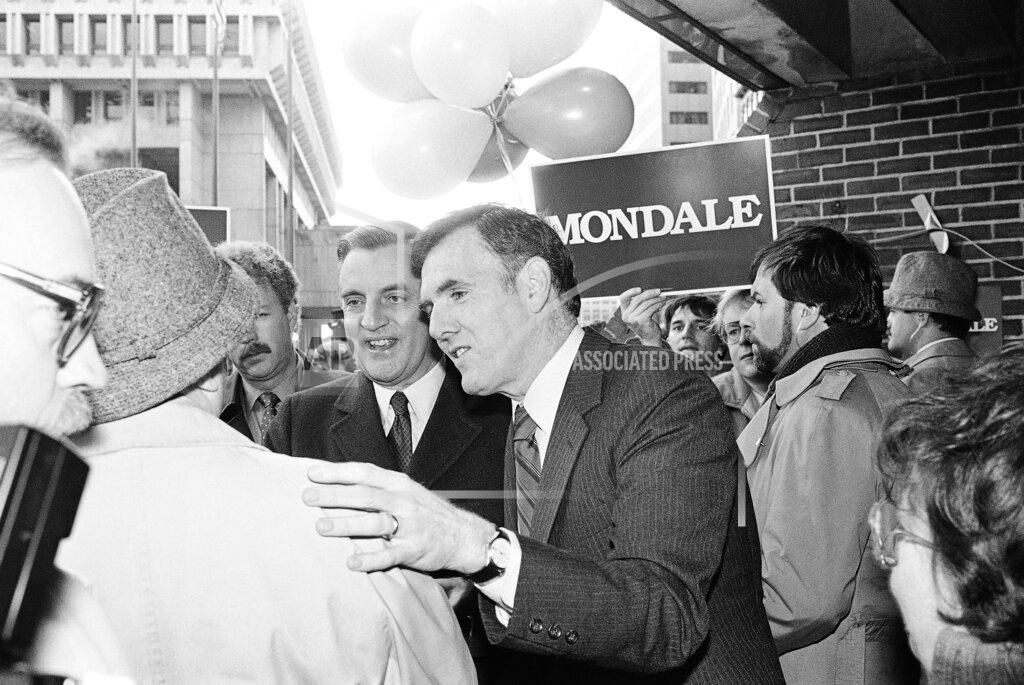
Gary Hart made plans to step up his challenge against a wounded front-runner, Walter F. Mondale, after the Senator’s upset victory in New Hampshire’s Democratic Presidential primary. Senator Hart will make major efforts in contests in the next 10 days in Maine, Vermont and Wyoming. One of the eight major aspirants, Senator Alan Cranston, announced his withdrawal.
Senator Hart also pledged to make a major effort in Massachusetts, which will hold its primary March 13, when eight other states will hold primaries or caucuses. Meanwhile, there were signs that his campaign’s financing problems might end soon.
Gary Hart describes himself as the Presidential aspirant of “new ideas.” He was a founder of a bipartisan group of liberals and conservatives who seek a more highly maneuverable fighting force with simpler weapons. He called for a withdrawal of the United States marines from Beirut more than a year before Mr. Mondale did.
Senator Hart achieved his upset in New Hampshire by seeking out an electorate that a New York Times/CBS News Poll showed to be younger, better educated, better off, more liberal, more critical of President Reagan and more politically independent than likely Democratic primary voters in other states.
President Reagan patiently worked on his own political agenda today, criticizing House Democrats on the issues of crime and school prayer and joking to a group of elderly people that he intended “to campaign in all 13 states.” His political aides said privately that the Democratic primary results from New Hampshire would have no basic effect on their early campaign strategy. “We’ll just enjoy things a little more,” one White House official said. Mr. Reagan, picking up two themes that are part of his basic campaign message, told members of the National Alliance of Senior Citizens that the House Democratic leadership had “bottled up” the omnibus crime bill approved by the Senate. He urged them to lobby their representatives for that bill and for passage of a constitutional amendment to supersede the Supreme Court’s ban of officially sponsored school prayer in which, the President said, “The Supreme Court expelled God from America’s classrooms.”
Facing the threat of a contempt-of-court citation, the Occupational Safety and Health Administration said it will propose that major employers of farm workers be required to install field toilets and washing facilities. The agency was forced to propose a standard because of a contempt-citation threat by U.S. District Judge June Green, who last week criticized OSHA officials for failing to meet a court-imposed January 16 deadline for offering such a regulation. OSHA has expressed doubt that such a regulation is needed.
A federal judge said the Attorney General William French Smith should have ordered a preliminary investigation to determine whether a special prosecutor was needed in the Jimmy Carter briefing papers case. U.S. District Judge Harold H. Greene denied the Justice Department’s request to dismiss a suit brought by John F. Banzhaf III, a George Washington University law professor, and gave the agency 10 days to answer the suit. The Justice Department said last week that its eight-month inquiry — conducted without a special prosecutor — failed to determine who transferred debate briefing papers and some White House documents from the Carter Administration to Ronald Reagan’s presidential campaign in 1980.
The House, ending a long stalemate on federal highway funding, voted to free long-awaited funds to continue interstate highway construction and emergency money for repairing roads damaged by 1983 floods. A compromise bill was approved by voice vote and sent to the Senate after agreement was reached to omit “pork-barrel” projects, which stalled an earlier bill.
Despite Reagan Administration opposition, Congress probably will pass legislation establishing a checkoff box on federal tax returns for $1 contributions to the U.S. Olympic Committee, Senator Ted Stevens (R-Alaska), one of the bill’s chief sponsors, predicted. A committee spokesman estimated that the checkoff could bring in as much as $20 million annually to help train Olympic athletes and improve facilities. The legislation is opposed by the Treasury Department on grounds that it would open the floodgates for other groups.
President Reagan enjoys a dinner with the American Winter Olympic Team.
A federal judge approved a plea bargain in which Metropolitan Edison, former operator of the Three Mile Island nuclear power plant, pleaded guilty to knowingly using “inaccurate and meaningless” testing methods. The violations occurred before the facility, near Harrisburg, Pennsylvania, was damaged in the United States’ worst commercial nuclear accident, which occurred in March, 1979. In approving the plea bargain, U.S. District Judge Sylvia Rambo said a trial would have been costly and probably would not have cleared up conflicting arguments about the utility’s conduct.
An export regulation bill — intended to prevent U.S. advanced nuclear technology and other sensitive material from falling into the hands of nations that have not signed the nuclear non-proliferation treaty — has bogged down in the Senate. Senate Majority Leader Howard H. Baker Jr. of Tennessee said so many senators have expressed a desire to add unrelated provisions — from farm exports to oil-company mergers — that the measure is “absolutely bejeweled with amendments.
The Federal Aviation Administration is getting ready to begin a three-week check of the nation’s airlines to see whether they are following safety regulations. More than 500 inspectors and a like number of other agency employees will begin surveillance of more than 400 airlines, large and small, on Sunday, examining anything from pilot procedures to maintenance and record-keeping, officials said. Although the inspections are expected to cover virtually every United States airline and every major airport, officials said the surveillance would not interfere with flight operations or affect travelers.
Thomas P. O’Neill Jr. might retire at the end of the year if a Democrat is elected President. The Speaker, after more than three decades in the House, said he would like to retire and become Ambassador to Ireland “or someplace like that.” If the Democratic candidate loses in November, Mr. O’Neill said in an interview, the next term will be his last.
A step in defining the cause of AIDS was reported by scientists at the University of California at Davis. They said they had isolated and transmitted among research monkeys a newly discovered virus that they believe causes a disease resembling AIDS in humans.
Nonprescription use of painkillers that contain two or more active compounds was criticized by a panel of experts convened by the National Institutes of Health as hazardous to the kidneys of people who take large doses of such drugs for long periods. The panel said that “serious consideration” should be given to banning the over-the-counter sale of such drugs. The most widely sold painkillers of this type, which combine aspirin and acetaminophen, include Excedrin and Vanquish.
Curbs on the freedom to smoke are increasing slowly around the country with the help of city councils and state legislatures, court decisions and the swelling assertiveness of nonsmokers. The toughest antismoking law in the country takes effect today in San Francisco, giving nonsmokers in the workplace the ultimate decision over whether and where there can be smoking on the job.
The college eligibility rules of the United States Football League violate Federal antitrust laws, according to a ruling by a Federal District judge in Los Angeles. The ruling by Judge Laughlin E. Waters could have far-reaching effects throughout college football in the form of underclassmen forgoing their educations to turn professional.
Swedish center Patrik Sundström scores a goal and adds 6 assists as Vancouver Canucks beat the Penguins 9-5 in Pittsburgh; just the 3rd player in NHL history to record 6 assists in a road game.
Dow Jones Industrial Average: 1154.63 (-2.51).
Born:
Cam Ward, Canadian NHL goalie (NHL Champions, Stanley Cup-Carolina, 2006; Conn Smythe Trophy, Stanley Cup MVP, 2006; NHL All Star, 2011; Carolina Hurricanes, Chicago Blackhawks), in Saskatoon, Saskatchewan, Canada.
Cullen Jones, American swimmer (Olympic gold medals, 4x100m freestyle, 2008; 4x100m medley relay, 2012), in New York, New York.
Nuria Martinez, Spanish WNBA guard (Minnesota Lynx), in Barcelona, Spain.
Died:
Roland Culver, 83, English actor (“Thunderball”), of heart disease.






 History Diaries