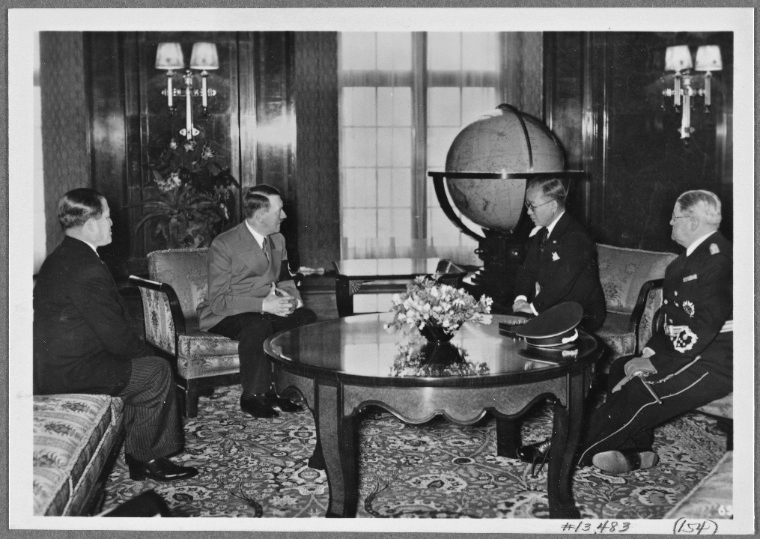
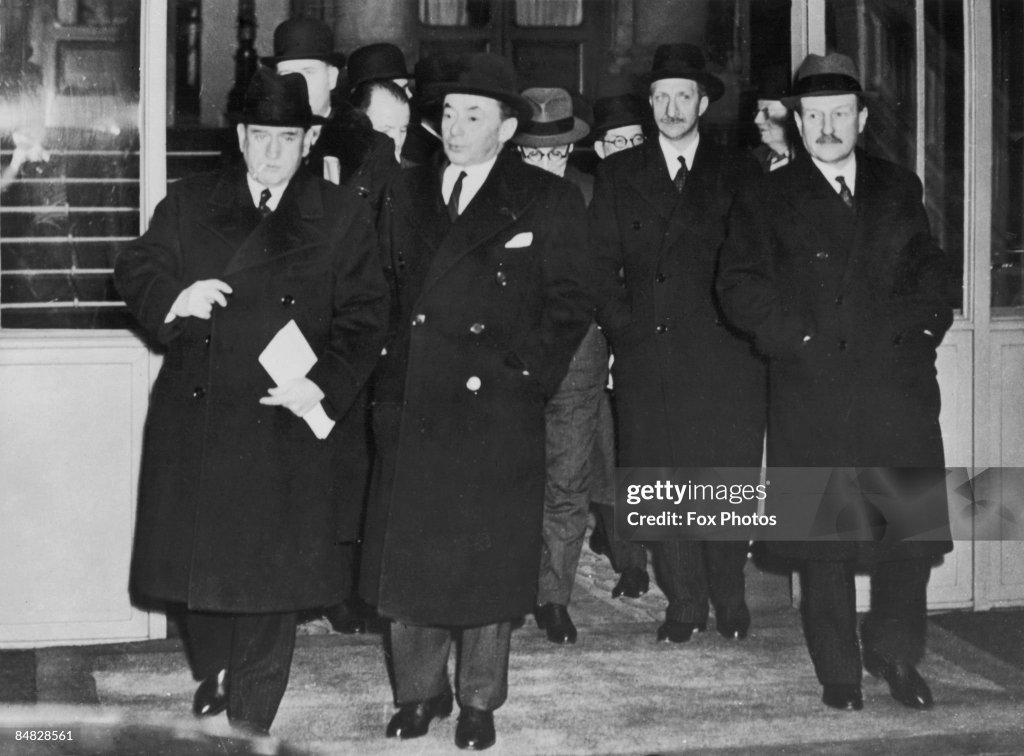
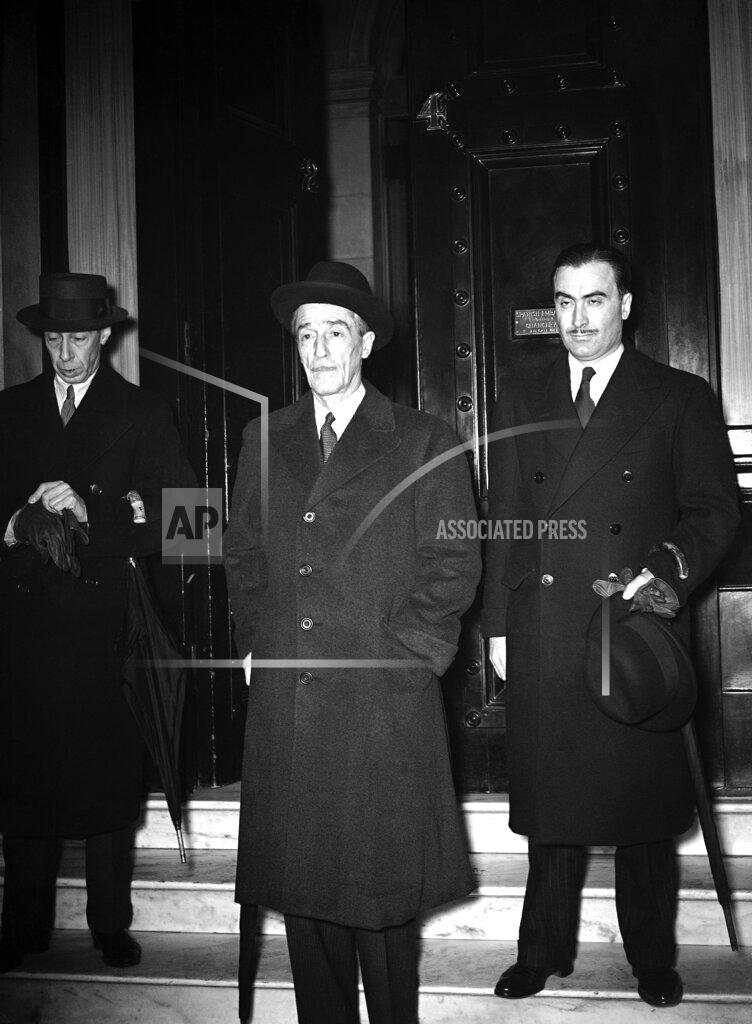
While Manuel Azaña in France formally resigned the Presidency of the Spanish Republic, Premier Negrín convened his Cabinet Ministers in Spain to discuss the latest developments. After the British and French governments recognized the Franco government, President Manuel Azaña, who had taken refuge in Paris, resigned his office. The British and French governments attempted to bring the Spanish Civil War to an end, but Republican Premier Juan Negrín, refused to participate in the peace negotiations. The radical elements of Republican Spain supported Premier Negrín and the continuation of the war.
The Cortes Generales convened in exile in Paris and accepted Azaña’s resignation.
In Burgos, Franco is re-organizing and preparing his army to continue the war and attack Madrid and Valencia if the Republic fails to surrender.
Germany and Italy fear a British-French attempt to pull Spain away from the Berlin-Rome axis, and are suspicious of recognition given to the Franco government.
Britain’s recognition of the Franco regime in Spain was confirmed yesterday in the House of Commons by a vote of 344 to 137 after a bitter debate in which Opposition speakers had accused Prime Minister Chamberlain of having misled Parliament. Mr. Chamberlain read a telegram from Burgos saying that the new regime was not “disposed to accept any foreign intervention.” A motion was brought against the Neville Chamberlain government in the House of Commons declaring the recognition of Francoist Spain “a deliberate affront to the legitimate Government of a friendly Power, is a gross breach of international traditions, and marks a further stage in a policy which is steadily destroying in all democratic countries confidence in the good faith of Great Britain.” The motion was defeated, 344 to 137.
After a debate of much bitterness in which charges of bad faith were hurled at Prime Minister Neville Chamberlain, the House of Commons tonight decided by the overwhelming vote of 344 to 137 to approve recognition of Generalissimo Francisco Franco’s regime in Spain. Party passions that had begun to die down were fanned into flame as Opposition speakers accused Mr. Chamberlain of deceiving Parliament, neglecting British interests, betraying democracy and handing thousands of Republicans over to firing squads. Clement R. Attlee, the Laborite leader, in particular was in an angry mood and likened Mr. Chamberlain to “a dictator addressing a fascist grand council” because the Prime Minister had decided on recognition before getting parliamentary approval. But Mr. Chamberlain denied that he had misled any one and insisted that British interests would have suffered if recognition had been delayed a day longer. It could scarcely be a betrayal of democracy, he retorted, when Britain’s “great sister democracy, France,” had come to exactly the same decision.
As to the possible fate of the Republican leaders in a Fascist Spain, Mr. Chamberlain read a telegram that he said had reached him from the Franco government last Wednesday. The telegram was clearly a refusal to accept any conditions for recognition, but at least it gave Mr. Chamberlain “assurances” with which to justify his course to the Commons. “National Spain has won the war,” said the message, “and it is therefore incumbent on the vanquished to surrender unconditionally.”
“The patriotism, chivalry and generosity of the Caudillo [leader], of which he has given so many examples in the liberated regions, and likewise the spirit of equity and justice which inspires all the national government’s actions constitute a firm guarantee for all Spaniards who are not criminals. The courts of justice, applying established laws and procedure promulgated before July 16, 1936, are restricted to bringing to judgment within the framework of these laws the authors of crime. Spain is not disposed to accept any foreign intervention which may impair her dignity or infringe her sovereignty” — and as Mr. Chamberlain read this message, there was a roar of laughter from the Opposition benches. The telegram ended by saying that if “the Red leaders prolong their resistance and sacrifice more lives it will be their responsibility.”
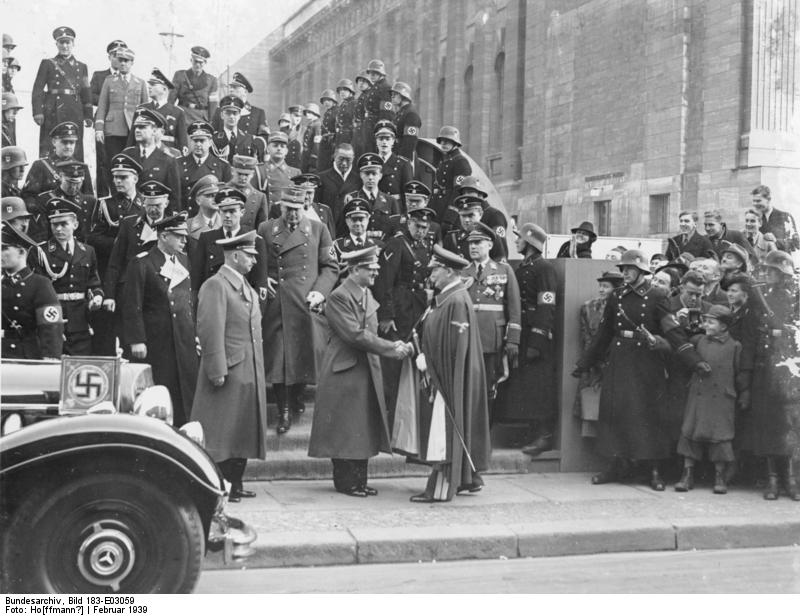
Germany responded to the British and French inquiry of 8 February 1939 regarding why Germany had not yet guaranteed Czechoslovakian sovereignty, noting that Germany must “await first a clarification of the internal development of Czechoslovakia”.
Gradually the whole enormous wealth of the Catholic Church of the former Austria is getting into the possession of the State. The Nazi conviction is that all church property should be the property of the State and be used for the benefit of all. In what is now Ostmark the church at one time was by far the largest land owner and its present possessions are estimated at not less than $100,000,000. During the last twelve months government commissioners have been appointed to control the properties and financial administration of all the larger monasteries, the most important of which are at St. Lambrecht, Kremsmuenster, Admont, St. Paul and Goettweig. They have not been confiscated in the literal sense because the abbots and monks remain in them, but it is certain that the control of their art treasures and real estate will never revert to them.
Student rioting continued at Warsaw University today, but this time it was directed more against the Polish Government than the German regime. The students took offense at a speech by General Stanislas Skwarczynski, leader of the National Unity Camp, who referred to them as “blind tools” of Poland’s foes and hinted at foreign influence behind the demonstrations. Protest meetings were organized in the colleges, whereupon the police closed the gates of the university grounds and permitted the students to leave only individually so as to prevent parades. The German Embassy was heavily guarded. Last night a mob attacked the building housing the German Council, the German minority representation. A quantity of documents was seized and burned. Reports from Danzig today indicated the restoration of order. Authorities there granted a Polish demand that the technical school be closed indefinitely.
Orders for quick action to halt student demonstrations against Germany were given to Warsaw police tonight after men and women of Warsaw University and Polytechnic School paraded, shouting “Down with Hitler!” “Down with the Germans!” and “We want a change in foreign policy!” The anti-German demonstrations started Friday. The police were instructed to use rubber sticks and fire hoses to quell further outbursts.
King Leopold of Belgium today entrusted Eugene Soudan, Socialist Senator, with the task of forming a new Cabinet. M. Soudan, Foreign Minister in Hubert Pierlot’s short-lived Cabinet, which resigned yesterday, has also previously held the portfolios of Finance and Justice. He is trying to form a Ministry of national union including representatives of the three principal parties and hopes to conclude his negotiations within forty-eight hours.
Soviets claim significant growth in their navy.
It is now quite certain that barring accidents all sixty-two Cardinals will be present at the beginning of the conclave that will elect a successor to Pius XI. Even the last to arrive among the Cardinals from the two Americas — William Henry Cardinal O’Connell of Boston, Sebastiano Cardinal Leme da Silveira Cintra of Brazil and Jaime Luis Cardinal Copello of Argentina — will reach Rome in ample time to join other members of the Sacred College in watching the conclave’s only door swing to and hearing the three locks inside and the three outside creak thrice under the triple turn of their keys.
Inside the conclave the future Pope will rub elbows with his electors, sharing their life in rooms for the greater part very far from comfortable until in successive ballots he obtains at least two-thirds of the votes — in the present case the minimum of forty-two, not counting his own. How long this will take it is impossible to foresee, but an indication is afforded by the fact that the longest of all conclaves held in the last hundred years — that which elected Pius XI in 1922 — lasted four days. The general expectation consequently is that by Sunday morning at the latest the name of the new Pope will have been proclaimed.
The first issue of Serbian weekly magazine Politikin zabavnik is published.
Two bombs explode in a Jerusalem market and 28 Arabs die.
There will be no war in Europe “this Spring, this year or next year” unless the United States encourages the democracies to an aggressive stand, Senator Nye told the Senate today during debate on the bill to expand the Army Air Corps to 6,000 planes. Meanwhile, a group of twelve Senators, including six Democrats, three Republicans, two Farmer-Laborites and a Progressive, introduced a constitutional amendment to prohibit the waging by the United States of war overseas without the authority of a popular referendum.
In other words, the Senate isolationists had a field day, but the indications were that the rearmament bill, ostensible subject of the debate, would pass with little opposition. The Senators were using that vehicle, as was the case in the House ten days ago, to voice their misgivings over the state of the world and the role which the United States should play. Underlying the national defense debate was the fundamental question: Shall this country, by promising all possible aid, short of military assistance, to victims of aggressions, attempt to avert a European war, or shall it stand by the traditional policy of having nothing to do with developments outside its own borders?
Presenting the slightly modified! version of the Ludlow amendment, which was defeated in the House two years ago, were Senators Bone of Washington, Clark of Idaho, Clark of Missouri, Donahey of Ohio, Murray of Montana and Wheeler of Montana, Democrats; Capper of Kansas, Frazier of North Dakota and Nye of North Dakota, Republicans; Lundeen of Minnesota and Shipstead of Minnesota, Farmer-Labor, and La Follette of Wisconsin, Progressive. Senator La Follette in a statement calling for support of the proposed constitutional amendment, said: “The referendum would be invoked only in case of a war on foreign soil. It would not even prevent our participation in such a war. It would merely guarantee that we send our forces abroad only when the people have expressed their approval at the ballot box.
A national health program designed to put public care and service in this field on a highly developed and coordinated basis is provided in an Administration-endorsed bill introduced by Senator Wagner today as an amendment to the Social Security Act. The program, which would involve estimated Federal grants-in-aid of about $80,000,000 in its first year of operation and larger sums thereafter, was evolved through studies which have occupied the last five years. It represents a completely new approach, according to its sponsor, to a problem considered fundamental by the Administration.
“No social legislation projected in our time,” Senator Wagner said in introducing his bill, “is more closely related to the general welfare than a national program for health protection. No legislation makes as wide an appeal to the public conscience and to the dictates of sound economy. No legislation was launched with more widespread approval among persons in every walk of life. We must take action now to conquer this last remaining frontier of social security in America.”
Secretary Morgenthau told members of Congress today that continuance of the President’s power to alter the gold content of the dollar and control exchange with the stabilization fund was a necessity for defending the American economy. “In the monetary field,” he said, “it is as important as a powerful navy in the field of defense against armed attack.” Testifying before the House Committee on Coinage, Weights and Measures, the Secretary added that more than fifty countries had changed their currency values in relation to gold in the last five years, and “unfortunately the future remains uncertain.”
Harold Ickes, secretary of the interior, calls for reorganization of the federal government; saying the current system is a peril to democracy.
President Roosevelt put the Navy’s Fleet Problem XX behind him tonight after an informal discussion of the war game on the USS Houston and set a course for Charleston, South Carolina, where he will disembark Friday after a two weeks’ vacation with the defending “Black” fleet in the maneuvers intended to test the security of the Western Hemisphere from a transatlantic attack. With Admiral Claude E. Bloch, chief umpire of the maneuvers; Admiral E. C. Kalbfus, commanding the invading “White” armada, and Vice Admiral Adolphus Andrews, President Roosevelt went over the results while anchored off Culebra Island, southeast of San Juan, Puerto Rico. A brief radio message from Captain Daniel J. Callaghan, naval aide to the President aboard the Houston, to temporary White House offices told of a general fleet engagement which began at sun-up yesterday and lasted until an hour past noon. Whether the defending “Black” force under Admiral Andrews had repelled the superior “hostile” fleet awaited the conclusions of the study which the President is expected to announce on his return.
Telephone use is up by 11.6 percent from 1932–37, according to a census.
A man kills his bride after only three hours of marriage. The sentence is 20 years to life.
Two competing editions of Hitler’s Mein Kampf appeared in U.S. bookstores on the same day. Reynal & Hitchcock’s version was officially leased from the American copyright holder Houghton Mifflin, but Stackpole Sons’ edition was unauthorized and proudly advertised that Hitler would receive no royalties from its sales. Stackpole claimed that Hitler had not been a citizen of any country at the time of publication and so the book was therefore public domain. Reynal & Hitchcock responded by promising to donate all profits from its edition to a refugee fund, and Houghton Mifflin continued to fight Stackpole Sons in court.
The erroneous word “Dord” is discovered in the Webster’s New International Dictionary, Second Edition, prompting an investigation.
Warner Bros. withdraws the film “Devil’s Island,” featuring a French penal colony, after the French protest.
Humphrey Bogart and Bette Davis will appear in “Old Maid.”
Yankee catcher Bill Dickey signs a contract for the 1939 season.
Eight persons, mostly Germans, are being held in custody in Mexico City in connection with an investigation of suspected Nazi espionage activities. They include Baron Hans Heinrich von Holleuffer, brother-in-law of Count Wolf Heinrich von Helldorf, Berlin police president and close friend of Chancellor Adolf Hitler. Pablo Garbinsky, another of those arrested, was taken to Veracruz for deportation on charges of having transmitted secret military information to Germany over a short-wave radio, located presumably in the suburb of Tacuba. The Mexican Department of Communications is credited with having started the investigation after having intercepted short-wave radio messages in code. The Attorney General joined in the inquiry. The names of the other persons arrested were not made available.
Bad weather forces the pioneer China-Burma flight to cancel.
Dow Jones Industrial Average: 147.30 (+0.68).
Born:
Charles Brown, featherweight boxer (Olympic bronze medal, 1964), in Cincinnati, Ohio.
Roger Hagberg, CFL and AFL fullback, halfback, and tight end (Grey Cup champion 1961, 1962; Winnipeg Blue Bombers; AFL: Oakland Raiders), in Winnebago, Minnesota (d. 1970, automobile accident).
Johnny Counts, NFL halfback and kick returner (New York Giants), in Mount Pleasant, New York (d. 2004).
Pete Hall, NFL end (New York Giants), in Sharon, Pennsylvania.
Charles Gayle, American jazz saxophonist and composer (“Streets”), in Buffalo, New York (d. 2023).
John Fahey, American folk singer and guitarist (“Transfiguration of Blind Joe Death”), in Washington, District of Columbia (d. 2001).
Tommy Tune, dancer, singer, choreographer and actor, in Wichita Falls, Texas.
Daniel C. Tsui, Chinese-born American physicist, in Fan, Henan, China.
Naval Construction:
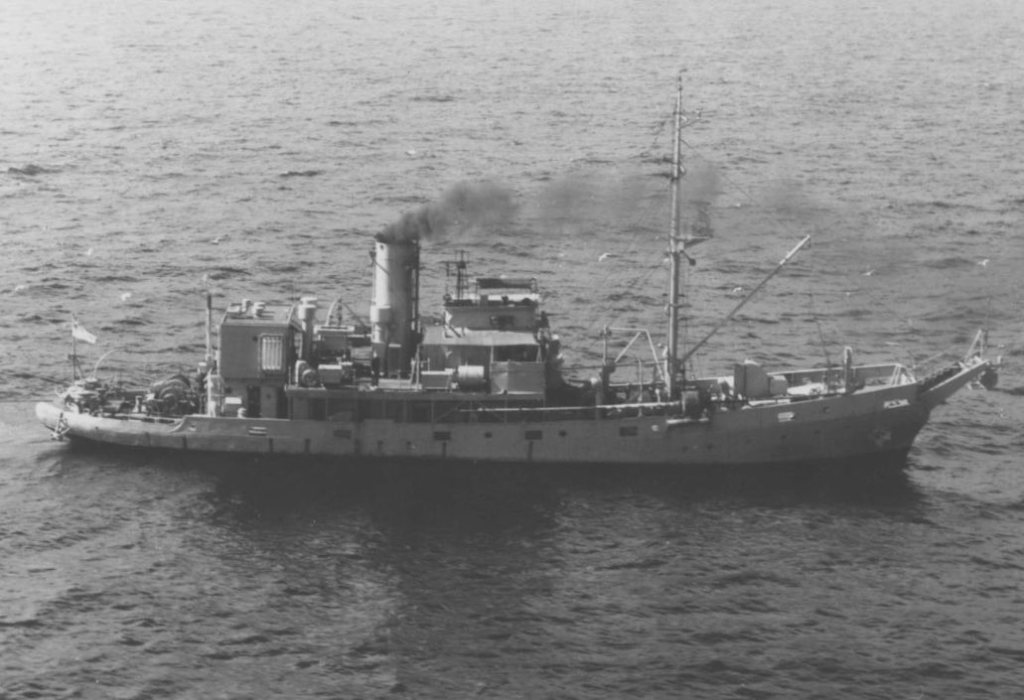
The Royal Australian Navy Net-class boom defense vessel HMAS Kookaburra (A 331) is commissioned.
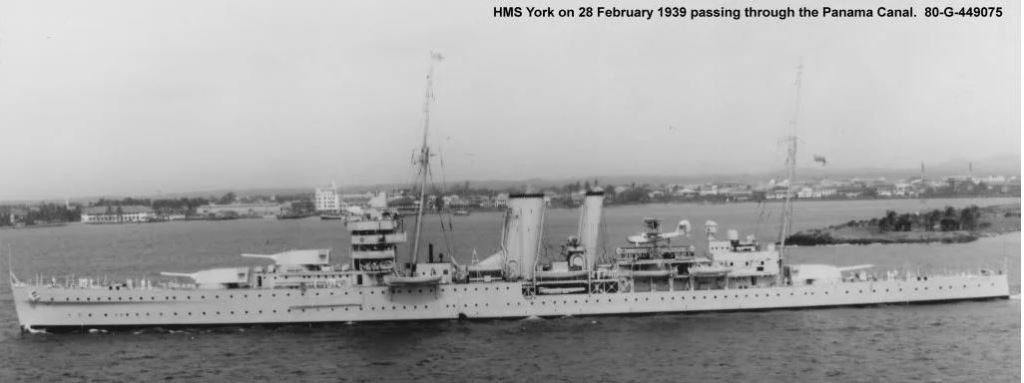
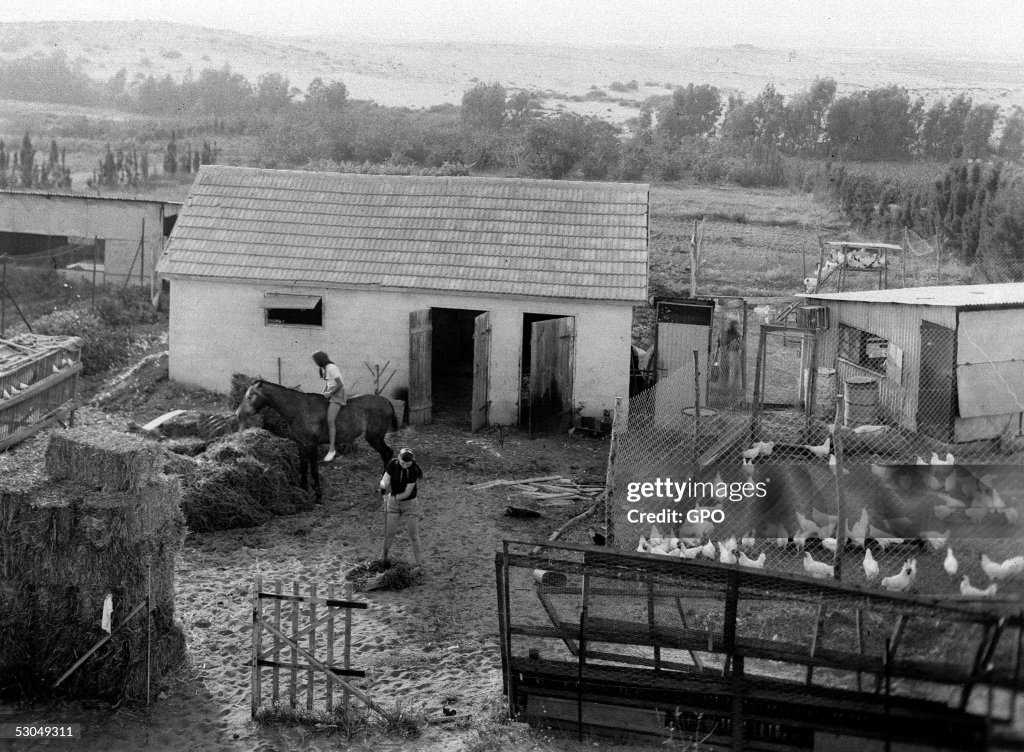
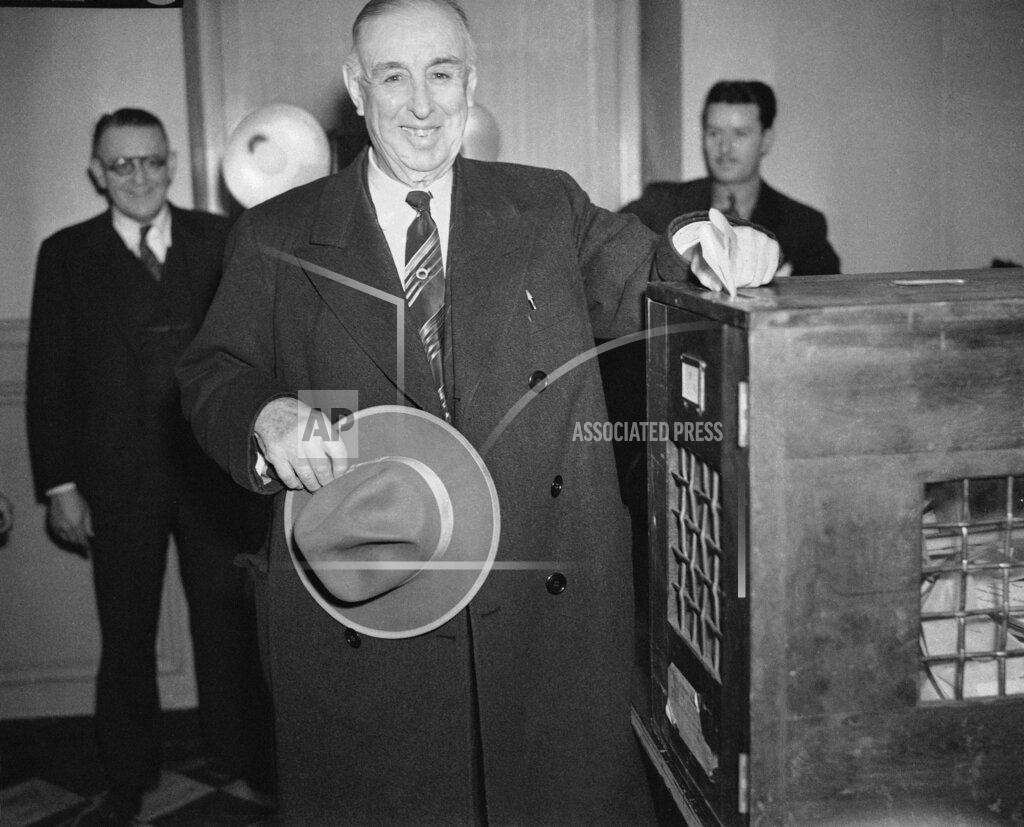


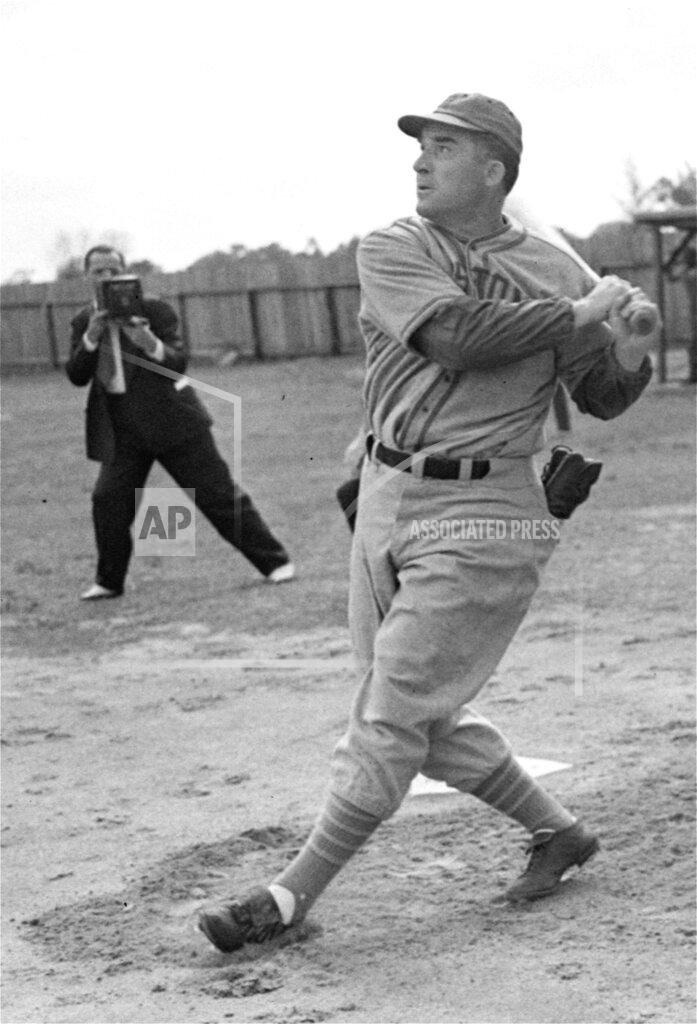
Battle Honours: Darwin 1942-43
HMAS Kookaburra was initially employed as a training tender to the Anti-submarine School at Sydney and performing boom defence duties. In November 1939 she proceeded to Darwin, where she was based until Christmas day, returning to Sydney on 9 January 1940 for further service in the port area. On 9 April 1940 she again proceeded to Darwin, arriving on 29 April 1940 to assume the dual role of Boom Defence and Examination vessel. With the exception of a refit in Brisbane between September 1942 and February 1943 Kookaburra was stationed in Darwin for the duration of World War II. Here, she carried out valuable work associated with patrolling and maintaining the Darwin anti-submarine boom net. She was present in Darwin harbour on 19 February 1942 when the Japanese carrier borne air squadrons made the first attack against the Darwin area and was involved in the salvage operations that followed.
Kookaburra paid off into reserve on 15 January 1946 at Darwin where she remained alongside the Boom Jetty for the next four years. On 27 November 1950 she recommissioned for the voyage to Sydney where she was refitted at Garden Island before again being placed in reserve until 1956. She again commissioned on 11 May 1956 under the command of Lieutenant Commander AM Downes, RANR(S) for oceanographic survey and general duties, following conversion to a Special Duties Vessel. Kookaburra was finally paid off at Sydney on 3 December 1958 and without any further sea-going service was removed from the Navy list and declared for disposal on 24 June 1965.
 History Diaries