Britain and France formally recognized Francoist Spain. With the fall of Catalonia, the British and French governments recognized the Franco government as the official Spanish government without conditions. This leads (Republican) Spanish President Azaña, now in Paris, to resign the next day.
Unconditional recognition of the Franco regime in Spain was announced in the House of Commons today by Prime Minister Neville Chamberlain. Amid shouts of “Shame!” and “Betrayal!” from a handful of Opposition members, Mr. Chamberlain reminded the Commons that Generalissimo Francisco Franco now controlled the greater part of Spain and that any further resistance by the Republicans [Loyalists] “can only result in further suffering and loss of life.” It was impossible for the British Government, said Mr. Chamberlain, to regard the scattered Republican government as sovereign over Spain.
“Certain assurances,” he added, had been received from the victorious Franco regime, but apparently they were so vague that he did not think it worthwhile to disclose them. He simply contented himself with saying: “His Majesty’s government have noted with satisfaction the public statements of General Franco concerning the determination of himself and his government to secure the traditional independence of Spain and to take proceedings only in the case of those against whom criminal charges are laid.”
Thus, the British Government has finally decided to face realities and take a gambler’s chance that the new Spanish Government will not allow Germany or Italy to keep a dominating position on the Iberian Peninsula. As long as resistance continues, the pretense of nonintervention will go on, but henceforth Great Britain will do all she can to be friendly and helpful to the victors. It is taken for granted this will involve a substantial loan for reconstruction in Spain. Formal announcement is expected this week of the appointment of the Duke of Alba as Spanish Ambassador to London and of Sir George Mounsey, assistant under-secretary of state at the Foreign Office, as the first British Ambassador to Nationalist Spain. Recognition will be withdrawn from Pablo de Azcarate y Flores, who has represented the Republicans quietly and competently in London. He spent a heartbreaking day today, preparing the palatial embassy building in Belgrave Square for his successor.
With the threat of European war, and half a million Spanish refugees in the south, France has their border with Spain blocked, with Franco’s ally Germany also causing strife. France needs to focus on itself and endorses fascism in Spain, as Germany and Italy have done throughout the war.
Britain has less reason to endorse Franco. Labour leader Clement Attlee, Leader of the Opposition, is furious with Prime Minister Neville Chamberlain’s decision. He stated, the first voice to do so, that Britain was hypocritical after almost three years of “non-intervention,” yet their lack of intervention is instead the thing that has helped fascism spread through Europe.
Manuel Azaña is expected to resign as President of the Spanish Republic. Diego Martínez Barrio was his constitutionally designated successor but reportedly he refused the post.
A “Day Without Germans” at the Polish universities will be proclaimed soon as a protest against the persecution of Polish students in Danzig. A decision to this effect was taken today by student organizations. They were stirred by news of further outrages in Danzig. Polish students there, assured by the Free City’s Senate that no harm would be done to them, appeared this morning at the lecture halls of the Technical College. They were again attacked by uniformed Nazis and driven from the building.
Street fighting followed, in which the police, supposedly protecting the Poles, were reported to have joined the Nazis against their victims. Twelve Poles were reported injured and four were arrested. Those injured appealed to the Polish Commissioner, who in very strong terms protested to the Senate. This time the Senate Vice President, Wilhelm Huth, promised an investigation and police action. The Commissioner, nevertheless, demanded guarantees, since, despite Herr Huth’s previous assurances, the anti-Polish demonstrations have continued.
The governmental papers appealed today to Warsaw students to refrain from demonstrations, explaining that the Cabinet had ample means to protect the national honor and did not underestimate Danzig’s importance to Poland. Strong anti-German speeches, nevertheless, were made at a meeting of the Academic Legion. “Let it be known in Berlin that the road to Danzig is barred by 40,000,000 Poles,” one speaker declared, while the Vice Minister of War and several high-ranking officers present applauded.
Cardinals discuss their policy on Jews, one of the most important issues facing Italy.
The six-day old Belgian Cabinet already resigns over disagreements about financial measures.
Borley Rectory, “the most haunted house in England”, destroyed in a fire.
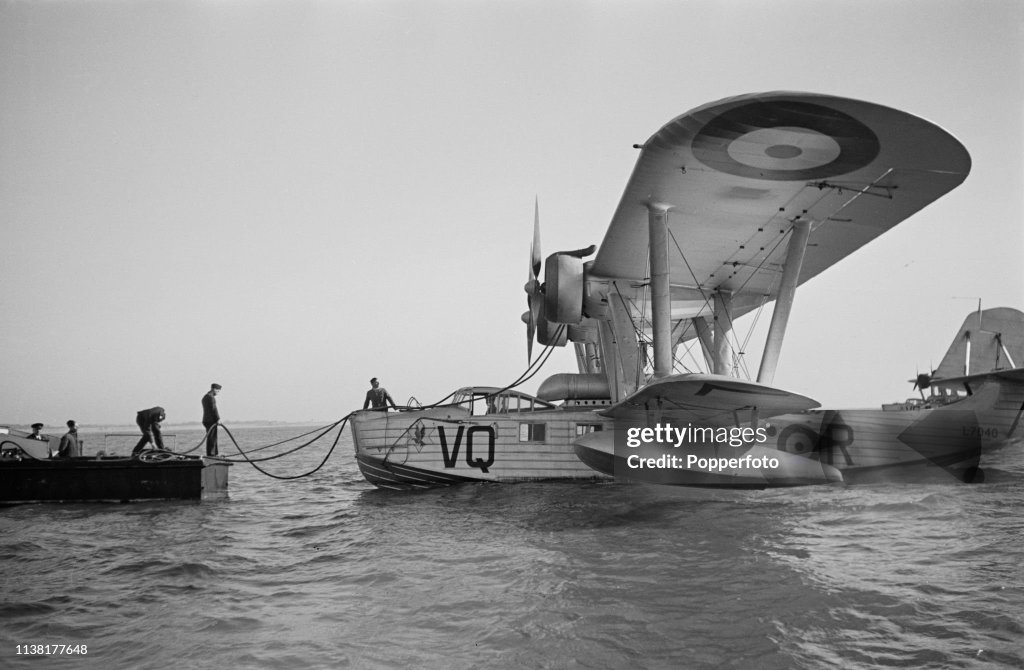
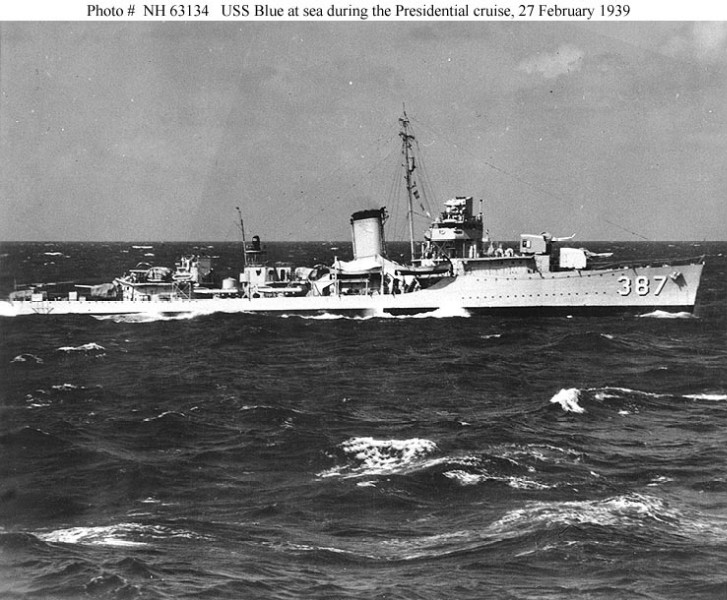
The British Admiralty approved William Reed’s sketch design for a coastal escort vessel requested during the previous month.
Germany began handing out “J” passports to Berlin Jews today as fast as formalities could be completed. This reversed a previous policy by which passports were granted only to those likely to receive permission to enter foreign countries. The reason for the change apparently was to provide passports as swiftly as possible so Jews could leave Germany under an order that requires the emigration of 100 Berlin Jews daily, beginning today. Jews crowded foreign consulates beseeching them to speed up visas or asking to be placed on waiting lists.
The Panamanian steamship Kepo sailed from the Black Sea port of Constanta, Rumania, with 1,000 Jewish refugees today without being cleared by port authorities. Officials said there might be complications if the vessel, presumably bound for Palestine, attempted to discharge her passengers there. Most of the refugees were from Sudetenland.
Nadezhda Konstantinova Krupskaya, widow of Lenin, dies only hours after her 70th birthday. She worked for the communist cause her entire life.
31 Arabs and one Jew died in clashes in Palestine.
London proposes an Arab-dominated independent state in Palestine. The Jewish delegates to the Palestine Conference rejected today the British suggestions for the establishment of an independent Arab State. The rejection was contained in a memorandum submitted at a meeting between British and Jewish delegates after the full conference committee of the delegates and their advisers had agreed that the suggestions in their present form were not even worthy of discussion.
At the same meeting the Jews apparently gave notice of an intention to withdraw from the conference if the British proposals for abrogation of the mandate and for expanding the present Government of Palestine with the appointment of Arabs and of Jews on a population basis were carried out. Presumably, the Jews also informed the British that they would not take part in the proposed round-table conference to draw up a Constitution for Palestine.
Colonial Secretary Malcolm MacDonald said, however, that the British suggestions should be regarded only as a basis for discussion. After a long session, in which Mr. MacDonald is reported to have softened the British proposals in form if not in substance, the Jews agreed to meet him and Richard Austen Butler, Under-Secretary for Foreign Affairs, tomorrow-but only informally, not in an actual session of the conference. It will be decided at that meeting whether further sessions of the British-Jewish section of the conference will be held.
The U.S. Supreme Court outlaws sit-down strikes. The U.S. Supreme Court decided NLRB v. Sands Manufacturing Co., NLRB v. Columbian Enameling & Stamping Co., NLRB v. Fansteel Metallurgical Corp. and Taylor v. Standard Gas & Electric Co. The sit-down strike as a weapon of labor in industrial strife was outlawed by the Supreme Court today in one of three five-to-two decisions through which stunning blows were dealt to the National Labor Relations Board in its administration of the Wagner Act. In a majority opinion by Chief Justice Hughes, the court denied the board the right to compel reinstatement of sit-down strikers in the Fansteel Metallurgical Corporation’s plant at North Chicago, denounced the strike, and condemned the board for exceeding its authority. “It was a high-handed proceeding without shadow of legal right,” said the Chief Justice of the Fansteel strike. “To justify such conduct because of the existence of a labor dispute or of an unfair labor practice would be to put a premium on resort to force instead of legal remedies, and to subvert the principles of law and order which lie at the foundations of society.”
Justice Stone, for the same majority, rejected a board ruling that the Columbian Enameling and Stamping Company of Terre Haute had declined to bargain collectively with a union the striking members of which the board demanded should be reinstated because of this alleged failure. The third decision, written by Justice Roberts, defeated a board order against the Sands Manufacturing Company of Cleveland, the majority holding that there had been no discrimination against union members, nor refusal to deal with them. The evidence submitted by the board was contradicted by the authors of both opinions. In each case the dissenters were Justices Black and Reed. Against them were the Chief Justice and Justices McReynolds, Butler, Stone and Roberts. Justice Frankfurter participated in none of the Labor Board cases, although he delivered his first findings from the bench in two other cases. The Labor Board appealed all its cases from Circuit Courts.
Senator Vandenberg opened an assault on the Administration’s foreign policy today as the $358,000,000 defense bill which would increase the army total of planes to 6,000 was seized upon in the Senate as the basis for an examination of President Roosevelt’s ideas and philosophy. Senator Vandenberg warned that any notion that the United States could pursue a policy involving direct action limited to steps “short: of war” was a “deeply dangerous infatuation.”
From the debate, in which Senator Connally replied to the Michigan Republican frequently with undisguised sarcasm and largely on the contention that the President’s critic had talked an hour without stating his position in clear terms, emerged two leading impressions. One was that no one on the floor appeared ready to contest the viewpoint that the United States should “keep out of foreign entanglements.” The other was that no substantial opposition faces the bill which marks a major step in increasing American armaments.
As a further move in the Administration’s program of appeasement to business and industry, Secretary Hopkins is expected by friends on Capitol Hill to make some recommendation concerning the proposed changes in the National Labor Relations Act. As it became known that the Secretary of Commerce had put in a request for all information on the subject in the hands of the Senate Education and Labor Committee, Senator Thomas, the chairman, today postponed scheduled hearings on the amendments embodying changes in the act until after the American Federation of Labor and the Congress of Industrial Organizations have had a chance to make peace in accordance with the request of President Roosevelt.
Mrs. Franklin D. Roosevelt indicated today that she had resigned from the Daughters of the American Revolution in disapproval of the national society’s refusal to permit the appearance in Constitution Hall of Marian Anderson, Black contralto, for whom Howard University is seeking to arrange a concert in Washington. She would “neither affirm nor deny” that the D. A. R. was the organization from which she had announced in her newspaper column she intended to resign rather than by continued membership seem to acquiesce in a policy of which she disapproved. She said she thought it the prerogative of the organization in question to make any announcement on the subject. Neither would she answer directly a question as to whether the policy in question was the exclusion of Miss Anderson from the society’s auditorium, nor comment upon the decision of the society in the matter. However, she said she had joined the society “by request” soon after taking up her residence in the White House.
A Nazi ship is said to film war games by U.S. ships.
12,000 communists rally at Madison Square Graden in New York.
Supporters of a U.S.-born nun, Mother Elizabeth Seton, seek sainthood for her.
A legislative committee reports widespread bias against Blacks.
The German steamship Koenigstein, with 165 Austrian Jews aboard, sailed from Georgetown, British Guiana today for Venezuela after British Guiana officials refused to allow the refugees to land. It is expected the vessel will return to Georgetown if negotiations in London allow the refugees to settle in this colony.
Japan was the largest foreign purchaser of steel ingots and scrap iron and steel from the United States in January, and during the first eleven months of 1938 the United States supplied 68.28 percent of Italy’s iron and steel scrap imports, the Department of Commerce announced today. Ingots and scrap, while not manufactured war materials, are generally regarded as important items in connection with national defense.
The Japanese Army’s westward drive was reported today to have advanced almost to the Han River in Hupeh Province. After a twenty-hour battle the Japanese reported they had occupied hill positions at Talkuanshan and had launched an attack against Shayang, thirty-five miles northeast of Shasi. Thirty junks loaded with fleeing Chinese were reported sunk on the Han. From Shayang the Japanese would be in a position to advance against Ichang, Yangtze River port about 100 miles farther west. To reach Ichang the invaders must traverse an area that produces most of China’s tung oil. A Japanese spokesman said the drive against Lushan, on whose peak twelve Americans and forty-three other foreigners are isolated, was “continuing.”
Foreign sources today confirmed Chinese reports of the shooting down of fifteen Japanese bombers in two Japanese raids at Lanchow last week. Inspection of the wrecks was claimed to have revealed that some of the planes were Fiats and others were Savoia-Marchettis, all Italian made. Foreign experts estimate that the two Lanchow raids cost the Japanese $2,000,000 and the loss of 105 men in the crews. High Chinese air force officers left today for Lanchow to decorate the Chinese fliers who brought down the bombers. The Chinese losses in the raids were said to have been two planes that were slightly damaged when the injured pilots crashed the machines in landing at the Lanchow airfield.
Japanese policy continues to promote non-discrimination against Jews. Nondiscrimination against Jews continues to be a Japanese policy, and although Jews entering Japan must comply with the immigration laws, none will be barred simply because he is Jewish. This declaration was made yesterday by Foreign Minister Hachiro Arita in response to an interpellation in Parliament by Katsuji Debuchi, former Ambassador to the United States. Mr. Debuchi’s purpose in obtaining the declaration evidently was to forestall Nazi efforts to extend the German anti-Semitic campaign to Japan with official support. Anti-Semitic activities already have been observed in Japan, but on a small scale, on the part of the German colony. Nazi residents have induced German firms to dismiss Jewish employees of long standing. Mr. Arita’s unequivocal declaration registers a tangible success for those Japanese who distrust the present tendency toward entangling Japan in European “axis” politics.
Dow Jones Industrial Average: 146.62 (-0.20).
Born:
Peter Revson, American auto racer (Indianapolis 500 1971 pole winner, runner-up), in New York, New York (d. 1974).
Antoinette Sibley, British ballerina (Turning Point), in Bromley, United Kingdom.
Died:
Nadezhda Krupskaya, 70, Russian revolutionary and wife of Vladimir Lenin.

 History Diaries