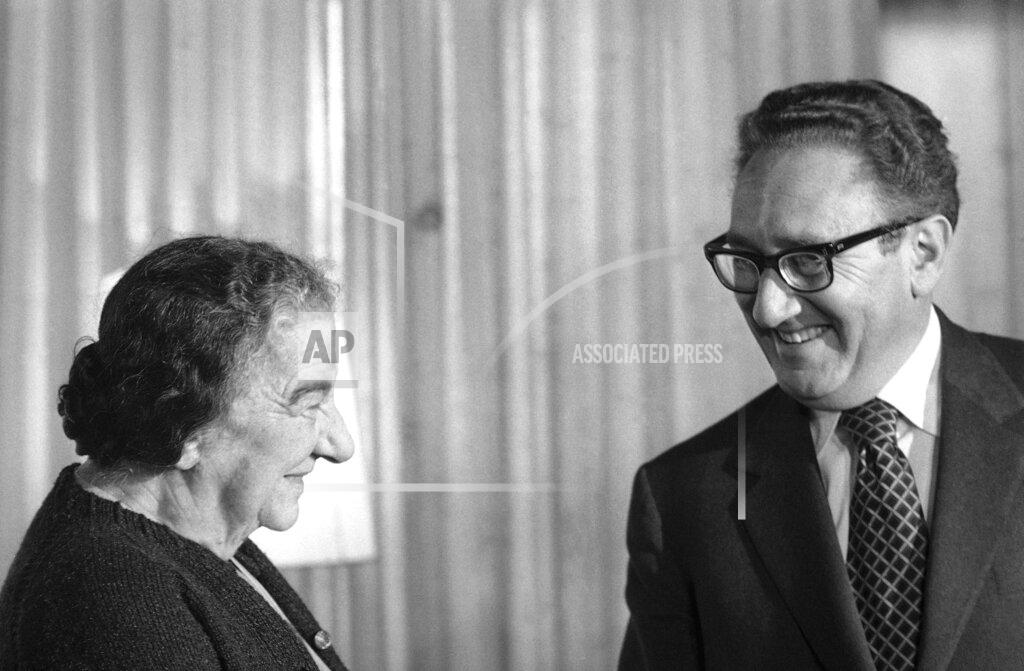
Secretary of State Henry Kissinger obtained a list of Israeli POWs from Syrian President Assad. Israeli Prime Minister Golda Meir announced the news of the POW list on nationwide television. U.S. Secretary of State Henry Kissinger was in Damascus meeting with Syrian President Hafez Assad, and because the meeting “lasted longer than expected”, he apparently avoided an assassination attempt that would have been made on him at the Umayyad Mosque. Syrian intelligence officials said that they learned about the plot only after the missed visit. A few hours after Secretary of State Kissinger left Damascus, Soviet foreign minister Andrei Gromyko arrived. The nature of his visit was not disclosed.
Secretary of State Kissinger flew to Israel from Syria, bringing a list of 65 Israeli troops held prisoner by Syria since the October war. This and Syria’s promise to allow the Red Cross to visit the prisoners opened the way for the start of negotiations on the separation of Israeli and Syrian forces on the Golan Heights. Premier Golda Meir, who broke into tears when Mr. Kissinger handed her the prisoner list, said that Israel would respond tomorrow by making its first proposals on the disengagement issue.
In an apparent move to broaden her minority coalition and leave her free to concentrate on talks with Secretary of State Kissinger this week, Premier Golda Meir of Israel received an extension of the deadline for presenting a new cabinet until next week. Within the second seven‐day extension of the deadline, Mrs. Meir reportedly hopes to persuade Moshe Dayan to remain as Defense Minister.
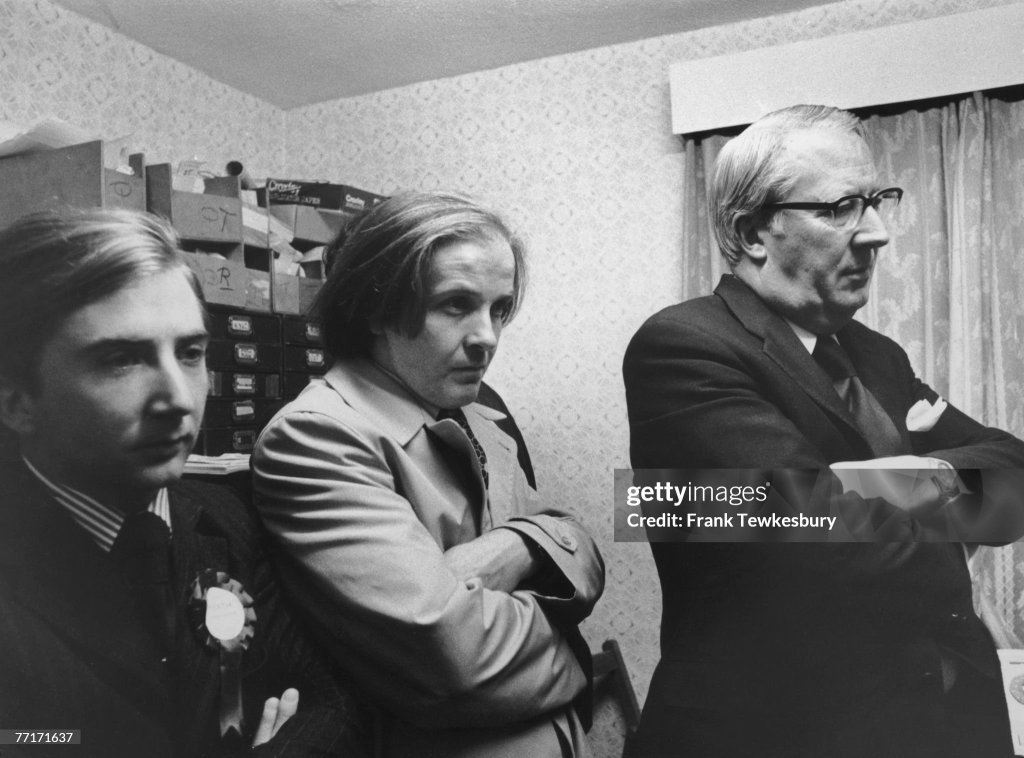
The campaign for what is considered the closest and most unpredictable election in recent British history came to an end with the polls indicating a narrow Conservative victory. But the Labor party, which has been gaining strength, was in striking distance of victory in tomorrow’s election, and the small Liberal party was given a chance to win enough seats in Parliament to hold the balance of power.
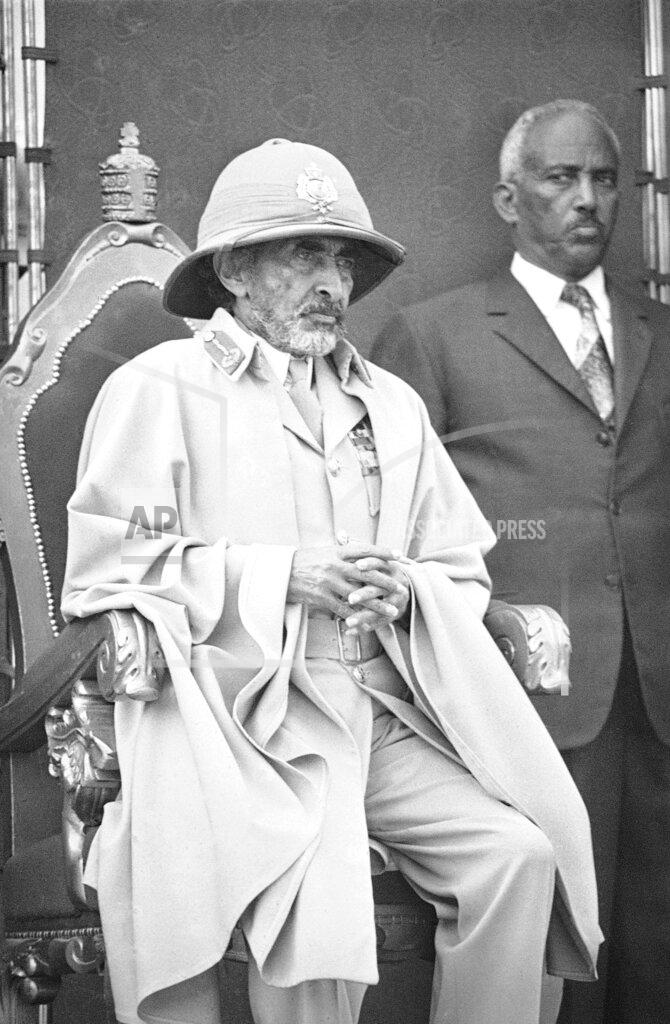
A military mutiny in Ethiopia spread from the northern city of Asmara, and the cabinet of Emperor Haile Selassie submitted its resignation. Rejecting demands for big pay increases, the emperor sent several generals to negotiate with the Asmara troops, but the mutineers took the envoys into custody. Though continuing to express loyalty to the 81-year-old Emperor, the troops asked for “total acceptance” of their demands in a radio broadcast.
On the same day that Ethiopia’s Emperor Haile Selassie opened a meeting of the Organization of African Unity (OAU) hosted in Addis Ababa, rebels within the Ethiopian Navy seized control of the naval base at Massawa, the nation’s leading port. Prime Minister Aklilu Habte-Wold and his entire cabinet submitted their resignations later in the day.
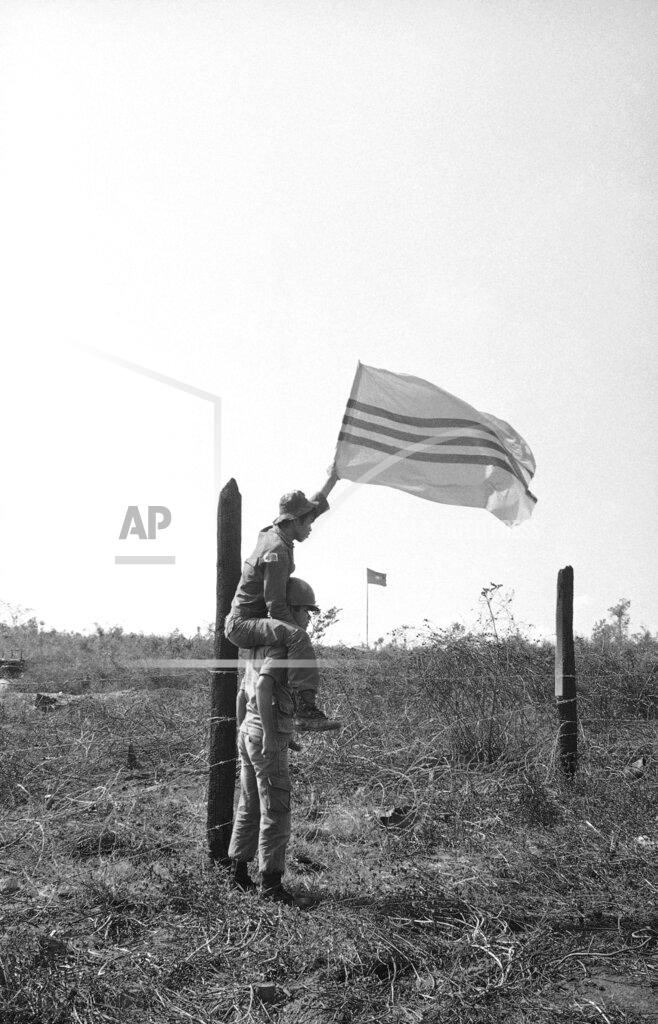
Hundreds of Communist Việt Cộng and South Vietnamese Government troops battled along the northern edge of the Plain of Reeds yesterday about 70 miles southwest of Saigon, government sources said today. The sources said the government committed more than 1,000 soldiers to the fighting. South Vietnamese officers in the field said that 92 North Vietnamese soldiers were killed in heavy air and artillery attacks on a force estimated at about 400 men. The only reported government losses were three killed and five wounded. The officers said that their troops seized large food stockpiles, about 75 weapons and 1,300 rounds of rockets and mortars. A Saigon newspaper said three tons of North Vietnamese ammunition, nine drums of fuel, three field hospitals and 70 tons of rice were captured.
The Việt Cộng’s chief delegate to the Joint Military Commission, Major General Hoàng Anh Tuấn, accused the Saigon Government yesterday of “land grabbing” in the Plain of Reeds. The Saigon command charged that the Việt Cộng fired on three helicopters of the Joint Military Commission yesterday while they were involved in an exchange of prisoners. No casualties were reported. The command said one aircraft was damaged and forced to land. The prisoner‐exchange program, nevertheless, resumed today.
A 2,000‐man Cambodian Government force, backed by armored personnel carriers and artillery, overran three insurgent positions south of Phnom Penh today in an operation to push insurgents away from the capital, reports from the area said. At least nine rebels were reported killed in the fighting some five miles south of the capital. Three government soldiers were reported wounded. Another government drive resumed six miles south of Phnom Penh after running into stiff Communist resistance a day earlier. In two days of fighting in the area, eight government soldiers have been killed and 53 wounded, reports from the field said. Rebel losses were not known.
North Korean President Kim Il Sung has apologized to South Korean President Park Chung Hee for a North Korean commando attempt on Park’s life six years ago, a Seoul government representative said. Chang Key Young, South Korean leader in the dialogue between the two Koreas, made the announcement when he met his North Korean counterpart, Yoo Chang Sik, at the border village of Panmunjom to discuss how to reopen the talks, suspended since August. Chang said Kim told him the attempt, in Seoul, was taken without his knowledge by “rash leftist elements” in North Korea. Of the 31 attackers, 30 were killed and one was captured.
Alexander Solzhenitsyn’s wife, who says she won’t leave the Soviet Union without her husband’s archives, said in Moscow that Soviet authorities told her it will take at least a month to approve the export of his personal library. She said officials at Lenin Library told her she would have to make a list of the 500 to 1,000 books and submit it for approval. Meanwhile, the exiled Soviet author returned quietly to Zurich, Switzerland, from Scandinavia.
France’s Interior Minister Raymond Marcellin was forced to resign after police from the Ministry’s Directorate of Territorial Security were caught attempting to place eavesdropping devices in the offices of the Le Canard enchaîné, a weekly investigative newspaper.
An Italian court found three Arabs guilty of possessing two Soviet-made guided missiles that the men were believed planning to use against an Israeli plane at Rome airport. They were sentenced to five years in prison but were released on $29,500 bail each pending appeal. In Cairo, President Anwar Sadat agreed to allow five Palestinian terrorists accused of fire-bombing a Pan American Airways jet at Rome airport last December to come to Egypt from Kuwait, where they fled after the incident, in which 31 people were killed, the semi-official newspaper Al Ahram reported. It said Sadat had agreed to a request by the Palestinian Liberation Organization to accept the five men.
After being nominated by Prime Minister Gough Whitlam, John Kerr was appointed by Queen Elizabeth II to be the next Governor-General of Australia, as the successor of Paul Hasluck. Kerr would take office on July 11. Less than two years later, Kerr would dismiss Whitlam and replace him with Malcolm Fraser.
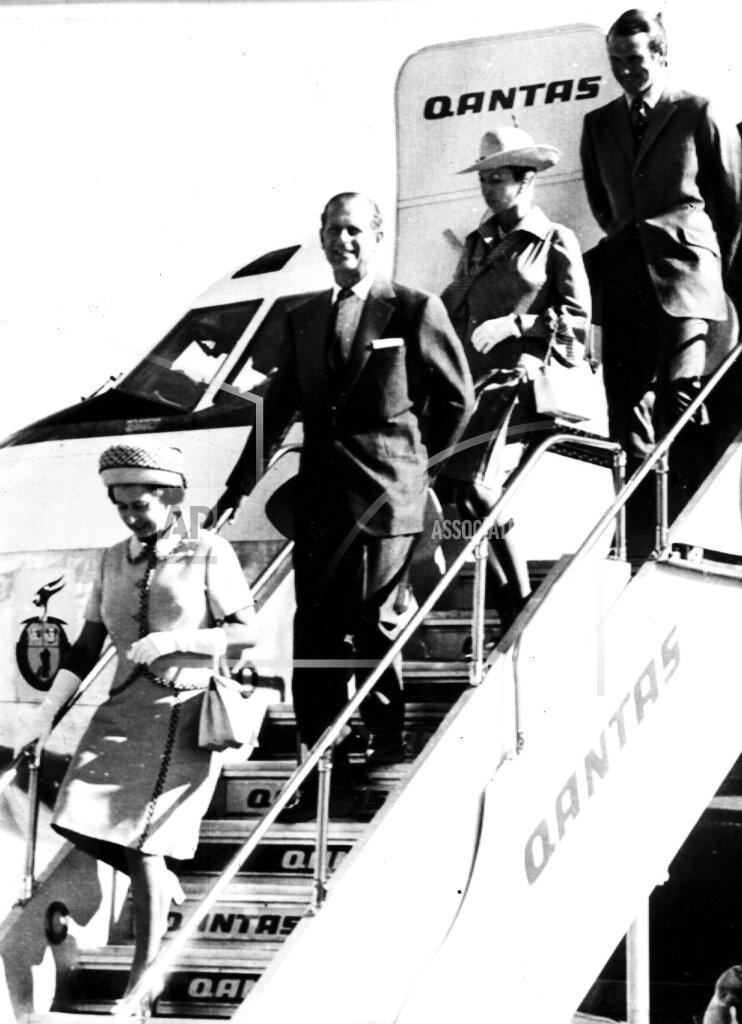
An Australian aborigine held two government officials at gunpoint in Canberra’s Aboriginal Affairs Building, demanding to see a suspended assistant secretary of the department, himself an aborigine. The action came while Queen Elizabeth II was opening a new session of the Australian Parliament in the city. It followed a warning by an aboriginal leader that thousands of demonstrators were heading for Canberra and the opening of Parliament; some of them armed militants.
Three rioters were killed by police in Gujarat state, India, and in another town eight members of a funeral procession were wounded after the mourners became violent. Anti-government protests were spreading from major population centers to outlying towns in the 48th day of demonstrations against high prices and food scarcities.
The Governor of Argentina’s Córdoba Province, Ricardo Obregón Cano, was taken prisoner at his residence in the Córdoba after a rebellion by the provincial police by officers. An estimated 800 mutinous police, angry at Obregon for firing police chief Antonio Navarro, invaded the Government House and took him hostage, along with the Vice-Governor, Atilio Lopez and the new police chief. The next day, the Provincial Superior Court cleared the way for Mario Agodino, a supporter of President Juan Perón, to replace the left-leaning Governor Obregón, based on a section of the Córdoba constitution that provided that a successor could be appointed when the governor was “unable to perform his duties”, including being held hostage. Obregón Cano and Vice Governor Lopez were freed two days later, but not allowed to return to office.
The sinking of a Mexican Navy tugboat drowned 43 of the crew of 46. The vessel sank 60 miles (97 km) off the coast of Veracruz after having engine trouble during bad weather. Forty-three Mexican sailors were feared drowned when a 1,600-ton tugboat sank about 60 miles from Veracruz. Planes and rescue craft picked up only three survivors and located four bodies in what Marine Ministry officials said was one of the Mexican navy’s worst disasters. The tug went down in rough seas after radioing it was having engine trouble.
A coalition of black organizations formally launched a campaign to win about two dozen additional congressional votes needed to reinstate the U.S. embargo against Rhodesian chrome imports. Black congressmen, who are leading the fight, suggested that their white colleagues facing close reelection campaigns in November because of Watergate might be prime targets of lobbying effort.
President Nixon has instructed his new right-to-privacy committee to concentrate its study on the federal government’s “big brother” problem rather than on industry practices, officials said. According to those present at the Cabinet-level group’s first meeting, Mr. Nixon told the 11-member committee headed by Vice President Ford that it should catalog the types of information the government gathers and ask whether the information was needed. “If you can’t justify it, stop it,” the President was quoted as saying.
Army Lieutenant William Calley, who in 1971 was sentenced to 20 years in jail for his part in the 1968 Mỹ Lai massacre, was released today on $1,000 bond. Former military trial judge Colonel Reid Kennedy recommended that Calley be released, and District Judge Robert Elliott granted it. In ordering his release, the civilian judge ruled that Lieutenant Calley presented “no danger to himself or to others,” and that there was “no likelihood” that he would attempt to flee. Since his conviction 35 months ago, Lieutenant Calley has been under house arrest in his apartment at Fort Benning, Georgia.
Congress completed action on an emergency energy bill as the House passed the controversial measure by a vote of 258 to 151 — 15 votes short of the two-thirds margin that would be required to override a presidential veto. President Nixon has said he would veto the measure because it orders a rollback of prices for some domestic crude oil, an action Mr. Nixon said would lead to further shortages by discouraging domestic oil production.
Federal Energy Office deputy director John Sawhill admitted that the government’s fuel allocation system contains flaws. The FEO is trying to take action to increase crude oil imports.
The White House offered to compromise with Congress on a new minimum wage bill, raising the possibility that a bill might be enacted within the next several weeks. In a letter to congressional leaders, President Nixon called for a “responsible” bill that would allow lower minimums for youths, gradual increases and limitations on the coverage of domestic workers and government employes. Though Mr. Nixon vetoed a bill without such provisions last year, his letter did not threaten another veto.
A jury to try John N. Mitchell and Maurice H. Stans on charges of conspiracy, obstruction of justice and perjury is expected to be selected by midday today and immediately sequestered, Judge Lee P. Gagliardi of Federal District Court announced yesterday. Meanwhile, the judge appealed to the prospective jurors to “refrain completely” from reading all newspapers and magazines and listening to or watching radio and television broadcasts for fear of picking up prejudicial publicity connected with the Mitchell‐Stans case. In the past, the judge urged venirement to avoid only those articles or programs touching on the case. The two farmer Cabinet members of the first Nixon Administration are accused of using their influence to block a federal investigation of Robert L. Vesco, the fugitive financier, in exchange for an illegal $200,000 contribution to President Nixon’s re‐election campaign.
John Ehrlichman has received — and rejected — an offer to plead guilty to a single charge in return for his cooperation with the Watergate prosecutor, one of his lawyers said. Mr. Ehrlichman, who has been indicted by California for burglary, conspiracy and perjury in connection with the break-in at the office of Daniel Ellsberg’s former psychiatrist, has not been indicted in the Watergate case.
The chief attorney for Associated Milk Producers, Inc., the nation’s largest dairy co-operative, said in a letter just released that AMPI had made a $100,000 illegal contribution to the Committee to Reelect the President and now wanted the money back. Attorney E. C. Heininger said also that AMPI had given $5,000 to People United for Good Government and “we understand that this money ultimately wound up in the hands of the Ellsberg burglars…” The letter, dated January 21, 1974, from Heininger to Kenneth Parkinson, attorney for the Committee to Reelect, was introduced into evidence at a deposition hearing in San Antonio, Tex., in an antitrust suit against AMPI.
The National Education Association broke off merger talks in Washington with the nation’s other major teacher’s union, the American Federation of Teachers, NEA President Helen Wise announced. AFT spokesmen were not available for comment. Mrs. Wise said, “We’ve ended the talks because AFT has no flexibility on the three major issues we consider paramount to a merger.” These were the question of AFL-CIO affiliation for the merged unit, guarantees of minority representation and a secret ballot for the vote to merge and to write new bylaws.
A major Mafia chieftain, named by an underworld informant as the man who ordered the assassination of mobster Joseph (“Crazy Joe”) Gallo, turned himself in to New York City police after eluding authorities for nearly two years. He was Joseph Yacovelli, 46, reputed to be acting head of the Joseph Colombo crime family. The flamboyant Gallo, whose exploits are the basis of a current movie, “Crazy Joe,” was shot to death on April 7, 1972. The killing climaxed a long-standing feud between the Gallo clan and the Colombo group.
The Nixon Administration asked the Supreme Court today to reject a desegregation plan for Detroit that would combine the largely black city schools with heavily white suburbs in a single metropolitan district. Solicitor General Robert H. Bork, appearing for the Department of Justice, said that creation of such a district to relieve segregation in the city alone would provide legal relief “so disproportionate as to be an improper extension of judicial power.” Mr. Bork told the Justices that “the fatal defect” in a metropolitan plan for Detroit was that it would define a unitary school system as one with a particular ratio of black and white pupils, rather than one that does not separate the races.
A Memphis newsman was abducted and robbed by three men but was released unharmed three hours later, police said. Carl Marsh, a veteran with the Memphis Press-Scimitar, was forced into his car in the parking lot of a suburban department store after dark. Police Chief Bill Price called it a “routine robbery.” He said the men took $5, all the cash Marsh had, then they “booted him out and drove off with his car.”
Poking through the snows of the vast, windy landscape just south of Hanna, Wyoming are a few dials, valves and pipes. These, along with an assemblage of trailers and compressors, are the modest signs of a renewed Government effort to make underground gasification of coal an economic process. If successful, this effort by the Bureau of Mines could open up vast deposits of coal in seams too deep to mine economically today. It could also reduce the long‐term demands for underground mining and the sort of surface mining that strips the earth north of here while creating prosperity in the town itself. Underground gasification could also moderate the need for huge gasification plants on the surface, using mined coal. Such plants to produce gas for energy are already projected for six Western sites. The effort on underground gasification of coal parallels Bureau of Mines studies of how to process oil shale into synthetic crude oil in the ground with minimum disturbance to the surface.
The U.S. performs a nuclear test at the Nevada Test Site.
The Soviet Union launched into orbit today the 633rd unmanned earth satellite in a secret series, the Soviets press agency Tass reported. It said that the satellite had been shot into an elliptical orbit 174 miles by 321 miles and that the first revolution had lasted 92.2 minutes.
“People” magazine begins sales.
Dow Jones Industrial Average: 863.42 (+3.91, +0.45%).
Born:
Chris Dishman, NFL guard and center (Arizona Cardinals, St. Louis Rams), in Cozad, Nebraska.
Kwame Ellis, NFL defensive back (New York Jets), in Berkeley, California.
Ronnie Anderson, NFL wide receiver (Arizona Cardinals), in Cleveland, Ohio.
Cliff Politte, MLB pitcher (St. Louis Cardinals, Philadelphia Phillies, Toronto Blue Jays, Chicago White Sox), in Kirkwood, Missouri.
Marc Lamothe, Canadian NHL goalie (Chicago Blackhawks, Detroit Tigers), in New Liskeard, Ontario, Canada.
Hiroyasu Shimizu, Japanese speed skater, 1998 Olympic gold medalist and winner of five world championships in the 500-meter race; in Obihiro, Hokkaido, Japan.
Julie Andrieu, French food critic and host of multiple cooking shows on television; in Neuilly-sur-Seine, Paris, France.
 History Diaries