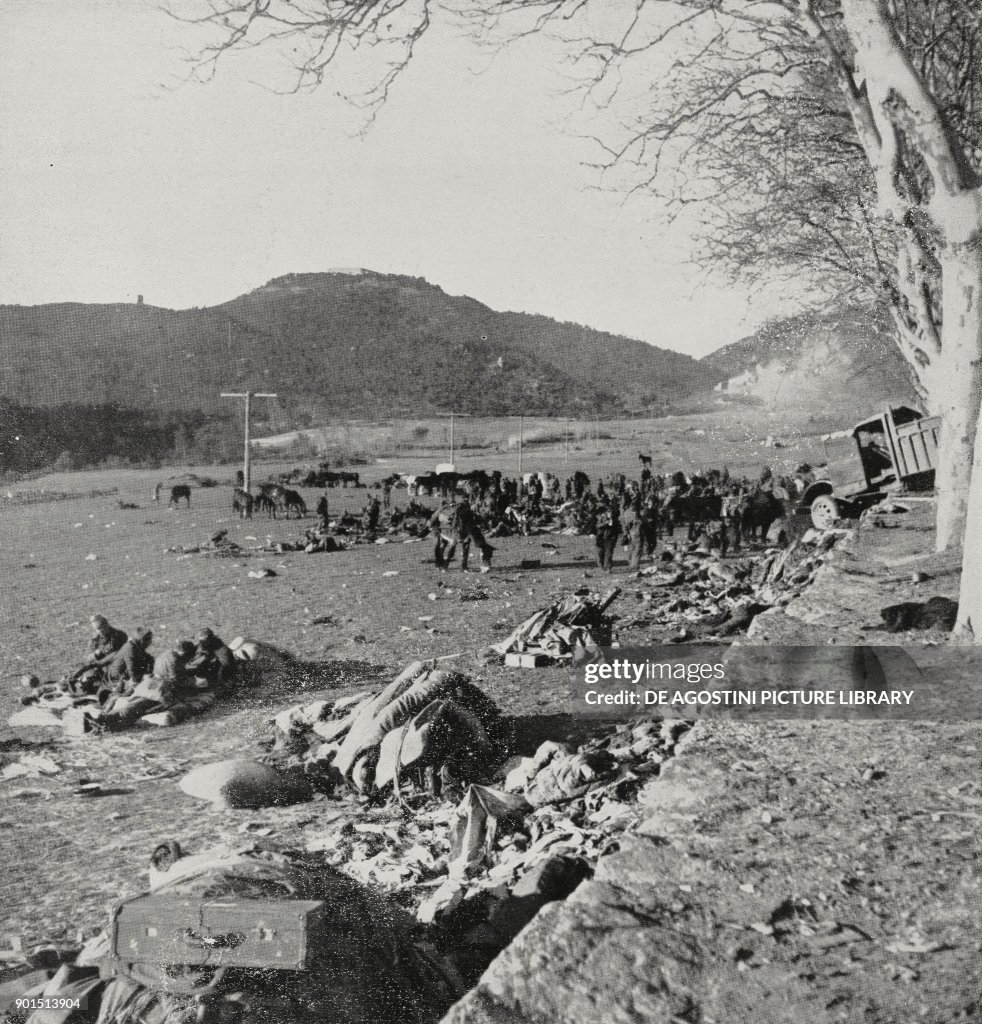
President Manuel Azaña of the Spanish Republic left the Spanish Embassy on Avenue George V this evening at 10 o’clock for his brother-in-law’s home near Geneva. By this act he abandoned all pretension to act as Chief Executive of the Spanish Republic. Senor Azaña drove to the Gare de Lyon, where he took a train for Geneva. A representative of the French Foreign Ministry was at the station. Senor Azaña was accompanied by the Loyalist Ambassador, Dr. Marcelino Pascua y Martinez, and twenty members of the embassy staff, according to The Associated Press. Their departure apparently left the embassy vacant for General Franco’s representative, José Maria Quiñones de Leon, who was Ambassador to France during King Alfonso’s reign.
It is understood Señor Azaña left at the embassy and communicated to the Madrid government the terms of his resignation. These will not be made public until tomorrow afternoon, when the French Cabinet is expected to have recognized Generalissimo Francisco Franco’s Burgos regime as the legal government of Spain. For those who like symbolism, it may be mentioned that as Señor Azaña left the embassy an exceptionally large falling star dropped westward across the sky. Whether the end of the Spanish Republic comes with the resignation of its President or will come only with recognition of the Franco regime by France will be hotly debated. Up to the last minute there had been arguments in Paris as to which event should come first. By leaving the embassy tonight, Señor Azaña is thought in some measure to have made a compromise and facilitated the French Government’s action tomorrow.
It is deemed unlikely that hostilities will be continued in Spain. From Count Francisco Gomez Jordana, the Burgos Foreign Minister, Senator Léon Bérard, the French envoy who returned to Paris this morning, obtained in writing confirmation of General Franco’s oft-repeated statement that he wants an independent Spain. M. Bérard also obtained an agreement that refugees would be allowed to return to Spain and would not be penalized for political offenses. On behalf of France, he agreed to restore all Spanish art treasures and the gold of the Bank of Spain held in France. Late tonight, the results of his negotiations will be laid before Foreign Minister Georges Bonnet, who has been absent from Paris for twenty-four hours. Tomorrow the French Cabinet will, as Premier Édouard Daladier said it would, be asked to agree to recognition of the Burgos government.
Announcements tomorrow by Prime Minister Neville Chamberlain and Premier Édouard Daladier in their respective Parliaments are expected to hasten the surrender of the Loyalist government of Spain. Apparently, there is no way for the Western democracies to avoid withdrawing recognition from the Loyalists. Tonight, attachés at the Spanish Embassy in Belgrave Square were packing up their belongings preparatory to surrendering the embassy to the Duke of Alba, Generalissimo Francisco Franco’s agent here. In his statement in the House of Commons, Mr. Chamberlain is expected to read a pledge by the Spanish Insurgents which is the nearest Great Britain could get to a promise of amnesty for Spain’s Loyalists. In it General Franco reaffirms that only criminals and those who have given “political support” to the Loyalist cause during the civil war will be punished.
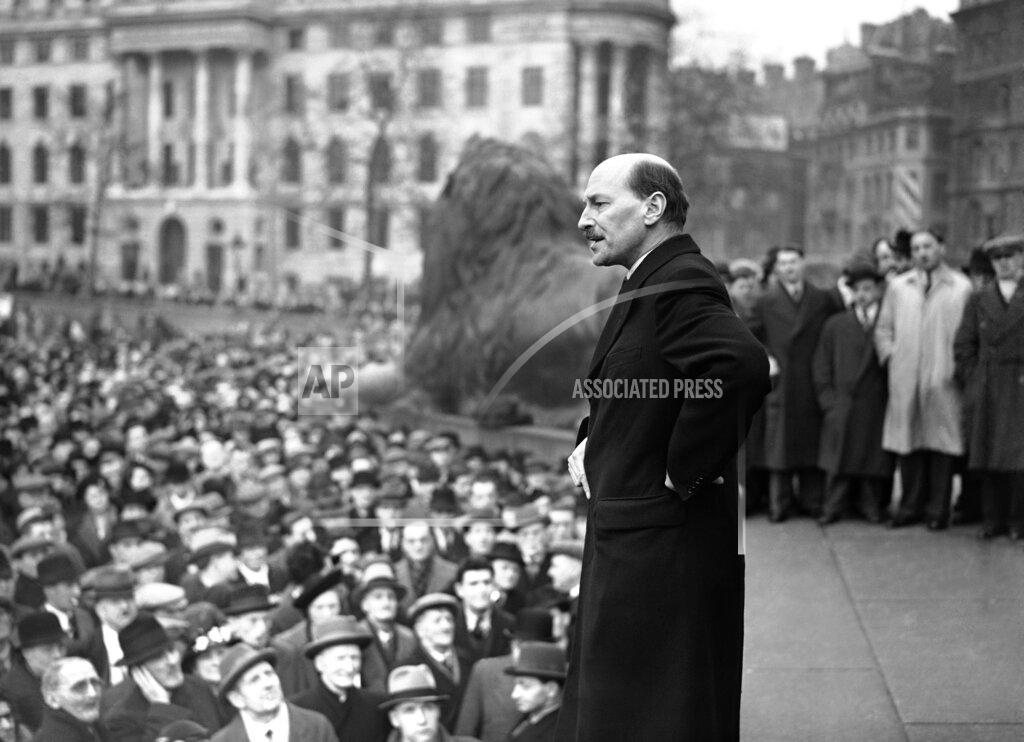
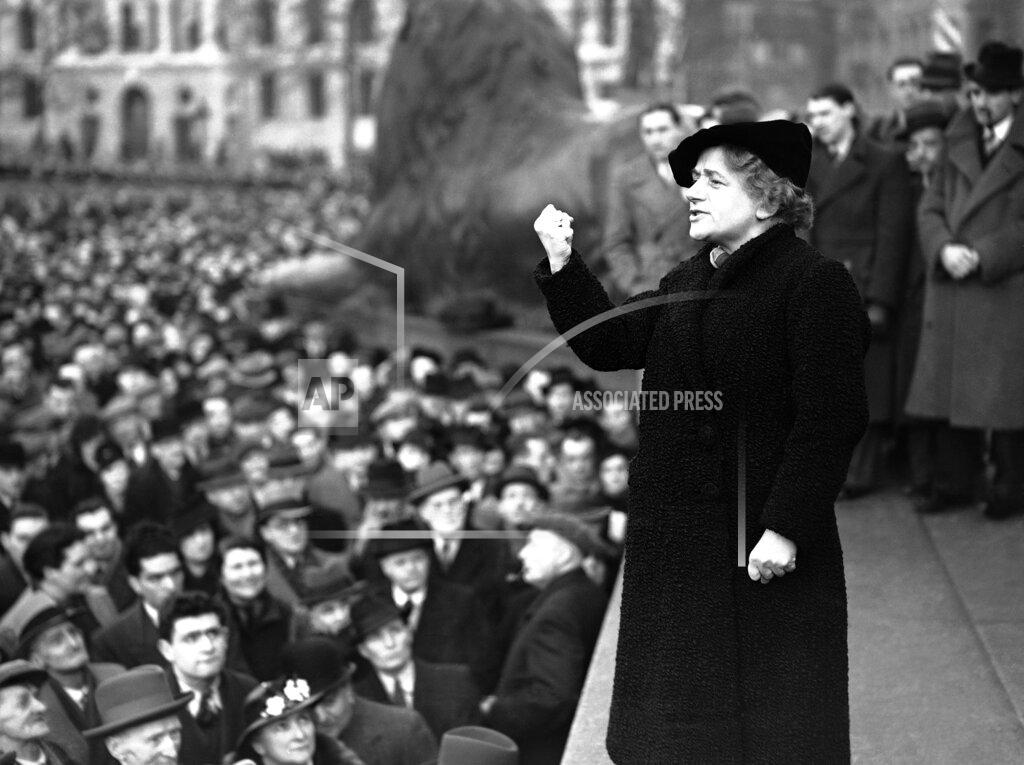
About 1,000 demonstrators marched from Trafalgar Square to Downing Street protesting the British government’s impending recognition of Francoist Spain.
Anti-German riots continue in Poland. Agitated crowds marched through the main streets trying to reach the German Embassy and frequent clashes with police occurred. Several hundred youths, after meeting in the Engineering College, proceeded toward the German Embassy and police had to intervene. Strong police forces have been dispatched to all colleges in the neighborhood of Warsaw to control the demonstrators. There were many arrests.
Meanwhile an appeal to send Polish troops to Danzig for the protection of the Polish minority and as a guarantee of Poland’s treaty rights in the Free City was dispatched today to Marshal Edward Smigly-Rydz by the Association of Polish Students of Danzig following last night’s outbreaks in the suburbs of Langfuhr. The Polish students’ home, which the Nazis raided last night, is still guarded by the police there and the Polish students are not allowed to leave it. Despite the assurance of the Nazi vice president of the Senate, several Poles again were attacked in the streets today. One Polish leader — a Free City citizen whose name cannot, for obvious reasons, be given — explained that recent attacks on Polish students constituted a deliberate move on the part of the Nazis to get rid of Poles in the Technical College. The aim of the Nazis, he said, was to “de-Polonize the Free City and make Danzig a 100 percent German and Nazi town.”
Polish workmen are being thrown out of work, he said, and no unemployment relief is granted unless they join the Nazi labor union. The government employment exchange, he added, controls all jobs and young Poles are told they must become members of the Hitler Youth if they want to earn an independent living. Polish merchants cannot renew their trading licenses for 1939 and are being compelled to close their businesses. He asserted that Polish trade is being boycotted by the Nazis very systematically.
Lately a new device has been invented against the Poles, he revealed. For using the Polish language, sending children to a Polish school or displaying Polish flags, people are being evicted from their homes when these belong to Germans. Even high Polish officials have received notice in this manner. He said that the anti-Polish campaign is led by the Nazi leader, Albert Forster. After first ousting the Jews, the Nazis now want to rid the city of Poles, even against contrary advice from Berlin.
The proposal of Rumania to force the emigration of 50,000 Jews annually during the next five years should be opposed everywhere, Leo Wolfson, honorary president of the United Rumanian Jews of America, declared in an address yesterday at the twenty-ninth annual convention of the organization at the Hotel Astor. Mr. Wolfson pointed out that no government had the right to sentence part of its population to emigrate from within its boundaries against its wishes and force it into other countries. “If there is a surplus of population in Rumania, a thesis I do not for an instant admit, that surplus must not and should not be charged to the Jews,” he said. “The birth rate among the Jews is the lowest. There are other groups in Rumania. Why are not any of these groups or parts of them superfluous in the eyes of the Rumanian authorities? Why must 250,000 Jews emigrate and be forced to leave and why not a part of the other groups?”
“I want to enter my solemn protest against the iniquity of forced emigration, and particularly against the activity of the Government of Rumania in seeking to force the emigration of 250,000 Jews from within its borders.” He said the Rumanian Government had appealed to Jews in other countries to help in the forced emigration scheme. “We urge the Jews throughout the world to refuse to cooperate,” he added. He declared that harsh as it might seem, the Jews should make it clear to the Rumanian Government that they would not accept its point of view and that they would refuse to have anything to do with the scheme.
Two small bombs exploded last night in the inner city of Prague without causing much damage, indicating that certain political circles here are seeking to cause difficulties for the government. One of the bombs exploded before a Jewish-owned department store, smashing its show windows. The other bomb went off before the former headquarters of the Communist Cooperative Organization. The police are investigating. The headquarters of Ernst Kundt, the German minority leader in Czecho-Slovakia, more and more is becoming the administrative center for dealing with the affairs of the German police. Instructions issued by Herr Kundt yesterday indicate on what occasions the swastika flag may be hoisted. An official Nazi party celebration is expected to take place on April 20 in Prague and elsewhere. The banner of the Czecho-Slovak republic must be raised then, simultaneously with the swastika flag.
Italy bans three Swiss reporters. Political motives are suspected.
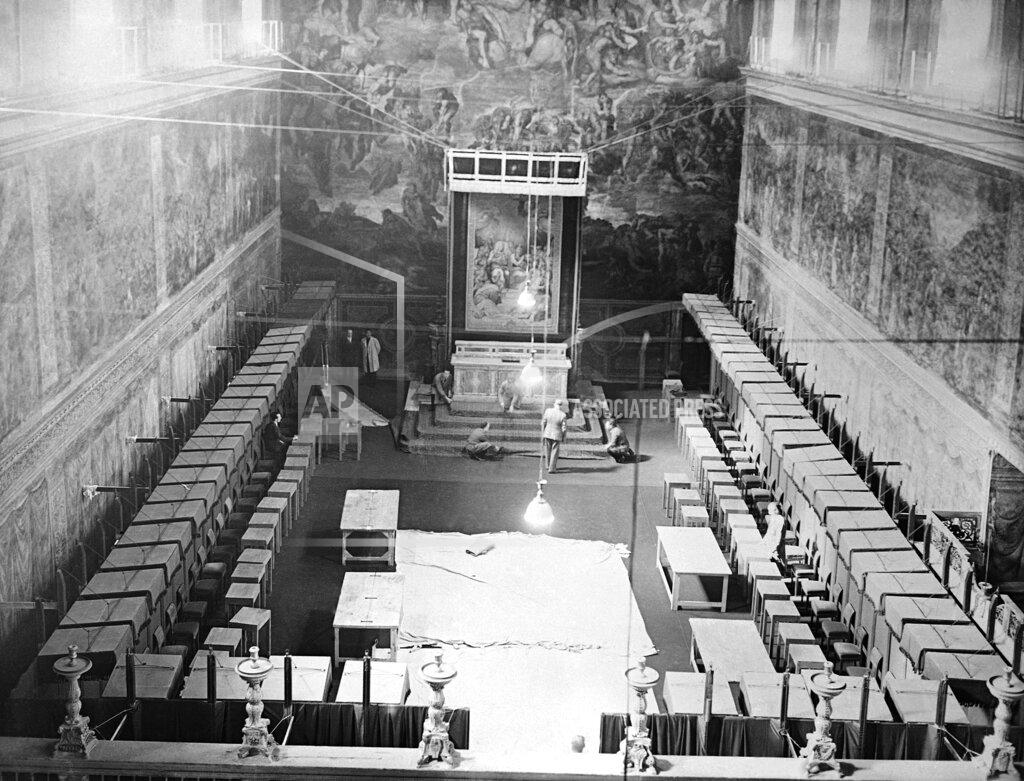
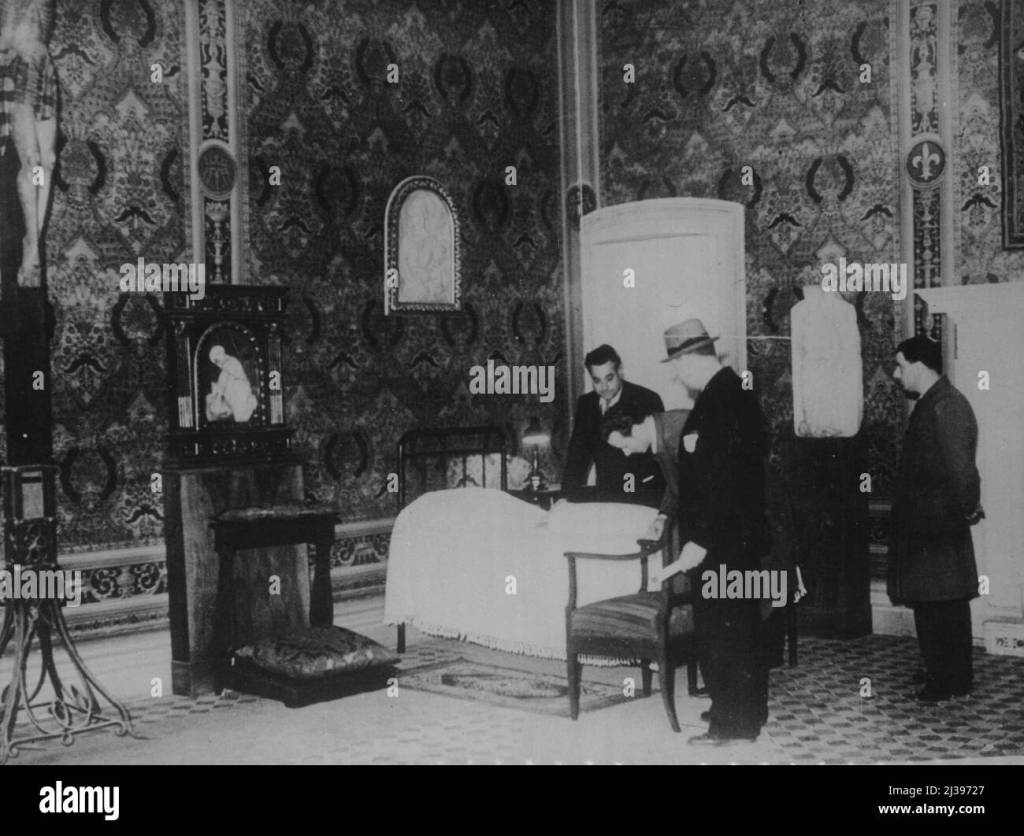
A fast decision in the papal selection is expected as Cardinals are busy with consultations. In exactly three days, sixty-two Cardinals will enter the conclave to select one of their number to succeed Pius XI to the throne of St. Peter. Never before, probably, has the supreme function invested in the Sacred College been followed by Catholics and non-Catholics alike with such breathless interest as today for seldom, if ever, have the political implications of the Cardinals’ decision been as obvious and immediate. Nevertheless, it may be foreseen that the Cardinals will reach a decision in a very short time because great though the difficulties of their choice undoubtedly are, in no previous conclave has the preparatory work been as thorough or preliminary contacts and discussions as long and intense.
The British government submits a proposal calling for an independent Palestine state allied to Britain. The British Government has informed the Jewish and the Arab delegates to the Palestine Conference that it intends to end its mandate over Palestine and establish an independent State with treaty relations with Britain. The British apparently contemplate an immediate enlargement of the present governing bodies in Palestine to include both Jews and Arabs as an indication of their intention to create an independent State. However, they have suggested the calling of a round-table conference in the Fall to consider the question at length.
Such a conference would include lawyers as well as politicians and representatives of all shades of British opinion. It would be modeled on the conferences that produced the Egyptian and Indian Constitutions. A general summary of the British “suggestions” has been submitted informally to both sides in the Palestine Conference and will be handed to them formally at discussions tomorrow. That part of the British memorandum that was seen today made no reference to the creation of an Arab State; it stressed that any independent state should be “Palestinian.” But sources say that envisions representation by population, and the Arabs outnumber the Jews by a little more than two-to-one.
National defense will be the only controversial legislation before Congress this week. Some sharp debate is expected as the bills for expansion of the army and the Air Corps and for additions and improvements in the navy’s air and submarine base facilities follow their course through the Senate, but little change in the measures as they passed the House is anticipated. One of the most interesting events on the week’s calendar will be the joint session on Saturday, which will commemorate the 150th anniversary of the first session of Congress. In the field of national defense, the two principal points at issue are the size of the army air force and whether the navy shall receive funds for improvement of harbor facilities at Guam. The House passed the Army Air Force Bill with a provision limiting the army to a total of 5,500 effective planes. It passed the Naval Base Bill with the item of $5,000,000 for the harbor at Guam deleted.
The Senate will begin debate tomorrow on the army and air corps expansion bill, which was favorably reported by its Military Affairs Committee last week. The committee, however, recommended that the top strength of the air corps be fixed at 6,000, as it was in the May bill before it was altered by the House. Advocates of economy are expected to be the chief opponents of the higher airplane limit in the Senate. The apparently strong sentiment in the Senate for the creation of a military establishment adequate for all phases of national defense, however, is expected to result in passage of the bill as recommended by the committee. This would necessitate sending the bill to conference to reconcile the difference between Senate and the House limit on the number of war planes. A livelier controversy is in prospect, however, over the Guam question. Some Administration leaders, such as Senator Lewis of Illinois, have predicted that the Senate will restore the appropriation for Guam to the Naval Base Bill.
The possibility of new peace negotiations with the Congress of Industrial Organizations will bring no relaxation in the American Federation of Labor’s campaign for revision of the National Labor Relations Act, it was learned last night. Even if President Roosevelt’s plea for unity in the ranks of labor leads to a complete healing of the breach between the two groups, the AFL will continue to press for adoption of amendments intended to guarantee “fair and equitable administration” of the labor law, members of its high command declared. While charges that the National Labor Relations Board was prejudiced in favor of the CIO were a major element in the federation’s original decision to seek a more rigid definition of the board’s power, the AFL leaders feel that the changes they have proposed are desirable in any case as stabilizing factors in employer-employee relations.
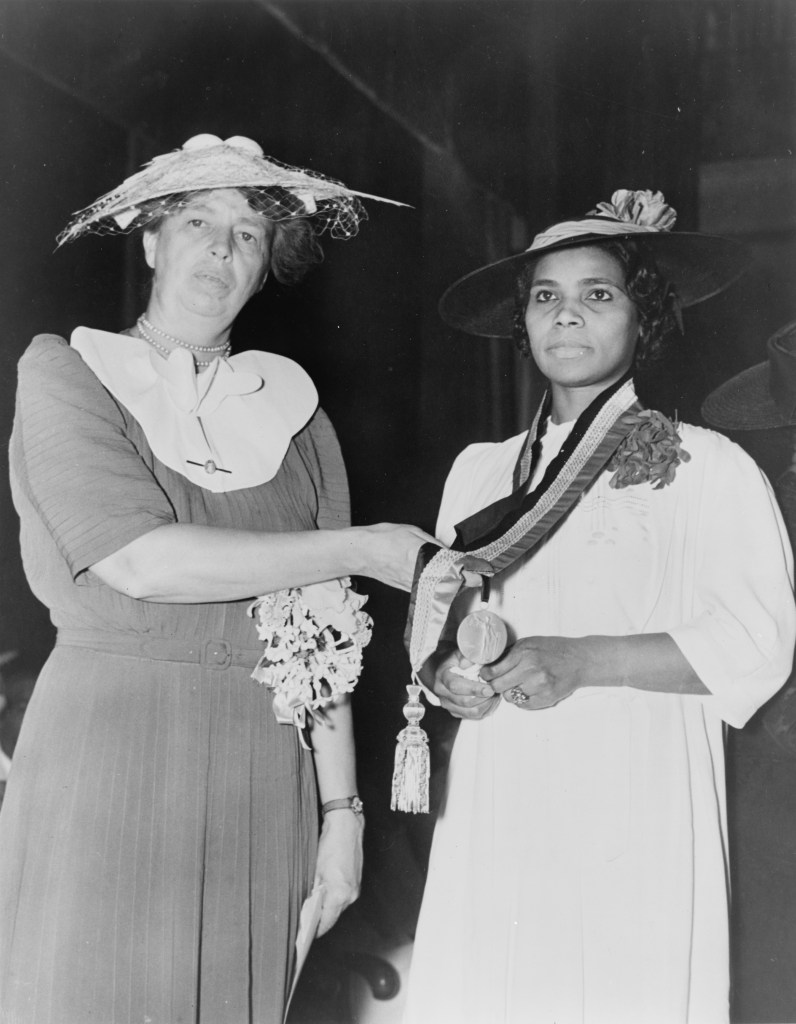
Eleanor Roosevelt, the First Lady of the United States, resigned from the Daughters of the American Revolution to protest their refusal to allow African American contralto Marian Anderson to perform at DAR Constitution Hall in Washington, D.C. Mrs. Roosevelt submitted her letter of resignation to the DAR president, declaring that the organization had “set an example which seems to me unfortunate” and that the DAR had “an opportunity to lead in an enlightened way” but had “failed to do so.” That same day, she sent a telegram to an officer of the Marian Anderson Citizens Committee publicly expressing for the first time her disappointment that Anderson was being denied a concert venue.
On February 27, Mrs. Roosevelt addressed the issue in her My Day column, published in newspapers across the country. Without mentioning the DAR or Anderson by name, Mrs. Roosevelt couched her decision in terms everyone could understand: whether one should resign from an organization you disagree with or remain and try to change it from within. Mrs. Roosevelt told her readers that in this situation, “To remain as a member implies approval of that action, therefore I am resigning.”
As word of her resignation spread, Mrs. Roosevelt and others quietly worked behind the scenes promoting the idea for an outdoor concert at the Lincoln Memorial, a symbolic site on the National Mall overseen by the Department of the Interior. On April 9th, seventy-five thousand people, including dignitaries and average citizens, attended the outdoor concert. It was as diverse a crowd as anyone had seen — Black, white, old, and young — dressed in their Sunday finest. Hundreds of thousands more heard the concert over the radio. After being introduced by Secretary Ickes who declared that “Genius knows no color line,” Ms. Anderson opened her concert with “America.” The operatic first half of the program concluded with “Ave Maria.” After a short intermission, she then sang a selection of spirituals familiar to the African-American members of her audience. And with tears in her eyes, Marian Anderson closed the concert with an encore, “Nobody Knows the Trouble I’ve Seen.”
The DAR’s refusal to grant Marian Anderson the use of Constitution Hall, Eleanor Roosevelt’s resignation from the DAR in protest, and the resulting concert at the Lincoln Memorial combined into a watershed moment in civil rights history, bringing national attention to the country’s color barrier as no other event had previously done.
A double-barreled television “eye” makes cameras more sensitive.
Twenty-five percent of homes in urban southern states are without gas or electric heat.
Philco Radio and Television Corporation will offer televisions to the public in May.
The Pennsylvania College for Women has students formulate vanishing creams as a science project.
Speculation increases about Charlie Chaplin’s “The Great Dictator.”
A four-month expedition leads to the discovery of Asia Minor forts from 714 B.C.E. The meeting place of the royal court of the Vannic Kingdom and fine pottery are dug up.
Twenty gunmen interrupt the Chinese New Year celebration in Nanking and assassinate the foreign minister of the Reformed Nanking Government.
The Chinese government will use donkeys, horses, and mules to haul supplies and save fuel.
The Japanese launched their long-deferred campaign today against Lushan, on whose peak fifty-five foreigners, including twelve Americans, remained despite repeated warnings by the invaders to leave. An artillery bombardment was laid down and infantry attacks were directed against Chinese positions on the mountain side, below Kuling, resort town where the foreigners were. Chinese reported that two Japanese attacks were turned back, at picturesque Blue Cloud Convent and at Changkaishan, southwest of Kuling. Meanwhile thirty-nine other foreigners, who were among a group of forty-eight that took advantage of safe conduct through the opposing lines, were en route to Shanghai aboard a Japanese transport. They are due to arrive tomorrow.
Elsewhere on the Central China front Japanese guns boomed again after a long silence. At Kingshan, 100 miles northwest of Hankow, a Japanese column reported that Chinese were dislodged from entrenchments in the hills twelve miles southeast of the town. Another column thrusting to the west announced the occupation of Tienmen after a twelve-mile advance, again threatening Ichang and Shashi, 190 miles west and 120 miles southwest of Hankow.
Renewing their drive eastward on the Tatung-Puchow Railway in South Shansi Province, Japanese reported the capture of Fowshan, twenty miles east of Linfen. Chinese acknowledged the loss of Fowshan, but said that they beat off another Japanese column attempting to advance east of Hungtung. The Chinese also admitted that the invaders had occupied Siaohsien, seventeen miles southwest of Suchow in Kiangsu Province. Heavy casualties were said to have been inflicted on guerrilla forces that held the town temporarily after ejecting the Japanese garrison.
In Central Hopeh Province Chinese said that their troops killed 200 Japanese and recaptured Shentseh, fifty miles south of Paoting. Along the Yellow River the Chinese reported recapture of Wuchih, in Northern Honan, on the north bank of the stream, and destruction of a Japanese-built pontoon bridge. Sporadic fighting was in progress south of Yochow in Hunan Province, while elsewhere in South China Chinese said that they had balked all recent Japanese attempts to advance.
The Japanese renew their claim on Shanghai and expect armed rule.
Prince Fumitaka Konoe flunks out of Princeton University and returns to Japan to assume the duties of dean at a Japanese college.
Born:
Josephine Tewson, British actress (“Keeping Up Appearances”; “Last of the Summer Wine”), in Hampstead, England, United Kingdom (d. 2022)
Chuck Wepner, boxer, in New York, New York.
George Flint, AFL guard (AFL Champions-Buffalo, 1964, 1965; Buffalo Bills), in Erie, Pennsylvania.
Died:
Levon Mirzoyan, 51, Azerbaijani Armenian communist official (executed in the Great Purge).
 History Diaries