The Soviet Union warned the United States today against extending the guerrilla war in South Vietnam to North Vietnam. A statement issued by TASS demands the withdrawal of U.S. military aid and a halt to “interference” in South Vietnam’s affairs; it also states that the Soviet Union will not stand by if the United States extends the war to North Vietnam. It said the Soviet people would render “the necessary assistance and support” to the “national liberation struggle” in South Vietnam. Western observers believed the statement was the Soviet Government’s answer to recent hints by Administration officials at greater United States involvement in South Vietnam and at the possibility of South Vietnamese raids into North Vietnamese territory.
The statement charged that the “bloody war” waged by the United States was being stepped up and constituted the “biggest of all military operations now conducted in the world.” The situation was becoming “ever more acute” and had created a “serious threat to peace throughout the whole of Southeast Asia,” the statement said. It blamed the United States for participating directly in the two recent military coups d’état in Saigon. These coups, it said, had the purpose of paving the way for an intensification of the “aggressive war” conducted by the United States. “The Soviet people cannot remain indifferent in the face of these developments,” tonight’s statement said.
Premier Chou En‐lai of Communist China, nearing the end of a week’s visit to Pakistan, called for the removal of “United States forces of aggression and United States military personnel who are carrying out intervention in South Vietnam.”
Viet Cong forces blow up a train on the Saigon-Danang run, killing 11.
ARVN troops attack Viet Cong positions near the border of Cambodia and South Vietnam. Government forces attacked Communist guerrilla positions in the Seven Mountains area near the Cambodian frontier today. Heavy action was reported in the first contacts.
Official estimates today put the number of known cases in South Vietnam’s cholera epidemic at 6,000, of which about 500 were fatal. The outbreak, which began in mid‐January, appeared to be nearly over.
Archbishop Makarios, President of Cyprus, announced tonight a sharp increase in the number of “legal” police forces needed to cope with “the abnormal situation” on the island. The President said approval had been given for a temporary increase of up to 5,000 men in the special police. Before the crisis erupted December 22, Greek Cypriote security forces — the police and gendarmerie — numbered 1,500 to 2,000 men, as permitted in the Constitution.
With an addition of 5,000 special policemen, the security forces would total 7,000 men at most, or roughly the equivalent of the British truce force now maintaining the shaky ceasefire on Cyprus. The archbishop also declared that “the instruments of the state responsible for maintenance of law and order have received instructions to disarm all citizens unlawfully carrying arms.”
At the United Nations the Secretary General, U Thant, told the Security Council that an impasse had developed on the question of setting up a peace‐keeping force for Cyprus. It was reported that the six elected member nations of the Council would step up efforts to reach agreement on the issue.
A group of 50 to 60 people calling itself the University Students of New York for Cyprus’s Freedom demonstrated outside the United Nations yesterday to support the territorial integrity and independence of Cyprus. The demonstrators also urged a United Nations peacekeeping force and carried placards criticizing Turkey.
The Soviet Union and Communist China were reported today to be engaged in consultations in Peking on how best to negotiate border questions between the two countries. According to diplomatic sources, the consultations are being conducted at the embassy level and are aimed at determining whether the Russians and Chinese can find common ground for a discussion of the border issues. The ideological dispute between them has grown worse recently and there is substantial doubt here whether they will be able to agree on a formula for negotiations.
Moreover, the Chinese Communists are understood to demand that the frontier negotiations be regarded as a comprehensive review of frontier disputes. Such an approach may be interpreted as allowing a reexamination of what the Chinese call “unequal” treaties under which czarist Russia obtained large areas of Chinese territory. Soviet officials are said to insist on a more narrow formula under which the negotiations would be limited to minor boundary “adjustments.”
The Chinese Communist party has given its political officials a greater measure of control over the Chinese economy. In a vast program of “Socialist education” undertaken throughout the country, Peking is reasserting the doctrine that “ideology is the most important element in production.” However, Western analysts here believe that the Chinese Communists are imposing the doctrine with caution. It was this approach that led in 1958 to the economic debacle of the “great leap forward.”
To recover from the “leap,” which was an attempt to collective and industrialize at breakneck speed, Peking sanctioned a partial return to such capitalistic forms as small private plots for farmers and free markets in the countryside. After 1959, the political commissars were told to pay more heed to the economic experts. According to reports reaching Hong Kong, the Chinese Communists have been gradually clamping new restrictions on the tilling of private plots and on all forms of free trade.
Austrian chancellor Alfons Gorbach resigns.
The Liberal party government of Canada’s Prime Minister Lester B. Pearson survived a no-confidence motion by only eight votes. After Canadian House of Commons opposition leader and former premier John Diefenbaker sent the measure to a vote, five other members of the opposition (three Social Credit Party and two New Democrat Party) voted against the resolution to force the resignation of Pearson and his cabinet. The final vote was 120 for and 128 against.
King Idris I of Libya announced that the north African nation would not renew the American lease of Libyan territory for Wheelus Air Base after the 1970 expiration of the agreement. The decision came four days after President Gamal Abdel Nasser of neighboring Egypt criticized the King for permitting a foreign base to operate in an Arab nation.
At the Leningrad State University (now the Saint Petersburg State University), cardiac surgeon Vasily Kolesov performed the first sutured internal thoracic artery coronary bypass on a human patient, grafting the left ITA to the left anterior descending artery. Dr. Kolesov followed up on the May 2, 1960 pioneering surgery of Dr. Robert Goetz.
Eastern Air Lines Flight 304, a Douglas DC-8 jet, crashed into Lake Pontchartrain 20 miles (32 km) northeast of New Orleans, nine minutes after taking off from New Orleans International Airport, killing all 58 people on board. Among the dead was the American opera singer and actor Kenneth Lee Spencer. Twenty people had gotten off when the airliner landed in New Orleans for one of its stops en route from New York to Mexico City, and 14 passengers boarded. The jet plunged into Lake Pontchartrain and broke apart after running into heavy turbulence. The wreckage would not be located until March 17, in a 12-foot-deep (3.7 m) crater that the impact had gouged into the bottom of the lake.
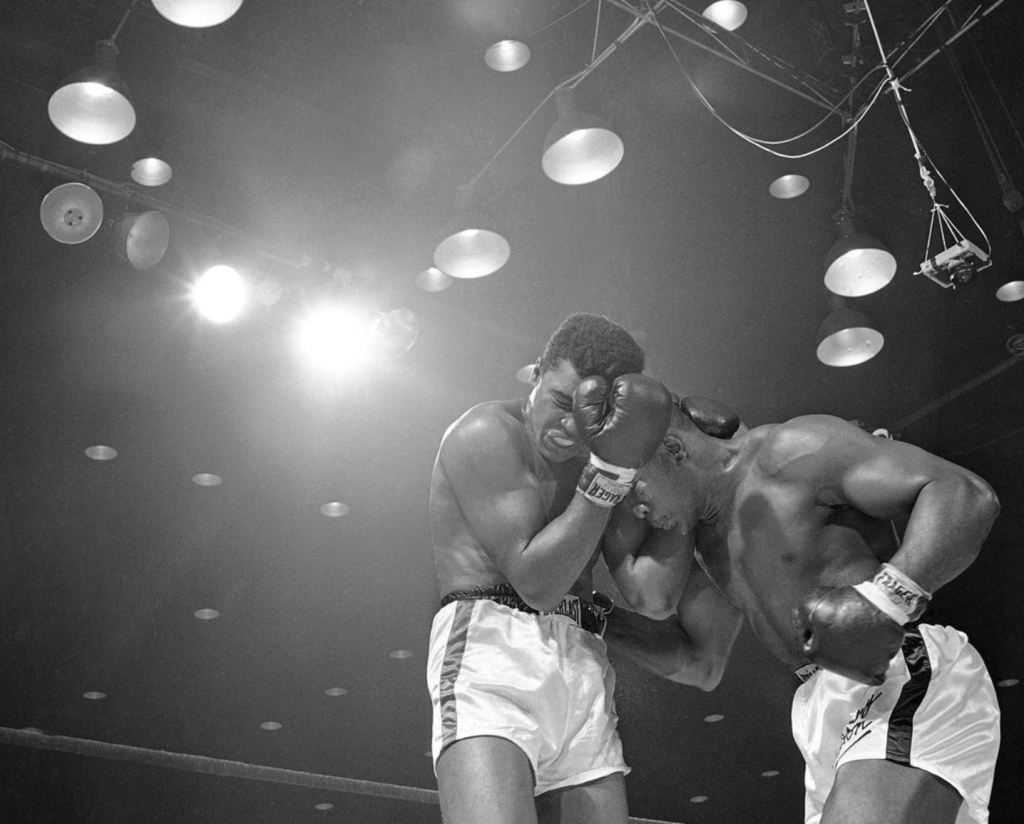
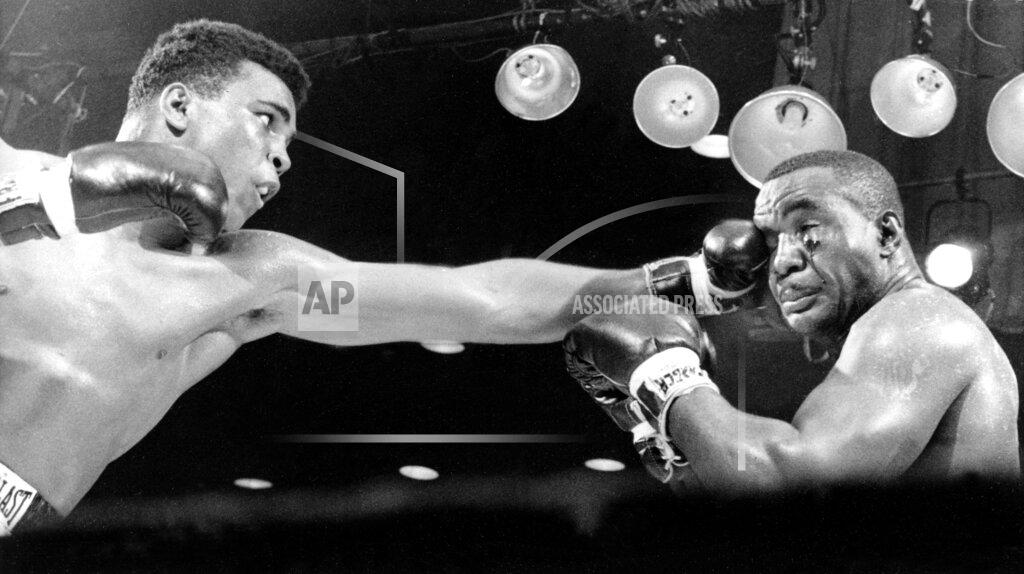
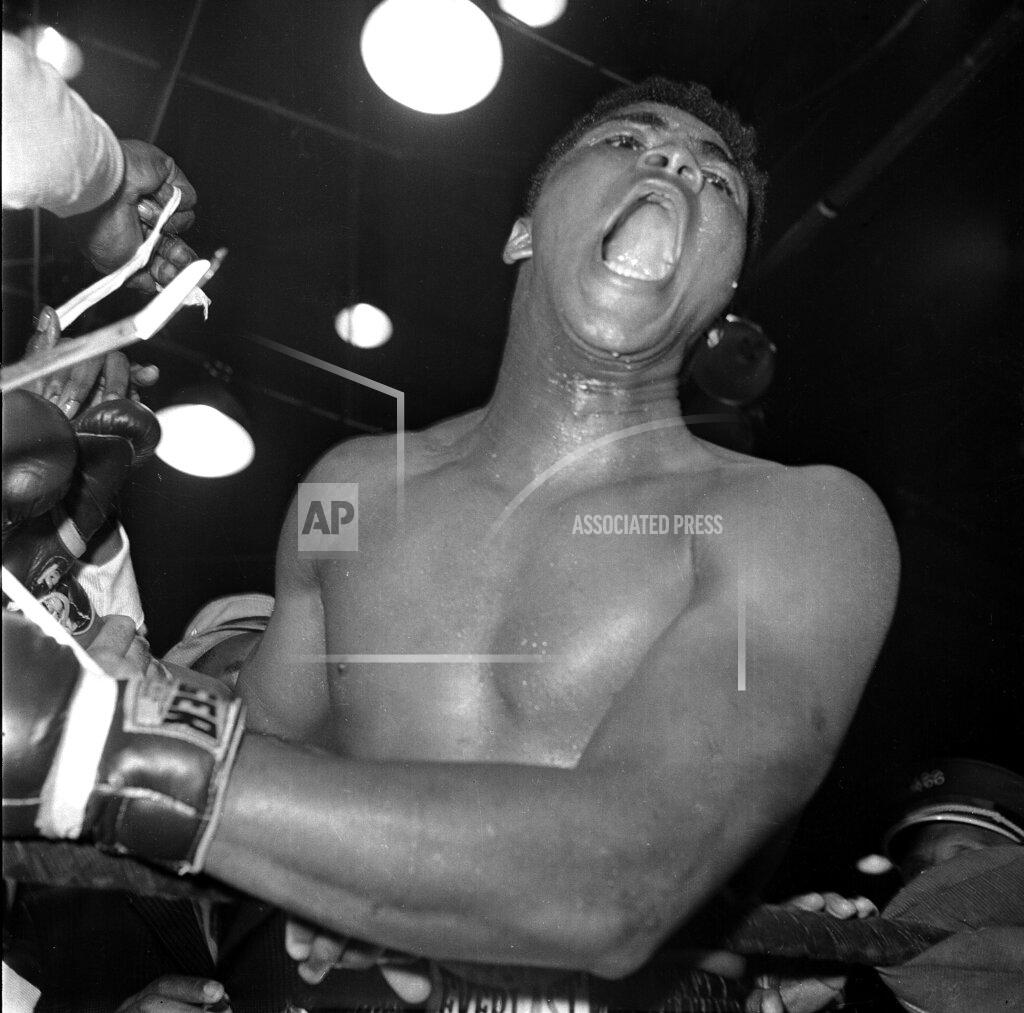
Muhammad Ali, still known at the time as Cassius Clay, defeated Sonny Liston in Miami Beach, Florida, to become the heavyweight boxing champion of the world. Reigning champion Liston fought Clay for six rounds, but was unable to raise his left arm after injuring his shoulder a few days earlier in practice. The fight ended when Liston declined to enter the ring when the 7th round started. Up until then, the match “had been so close at the end of six rounds it could be considered a draw.”
The House of Representatives approved the Administration’s tax‐reduction bill today, 326 to 83. The Senate is expected to complete Congressional action on the measure tomorrow. Leaders obtained unanimous consent for a final Senate vote at 12:30 P.M. The bill provides $11.5 billion in annual tax relief for individuals and corporations. It calls for top‐to‐bottom cuts in income‐tax rates and various structural revisions or reforms in the Revenue Code. Individuals, on the average, will get a tax cut of 19 percent when the measure becomes fully effective in 1965.
About two‐thirds of the overall reduction applies to income received this year. The full reduction applies to income received in subsequent years. The new rates do not affect income for 1963, on which final tax returns are due April 15. Today’s action came on a compromise text devised by a conference committee appointed to adjust differences between versions passed by the House on September 25 and the Senate on February 7. Senate approval of the conference agreement tomorrow, a virtual certainty, promises an increase early in March of $800 million a month in the takehome pay of the country’s workers. This results from a cut in the18 percent incometax withholding rate to 14 percent, effective a week after President Johnson signs the bill.
The opening skirmish in the Senate civil rights fight begins tomorrow. Under a plan presented today by the Democratic leadership, the bill will be brought up for a second reading after a vote on the tax‐reduction bill. The tax vote is set for 12:30 P.M. The automatic second reading of the rights measure will bring a procedural debate. Southern Democrats will challenge the leadership plan to keep the bill out of the Judiciary Committee, where it could be held up. The plan calls for the bill to be put on the Senate calendar, from which it could be called up later by a motion and with a majority vote.
It is considered unlikely that the Southerners will seek to filibuster on whether the bill should be put on the calendar or go to committee. The reason is their interest in the farm bill. The farm bill provides new programs to aid cotton and wheat growers. The cotton section would enable American textile mills to buy cotton at the same price as foreign mills, which benefit from a Federal subsidy to American exporters. The subsidy means that the price of American cotton to foreign mills is 8½ cents a pound less than to domestic mills. The subsidy on exported cotton is designed to help in reducing surplus stocks and bolstering growers’ incomes.
If the plan announced by Senator Mike Mansfield of Montana, the Democratic leader, is successful, he could then call up the farm bill. Democratic leaders hoped the farm bill would not take more than three or four days, and that the Senate could also dispose of the House‐approved $16.9 billion military authorization measure. If that happens, the expected civil rights filibuster could start by the middle of next week.
The White House announced today the end of the maritime union boycott of wheat shipments to the Soviet Union. President Johnson has issued orders that thhe Government must stick by its requirement that 50 per cent of the wheat sold under future export licenses be carried in United States-flagged ships. Settlement of the nine‐day boycott appeared to be a victory for the International Longshoremen’s Association, whose members refused to load wheat for Russia and other Soviet bloc countries. It was understood that Thomas W. Gleason, president of the union, would direct union vice presidents in Atlantic and Gulf of Mexico ports to order a resumption of loading tomorrow. Eight ships are tied up in these ports and it is estimated that 25 to 30 ships are waiting offshore for the end of the boycott.
The Warren Commission appointed an “independent lawyer” today to protect the interests of Lee H. Oswald, President Kennedy’s accused assassin. Walter E. Craig of Phoenix, Arizona, the president of the American Bar Association, was selected for the job. He will not work for the commission but will be given access to all its materials. The commission, headed by Chief Justice Earl Warren, explained the appointment at some length in a statement. The reason indicated was that Oswald had been killed and would never be able to defend himself at a trial. But the statement said the commission was not, by this action, casting doubt on Oswald’s guilt. It said that two months of investigation had “not caused the commission to doubt the reasonableness of the action of the authorities in charging Oswald.”
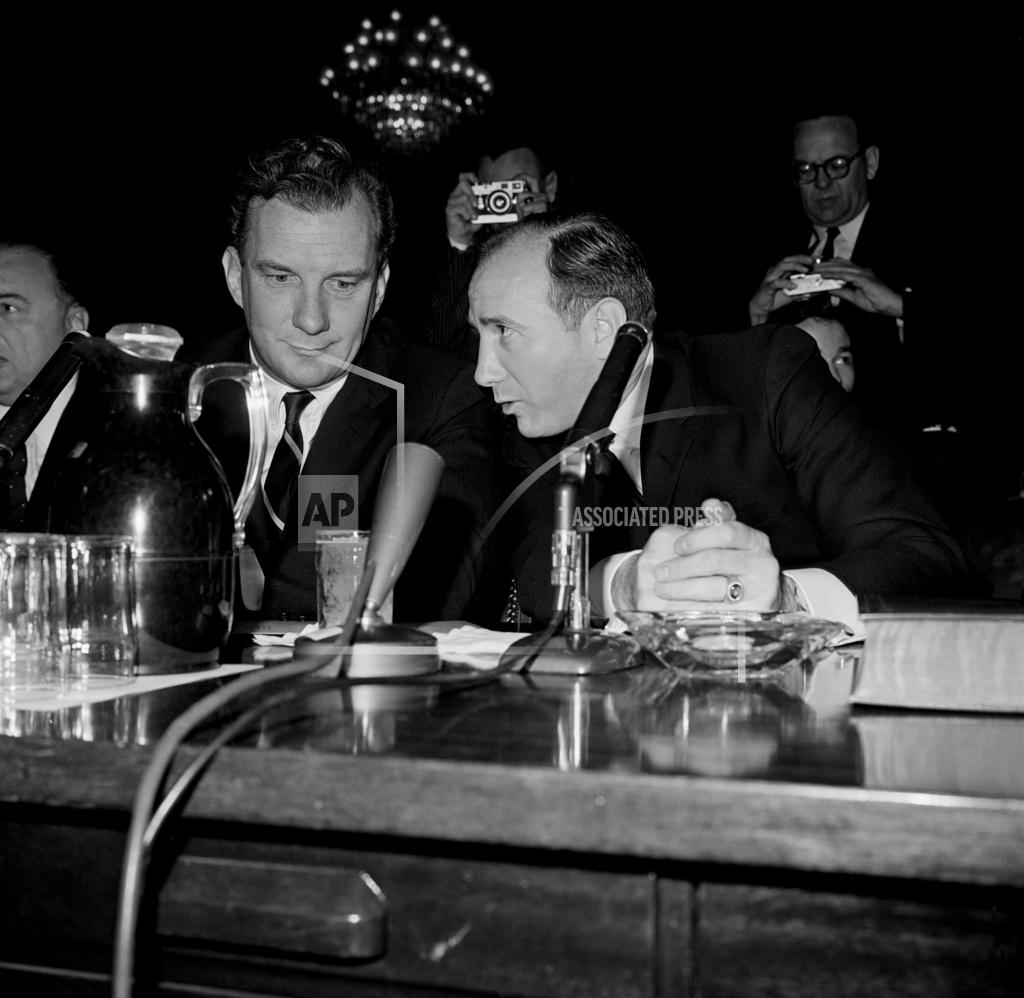
Robert G. Baker refused to tell the Senate Rules Committee about his private business affairs today, but he could not keep the members from putting into the record allusions to just about everything they know or suspect about his activities. In a dramatic two‐and‐one-half‐hour public appearance before the investigative panel, the former secretary of the Senate Democratic majority invoked constitutional immunity 121 times to avoid answering questions. But the questions themselves probed widely, not only into the established facts of Mr. Baker’s career but also into the circumstantial areas of supposition and rumor as well. The session, held before a standing‐room‐only crowd, and briefly before live television cameras, was marked by spirited legal skirmishes between committee members and Edward Bennett Williams, Mr. Baker’s attorney.
James R. Hoffa, president of the International Brotherhood of Teamsters, emphatically denied today any involvement in alleged efforts to influence the jury in his Nashville trial in late 1962. The union chief took the stand in his own defense in a courtroom crowded with 100 spectators. Many more waited outside. The jury followed the testimony closely, but impassively, as Mr. Hoffa painted a picture of himself as a man who rose from poverty to the leadership of the nation’s largest union. Mr. Hoffa also described himself as a person who worked tirelessly for the benefit of his members and was a good family man.
Former President Herbert Hoover has been confined to bed since Sunday night suffering from a kidney ailment and some respiratory difficulty. He has been running a slight fever and his condition is regarded as serious but not dangerous. Mr. Hoover was 89 years old last August 10. A bulletin issued at 7:30 P.M. by the three doctors who have been attending him in his Waldorf Towers apartment said: “Former President Hoover had a rather restless day due to respiratory difficulty. He is having less pain from his right kidney, and no further bleeding. Despite his age and illness, he still remains quite strong and alert. His temperature is lower. His blood pressure remains normal. His heart beat is somewhat rapid, but the rhythm is normal and there is no evidence of heart failure.”
A unit of the State Bar Association charged today that anticrime proposals advanced by Governor Rockefeller could put New York on the road to becoming a “police state.” The attack was made by the association’s Committee on Penal Law and Criminal Procedure in urging Mr. Rockefeller to veto the so‐called “stop and‐frisk” and “no‐knock” bills. The measures, which represent major sections of the Governor’s anticrime program, recently passed the Assembly and Senate after bitter debate. The bar group was most vehement in its denunciation of the “stop‐and‐frisk” bill. This would permit a policeman to stop, search and question any person he “reasonably suspects” of committing or planning to commit a crime, or if the policeman feels his life is in danger from the suspect.
Dow Jones Industrial Average: 796.59 (-0.53).
Born:
Don Majkowski, NFL quarterback (Pro Bowl, 1989; Green Bay Packers, Indianapolis Colts, Detroit Lions), in Buffalo, New York.
Rich Rowland, MLB catcher (Detroit Tigers, Boston Red Sox), in Cloverdale, California.
Nikita Wilson, NBA small forward (Portland Trailblazers), in Pineville, Louisiana.
Lee Evans, British comedian and actor, in Avonmouth, Bristol, England, United Kingdom.
Died:
Hinrich Lohse, 67, Nazi German war criminal who was the Nazi Reichskommissar for Ostland, (Nazi-occupied Latvia, Lithuania and Estonia) during World War II.
Grace Metalious, 39, American novelist, of liver disease.

[Ed: Congratulations, I guess? Son, you’re about to Boldly go where Everyone has gone before…]
 History Diaries