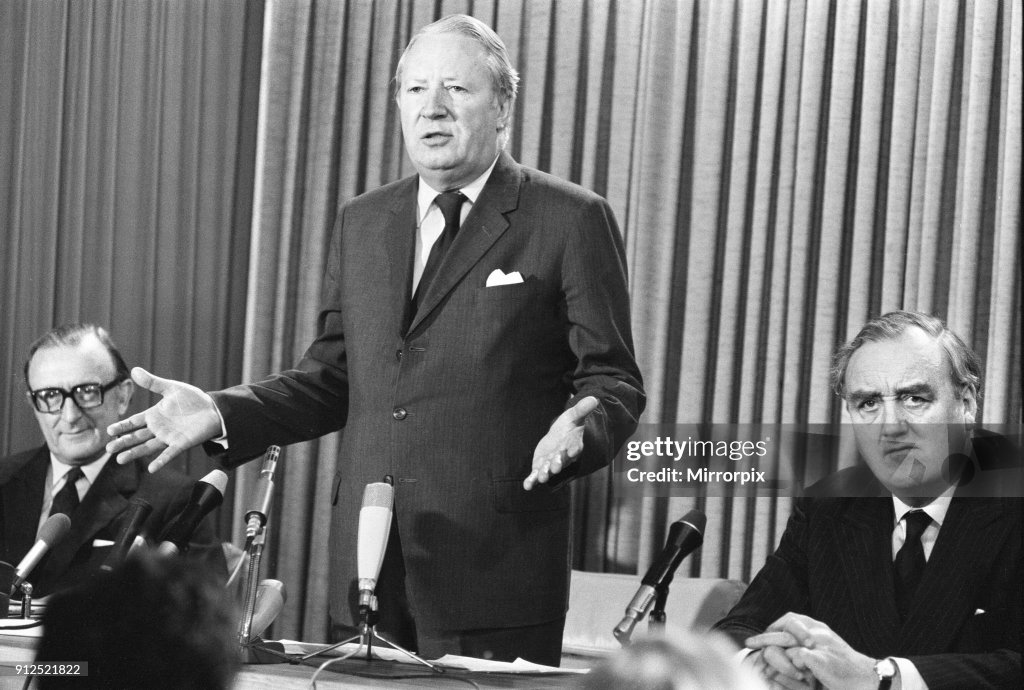
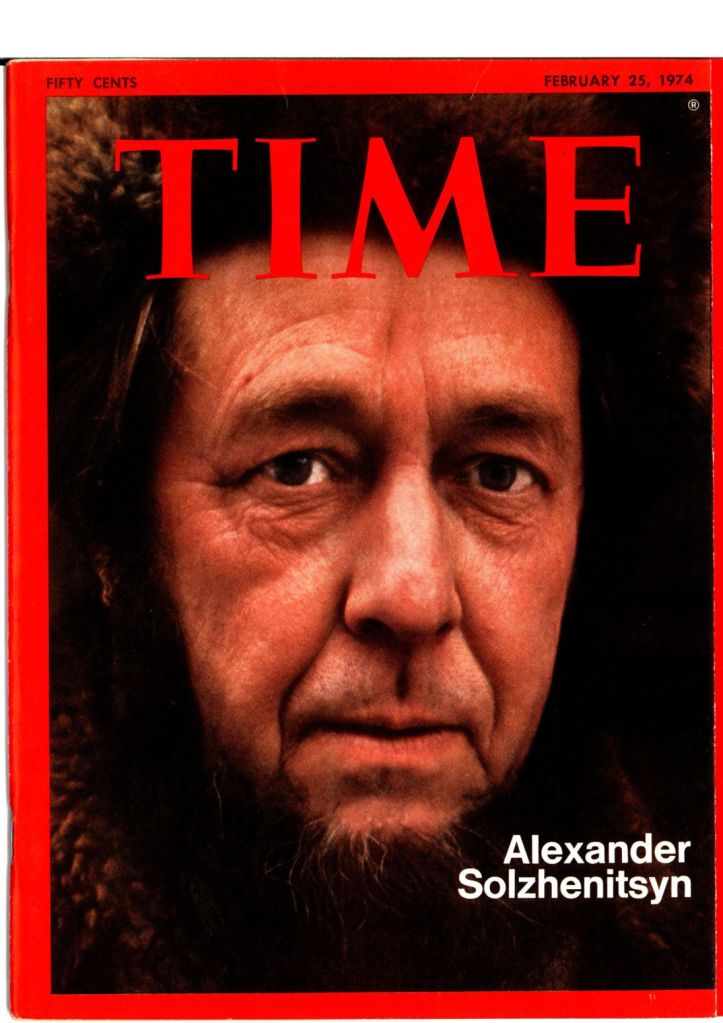
President Nixon in a televised news conference tonight at the White House said he had sought to avoid confrontation with Moscow over the expulsion of Aleksandr Solzhenitsyn from the Soviet Union in order to further detente with the Russians. He said: “If I thought that breaking relations with the Soviet Union… would help him or help thousands of others like him in the Soviet Union, we might do that.”
A U.S. Air Force plane will begin searching the Atlantic today for balloonist Thomas Gatch Jr., according to a spokesman at Lajes Air Base in the Azores. Planes searched a large area of the Spanish Sahara but found no trace of the 48-year-old bachelor who hoped to make the first transatlantic balloon crossing. Gatch took off a week ago Monday from Harrisburg, Pa., and was last seen Thursday by a Liberian freighter in the Atlantic. He had planned to land in France or Spain but was apparently blown off course.
The Soviet Union will send Foreign Minister Andrei A. Gromyko to Cairo Friday on the heels of Secretary of State Kissinger’s visit to the Egyptian capital this week, diplomatic sources reported today. This was interpreted as a move by the Kremlin to ensure that Moscow will not be upstaged diplomatically by Mr. Kissinger, as it was in mid-January when the Secretary of State Succeeded in arranging the disengagement of Egyptian and Israeli forces on the Suez Canal front. Kremlin is reliably reported to have voiced its keen irritation with Cairo during the visit here last month of Foreign Minister Ismail Fahmy of Egypt. The Russians were said to have been upset at not having been better informed on the course of negotiations, and over the warmth shown by the Egyptians, especially President Anwar el‐Sadat, to Mr. Kissinger in spite of Washington’s general policy on the Middle East.
U.S. Secretary of State Kissinger arrived in London for talks with British officials before going on to the Middle East to try to negotiate a break in the diplomatic impasse between Israel and Syria. Officials aboard Mr. Kissinger’s jet said they believed he would succeed in getting Israel and Syria to agree on a formula for the separation of their military forces. A senior official said he believed that Syria — previously opposed to participating in the Geneva conference — would send a delegation there to negotiate with the Israelis under the flag of the Egyptian delegation. This would ease matters for President Hafez al‐Assad of Syria, who had previously refused to negotiate directly with the Israelis until they agreed to a total withdrawal from all territory occupied last October or in 1967.
The American official said that he was “extremely hopeful” that the Syrians, to meet Israeli conditions, would release the list of names of Israeli prisoners of war and would also allow the International Committee of the Red Cross to visit the prisoners. But American officials again refused to speculate on whether progress between Syria and Israeli would lead the Arabs to end their oil embargo against the United States.
The commander of the United States Army in Europe reported today that while discipline among the troops, in West Germany was still “only fair,” progress was being made in controlling drug use. General Michael S. Davison, testifying before House, Armed Services subcommittee, saw a favorable trend developing among the men in discipline, morale and readiness after what he acknowledged was a difficult period for the United States Seventh Army in Europe. Some past “sullen attitudes” are disappearing, he said, racial tensions are decreasing and morale is now “good.” Discipline is improving, he said, but can still be judged as “only fair.”
The Israeli army’s “hippie image” is on the way out. Spurred by foreign correspondents’ reports during the October war that the soldiers’ variegated attire made them look like an army of hippies, the command has decided to issue orders banning nonmilitary hats. Shaggy hair has not been forbidden, but any soldier whose uniform does not conform to regulation faces arrest.
Troops moved into Baroda, India, the government continued to rock as violent demonstrations against the western Indian state of Gujarat. At least one man was dead and more than 10 injured after police had failed to check rioting despite repeated shooting. In Ahmedabad, the state capital, four persons were shot. Demonstrations, now running more than 45 days, stemmed from food shortages and rising prices, up 26% in a year.
Five South Korean intellectuals critical of the government of President Park Chung Hee were indicted on charges of violating anti-Communist and national security laws. The prosecution claimed the two novelists and three professors had been recruited by Tokyo-based North Korean agents in 1971 and had since taken a pro-North Korean line in their writings. The five were leaders of a writers’ group that supported demands for more political freedoms in the country.
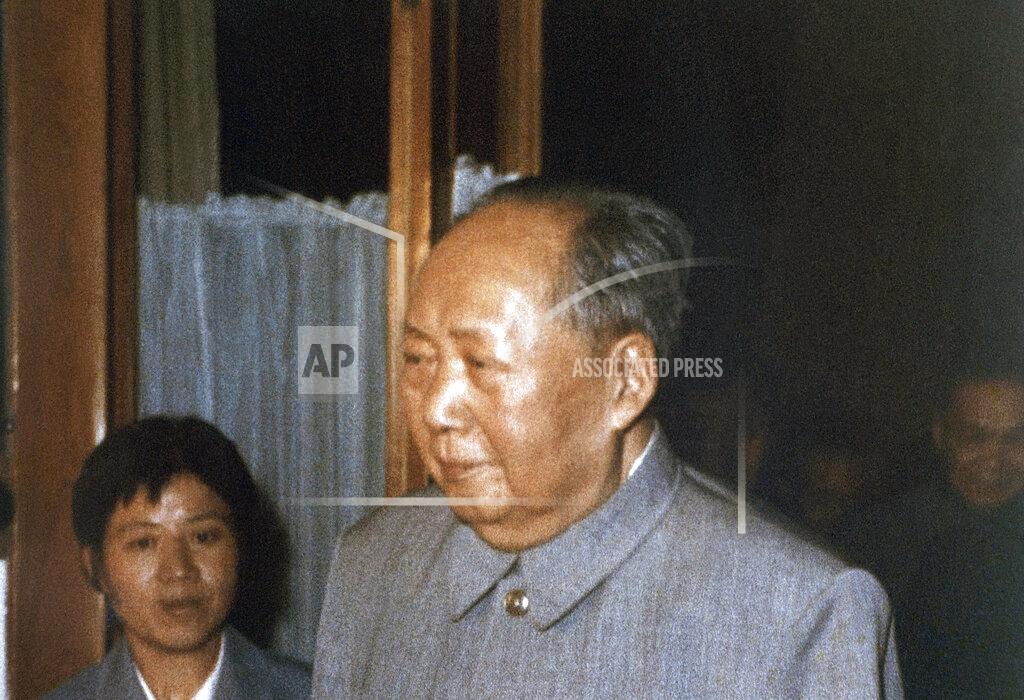
China, apparently seeking to bolster its waning influence in the Middle East, welcomed Algerian President Houari Boumedienne to Peking with a “grand ceremony of welcome” by a group of leaders that included Premier Chou En-lai. Diplomatic sources in Hong Kong said the visit was made at the invitation of acting President Tung Pi-wu and Chou and appeared to have been hastily arranged.
South Korea proposed today to reopen the long‐suspended talks with North Korea under Red Cross auspices on April 9 in Seoul. The North rejected the proposal, made at a meeting of liaison officials of the Red Cross organizations of the two Koreas at Panmunjom. The talks, begun in August, 1972, to arrange reunions of divided Korean families, were suspended after a session in Pyongyang last July. Chung Choo Nyun, the spokesman for the. South Korean Red Cross, said, that North Korea had insisted that Seoul remove “non‐Red Cross” members — South Korea Central Intelligence Agency officials — from its delegation and abrogate its anti‐Communist laws.
Soviet technicians have entered South America for the first time to train Peruvian soldiers in the use of Soviet tanks bought last year, according to Administration sources in Washington. The Washington officials said the Russians were not advisers attached to military units but technical representatives who go wherever Soviet weapons purchases are made. Peru is the only Western Hemisphere nation besides Cuba equipped with Soviet weapons.
Mrs. Salvadore Allende, widow of the former Chilean president, appearing before the U.N. Human Rights Commission, said that between 15,000 and 80,000 persons have died under Chile’s military junta and asked the group to demand an end to what she called genocidal repression in her country. Later, when the representative of the new Chilean regime, Raul Bazan Davila, delivered a 90-minute rebuttal he was repeatedly interrupted by the Soviet and Byelorussian delegates who charged him with straying from the subject and indulging in propaganda.
The price of gold broke records again throughout Europe today. The precious metal, a favorite refuge of money speculators in times of‐currency uncertainties, jumped $7 an ounce in London to $170, the highest fixed price in the history of that market. The dollar, meanwhile, which normally sinks when gold rises, reversed the trend and rose today on major world money markets. In the process, it turned around from a string of consecutive losses.
Bullion dealers said two new factors fueled the gold rush. First, the bounding price — rising in an almost unbroken line since the beginning of the year — has developed a momentum of its own, quite apart from outside factors such as mistrust of paper money. Second, everybody is betting the price will go higher still. As a result, “there’s an almost total absence of sellers,” one London dealer explained.
President Nixon’s personal attorney Herbert Kalmbach pleaded guilty to illegal campaign fundraising activities. Two of the charges date back to the 1970 elections. Kalmbach won’t be further prosecuted for other offenses since he has agreed to testify for the government in the other Watergate trials. Jack Gleason and H.R. Haldeman were named as accomplices in one charge. Prosecutor Thomas McBride reviewed another charge involving an ambassadorship for J. Fife Symington, Jr.
The Senate Watergate Committee filed a brief in a U.S. court of appeals in an effort to obtain five White House tapes. The Senate Watergate committee told the U.S. Court of Appeals in Washington it was willing to compromise in its effort to obtain five subpoenaed presidential tapes. The panel said that as a last resort it would agree to a “stringent protective order” that would prevent disclosure of the contents of the tapes now but leave the door open for their future release. “The major concern regarding the informing function (of the committee) is that these tapes be released… so that at some future time they may be made public and not forever kept secret from the nation,” the panel said. A federal judge ruled February 8 that “the public interest does not require that the President should be forced to provide evidence… to furnish fuel for future hearings.”
Overprescribing of antibiotics costs American hospital patients an estimated $200 million a year and may cause 30,000 deaths a year from adverse reactions to the drugs, a teacher told the Senate subcommittee on health. James A. Visconti, associate professor of pharmacology at Ohio State University, said in addition that many patients receiving unneeded antibiotics were forced to stay in hospitals longer than otherwise. Dr. Charles C. Edwards, assistant secretary of health, education and welfare, testified that many doctors prescribed antibiotics when they knew they would not help “out of a desire to do something.”
Fourteen more prospective jurors were selected in New York for the trial of former Attorney General John N. Mitchell and former Commerce Secretary Maurice H. Stans on charges of influence peddling in return for a secret $200,000 contribution to President Nixon’s 1972 reelection campaign. Thirty-eight of 52 prospective jurors have now been chosen, and at Monday’s pace the process will continue at least through today. Mitchell and Stans are charged with accepting the cash from financier Robert L. Vesco in exchange for efforts to impede a Securities and Exchange Commission investigation of Vesco’s international amalgam of corporations. Vesco was also indicted but has fled the country.
At his news conference the President also asserted that the House of Representatives could not impeach him without first finding evidence that he had violated criminal law, a position that put him in direct conflict with the staff of the House Judiciary Committee. He hinted that he would refuse to give the committee all the tapes and documents it wants for the impeachment inquiry.
The President conceded that “the paperwork” required to legalize the big tax deductions that he had taken for the gift of his pre-presidential papers to the National Archives “apparently was not concluded” until after the deadline for making such gifts. He went a step further than he had gone before in acknowledging that the gift, and therefore the tax deductions totaling $576,000, may be legally defective.
Mr. Nixon at his news conference said that the nation’s fuel shortage would continue to be a serious problem, but he declared that “the crisis has passed.” There is a “much better than even chance” that gasoline rationing will not be necessary, he said, and he predicted that the long lines at gasoline stations would become shorter in the spring and summer.
The Watergate special prosecutor has begun an inquiry into President Nixon’s handling of the military snooping on the White House in 1971, sources said. Investigators from the office of Leon Jaworski, the special prosecutor, have been permitted to see the highly classified White House report on the spying compiled by David Young of the White House “plumbers” group, the sources said.
The Shah of Iran claimed that the United States is getting the same amount of oil now as before the embargo. Federal energy czar William Simon was upset by the statement made by the Shah on the program “60 Minutes”.
Simon insisted that imports are monitored precisely, and he called the Shah’s comment “irresponsible”. However, Representative Charles Vanik said that the Shah raised a legitimate point, and Congress will require Simon to testify on the matter.
The Federal Trade Commission investigated a complaint that the major oil companies stifle competition within the industry. Commission staff lawyers made recommendations to assure competition.
A report in the Monday editions of the New York Times that the late FBI Director J. Edgar Hoover funneled to some favored congressmen sensitive information about their political opponents was branded “a lot of nonsense” by Rep. John J. Rooney (D-New York). Several of those reportedly aided were said to be, like Rooney, members of the House Appropriations subcommittee with power over the FBI budget. The newspaper quoted a “well-placed source,” who said information was gathered on Allard K. Lowenstein when he unsuccessfully opposed Rooney in a 1972 primary. While nothing derogatory was found about Lowenstein, “we gave Rooney everything we knew,” the source was quoted as saying. The paper quoted an FBI spokesman as saying: “We categorically deny the whole story.”
It would be feasible for the government to order that 1979 standard-size cars be built to protect occupants against injury in crashes at speeds up to 50 m.p.h., Robert Carter, a Department of Transportation safety official, told the Senate Commerce Committee. But he said such a requirement probably would not be feasible for subcompacts. The idea of legislating such a rule was advanced Thursday by consumer advocate Ralph Nader, who charged that James B. Gregory, head of the National Highway Traffic Safety Administration and Carter’s boss, and Transportation Secretary Claude S. Brinegar were selected by the Nixon Administration basically “to cool the auto safety program… to delay and delay and delay.”
The first issue of People magazine, post-dated March 4, 1974, went on sale at newsstands and supermarkets in the United States as a new weekly publication from Time Inc., providing news and photographs of celebrities and some stories about non-celebrities. Actress Mia Farrow was the first person to be featured on the cover of the magazine, which was sold for 35 cents, and subscriptions were initially not available.
The first “single-point urban interchange” on a highway was opened at Clearwater, Florida, in the United States at the intersection of U.S. Route 19 and Florida State Road 60.
Veronica & Colin Scargill (England) begin tandem bicycle ride a record 18,020 miles around the world, completed on August 27, 1975.
Dow Jones Industrial Average: 851.38 (-4.61, -0.54%).
Born:
Dominic Raab, British Foreign Secretary 2019-2021, Deputy Prime Minister of the United Kingdom 2021 to 2023; in Buckinghamshire, England, United Kingdom.
Detron Smith, NFL fullback (NFL Champions, Super Bowl 32, 33-Broncos, 1997, 1998; Pro Bowl 1999; Denver Broncos, Indianapolis Colts), in Dallas, Texas.
Tamarick Vanover, NFL wide receiver (Kansas City Chiefs, San Diego Chargers), in Tallahassee, Florida.
Shannon Stewart, MLB leftfielder (Toronto Blue Jays, Minnesota Twins, Oakland A’s), in Cincinnati, Ohio.
Sébastien Loeb, French rally driver, winner of 9 consecutive World Rally Championships 2004 to 2012; in Haguenau, Bas-Rhin département, France.
Divya Bharti, Indian film actress; in Bombay (now Mumbai), India (killed in an accidental fall, 1993).
Died:
Winthrop W. Aldrich GBE, 88, American banker and financier, U.S. Ambassador to the Court of St James’s as the senior diplomat to the UK, 1953 to 1957
Frank Assunto, 42, American jazz trumpeter for the Dukes of Dixieland band.
Harry Ruby, 79, American musician, film score composer and songwriter known for “Who’s Sorry Now?”

 History Diaries